The simple fix is to walk around your house and seal the cracks with good-quality caulk before brown marmorated stink bugs go looking for a winter hideout. Maryland Extension calls this kind of exclusion the best way to keep them out.
Caulk works best as part of a quick whole-house check, because bugs can slip in through more than one spot. Here is how to find the gaps and close them.
Why brown marmorated stink bugs gather at homes
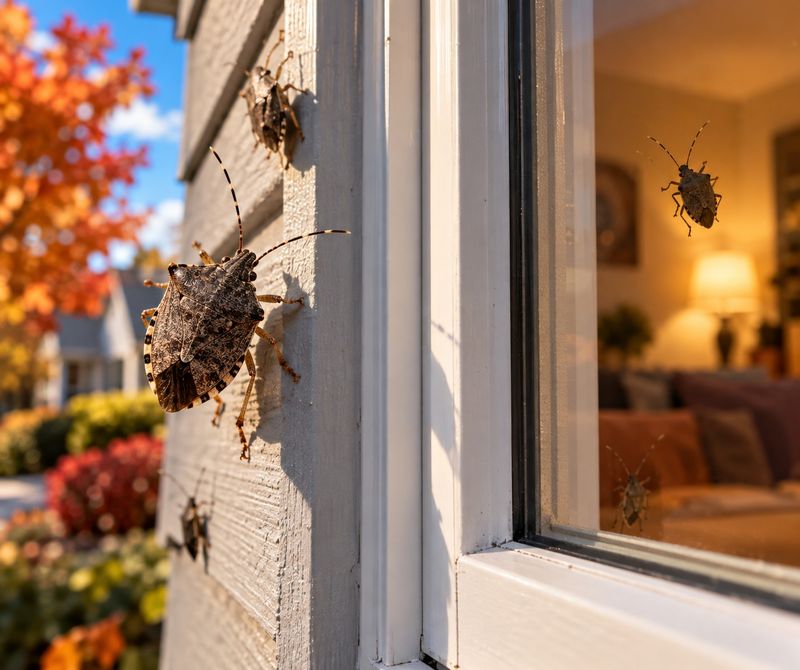
Late summer and early fall bring a familiar sight to many Maryland yards: brown marmorated stink bugs crawling on sunny walls, window frames, and porches. According to University of Maryland Extension, adults gather at buildings during this time because they are looking for sheltered places to spend the winter.
A warm, dry house with lots of small gaps looks like a good option to them.
That is why the outside of your home matters most. If bugs cannot find a way in, they have to settle somewhere else.
Once they do get inside, they may later show up around trim, baseboards, ceiling fixtures, or exhaust fans.
It helps to know what these insects are not doing. The EPA says brown marmorated stink bugs do not damage the structure of a house and do not reproduce inside it.
Your home is simply a winter shelter for them. The problem is mostly the nuisance and the smell when they are disturbed.
Keep in mind that this advice is about brown marmorated stink bugs. Other stink bug species can behave differently, so the steps in this article are aimed at this one.
The plan that follows is simple. Check the outside of the house, close the gaps that suit caulk, and keep doors, screens, and vents in good shape.
Each step lowers the number of bugs that get in, but no single repair can promise a bug-free home.
The gaps worth checking first
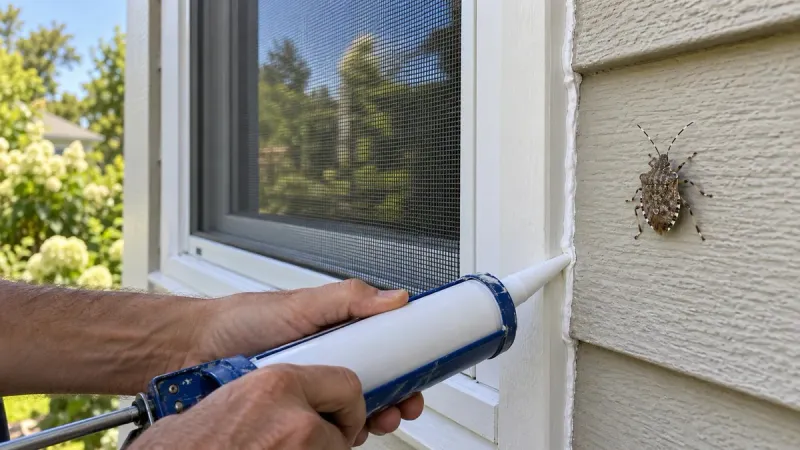
Start with a slow walk around the outside of your house, preferably on a dry day. Maryland Extension points to a handful of common entry spots.
Look for cracks around windows, doors, and siding. Check gaps around utility pipes, spaces behind chimneys, and openings under wood fascia.
Then widen your search a bit. EPA guidance also suggests looking at door edges and thresholds, foundation cracks, crawlspace entries, chimney tops, and places where pipes enter the home.
Not every house has all of these problems. Think of this list as places to look, not a list of flaws you must find.
Bring a flashlight and a notepad. Mark each gap you find with a quick note or a piece of painter’s tape so you can come back with the caulk.
A small crack that you can slide a credit card into is worth noting.
You may never learn exactly how a bug got in. Brown marmorated stink bugs that enter through the outside can later crawl out of interior cracks, so the spot where you see one is often far from where it came in.
That is why checking the whole exterior beats guessing based on where bugs show up inside.
Work in order, one side of the house at a time. A steady, thorough pass will catch more than a quick glance at the sunniest wall.
Seal suitable cracks with caulk
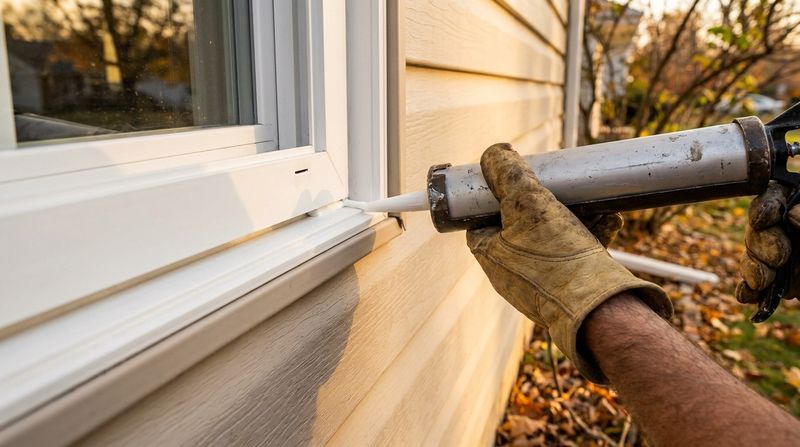
Caulk is the step most people think of first, and for good reason. Maryland Extension recommends sealing suitable cracks with good-quality silicone or silicone-latex caulk.
Choose a product made for exterior use, and read the label for the surfaces it works on.
Prepare each gap before you fill it. Brush away loose dirt, old crumbling caulk, and cobwebs, and let the area dry.
Follow the directions on the tube for cutting the nozzle, applying the bead, and waiting for it to cure.
Work slowly and press the caulk into the crack so it fills the gap instead of sitting on top. A smooth, continuous line works better than a thick blob.
Wipe away extra before it sets.
Where does caulk make sense? Think of small, fixed cracks, such as seams where trim meets siding, narrow gaps around window frames, and spaces where pipes or cables pass through a wall.
These are the stationary openings that a flexible sealant can close.
The real benefit comes from finding and closing many suitable gaps, not from one perfect seam. Do not fill every opening you see just because you have a tube in your hand.
Some places need to move, drain, or breathe, and those are covered in the next section.
Even a careful job will not make a house bug-proof. It simply removes a number of easy doorways from the list.
Keep doors, screens, and vents working
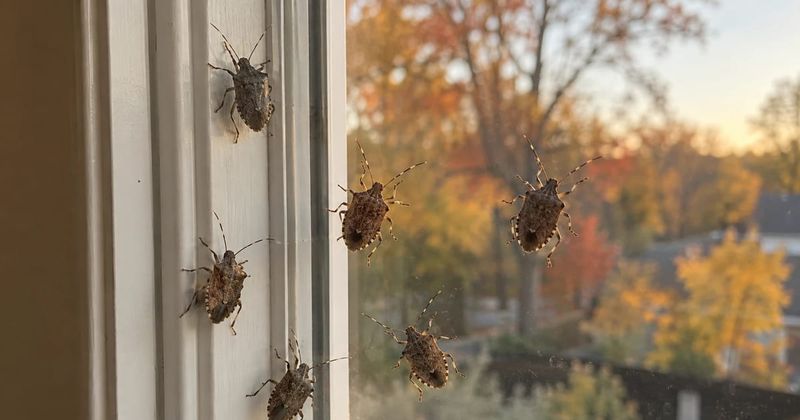
Some openings need a different fix than caulk. Doors and windows have to open and close, so they rely on screens and seals instead.
Maryland Extension advises repairing or replacing damaged door and window screens. A small tear is plenty big for a stink bug.
Check your entry doors next. If you can see daylight around the edges, the EPA recommends adding weather stripping or a door sweep.
That also helps keep out drafts, which is a nice bonus.
Vents are the tricky part. They exist to move air, so they should never be caulked shut.
UC IPM suggests screening vents such as gable vents instead.
Use a screen or cover made for the vent, and keep the airflow open. Building guidance from the Building America Solution Center warns that changes to vents must not unduly restrict ventilation.
This matters most at dryer vents, where blocked airflow can cause real trouble.
A simple rule helps: if an opening is a fixed crack, caulk it. If it has a job to do, such as letting a door swing or air flow out, give it a screen, seal, or cover that lets it keep working.
When in doubt about a vent, ask a qualified contractor before changing it.
When should you seal the house?
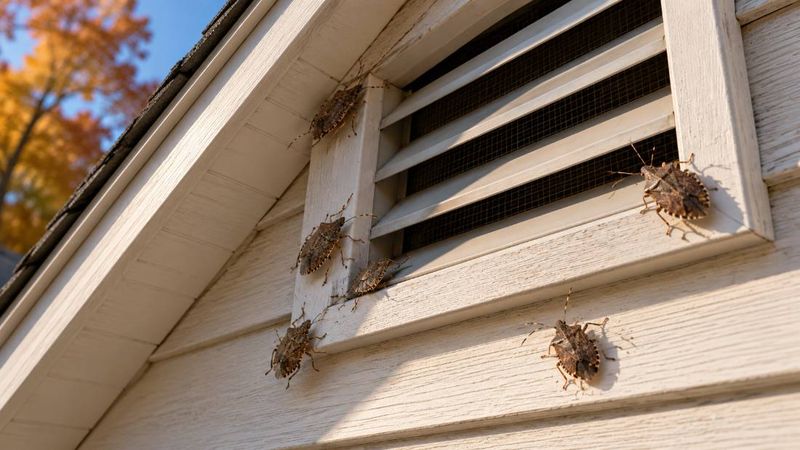
Brown marmorated stink bugs start gathering on homes in late summer and early fall, so the best window for prep comes before that. Maryland Extension describes this seasonal movement but does not set a sealing deadline.
For more specific timing, look to NC State Extension. It advises inspecting and sealing in summer, before the bugs return in late August.
That gives you time to work without bugs already crowding the walls.
NC State also offers a caution. Sealing during fall, winter, or early spring could trap bugs inside the walls or other spaces in your home.
If bugs are already tucked in, closing the gaps behind them leaves them nowhere to go but deeper into the house.
It is worth being clear about whose advice this is. The summer timing and the warning about sealing later come from NC State Extension, not from a Maryland rule.
There is no universal deadline that applies to every house or every year.
So use the advice as a planning guide. If it is summer, you are in a good spot to inspect and seal.
If it is already fall, fix screens and door seals, and think carefully before closing cracks where bugs may already be hiding.
What if bugs are already inside?
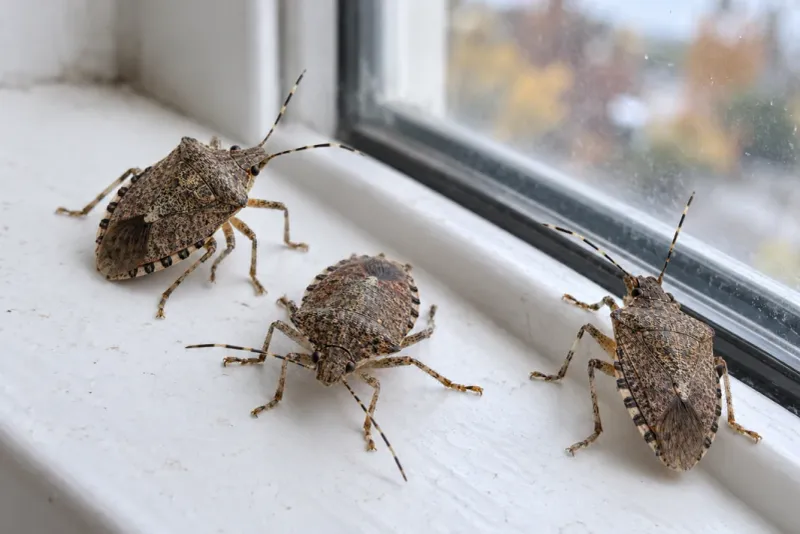
Even a well-sealed house may end up with a few visitors. For brown marmorated stink bugs that are already indoors, Maryland Extension recommends vacuuming them up or collecting them in soapy water.
Both options are simple and need no special products.
Vacuuming is quick, but it comes with a catch. The vacuum may keep a temporary odor after you use it.
Some people use a vacuum just for bugs, or empty the bag or canister outside right away.
The soapy water method is easy to set up. Fill a wide container with water and a little dish soap, then gently brush or drop the bug in.
Gentle handling helps, since a startled stink bug is more likely to release its smell.
You may feel tempted to reach for a fogger or bug bomb. Maryland Extension says foggers will not stop more bugs from entering.
The EPA notes that they may kill bugs they reach but are not a long-term solution.
Think of indoor cleanup as a way to deal with the ones that got through, not as prevention. A bug or two on a windowsill on a warm winter day is common in homes that had many bugs outside in fall.
Removing them calmly is usually all that is needed.
Make exclusion a whole-house check
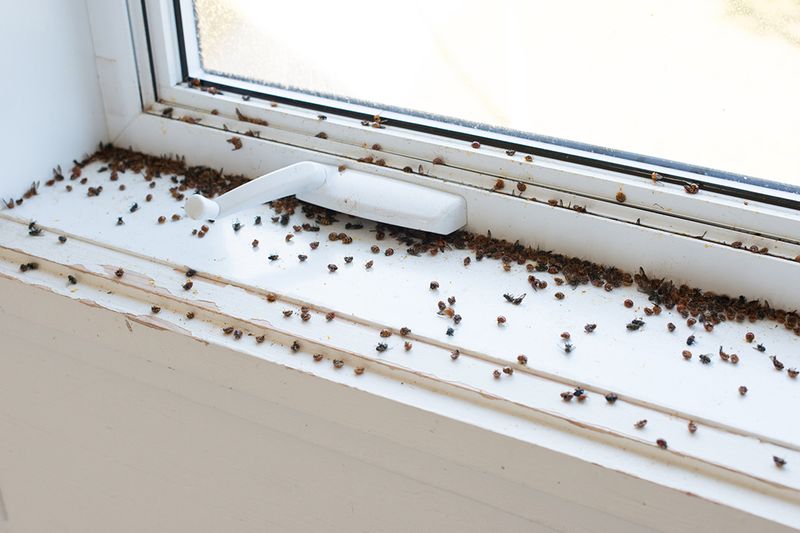
A good defense is a walk-around, a few tubes of caulk, and some attention to doors, screens, and vent covers. Maryland Extension points to exclusion as the best method, and it works by lowering the odds, not by promising zero bugs.
A few stragglers do not mean you failed. Each gap you close simply gives the next bug one fewer way in.
Share this story