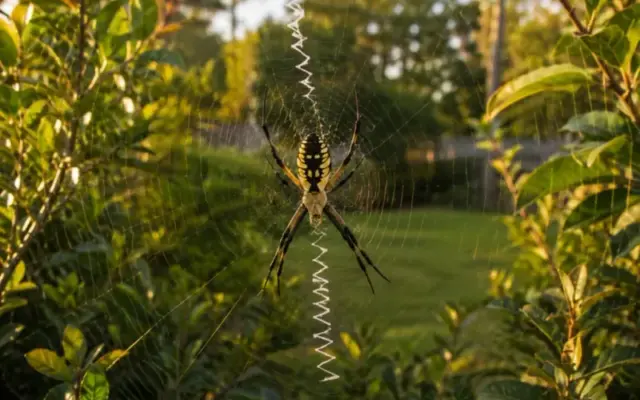
That big yellow-and-black spider hanging in the middle of a web in your Alabama garden is usually far calmer than it looks. Spiders like this tend to stay put on their webs and drop or scurry away when bothered, and bites are uncommon.
They also show up most noticeably when summer turns toward fall. Here is how to size up the spider, decide what to do about its web, and know what to do if someone gets bitten.
What spider might be in your garden?
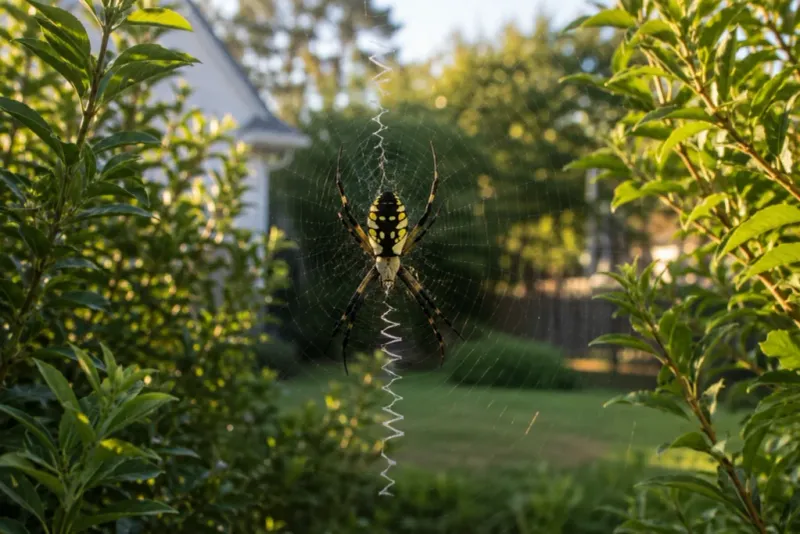
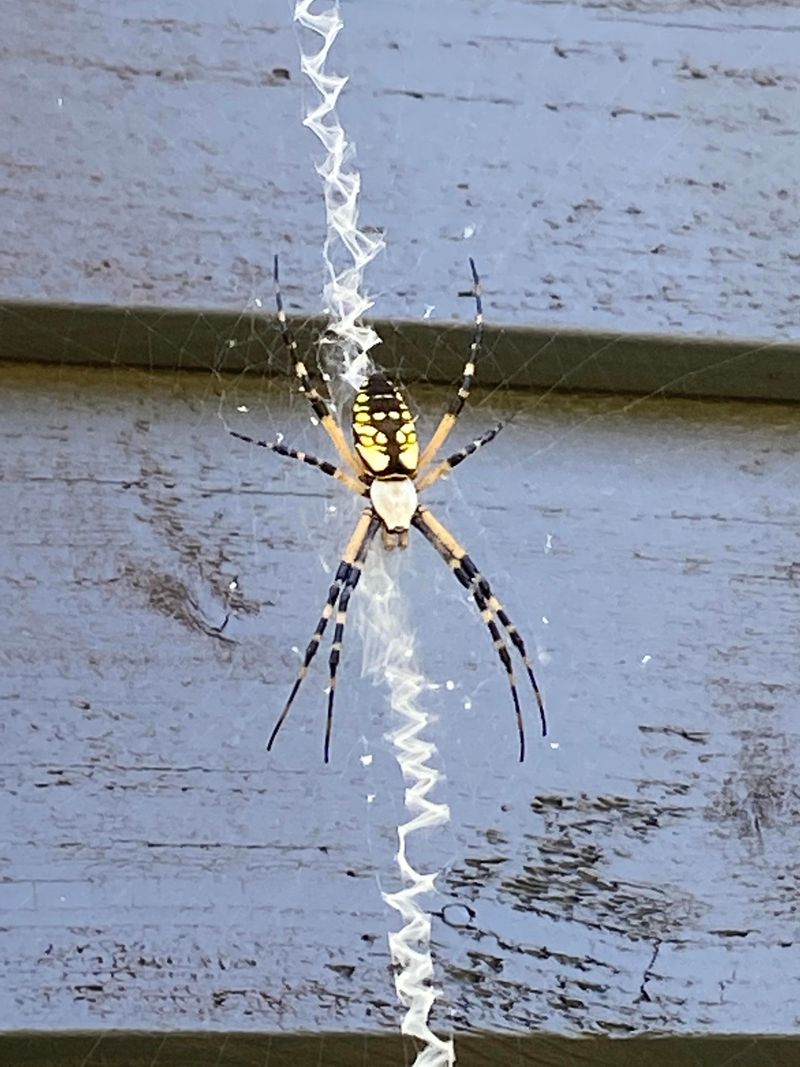
A large spider with bold black-and-yellow markings, sitting in the middle of a round web, is very likely a yellow garden spider, Argiope aurantia. That is a good guess, but it is still a guess.
Color alone cannot confirm the species, so think of it as a likely match rather than a certain one.
Here are the clues worth noticing. UF/IFAS Extension describes this spider as a conspicuous orb-weaver with a black-and-yellow abdomen, and it often rests head-down in the center of its web.
A thick zigzag band of silk running through the web is another hint. Neither the yellow nor the zigzag proves the spider’s identity on its own.
The Southeast has other eye-catching orb-weavers that can confuse people. The banded garden spider and the golden silk orb-weaver both turn up in yards and fields, and University of Georgia Extension points out that the Joro spider can resemble native spiders in the region too.
So a big yellow-striped spider in Alabama is not automatically Argiope aurantia.
If you want certainty, take a clear photo from a comfortable distance and show it to your county Extension office. Until then, treat the spider as a probable yellow garden spider and enjoy watching it from a respectful distance.
Knowing what you can and cannot say about its identity sets you up to judge the actual risk sensibly.
The web helps explain why it stands out
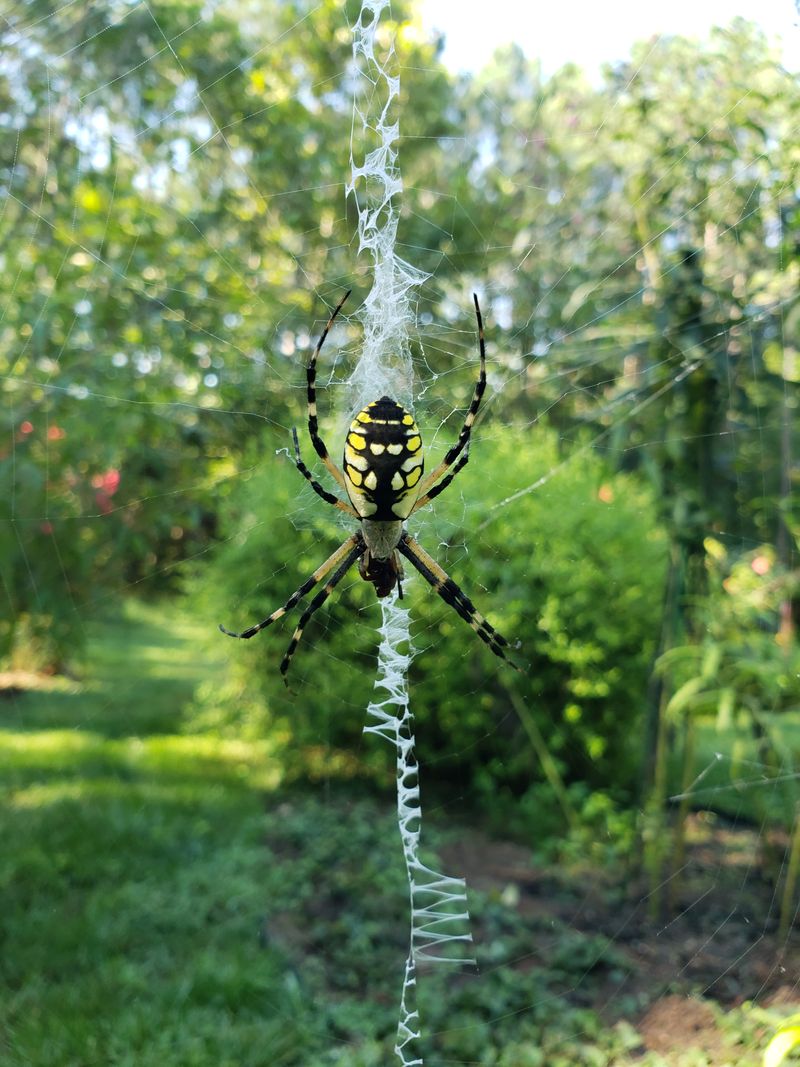
Few garden sights stop people in their tracks like a wide, perfectly round web strung between tomato cages or tall flowers. Yellow garden spiders build these big circular orb webs in gardens and other plant-filled places, and the web is often what you notice before the spider itself.
Many of these webs include a zigzag band of dense silk, often called a stabilimentum. It is a handy visual clue, but it is not a guarantee of species, so use it as one piece of the puzzle.
Size matters too. UF/IFAS Extension notes that females are much larger and more conspicuous than males, and the large spiders people spot in gardens are usually females.
The web is more than decoration. It is a trap for insects, and N.C.
Cooperative Extension describes these spiders catching prey such as grasshoppers and other flying insects. A bug that blunders into the sticky silk gets wrapped up and eaten.
That makes the spider a natural predator in your yard. Still, it would be a stretch to promise that one spider will control a particular pest or shield your plants from damage.
Think of it as a small bonus, not a pest-control plan.
Bites are uncommon, but give the spider space
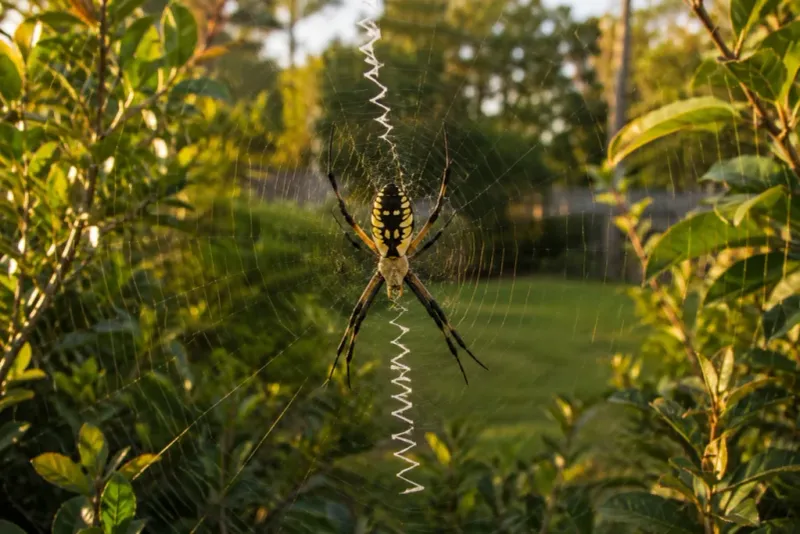
Most yellow garden spiders spend their days parked on their webs. When something disturbs them, they tend to flee rather than fight.
UF/IFAS Extension describes them as generally not a threat to people.
Bites are unlikely, and they usually happen only when a spider is grabbed, pinned, or trapped. South Dakota State University Extension describes them as nonaggressive.
That does not mean they cannot bite, so the simple rule is to look and not touch. Never pick one up or poke at it.
There is an important difference between a likely garden spider and an unidentified one. A big yellow-and-black spider sitting in a round web fits the garden spider pattern.
A small, hidden, or unfamiliar spider that you cannot name deserves more caution.
Alabama does have spiders of potential medical concern. Alabama Extension lists widow and recluse spiders among them.
Those spiders look and behave very differently from an orb-weaver, which is why it is unwise to assume every spider is harmless or every spider is dangerous. Match your caution to what you actually know about the animal in front of you.
Why are they so noticeable late in the year?
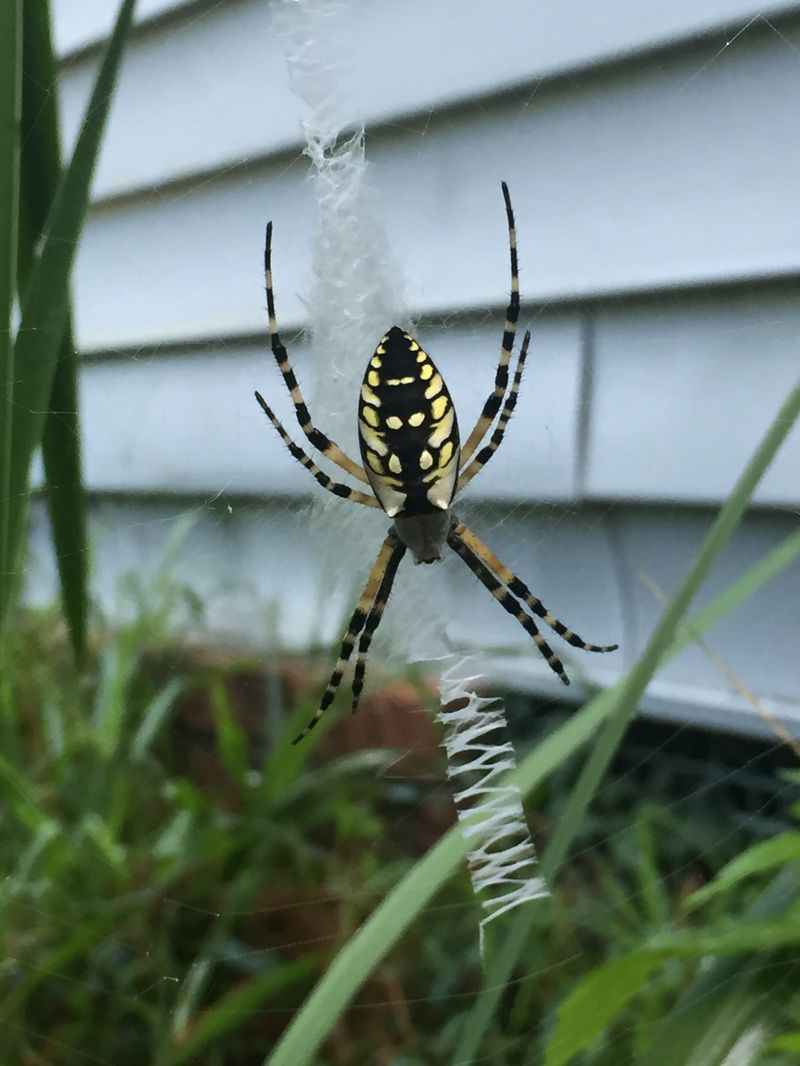
By late summer, a spider that started the season small has grown large enough to be hard to miss. Yellow garden spiders are especially noticeable in late summer and fall, when females are big and their webs are broad.
That is why many gardeners suddenly seem to find one in August or September.
The general life cycle goes like this. South Dakota State University Extension describes females making egg sacs in fall.
Adults often die around the first hard frost, while the eggs overwinter and young spiders emerge later.
Those details come from university sources in other states, such as N.C. Cooperative Extension and University of Minnesota Extension.
They describe a general seasonal pattern, not an Alabama species calendar.
So there is no single statewide date when every yellow garden spider is finishing up. Timing shifts with local weather, and frost arrives at different times across Alabama.
If you still see an active web in a mild stretch, that is not unusual. Treat late summer and fall as the time these spiders stand out, and let your own local conditions set the pace.
When should you leave the web alone?
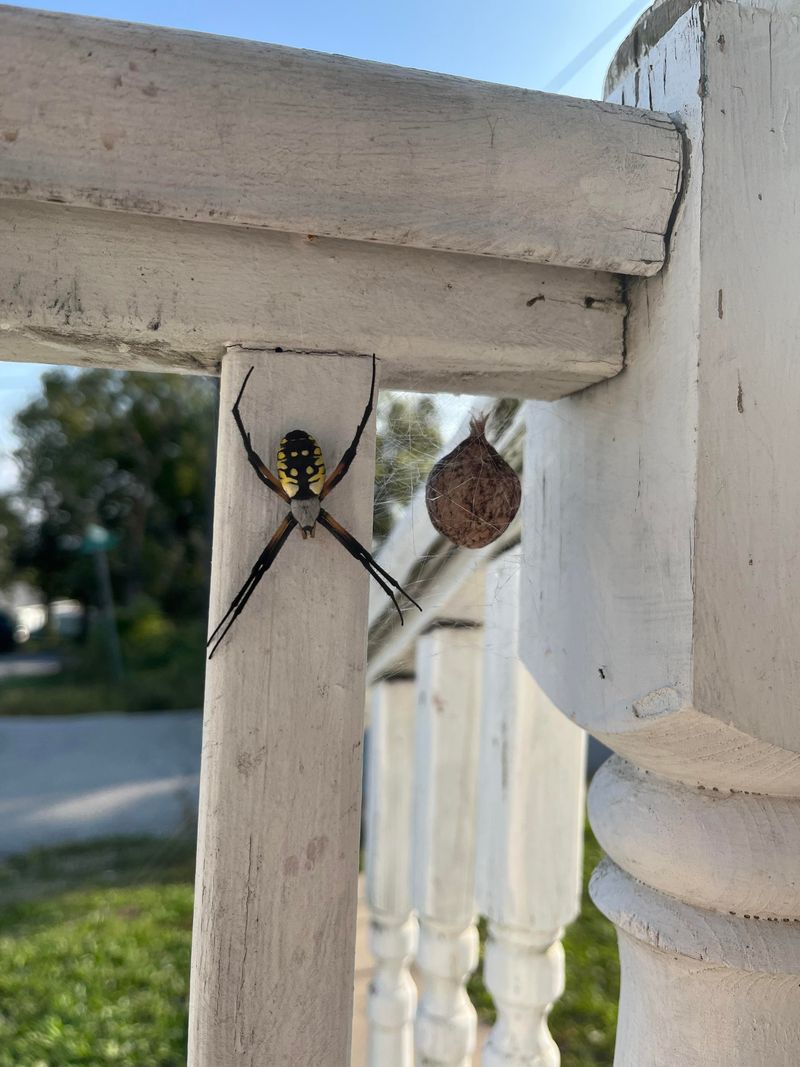
Most of the time, the best plan is the easiest one: do nothing. A web off to the side of a flower bed or along a fence rarely causes trouble, and the spider will keep catching insects there.
UF/IFAS Extension notes these spiders feed on flying insects and other prey. That is a nice perk, though it is not a guarantee of fewer garden pests.
A busy spot is a different story. A web across a doorway, mailbox, or path can mean someone walks into it, and a startled person is more likely to swat or grab the spider.
Sometimes a simple fix, like moving a hose reel or walking a different route, solves the problem without touching anything.
If you truly must move the spider, use a large container only when you can do it without touching the spider. Be confident that it is a yellow garden spider before you try.
If you are unsure about the identification, skip the move and ask your county Extension office for advice.
Do not grab the spider with your hands, and stay away from egg sacs. South Dakota State University Extension advises caution around these spiders, and a female guarding an egg sac is best left undisturbed.
If a bite happens, respond to symptoms
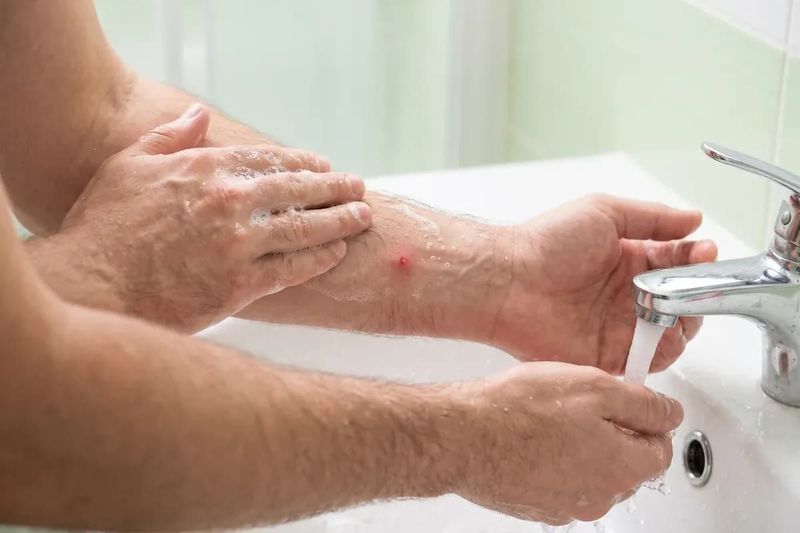
Even though a bite from a garden spider is unlikely, it helps to know the steps. Start by washing the area with soap and water.
CDC guidance also suggests a cool, damp cloth or ice wrapped in cloth, and elevating the area if possible.
Do not try to remove venom. Cutting, sucking, or squeezing the spot will not help and can cause more harm.
The first aid recommendations in the 2024 American Heart Association and American Red Cross first aid guidelines are a good general reference for staying calm and keeping care simple.
Watch the symptoms over the next hours. Seek medical care for severe or spreading pain, an open wound, or symptoms throughout the body.
Call emergency services for difficulty breathing, muscle rigidity, dizziness, or confusion.
Do not assume which spider caused a bite based on a guess. If you can do it safely, take a photo of the spider, but never chase it or handle it.
Medical decisions should follow how the person feels and how the bite looks, not a hunch about the species. That matters because Alabama has widow and recluse spiders, and a bite from an unidentified spider should be judged by symptoms.
Give the spider space and let the season run its course
Look closely, keep your hands to yourself, and remember that a likely identification is not a confirmed one. A web that is out of the way can stay, and UF/IFAS Extension and South Dakota State University Extension both support giving these spiders room.
Timing will vary from yard to yard, so there is no statewide deadline to watch for.
A garden spider rarely asks for much, just a quiet corner and a steady supply of insects.
Share this story