Yes, Illinois has a tiny native mammal with a venomous bite: the northern short-tailed shrew. Its saliva is toxic, and it uses that saliva to subdue the worms, slugs, and insects it eats.
It also stays active through winter, slipping through tunnels in soil, leaf litter, and even snow. The full story has a few twists, including what cold weather does to this busy little hunter and what we really know about your own backyard.
Meet Illinois’s northern short-tailed shrew
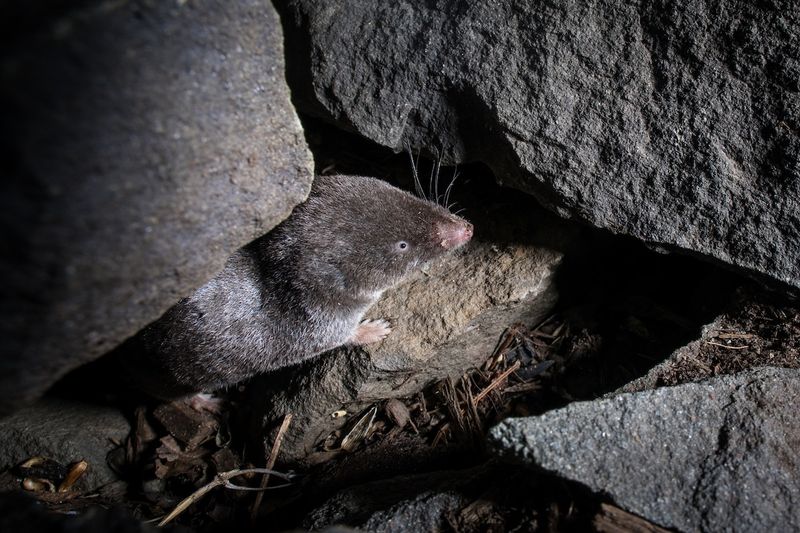
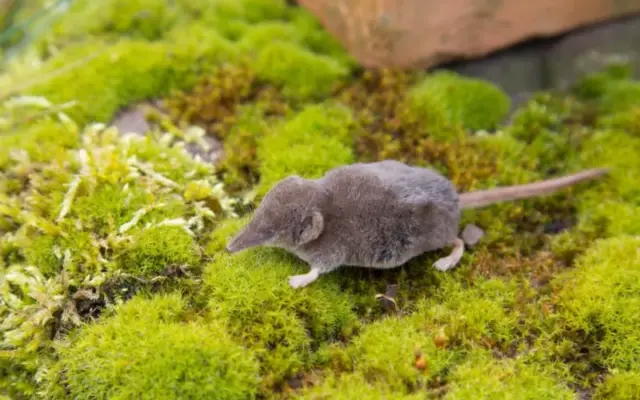
Picture a mouse-sized animal with velvety gray fur, tiny eyes, and a pointed nose that never stops twitching. That is the northern short-tailed shrew (Blarina brevicauda), and it is the species with the direct venom evidence discussed in this article.
It is not a rodent, but a member of a separate group of small insect-eating mammals.
Illinois Department of Natural Resources describes the northern short-tailed shrew as a common, native mammal found statewide. Adults measure only about four to five inches long, and that length includes the tail.
The animal lives in forests and grasslands, where it makes runs above ground or tunnels below it.
Illinois has a second close relative, too. The state’s wild mammal list names both the northern and the southern short-tailed shrew.
The strongest direct venom evidence found for this story belongs to the northern species. Without testing, it would be a stretch to hand that same evidence to its southern cousin, so this article keeps the focus on B. brevicauda.
Shrews are easy to miss. They are small, quick, and spend much of their time hidden in vegetation, soil, or leaf litter.
Most people never get a clear look at one, which makes the idea of a venomous mammal in Illinois feel even more surprising.
How a shrew’s bite delivers toxic saliva
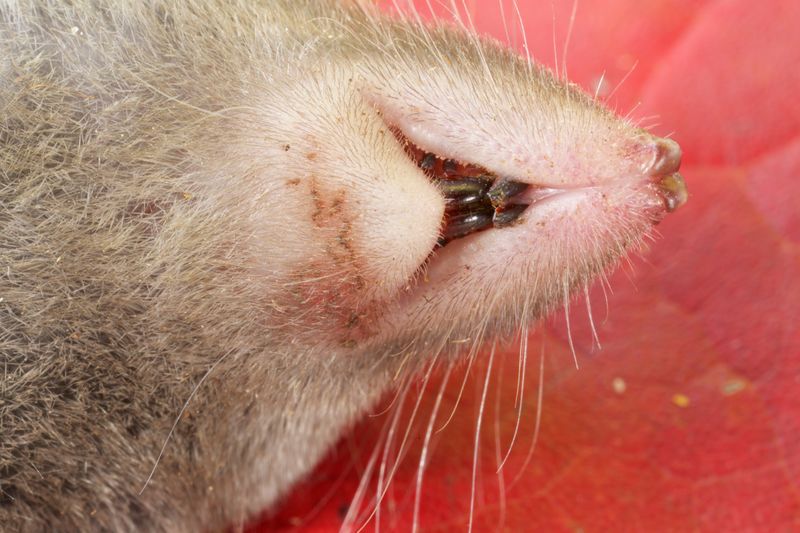
A shrew’s venom is not hidden in some exotic gland far from its mouth. It is toxic saliva, and it enters prey through a bite.
Researchers have isolated and characterized a toxin from the salivary glands of Blarina brevicauda in a peer-reviewed study of Blarina toxin.
In that study, experimental administration of the toxin affected mice. The paper also cites a few human bite accounts that describe local burning and swelling.
Those are sparse reports, and the animal experiments do not tell us how severe a bite would be for a person. So it would be wrong to call a bite deadly to people, and just as wrong to promise it can never cause harm.
The delivery system is also much simpler than a snake’s. There are no hollow fangs and no precise injection.
A scientific review of venom in shrews and their relatives describes delivery as involving biting, and notes that the role of slight grooves in the teeth is still uncertain.
Not every shrew is venomous, either. The same review explains that toxic saliva is confirmed in only a small number of species, while others are suspected or simply untested.
That is why this story sticks to the northern short-tailed shrew.
What this small predator eats
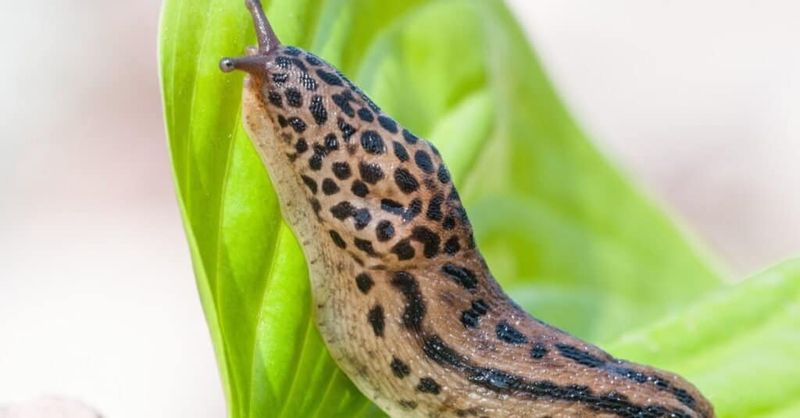
Dinner for a shrew is a wriggling, crawling buffet. The Illinois species sheets list earthworms, slugs, snails, insect larvae, and other small animals among its foods.
Insects and worms show up in the state’s description as well.
Many of those meals are soft-bodied and slow compared with the shrew. Others, like snails, are tougher to deal with.
Toxic saliva fits that picture because the research on Blarina toxin ties it to subduing prey. The same toxin study is where the venom evidence comes from, so a bite works as a tool for the shrew’s work as a predator.
It helps to keep the claim modest. The sources describe what the shrew eats, not how many of each prey animal it catches or how often a hunt succeeds.
Nothing here shows what a shrew does to the worms, grubs, or slugs in any particular yard.
The takeaway is simple. This is a small, hungry predator with a specialized bite, built for the tiny creatures of leaf litter and soil rather than for anything as large as a person.
How shrews move through winter
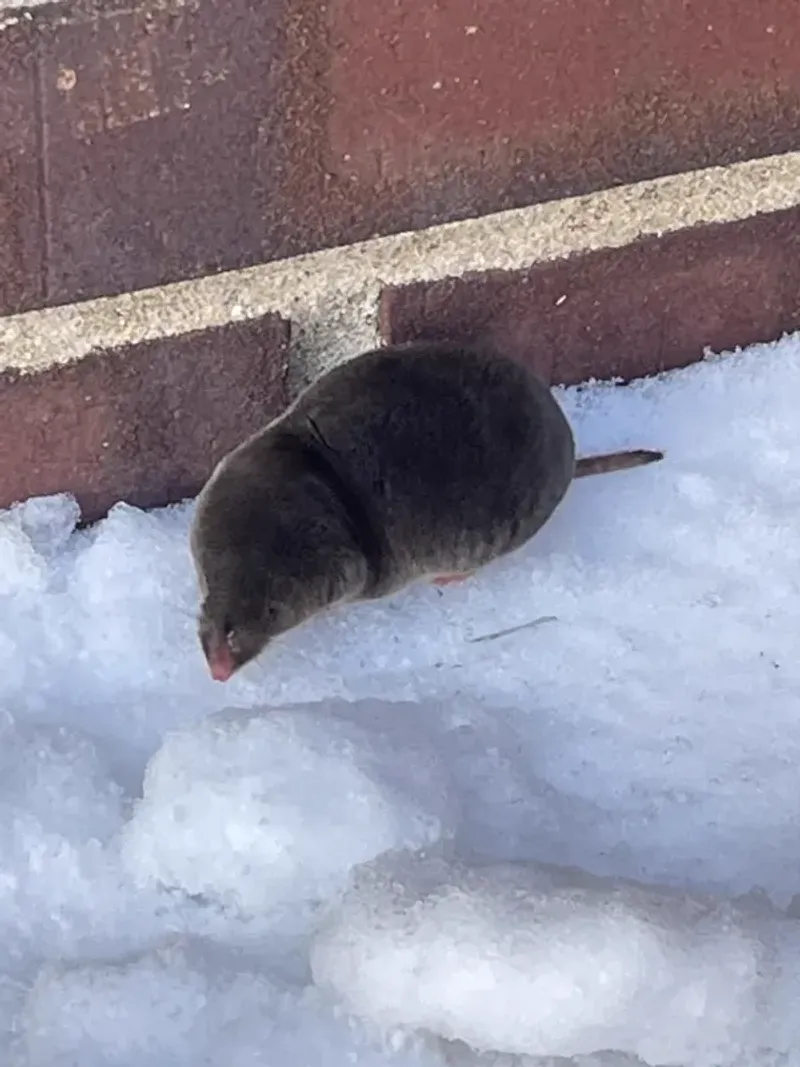
Winter does not send the northern short-tailed shrew into a long sleep. The Illinois species sheet says it does not hibernate.
Illinois DNR also describes it as active both day and night, all year, using above-ground runs or underground tunnels.
For winter detail, look to Pennsylvania. The Pennsylvania Game Commission reports that short-tailed shrews use the top few inches of soil and leaf litter, dig or reuse tunnels, and burrow through snow.
That points to winter movement beneath the snow surface, though it was not measured in Illinois lawns.
Year-round does not mean nonstop. The Illinois agency says the shrew’s body temperature, metabolism, and activity drop when temperatures fall low.
During a hard cold snap, a shrew may be far less busy than the word active suggests.
A good way to think of it: the animal can get around in winter, but it is not a tireless hunter patrolling at full speed through every freeze.
Does that mean one is under your lawn?

Probably the honest answer is: nobody can say from the evidence. Illinois DNR describes the northern short-tailed shrew as a statewide species that lives in forests and grasslands.
That tells us where the animal occurs and what habitat suits it, not whether a given yard has one.
A county full of suitable habitat is not the same as a lawn with a resident. Lawn size, nearby cover, soil, and neighbors all play a part, and the sources do not measure any of that.
So it would be wrong to say a shrew is likely beneath your lawn, or that every lawn has one.
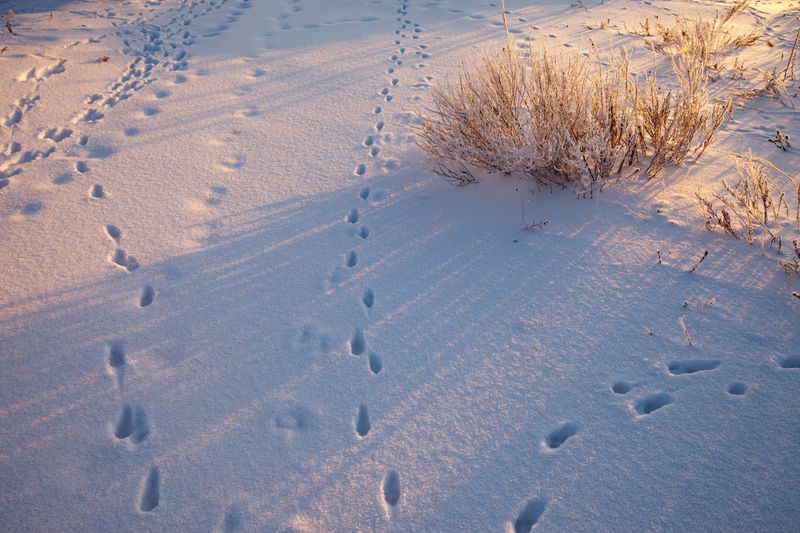
Snow tunnels add a small clue. Pennsylvania’s wildlife agency reports short-tailed shrews burrowing through snow, which makes movement beneath a snowy surface possible.
It does not prove a shrew is under a particular Illinois lawn.
As a practical example, a thin raised line of soil or a small hole in spring could come from several small animals. Without seeing the animal itself, such signs cannot be pinned on a shrew.
The state’s species page is the best place to compare habits.
Leave it alone, and know what to do after a bite
The simplest rule is also the best one: do not pick up or handle a wild shrew. It is a predator of small prey, not an animal that chases or threatens people.
Most trouble comes when someone tries to catch it, move it, or take it away from a pet.
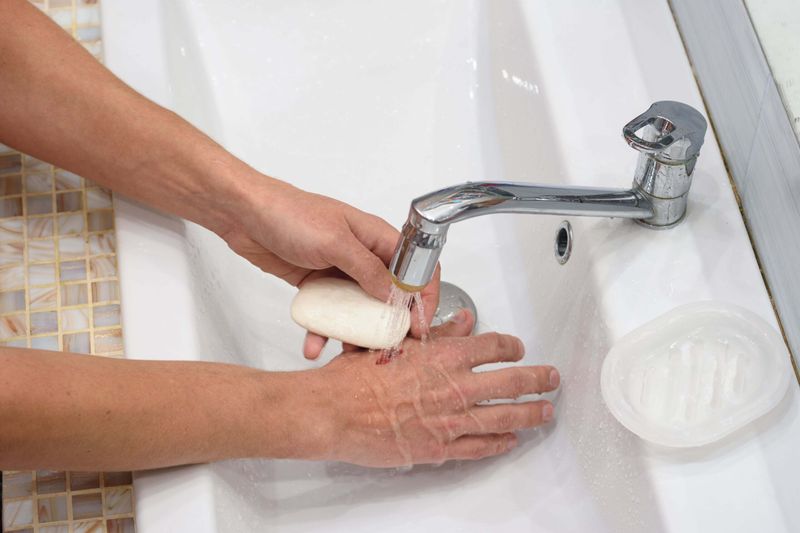
If a wild animal does bite or scratch someone, CDC guidance on wildlife advises washing the wound right away with warm, soapy water. Then seek medical guidance, and ask whether rabies-related care is appropriate.
A doctor or local health department can help sort that out.
There is no need to panic over a shrew bite. The sparse human accounts mention local burning and swelling, but they are too limited to say how severe a bite might be.
Treating it like any wildlife bite is the careful, proportionate response.
If a cat or dog brings home a shrew, keep your hands out of it. Use a shovel or thick gloves only if you must remove it, and wash up afterward.
What winter evidence can—and cannot—tell you
Here is the tidy version: the northern short-tailed shrew has toxic saliva, and short-tailed shrews can move beneath snow. Illinois DNR and Pennsylvania’s wildlife agency back those parts.
Neither shows a shrew hunting under one specific lawn.
So the snowy yard stays a mystery, and that is half the fun of winter wildlife.
Share this story