After a good soaking rain in Alabama, you might wake up to find strange little caps dotting your yard overnight. Some of these mushrooms are harmless, a few are tasty, and some can shut down your liver within days.
Knowing the difference could protect you, your kids, and your pets. Here are ten mushrooms you are likely to spot after the storms roll through, plus the clues that separate the safe from the seriously dangerous.
1. Eastern North American Destroying Angel
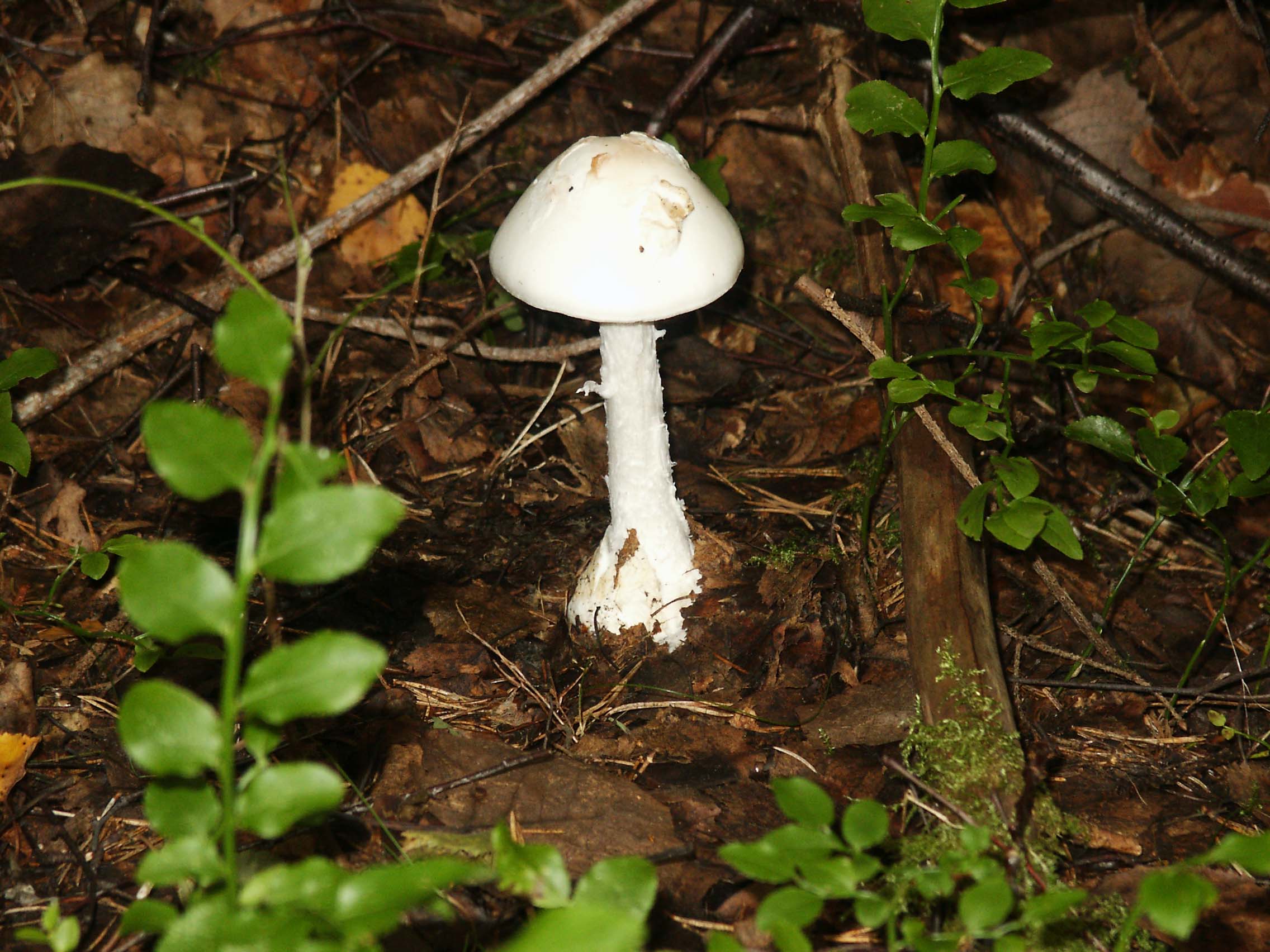
Beautiful and pure white, the destroying angel looks like something a fairy might use as an umbrella. That innocent look hides one of the deadliest toxins in nature.
A single cap can contain enough amatoxin to kill an adult.
You will often find it near oak and pine trees in Alabama woods and wooded yards, especially in summer and early fall after heavy rain. Look for white gills, a thin ring on the stem, and a sack-like cup buried at the base.
Here is the scary part. Symptoms may not show up for 6 to 24 hours, and then the person may feel better for a day before liver damage sets in.
If anyone eats a white mushroom they cannot identify, call Poison Control at 1-800-222-1222 right away.
2. Green-Spored Parasol
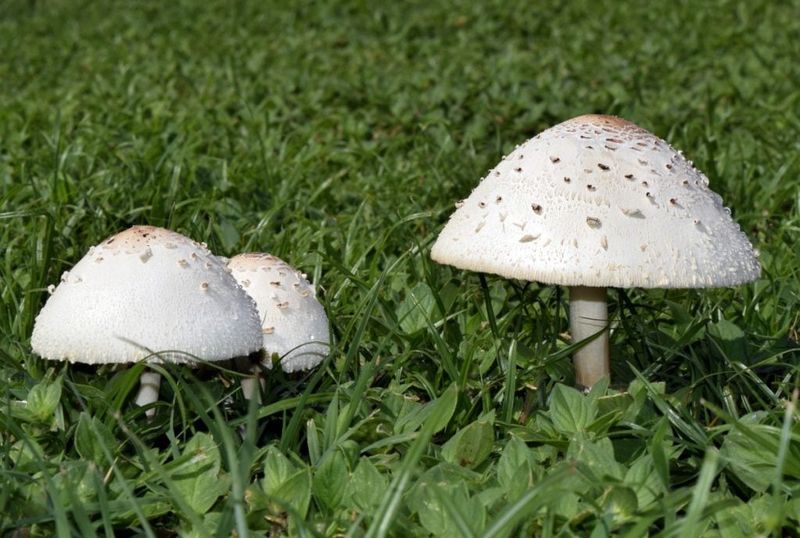
Ask any Southern poison center which mushroom sends the most people to the ER, and the answer is usually this lawn giant. Chlorophyllum molybdites loves warm, wet grass and often pops up in big fairy rings.
The cap can grow wider than a dinner plate, with tan scales on a white background. It looks a lot like the edible parasol mushroom, which is why folks get fooled.
The giveaway is the spore color. Older gills turn a dull greenish gray, and a spore print comes out green.
Eating it usually causes hours of violent vomiting and diarrhea, so keep toddlers and dogs away from those backyard rings.
3. Jack-O-Lantern Mushroom
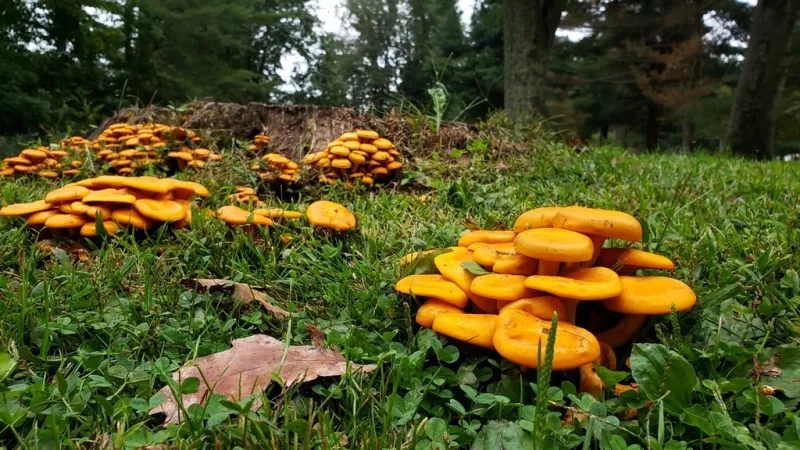
Picture a glowing orange bouquet sprouting from an old oak stump. Fun fact: the gills of the jack-o-lantern mushroom can give off a faint green glow in total darkness!
Sadly, that cool trick does not make it safe. Foragers sometimes mistake it for the prized chanterelle, but eating it leads to cramps, vomiting, and a miserable day or two.
To tell them apart, check the underside. Jack-o-lanterns have true, sharp, blade-like gills and grow in tight clusters on wood.
Chanterelles have blunt, forked ridges and grow alone from the soil.
4. Chanterelles
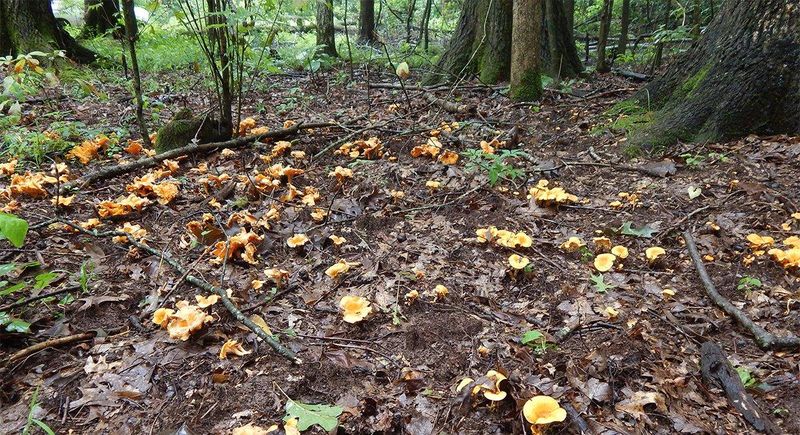
Summer rain in Alabama means one thing to local foragers: chanterelle hunting season. These golden mushrooms smell faintly of apricots and show up under oaks and beech trees from June into August.
Flip one over and you will see wrinkly ridges instead of thin gills. Those ridges fork and run down the stem like melted wax.
Tear the stem, and the inside flesh looks white and stringy, a bit like string cheese.
Even with an easy-to-spot mushroom like this, never eat one on a guess. Have an experienced forager or a local mushroom club confirm your find, and compare it carefully with the toxic jack-o-lantern before cooking.
5. Deadly Galerina
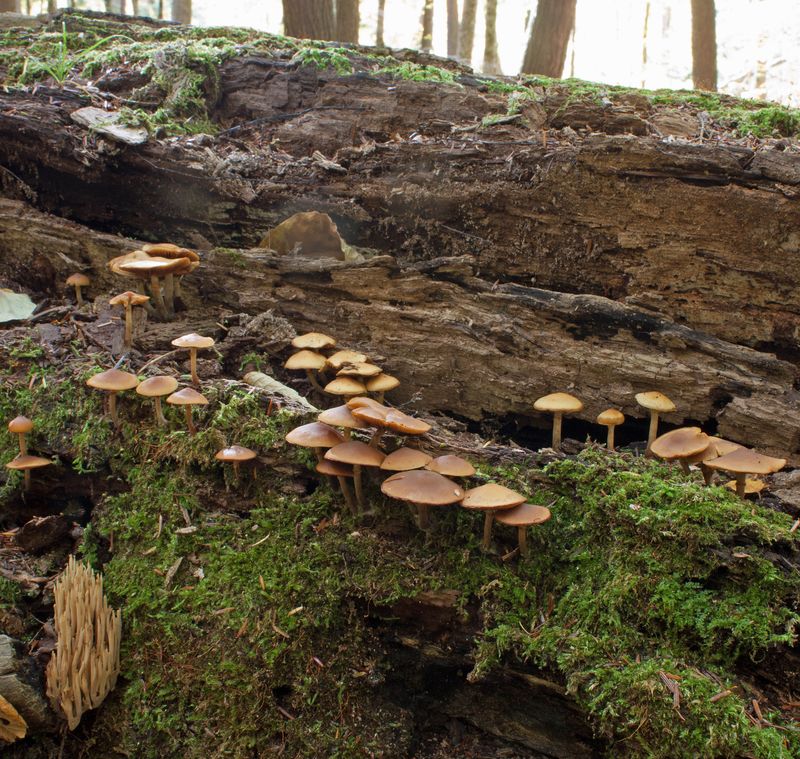
Small, brown, and boring. That is the best way to describe Galerina marginata, and it is exactly why it is so dangerous.
It carries the same liver-destroying toxins as the destroying angel. Yet it looks like dozens of other little brown mushrooms growing on rotten logs across the state.
Mushroom experts even have a nickname for this group: LBMs, or little brown mushrooms. The safest rule?
Treat every small brown mushroom on wood as off-limits. Some people have confused Galerina with edible honey mushrooms, and the results were tragic.
6. Chicken of the Woods
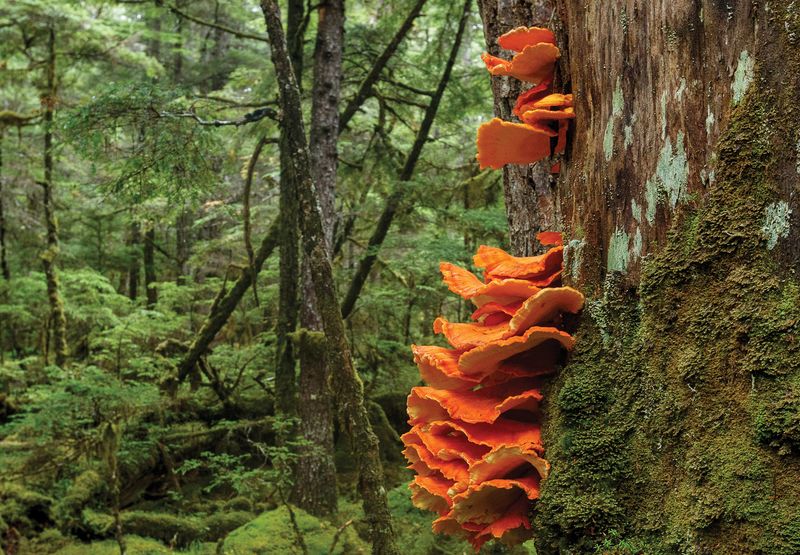
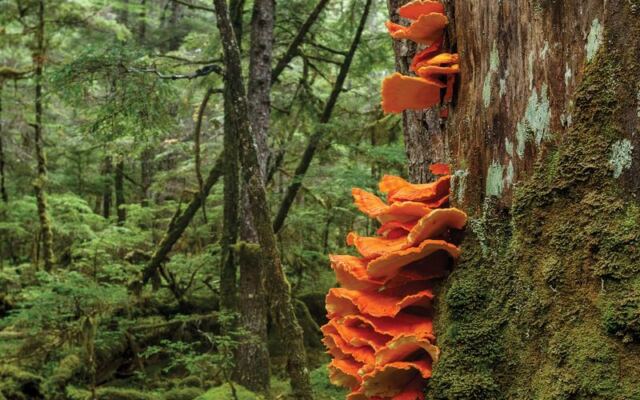
Bright enough to spot from your car window, chicken of the woods grows in bold orange and yellow shelves on oak trees and stumps. Many people say it tastes and feels like chicken when cooked, which explains the funny name.
There are no gills here at all. The underside is covered with tiny pores, and the whole thing looks like stacked fans.
Still, caution matters. Some people get upset stomachs, especially from mushrooms growing on eucalyptus, cedar, or other conifers.
Always cook it well, try only a small bite the first time, and confirm the ID with someone who knows.
7. False Morels
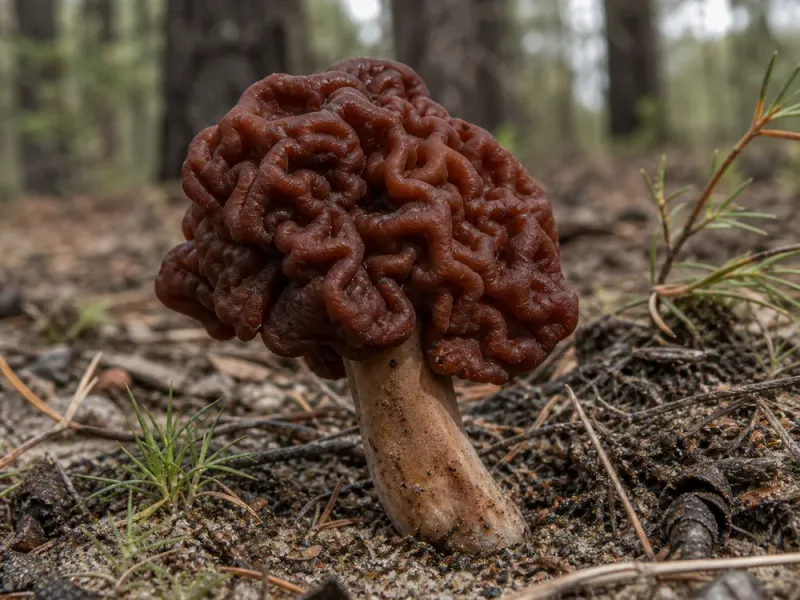
Spring morel hunters, listen up. Not every wrinkly cap in the woods is the tasty treasure you are hoping for.
False morels have caps that look lumpy and brain-like instead of honeycombed. They often lean reddish brown, and their caps hang loose or bulge outward.
The easiest test is to slice one in half lengthwise.
A true morel is completely hollow from top to bottom. A false morel is stuffed with cottony material or split into chambers.
These fakes contain a toxin related to rocket fuel, so leave them right where you found them.
8. Fly Agaric and Its Southern Cousins
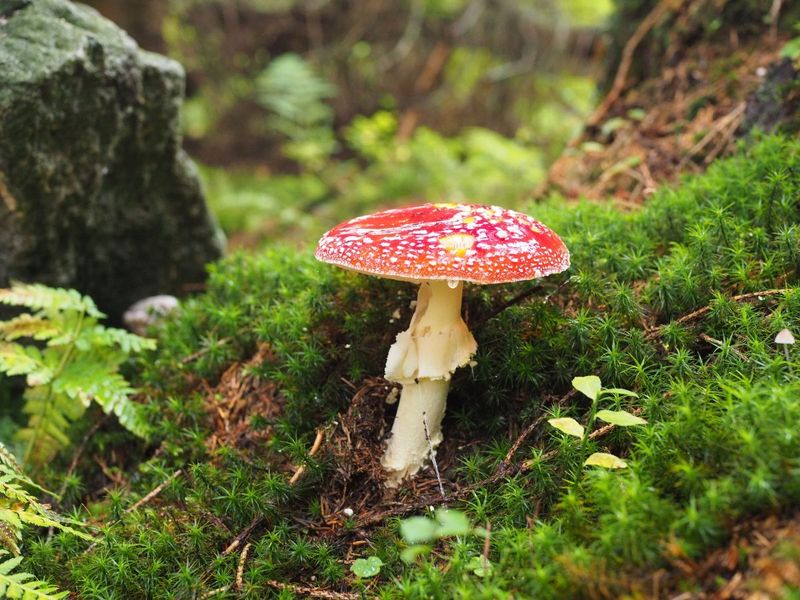
Remember the red mushroom with white dots from fairy tales and video games? That is the fly agaric, and Alabama has a yellow-orange version called Amanita muscaria var. guessowii, plus several warty relatives.
They are poisonous, causing confusion, drowsiness, sweating, and vomiting. Most adults survive, but small kids and pets can get very sick.
Like other Amanitas, they usually have white gills, a ring, and a swollen base. Learning those three features helps you spot the whole Amanita family, which causes most mushroom deaths worldwide.
9. Puffballs
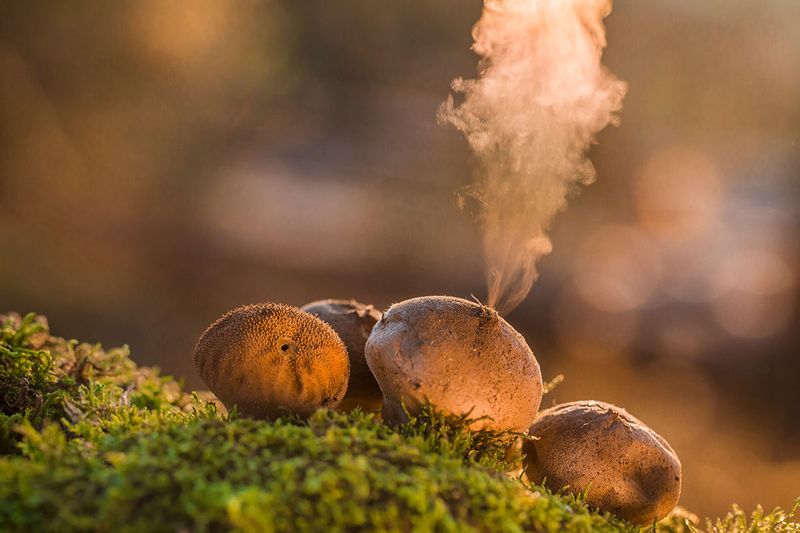
Kids love stomping on old puffballs to watch a cloud of brown dust shoot out. That smoky puff is actually millions of spores heading off to start new mushrooms.
Young puffballs are round, white, and solid inside, like a marshmallow. Some are edible when the inside is pure white all the way through.
Here is the catch. A baby Amanita still inside its egg can look like a puffball from the outside.
Always cut it top to bottom. If you see the outline of a tiny mushroom with a cap and stem, throw it out, because that could be a deadly angel in disguise.
10. Protecting Kids and Pets in Your Yard
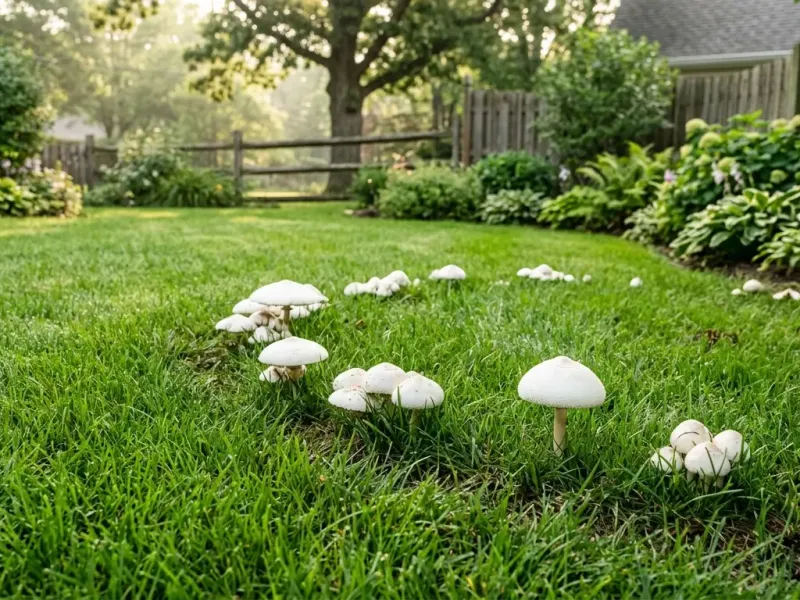
Dogs do not care what a mushroom is called. They just sniff, chomp, and swallow, and veterinarians across Alabama see a spike in poisonings after rainy weeks.
The simplest fix is a quick morning sweep. Wear gloves, pull up any mushrooms, and toss them in a sealed trash bag.
Teach young children a simple rule: we look at mushrooms, but we never taste them.
If a child or pet eats one, snap a photo, save a sample in a paper bag, and call Poison Control at 1-800-222-1222 or your vet. Quick action makes a huge difference with toxic species.
Curious about learning more? The Alabama Mushroom Society hosts forays where experts teach safe identification in person.
Share this story