Get the latest garden guides in your inbox →
Gardening Latest
  • General Gardening
  • Lawn Care
  • Plant Care
  • Composting
  • Soil Health
  • Backyard
  • Garden Muse Magazine
  • General Gardening
  • Lawn Care
  • Plant Care
  • Composting
  • Soil Health
  • Backyard
  • Garden Muse Magazine
  • News
  • Gardening Calendar
  • Garden Structures
  • Vegetable Garden
  • Vertical Garden
  • Raised Beds
  • Hydroponics
  • General Equipment
  • Community Gardens
Garden Themes
  • Spiritual Garden
  • Hydroseeding
  • Seeding and Laying Sod
  • Artificial Grass
  • Lawn Care Equipment
  • Plants
  • Trees
  • Planting Tools
  • Composting Basics
  • Fertilizer
  • Alternative Growing Mediums
  • Front Yard
  • Backyard Activities
  • Landscaping
Gardening Latest

Explore by state

Which state is your garden in?

Currently viewing Indiana

All states

Northeast

  • Connecticut —
  • Delaware 21
  • Maine —
  • Maryland 7
  • Massachusetts 24
  • New Hampshire —
  • New Jersey 7
  • New York 17
  • Pennsylvania 17
  • Rhode Island —
  • Vermont —

Southeast

  • Alabama 7
  • Arkansas —
  • Florida 7
  • Georgia 8
  • Kentucky 21
  • Louisiana 6
  • Mississippi —
  • North Carolina 5
  • South Carolina 20
  • Tennessee 4
  • Virginia 6
  • West Virginia —

Midwest

  • Illinois 6
  • Indiana 9
  • Iowa 20
  • Kansas —
  • Michigan 8
  • Minnesota 6
  • Missouri 6
  • Nebraska —
  • North Dakota —
  • Ohio 8
  • South Dakota —
  • Wisconsin 22

Southwest

  • Arizona 7
  • Colorado —
  • Nevada —
  • New Mexico —
  • Oklahoma —
  • Texas 6
  • Utah —

West

  • Alaska —
  • California 7
  • Hawaii —
  • Idaho —
  • Montana —
  • Oregon —
  • Washington —
  • Wyoming —

No state matches that search.

Site menu

Gardening Latest
  • General Gardening
    • News
    • Gardening Calendar
    • Garden Structures
    • Vegetable Garden
    • Vertical Garden
    • Raised Beds
    • Hydroponics
    • General Equipment
    • Community Gardens
    Garden Themes
    • Spiritual Garden
  • Lawn Care
    • Hydroseeding
    • Seeding and Laying Sod
    • Artificial Grass
    • Lawn Care Equipment
  • Plant Care
    • Plants
    • Trees
    • Planting Tools
  • Composting
    • Composting Basics
  • Soil Health
    • Fertilizer
    • Alternative Growing Mediums
  • Backyard
    • Front Yard
    • Backyard Activities
    • Landscaping
  • Garden Muse Magazine

Explore

  • About GardeningLatest.com
  • Contact Us

Get the latest from the garden

New guides on lawn care, plants and backyard projects, sent when they go up.

Subscribe →

Follow

  • Facebook
  • X
  • Pinterest
  • YouTube
Indiana Gardening

Those Brown Cones Dangling From Your Indiana Arborvitae Are Actually Full Of Eggs

Many of those brown, cone-shaped things hanging from your arborvitae are not cones at all.

DH

By Dale Hutchins

November 23, 2026 · 6 min read

Those Brown Cones Dangling From Your Indiana Arborvitae Are Actually Full Of Eggs

Many of those brown, cone-shaped things hanging from your arborvitae are not cones at all. They are bagworm cases, and a female’s case can hold eggs that wait out the winter.

When those eggs hatch in the new season, tiny caterpillars start chewing on your shrub. Knowing what you are looking at now gives you a chance to act before the feeding starts.

At a glance

Where
Indiana Gardening
Hardiness zone
6 −10 to 0°F
Read
6 minutes
Published
November 23, 2026

Could that brown shape be a real arborvitae cone?
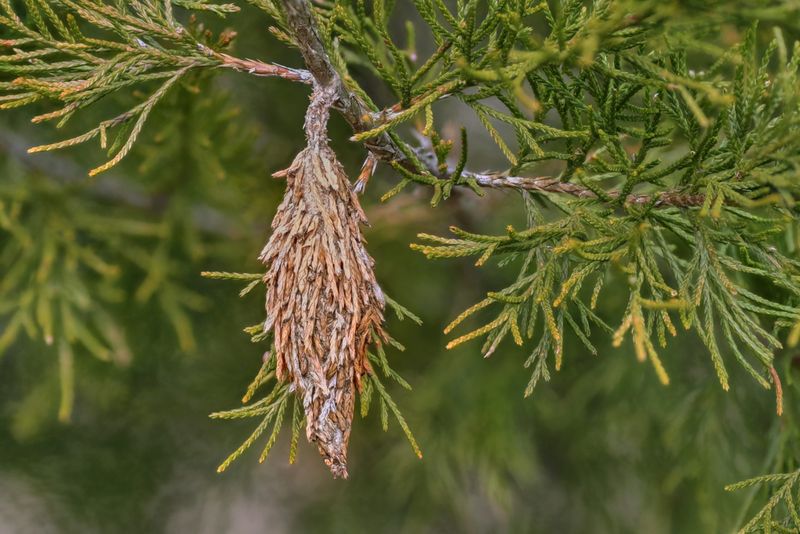
Could that brown shape be a real arborvitae cone?
© Bartlett Tree Experts

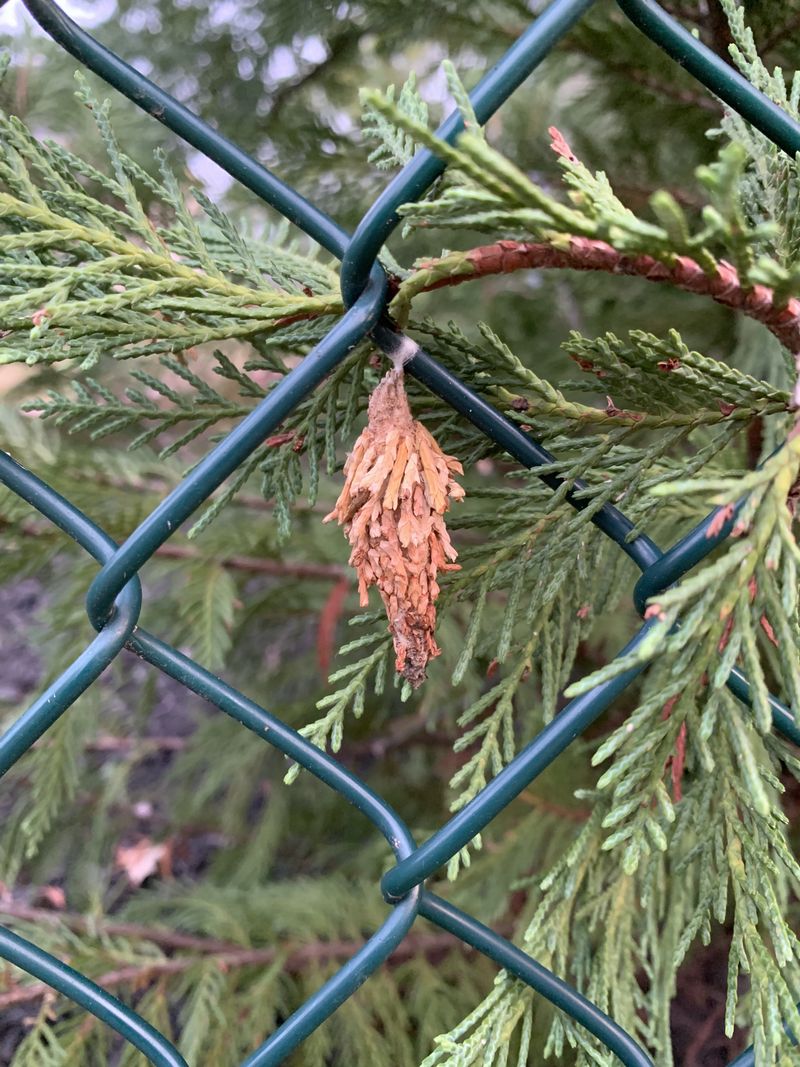
Some cone-shaped objects on arborvitae are bagworm cases, and others are real seed cones. Brown color and a cone-like outline will not tell you which is which.

Arborvitae does produce its own cones, so a quick check matters before you start pulling things off.

Real eastern arborvitae cones are small and oblong. The Minnesota DNR describes ripe northern white cedar cones as roughly one-third to one-half inch long.

They grow as part of the branch, with firm, woody scales that open as they dry.

Bagworm cases are built differently. According to Clemson Extension, the caterpillar spins a bag of silk and weaves in pieces of the host plant.

Young cases are tiny, while older ones can reach about 1 to 2 inches long.

Use a few clues to sort them out. Look at size first, since anything well over half an inch is more likely a bag.

Then check texture and attachment: a bag feels papery or silky, is covered in bits of foliage, and is fastened to the twig with a band of silk. A true cone looks like part of the plant and has scales you can see.

Careful identification keeps you from stripping off healthy seed cones and helps you spot a real infestation early. If you are unsure, take a clear photo and ask your county Extension office to take a look.

A bagworm case may hold overwintering eggs
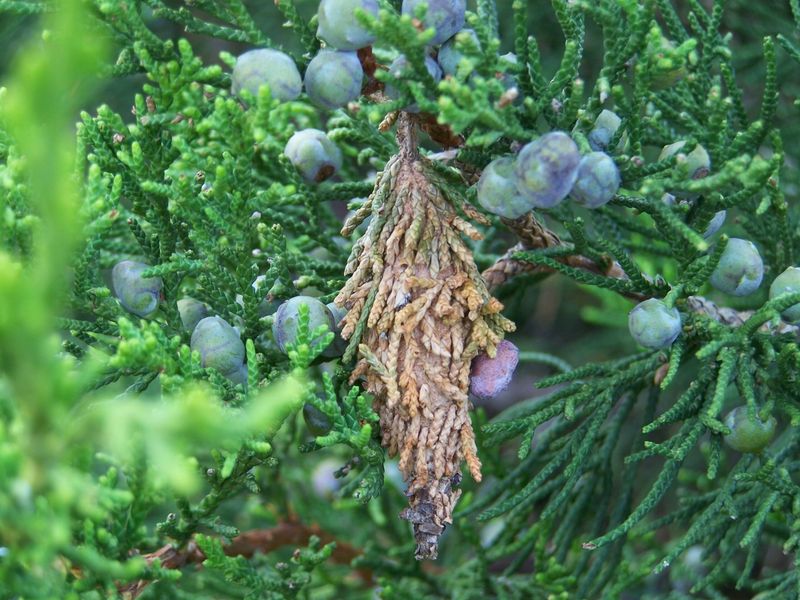
A bagworm case may hold overwintering eggs
© The Morton Arboretum

Bagworm caterpillars live inside a portable shelter that they build from silk and pieces of the plant they feed on. They drag it along as they eat, and they add to it as they grow.

Purdue Extension notes that arborvitae and other conifers are common hosts.

Pull or snip it off, taking care not to leave the silk band wrapped around the branch.

The life cycle explains the eggs. In the common evergreen bagworm, eggs overwinter inside the female’s bag.

University of Maryland Extension reports that a fertilized female may lay anywhere from 200 to 1,000 eggs there, so a single case can seed a lot of new caterpillars.

Not every case holds eggs, though. Male bagworms leave their cases as moths, so their bags may be empty by winter.

Some female cases may also be empty or hold few eggs, and there is no reliable count to expect.

You cannot easily tell the cases apart from the outside. A University of Maryland Extension answer recommends removing bags rather than trying to sort them by what is inside.

That saves time and removes the risk of leaving behind one that is full.

Removing bags before hatch can reduce the next generation
Removing bags before hatch can reduce the next generation
© Pegplant’s

Every egg-filled case you take off is one fewer source of hungry caterpillars. That is the payoff of winter removal: fewer larvae hatching on your shrub and a smaller feeding population later.

It lowers the next generation, but it does not erase the bagworms already present.

The timing rule is simple: act before hatch. A fixed calendar date will not work for every yard, because hatch and caterpillar activity shift with region and season.

A warm spring can move things earlier, and a cool one can push them later.

Indiana guidance helps set the scene. Purdue Extension describes bagworm caterpillars as active from June through late summer in Indiana.

That tells you the feeding season, so the safest approach is to finish removal well ahead of it.

Other states give different hints. Maryland Extension advises removal before hatch in May or early June, but that is Maryland’s calendar, not an Indiana deadline.

Treat it as a reminder that waiting until late spring is a gamble.

A practical plan is to check your shrubs in fall, winter, and early spring. Do your pass on a mild day when branches are easy to see.

If you find bags, take them off right away instead of waiting for a better moment.

Remove reachable bags by hand
Remove reachable bags by hand
© Woodland Tree Service

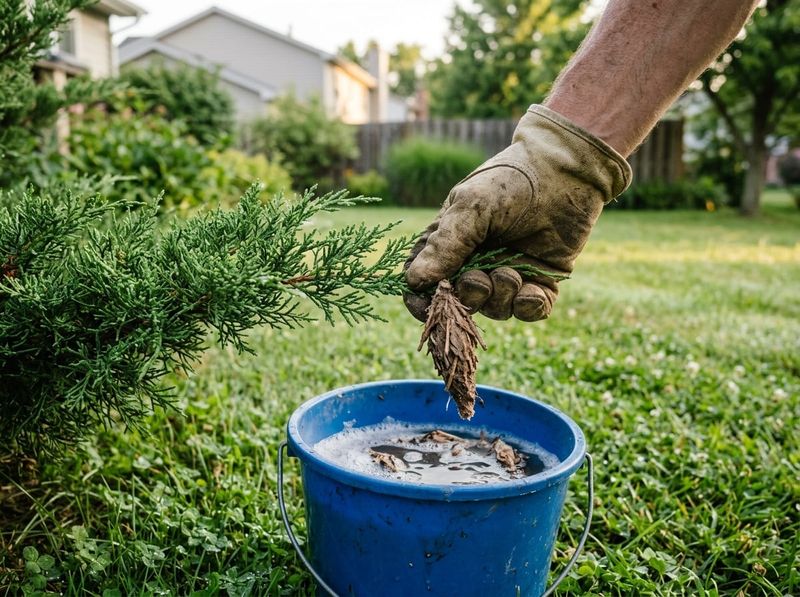
For small landscape shrubs, hand removal is the plain, effective method. Put on gloves and grab each suspected bag near the twig.

Pull or snip it off, taking care not to leave the silk band wrapped around the branch.

Maryland Extension and Purdue Extension both advise removing bags in fall, winter, or early spring, before hatch, and then destroying them. Work slowly and check the inner branches, since bags hide well against dense foliage.

What you do next matters as much as the pulling. Do not drop bags beside the shrub, because eggs could still hatch and crawl back.

Seal them in a bag and put them in the trash, or crush or burn them where local rules allow.

Skip the compost pile. Oklahoma State Extension advises trash disposal rather than composting, and bags should only go to compost if they have first been reliably destroyed.

Stay safe on the ground. Never climb a ladder or a tree to reach bags high in the canopy.

When bags are out of safe reach, contact an ISA-certified arborist who has the training and equipment to remove them.

Sprays target feeding larvae, not sealed eggs
Sprays target feeding larvae, not sealed eggs
© K-State Extension – Kansas State University

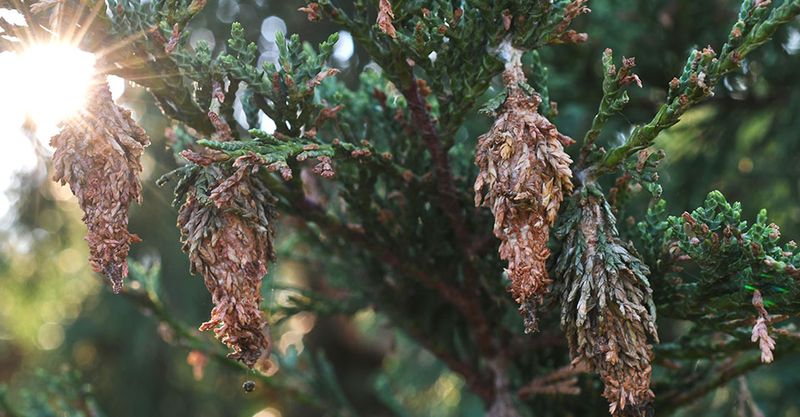
Winter bag removal and pesticide treatment are two separate jobs. Sprays are aimed at active, feeding larvae, not at dormant eggs sealed inside a case.

Spraying an old bag in January does little, because the eggs are protected and nothing is feeding.

The caterpillar has to eat the treated leaves for a spray to work. Delaware Extension notes that the bag shields the insect, so it takes in insecticide by feeding on treated foliage.

That is why the feeding season is the moment sprays make sense.

Timing matters too. Purdue says caterpillars are most susceptible when they are active in summer and their bags are still small.

Larger larvae with bigger bags are harder to control.

This article does not recommend a product or schedule. Read the label on any pesticide before you buy or use it, and follow it exactly.

Your county Extension office can tell you what is currently advised for your area and your type of shrub.

Removal lowers risk but cannot guarantee recovery
Removal lowers risk but cannot guarantee recovery
© Manor Tree Service

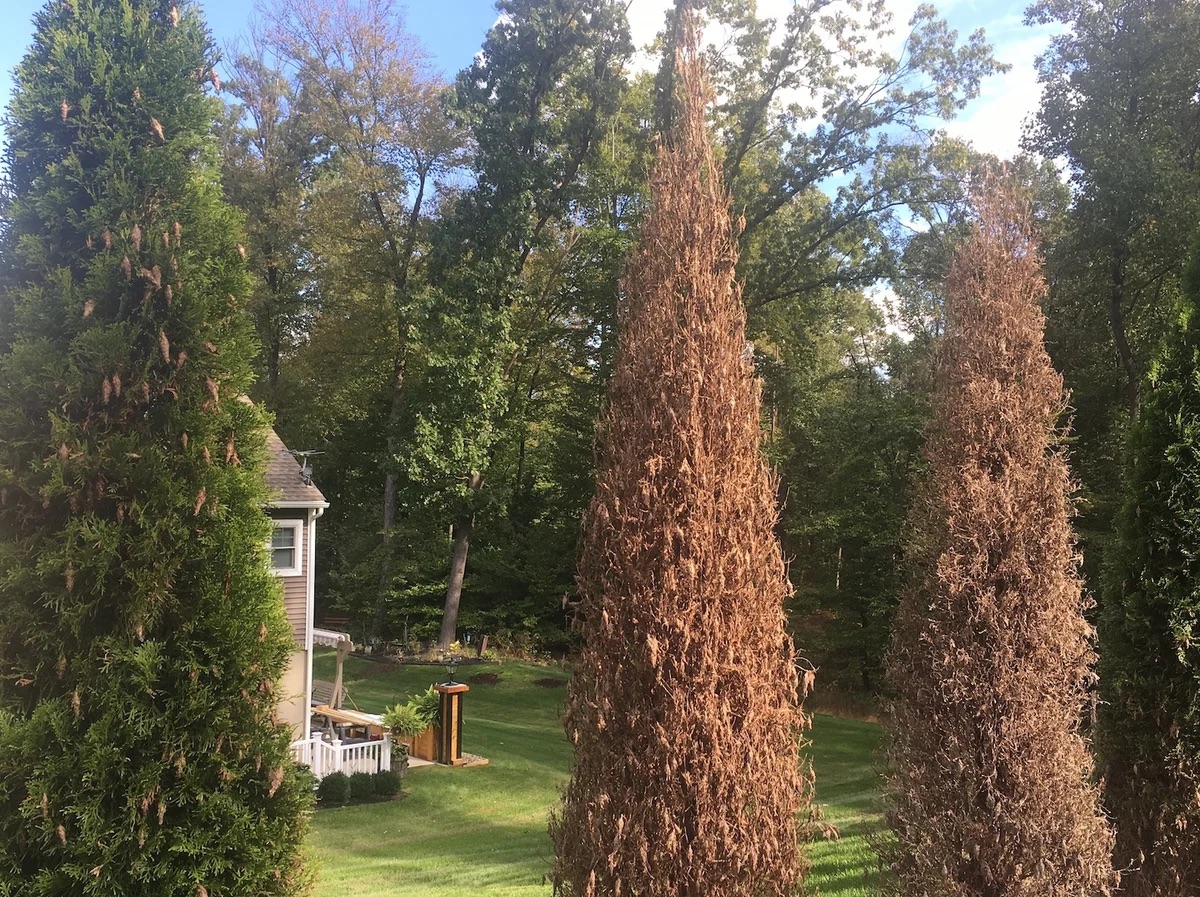
Pulling bags is a smart way to cut down the next wave, but it has limits. It cannot undo feeding that already happened, and it cannot promise a shrub will bounce back.

Conifers like arborvitae often do not regrow well from bare, browned branches.

Maryland Extension warns that heavy feeding can cause lasting damage and that severe infestations can kill conifers. Removal helps lower that risk, but it works best when it is part of regular watching.

Your next steps are straightforward. Inspect carefully, confirm what you find is a bag, and remove reachable ones before hatch.

Call an ISA-certified arborist for high bags or for a shrub that is already badly damaged.

A few minutes on a mild winter day can matter more than a lot of effort in July.

Share this story
DH

Written by

Dale Hutchins

More from Dale Hutchins →

About Gardening Latest

Gardening Latest provides in-depth guides to maintaining and enhancing your garden and backyard. Learn how to make the most of the space you have and create a beautiful garden.

More about us →

Latest stories

  • Michigan GardeningThe Michigan Trees That Bring Owls to Your Yard and Keep Mice Out of Your Garage

    The Michigan Trees That Bring Owls to Your Yard and Keep Mice Out of Your Garage

    3 min ago
  • Massachusetts GardeningSnakes Aren’t the Only Venomous Animals in Massachusetts Yards, and This Mouse-Sized Shrew Proves It

    Snakes Aren’t the Only Venomous Animals in Massachusetts Yards, and This Mouse-Sized Shrew Proves It

    8 min ago
  • New York GardeningThose Ladybug Look-Alikes Crawling Inside Your New York Home Chose It For A Reason

    Those Ladybug Look-Alikes Crawling Inside Your New York Home Chose It For A Reason

    18 min ago
  • Ohio GardeningThese Clever Tricks Send Skunks Packing From Ohio Yards for Good

    These Clever Tricks Send Skunks Packing From Ohio Yards for Good

    24 min ago
  • Pennsylvania GardeningThe Plants Hungry Deer Strip First Once Winter Hits Pennsylvania Yards

    The Plants Hungry Deer Strip First Once Winter Hits Pennsylvania Yards

    35 min ago

Gardening by state

Stories for your state, and the hardiness zone most of it gardens in.

Keep exploring

Read next

All Indiana Gardening →
Indiana GardeningSpot A Big Black Caterpillar With White Spots In Indiana? Here’s Why You Shouldn’t Touch It
Indiana Gardening

Spot A Big Black Caterpillar With White Spots In Indiana? Here’s Why You Shouldn’t Touch It

15 hr ago
Indiana GardeningTiny Red Dots Moving Across Your Sunny Indiana Windowsill Are Clover Mites
Indiana Gardening

Tiny Red Dots Moving Across Your Sunny Indiana Windowsill Are Clover Mites

17 hr ago
Indiana GardeningThat Crusty Tan Blob On Your Indiana Shrub Branches Is Something You Want To Keep
Indiana Gardening

That Crusty Tan Blob On Your Indiana Shrub Branches Is Something You Want To Keep

21 hr ago

More from Indiana Gardening

  • 7 Venomous Creatures Indiana Homeowners Run Into More Often Once The Weather Turns Cold

    Nov 12
  • The Michigan Trees That Bring Owls to Your Yard and Keep Mice Out of Your Garage

    3 min ago
Back to top

Leave a response Cancel

Your email address stays private. Required fields are marked with an asterisk.

Gardening Latest

In-depth guides to maintaining and enhancing your garden and backyard: how to make the most of the space you have, and how to make it beautiful.

  • Facebook
  • X
  • Pinterest
  • YouTube

We may earn a portion of sales from products or services that are purchased through our site as part of our affiliate partnerships with retailers.

Explore

  • About GardeningLatest.com
  • Contact Us
  • Terms and Conditions
  • Privacy
  • Editorial Note:
  • FTC Disclosure

Newsletter

New garden guides and seasonal tips, straight to your inbox.

We’ll email you a link to confirm. Unsubscribe any time.

Almost there! Check your inbox and tap the link to confirm.

© 2026 Gardening Latest. All rights reserved.

Back to top