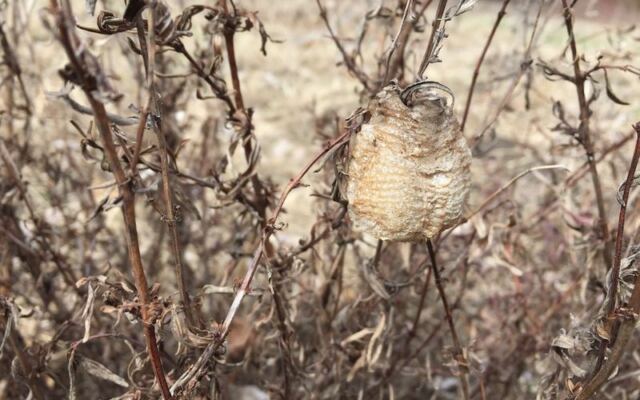
That crusty tan blob stuck to your shrub is worth keeping, because it may be a praying mantis egg case. The eggs inside are built to ride out Indiana winters right where they are.
A quick pruning job or a trip into a warm house could undo that, so a little know-how goes a long way. Here is how to spot a likely case and what to do with it.
Could that tan mass be a mantis egg case?
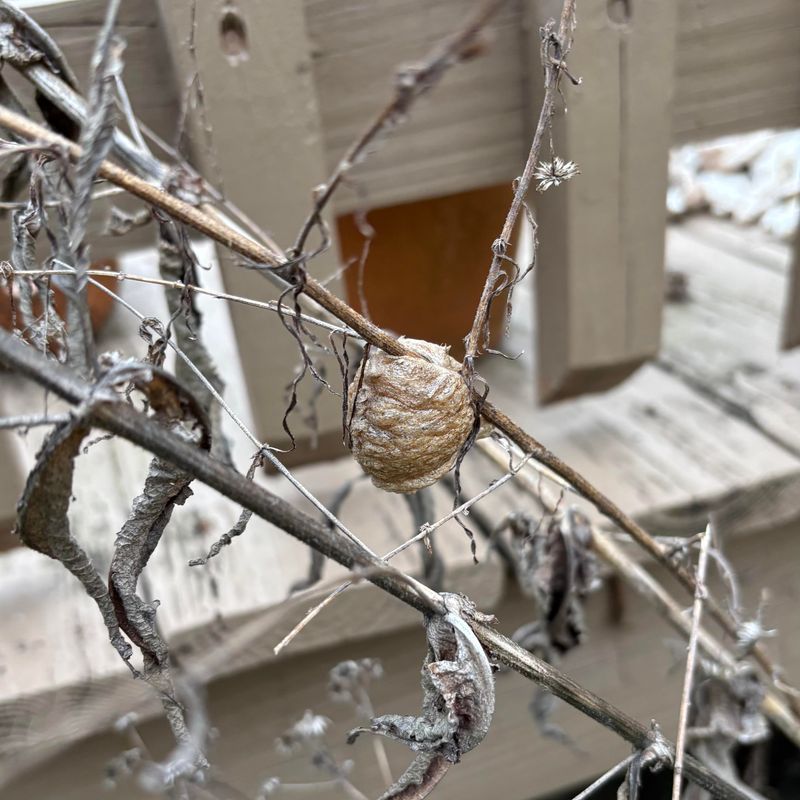
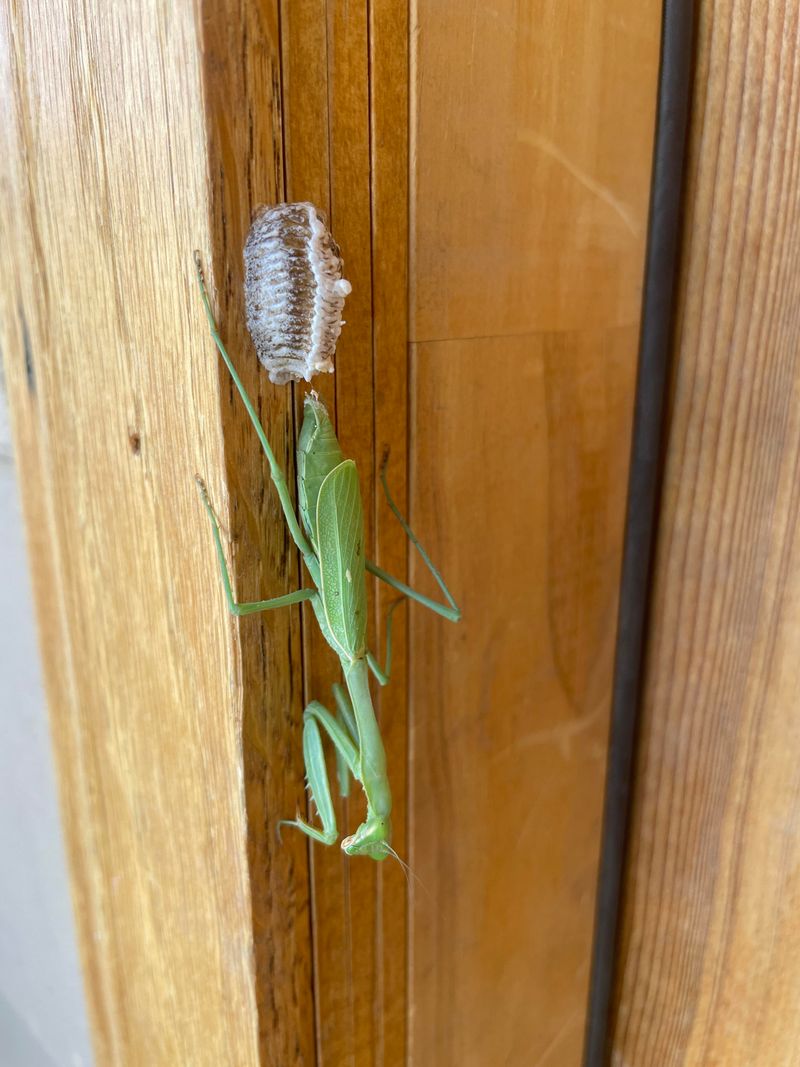
Walk past a bare shrub in winter and you might spot a lumpy, tan, foam-like mass wrapped around a twig. That could be a praying mantis egg case, called an ootheca.
Indiana DNR describes these cases as foam-like masses commonly attached around twigs.
Notice that word: could. A tan color and a spot on a branch are not enough to prove what you have.
Plenty of other things can look like a crusty blob, so it is best to call yours a possible mantis egg case until you know more.
Size and shape also vary. Cases from different mantis species can look rounder, longer, or more rumpled, so appearance by itself may not tell you which species laid it.
Think of it as a clue rather than an answer.
If you feel unsure, take a clear photo and send it in. Indiana DNR invites people to share photos to help tell mantis cases apart from other egg masses.
Purdue Extension also notes that Chinese and Carolina mantids are among the most common in Indiana, which is another reason shapes can differ from one yard to the next.
A good photo shows the whole mass, the twig it is attached to, and something for scale, like a coin. Take it from a couple of angles without poking or peeling the case.
With a picture in hand, you can get help instead of guessing.
The case protects eggs through winter
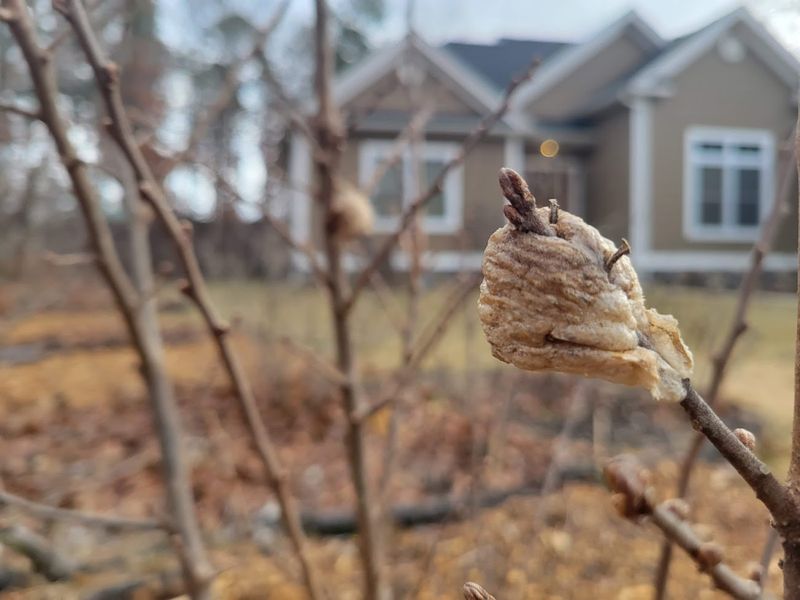
A female mantid builds the case herself. She lays her eggs in a foamy material that hardens into a tough, protective shell around them.
University of Wisconsin Extension explains that this casing shelters the eggs, which pass the cold months inside.
Once spring conditions warm, the eggs generally hatch. Timing depends on the weather and the species, so nobody can give you an exact date for a particular case.
Watching your shrub in late spring is a better plan than marking a calendar.
The number of eggs inside varies, too. University of Maryland Extension notes that a case can hold dozens to hundreds of eggs, but that is a range, not a promise.
Hatching is also not guaranteed. A case can fail for many reasons, and young mantids that do emerge face hungry predators, a lack of food, and even cannibalism from their own siblings.
Only some of the young will survive to adulthood, and you cannot count on any set number.
That is the reassuring part and the realistic part at once. The case is a clever piece of natural engineering, and it does its job best when left alone.
If the branch can stay, leave the case outdoors
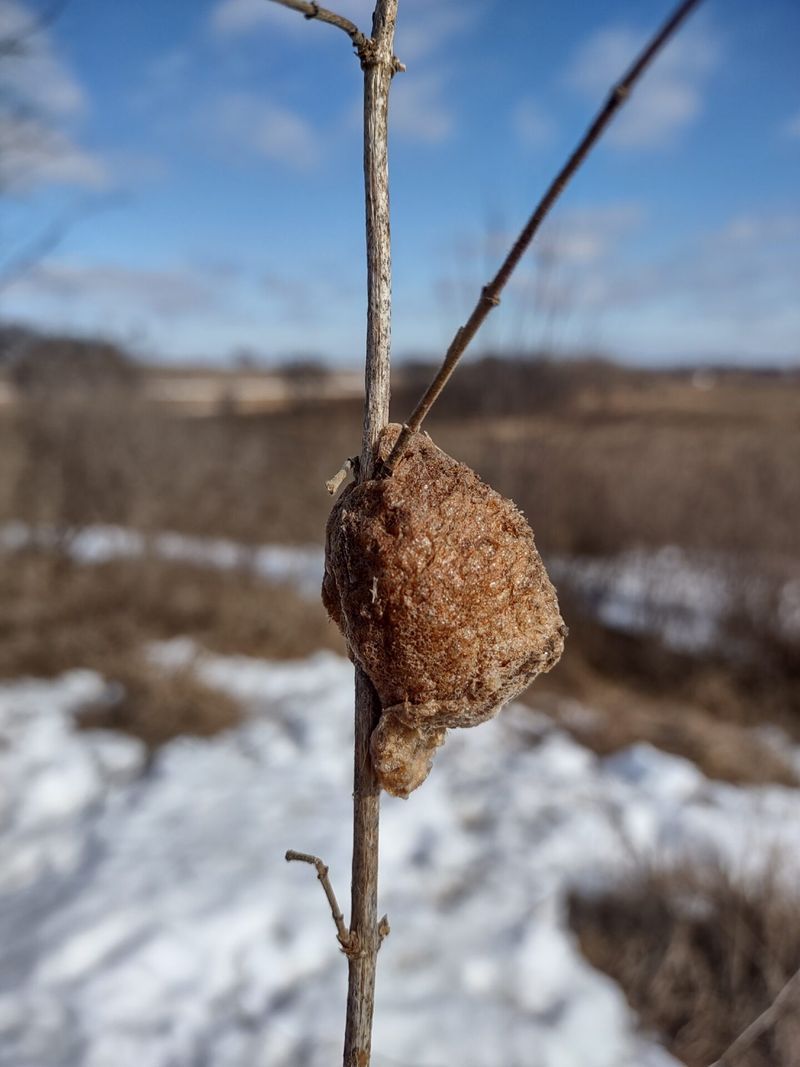
The easiest advice is also the best: if you think you have a mantis egg case and the branch does not need pruning, leave it right where it is. No wrapping, no jar, and no heat lamp required.
The case is made to sit outside through freezing nights and snowy days.
Purdue Extension points out that indoor warmth can restart development, which is one more reason to keep it outside. The shrub is already doing the job of holding it in place.
The University of Maryland Extension also recommends leaving cases outdoors through the changing seasons. Your part is mostly to hold back.
This advice is for a likely mantis case. It is not a rule to save every unknown lump you find.
If you cannot tell what the mass is, take a photo first and ask for help.
A few easy habits help. Mark the branch in your mind, or tie a bit of bright yarn nearby, so you do not trim it by accident.
Keep hedge trimmers and string trimmers away from that spot until warm weather arrives.
If you need to prune, save the case-bearing piece
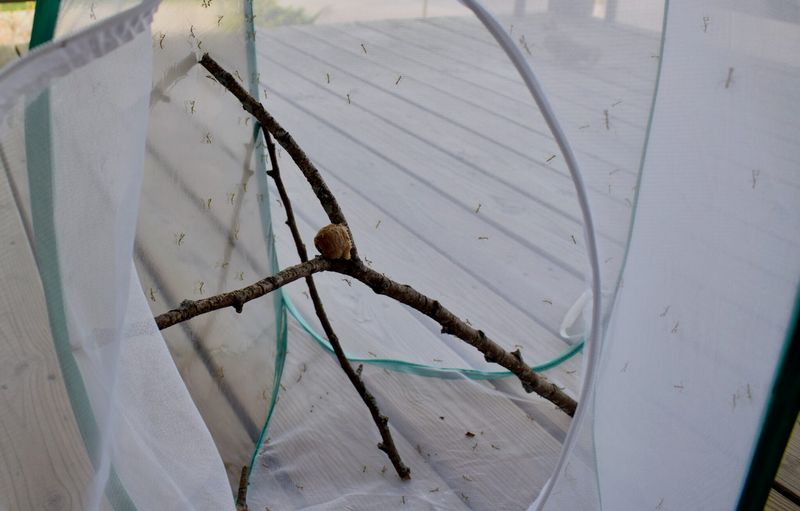
Sometimes a branch really does have to go, maybe because it is broken or blocking a walkway. In that case, do not toss the whole thing in the yard waste.
Cut so that the piece of branch holding the likely egg case stays intact, and keep that piece.
Next, find a sheltered spot outdoors. Think of a place that blocks the worst wind and rain, like a protected corner of a porch, a shrub’s inner branches, or a shaded fence.
The Connecticut Agricultural Experiment Station describes tying a case-bearing branch outdoors, and that is a simple way to secure it.
Do not set the case on the ground. Illinois Extension advises moving cases to a sheltered place and not putting them on the ground.
Keep it up off the soil, attached to a branch or fence.
Keep the handling gentle and simple. Use the branch as your handle so your fingers never squeeze the case itself.
There is no need for special treatments or storage tricks, and none are recommended here.
A warm house can prompt an early hatch
Picture this: you bring a mantis case inside to keep it safe, and a few weeks later dozens of tiny insects are crawling across your curtains. It sounds like a joke, but it happens.
Purdue Extension reports that warm indoor conditions can restart development and lead to an unexpected hatch.
The trouble is that a house in January feels like spring to the eggs. Hatchlings that emerge in winter have no food outside and nowhere to go, so the early hatch is bad for the mantids and messy for you.
Leaving the case outdoors avoids that problem. University of Maryland Extension’s Ask Extension answer recommends leaving cases outdoors through the seasonal changes.
Outdoor temperatures rise gradually, which fits the natural schedule better.
For the same reason, do not count on storing a case indoors to control when it hatches or to raise mantids at home. Timing is hard to steer, and a wild case is better left with the weather it evolved with.
Mantids eat pests and beneficial insects
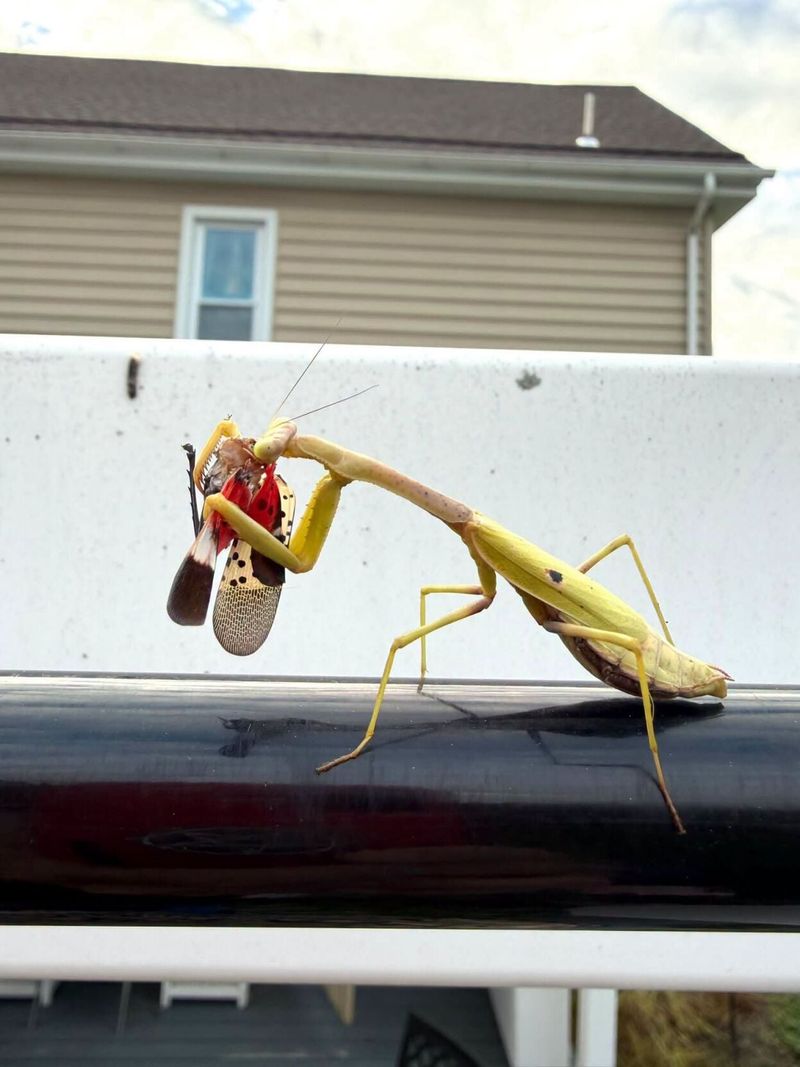
Mantids are fascinating hunters, but they are not a garden fix in a box. They are generalist predators, so they grab whatever insect comes close.
University of Wisconsin Extension cautions that they eat helpful insects as well as pests, so they should not be counted on as dependable pest control.
That means your hatchlings might snack on a caterpillar one day and a pollinator the next. University of Maryland Extension makes the same point about their wide-ranging diet.
Enjoy them as part of the yard’s wildlife, not as your pest crew.
Remember, too, that the appearance of a case does not settle which species laid it. The Chinese mantis is nonnative, while the Carolina mantis is native, and the Missouri Department of Conservation describes several mantids that can look similar.
You cannot assume which one is on your shrub.
The ecological story is still unsettled. The Missouri Department of Conservation says the possible role of Chinese mantids in native mantid declines is difficult to determine.
A University of Maryland Extension response says they have not been shown to be a significant environmental threat in its context.
So no case is automatically a hero or a villain. Think of it as a small wild mystery that spring will gradually answer.
Share this story