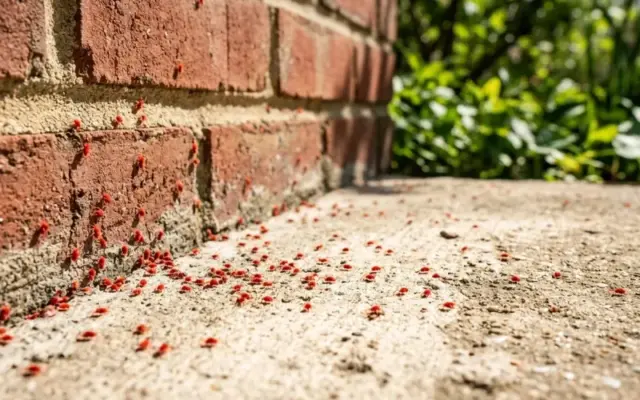
Those tiny red dots crawling across your sunny windowsill are most likely clover mites, small plant-feeding mites that love warm, bright spots on the side of a house. They look alarming, but they do not bite people or pets and they do not harm your home.
The real trouble is that squishing them can leave a red stain. Here is how to check what you have, clean them up the clean way, and make it harder for them to come back.
What clues point to clover mites?
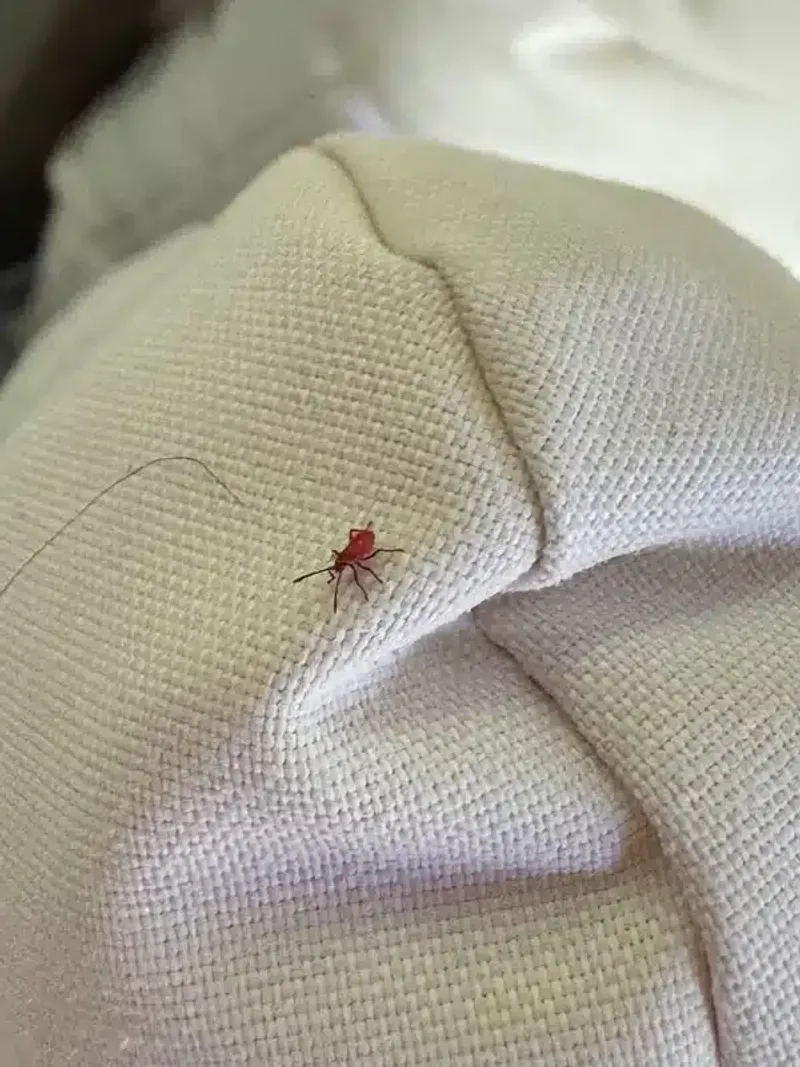
Size and color are a good place to start. Clover mites are tiny, often about the size of a pinhead, and they usually look reddish.
Seeing red specks on a sunny sill makes clover mites a reasonable guess, but it is only a guess. Plenty of other small mites and insects can look red from a distance.
The clue worth hunting for is the front pair of legs. According to Utah State University Extension, clover mites have unusually long front legs, and those legs can look like antennae.
If you see that feature, your identification gets much stronger. If you do not see it, hold off on calling them clover mites.
A small magnifying glass or the zoom on a phone camera can help a lot. Look for a mite that seems to be walking with two long feelers out in front, even though those are really legs.
Mites that look larger, fuzzy, or lack those long front legs may be something else entirely.
If knowing for sure matters to you, collect one or two mites on a piece of clear tape or in a small sealed container. Your local county extension office can help get a specimen identified.
Purdue Extension, in its clover mite publication, notes that these mites commonly show up first around windows, which fits what you are seeing. Fit is helpful, but it is not proof, so let the legs make the call.
Why they show up near sunny windows
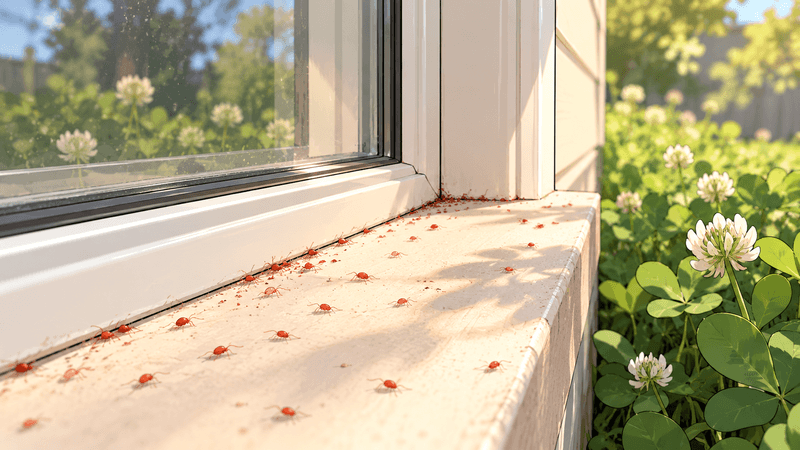
Outdoors, clover mites feed on plants, especially lawn grasses and clover. Indoors, they are mostly wanderers that slipped in through small gaps around windows, doors, and other openings.
Your windowsill is often the first place you notice them because it is bright, warm, and close to where they came in.
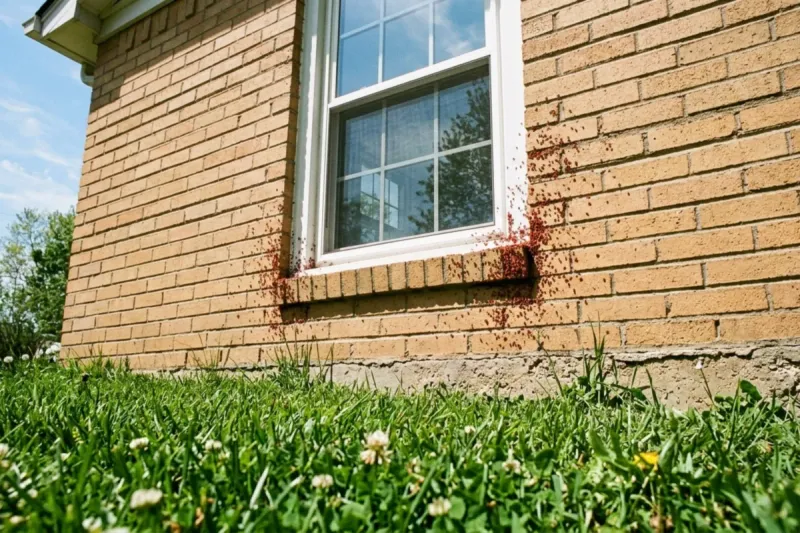
That sunny spot is not random. University of Minnesota Extension reports that clover mites tend to gather on the sunny side of a house.
A south or west facing window with grass close to the foundation is a very typical setup.
Timing can also be a hint. In Indiana, Purdue guidance describes spring and fall as the main activity periods, and says the mites are fairly inactive in hot summer weather and in cold weather.
That makes a mild March or October day a common time for a sudden flurry.
Still, those seasons are not a strict calendar. A warm spell in another month can bring a few out, and conditions vary from one yard and region to another.
Treat the season as a loose pattern rather than a rule, and judge by what you actually see on your own windowsill.
They are a nuisance, but they can stain
Here is the reassuring part. Clover mites live outdoors on plants, especially grasses and clover, and they are not looking for you.
Purdue Extension says they do not bite people or pets, and they do not damage a home’s structure.
So why the warning about squishing them? A crushed mite may leave a small red stain, and that is the whole reason.
It is about keeping your sill, walls, and curtains clean, not about avoiding a special health danger.
Not every crushed mite will stain every surface. Light colored paint, fabric, and porous materials are the most likely places to show a mark, while a quick wipe on a hard surface may leave nothing at all.
The safest habit is simply to skip the squish.
Utah State University Extension, in its clover mite notes, also describes them as a nuisance pest rather than a health threat. That means you have time to deal with them calmly.
Think of them as tiny, harmless trespassers that happen to be messy if mishandled.
Remove a few without smearing them
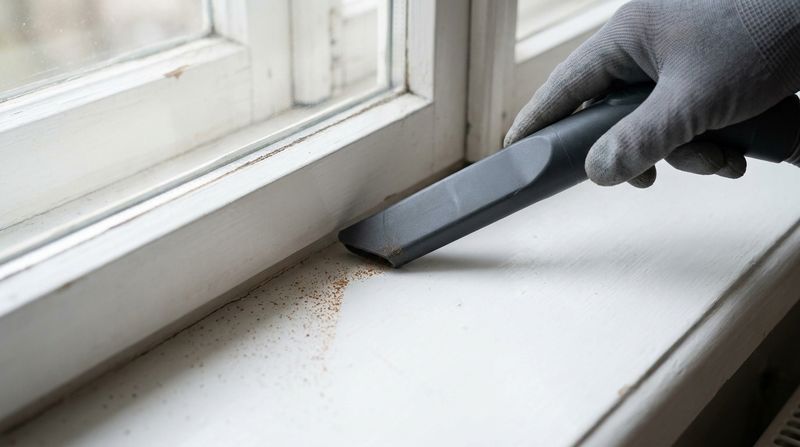
If only a handful have appeared, cleanup is simple. A vacuum cleaner with a hose attachment is the easiest tool.
Move the nozzle slowly over the sill and nearby window frame so the mites are pulled in rather than flattened.
A moist cloth also works. Dab or lightly lift the mites instead of pressing and dragging, since rubbing is what causes smears.
University of Minnesota Extension recommends vacuuming or wiping them up and avoiding crushing them on surfaces like walls, sills, and curtains.
Here is a quick routine to try:
- Start with the sill and the window track, where they gather most.
- Check the top edges of curtains and the wall just beside the window.
- Vacuum slowly, then empty the bag or canister outside.
- Rinse the cloth outside as well, so nothing wanders back in.
If a mite does get crushed, blot the spot gently and clean it with a mild soap and water solution rather than scrubbing hard. Test first on fabric in a hidden corner.
Keep your focus on cleanup for now, because a few mites on a windowsill rarely call for anything stronger.
Make it harder for mites to get inside
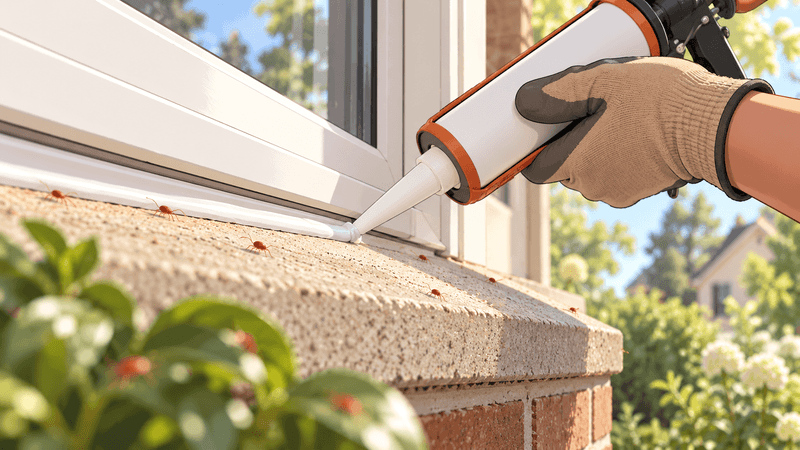
Cleaning up helps today, but cutting down entry points helps next spring. Start with the window itself.
Repair damaged window seals, fill cracks, and check other small openings around the house where tiny mites could slip through.
Next, look at the plants. Utah State University Extension advises keeping grass and other vegetation from touching the foundation.
Trimming back lawn edges, ivy, and dense plantings gives mites fewer places to build up right next to your walls.
If they keep coming back, a vegetation-free strip along the foundation is one more option. It is an extra step, not a guaranteed fix.
Purdue recommends a pea-gravel barrier about 18 to 24 inches wide in its clover mite publication, while Utah State suggests a wider boundary.
Those differences are a sign that no single width is settled. Iowa State University Extension adds that mites may still cross mulch, rock, or flower beds, so a barrier may not work in every setting.
Treat these steps as ways to reduce openings and expect fewer mites rather than none.
When to seek more help
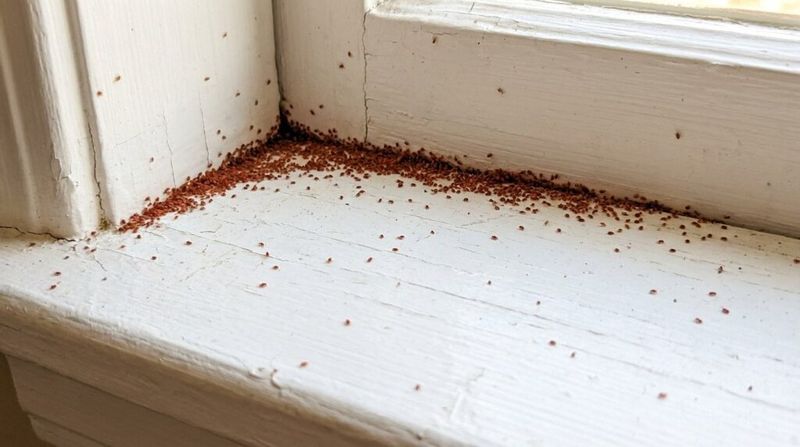
A few mites on a sill do not call for pesticide. Begin with removal and the exclusion steps above, then see how things look over the next few weeks.
Most households find that is enough to keep the problem manageable.
If mites keep appearing or show up in large numbers, it is time to ask for help. University of Minnesota Extension suggests physical removal first and cautions against making pesticides the default.
Your local county extension office or a licensed pest professional can confirm the identification and suggest options that fit your home and yard.
If a pesticide does come up in that conversation, the rules matter. The label must allow use against this pest at the exact place where it will be applied, and you must follow the label directions exactly.
Purdue Extension also stresses using products only as directed. Indoor spraying should not be your first move.
Bring a specimen on clear tape when you call, along with notes on where and when you see the mites. Those details make advice much more useful.
Clover mites are a seasonal annoyance, and with patience they tend to stay just that.
Share this story