Get the latest garden guides in your inbox →
Gardening Latest
  • General Gardening
  • Lawn Care
  • Plant Care
  • Composting
  • Soil Health
  • Backyard
  • Garden Muse Magazine
  • General Gardening
  • Lawn Care
  • Plant Care
  • Composting
  • Soil Health
  • Backyard
  • Garden Muse Magazine
  • News
  • Gardening Calendar
  • Garden Structures
  • Vegetable Garden
  • Vertical Garden
  • Raised Beds
  • Hydroponics
  • General Equipment
  • Community Gardens
Garden Themes
  • Spiritual Garden
  • Hydroseeding
  • Seeding and Laying Sod
  • Artificial Grass
  • Lawn Care Equipment
  • Plants
  • Trees
  • Planting Tools
  • Composting Basics
  • Fertilizer
  • Alternative Growing Mediums
  • Front Yard
  • Backyard Activities
  • Landscaping
Gardening Latest

Explore by state

Which state is your garden in?

Currently viewing Ohio

All states

Northeast

  • Connecticut —
  • Delaware 24
  • Maine —
  • Maryland 10
  • Massachusetts 27
  • New Hampshire —
  • New Jersey 11
  • New York 20
  • Pennsylvania 20
  • Rhode Island —
  • Vermont —

Southeast

  • Alabama 10
  • Arkansas —
  • Florida 10
  • Georgia 11
  • Kentucky 24
  • Louisiana 9
  • Mississippi —
  • North Carolina 9
  • South Carolina 23
  • Tennessee 7
  • Virginia 9
  • West Virginia —

Midwest

  • Illinois 9
  • Indiana 12
  • Iowa 23
  • Kansas —
  • Michigan 11
  • Minnesota 9
  • Missouri 9
  • Nebraska —
  • North Dakota —
  • Ohio 11
  • South Dakota —
  • Wisconsin 25

Southwest

  • Arizona 10
  • Colorado —
  • Nevada —
  • New Mexico —
  • Oklahoma —
  • Texas 9
  • Utah —

West

  • Alaska —
  • California 10
  • Hawaii —
  • Idaho —
  • Montana —
  • Oregon —
  • Washington —
  • Wyoming —

No state matches that search.

Site menu

Gardening Latest
  • General Gardening
    • News
    • Gardening Calendar
    • Garden Structures
    • Vegetable Garden
    • Vertical Garden
    • Raised Beds
    • Hydroponics
    • General Equipment
    • Community Gardens
    Garden Themes
    • Spiritual Garden
  • Lawn Care
    • Hydroseeding
    • Seeding and Laying Sod
    • Artificial Grass
    • Lawn Care Equipment
  • Plant Care
    • Plants
    • Trees
    • Planting Tools
  • Composting
    • Composting Basics
  • Soil Health
    • Fertilizer
    • Alternative Growing Mediums
  • Backyard
    • Front Yard
    • Backyard Activities
    • Landscaping
  • Garden Muse Magazine

Explore

  • About GardeningLatest.com
  • Contact Us

Get the latest from the garden

New guides on lawn care, plants and backyard projects, sent when they go up.

Subscribe →

Follow

  • Facebook
  • X
  • Pinterest
  • YouTube
Ohio Gardening

What a Bald Eagle Circling Over Your Ohio Yard Is Really Telling You

A bald eagle circling over your Ohio yard is telling you one plain thing: it is using the sky above your neighborhood…

MK

By Margaret Kessler

November 23, 2026 · 6 min read

What a Bald Eagle Circling Over Your Ohio Yard Is Really Telling You

A bald eagle circling over your Ohio yard is telling you one plain thing: it is using the sky above your neighborhood. That big, slow loop is ordinary flight, and it connects your home to the wider landscape of fields, rivers, and lakes.

Ohio has a proud eagle comeback story, and your sighting is a small piece of it. Here is what the circling can and cannot mean, and how to enjoy it the right way.

At a glance

Where
Ohio Gardening
Hardiness zone
6 −10 to 0°F
Read
6 minutes
Published
November 23, 2026

Circling is flight behavior, not a message

Circling is flight behavior, not a message
© Tamara Gooch

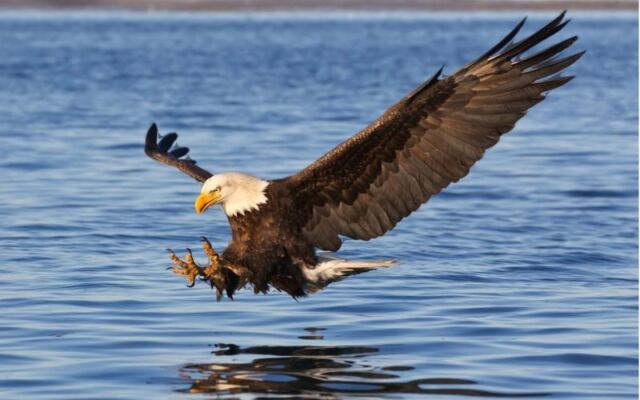
Rising air does a lot of the work for large birds. When warm air lifts off the ground, an eagle can spread its wings, tilt into a turn, and stay inside that column as it climbs.

Circling is how it stays in the lift, much like a swimmer treading in a current.

Eagles also soar while they look for food. The U.S.

Fish and Wildlife Service notes that bald eagles may hunt from a perch or while soaring, and they find prey by sight. An Army Corps of Engineers eagle guide describes similar soaring behavior along a river.

So what is the bird in your sky doing? From the ground, you usually cannot tell.

It might be gaining height, scanning for a meal, or traveling across the county, and the loops look about the same in each case.

That is why the popular explanations fall apart. Circling does not mean the eagle spotted something in your yard.

It is not marking territory, and it is not sending a sign. It is a bird doing what large soaring birds do, and you happened to have a good view.

The eagle uses a landscape larger than your yard
The eagle uses a landscape larger than your yard
© Reddit

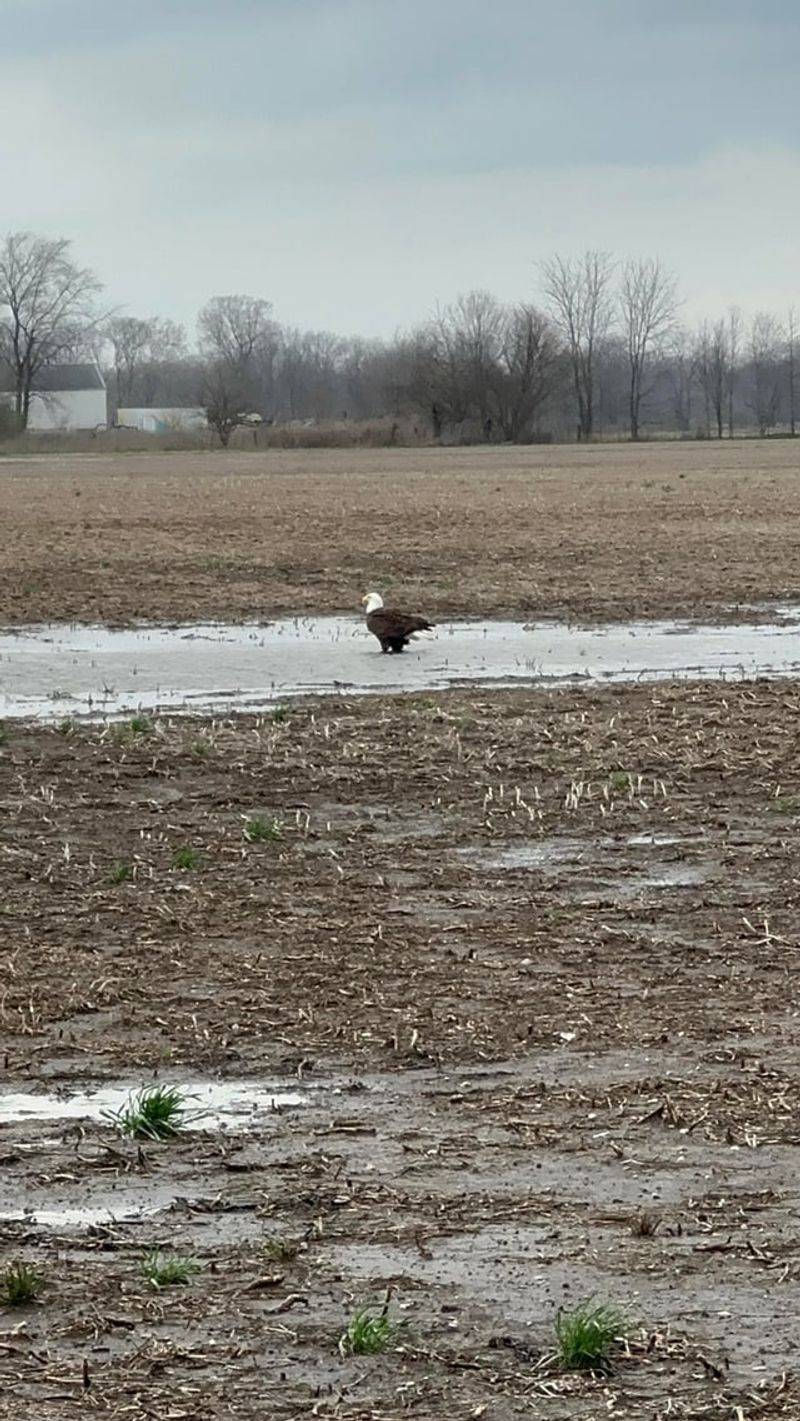
What can an eagle overhead reasonably suggest? Mostly that the bird is using the broader landscape around you.

Eagles need food, sturdy perches, and nesting sites, and the area within a few miles may offer some of those things.

Fish are a staple of the bald eagle diet, which is why you so often see the birds near lakes, rivers, and marshes.

Ohio’s eagles have a strong link to water. The Ohio Department of Natural Resources calls the western Lake Erie marsh region the state’s eagle stronghold and says suitable nest areas typically have plenty of fish-bearing water nearby.

Yet eagles are not tied only to shorelines. The U.S.

Fish and Wildlife Service says they are increasingly found in drier places, including farmland and urban and suburban habitat. A bird crossing a neighborhood is not unusual anymore.

Here is the limit of what you can read into it. Eagles travel across large areas, so the one you saw may be passing through or feeding somewhere well beyond your fence line.

A single sighting does not prove a nest, a resident pair, breeding, or prey on your property. It simply shows that your home sits inside territory an eagle finds worth crossing.

Ohio’s recovery shows up in statewide nest counts
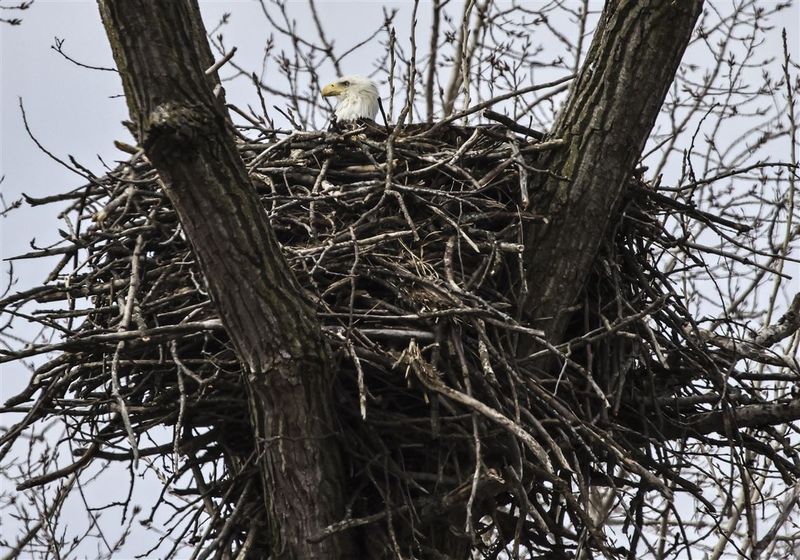
Ohio’s recovery shows up in statewide nest counts
© Toledo Blade

Ohio’s eagle story is one worth being proud of. The Ohio Department of Natural Resources reports a 2025 statewide census of 964 active nests.

The department’s annual report says that is 36% higher than the 2020 census.

Both numbers describe nesting across the whole state. They are population measures, gathered by counting nests, and they show a species that has rebounded well over recent years.

They do not describe any one street or backyard. Many neighborhoods have no nest at all, and your property may have very different conditions than the statewide total suggests.

A nest count also is not a grade for the health of every stream, lake, or town in Ohio.

What the count does give you is context. When an eagle crosses your sky, it belongs to a larger population that has been growing.

That makes the sighting a small, welcome sign of recovery, even though it says nothing specific about your own land.

Fish matter, but they are not the whole menu
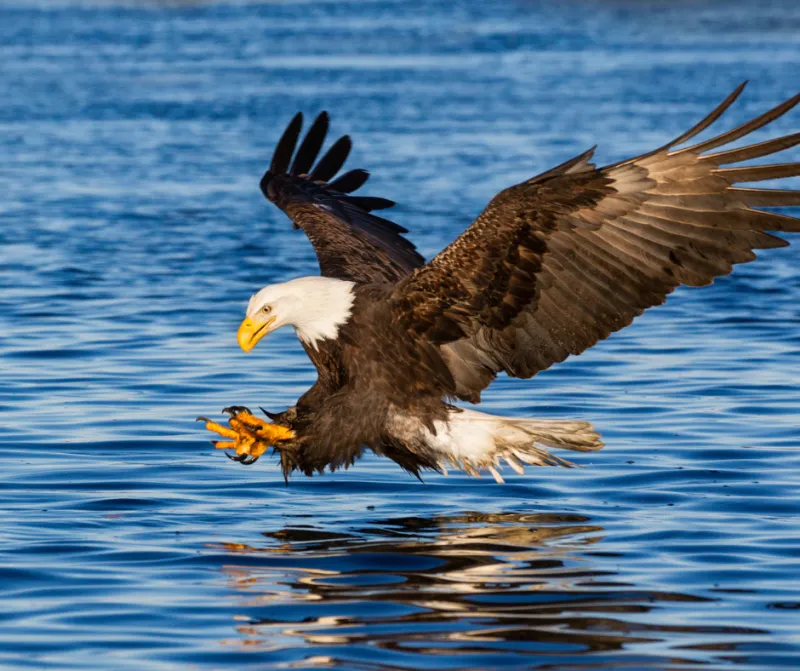
Fish matter, but they are not the whole menu
© Fox Run Environmental Education Center

Fish are a staple of the bald eagle diet, which is why you so often see the birds near lakes, rivers, and marshes. A fish near the surface is an easy target for a bird with sharp eyes and strong talons.

But the menu is wider than that. The U.S.

Fish and Wildlife Service lists other foods, including birds, turtles, small mammals, and carrion. Eagles also steal prey from other animals when the chance comes up.

That flexibility helps explain why eagles can live in so many kinds of places. A bird that eats a dead deer by a farm road, a duck on a pond, or a fish from a reservoir can make a living in many parts of a landscape.

For a homeowner, the takeaway is modest. An eagle crossing your sky is part of a local food chain, but you cannot tell from the flyover whether it is feeding in your yard.

Its presence also does not prove that any one prey species nearby is thriving. It shows only that a flexible predator is finding enough to eat somewhere in the region.

One sighting cannot test the water
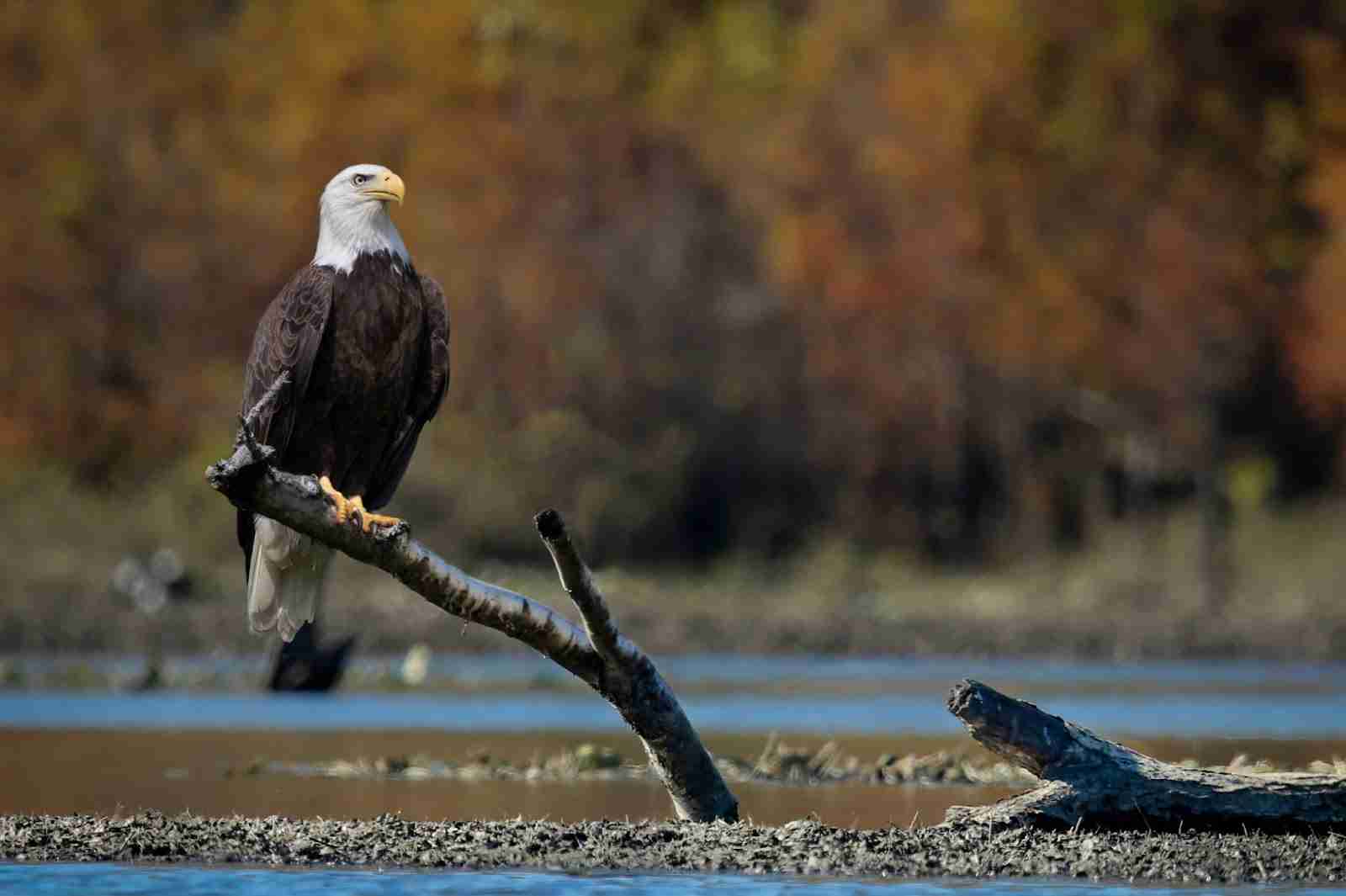
One sighting cannot test the water
© Stuttgart Daily Leader

Seeing an eagle and testing an ecosystem are very different jobs. Agencies do use eagles as study subjects, tracking nest productivity and testing tissues for contaminants.

A National Park Service monitoring protocol lays out that kind of work and cautions that population changes and contaminant exposure alone do not prove cause and effect.

A backyard sighting has none of that structure. Eagle presence alone cannot tell you whether nearby water is clean or whether an ecosystem is healthy.

It is a single observation, not a measurement.

History shows why recovery is not a simple clean-water tale. The EPA links DDT exposure to eggshell thinning and reproductive decline in eagles.

It says eagle populations slowly recovered after most U.S. uses of DDT were banned in 1972.

So the comeback came from several pieces working together, including the pesticide ban, and not from water quality alone. If you worry about a local creek or pond, ask your county health or soil and water office about actual testing.

The eagle can inspire you to ask, but it cannot give the answer.

Admire the eagle without disturbing it
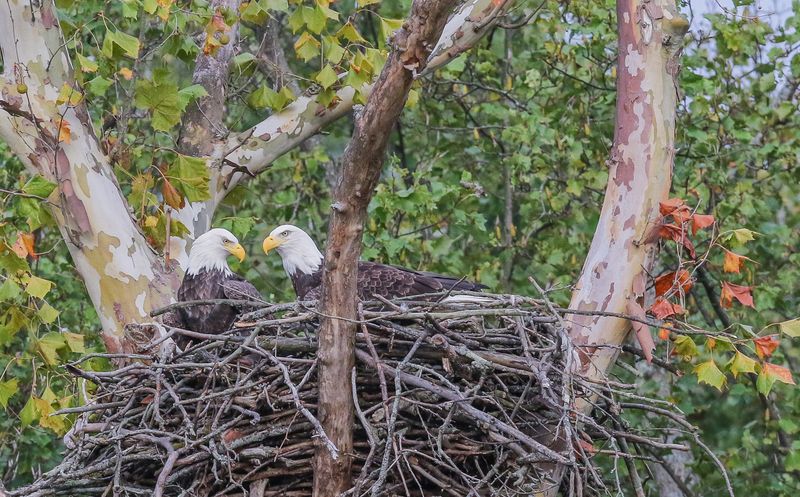
Admire the eagle without disturbing it
© National Park Service

The best way to enjoy an eagle is from far away. Keep your distance, grab a pair of binoculars, and let the bird go about its day.

If it stops what it is doing because of you, you are too close.

A few things are firmly off limits. Do not feed an eagle, do not approach or disturb a nest, and do not handle feathers, nests, or other eagle parts.

The U.S. Fish and Wildlife Service also warns against pursuing or photographing an eagle with a drone.

Federal protections apply to eagles, and the rules are specific. Prohibited disturbance includes harming an eagle, substantially interfering with its normal behavior, or causing a nest to be abandoned.

Bald eagles are no longer listed under the Endangered Species Act, but those protections still stand.

Ohio’s recovery is real, and the state’s 964 active nests are something to appreciate. The eagle above your yard is using the wider landscape, not giving a verdict on your property or the nearby water.

Watch it wheel across the sky, then let it carry on.

Share this story
MK

Written by

Margaret Kessler

More from Margaret Kessler →

About Gardening Latest

Gardening Latest provides in-depth guides to maintaining and enhancing your garden and backyard. Learn how to make the most of the space you have and create a beautiful garden.

More about us →

Latest stories

  • New Jersey GardeningThese 8 Scary-Looking New Jersey Neighbors Seem Dangerous But Are Actually Totally Harmless

    These 8 Scary-Looking New Jersey Neighbors Seem Dangerous But Are Actually Totally Harmless

    2 min ago
  • North Carolina GardeningWhy Some North Carolina Homeowners Are Learning to Live With the Squirrels Instead

    Why Some North Carolina Homeowners Are Learning to Live With the Squirrels Instead

    8 min ago
  • Michigan GardeningMichiganders Who Eat Celery Every Day Are Discovering What It Actually Does To Their Bodies

    Michiganders Who Eat Celery Every Day Are Discovering What It Actually Does To Their Bodies

    13 min ago
  • Massachusetts GardeningMassachusetts Neighborhoods Are Filling Up With an Invasive Tree You Can’t Pull Fast Enough

    Massachusetts Neighborhoods Are Filling Up With an Invasive Tree You Can’t Pull Fast Enough

    18 min ago
  • California GardeningThe Backyard Crops That Quietly Break California Law, Even When They Grow Like Weeds

    The Backyard Crops That Quietly Break California Law, Even When They Grow Like Weeds

    23 min ago

Gardening by state

Stories for your state, and the hardiness zone most of it gardens in.

Keep exploring

Read next

All Ohio Gardening →
Ohio GardeningThe Winter Project Ohio Farmers Are Taking On to Bring Barn Owls Home
Ohio Gardening

The Winter Project Ohio Farmers Are Taking On to Bring Barn Owls Home

34 min ago
Ohio Gardening8 Protected Animals Ohio Homeowners Get Fined for Removing From Their Own Yards
Ohio Gardening

8 Protected Animals Ohio Homeowners Get Fined for Removing From Their Own Yards

6 hr ago
Ohio GardeningThese Clever Tricks Send Skunks Packing From Ohio Yards for Good
Ohio Gardening

These Clever Tricks Send Skunks Packing From Ohio Yards for Good

9 hr ago

More from Ohio Gardening

  • The Persimmon Seed Folklore Some Ohioans Know: Spoon, Knife, or Fork?

    Nov 12
  • Sluggish Flies at Sunny Ohio Windows May Be Cluster Flies That Overwintered in Your Walls

    Nov 12
Back to top

Leave a response Cancel

Your email address stays private. Required fields are marked with an asterisk.

Gardening Latest

In-depth guides to maintaining and enhancing your garden and backyard: how to make the most of the space you have, and how to make it beautiful.

  • Facebook
  • X
  • Pinterest
  • YouTube

We may earn a portion of sales from products or services that are purchased through our site as part of our affiliate partnerships with retailers.

Explore

  • About GardeningLatest.com
  • Contact Us
  • Terms and Conditions
  • Privacy
  • Editorial Note:
  • FTC Disclosure

Newsletter

New garden guides and seasonal tips, straight to your inbox.

We’ll email you a link to confirm. Unsubscribe any time.

Almost there! Check your inbox and tap the link to confirm.

© 2026 Gardening Latest. All rights reserved.

Back to top