Get the latest garden guides in your inbox →
Gardening Latest
  • General Gardening
  • Lawn Care
  • Plant Care
  • Composting
  • Soil Health
  • Backyard
  • Garden Muse Magazine
  • General Gardening
  • Lawn Care
  • Plant Care
  • Composting
  • Soil Health
  • Backyard
  • Garden Muse Magazine
  • News
  • Gardening Calendar
  • Garden Structures
  • Vegetable Garden
  • Vertical Garden
  • Raised Beds
  • Hydroponics
  • General Equipment
  • Community Gardens
Garden Themes
  • Spiritual Garden
  • Hydroseeding
  • Seeding and Laying Sod
  • Artificial Grass
  • Lawn Care Equipment
  • Plants
  • Trees
  • Planting Tools
  • Composting Basics
  • Fertilizer
  • Alternative Growing Mediums
  • Front Yard
  • Backyard Activities
  • Landscaping
Gardening Latest

Explore by state

Which state is your garden in?

Currently viewing Maryland

All states

Northeast

  • Connecticut —
  • Delaware 24
  • Maine —
  • Maryland 11
  • Massachusetts 27
  • New Hampshire —
  • New Jersey 11
  • New York 20
  • Pennsylvania 20
  • Rhode Island —
  • Vermont —

Southeast

  • Alabama 10
  • Arkansas —
  • Florida 11
  • Georgia 11
  • Kentucky 25
  • Louisiana 9
  • Mississippi —
  • North Carolina 9
  • South Carolina 24
  • Tennessee 7
  • Virginia 10
  • West Virginia —

Midwest

  • Illinois 9
  • Indiana 12
  • Iowa 24
  • Kansas —
  • Michigan 11
  • Minnesota 9
  • Missouri 9
  • Nebraska —
  • North Dakota —
  • Ohio 11
  • South Dakota —
  • Wisconsin 25

Southwest

  • Arizona 10
  • Colorado —
  • Nevada —
  • New Mexico —
  • Oklahoma —
  • Texas 9
  • Utah —

West

  • Alaska —
  • California 10
  • Hawaii —
  • Idaho —
  • Montana —
  • Oregon —
  • Washington —
  • Wyoming —

No state matches that search.

Site menu

Gardening Latest
  • General Gardening
    • News
    • Gardening Calendar
    • Garden Structures
    • Vegetable Garden
    • Vertical Garden
    • Raised Beds
    • Hydroponics
    • General Equipment
    • Community Gardens
    Garden Themes
    • Spiritual Garden
  • Lawn Care
    • Hydroseeding
    • Seeding and Laying Sod
    • Artificial Grass
    • Lawn Care Equipment
  • Plant Care
    • Plants
    • Trees
    • Planting Tools
  • Composting
    • Composting Basics
  • Soil Health
    • Fertilizer
    • Alternative Growing Mediums
  • Backyard
    • Front Yard
    • Backyard Activities
    • Landscaping
  • Garden Muse Magazine

Explore

  • About GardeningLatest.com
  • Contact Us

Get the latest from the garden

New guides on lawn care, plants and backyard projects, sent when they go up.

Subscribe →

Follow

  • Facebook
  • X
  • Pinterest
  • YouTube
Maryland Gardening

The Hammer-Headed Worm Showing Up In Maryland Gardens Carries The Same Toxin As Pufferfish

Researchers have found tetrodotoxin, the same toxin linked to pufferfish, in hammerhead flatworms.

GC

By Grace Calvert

November 24, 2026 · 6 min read

The Hammer-Headed Worm Showing Up In Maryland Gardens Carries The Same Toxin As Pufferfish

Researchers have found tetrodotoxin, the same toxin linked to pufferfish, in hammerhead flatworms. The finding comes from two named species that live in gardens, and some of their relatives now turn up in Maryland.

If you have flipped over a flowerpot and met a strange, flat, headlike crescent of a worm, you probably want to know what that means. Here is what scientists actually found and what it means for your yard.

At a glance

Where
Maryland Gardening
Hardiness zone
7 0 to 10°F
Read
6 minutes
Published
November 24, 2026

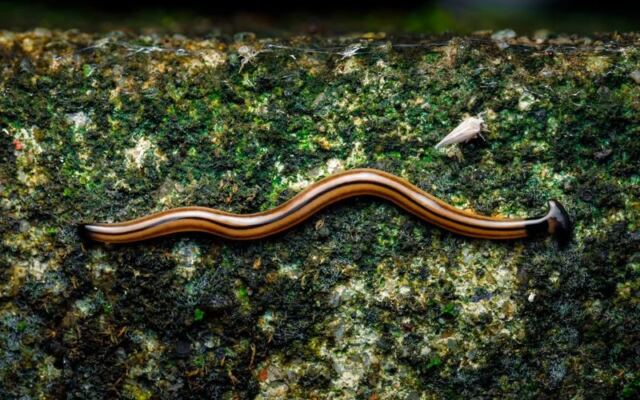
Why do hammerhead flatworms shelter under pots and mulch?
Why do hammerhead flatworms shelter under pots and mulch?
© LSU AgCenter

Maryland gardeners are not imagining things. University of Maryland Extension reports that several invasive hammerhead worm species of the genus Bipalium live in the state.

These flatworms dry out easily, so they hunt for moisture. They favor damp places such as the underside of debris and leaf litter.

A clay pot, a board, a stack of bricks, or a thick layer of mulch can hold moisture in much the same way, which makes it a handy hiding place.

Wet weather also brings them into view. Extension sources, including NC State Extension, describe them as moisture-loving animals, so a worm may be easier to spot after a good rain.

Seeing one, however, does not prove your yard has an infestation or that numbers are rising.

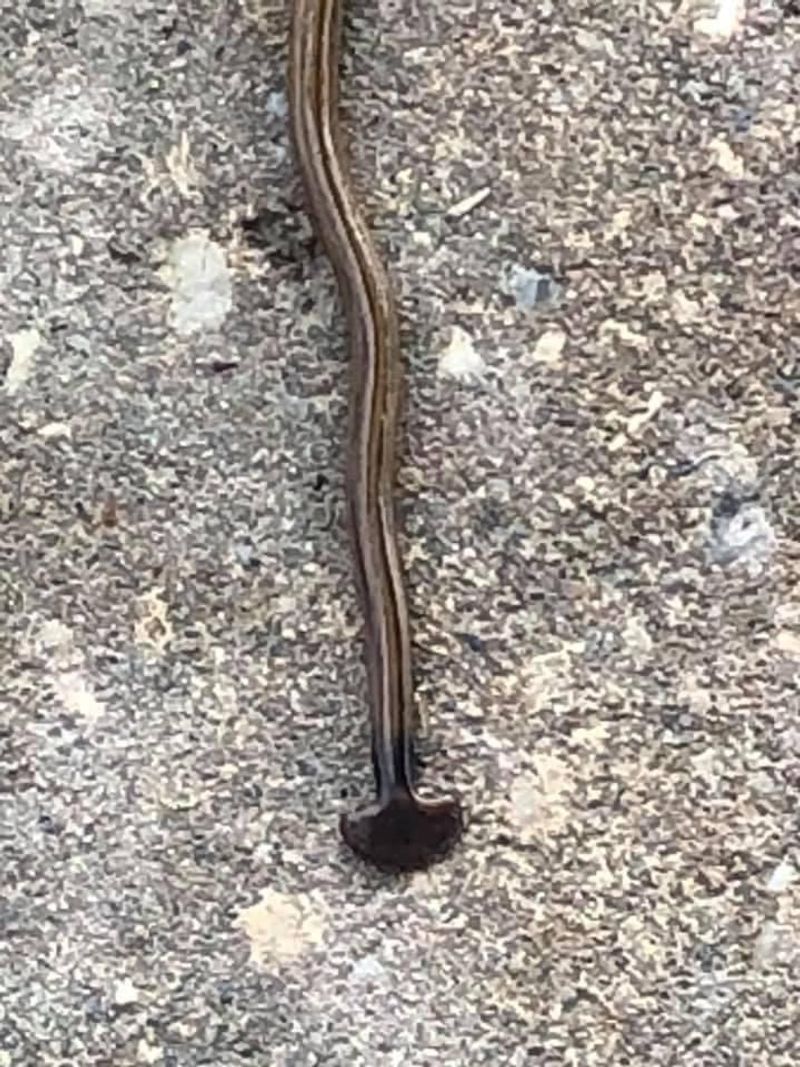
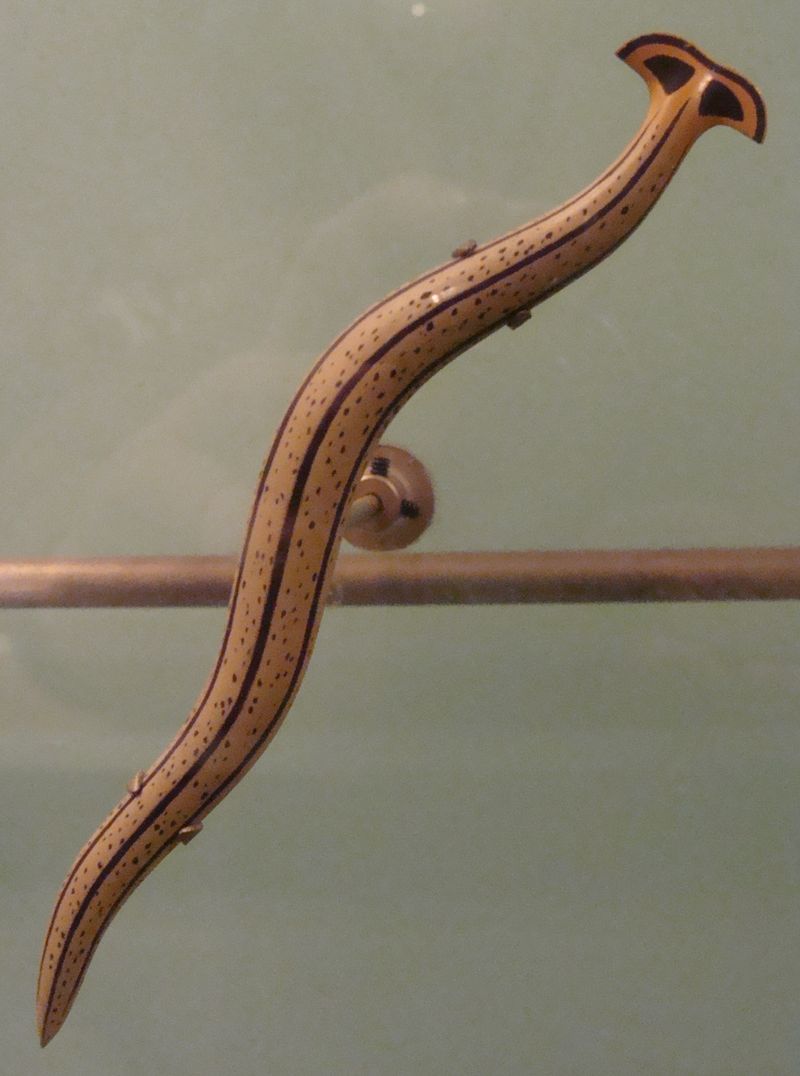
It also helps to know that “hammerhead worm” is a common name, not a single species. It covers several kinds of flatworms with similar shovel-shaped heads.

Telling them apart can be hard, and Penn State Extension points out that several land planarians resemble one another, so a photo alone may not settle which species you have.

Researchers found the toxin in two flatworm species
Researchers found the toxin in two flatworm species
© Wikipedia

The toxin story comes from a 2014 study that tested land flatworms for tetrodotoxin, often shortened to TTX. TTX is the compound best known from pufferfish.

The researchers detected it in two named species: Bipalium adventitium and Bipalium kewense. Those two species are the ones tested, so the result belongs to them specifically.

Skip bare-handed handling, and wear gloves or use a tool if you need to move a worm.

The study also found evidence consistent with TTX helping the worms subdue prey. That fits with the way these animals hunt other soft-bodied creatures, so the toxin may work as a tool for catching dinner.

Another finding involved reproduction. TTX turned up in the egg capsules of B. adventitium, which suggests the toxin may be passed along to the next generation or help protect the eggs.

What the study did not do is test every animal called a hammerhead worm. A worm of a different species, or one that looks similar, was not part of that result.

The finding is real, but it is narrow, and it is a good example of why species names matter.

What does the toxin finding mean for a garden encounter?
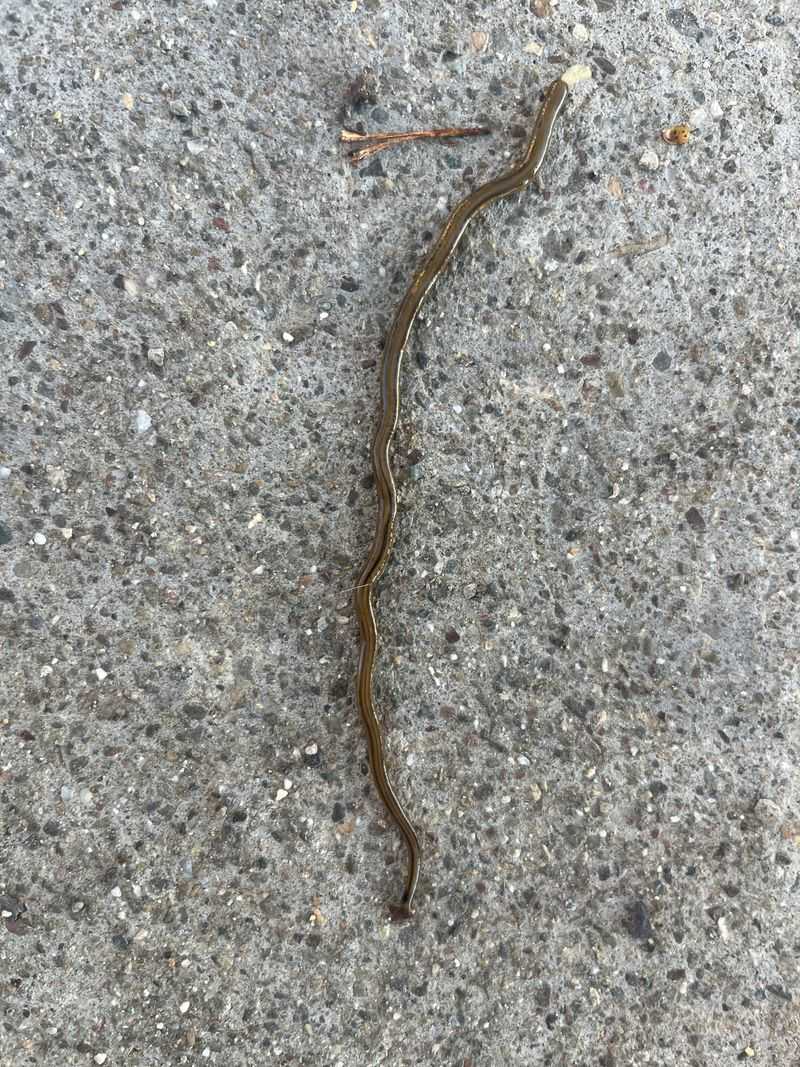
What does the toxin finding mean for a garden encounter?
© The Ukiah Daily Journal

Finding a toxin and being harmed by it are two separate things. The 2014 study showed that TTX is present in two species, but it was not designed to measure how much a worm holds, how a person might be exposed, or how dangerous that would be.

So the comparison to pufferfish has limits. Pufferfish poisoning usually happens when someone eats the fish.

Nothing in the study shows that ordinary garden contact carries a similar risk.

Official advice leans cautious but calm. Maryland Extension recommends keeping pets and small children from swallowing the worms and notes possible minor skin irritation.

Penn State Extension calls the contact risk likely low but not fully known.

A 2025 review goes further, arguing that alarming claims about human toxicity are unsupported and that accidental contact is not a meaningful clinical hazard.

These views differ in tone more than in substance. Contact is probably low risk, though not proven risk-free, so sensible habits make more sense than worry.

Think of it as treating the worm like any wild creature you would rather not handle with bare hands.

What is known about their effect on other garden life?
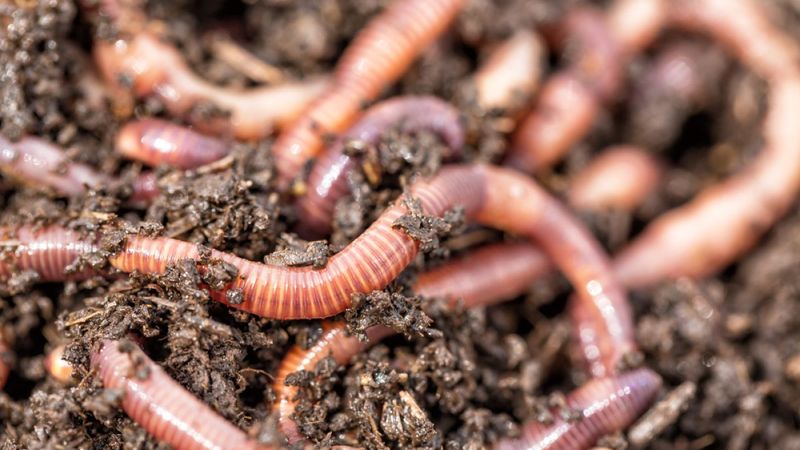
What is known about their effect on other garden life?
© Best Life Online

Hammerhead flatworms are predators. According to NC State Extension, they feed on earthworms and other invertebrates, which they find by following slime trails through damp soil.

That feeding habit has led to worry about soil health, since earthworms help loosen soil and recycle plant matter. Still, eating earthworms is not the same as proving widespread damage to gardens or natural areas.

The size of the ecological effect is uncertain. Penn State Extension notes that in many urban and suburban settings, a lot of the earthworms present are themselves non-native, which complicates the picture of who is harming whom.

For a Maryland gardener, the practical meaning is modest. A worm under a pot is a predator doing what predators do, and the sources do not show that it is wrecking Maryland gardens or ecosystems.

Watching your own soil, plants, and earthworm numbers over time will tell you more than any broad prediction can.

Take simple precautions after contact
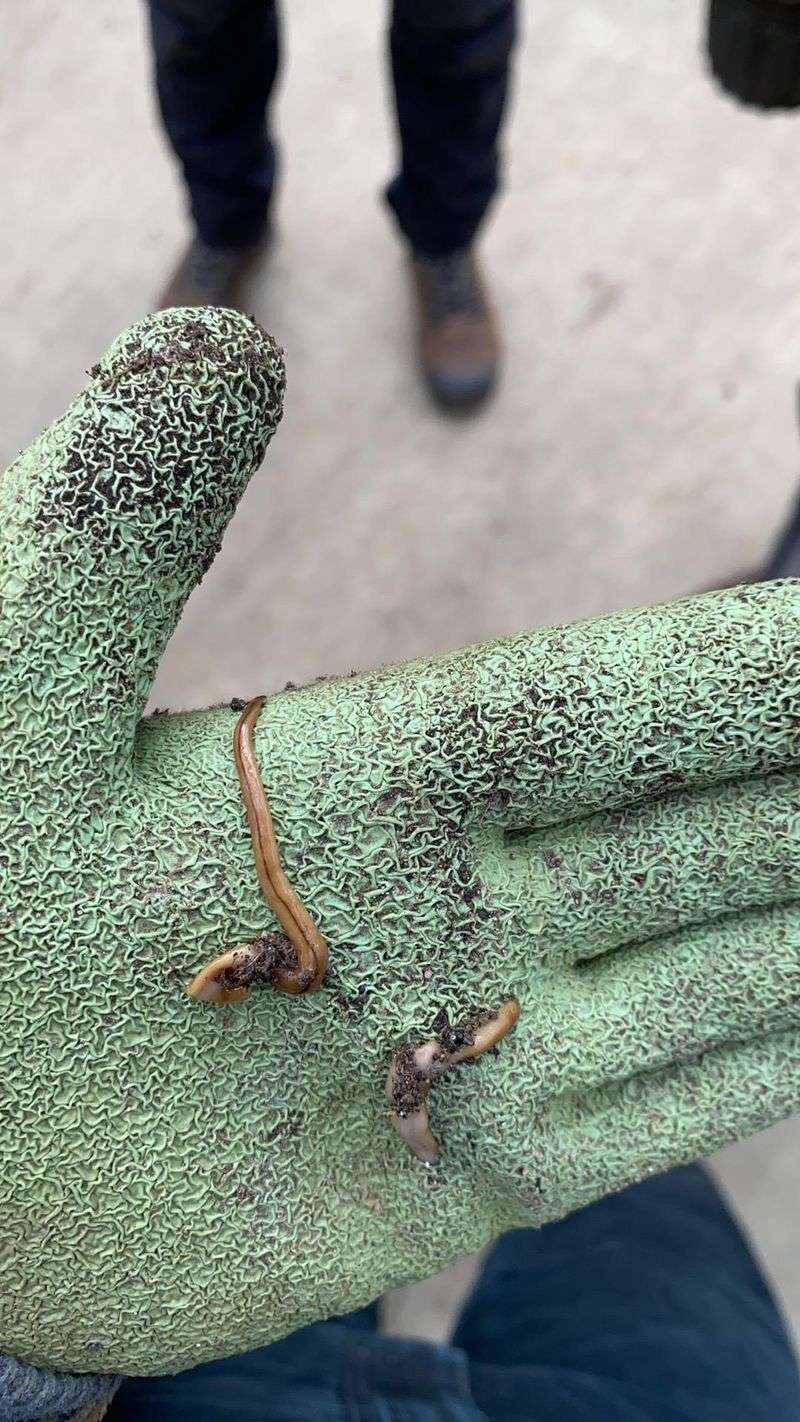
Take simple precautions after contact
© UMass Amherst

Good habits cover nearly every situation. Skip bare-handed handling, and wear gloves or use a tool if you need to move a worm.

Never eat a flatworm, and do not let children or pets mouth one. A curious dog or toddler is the main case where extra attention makes sense, and Maryland Extension specifically advises preventing that kind of ingestion.

If you do touch one by accident, wash your hands with soap and water. The same Maryland source mentions possible minor skin irritation, so rinse the spot if your skin feels bothered.

Penn State Extension describes the risk from contact as likely low but not fully known. That uncertainty is a reason for routine care, not for panic.

A 2025 review also cautions against treating accidental contact as a clinical hazard. Seeing a worm or brushing against one is not a poisoning emergency, and a quick hand wash is usually all the follow-up you need.

Remove one worm without treating the whole yard
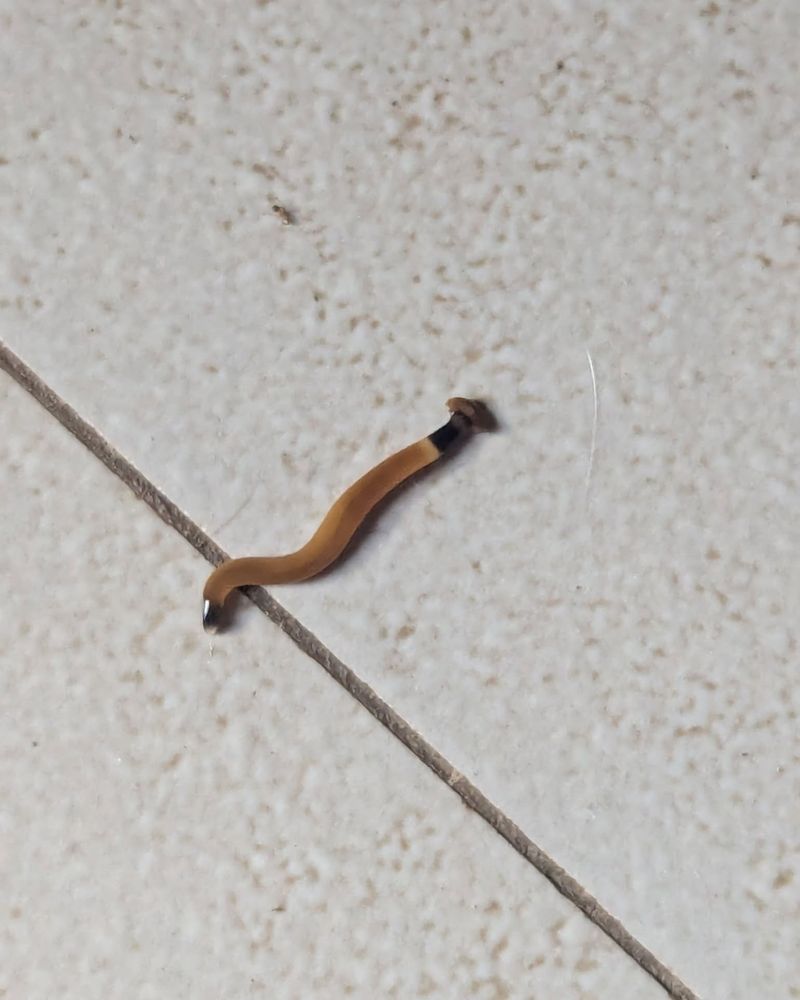
Remove one worm without treating the whole yard
© micheleward01

If you decide to remove a worm, handle it as a single job. Penn State Extension describes two options: seal the worm in a bag and freeze it, or drop it into alcohol.

Use gloves or a tool rather than bare fingers. Once the worm is in the bag or container, the job is done.

Salt can also be applied to an individual worm, but it may harm nearby plants. Keep it away from beds, pots, and roots, or choose freezing or alcohol instead.

Do not cut a worm in pieces. Land flatworms can regenerate from fragments, so chopping may leave you with more worms rather than fewer.

NC State Extension likewise says cutting is not a control method.

Treating the whole yard is a different matter. University of Maryland Extension says no reliable yard-wide method removes these worms without also affecting other species.

Pesticides and broad treatments are not recommended, so remove only the worms you actually find.

A sighting calls for care, not alarm
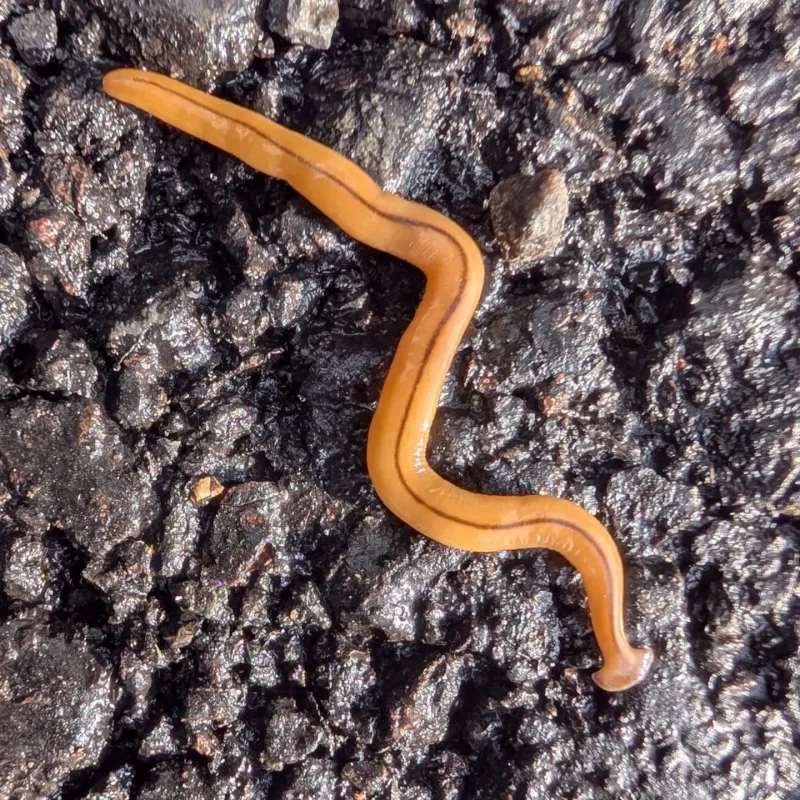
A sighting calls for care, not alarm
© birdsongfarmoregon

Maryland does have invasive hammerhead flatworms, as state Extension reports. The toxin evidence from the 2014 study applies to two tested species, and it does not show a pufferfish-like threat from ordinary garden contact.

Keep worms out of mouths, use gloves, wash up afterward, and remove a worm only if you choose to. As Maryland Extension advises, skip the yard-wide campaign.

A flatworm under a flowerpot is a curiosity, not a crisis.

Share this story

GC

Written by

Grace Calvert

More from Grace Calvert →

About Gardening Latest

Gardening Latest provides in-depth guides to maintaining and enhancing your garden and backyard. Learn how to make the most of the space you have and create a beautiful garden.

More about us →

Latest stories

  • South Carolina GardeningFor Every Seedling You Pull, Another Pops Up: The Invasive Tree Overrunning South Carolina Neighborhoods

    For Every Seedling You Pull, Another Pops Up: The Invasive Tree Overrunning South Carolina Neighborhoods

    6 min ago
  • Kentucky GardeningKentucky Has a Tiny Mammal With a Venomous Bite, and It’s Hunting Under Your Lawn All Winter

    Kentucky Has a Tiny Mammal With a Venomous Bite, and It’s Hunting Under Your Lawn All Winter

    12 min ago
  • Florida GardeningWhy That Bald Eagle Keeps Circling Over Your Florida Yard Isn’t an Accident

    Why That Bald Eagle Keeps Circling Over Your Florida Yard Isn’t an Accident

    18 min ago
  • Iowa GardeningYou Pull It, It Comes Right Back: The Invasive Tree Taking Over Iowa Neighborhoods

    You Pull It, It Comes Right Back: The Invasive Tree Taking Over Iowa Neighborhoods

    31 min ago
  • Virginia GardeningThat Terrifying Bug You Keep Spotting In Your Virginia Garden Is Actually A Friend

    That Terrifying Bug You Keep Spotting In Your Virginia Garden Is Actually A Friend

    37 min ago

Gardening by state

Stories for your state, and the hardiness zone most of it gardens in.

Keep exploring

Read next

All Maryland Gardening →
Maryland GardeningThe One Clue In Your Maryland Yard That Means A Coyote Walked Through Overnight
Maryland Gardening

The One Clue In Your Maryland Yard That Means A Coyote Walked Through Overnight

2 hr ago
Maryland GardeningThose Leafy Green Balls Stuck In Leafless Maryland Trees Aren’t Squirrel Nests At All
Maryland Gardening

Those Leafy Green Balls Stuck In Leafless Maryland Trees Aren’t Squirrel Nests At All

6 hr ago
Maryland GardeningHere’s What Maryland Law Actually Says When A Neighbor’s Dog Keeps Pooping In Your Yard
Maryland Gardening

Here’s What Maryland Law Actually Says When A Neighbor’s Dog Keeps Pooping In Your Yard

9 hr ago

More from Maryland Gardening

  • These Venomous Critters Share Maryland Yards With You, And Late Fall Is When You’ll Spot Them

    Nov 13
  • Maryland Lawn Fertilizer Deadline Is November 15, 2026, and Penalties Are Possible for Homeowners

    Nov 13
Back to top

Leave a response Cancel

Your email address stays private. Required fields are marked with an asterisk.

Gardening Latest

In-depth guides to maintaining and enhancing your garden and backyard: how to make the most of the space you have, and how to make it beautiful.

  • Facebook
  • X
  • Pinterest
  • YouTube

We may earn a portion of sales from products or services that are purchased through our site as part of our affiliate partnerships with retailers.

Explore

  • About GardeningLatest.com
  • Contact Us
  • Terms and Conditions
  • Privacy
  • Editorial Note:
  • FTC Disclosure

Newsletter

New garden guides and seasonal tips, straight to your inbox.

We’ll email you a link to confirm. Unsubscribe any time.

Almost there! Check your inbox and tap the link to confirm.

© 2026 Gardening Latest. All rights reserved.

Back to top