Pull a shoot of tree-of-heaven out of the ground, and there is a good chance more will pop up nearby. This invasive tree is recorded as widespread across Iowa, and it can keep growing back because its roots survive disturbance.
Whether pulling works depends on what is underground, not on how big the shoot looks. Here is how to spot the tree and pick a removal method that will not make things worse.
Why tree-of-heaven can keep sending up shoots
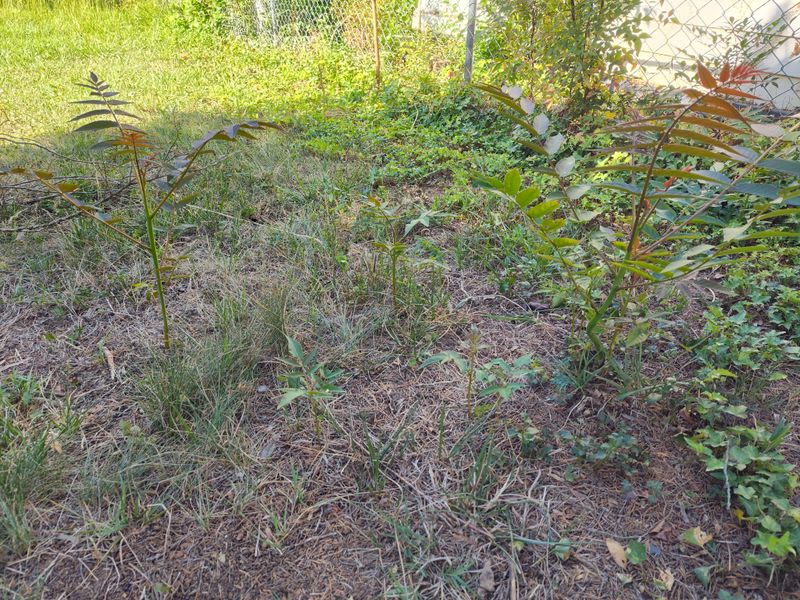
Tree-of-heaven (Ailanthus altissima) spreads in two ways: by seed and by root suckers. According to Iowa State Extension, it is a problem invasive in Iowa, and cutting it can provoke suckers.
That is why a shoot you pull or mow can seem to return right away.
A shoot that looks like a little sapling may not be a separate plant at all. Extension guidance explains that established roots can send up shoots some distance from the parent tree.
Think of the shoot as a green tip on a much bigger underground network.
Cutting or injuring a tree can trigger two kinds of regrowth. Stump sprouts grow from the cut trunk, and root suckers pop up from the roots, sometimes well away from the stump.
Both are a response to disturbance.
A true seedling can also come back, but for a different reason. If you pull a small seed-grown plant and snap off the root, leftover pieces can regrow.
In that case the problem is an incomplete removal, not a hidden parent plant.
So the first question is always what is below ground. A lone seedling with a short root calls for a different approach than a cluster of shoots linked to a large tree.
The sections ahead will help you tell them apart and plan accordingly.
Check several traits before you remove a tree
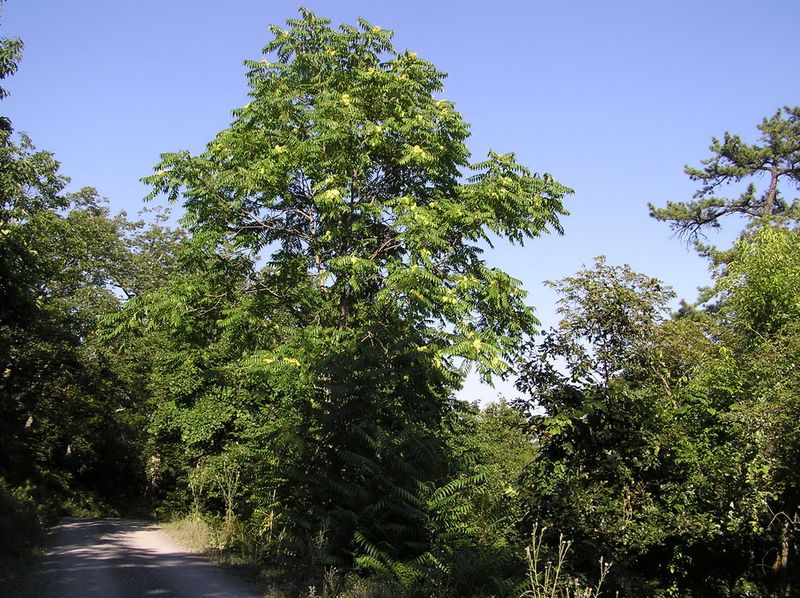
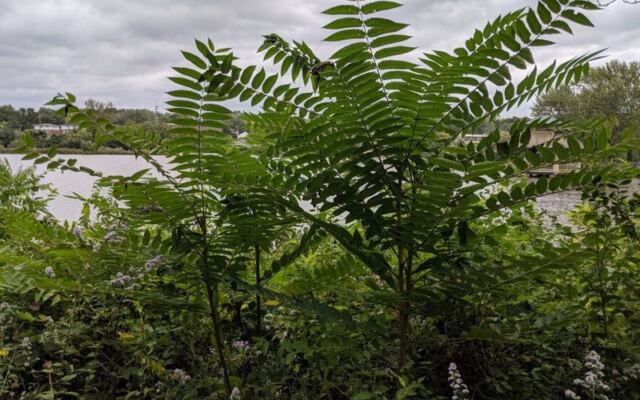
Before you pull or cut anything, make sure you have the right plant. Tree-of-heaven has very long compound leaves, often 1 to 3 feet, with roughly 11 to 41 leaflets, according to Iowa State Extension.
The leaflet edges are mostly smooth, with a few teeth near the base.
Look for seeds too. They are winged and hang in dense clusters, which can help you separate this tree from some look-alikes.
A mature female tree can be easy to spot once those clusters appear.
Native trees can fool you. Sumac and black walnut also have compound leaves, and young plants of each can resemble tree-of-heaven at a glance.
University of Maryland Extension offers identification help and notes these look-alikes.
Some people crush a leaf and sniff it, since the smell is often described as unpleasant. Treat that as a clue only.
Smell varies, and it cannot confirm the species by itself.
A practical approach is to check several things at once: leaf length, leaflet count, leaflet margins, the seeds, and the overall look of the plant. If the traits do not line up, take photos and ask your county extension office before removing anything.
Removing a healthy native by mistake is a problem you cannot undo.
Tree-of-heaven is recorded across Iowa
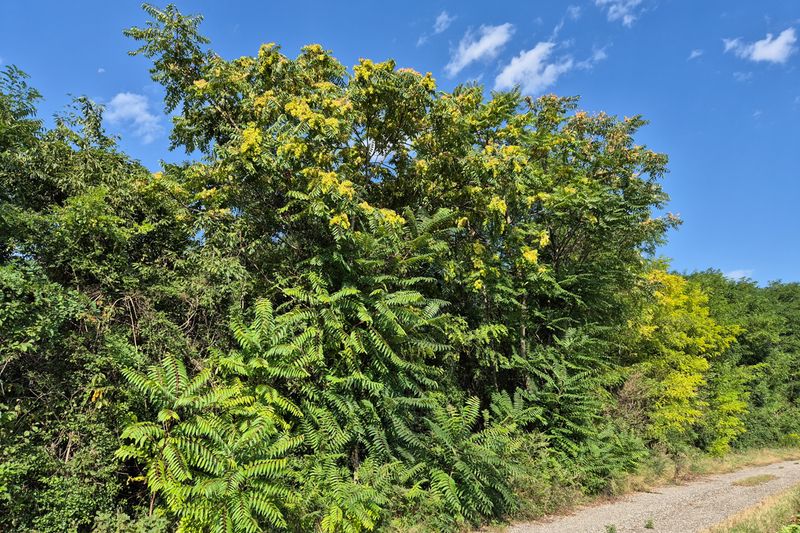
The Iowa DNR’s 2024 forest health report classifies tree-of-heaven as widespread. According to the Iowa DNR Forest Health Highlights, that label means the species is commonly seen in a majority of Iowa counties.
So if you live almost anywhere in the state, running into it is plausible.
It helps to be clear about what that label measures. The classification is statewide and based on counties.
It does not tell us how many trees stand in your neighborhood, or how fast the tree is spreading on your block.
Some neighborhoods may have a lot of it, and others may have only a few scattered plants. The record simply says the tree is established across much of the state and worth watching for.
Iowa State Extension notes that the species turns up in urban and neglected spaces, such as fence lines, alleys, and unmaintained lots. Those are good places to look when scanning your own property.
The takeaway is practical. Do not assume every unfamiliar shoot is tree-of-heaven, and do not assume it cannot be on your lot.
Identify first, then decide what to do.
Pull a seedling only if the whole root comes out
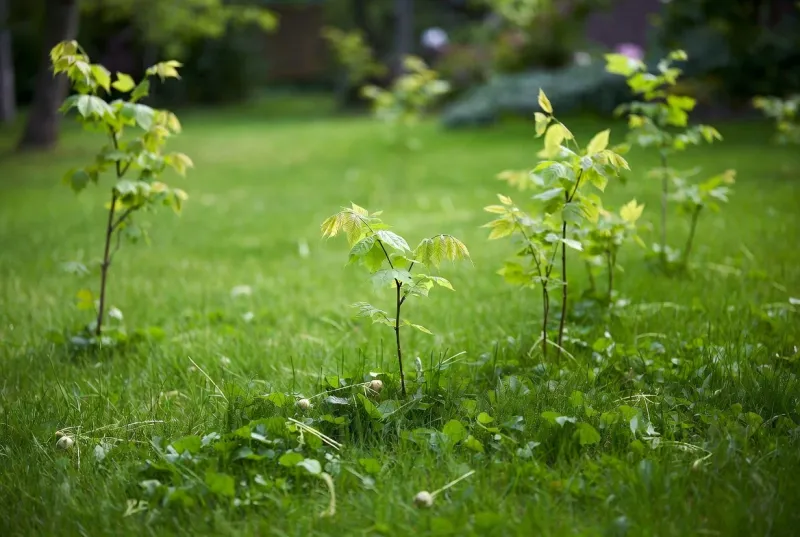
Hand-pulling has a narrow window where it makes sense. A small seedling that grew from seed, in moist soil, can be removed this way if the entire root comes out.
Iowa State Extension cautions that leftover roots or fragments can regrow.
Soil after rain is your friend. Loosen the ground, grip low on the stem, and pull slowly and steadily so the root does not snap.
If it breaks, dig out what remains.
A root sucker is a different story. It is attached to an established root system, so pulling usually tears off the top and leaves the root behind.
The U.S. Forest Service species review describes how the plant resprouts from remaining root material.
Size will not settle the question. A shoot only a foot tall may be a sucker on a large root, while a seedling of similar height may be fully independent.
You cannot judge by looking above ground.
One way to check is to dig carefully beside the shoot. A seedling shows a single root ending in a tip, while a sucker leads sideways to a thicker root.
If you find a horizontal root, stop pulling and treat it as an established plant. Check the spot again over the following weeks for new growth.
Plan established-tree control around the roots
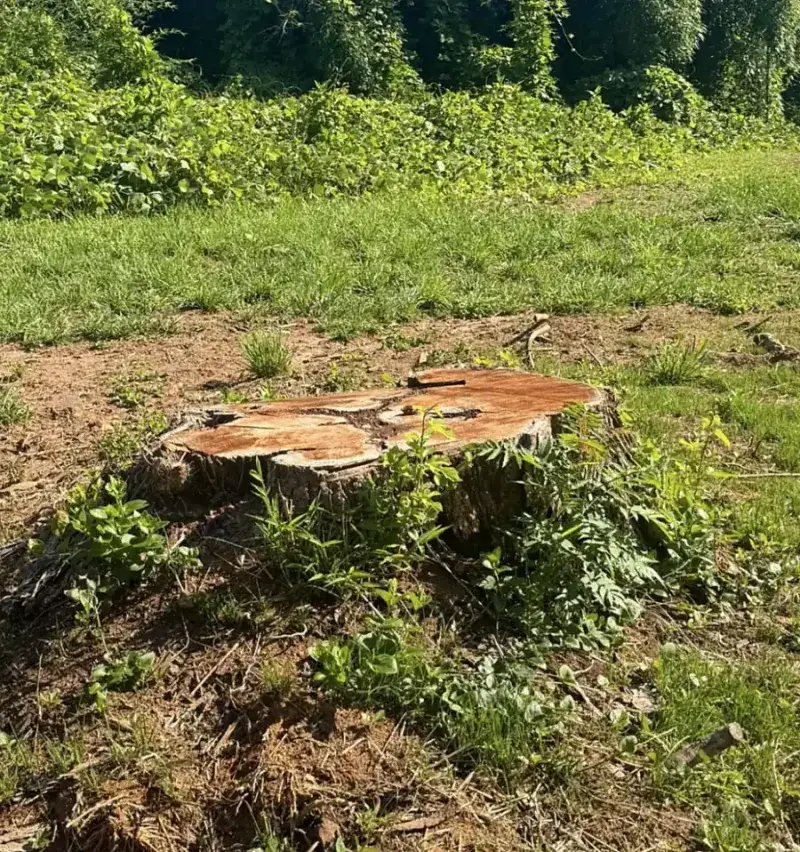
With an established tree, the roots are the target. Repeated cutting alone is an unreliable fix and may even increase sprouting.
The plant responds to damage by pushing up more growth from the stump and roots.
General guidance from Iowa State Extension favors methods that carry a systemic herbicide into the root system, usually in mid to late summer or early fall. Which method and timing fit best depends on the plant and the site.
A large tree near a house or power line is a different job than a few stems along a fence.
Cut-stump treatment gets mixed up with root control, so here is the distinction. Penn State Extension says it may prevent stump sprouts but does not prevent root suckering.
If a tree must come down quickly for safety, treating the stump may still help, but expect to monitor and do more.
The same goes for stump grinding. Removing the stump does not remove the roots that stretch out from it.
New shoots can still appear in the yard.
Build monitoring into the plan from the start. Walk the area every few weeks through the growing season and again the next year.
Look for new shoots, and treat each one as a fresh question about where its roots lead.
This article does not give a product recipe, because the right choice depends on your site and the label. If the tree is large or close to structures, an arborist or your county extension office can help you pick a safe approach.
Protect yourself and follow the product label
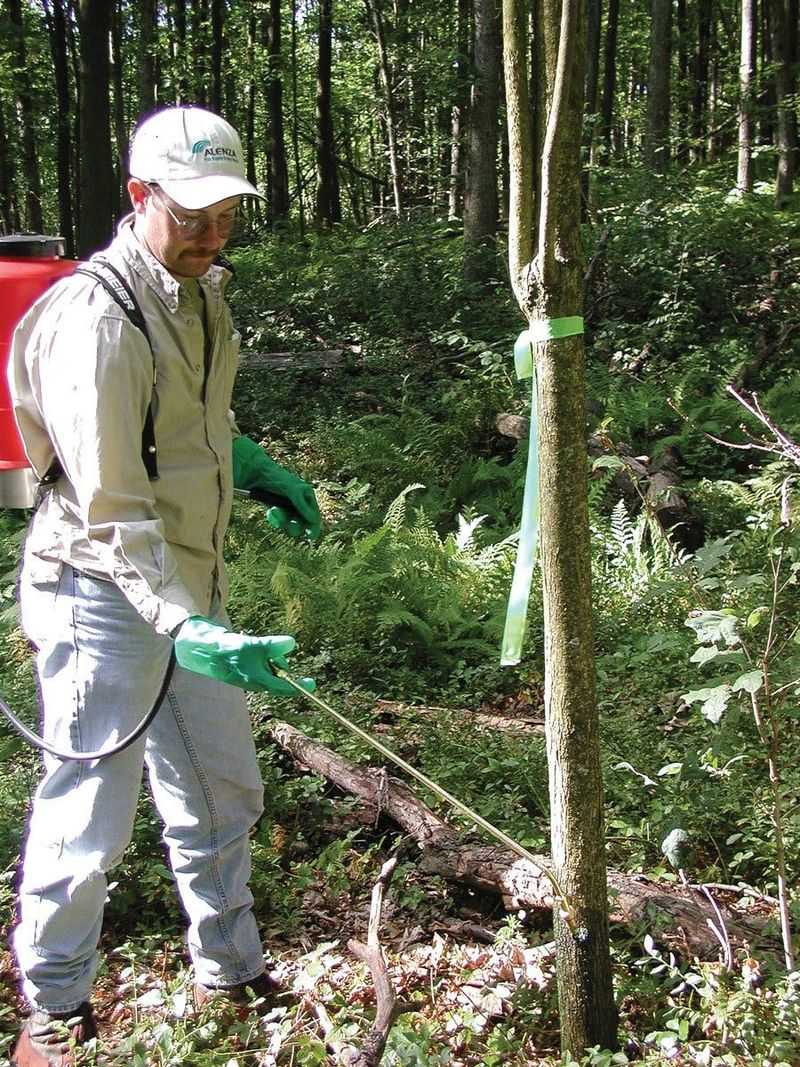
Handle this plant with some care. Extension sources report that contact can occasionally cause skin irritation or dermatitis, as Ask Extension explains.
Penn State also mentions rare reports of heart inflammation linked to sap getting in through broken skin, but those are rare and not an everyday risk.
Simple habits go a long way. Avoid getting sap on your skin, and wear long sleeves and gloves when you will be handling a lot of the plant.
Wash up afterward.
If you are thinking about herbicide, start with the label. Iowa State notes in its guide to using pesticides safely that using a product outside its labeled sites is illegal and can harm plants or the environment.
Use only a product and application method labeled for your site and for this target plant.
The label also covers the details: rates, protective equipment, weather conditions, and disposal. Iowa State’s page on understanding herbicide labels helps you read them.
Broad spraying is not the answer. Nearby plants, people, pets, and water can all be affected.
Targeted treatment of the plant you have confirmed is the safer path.
Match the removal method to the root
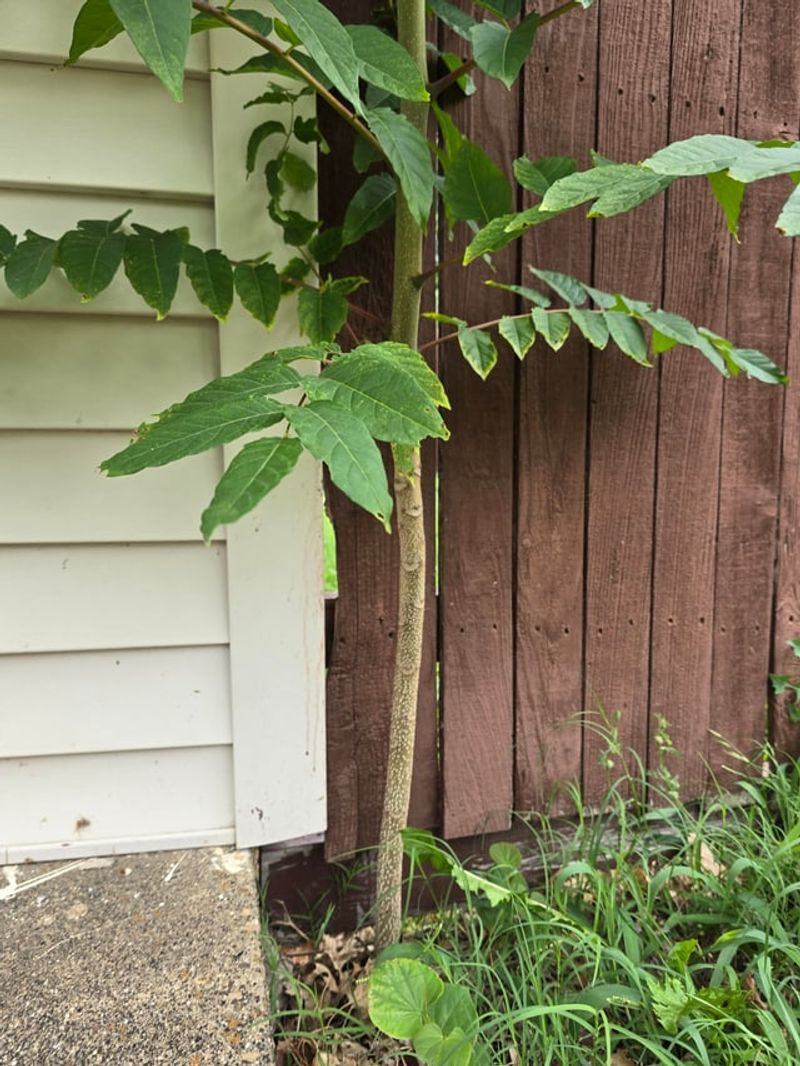
Start by confirming the plant using several traits, not one. Pull only a truly young seedling, and only when you can get the whole root.
Anything bigger or connected to roots is a root-system problem that needs a plan and repeat checks, as Iowa State Extension outlines.
When a shoot comes back, resist the urge to cut it again by reflex. Stop and ask what it is attached to, then adjust your method.
A weed that answers every attack with new growth is usually telling you the fight is underground.
Share this story