Get the latest garden guides in your inbox →
Gardening Latest
  • General Gardening
  • Lawn Care
  • Plant Care
  • Composting
  • Soil Health
  • Backyard
  • Garden Muse Magazine
  • General Gardening
  • Lawn Care
  • Plant Care
  • Composting
  • Soil Health
  • Backyard
  • Garden Muse Magazine
  • News
  • Gardening Calendar
  • Garden Structures
  • Vegetable Garden
  • Vertical Garden
  • Raised Beds
  • Hydroponics
  • General Equipment
  • Community Gardens
Garden Themes
  • Spiritual Garden
  • Hydroseeding
  • Seeding and Laying Sod
  • Artificial Grass
  • Lawn Care Equipment
  • Plants
  • Trees
  • Planting Tools
  • Composting Basics
  • Fertilizer
  • Alternative Growing Mediums
  • Front Yard
  • Backyard Activities
  • Landscaping
Gardening Latest

Explore by state

Which state is your garden in?

Currently viewing South Carolina

All states

Northeast

  • Connecticut —
  • Delaware 24
  • Maine —
  • Maryland 11
  • Massachusetts 27
  • New Hampshire —
  • New Jersey 11
  • New York 20
  • Pennsylvania 20
  • Rhode Island —
  • Vermont —

Southeast

  • Alabama 10
  • Arkansas —
  • Florida 11
  • Georgia 11
  • Kentucky 25
  • Louisiana 9
  • Mississippi —
  • North Carolina 9
  • South Carolina 24
  • Tennessee 7
  • Virginia 10
  • West Virginia —

Midwest

  • Illinois 9
  • Indiana 12
  • Iowa 24
  • Kansas —
  • Michigan 11
  • Minnesota 9
  • Missouri 9
  • Nebraska —
  • North Dakota —
  • Ohio 11
  • South Dakota —
  • Wisconsin 25

Southwest

  • Arizona 10
  • Colorado —
  • Nevada —
  • New Mexico —
  • Oklahoma —
  • Texas 9
  • Utah —

West

  • Alaska —
  • California 10
  • Hawaii —
  • Idaho —
  • Montana —
  • Oregon —
  • Washington —
  • Wyoming —

No state matches that search.

Site menu

Gardening Latest
  • General Gardening
    • News
    • Gardening Calendar
    • Garden Structures
    • Vegetable Garden
    • Vertical Garden
    • Raised Beds
    • Hydroponics
    • General Equipment
    • Community Gardens
    Garden Themes
    • Spiritual Garden
  • Lawn Care
    • Hydroseeding
    • Seeding and Laying Sod
    • Artificial Grass
    • Lawn Care Equipment
  • Plant Care
    • Plants
    • Trees
    • Planting Tools
  • Composting
    • Composting Basics
  • Soil Health
    • Fertilizer
    • Alternative Growing Mediums
  • Backyard
    • Front Yard
    • Backyard Activities
    • Landscaping
  • Garden Muse Magazine

Explore

  • About GardeningLatest.com
  • Contact Us

Get the latest from the garden

New guides on lawn care, plants and backyard projects, sent when they go up.

Subscribe →

Follow

  • Facebook
  • X
  • Pinterest
  • YouTube
South Carolina Gardening

For Every Seedling You Pull, Another Pops Up: The Invasive Tree Overrunning South Carolina Neighborhoods

If you keep pulling little green shoots and more keep showing up, tree-of-heaven is a likely suspect.

BR

By Beau Rutledge

November 24, 2026 · 6 min read

For Every Seedling You Pull, Another Pops Up: The Invasive Tree Overrunning South Carolina Neighborhoods

If you keep pulling little green shoots and more keep showing up, tree-of-heaven is a likely suspect. This invasive tree spreads by seed and can also send up new shoots from its roots.

Knowing which kind of shoot you have changes what works and what wastes your weekend. A few clues in the leaves and the roots can point you in the right direction.

At a glance

Where
South Carolina Gardening
Hardiness zone
8 10 to 20°F
Read
6 minutes
Published
November 24, 2026

What South Carolina records can—and cannot—show
What South Carolina records can—and cannot—show
© CNS Maryland

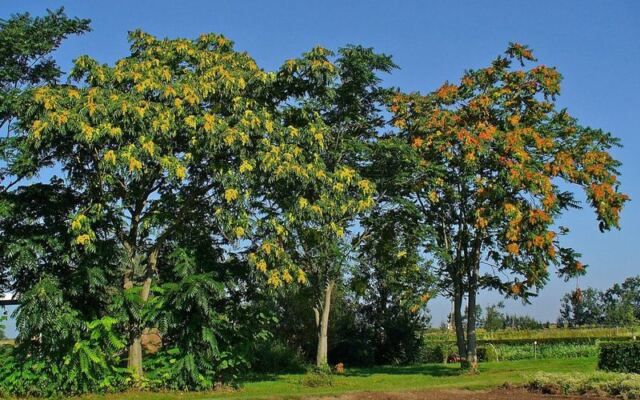
Tree-of-heaven (Ailanthus altissima) spreads by wind-blown seed, and it can also send up new shoots from its roots after the tree or its roots are disturbed. That combination explains why a patch can seem to keep coming back, and it is the heart of this guide.

South Carolina sources do list and document the species. The state’s 2025 State Wildlife Action Plan names tree-of-heaven and Callery pear as invasive exotic trees, and it also lists Chinese tallow in parts of the state.

A USDA South Carolina invasive plant booklet adds county-level documentation for tree-of-heaven.

Those records show the plant is present in the state. They do not tell us how common it is on your street, and they do not prove a statewide surge.

Your own yard is the best evidence you have.

So think of tree-of-heaven as a plausible suspect, not a confirmed identification. The next sections walk through how to check the plant, tell seedlings from root suckers, and pick a response that fits what you actually found.

Check whether the plant is tree-of-heaven
Check whether the plant is tree-of-heaven
© Purdue Extension – Purdue University

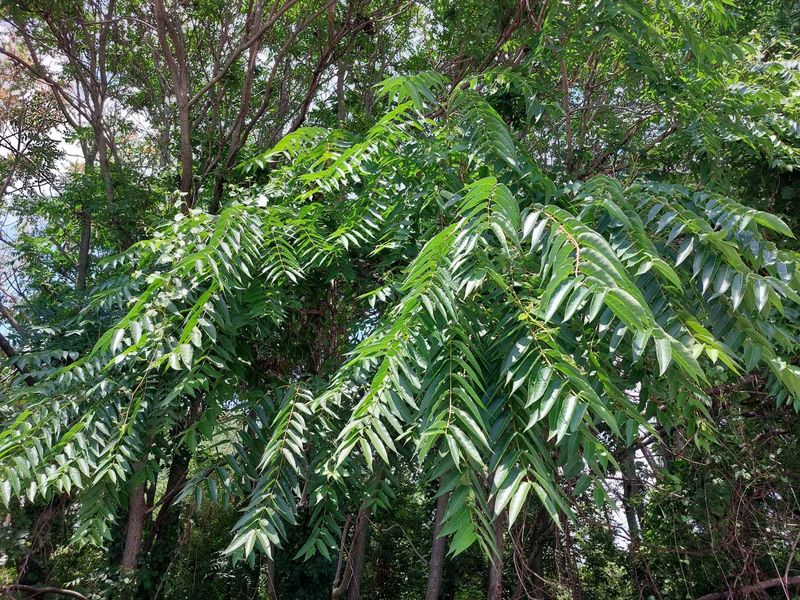
Start with the leaves. Tree-of-heaven has large compound leaves made of many leaflets, and a handy clue is the notch or teeth near the base of each leaflet, where a small gland sits.

The USDA identification sheet describes this feature and warns that the tree can be confused with native sumacs and walnuts.

The USDA South Carolina fact sheet notes that tree-of-heaven can send up root and stump sprouts after it is injured or cut.

That look-alike problem is why you should confirm the identification before removing anything. Pulling or cutting a native sumac or walnut by mistake takes out a useful tree.

A photo of the leaf, the stem, and the whole plant sent to a local Extension office can settle the question.

Other invasive trees can also fit the picture in South Carolina. Callery pear, including Bradford pear, can make fruit and seed only after cross-pollination, and Clemson Extension notes that Bradford pears cannot pollinate themselves.

A lone Bradford pear does not make fertile seed on its own.

Chinese tallow behaves differently again. The USDA South Carolina booklet points to seed spread, especially along waterways, and sprouting from cut stumps.

That is not the root-sucker habit described for tree-of-heaven, so the right plan depends on which tree you have.

Tell seedlings from root suckers
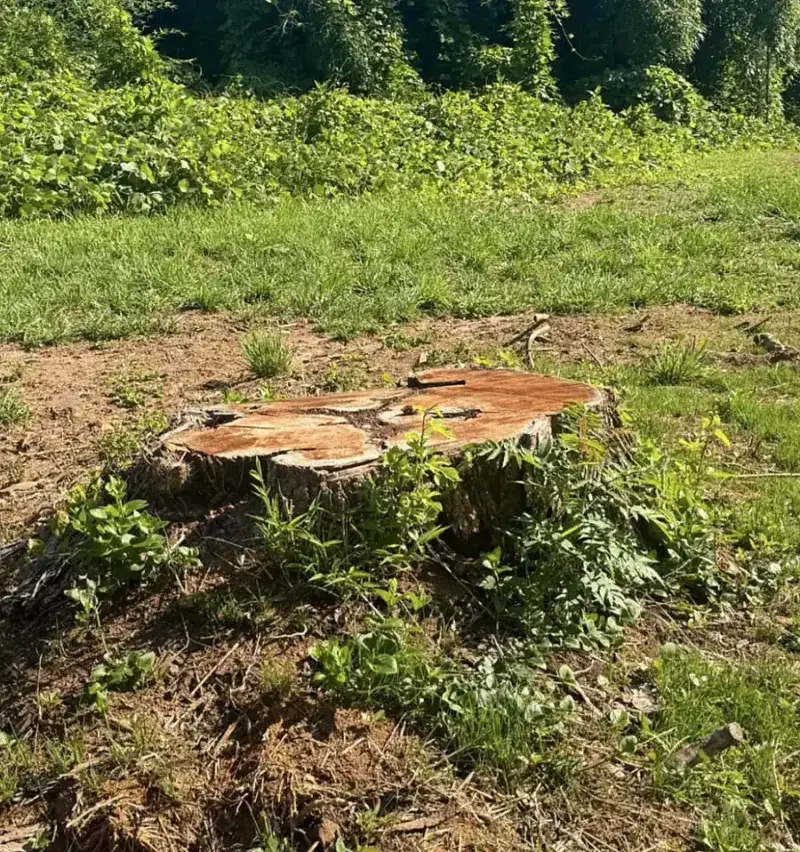
Tell seedlings from root suckers
© JB Stump Grinding

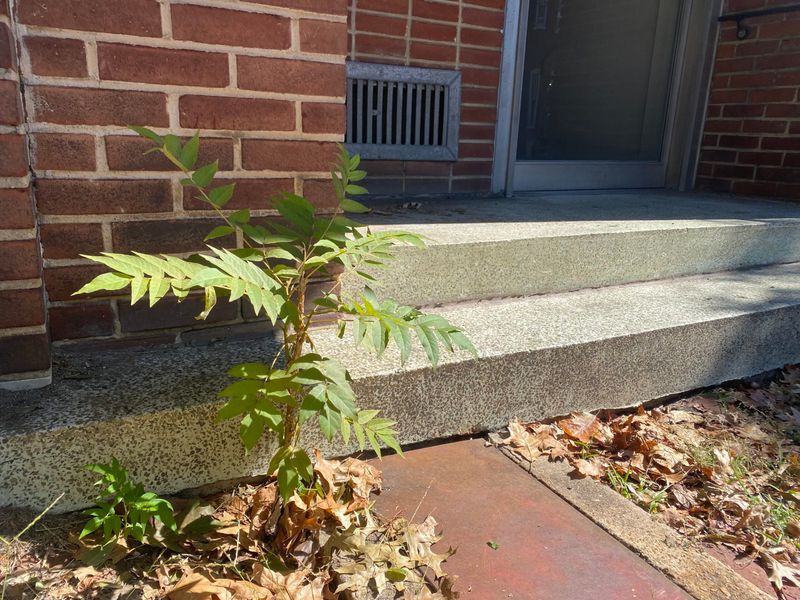
Two terms matter here, and they are not interchangeable. A seedling is a plant that began from a seed.

A root sucker is a shoot that grows from the root system of an established tree.

The difference shows up when you dig. A seedling usually has its own small root and no long connection to anything else.

A sucker stays attached to a larger root that may run sideways toward a parent tree.

Shoots that appear near a cut or damaged tree may well be suckers rather than newly sprouted seedlings. The NC State Extension page describes this sprouting from roots, and the USDA South Carolina fact sheet notes that leftover root pieces can regrow.

That gives you several reasons a shoot may return: an incomplete root pull, root fragments left in the soil, suckers tied to a living tree, or fresh seed blowing in. Pulling a complete, isolated seedling does not itself cause another plant to appear.

When a new one shows up, one of those other explanations is usually at work.

Pull small seedlings only when you can remove the roots
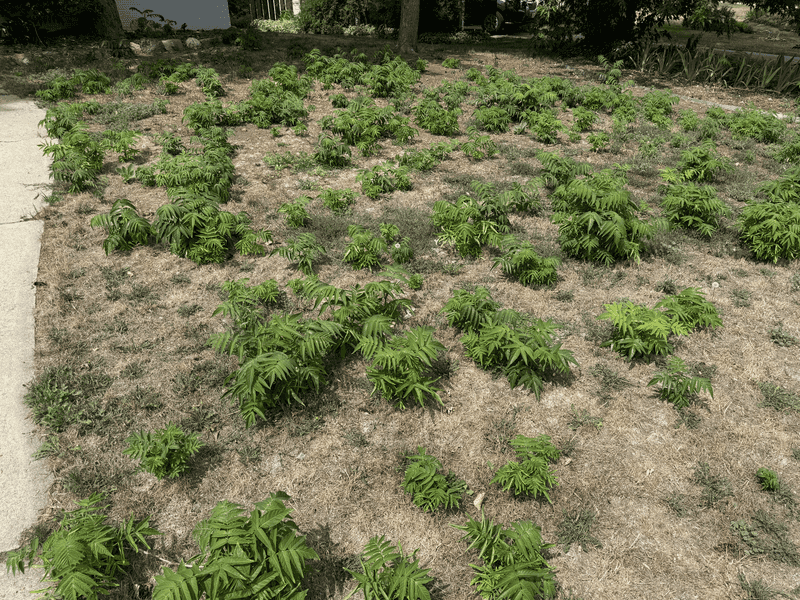
Pull small seedlings only when you can remove the roots
© Reddit

Small, seed-grown tree-of-heaven can be handled by hand. The Clemson-linked South Carolina fact sheet says hand-pulling in moist soil can work if the entire root system comes out.

Timing helps. Try it after a good rain, when the ground is soft and roots slide out more easily.

For plants that resist, loosen the soil with a trowel or spade and dig carefully so the root does not snap.

Check what you pulled. A clean root with a tip is a good sign, while a root that broke off partway may leave a piece behind.

Leftover fragments can regrow, so a plant that returns does not prove hand-pulling never works. It may only mean part of the root stayed in the ground.

Keep this advice for small plants. If the shoot is thick, if several come up in a line, or if it is tied to a large root, you are probably dealing with something bigger than a seedling, and pulling is no longer the right tool.

Cutting an established tree can lead to more shoots
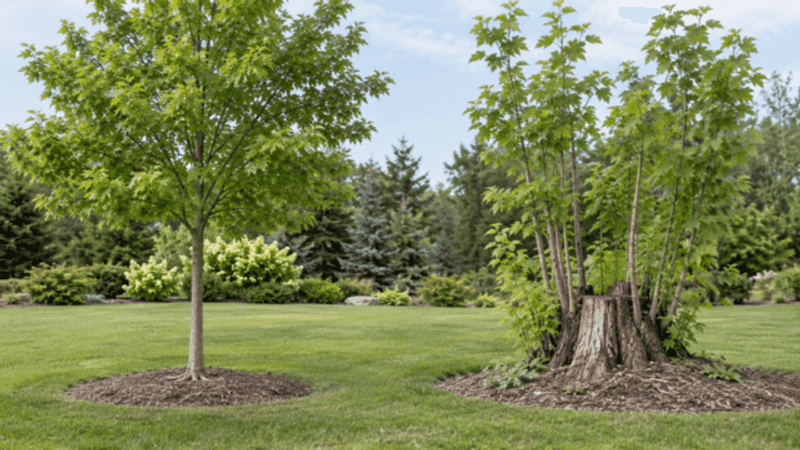
Cutting an established tree can lead to more shoots
© Cleaning

A mature tree is a different problem. It has a large root system, and injury can wake that system up.

The USDA South Carolina fact sheet notes that tree-of-heaven can send up root and stump sprouts after it is injured or cut. NC State Extension describes the same habit.

So if you cut one down and shoots pop up around the stump or across the yard, the cause may be the old root system, not a sudden wave of seedlings. Those shoots can be connected underground to the tree you removed.

One cut does not reliably end the problem. Control can take follow-up over several years, because new sprouts may keep appearing until the roots run out of stored energy.

Before you pick up a saw, confirm the species and think about what comes next. Cutting first and planning later is how a single tree turns into a yard full of shoots.

Get species-specific advice for established trees
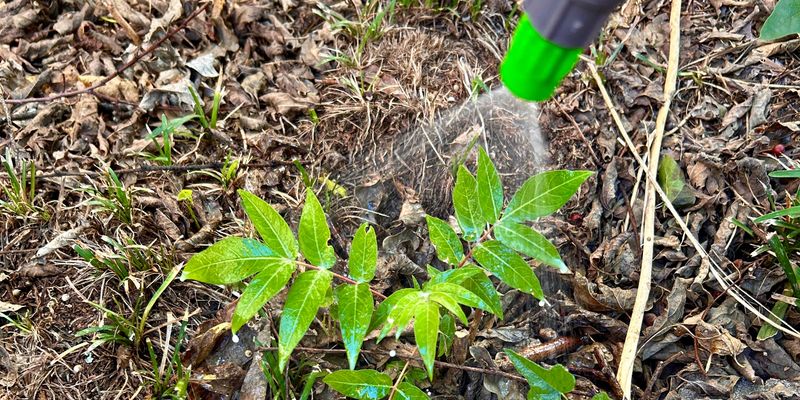
Get species-specific advice for established trees
© AOL.ca

If you have an established tree or suckers that keep coming back, ask a local Clemson Extension office or a qualified professional for advice about that species. Their guidance can account for your site and what grows nearby.

Be careful with general instructions. Clemson’s volunteer seedling guidance covers common yard trees, but it does not automatically fit tree-of-heaven.

Penn State Extension cautions that cut-stump herbicide treatment does not prevent root suckering.

If herbicide comes up, the product label is the rule. The EPA explains that labels set out where, how, how much, and how often a product may be used.

Follow the application directions and the protective equipment requirements printed there. Skip homemade mixtures and fixed schedules.

One more practical point is the sap. Reports of skin irritation are uncommon, and there are rare reports of more serious reactions, so there is no need for alarm.

Still, wear long sleeves and gloves during extensive handling and avoid getting sap on your skin.

Match your next step to the shoot
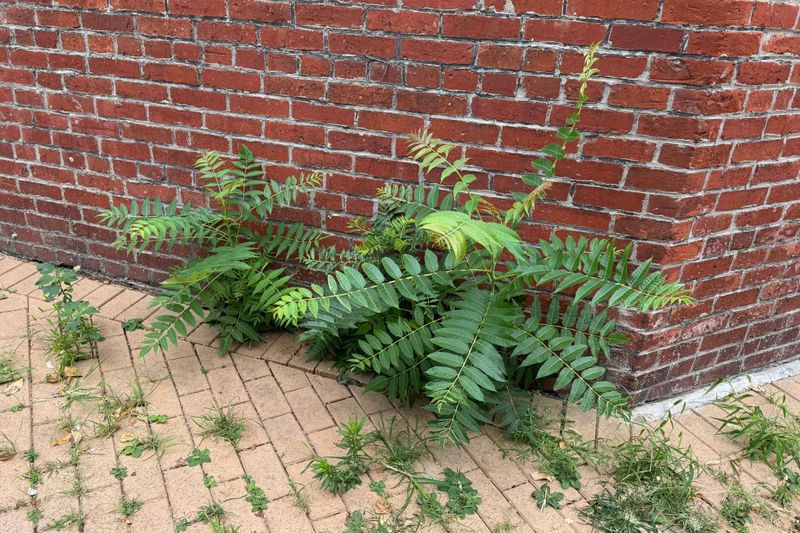
Match your next step to the shoot
© Casey Trees

Work through it in order. Confirm the species first, since sumacs and walnuts look similar.

Then dig a little to see whether you have a small seedling or a shoot attached to an established root system.

Recurring shoots can come from leftover roots, connected suckers, or new seed, and pulling a complete seedling does not cause a replacement. Details on regrowth are in the NC State Extension page, and the USDA South Carolina fact sheet covers the state side.

The shoot in your hand usually tells you more than the headline does.

Share this story

BR

Written by

Beau Rutledge

More from Beau Rutledge →

About Gardening Latest

Gardening Latest provides in-depth guides to maintaining and enhancing your garden and backyard. Learn how to make the most of the space you have and create a beautiful garden.

More about us →

Latest stories

  • Kentucky GardeningKentucky Has a Tiny Mammal With a Venomous Bite, and It’s Hunting Under Your Lawn All Winter

    Kentucky Has a Tiny Mammal With a Venomous Bite, and It’s Hunting Under Your Lawn All Winter

    10 min ago
  • Florida GardeningWhy That Bald Eagle Keeps Circling Over Your Florida Yard Isn’t an Accident

    Why That Bald Eagle Keeps Circling Over Your Florida Yard Isn’t an Accident

    16 min ago
  • Maryland GardeningThe Hammer-Headed Worm Showing Up In Maryland Gardens Carries The Same Toxin As Pufferfish

    The Hammer-Headed Worm Showing Up In Maryland Gardens Carries The Same Toxin As Pufferfish

    23 min ago
  • Iowa GardeningYou Pull It, It Comes Right Back: The Invasive Tree Taking Over Iowa Neighborhoods

    You Pull It, It Comes Right Back: The Invasive Tree Taking Over Iowa Neighborhoods

    29 min ago
  • Virginia GardeningThat Terrifying Bug You Keep Spotting In Your Virginia Garden Is Actually A Friend

    That Terrifying Bug You Keep Spotting In Your Virginia Garden Is Actually A Friend

    35 min ago

Gardening by state

Stories for your state, and the hardiness zone most of it gardens in.

Keep exploring

Read next

All South Carolina Gardening →
South Carolina GardeningA Neighbor’s Tree Just Landed in Your South Carolina Yard, and Here’s Who Really Pays
South Carolina Gardening

A Neighbor’s Tree Just Landed in Your South Carolina Yard, and Here’s Who Really Pays

2 hr ago
South Carolina GardeningSouth Carolina Gardeners Share Their Yards With These Venomous Creatures, So Here’s How To Spot Each One
South Carolina Gardening

South Carolina Gardeners Share Their Yards With These Venomous Creatures, So Here’s How To Spot Each One

6 hr ago
South Carolina GardeningSo That’s Why Coyotes Keep Howling Near Your South Carolina Home Late at Night
South Carolina Gardening

So That’s Why Coyotes Keep Howling Near Your South Carolina Home Late at Night

9 hr ago

More from South Carolina Gardening

  • Those Mud Towers Popping Up in Your South Carolina Yard Are Likely Built by Crawfish

    Nov 21
  • Spotted A Yellow Jacket Nest Around Your South Carolina Home? Here’s Exactly What To Do

    Nov 21
Back to top

Leave a response Cancel

Your email address stays private. Required fields are marked with an asterisk.

Gardening Latest

In-depth guides to maintaining and enhancing your garden and backyard: how to make the most of the space you have, and how to make it beautiful.

  • Facebook
  • X
  • Pinterest
  • YouTube

We may earn a portion of sales from products or services that are purchased through our site as part of our affiliate partnerships with retailers.

Explore

  • About GardeningLatest.com
  • Contact Us
  • Terms and Conditions
  • Privacy
  • Editorial Note:
  • FTC Disclosure

Newsletter

New garden guides and seasonal tips, straight to your inbox.

We’ll email you a link to confirm. Unsubscribe any time.

Almost there! Check your inbox and tap the link to confirm.

© 2026 Gardening Latest. All rights reserved.

Back to top