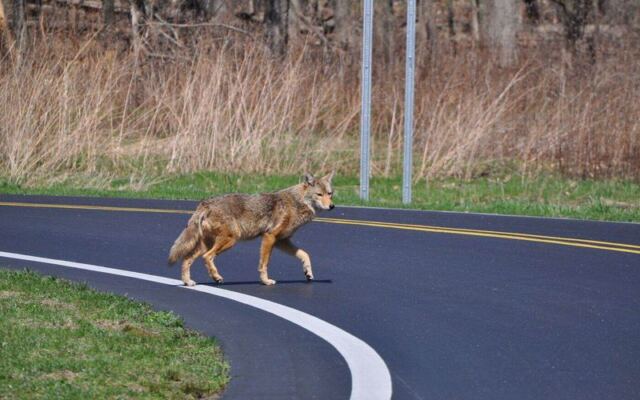
The clue is usually small: a twisted, rope-like pile of scat or a neat trail of paw prints in soft soil. Either one may point to a coyote passing through, even if nobody ever saw the animal.
Neither one proves it, and neither one tells you when the animal came by. Knowing what to look for helps you stay calm and make smart choices.
Coyotes live throughout Maryland
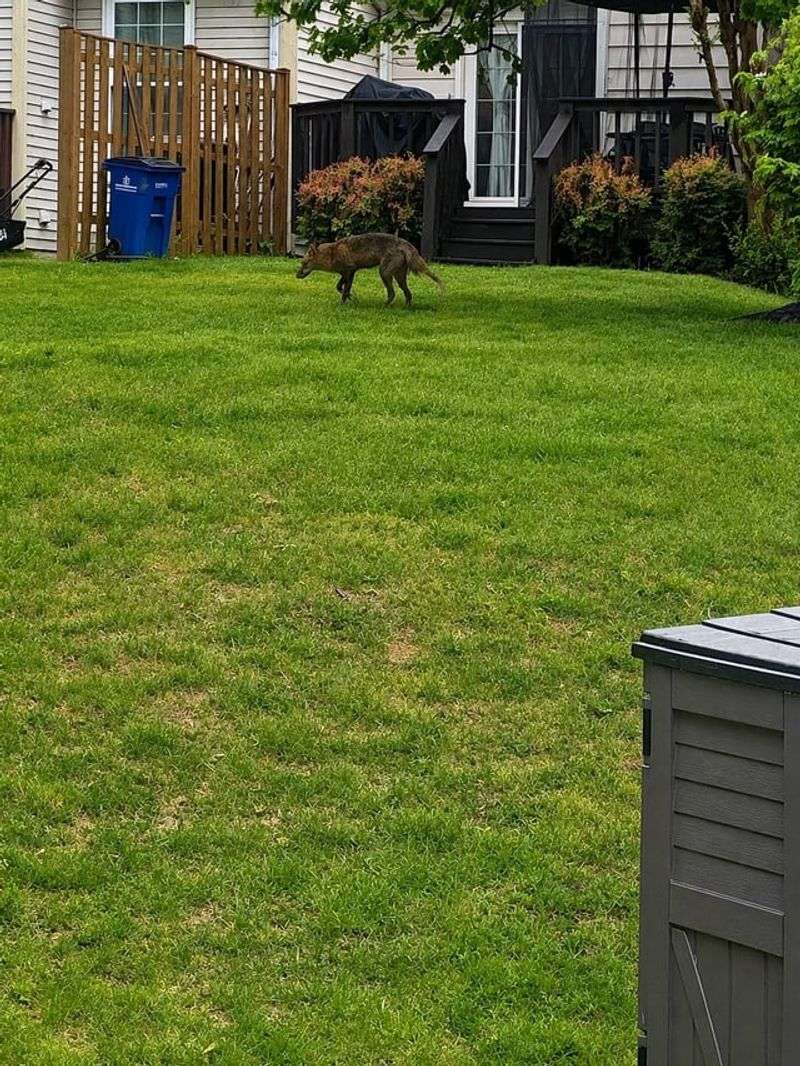
Coyotes are found all across Maryland, and a yard visit is a real possibility even if you never spot one. Maryland DNR says coyotes occur statewide, with the highest numbers in western Maryland and the lowest on the Eastern Shore.
Their habitats include suburbs, so neighborhoods with wooded edges, creeks, or open lots can be part of their range.
That statewide picture is useful background, but it has limits. Knowing that coyotes live in Maryland does not confirm that one crossed your particular property.
It simply makes the idea reasonable when you find something odd in the grass.
Coyotes can also go unseen. Maryland’s coyote fact sheet notes that they may use suburban habitat without people noticing them.
So a homeowner can share a neighborhood with coyotes and never see one at all.
That is why signs like scat and tracks catch our attention. They can add support to a guess about who visited.
Still, a guess is where they leave you, and the next sections show how to weigh each clue sensibly, one step at a time.
Think of each sign as a puzzle piece rather than a finished picture. A single piece might fit several animals, including foxes, dogs, and raccoons.
Several pieces together, plus what you know about your neighborhood, give a stronger sense of what may have happened.
What scat can suggest
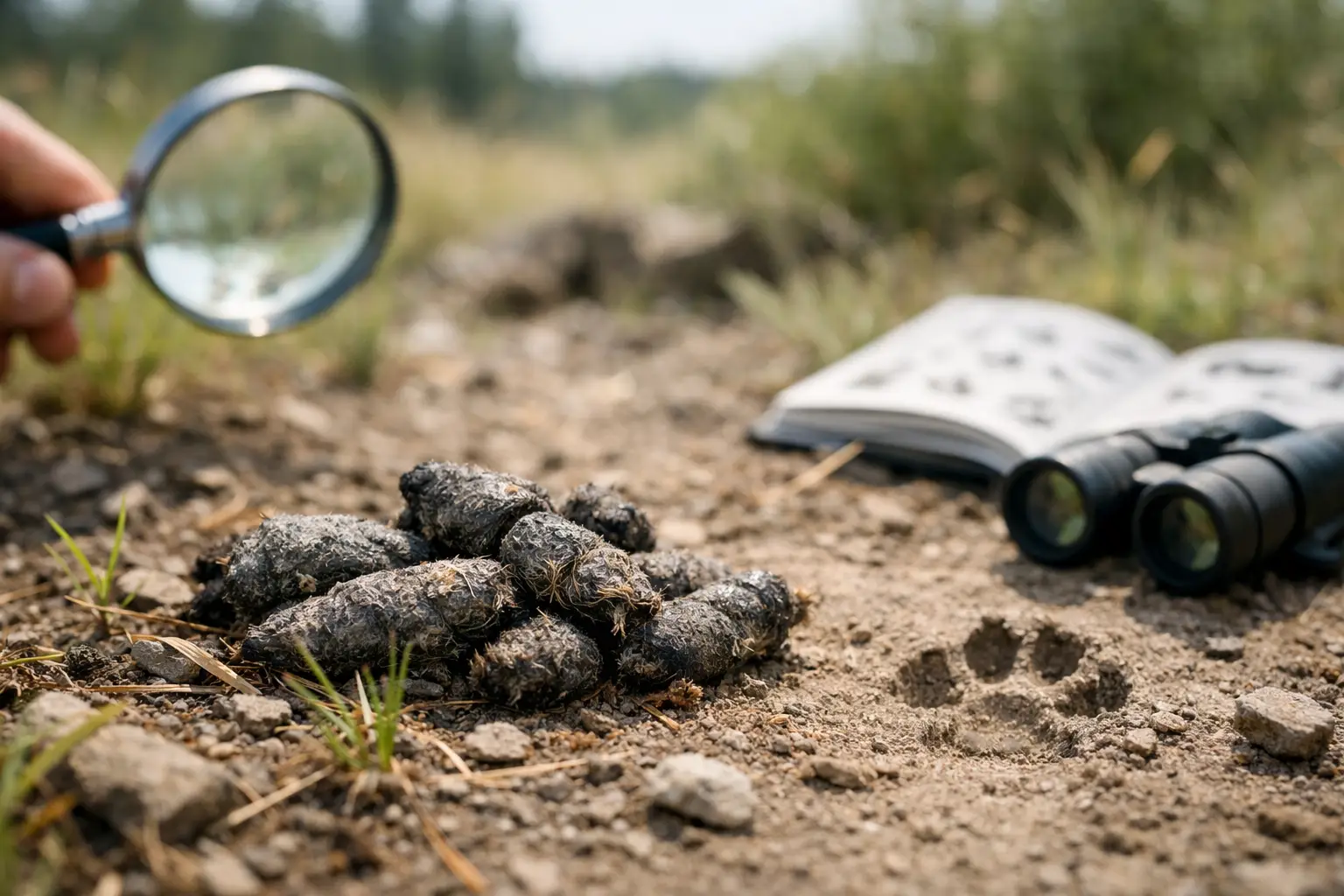
Coyote scat is often described as ropey or segmented, with tapered ends. It may contain hair, bones, feathers, seeds, or other plant matter.
Maryland DNR’s furbearer guide lists features like these as clues to look for.
Notice the word clues. What an animal eats changes from week to week, so the shape and contents of its droppings change too.
A coyote that ate mostly berries will leave something different from one that ate a rabbit.
Age and exposure matter as well. UC IPM notes that scat varies with diet and age and changes as it sits outdoors.
Rain, sun, and insects can alter how a pile looks.
So if you spot a twisted, tapered pile with hair in it, you can reasonably say it fits what coyotes sometimes leave. You cannot say it must be a coyote.
Other animals eat similar foods and leave droppings that overlap in appearance.
Look from a distance and note the details with your eyes only. Size, shape, color, and visible contents are all worth noticing.
Treat them as hints about diet and as a starting point, never as a test that settles the question.
Why scat may look like a fox’s
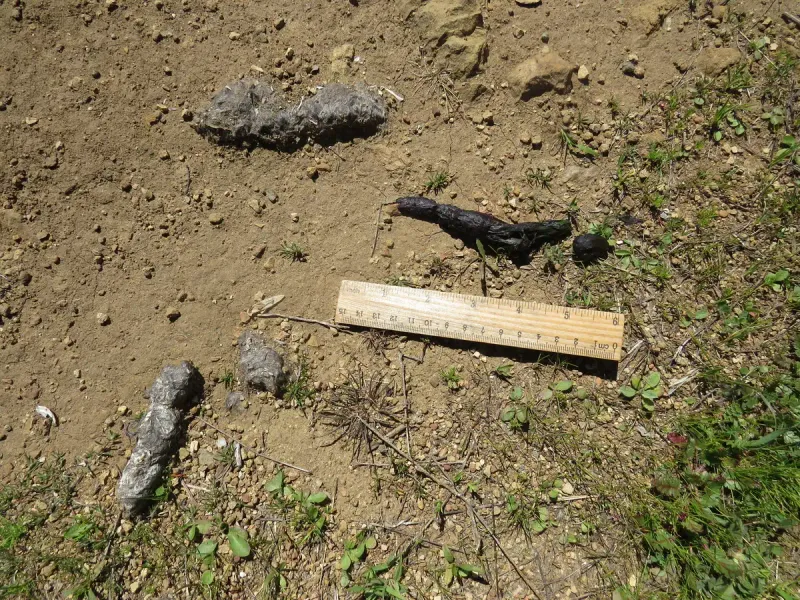
Maryland DNR cautions that a large fox and a small coyote can leave scat that looks the same. Size is one reason.
The bigger the fox and the smaller the coyote, the more their droppings can overlap in width and length.
Hair and bones do not solve the puzzle either. They show that the animal ate animal material, such as a mouse or a bird.
But foxes also eat animal prey, so those contents do not point to just one species.
The same caution appears in the DNR furbearer guide, and DNR’s coyote page reminds readers that coyotes are one of several wild canids in the state.
A practical way to think about it: scat is one uncertain clue, not a verdict. If you find a pile, jot down what you see and then look around for other signs, such as a trail of prints.
Each added clue narrows the possibilities a little.
If the answer matters to you, a local wildlife professional may be able to help you sort it out from photos. Until then, a calm shrug of uncertainty is perfectly reasonable.
Look at a trail of tracks, not one print
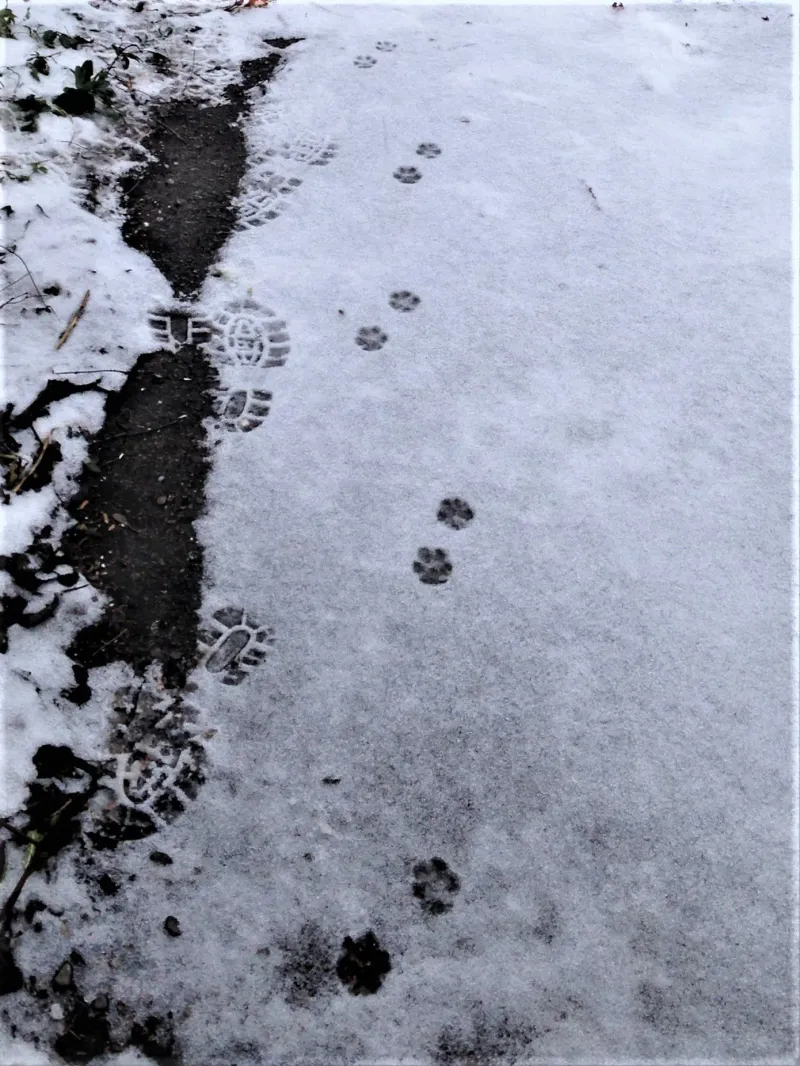
One print can fool anyone. Soil texture, moisture, and the way an animal stepped all change how a single track looks.
A series of prints tells a much fuller story.
According to Virginia Cooperative Extension, coyote prints tend to be relatively oblong. The two central nails sit close together and typically point forward.
When the animal walks, the rear foot often lands in the front track, so the prints can appear to overlap.
Domestic dogs often differ in these ways. Their toes and nails frequently point outward, and their gait typically does not place rear tracks on top of front ones.
Dog prints can also look rounder or more spread out.
These are tendencies, not guarantees. Dogs come in every size and shape, and some will leave prints that look very much like a coyote’s.
A straight line of prints does not prove a coyote either, because plenty of animals walk in a line.
Walk the whole trail from a respectful distance and look for repeated patterns. Do the prints overlap?
Do the nails point forward or outward? Does the trail wander toward the woods or toward a neighbor’s gate?
If the clues lean toward coyote, you can say it may have been one. If they are mixed, treat the identification as open.
Admitting uncertainty is part of reading tracks well.
A morning discovery cannot date the sign
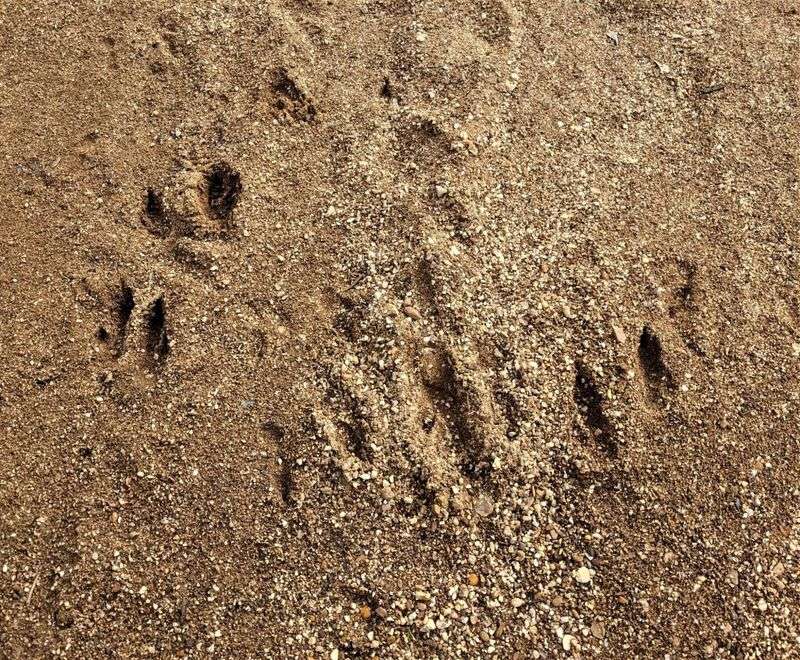
Finding something at breakfast time tells you when you noticed it, not when it was left. A track or pile of scat could have been there for hours, or for days.
Nothing about a morning find shows the hour of the visit.
Scat changes over time. UC IPM notes that its look depends on diet and age and shifts with exposure to weather.
Because of that, a pile’s color or texture is a poor clock.
Tracks have the same problem. A rainstorm can soften the edges, and dry soil can hold a print for a long time.
Without a record of conditions, you cannot say when a print was made.
It also helps to avoid a common assumption. Coyotes are not active only at night, and one sign in your yard does not reveal a nightly routine.
A single discovery is a single snapshot.
If timing matters to you, try a simple habit. Check the same spot at the same time each day and take dated photos.
That will not solve the mystery fully, but it gives you a better record than a guess.
Photograph signs and keep your distance
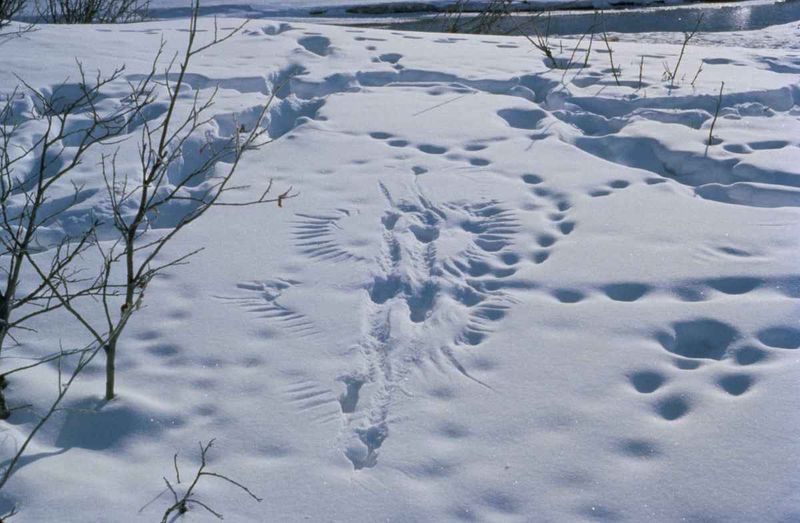
A phone camera is the safest tool you own for this job. Photograph a print or scat right where it lies, and place a size reference such as a coin, key, or ruler next to it.
Take a wide shot too, so the surroundings show.
When several prints are available, photograph more than one. Virginia Cooperative Extension suggests looking at a series rather than a single print, and a set of photos preserves that detail.
A local wildlife professional can then review them and offer an opinion.
Keep your hands off. Do not pick up or closely handle scat, and keep children and pets from touching or sniffing it.
Dogs in particular can be tempted to investigate, so steer them away.
If contact does happen, wash your hands. CDC guidance advises handwashing after contact with wildlife or animal poop.
Soap and running water are enough for most situations.
Once you have your photos, you can clean up with gloves or a bag, or simply leave the sign to fade. The pictures are what matter now.
They let you share the details without anyone taking a risk.
Take sensible steps around pets
A sign in the yard may point to coyote activity, but it cannot name the animal or date its visit, and it is not a signal of immediate danger. What it can do is prompt a few easy habits.
Those habits also help with many other wildlife encounters.
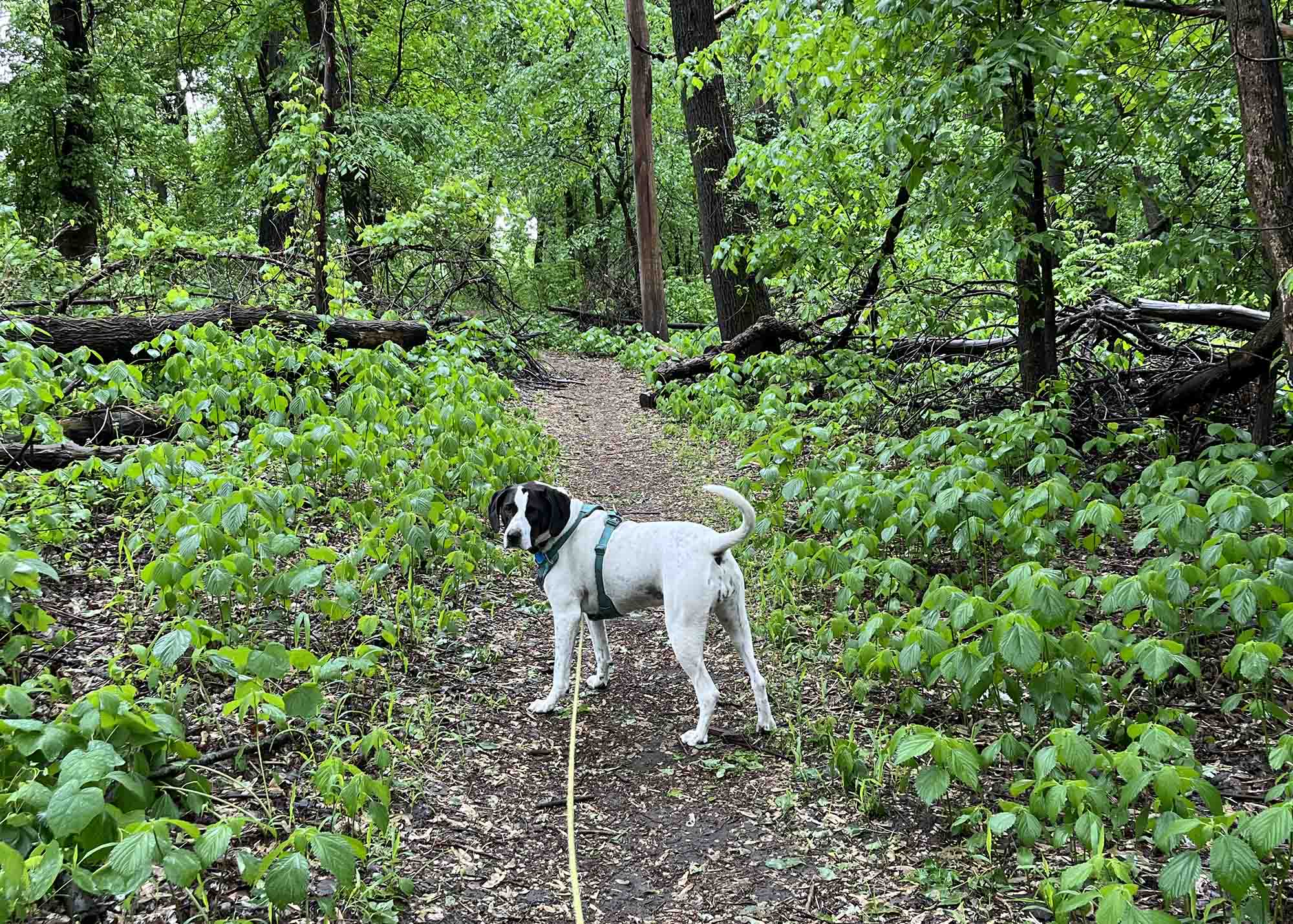
Maryland DNR recommends avoiding outdoor pet feeding, leashing pets, and going outside with them. DNR’s coyote page lists these steps as ways to reduce potential conflicts.
Bowls left on a porch can draw all sorts of visitors.
The CDC adds that pets should be supervised outdoors and not allowed to approach wildlife. A short leash and a watchful eye go a long way.
Some mysteries stay mysteries, and that is fine. A careful look, a few photos, and sensible routines will serve you better than certainty you cannot have.
Share this story