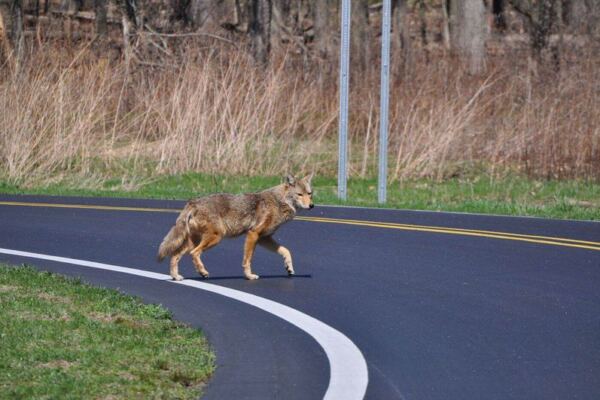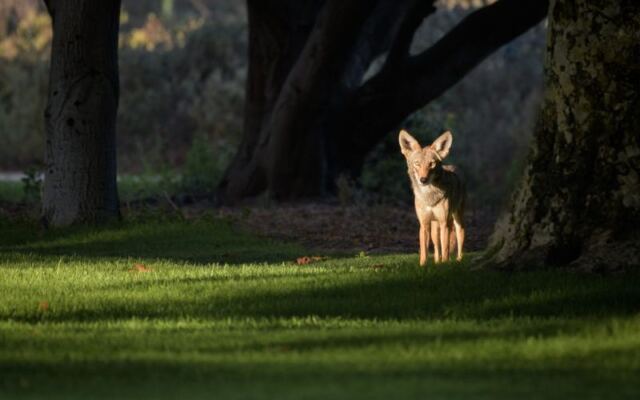
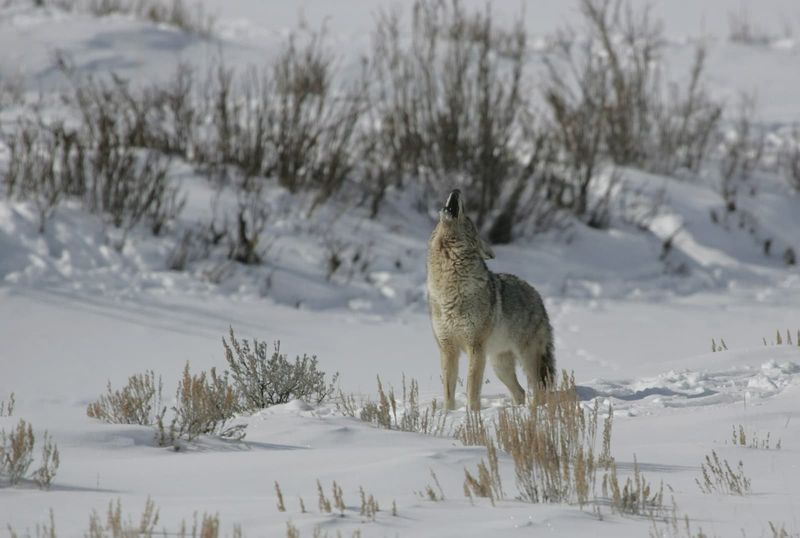
Those high, wavering yips and howls after dark are coyotes talking to each other, and they often include a message about territory. Hearing them can feel spooky, but a call by itself is usually just communication, not a sign of trouble.
Maryland coyotes have lived in the state for decades, so night music near neighborhoods is not new. Here is what the sounds can tell you, what they cannot, and what to do at home.
Why coyotes call in late November
Maryland’s coyote breeding season runs from late January through March and peaks in February, according to Maryland DNR. That means a howl in late November does not tell you breeding is underway.
Coyotes also call outside that window, so a late-autumn chorus is not out of place.
So why might you hear them now? Nobody can say for certain from the sound alone.
Coyotes use their voices all year to keep in touch, and cool, still nights can make any sound seem bigger and closer than it is.
There is one seasonal pattern worth knowing about. The USDA’s coyote ecology reference says young coyotes generally stay with their family groups into late summer or fall, when some may disperse.
Dispersal in fall or winter is a general possibility, not an explanation for the howls outside your window. A young coyote passing through is one idea, but a settled family calling to each other is just as plausible.
A handy way to think about it: the calendar can tell you what is typical, but it cannot explain one particular night. Treat late-November howling as ordinary coyote chatter.
If you want to track coyote activity near your home, notes about when and where you see animals will tell you far more than the sound alone.
What coyote howls can communicate
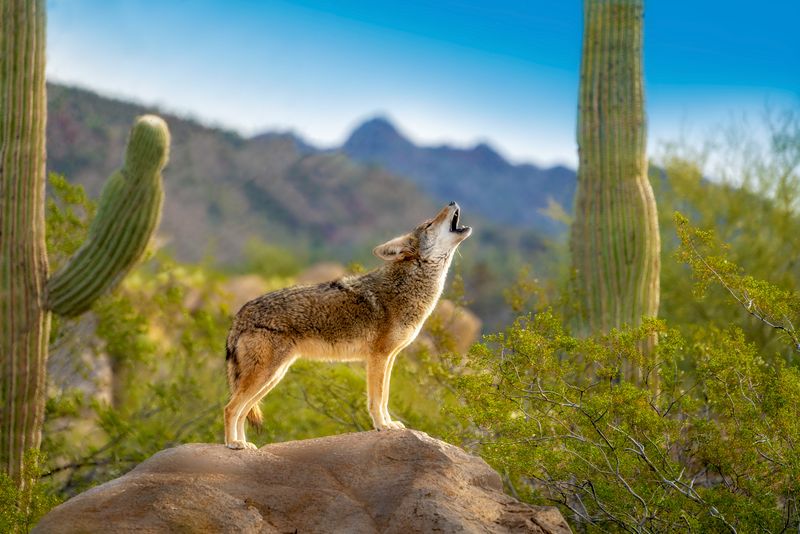
Picture a neighborhood group chat, but with voices instead of phones. Coyotes howl and yip mainly to communicate with one another, and part of that communication is signaling territory.
Maryland’s WildlifeHelp guidance describes howling as primarily communication and territory related, and says hearing it without any concerning behavior is generally not a reason for alarm.
Those are broad purposes, though, not a dictionary. Coyotes make a wide range of sounds, including howls, yips, and barks, and the same sequence should not be read as one fixed message.
The USDA’s coyote reference describes this variety of vocalizations. A listener on the porch cannot tell whether a call means “this is my area,” “where is everyone,” or something else entirely.
A few popular beliefs are worth setting aside. Howling does not reliably mean a group just caught prey, and WildlifeHelp calls that a mistaken belief.
A call is also not good evidence that people are in danger, and it does not point to a den.
What you can say is simple. Coyotes are out there, they are talking, and they usually want nothing to do with you.
Enjoy the odd soundtrack, and save your attention for what you actually see, like an animal that lingers close to people.
Can a chorus tell you how many coyotes are nearby?
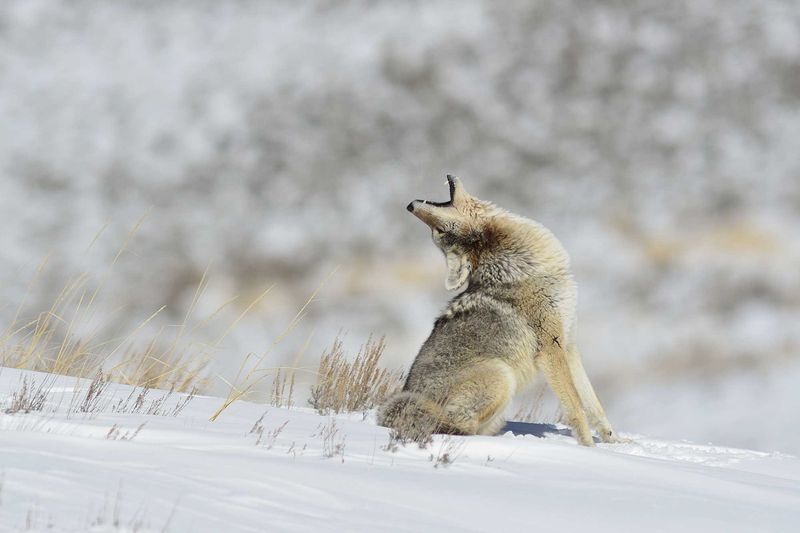
A wild chorus can sound like a dozen animals. Often it is far fewer.
Researchers tested this in a study called Do You Hear What I Hear? They played recordings of one to four coyotes, and listeners tended to guess higher group sizes than were actually calling.
The reason is easy to picture. Coyote voices overlap, rise and fall, and bounce around, so a few animals can seem like a crowd.
Maryland’s WildlifeHelp guidance notes the same thing, that people commonly overestimate how many callers there are.
Distance is just as slippery. Cold air, trees, houses, and open fields all change how sound travels, and the sources here do not give a way to judge how far away a particular Maryland caller is.
A howl that seems to come from right behind the shed could be a good distance off.
So the honest answer is that a chorus cannot tell you the group size or how close the animals are. If you want to know whether coyotes are using your area, look for things you can verify, such as tracks, scat, or an animal seen on a camera or in daylight.
Coyotes live across Maryland, but not in equal numbers
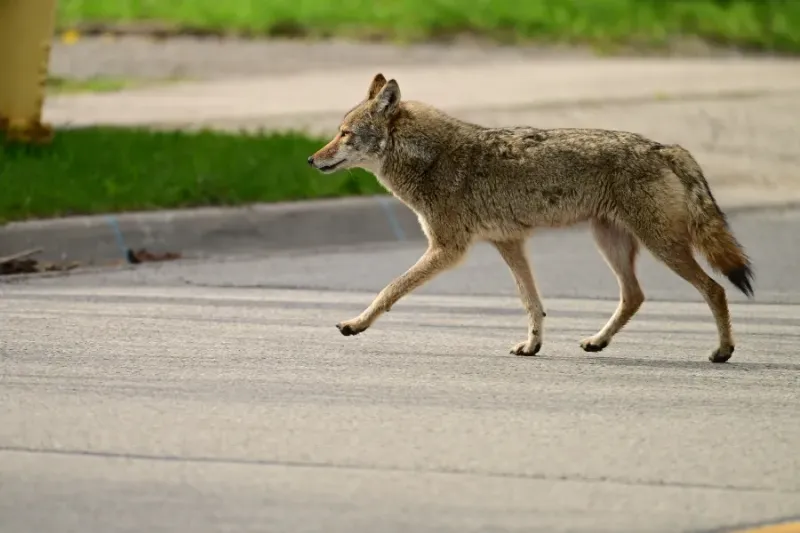
Coyotes are relative newcomers to Maryland, at least in the history books. They were first documented in the state in 1972, and Maryland DNR says they now occur statewide.
That is a long stretch of settling in, over more than fifty years.
Statewide does not mean evenly spread. DNR materials describe higher sightings or densities in western and central Maryland and lower levels in the southern and eastern parts of the state.
A neighbor in Frederick County and a friend on the Lower Shore may have very different coyote experiences.
The story of how coyotes got here is covered in a DNR article, Coyotes in Maryland: Where they came from and what to expect. It describes a historical spread into the state, not a wave happening this month.
That difference matters when you hear howls. The state’s sources support a past range expansion and a present statewide presence.
They do not show a sudden surge of coyotes this season, or link a particular night’s howling to expansion. Hearing coyotes is likely a sign that they have been living nearby for a while, not that something dramatic has changed.
Make your yard less inviting to coyotes
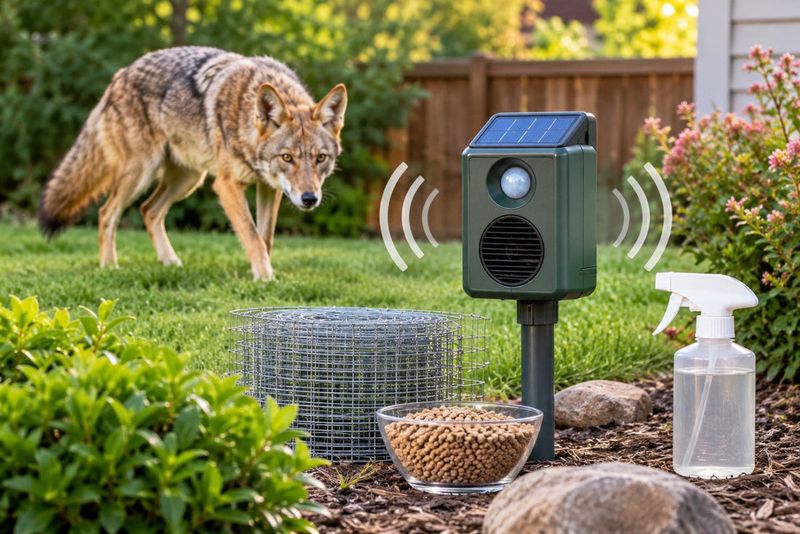
Good news first: a howl alone does not call for any response. What helps is making your property boring to a hungry animal.
Montgomery Parks offers a handy list that works for any Maryland yard.
Start with food. Never feed coyotes, on purpose or by accident.
Bring pet food indoors, secure garbage and compost in sturdy closed containers, and keep birdseed from piling up on the ground, since spilled seed draws small animals that in turn draw coyotes.
Next, think about pets. Keep cats indoors, walk dogs on a leash, and supervise small dogs while they are outside, even in a fenced yard.
Do not let pets interact with a coyote, even a calm one.
A quick evening routine can cover most of this. Before bed, check that the bowl is inside, the lid is latched, and the feeder area is swept.
Turn on a porch light before letting a dog out, and stay with it.
These habits help with raccoons, foxes, and rats too, so the effort pays off beyond coyotes. Think of it as setting the table for nobody.
What to do if a coyote acts boldly
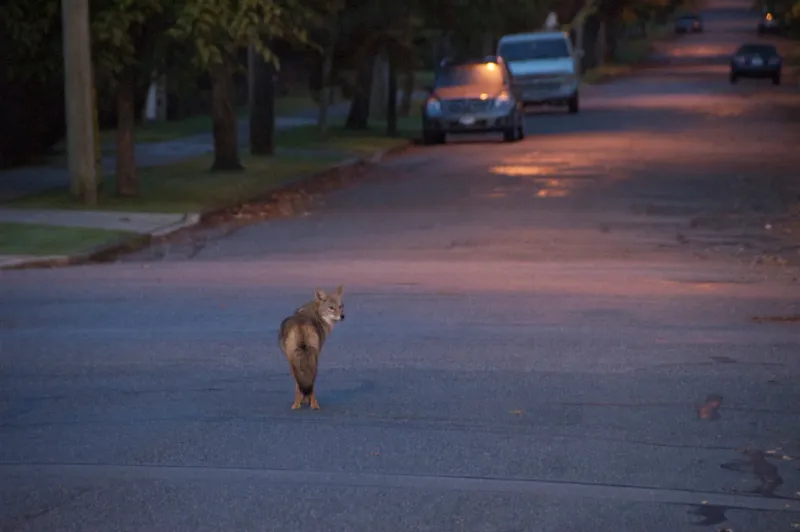
Most coyotes keep their distance, but now and then one may come closer than it should. If that happens, make yourself look large and yell.
Park guidance from Montgomery Parks recommends this to deter a bold animal.
If the coyote keeps coming and seems threatening, do not run. Move toward other people or toward a vehicle instead.
Keep any pets close, and do not try to approach or feed the animal.
Reporting has a purpose too. Unusual, aggressive behavior, or any incident involving contact, should go to your local animal services or Maryland wildlife authorities, as outlined in the DNR article Coyotes in Maryland.
A howl by itself is not a reason to call.
It helps to note the time, place, and what the animal did, so officials have clear details. Then take a breath.
A bold coyote is rare, and most nights the only thing you will get from them is a song from the dark.
Share this story