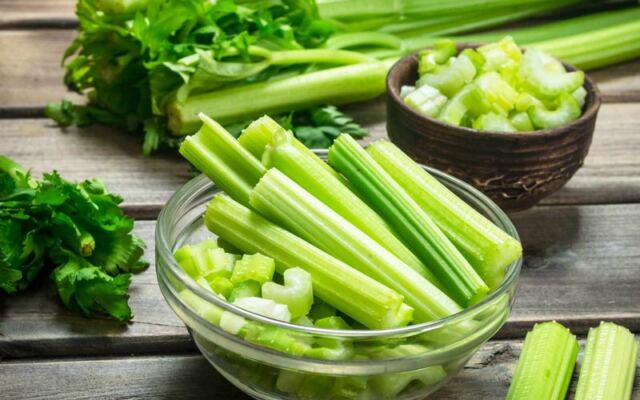
Eating celery every day changes your plate in simple ways: you add a crunchy, low-calorie, water-rich vegetable with some fiber and vitamin K. Whether that shifts your weight or overall diet depends on how much you eat and what the celery replaces.
Florida has a long history with this vegetable, from Sanford’s Celery City days to cool-season gardens. Here is what a daily stalk can and cannot do for you.
What does celery reliably add?
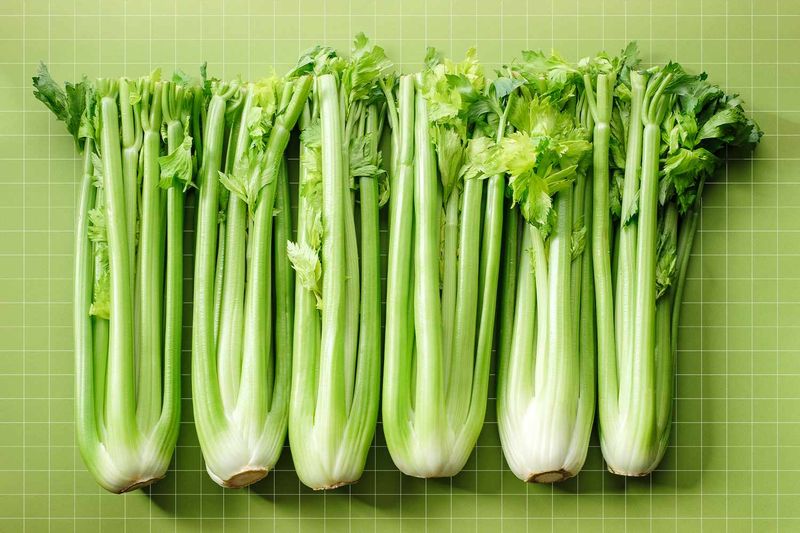
Raw celery gives you water, a little fiber, and vitamin K for very few calories. According to USDA nutrient data, 100 g of raw celery has about 16 calories, 95.43 g of water, 1.6 g of fiber, and 29.3 micrograms of vitamin K.
Those numbers describe what is in the food. They are composition data, measured per 100 g, which is roughly a couple of medium stalks.
They do not tell you what a person will feel or notice after eating celery every day.
That difference matters. A vegetable can be a good ingredient without causing a dramatic, predictable change in your body.
Celery earns its place the way many vegetables do: it adds crunch, volume, and some nutrients to meals and snacks without adding many calories.
Think of the baseline this way. If you swap a salty, heavy snack for celery with a bit of peanut butter, your day looks different on paper.
If you simply add celery on top of everything else you eat, the change is much smaller. The nutrients are real, but the promised transformations are not part of the nutrition label.
So the honest answer to the headline starts here. Daily celery adds a light, hydrating, vitamin K-containing vegetable to your routine.
Anything beyond that needs stronger proof than a nutrient table can give.
Does celery change weight or digestion?
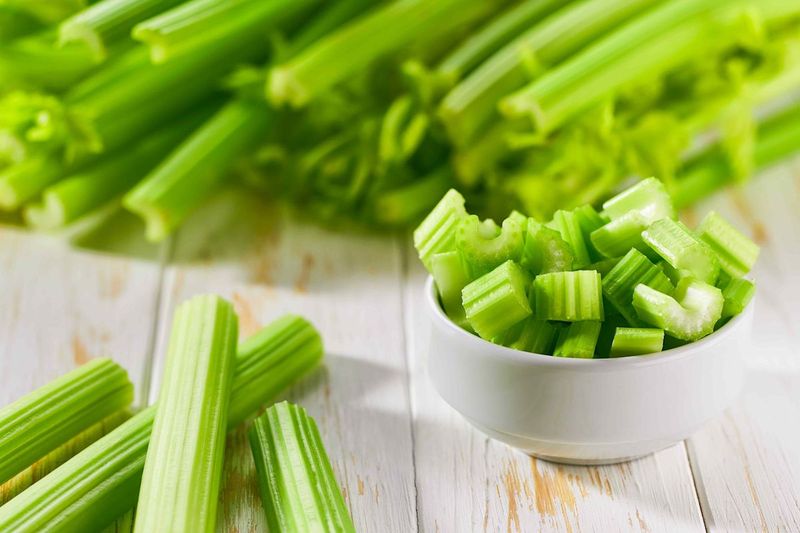
Weight is where celery myths pile up. You may have heard that celery burns more calories than it contains.
Tufts nutrition experts reject the idea of negative-calorie foods as a weight-loss strategy, and celery is no shortcut.
What celery can do is take up space on your plate for few calories. If you reach for celery sticks instead of chips, your total intake may drop.
If you eat celery and then add a big scoop of dip or a second dessert, it may not. The result depends on portion size and what the celery replaces.
Digestion is a similar story. Celery does contain fiber, about 1.6 g per 100 g in the USDA data, and fiber is part of how the digestive system works.
But having fiber in a food is not proof that a daily serving will reliably change how your gut behaves.
Your own results will vary with the rest of your diet, how much water you drink, and how your body handles raw vegetables. Some people find raw celery filling and easy on the stomach.
Others find stringy stalks less comfortable.
A practical test is simple. Notice what celery replaces in your day, keep the portion reasonable, and judge it by how it fits your meals.
Do not expect a promised change in weight or digestion from the stalks alone.
Blood-pressure studies tested celery preparations
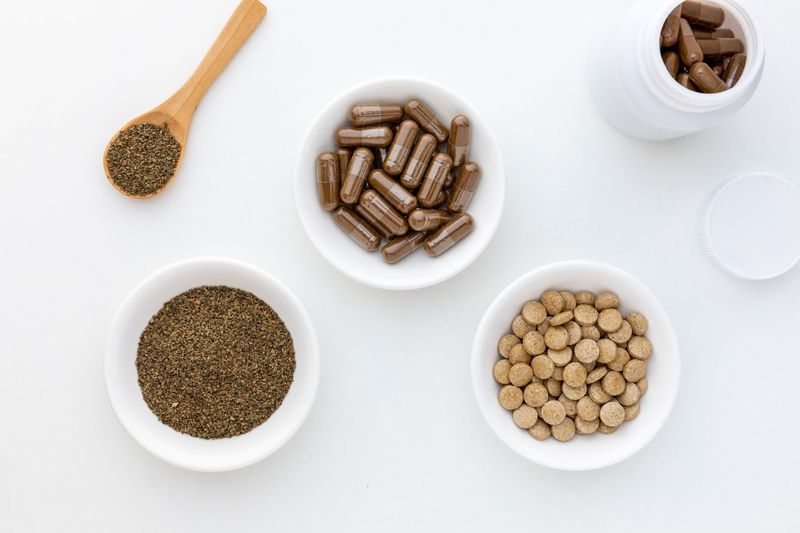
Headlines about celery and blood pressure usually trace back to research on concentrated forms, not a stalk on your cutting board. A 2025 systematic review and meta-analysis reported possible benefits for blood pressure, fasting glucose, and triglycerides from celery preparations.
Before anyone gets excited, look at the limits. The review combined a small number of trials with limited total participants, and the results differed a lot from study to study, which researchers call substantial heterogeneity.
In plain terms, the studies were too few and too different to give a firm answer.
Another piece of research is a randomized trial in which 52 people with hypertension took 1.34 g per day of celery-seed extract capsules for four weeks. That is a supplement made from seeds, not celery stalks eaten as food.
Neither source shows that eating celery stalks every day lowers blood pressure or treats a disease. Capsules and extracts can contain much more of a particular plant compound than a normal serving of vegetable.
If you have high blood pressure, celery can still be part of a vegetable-rich eating pattern. But it does not replace medication or medical care.
Talk with your clinician before adding celery-seed supplements, since a capsule is a different product from a snack.
Juice is not the same as whole celery

A tall glass of celery juice and a crunchy stalk may come from the same plant, but they are not the same food. Most juicing removes the fiber, so what you drink is missing a main feature of the whole vegetable.
Mayo Clinic says in its juicing guidance that juicing is no healthier than eating whole fruits and vegetables. It also says the evidence does not support juice cleanses’ claims to remove toxins or cause weight loss.
That means celery juice should not be treated as a stronger or more powerful version of eating celery. It is simply a different way to take in the vegetable, one with less fiber and a lot less chewing.
Chewing matters for everyday eating. A bowl of sliced celery takes time to eat, while juice goes down quickly.
Many people also find a stalk more satisfying than a glass of liquid.
If you enjoy celery juice, you can drink it as a beverage. Just skip the promises about detox or fast results.
For most people, the simpler choice is to eat the stalks, add them to soups and salads, and save the juicer for when you like the taste.
A daily serving calls for a few precautions
Celery is an everyday food for most people, yet a few readers need to be careful. If you take warfarin or another vitamin K-antagonist medication, vitamin K intake matters.
The NIH Office of Dietary Supplements says sudden changes in vitamin K intake can increase or decrease the medication’s anticoagulant effect.
Celery contains vitamin K, so the goal is consistency. Keep your intake steady from week to week, and talk with your clinician before making a major diet change, such as starting a daily celery habit.
Allergy is the other big caution. According to Anaphylaxis UK, celery can be an allergen, and reactions may be mild or, rarely, serious.
If you know or suspect you are allergic, seek medical advice instead of testing yourself with a daily serving.
Last comes food handling. FDA advice is to wash produce under running water and not to use soap, detergent, or commercial produce wash.
For celery, that means rinsing the stalks well, rubbing gently, and drying them with a clean towel or paper towel. It is a small step that makes a daily habit safer.
Florida celery grows in a cool-season window
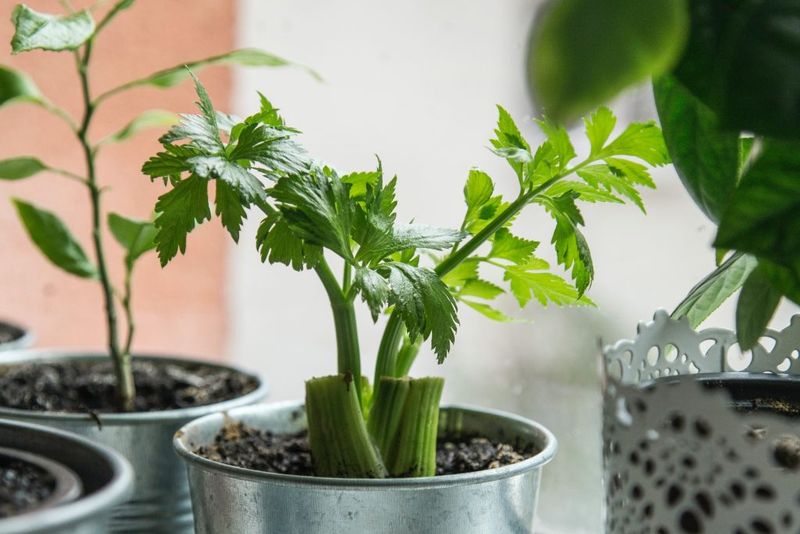
Florida’s mild winters make celery a cool-season crop. UF/IFAS planting details list planting windows of August to February in North Florida, September to March in Central Florida, and October to March in South Florida.
Once plants are in the ground, expect roughly 75 to 90 days to harvest. That is a long wait compared with fast crops like radishes, so planning ahead matters.
Here comes the honest part. UF/IFAS also cautions in its vegetable selection guide that celery is difficult to grow and not recommended for the average home gardener.
So if you are curious, treat celery as a challenge project rather than a sure thing. Start small, pick the window for your part of the state, and be ready for some trial and error.
Growing celery and eating it are separate topics. A homegrown stalk is a fun accomplishment, but it does not carry special body effects compared with a store-bought one.
If gardening feels like too much, the grocery store is a perfectly good source.
Sanford’s celery roots run deep

Sanford once wore the nickname Celery City, and the story begins with cold weather. According to UCF’s RICHES history project, celery growing took root after freezes damaged citrus in 1894 and 1895.
Farmers needed another crop, and celery fit the moment. By 1898, celery had become closely associated with Sanford, shaping how the town was known.
That history is a local identity story. It shows how Florida growers adapted when weather changed their plans, and why the vegetable still feels at home in the state’s culture.
It does not prove that celery has special health powers. A crop’s fame says something about farming and business, not about what happens in your body when you eat it.
It also does not mean every part of Florida grows celery under the same conditions. Planting windows differ across North, Central, and South Florida, and the gardening caution still applies.
Sanford’s past is a good reason to appreciate the vegetable, and a fun detail to share the next time you crunch a stalk.
Choose celery for what it is
Celery is a crunchy, low-calorie, water-rich vegetable, and per USDA data it brings some fiber and vitamin K. Do not expect a predictable transformation or treat it as a remedy.
Any effect on weight depends on portion size and what the celery replaces.
If you take warfarin or another vitamin K-antagonist medication, keep your intake consistent and talk with your clinician about major diet changes. Anyone with a known or suspected celery allergy should get medical advice first.
A good vegetable does not need to be a miracle to earn a spot on your plate.
Share this story