Get the latest garden guides in your inbox →
Gardening Latest
  • General Gardening
  • Lawn Care
  • Plant Care
  • Composting
  • Soil Health
  • Backyard
  • Garden Muse Magazine
  • General Gardening
  • Lawn Care
  • Plant Care
  • Composting
  • Soil Health
  • Backyard
  • Garden Muse Magazine
  • News
  • Gardening Calendar
  • Garden Structures
  • Vegetable Garden
  • Vertical Garden
  • Raised Beds
  • Hydroponics
  • General Equipment
  • Community Gardens
Garden Themes
  • Spiritual Garden
  • Hydroseeding
  • Seeding and Laying Sod
  • Artificial Grass
  • Lawn Care Equipment
  • Plants
  • Trees
  • Planting Tools
  • Composting Basics
  • Fertilizer
  • Alternative Growing Mediums
  • Front Yard
  • Backyard Activities
  • Landscaping
Gardening Latest

Explore by state

Which state is your garden in?

Currently viewing Georgia

All states

Northeast

  • Connecticut —
  • Delaware 33
  • Maine —
  • Maryland 19
  • Massachusetts 35
  • New Hampshire —
  • New Jersey 19
  • New York 28
  • Pennsylvania 28
  • Rhode Island —
  • Vermont —

Southeast

  • Alabama 19
  • Arkansas —
  • Florida 19
  • Georgia 19
  • Kentucky 33
  • Louisiana 18
  • Mississippi —
  • North Carolina 17
  • South Carolina 32
  • Tennessee 16
  • Virginia 18
  • West Virginia —

Midwest

  • Illinois 18
  • Indiana 20
  • Iowa 32
  • Kansas —
  • Michigan 19
  • Minnesota 18
  • Missouri 18
  • Nebraska —
  • North Dakota —
  • Ohio 19
  • South Dakota —
  • Wisconsin 34

Southwest

  • Arizona 19
  • Colorado —
  • Nevada —
  • New Mexico —
  • Oklahoma —
  • Texas 18
  • Utah —

West

  • Alaska —
  • California 19
  • Hawaii —
  • Idaho —
  • Montana —
  • Oregon —
  • Washington —
  • Wyoming —

No state matches that search.

Site menu

Gardening Latest
  • General Gardening
    • News
    • Gardening Calendar
    • Garden Structures
    • Vegetable Garden
    • Vertical Garden
    • Raised Beds
    • Hydroponics
    • General Equipment
    • Community Gardens
    Garden Themes
    • Spiritual Garden
  • Lawn Care
    • Hydroseeding
    • Seeding and Laying Sod
    • Artificial Grass
    • Lawn Care Equipment
  • Plant Care
    • Plants
    • Trees
    • Planting Tools
  • Composting
    • Composting Basics
  • Soil Health
    • Fertilizer
    • Alternative Growing Mediums
  • Backyard
    • Front Yard
    • Backyard Activities
    • Landscaping
  • Garden Muse Magazine

Explore

  • About GardeningLatest.com
  • Contact Us

Get the latest from the garden

New guides on lawn care, plants and backyard projects, sent when they go up.

Subscribe →

Follow

  • Facebook
  • X
  • Pinterest
  • YouTube
Georgia Gardening

Georgians Eating Celery Every Day Are Finding Out What It Really Does For Their Bodies

Georgians who crunch on celery every day are finding it adds a low-calorie vegetable, a little fiber, and some potassium…

SB

By Savannah Brooks

November 25, 2026 · 6 min read

Georgians Eating Celery Every Day Are Finding Out What It Really Does For Their Bodies

Georgians who crunch on celery every day are finding it adds a low-calorie vegetable, a little fiber, and some potassium and vitamin K to their meals. That is a modest but real contribution, and it has people curious about what else this stalk might do.

Some early studies on celery products have drawn headlines, so it helps to know what they show and what they do not. Here is a plain look at the nutrition, the research, the garden facts, and the safety tips.

At a glance

Where
Georgia Gardening
Hardiness zone
8 10 to 20°F
Read
6 minutes
Published
November 25, 2026

What raw celery adds to a meal

What raw celery adds to a meal
© EatBetter app

Raw celery is mostly water, so it brings a lot of crunch for very few calories. According to USDA nutrient data, 100 grams of raw celery provides about 16 calories, 1.6 grams of fiber, 260 milligrams of potassium, and 29.3 micrograms of vitamin K.

Those numbers are per 100 grams, which is roughly a cup and a half of chopped celery or about two medium stalks. What you actually get depends on how much you eat.

One thin stalk in a lunch box gives you less than a big bowl of celery in a soup or a salad.

Fiber helps digestion and keeps you feeling full. Potassium is a mineral the body uses for nerves and muscles.

Vitamin K plays a role in normal blood clotting. Celery offers a little of each, but it is not a rich source of any single one.

Think of celery as one useful player on a team. A plate with beans, greens, fruit, whole grains, and other vegetables will cover far more nutritional ground than celery alone.

Adding a few stalks to your day can make meals crunchier and a bit more filling, and that is a perfectly good reason to keep it in the fridge.

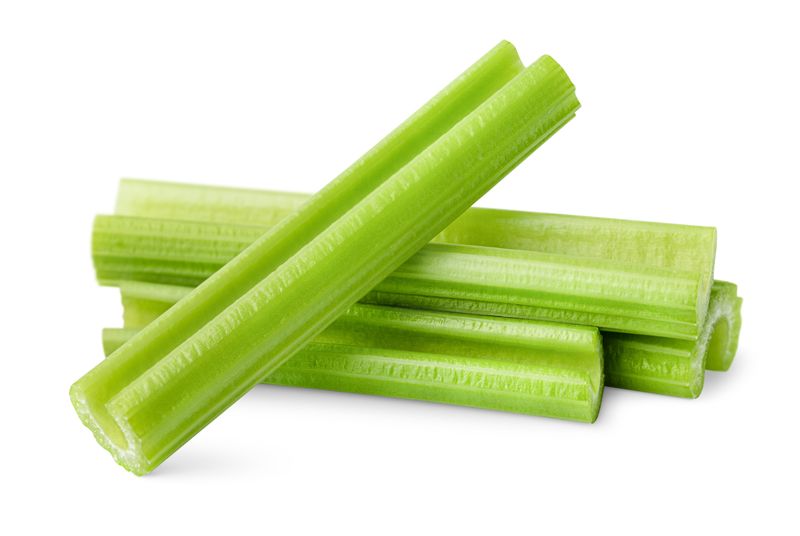
Celery is low-calorie, not negative-calorie
Celery is low-calorie, not negative-calorie
© Delish

You may have heard that celery burns more calories to digest than it supplies. It sounds clever, but it is a myth.

As the Tufts Health and Nutrition Letter explains, celery is low in calories but not calorie-free, and eating it does not leave you with a net calorie deficit.

Georgia gardeners already know the cool season is prime time for greens, and celery-type crops show up in local guidance.

Your body does spend a small amount of energy digesting any food. For celery, that cost is tiny compared with the calories the stalk provides.

So a snack of celery will never subtract calories from the rest of your day.

The realistic benefit is about volume. A big crunchy pile of celery takes up room on the plate and in the stomach for few calories, which can help when you are trying to eat lighter meals.

The real catch is what goes on top. A stalk loaded with peanut butter, cream cheese, or ranch can carry far more calories than the celery itself.

If calories matter to you, measure the dip, not the stalk.

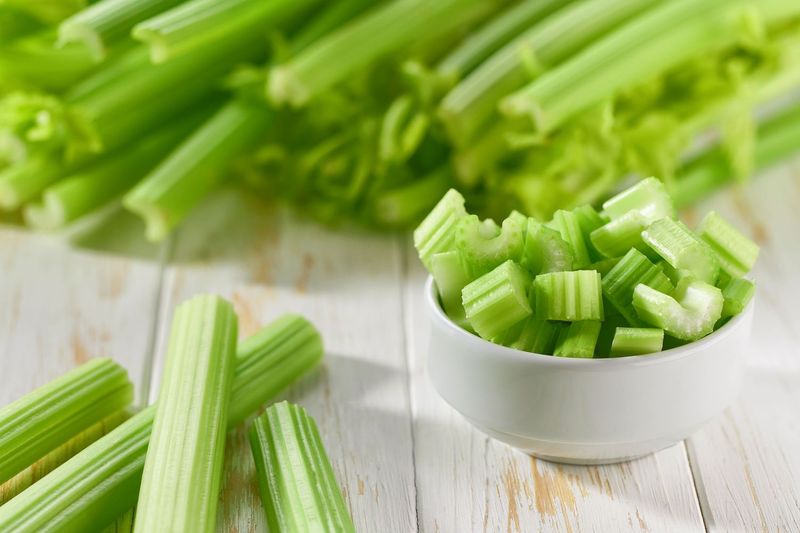
What celery studies can—and cannot—show
What celery studies can—and cannot—show
© Verywell Health

A 2025 meta-analysis in Frontiers in Nutrition pulled together 10 randomized studies involving 511 adults. It reported improvements in blood pressure, blood glucose, and triglycerides.

That sounds exciting, but the findings are preliminary.

The studies used different celery preparations and different groups of people. Samples were small, and the results varied a great deal from one study to the next.

The authors call for larger, longer studies before anyone draws firm conclusions.

Preparation matters a lot here. In celery research, the product might be seeds, extracts, powders, leaves, or other forms, not just the stalks people snack on.

One randomized trial of celery seed extract and high blood pressure shows why: a concentrated extract is a very different thing from a crunchy stalk.

So the results cannot be passed from one form to another. They do not prove that eating ordinary raw stalks every day lowers your blood pressure, blood glucose, or triglycerides, and they say nothing solid about celery juice.

They do not establish a treatment or a daily dose either.

If you take medicine for any of these conditions, keep taking it as prescribed. Celery can sit on your plate, but it is not a replacement for care from your doctor.

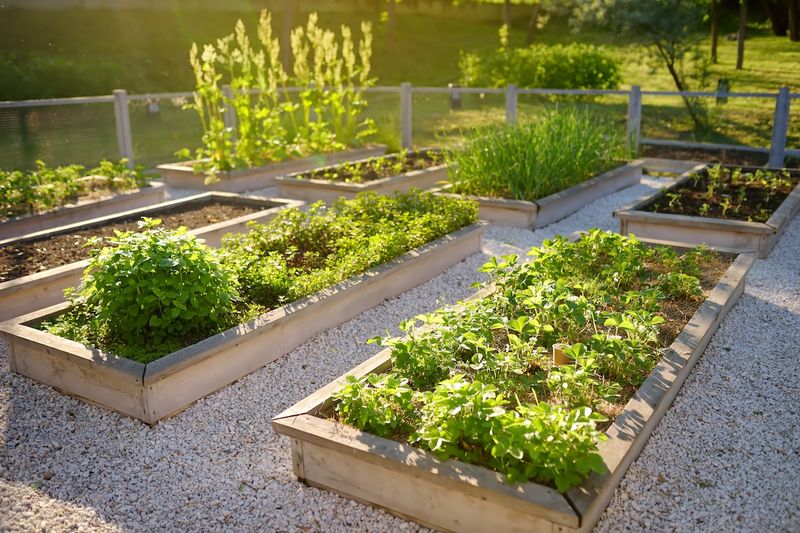
Georgia gardeners may need to experiment
Georgia gardeners may need to experiment
© The Old Farmer’s Almanac

Georgia gardeners already know the cool season is prime time for greens, and celery-type crops show up in local guidance. A Georgia Department of Agriculture Market Bulletin lists leafy celery among possible fall and winter crops.

Timing is the next question. UGA’s vegetable garden calendar notes that planting dates vary by region, so a gardener near Savannah will not follow the same schedule as one in the north Georgia mountains.

There is also a caution. UGA’s commercial vegetable handbook reports no Georgia research on celery production and recommends trying it on limited acreage first.

That advice is aimed at farmers, but home growers can borrow it. Leafy celery being listed does not mean crisp grocery-style stalks are easy to grow here, and celery is not a common crop across the state.

A sensible plan is to start small. Plant a few seedlings, keep notes on dates and results, and ask your county Extension office for local advice.

If it works, great. If not, you have lost very little.

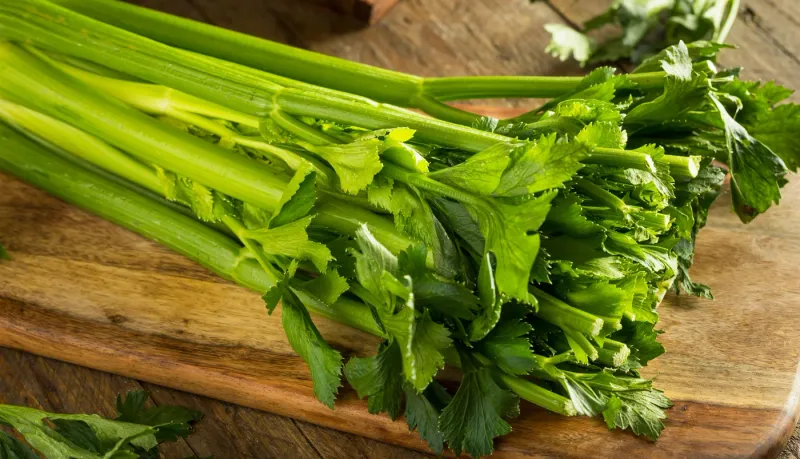
Wash celery and know when to seek help
Wash celery and know when to seek help
© Habuild

Rinse celery under running water before you eat or cut it, and that includes celery from your own garden. The FDA’s produce safety guidance says not to use soap or detergent on produce.

Washing lowers the chance of contamination, but it does not remove every risk.

If you take warfarin, vitamin K matters to you. Celery contains some, so the goal is consistency, not avoidance.

The NIH vitamin K fact sheet advises against sudden changes in vitamin K intake. Talk with your care team before making big changes to what you eat.

Celery allergy is uncommon for many people but can be serious. Mild signs can include an itchy mouth, lips, or throat, or a rash after eating celery.

See a doctor or allergist if you notice symptoms like these, as described by Anaphylaxis UK.

Call 911 or seek emergency help right away if a reaction seems severe or develops quickly. Warning signs include trouble breathing, wheezing, swelling of the tongue or throat, dizziness or fainting, or widespread hives.

Do not assume cooking makes celery safe if you have an allergy. Heat does not make it safe for everyone, so follow your doctor’s advice.

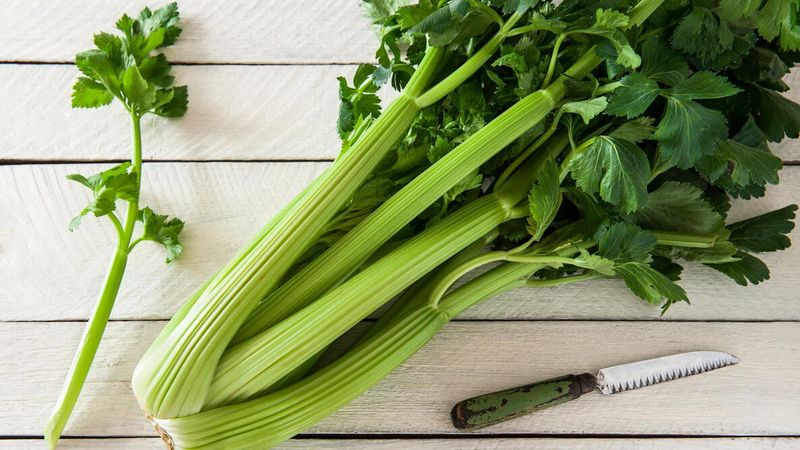
Keep celery in perspective
Keep celery in perspective
© The Old Farmer’s Almanac

Celery is a handy, crunchy choice, and it fits well in a varied eating pattern. Nothing in the research requires a daily serving.

The 2025 meta-analysis calls for more study, and it does not make celery a treatment.

Celery juice has not been shown to detox or cleanse the body. The NIH’s NCCIH says evidence for such approaches is limited.

Keep up with prescribed care and checkups.

If you like the idea of growing your own, treat it as an experiment worth trying, not a promise of a harvest.

Celery is best seen as one more good thing to crunch, not a cure.

Share this story

SB

Written by

Savannah Brooks

More from Savannah Brooks →

About Gardening Latest

Gardening Latest provides in-depth guides to maintaining and enhancing your garden and backyard. Learn how to make the most of the space you have and create a beautiful garden.

More about us →

Latest stories

  • California GardeningIf a Gray Fox Keeps Trotting Through Your California Yard This Winter, Here’s What It’s After

    If a Gray Fox Keeps Trotting Through Your California Yard This Winter, Here’s What It’s After

    11 hr ago
  • Arizona GardeningWhen a Gray Fox Trots Through Your Arizona Yard This Winter, It’s on a Mission

    When a Gray Fox Trots Through Your Arizona Yard This Winter, It’s on a Mission

    12 hr ago
  • Texas GardeningNeighbor Vines Crossing Into Your Texas Yard: Texas Tree-Branch Guidance Is Clear, but the Answer for Vines Is Less Settled

    Neighbor Vines Crossing Into Your Texas Yard: Texas Tree-Branch Guidance Is Clear, but the Answer for Vines Is Less Settled

    12 hr ago
  • Wisconsin GardeningWisconsin Neighbors Fight Over Snow Piled on Their Property, and Here’s What the Law Actually Says

    Wisconsin Neighbors Fight Over Snow Piled on Their Property, and Here’s What the Law Actually Says

    12 hr ago
  • Missouri GardeningYellow Jackets Nesting Near Your Missouri Home? This Is What You Should Do First

    Yellow Jackets Nesting Near Your Missouri Home? This Is What You Should Do First

    12 hr ago

Gardening by state

Stories for your state, and the hardiness zone most of it gardens in.

Keep exploring

Read next

All Georgia Gardening →
Georgia GardeningThese Venomous Creatures Share Your Georgia Yard, And Here’s How To Recognize Each One
Georgia Gardening

These Venomous Creatures Share Your Georgia Yard, And Here’s How To Recognize Each One

14 hr ago
Georgia GardeningIf You Keep Hearing Coyotes Howl Near Your Georgia Home at Night, Here’s Why It’s Happening Now
Georgia Gardening

If You Keep Hearing Coyotes Howl Near Your Georgia Home at Night, Here’s Why It’s Happening Now

17 hr ago
Georgia Gardening9 Warning Signs In Your Georgia Yard That Rats Are Getting Ready To Move Inside
Georgia Gardening

9 Warning Signs In Your Georgia Yard That Rats Are Getting Ready To Move Inside

23 hr ago

More from Georgia Gardening

  • Here’s What Georgia Law Actually Lets You Do When A Neighbor’s Tree Hangs Over Your Yard

    Nov 24
  • That Paper Nest You Just Spotted In A Bare Georgia Tree Is Safer To Leave Until Winter

    Nov 23
Back to top

Leave a response Cancel

Your email address stays private. Required fields are marked with an asterisk.

Gardening Latest

In-depth guides to maintaining and enhancing your garden and backyard: how to make the most of the space you have, and how to make it beautiful.

  • Facebook
  • X
  • Pinterest
  • YouTube

We may earn a portion of sales from products or services that are purchased through our site as part of our affiliate partnerships with retailers.

Explore

  • About GardeningLatest.com
  • Contact Us
  • Terms and Conditions
  • Privacy
  • Editorial Note:
  • FTC Disclosure

Newsletter

New garden guides and seasonal tips, straight to your inbox.

We’ll email you a link to confirm. Unsubscribe any time.

Almost there! Check your inbox and tap the link to confirm.

© 2026 Gardening Latest. All rights reserved.

Back to top