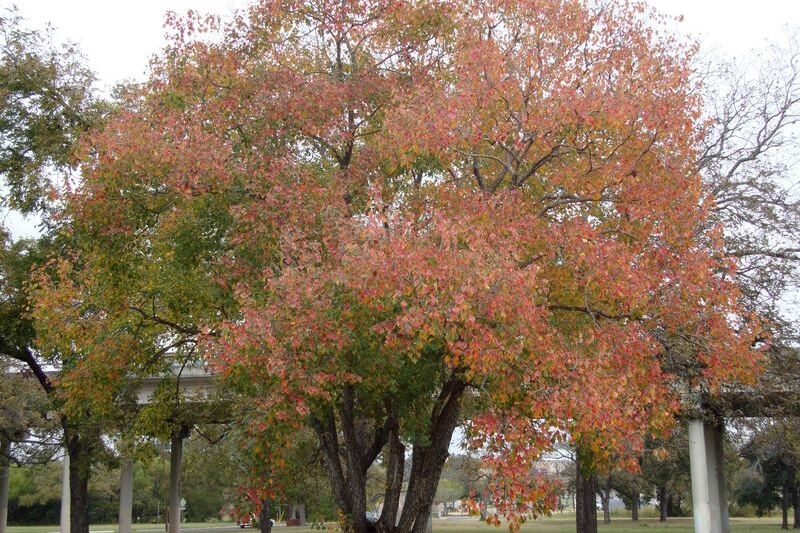
If a neighbor’s tree branches hang over your yard, Georgia guidance says you can generally trim the parts that cross onto your land. You usually pay for that work yourself, and you have to keep your cutting on your side of the line without harming the tree.
Some situations change the answer, like a trunk on the boundary, a tree that looks dangerous, or branches near power lines. Here is how it all works, in plain words.
What Georgia guidance allows

Here is the plain answer. Under guidance from the Georgia Attorney General’s Consumer Protection Division, a neighbor whose tree branches cross onto your property may generally trim the parts that overhang.
UGA Extension says much the same in its tree ownership and responsibility publication.
It helps to know what kind of authority this is. It is current guidance from a state agency and a university extension service.
It is not a claim that a Georgia appellate court has settled every detail of the right to trim.
That caution is not new. A 2022 Georgia Legal Services Program disaster manual said Georgia courts had not directly addressed whether a landowner may trim a neighbor’s overhanging branches.
The more recent state guidance now states the general practical rule, and that is the rule most homeowners will work from.
The rule comes with limits, and the rest of this article walks through them. Your work should stay on your side of the property line, and you should avoid harming the tree.
Ordinary pruning is generally your expense. A trunk sitting on the boundary, a tree that may be dangerous, power lines, or local city rules can each call for a different next step.
Knowing which situation you are in before you pick up a saw can save you money, and possibly a legal fight with the person next door.
A boundary-line trunk can mean shared ownership
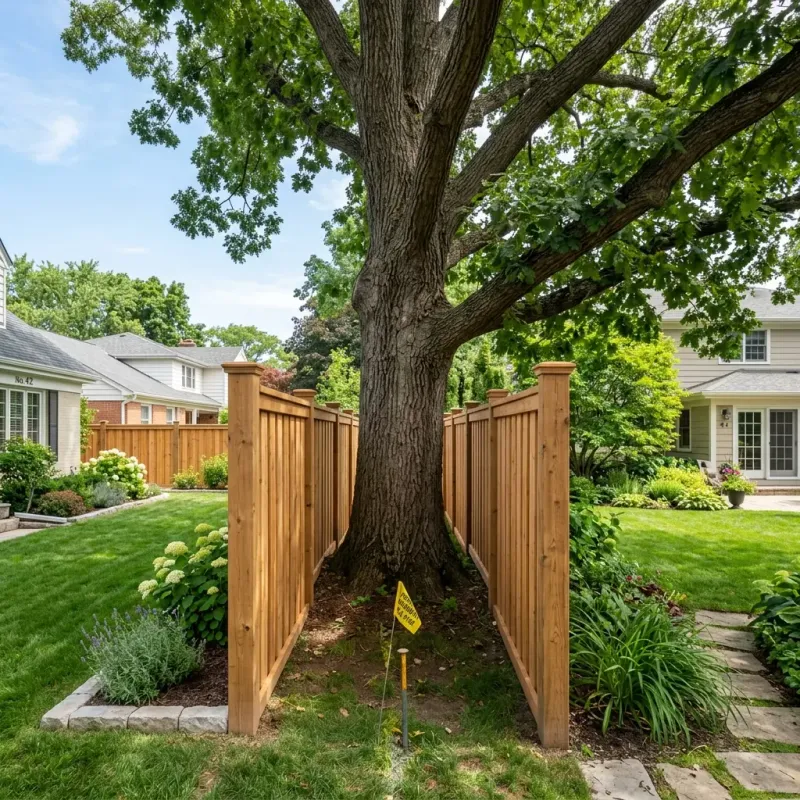
The overhanging-branch guidance assumes the tree belongs to your neighbor. The trunk is on their side, and only some limbs reach over to your side.
That is the simple case.
Things change when the trunk sits right on the boundary. UGA Extension says a tree like that may be jointly owned by both landowners.
If you share the tree, a trim is not just a matter of cutting what hangs over your yard, because the tree is partly yours and partly theirs.
Treat that as a different kind of problem. Cutting a jointly owned tree without talking to the other owner could cause a real dispute.
A better first step is a conversation about what each of you wants done.
So how do you know where the trunk really sits? Start by finding out where your property line is.
Fences and old landscaping are often not placed exactly on the boundary, so they are poor guides.
If the answer is unclear, consider hiring a licensed surveyor. A survey is a practical way to clarify the line and show which side of it the trunk stands on.
It does not automatically resolve every legal question that could come up, but it gives both neighbors the same facts to work from. Having a survey in hand before you talk can keep the conversation calmer and more specific.
Keep trimming on your side of the line
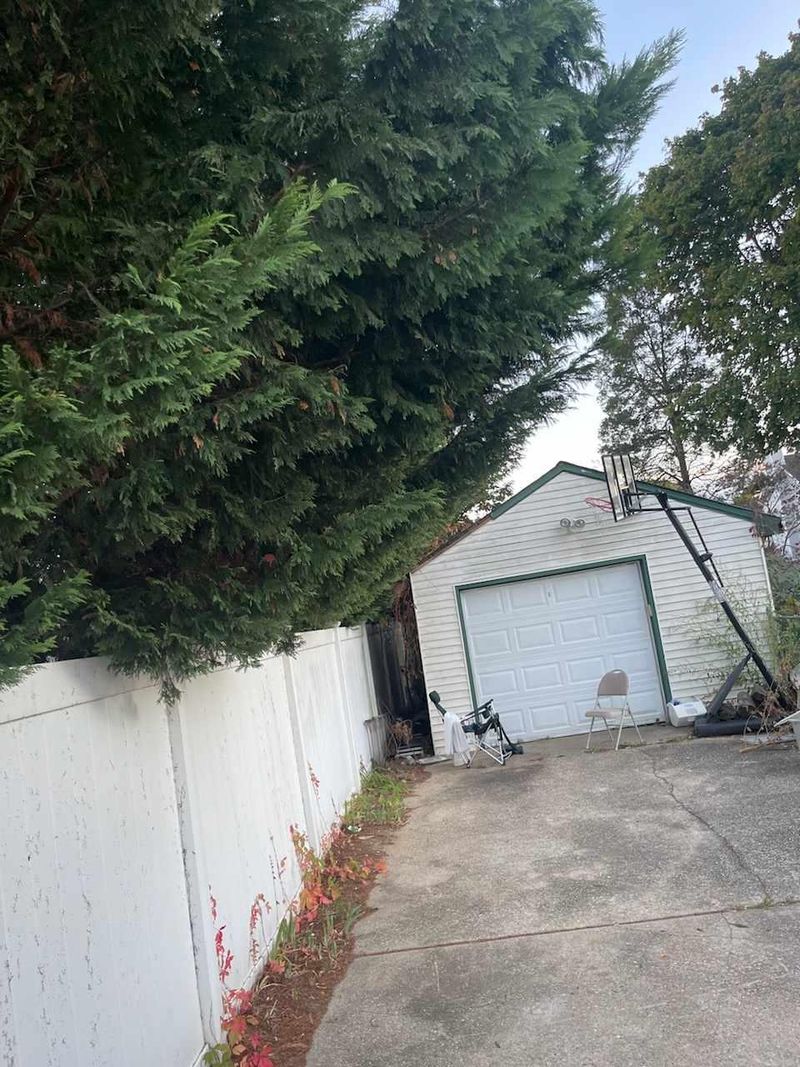
The right to trim has a clear edge. You may work on branches that extend over your own property, and you should do it from your own property.
The Attorney General’s guidance warns against trespassing onto the neighbor’s land or damaging the tree.
That means no stepping into the neighbor’s yard to reach a limb unless they give you permission. It also means no climbing the tree from their side or leaning a ladder on their ground.
If the only way to reach a branch is over the fence, ask first.
How you cut matters too. Heavy pruning can harm some trees, and UGA notes that some evergreens can be disfigured or damaged by severe cutting.
The general guidance lets you trim what crosses the line. It does not let you remove the tree, strip it bare, or cut without regard to its health.
Georgia courts treat unauthorized tree cutting seriously enough to hear property claims about it. One example is Bullard v.
Bouler, a Court of Appeals case involving cut trees. It is a good reason for caution, though it does not mean any particular penalty would apply to you.
If a cut would leave the tree lopsided or stressed, stop and get a professional opinion first. A small trim that respects the line is far safer than a big one that starts an argument.
Who usually pays for pruning?
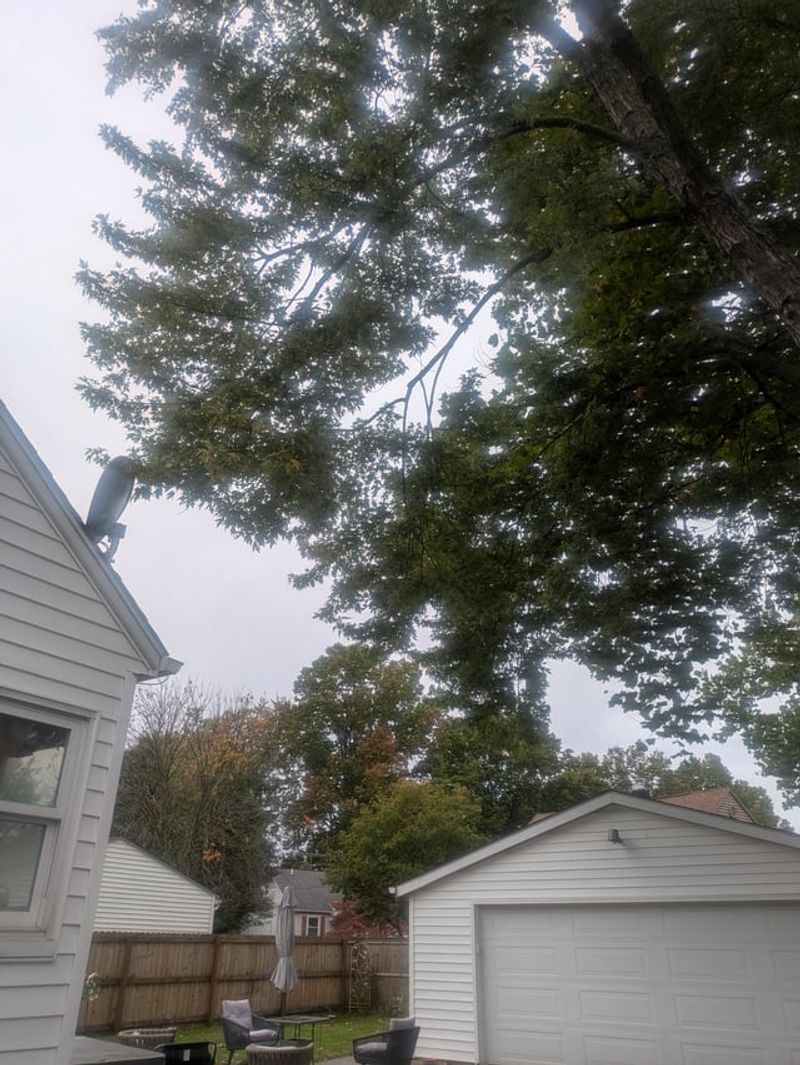
Money is often the first thing people ask about. Under the Attorney General’s general guidance, ordinary trimming is the responsibility of the neighbor affected by the overhang.
In other words, the person who wants the branches cut generally pays for the work.
That is different from saying the tree owner must pay. The guidance does not automatically shift the bill for routine pruning to the person who owns the tree.
Nor does it say the owner has to remove branches just because they cross the property line.
Neighbors are free to work out something else. You might split the cost, or the owner might offer to cover it because they want the tree shaped a certain way.
If you agree on a different arrangement, putting it in writing is wise.
Picture a limb that scrapes your roof and drops leaves in your gutters. That is a routine pruning job, and you should expect to hire a trimmer and pay the invoice unless your neighbor agrees to help.
Keep this answer limited to ordinary pruning of healthy branches. If you suspect the tree is diseased or dangerous, or if a tree has already caused damage, that raises a separate question.
The payment rule for routine trimming does not settle it.
A dangerous tree raises a different question
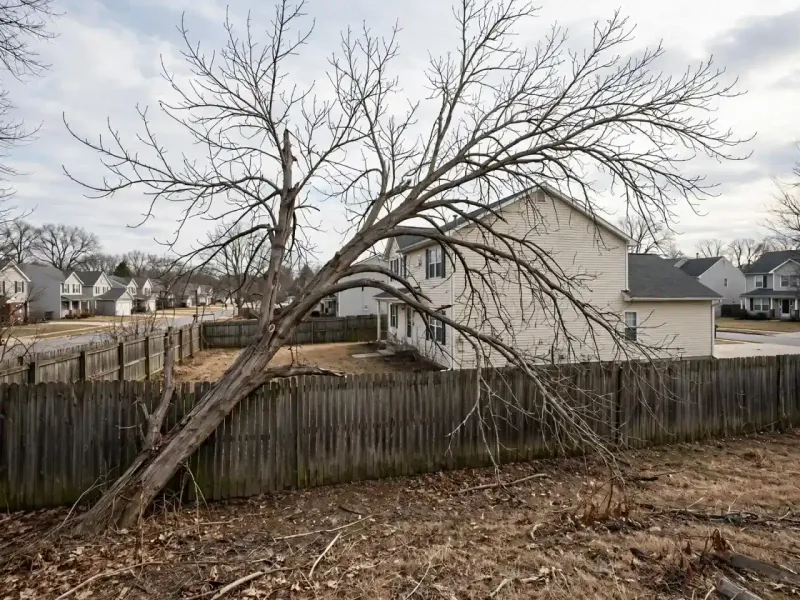
An annoying overhang is one thing. A tree that looks sick, cracked, or ready to drop limbs is another.
In those cases, responsibility depends on the tree’s condition, what the owner knew or reasonably should have known, and the surrounding circumstances. A branch crossing your fence does not automatically make the owner liable.
If you see warning signs, write down what you see and take photos. Then tell the owner in writing.
UGA explains that written reports from an arborist or another person can show the owner’s prior knowledge. An arborist’s assessment is stronger than a layperson’s guess.
Georgia cases show why details matter. In Wade v.
Howard, the Court of Appeals held that leaning or overhanging alone did not establish notice of danger on the facts of that case. It is not a universal test, and it does not set a lean percentage that decides every dispute.
UGA also says Georgia has no general legal duty to inspect trees on a fixed schedule.
Keep pruning and falling trees separate in your mind. The Attorney General says that when a tree falls, the owner of the property where it lands generally bears damage and removal costs.
A possible exception applies if the tree’s owner should reasonably have known it was dead or diseased.
The current Attorney General page also lists a lean of more than 25 percent as an example of imminent danger, but it is an example, not a legal cutoff. If you are worried, an arborist can tell you far more than a rule of thumb can.
Plan the work before anyone cuts
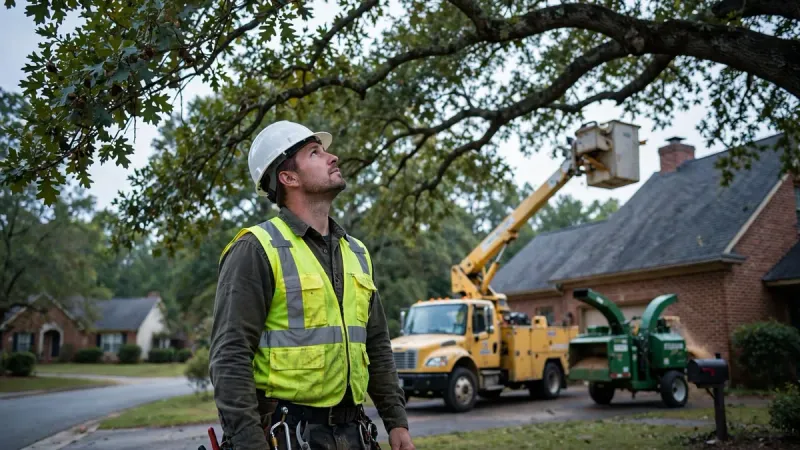
A little planning prevents most tree fights. Start by confirming the property line so you know whose tree you are dealing with.
Then talk with your neighbor about what you plan to do and when.
Consider a written agreement that covers the work, who pays, and who hires the crew. UGA recommends getting professional advice before pruning a neighbor’s tree, so call a certified arborist before any substantial cutting.
An arborist can tell you how much can be removed without hurting the tree.
Stay far away from power lines. Never prune near them yourself.
OSHA says to treat lines as energized, and that work within 10 feet must be done by trained, experienced line-clearance tree trimmers. If branches are close to wires, call the utility or a qualified line-clearance crew.
Finally, check local rules before substantial pruning or removal. Atlanta, for example, has a tree protection ordinance that covers trees on private property.
That is only one local example. Rules differ from place to place, and not every pruning job needs a permit, so call your city or county office to find out what applies where you live.
The practical rule
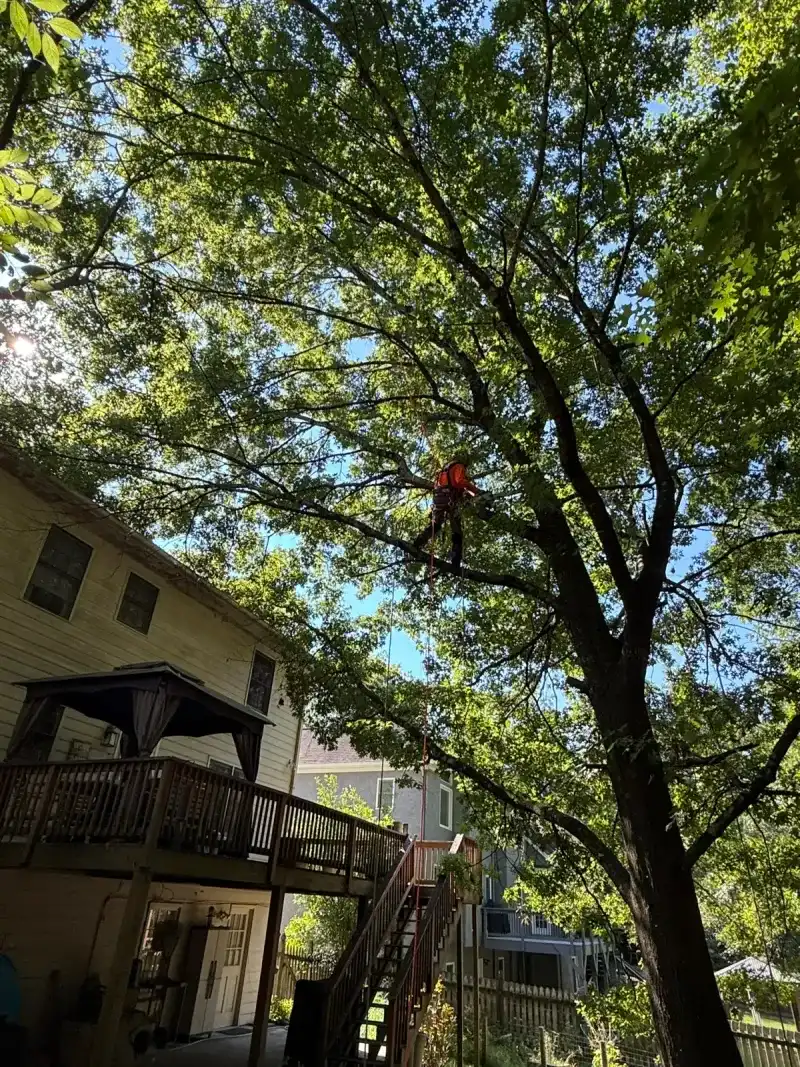
In general, you may trim what crosses onto your property, you should stay on your side of the line, and you should not harm the tree. Expect to pay for routine pruning unless you and your neighbor agree otherwise, as the Attorney General’s guidance describes.
A boundary-line trunk, a suspected hazard, power lines, or local restrictions call for a different next step. Good fences may make good neighbors, but a friendly conversation before the first cut does even more.
Share this story