Those late-night yips and howls near your Georgia home are most likely coyotes talking to each other and marking their territory. Late November falls in the season when young coyotes leave their families and look for places of their own, which is a plausible reason the calls seem to be happening now.
The sounds can be eerie, but they tell you far less than you might think. Here is what the calls mean, what they do not mean, and how to keep your pets and yard safe.
What coyote calls communicate
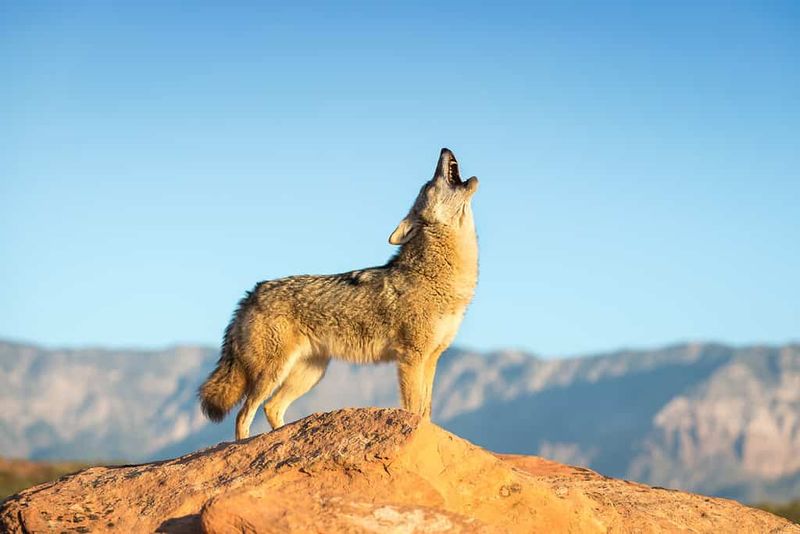
Picture a family spread out across a dark neighborhood, calling to find one another. That is a good way to think about howls and yips.
According to a University of Georgia extension guide, these calls help coyotes keep in touch and can also signal that a territory is already occupied.
Hearing a coyote chorus can feel like a threat, but it is simply communication. Calls do not reliably announce a kill, and they do not mean the animals are heading toward your house.
Researchers writing for Penn State describe howling as a way for coyotes to stay connected and claim space, not as a victory song.
It also helps to know what a coyote group really looks like. Georgia DNR says coyotes commonly live in small family groups, but they usually hunt alone.
That is quite different from a large, wolf-like pack chasing prey together.
So when the yipping starts, a calm reading is the accurate one. Somewhere out there, coyotes are probably checking in with each other, much like people texting across town.
Why fall can bring more coyote activity
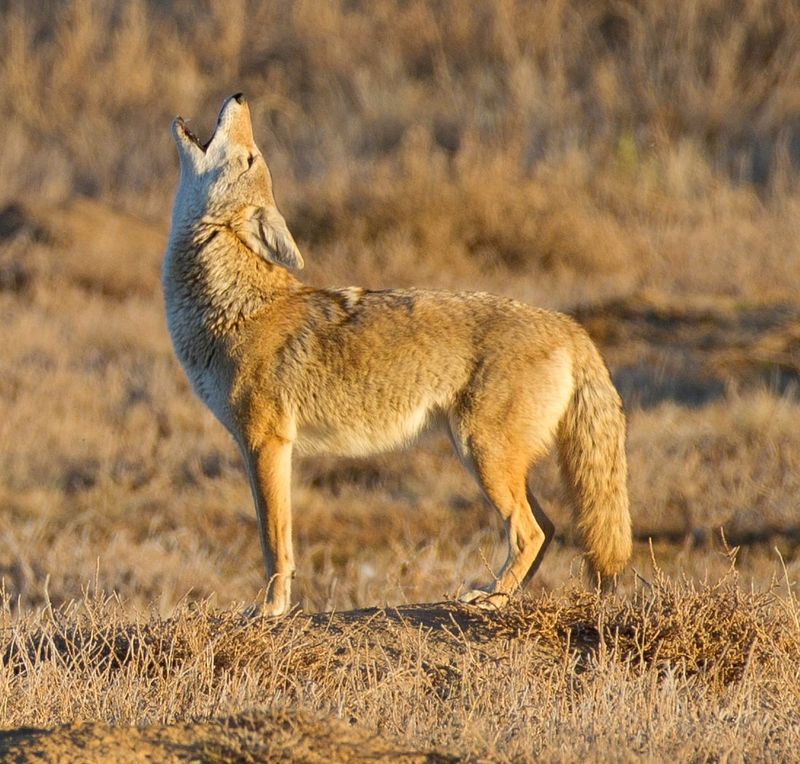
Coyotes follow a yearly rhythm, and late November sits at a busy point in it. UGA’s guide places breeding broadly from January to April and pup rearing from May to August.
Young coyotes then disperse to set up territories from September to December.
That timeline gives a plausible backdrop for the calls you are hearing now. Young coyotes on the move may call as they travel through areas already held by other coyotes, and residents may call back.
The same guide notes that howling is more common during breeding and dispersal.
Notice what is missing from that calendar. The usual pup-rearing period ended months ago, so pup season is not a good explanation for November howls unless someone has specific local evidence.
Keep in mind that these are broad patterns, not a way to diagnose a single night. Dispersal is a sensible context, but nobody can say it is the cause of the calls outside your window tonight.
Think of the season as a helpful hint, not an answer key.
A chorus does not tell you how many are nearby
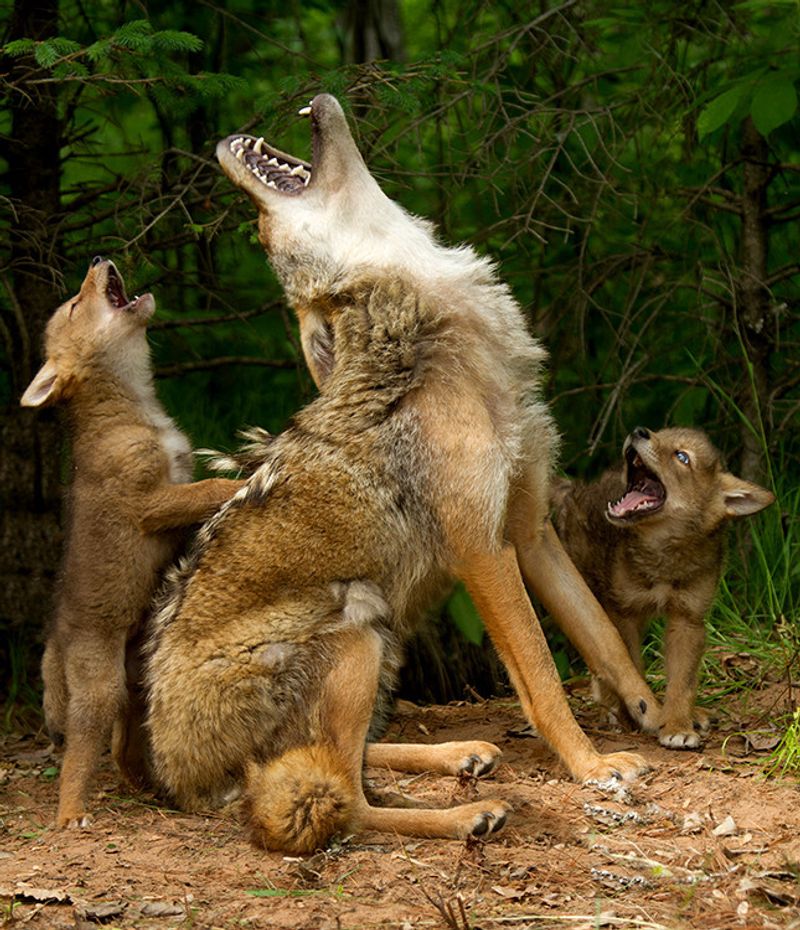
Two or three coyotes can sound like a whole crowd. Their voices overlap, rise, and fall, and our ears fill in the gaps.
In a Texas study of 427 listeners, people overestimated the number of coyotes in recordings by nearly twofold on average.
That study was done in Texas, so it does not give a count for any call heard in Georgia. What it does show is that the number of voices you think you hear is not a reliable headcount.
Your neighborhood may have far fewer coyotes than the chorus suggests.
Distance is another puzzle. Coyote calls can carry a long way, so a howl that sounds close may come from well outside your property.
Sound alone cannot pinpoint where the animals are, and it cannot show that a den is in your yard.
Nighttime also plays a role. UGA researchers note that urban coyotes can be more active after dark, which is when we are quiet enough to hear them.
And no, the moon is not the trigger, since the Texas study found howling is not linked to moonlight intensity.
Hearing a howl does not mean a coyote is in your yard
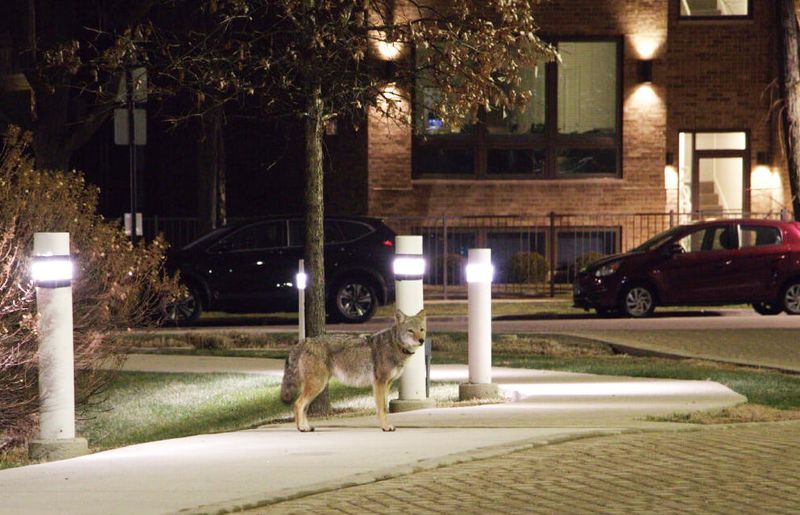
A sound in the dark and an animal at your back door are two very different things. Coyotes live throughout Georgia, and UGA reports they are present in all 159 counties, including cities and suburbs.
So hearing one is not surprising, but a howl alone does not show that a coyote is near your house.
Putting the risk in proportion helps. UGA describes attacks on people as extremely rare.
Pets are a different story, and they can face real risks, which is why the later sections focus on keeping them safe.
Timing can also mislead us. A coyote seen in daylight is not automatically sick or rabid, and UGA says daytime activity is not necessarily abnormal.
Behavior and contact matter more than the hour or the sound.
Odd behavior, such as a coyote that seems unafraid and keeps approaching people, is worth reporting. For general guidance, Georgia DNR’s wildlife conflict page is a useful place to start.
Until then, a howl in the distance is simply a sign that coyotes share your area, as they do almost everywhere in the state.
Make your yard less inviting
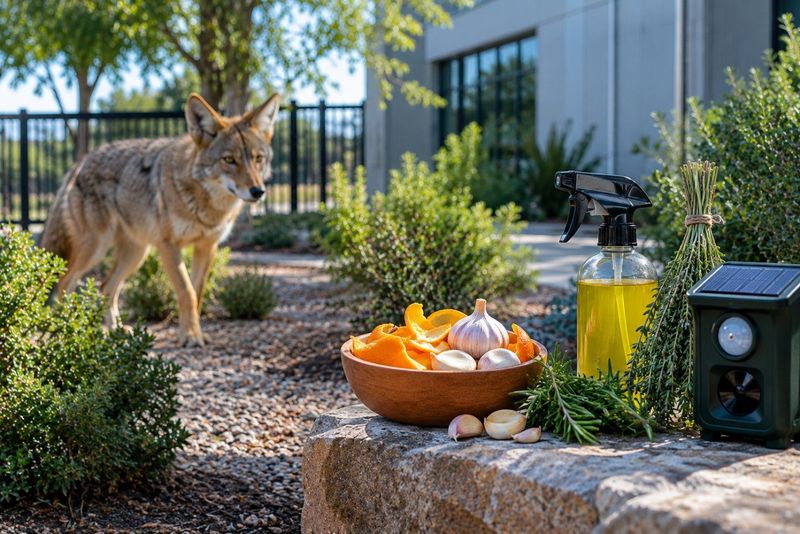
Coyotes pass through many yards, but fewer stop to linger when there is nothing to eat or hide in. Small changes can reduce the reasons for a visit.
These steps lower the incentive and the access, though they cannot promise coyotes will stay away.
Start with food, since Georgia DNR’s coyote fact sheet recommends securing trash and pet food. Use cans with tight lids, and bring pet bowls inside after meals.
Sweep up spilled birdseed too, because it attracts rodents, and rodents attract coyotes.
Never feed coyotes, even by accident or out of kindness. Animals that connect people with food lose some of their natural caution, and that makes problems more likely for everyone.
Shelter matters as well. The same fact sheet advises closing crawl spaces that a coyote could use as a den.
Check under decks, sheds, and porches, and block openings with sturdy material once you are sure nothing is inside.
A quick walk around your property at dusk, looking at it as a hungry animal might, can show which of these jobs to tackle first.
Protect pets and keep your distance
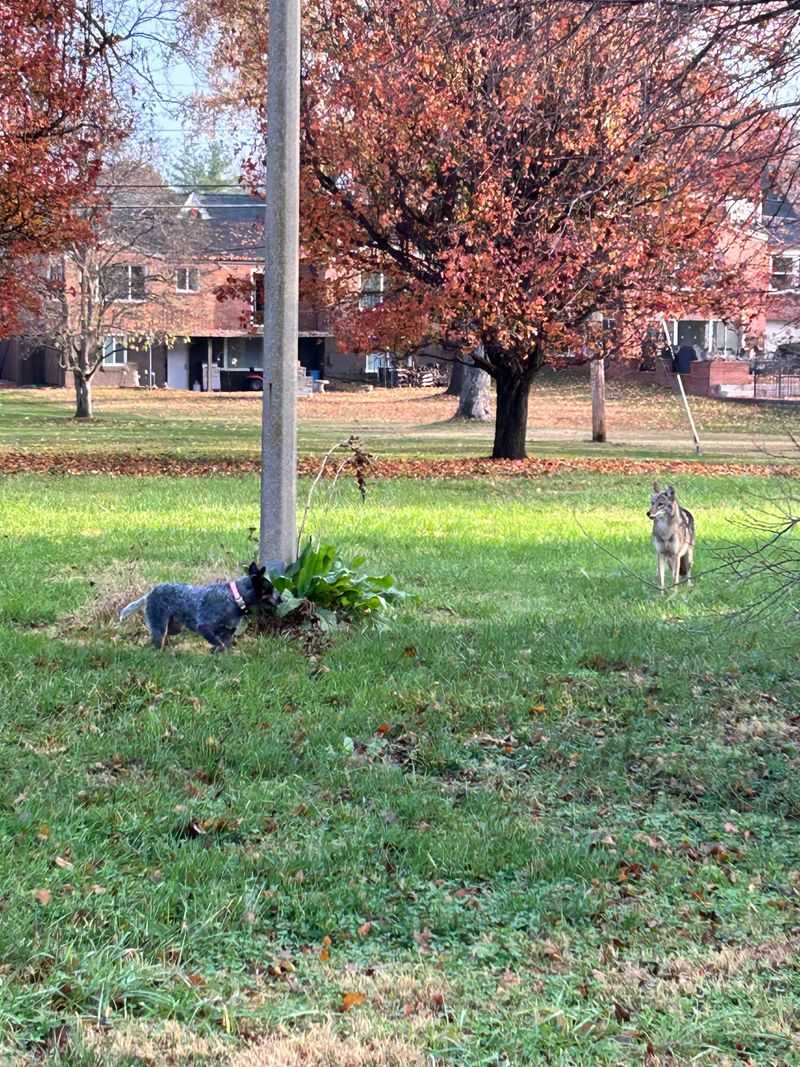
Pets are where the practical caution belongs. Georgia DNR identifies small dogs and cats as potential prey, and large dogs can be seen as a threat by coyotes with young.
Keeping cats indoors and dogs leashed outside covers most of the risk.
A fence helps, but it is not a guarantee. Stay outside with your dog, even in a fenced yard, especially after dark.
Be extra alert on walks at dawn and dusk, when coyotes are often moving.
If you see a coyote nearby, do not approach it. When it is safe, DNR suggests making noise or using a hose or motion-activated sprinkler to haze it away.
Clapping, shouting, or banging pots from a safe distance are simple options.
Hazing may not work every time. USDA notes that controlled evidence is limited and that results can depend partly on a coyote’s past experiences with people.
Treat it as one tool, and keep your pet close and your own distance.
Know when to ask for help
Hearing coyotes and being touched by one are in completely different categories. Howls, even loud ones, call for curiosity and a few yard checks.
A bite, scratch, or other physical contact calls for action.
After any contact, contact a health professional right away, or a veterinarian if a pet was involved. Local animal control or wildlife officials can then advise on what to do next.
Describing exactly what happened helps them guide you.
For Georgia-specific wildlife questions, the Georgia DNR fact sheet lists 1-800-366-2661. You can also browse DNR’s guidance on preventing wildlife conflicts for more detail.
Save the number in your phone now so it is handy.
The howls will likely fade as winter settles in and young coyotes find places of their own. Until then, they are just the neighborhood’s night voices, heard more often than seen.
Share this story