Get the latest garden guides in your inbox →
Gardening Latest
  • General Gardening
  • Lawn Care
  • Plant Care
  • Composting
  • Soil Health
  • Backyard
  • Garden Muse Magazine
  • General Gardening
  • Lawn Care
  • Plant Care
  • Composting
  • Soil Health
  • Backyard
  • Garden Muse Magazine
  • News
  • Gardening Calendar
  • Garden Structures
  • Vegetable Garden
  • Vertical Garden
  • Raised Beds
  • Hydroponics
  • General Equipment
  • Community Gardens
Garden Themes
  • Spiritual Garden
  • Hydroseeding
  • Seeding and Laying Sod
  • Artificial Grass
  • Lawn Care Equipment
  • Plants
  • Trees
  • Planting Tools
  • Composting Basics
  • Fertilizer
  • Alternative Growing Mediums
  • Front Yard
  • Backyard Activities
  • Landscaping
Gardening Latest

Explore by state

Which state is your garden in?

Currently viewing Georgia

All states

Northeast

  • Connecticut —
  • Delaware 33
  • Maine —
  • Maryland 19
  • Massachusetts 35
  • New Hampshire —
  • New Jersey 19
  • New York 28
  • Pennsylvania 28
  • Rhode Island —
  • Vermont —

Southeast

  • Alabama 19
  • Arkansas —
  • Florida 19
  • Georgia 19
  • Kentucky 33
  • Louisiana 18
  • Mississippi —
  • North Carolina 17
  • South Carolina 32
  • Tennessee 16
  • Virginia 18
  • West Virginia —

Midwest

  • Illinois 18
  • Indiana 20
  • Iowa 32
  • Kansas —
  • Michigan 19
  • Minnesota 18
  • Missouri 18
  • Nebraska —
  • North Dakota —
  • Ohio 19
  • South Dakota —
  • Wisconsin 34

Southwest

  • Arizona 19
  • Colorado —
  • Nevada —
  • New Mexico —
  • Oklahoma —
  • Texas 18
  • Utah —

West

  • Alaska —
  • California 19
  • Hawaii —
  • Idaho —
  • Montana —
  • Oregon —
  • Washington —
  • Wyoming —

No state matches that search.

Site menu

Gardening Latest
  • General Gardening
    • News
    • Gardening Calendar
    • Garden Structures
    • Vegetable Garden
    • Vertical Garden
    • Raised Beds
    • Hydroponics
    • General Equipment
    • Community Gardens
    Garden Themes
    • Spiritual Garden
  • Lawn Care
    • Hydroseeding
    • Seeding and Laying Sod
    • Artificial Grass
    • Lawn Care Equipment
  • Plant Care
    • Plants
    • Trees
    • Planting Tools
  • Composting
    • Composting Basics
  • Soil Health
    • Fertilizer
    • Alternative Growing Mediums
  • Backyard
    • Front Yard
    • Backyard Activities
    • Landscaping
  • Garden Muse Magazine

Explore

  • About GardeningLatest.com
  • Contact Us

Get the latest from the garden

New guides on lawn care, plants and backyard projects, sent when they go up.

Subscribe →

Follow

  • Facebook
  • X
  • Pinterest
  • YouTube
Georgia Gardening

These Venomous Creatures Share Your Georgia Yard, And Here’s How To Recognize Each One

Your backyard in Georgia is full of life, from chirping crickets to busy squirrels.

SB

By Savannah Brooks

November 26, 2026 · 4 min read

These Venomous Creatures Share Your Georgia Yard, And Here’s How To Recognize Each One
These Venomous Creatures Share Your Georgia Yard, And Here's How To Recognize Each One

Your backyard in Georgia is full of life, from chirping crickets to busy squirrels. Some of the critters living there carry venom, and a few can send you to the doctor with one bite or sting.

Knowing what they look like helps you stay safe without panicking every time something moves in the grass. Here are ten venomous neighbors worth learning to spot.

At a glance

Where
Georgia Gardening
Hardiness zone
8 10 to 20°F
Read
4 minutes
Published
November 26, 2026

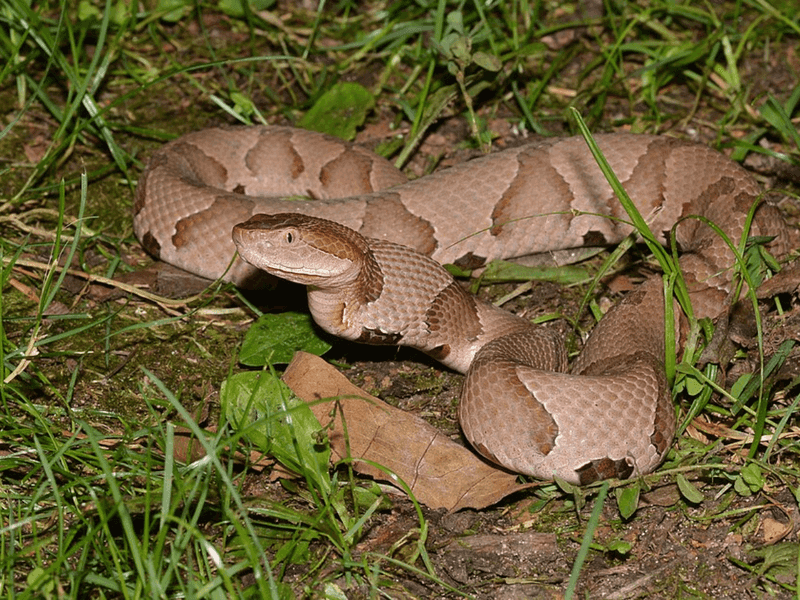
1. Eastern Copperhead

Eastern Copperhead
© The Economic Times

Leaf piles in Georgia hide a master of camouflage. The copperhead is responsible for more snakebites in the state than any other snake, mostly because people step near it without ever seeing it.

Look for a thick body in shades of tan, pink, and copper with dark bands shaped like hourglasses or Hershey’s Kisses. The head is broad and coppery with no pattern on top.

Copperheads like woodpiles, mulch beds, and stone walls. Wear gloves and shoes when doing yard work, and use a flashlight on summer evenings when they are most active.

2. Timber Rattlesnake
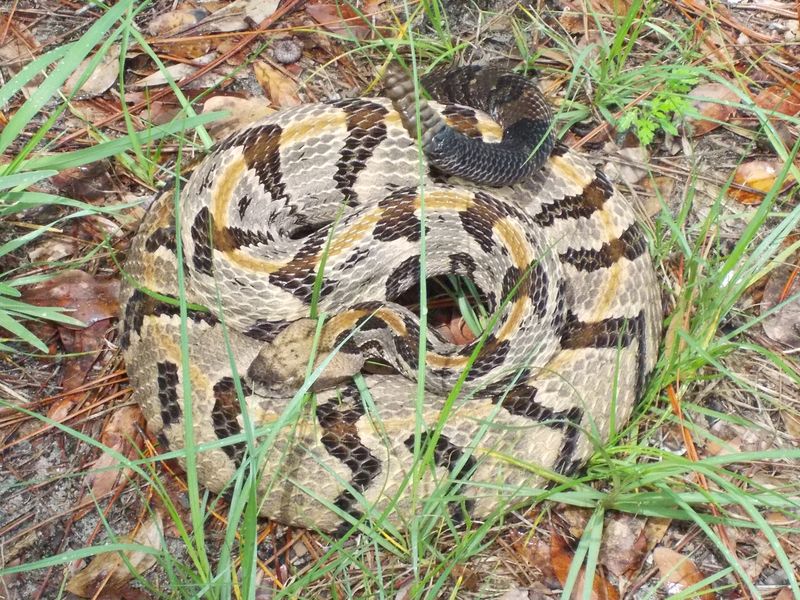
Timber Rattlesnake
© Florida Museum of Natural History – University of Florida

Folks in south Georgia sometimes call it the canebrake rattler. Whatever the name, this big snake usually prefers to lie still and let trouble pass.

Its body is gray, tan, or yellowish with dark zigzag bands called chevrons. Many have a rusty stripe down the back, and the tail ends in a solid black section with a rattle.

Homes near forests and creeks are more likely to get a visit. If you hear that buzzing rattle, back away slowly and give it plenty of room.

3. Eastern Diamondback Rattlesnake
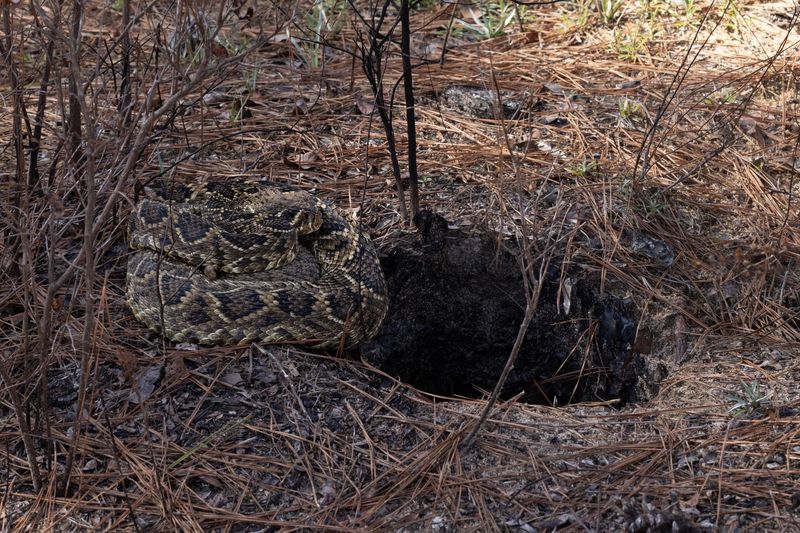
Eastern Diamondback Rattlesnake
© nkfherping

Picture a snake longer than a grown adult is tall. The eastern diamondback is the largest venomous snake in North America, and it lives in the sandy pine country of south and coastal Georgia.

The pattern gives it away: dark brown diamonds outlined in cream or yellow running down its back. Two light stripes cross its face near the eyes.

A few people have serious allergic reactions, so watch for swelling or trouble breathing.

Fun fact: diamondbacks often shelter in gopher tortoise burrows. Leave any large holes in sandy yards alone.

4. Pygmy Rattlesnake
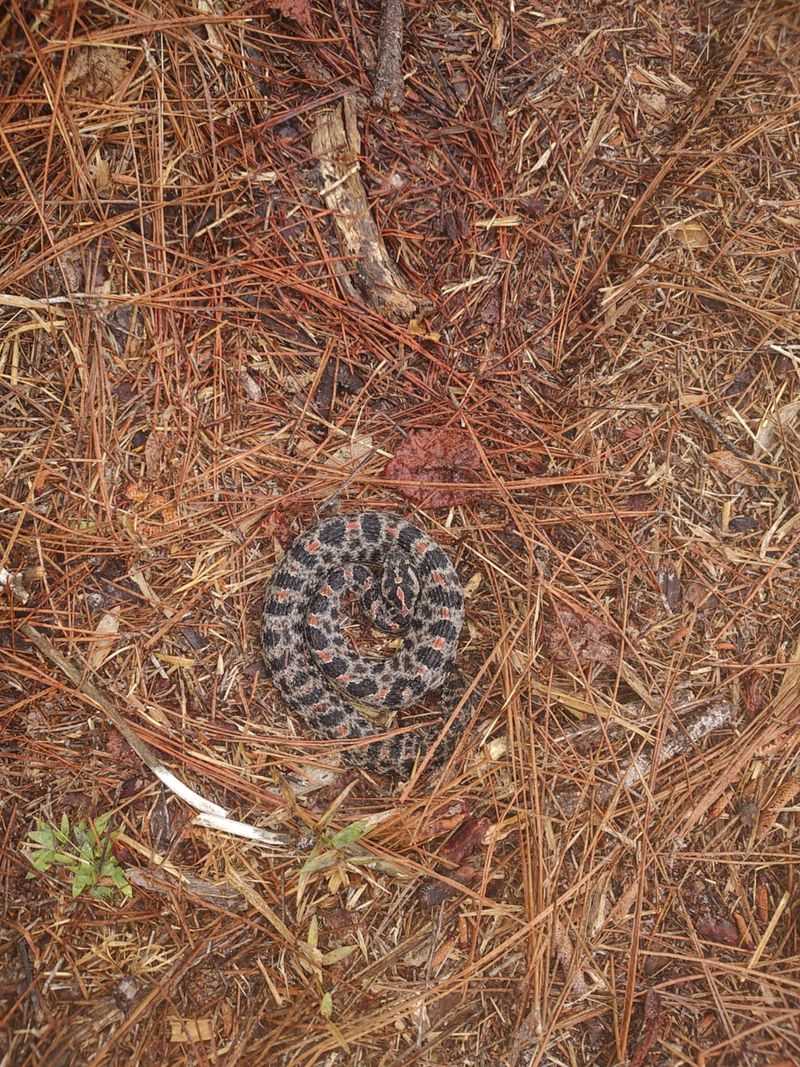
Pygmy Rattlesnake
© Reddit

Small but feisty, the pygmy rattler rarely grows past two feet. Its rattle is so tiny it sounds like a buzzing insect, so most people never hear it.

Watch for a gray body covered in dark round blotches, often with a reddish or orange stripe down the middle of the back. It loves pine straw and garden beds.

Bites are painful but rarely deadly. Still, any bite needs a trip to the doctor.

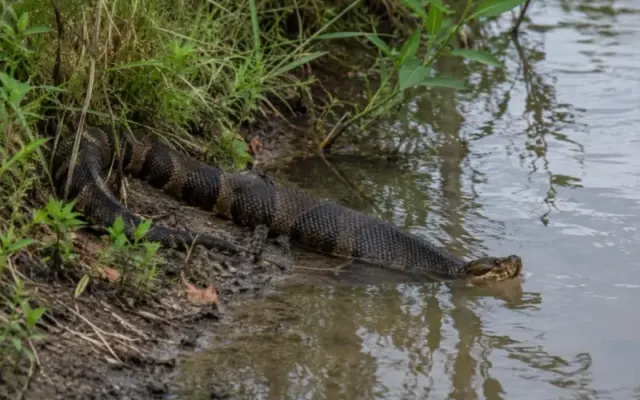
5. Cottonmouth
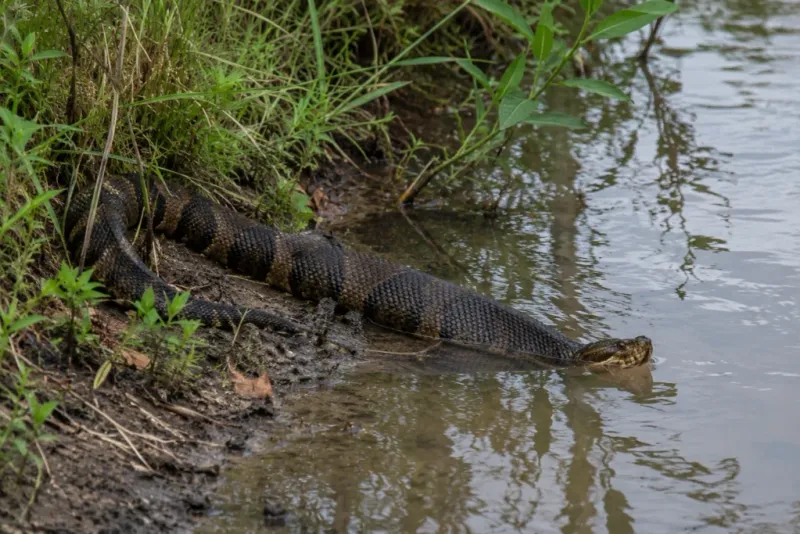
Cottonmouth
© Northwest Exterminating

Got a pond, ditch, or creek nearby? Then cottonmouths may be close.

When upset, they open their mouths wide to show a bright white lining, which is how they got their name.

Adults are thick and dark, often olive, brown, or nearly black. They have a dark stripe through the eye and swim with their bodies floating high on the water.

Many harmless water snakes get mistaken for cottonmouths. Treat any snake near water with respect and keep your distance.

6. Eastern Coral Snake
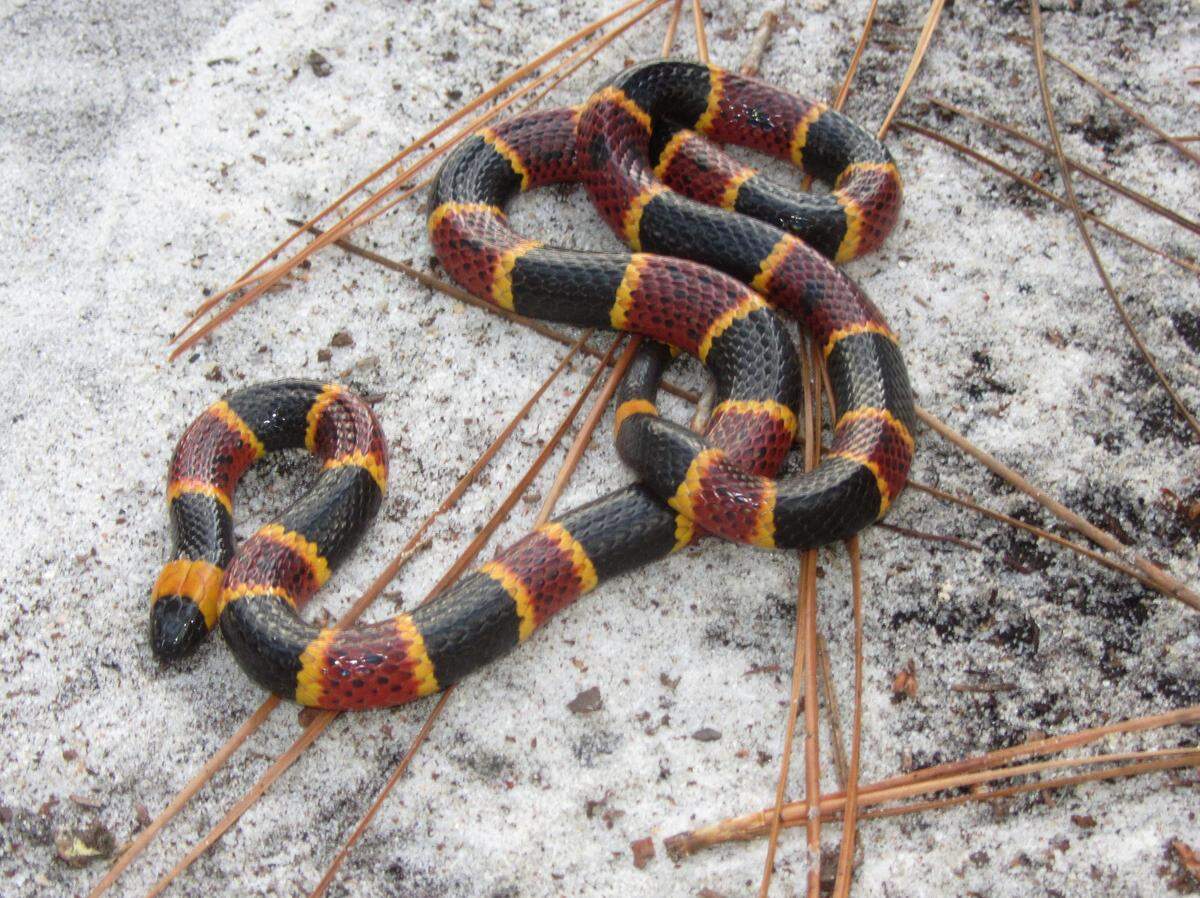
Eastern Coral Snake
© Raleigh (N.C.) News and Observer

“Red touches yellow, kills a fellow.” That old rhyme helps you tell the coral snake from look-alikes such as the harmless scarlet kingsnake.

Coral snakes are slim and glossy with wide red and black bands separated by thin yellow rings. The nose is black.

They spend most of their time hidden under leaves or logs in south Georgia. Their venom is powerful, so never pick up a colorful snake.

7. Southern Black Widow
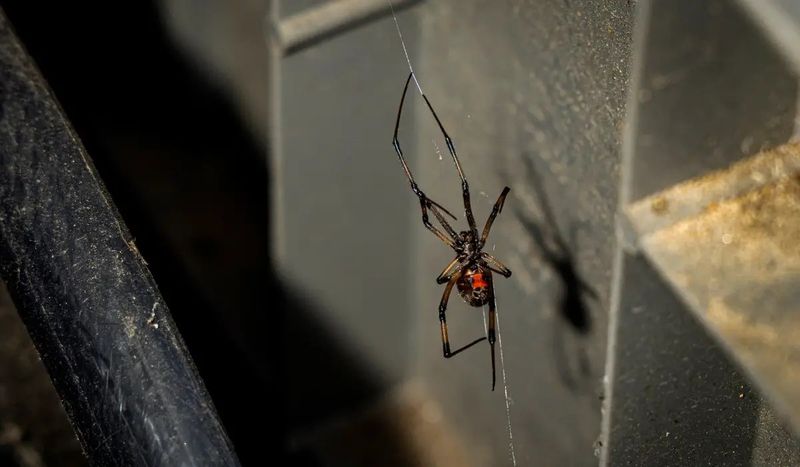
Southern Black Widow
© Rigo Pest Prevention

Reaching into a dark shed corner without looking is a classic mistake. Black widows love quiet, cluttered spots like woodpiles, flower pots, and outdoor furniture.

Females are shiny black with a red hourglass under the belly. Their webs look messy and tangled instead of neat circles.

A bite can cause strong muscle cramps. Shake out gloves and boots stored outside before putting them on.

8. Brown Recluse
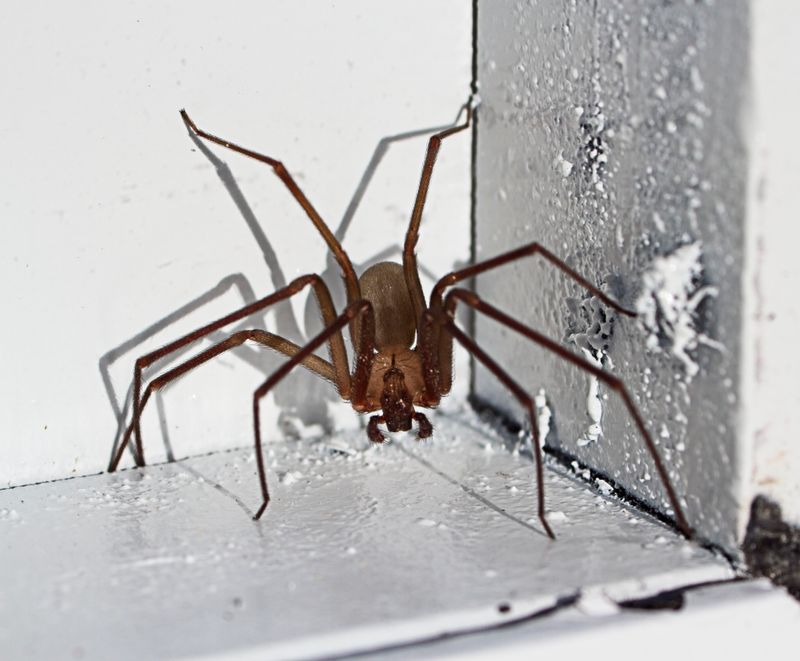
Brown Recluse
© Live Science

True to its name, the brown recluse is shy. It is less common in Georgia than many people think, showing up mostly in the northwest part of the state.

Look for a plain brown spider with a darker violin shape on its back. It has six eyes instead of eight, though you would need a magnifier to check.

Garages, attics, and boxes are favorite hideouts. Keep clutter low and seal cracks to make your home less welcoming.

9. Red Imported Fire Ant
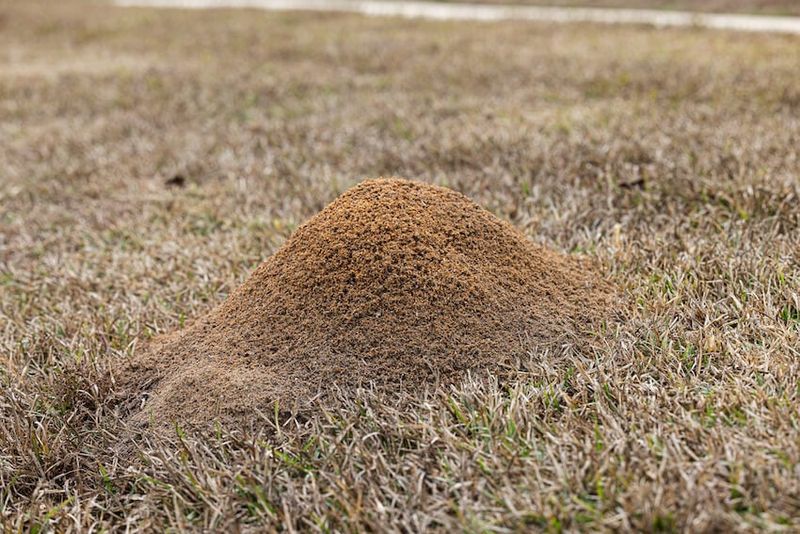
Red Imported Fire Ant
© CAES Field Report – University of Georgia

Any Georgia kid who has stepped on a mound remembers the burn. Fire ants attack in groups, stinging again and again.

Their mounds are fluffy dirt piles with no hole on top, often in sunny lawns. The ants are small and reddish brown.

Stings leave itchy white bumps. A few people have serious allergic reactions, so watch for swelling or trouble breathing.

10. Southern Flannel Moth Caterpillar
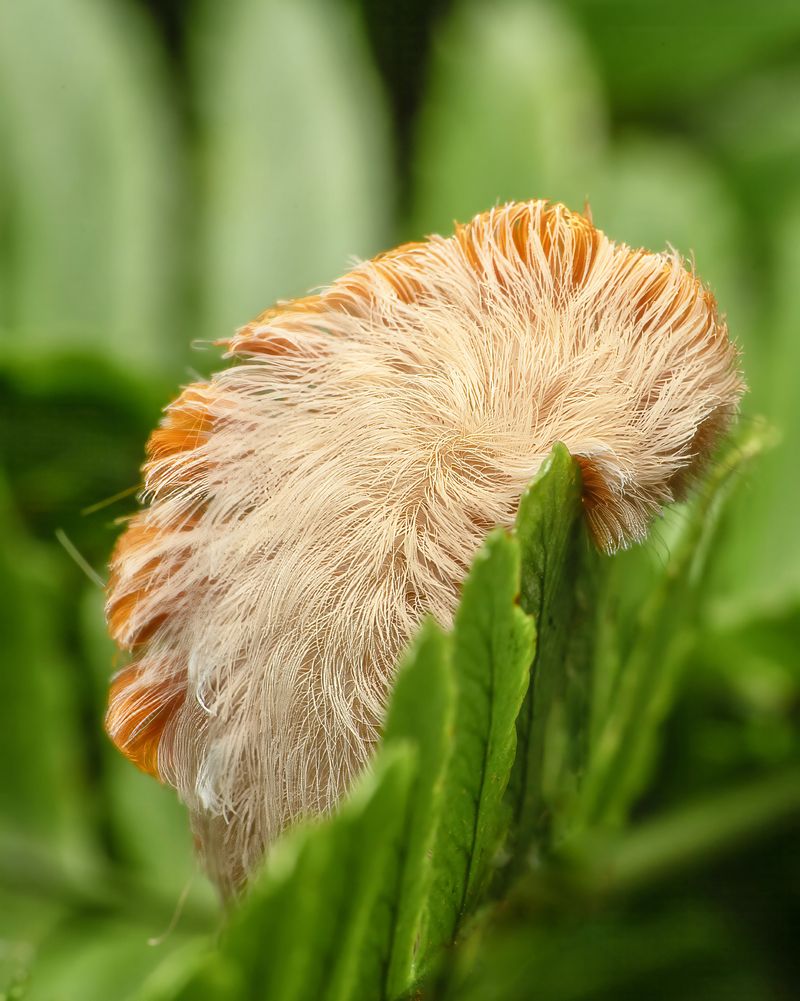
Southern Flannel Moth Caterpillar
© trent_wildlife

It looks like a tiny furry toupee crawling on a leaf. Called the puss caterpillar, it is cute enough to touch, which is exactly the problem.

Hidden under that soft fur are venomous spines. A sting can cause intense pain that spreads up the arm.

Check oak and elm trees in late summer and fall. Teach kids to admire fuzzy caterpillars with their eyes only.

Share this story

SB

Written by

Savannah Brooks

More from Savannah Brooks →

About Gardening Latest

Gardening Latest provides in-depth guides to maintaining and enhancing your garden and backyard. Learn how to make the most of the space you have and create a beautiful garden.

More about us →

Latest stories

  • California GardeningIf a Gray Fox Keeps Trotting Through Your California Yard This Winter, Here’s What It’s After

    If a Gray Fox Keeps Trotting Through Your California Yard This Winter, Here’s What It’s After

    11 hr ago
  • Arizona GardeningWhen a Gray Fox Trots Through Your Arizona Yard This Winter, It’s on a Mission

    When a Gray Fox Trots Through Your Arizona Yard This Winter, It’s on a Mission

    12 hr ago
  • Texas GardeningNeighbor Vines Crossing Into Your Texas Yard: Texas Tree-Branch Guidance Is Clear, but the Answer for Vines Is Less Settled

    Neighbor Vines Crossing Into Your Texas Yard: Texas Tree-Branch Guidance Is Clear, but the Answer for Vines Is Less Settled

    12 hr ago
  • Wisconsin GardeningWisconsin Neighbors Fight Over Snow Piled on Their Property, and Here’s What the Law Actually Says

    Wisconsin Neighbors Fight Over Snow Piled on Their Property, and Here’s What the Law Actually Says

    12 hr ago
  • Missouri GardeningYellow Jackets Nesting Near Your Missouri Home? This Is What You Should Do First

    Yellow Jackets Nesting Near Your Missouri Home? This Is What You Should Do First

    12 hr ago

Gardening by state

Stories for your state, and the hardiness zone most of it gardens in.

Keep exploring

Read next

All Georgia Gardening →
Georgia GardeningIf You Keep Hearing Coyotes Howl Near Your Georgia Home at Night, Here’s Why It’s Happening Now
Georgia Gardening

If You Keep Hearing Coyotes Howl Near Your Georgia Home at Night, Here’s Why It’s Happening Now

17 hr ago
Georgia GardeningGeorgians Eating Celery Every Day Are Finding Out What It Really Does For Their Bodies
Georgia Gardening

Georgians Eating Celery Every Day Are Finding Out What It Really Does For Their Bodies

20 hr ago
Georgia Gardening9 Warning Signs In Your Georgia Yard That Rats Are Getting Ready To Move Inside
Georgia Gardening

9 Warning Signs In Your Georgia Yard That Rats Are Getting Ready To Move Inside

23 hr ago

More from Georgia Gardening

  • Here’s What Georgia Law Actually Lets You Do When A Neighbor’s Tree Hangs Over Your Yard

    Nov 24
  • That Paper Nest You Just Spotted In A Bare Georgia Tree Is Safer To Leave Until Winter

    Nov 23
Back to top

Leave a response Cancel

Your email address stays private. Required fields are marked with an asterisk.

Gardening Latest

In-depth guides to maintaining and enhancing your garden and backyard: how to make the most of the space you have, and how to make it beautiful.

  • Facebook
  • X
  • Pinterest
  • YouTube

We may earn a portion of sales from products or services that are purchased through our site as part of our affiliate partnerships with retailers.

Explore

  • About GardeningLatest.com
  • Contact Us
  • Terms and Conditions
  • Privacy
  • Editorial Note:
  • FTC Disclosure

Newsletter

New garden guides and seasonal tips, straight to your inbox.

We’ll email you a link to confirm. Unsubscribe any time.

Almost there! Check your inbox and tap the link to confirm.

© 2026 Gardening Latest. All rights reserved.

Back to top