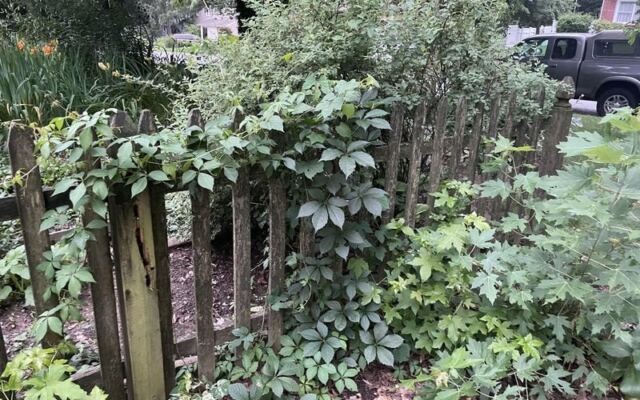
North Carolina guidance says you may trim healthy tree limbs that reach onto your land, back to the property line, without waiting for your neighbor to do it. That guidance is about tree limbs, though, so it does not hand you a blanket right to cut any vine.
A fence might not even sit on the real boundary. Here is how to handle a creeping vine without turning a small annoyance into a bigger fight.
The tree-limb rule is not a blanket vine rule
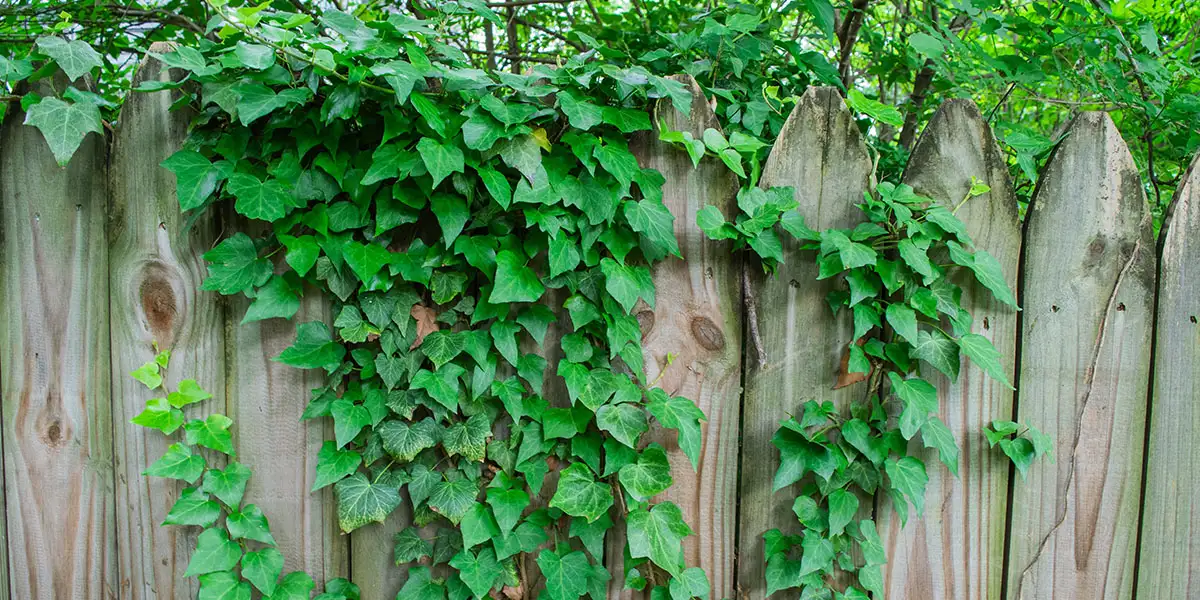
Here is the clearest North Carolina guidance on the topic. According to the North Carolina Pro Bono Resource Center, a property owner may trim healthy tree limbs that extend onto their land, back to the boundary line.
You generally do not have to wait for the neighbor to do it.
Notice the wording, though. That guidance is about tree limbs.
It does not say that every vine in every situation can be cut the same way, and the sources reviewed for this article do not settle that question.
Vines make things messier than limbs do. A vine can trail across the boundary from the other yard.
It can be rooted on one side and climb up on the other. It can also weave through the fence slats so that it is hard to say where one plant ends and the next begins.
Each of those setups raises a different question. Who owns the plant?
Which part sits on your land? Would a cut hurt growth that belongs to your neighbor?
Think of the tree-limb rule as a useful reference point, not a guaranteed answer. NC State Extension also treats tree responsibility as something that depends on where the tree stands and on local rules.
The same careful thinking makes sense for vines.
The safest mindset is simple. Use the limb guidance to understand the general idea, then check the details of your own yard before you pick up the pruners.
Where is the boundary, really?
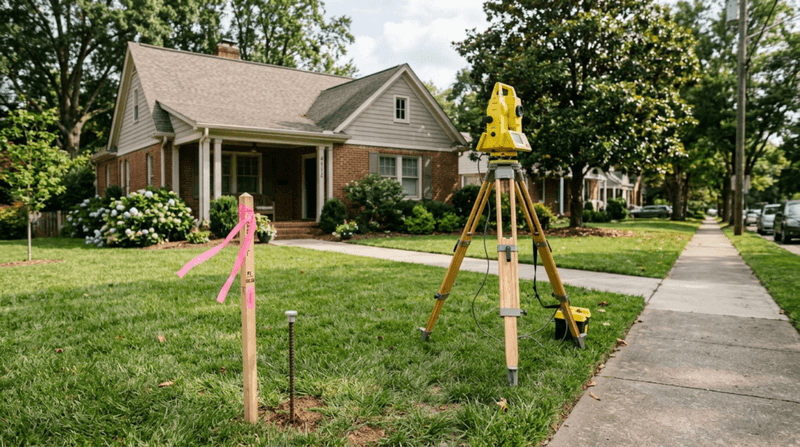
Before any cutting, you need to know where your land actually ends. Many people assume the fence marks that line, but a fence is not proof of the boundary.
Fences get built a little inside or outside the true line all the time.
A North Carolina Court of Appeals case, Parker v. DeSherbinin, shows how a fence and the legal boundary can differ.
The case involved boundary and adverse-possession issues and touched on a fence and vine trimming. It was not a general ruling about when you can trim vines.
So use it only as a reminder. If the fence and the line are in different places, trimming on what you think is your side could land you on someone else’s property.
Start with reliable records. Your deed, a recorded plat, and any survey you received at closing are good first stops.
Your county register of deeds and GIS mapping tools can help you find them, though online maps are rough guides and not final proof.
If the line is still unclear, consider hiring a licensed surveyor or asking a real estate attorney for help. That costs money, but it costs far less than a boundary dispute.
Get the line settled first, then decide what to trim.
Keep any trimming on your side
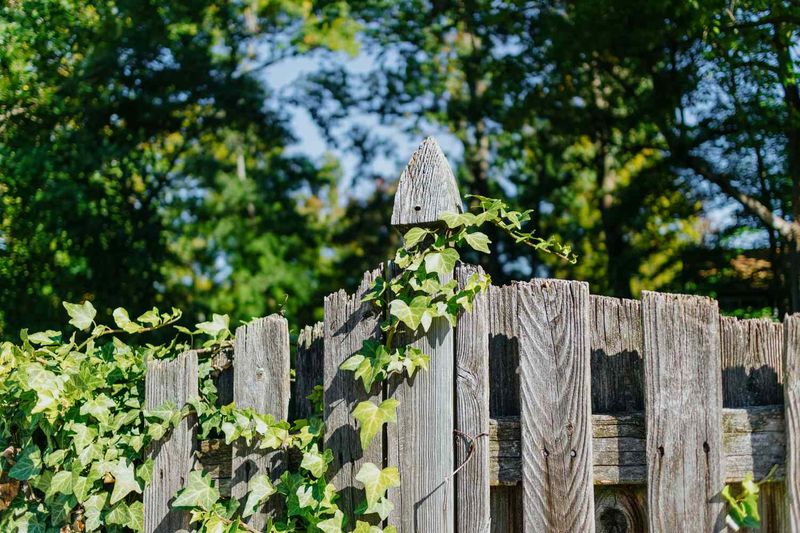
If you trim anything, the cautious reading of the tree-limb guidance is to stay on your own side of the line. Do not cross the boundary.
Do not cut the part of a vine that is growing or rooted on your neighbor’s side without permission.
There is a real difference between clipping an overhanging piece and cutting a vine at its base. A trim at the edge of your yard removes only what hangs over.
A cut at the root could kill the whole plant, including growth that belongs to your neighbor.
The Pro Bono Resource Center guidance says that trimming healthy tree limbs must not be done in a way that kills the tree. That warning is a good habit for vines too, even though the guidance itself speaks about trees.
Two state laws also come into play when damage crosses the line. G.S. 14-128 deals with certain willful damage to plants on another person’s land.
G.S. 1-539.1 covers specified unauthorized cutting or injury to valuable woody growth after entering another’s land.
Both laws have specific conditions. They address particular kinds of damage, not every act of trimming.
Still, they are good reasons to keep your cuts small and on your own property.
A neighbor may not have to remove the vines
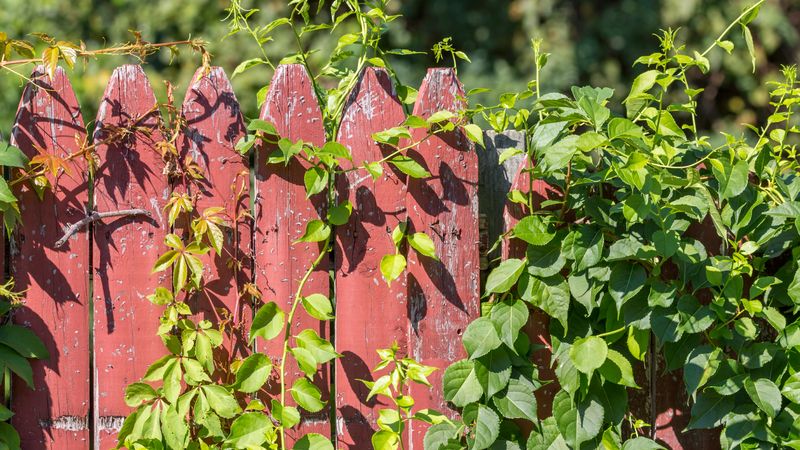
Many people expect the neighbor to clean up the mess. The guidance does not promise that.
The Pro Bono Resource Center says a neighbor generally cannot be compelled to trim overhanging tree limbs.
That is about tree limbs, and it does not answer every vine dispute. Whether a particular vine breaks a local rule, or counts as a legal nuisance, depends on the facts and on the rules where you live.
Nobody should say a neighbor must remove vines as if it were settled law.
So set your expectations. You may end up doing some of the work yourself, on your own side of the line, even if the plant is not yours.
This is where a friendly chat helps. Asking your neighbor before you cut is a practical step, not a legal requirement.
It is simply the easiest way to avoid hurt feelings.
You might say the vine is pushing on the fence and ask whether they mind if you trim the part that reaches your yard. They may offer to do it, or they may tell you something useful, like who planted the vine.
Keep a short note or text of the conversation in case questions come up later.
Local rules can affect what you do next
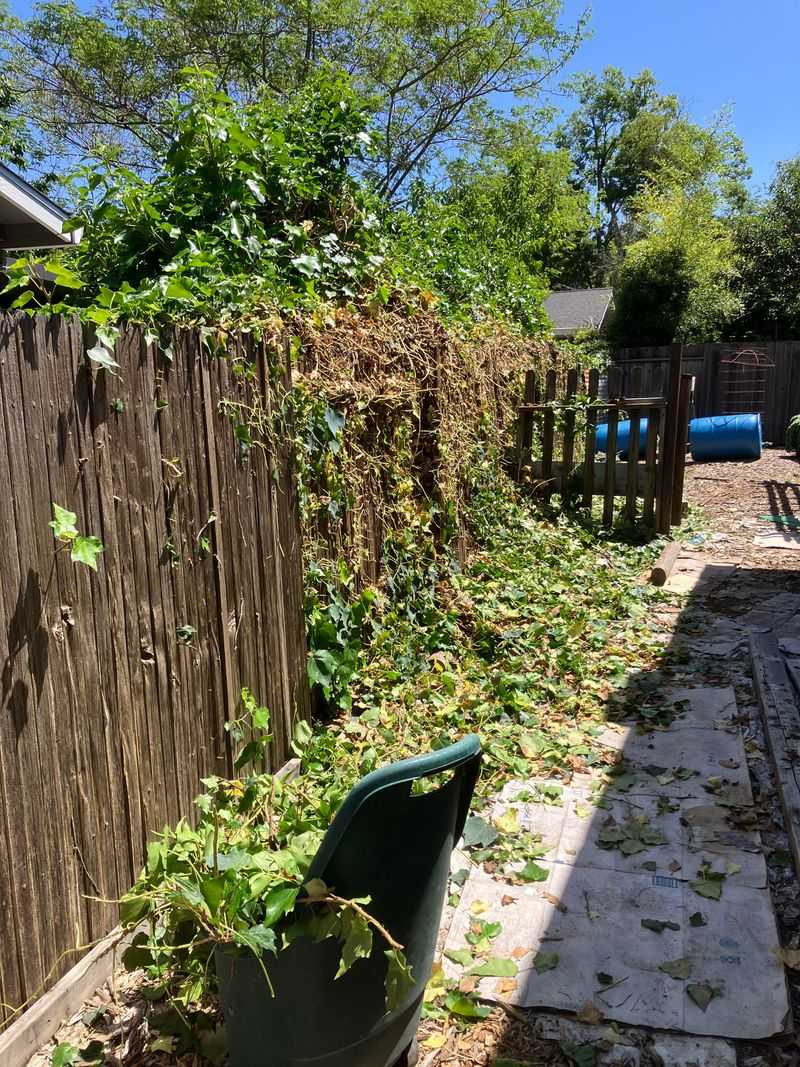
State guidance is only part of the picture. Local ordinances, easements, covenants, and HOA rules may affect pruning or removal where you live.
Those rules vary a lot from one place to another.
None of them create a statewide right to cut vines. They also do not create a statewide duty for your neighbor to remove them.
They simply add local limits or requirements that you should know about.
The Pro Bono Resource Center suggests checking with your local city government about tree ordinances. NC State Extension also notes that ordinances, easements, covenants, and HOA rules can restrict pruning or removal.
Here are a few practical checks. Call or browse your city or county website for rules on vegetation, trees, or nuisance conditions.
Read your HOA covenants if you have them, since some set standards for fences and plantings.
Look at your deed or plat for easements. A utility or drainage easement along a fence line can limit what anyone does there.
Write down what you find, because it will help if you need to talk with your neighbor or a local office.
Unauthorized damage can carry legal consequences
Two North Carolina statutes deal with damage to plants that belong to someone else. Both are narrow, so it helps to read them carefully.
G.S. 14-128 addresses certain willful damage to plants on land that is not your own. It makes that conduct a Class 1 misdemeanor under the conditions the law describes.
G.S. 1-539.1 works differently. It provides triple damages for specified unauthorized cutting or injury to valuable wood, timber, shrubs, or trees after entering another person’s land.
The key is in the conditions. The second law, for example, involves entering another person’s land and injuring or cutting valuable woody growth.
Neither statute spells out a general right to cut overhanging vines, and neither one automatically applies whenever someone clips a vine on their own side.
The practical lesson is about risk. Cutting growth on your neighbor’s side, or going onto their land to do it, is where these laws are most likely to matter.
If you are unsure whether a plan could cross that line, talk with a licensed attorney before you cut.
Identify the vine before handling it
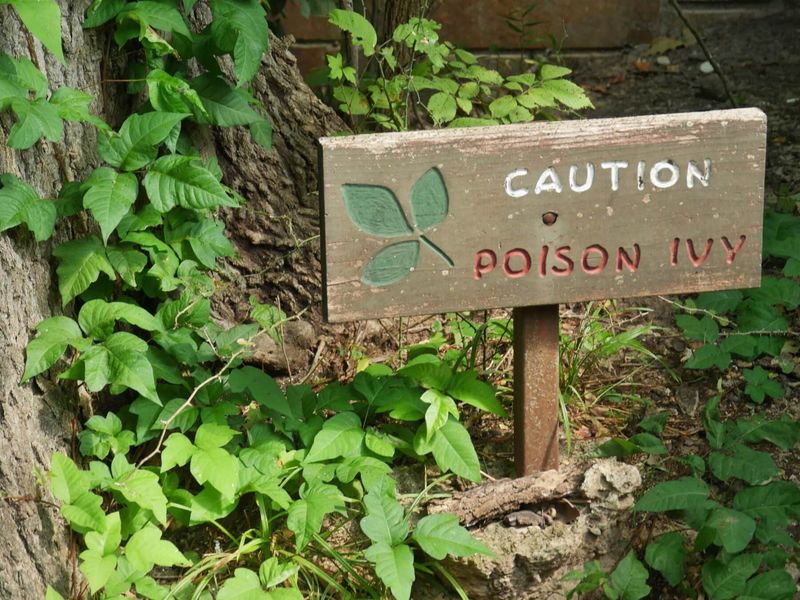
Not every vine is harmless. Before you touch an unfamiliar one, figure out what it is.
A quick photo and a call to your local Extension office can help.
Poison ivy is the big concern. NC State Extension explains that poison ivy can grow as a woody vine and that all parts of it contain urushiol, the oil that causes the rash.
Smoke from burning it can be hazardous.
For that reason, do not burn unidentified vines, and do not burn vine cuttings at all. If poison ivy is possible, avoid direct contact and ask local Extension staff about safe removal.
English ivy is a different case. NC State Extension advice for English ivy on a tree on your own property is to cut the stems at ground level and remove only what you can safely reach.
That is plant-care advice for your own tree. It does not give you permission to cut or treat a neighbor’s plant.
If the ivy is rooted on their side, you are back to asking first.
Start with permission and a verified line

Work through it in order. Identify the vine, then confirm the property boundary using records or a survey.
Next, ask your neighbor, and check the city, county, easement, and HOA rules that apply to you.
Through all of it, do not cut growth on the neighbor’s side without permission. The tree-limb guidance is a helpful reference, not a guaranteed vine answer, and a boundary case reminds us a fence can mislead.
Extension guidance points back to local rules.
A vine grows back in a season, but a strained relationship with a neighbor can last for years.
Share this story