When coyotes yip and howl outside your Georgia home after midnight, they are talking to each other, not sending a coded message to you. Their calls carry far across neighborhoods and fields, and they can help coyotes stay in touch, mark their presence, and keep a group together.
Nobody can translate a single howl exactly, and the sound alone cannot tell you how many animals are out there. Here is what the calls can mean, what they cannot tell you, and what to do about it.
Georgia coyotes use calls to communicate across distance
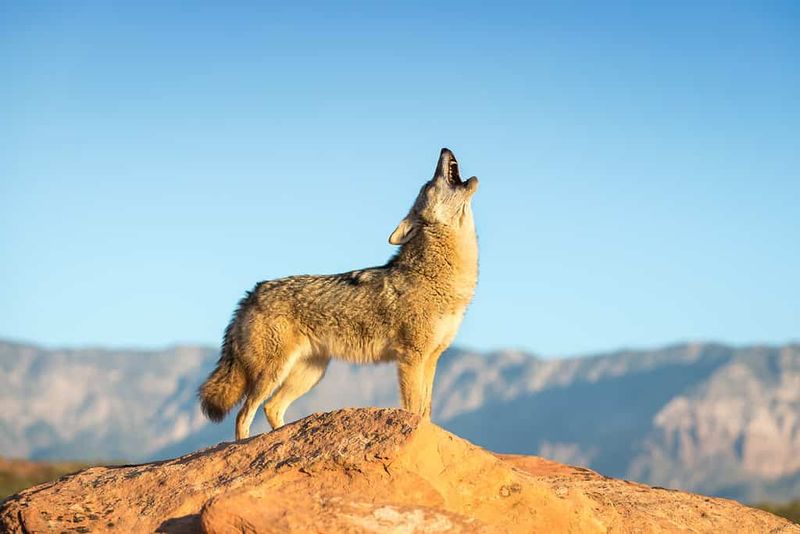
Coyote calls are communication between coyotes. They are not a coded message aimed at the person lying awake in the bedroom.
Coyotes live in every part of Georgia, from metro Atlanta cul-de-sacs to farm country in the south, so the sounds you hear at midnight could come from almost anywhere in the state.
Georgia DNR notes in its coyote fact sheet that coyotes use cries, shrieks, and yips to communicate. Those sounds are part of normal coyote life, and the evening chorus many people notice is one of the most familiar parts of it.
Why call out loud at all? Sound travels well in the dark, over fields and through woods, where coyotes cannot always see each other.
A howl is a way to send information over a long distance. Researchers who study wild dogs, including coyotes, describe howls as long-range social signals that help animals deal with each other when they are apart.
There is no good evidence that suburban coyotes say one thing while rural coyotes say another. The basic job of the call, keeping in touch across distance, looks much the same whether the backdrop is a subdivision or a pasture.
What changes is mostly who happens to be listening.
So the first answer is simple. The howling you hear is coyotes being social, using their voices the way they have for a very long time.
What might a howl tell another coyote?
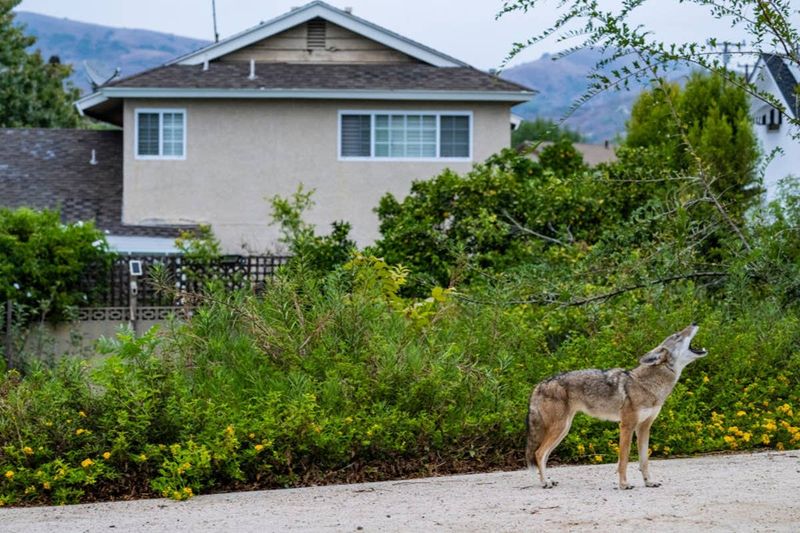
A single howl can do several jobs. Researchers have described canid howls as helping animals defend territory and keep groups together.
A call can also help one coyote find another that is out of sight.
Think of it like a person calling out in a big dark house. The call might mean “where are you?” or “I’m over here” or simply “this space is occupied.” Those are possible functions, not a dictionary entry for any one howl.
An old field report on coyote long-distance calls in Wyoming pointed out that these vocalizations can serve more than one purpose. That is a useful reminder for anyone trying to decode the noise outside their window.
The same sound might carry a different meaning depending on who is calling, who answers, and what is going on nearby.
That is why it makes no sense to say a howl is a warning to you, a sign of an attack, or a sign of where pups are hiding. A call from the treeline does not reveal a specific message, a threat, or the location of a den.
It tells you only that coyotes are in the area and talking.
If you want a calm way to think about it, treat the howl as background information. Coyotes live near you.
They are in contact with one another. Beyond that, the sound leaves most of the story untold.
A chorus cannot tell you how many coyotes are there
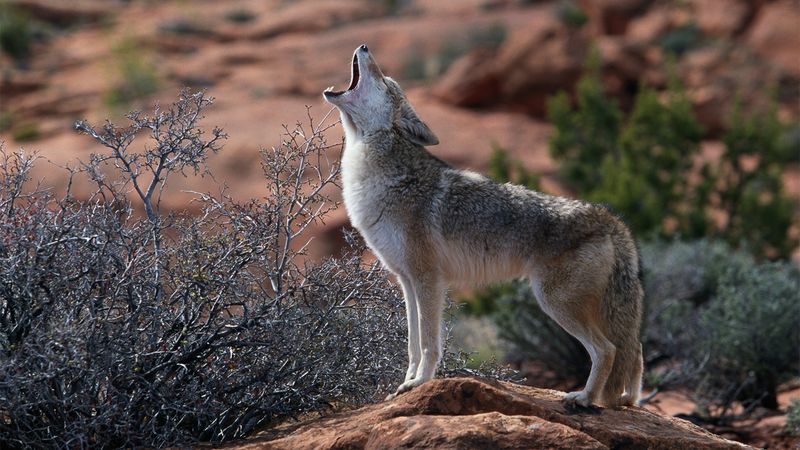
Few sounds seem bigger than a coyote chorus. A wild burst of yips, barks, and howls can make it feel as if a dozen animals have surrounded the house.
Often, though, it is just a few.
Coyotes make a wide range of sounds, and they can switch quickly between them. Massachusetts wildlife officials note that the variety of calls and the way sound behaves outdoors can make a small number of coyotes seem like many more.
The Wyoming field report likewise treats these vocalizations as complex.
The practical lesson is to skip the head count. Echoes off houses, trees, and hills can multiply a voice, and one coyote can sound like several.
A chorus also cannot prove that a large pack is nearby.
The word “pack” causes another mix-up. Georgia DNR describes coyotes as living in small communities of related individuals, but also says they are primarily solitary hunters.
So a family connection does not mean a gang of animals working together to hunt.
Next time a chorus starts up, try listening for the mix of sounds rather than counting voices. You will likely hear that the noise is lively and layered, which is exactly why it is such a poor way to measure anything.
Late November falls in the pup-dispersal window
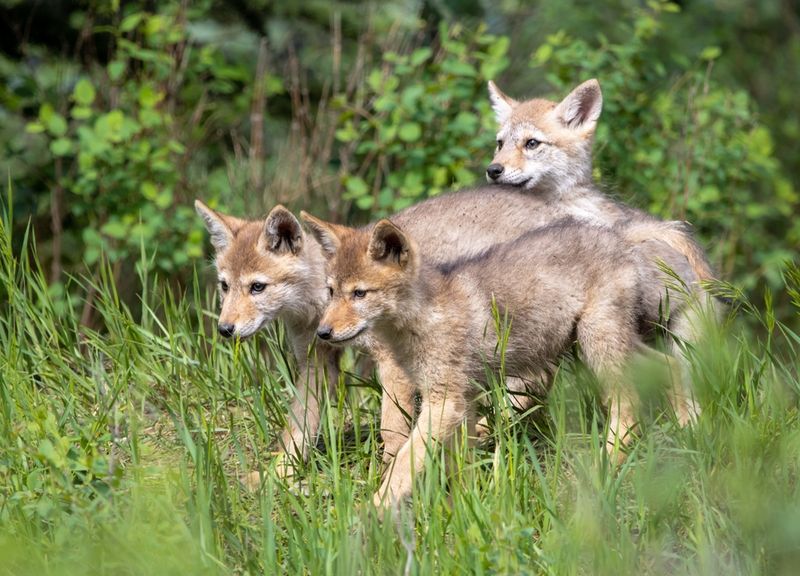
Coyote life in Georgia follows a broad yearly rhythm. The University of Georgia’s guide to coyote conflicts places breeding in roughly January through April and pup-rearing from May through August.
Pup dispersal, when young coyotes move away from where they were born, runs from about September through December.
That puts late November in the dispersal period. It does not put it in the middle of breeding season or in the main stretch of pup-rearing, so those are not good explanations for calls you hear this time of year.
Even so, the dates are general background, not a decoder. They cannot tell you why a certain coyote howled on a certain night.
They also do not show that dispersing young animals made the sound, or that pups or a den are anywhere close to your home.
Here is a useful way to hold the idea. The seasons describe what is common across the state over many months.
A single howl at 1 a.m. is one small moment inside that long pattern, and the pattern cannot explain it alone.
If a call stirs your curiosity, enjoy the fact that you are hearing a wild animal living its ordinary year, and leave it at that.
A howl alone is not evidence of an imminent threat
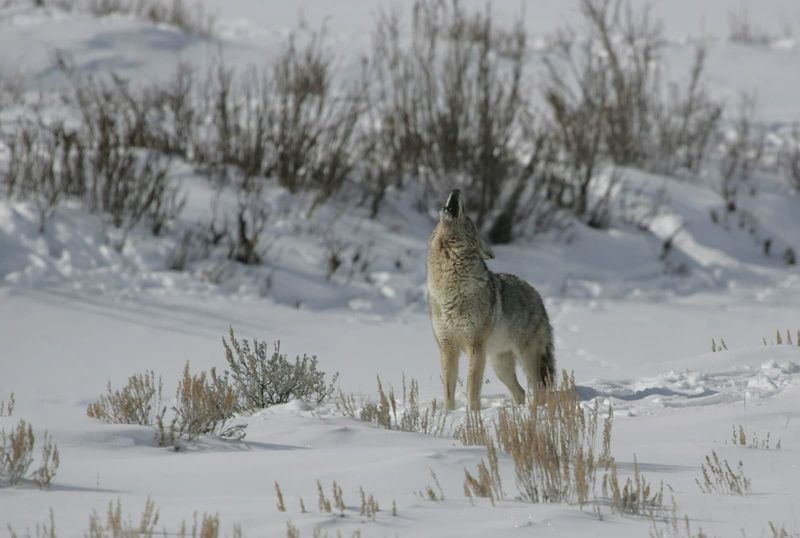
Hearing a coyote, or even spotting one, is not the same as facing danger. A howl does not prove that anything harmful is about to happen.
In the University of Georgia’s sample of Atlanta-area reports from 2019 and 2020, most were simple sightings, though that was a local snapshot and not a statewide count.
A coyote seen in daylight is not automatically sick or dangerous either. Coyotes are flexible animals, and seeing one at an unusual hour does not by itself tell you about its health.
Florida wildlife officials make the same point in their coyote FAQ.
Some behavior deserves more attention. Watch for a coyote that approaches people closely, lets people come near, or acts aggressively.
Those are the signs that matter far more than any sound in the night.
If you see that kind of behavior, do not try to figure out what is wrong with the animal yourself. Reach out to Georgia DNR through its wildlife conflicts page, where staff can offer advice for your situation.
A calm response fits here. Stay at a distance, bring pets inside, and let the professionals help judge the situation.
Keep pets supervised and coyotes wary of people
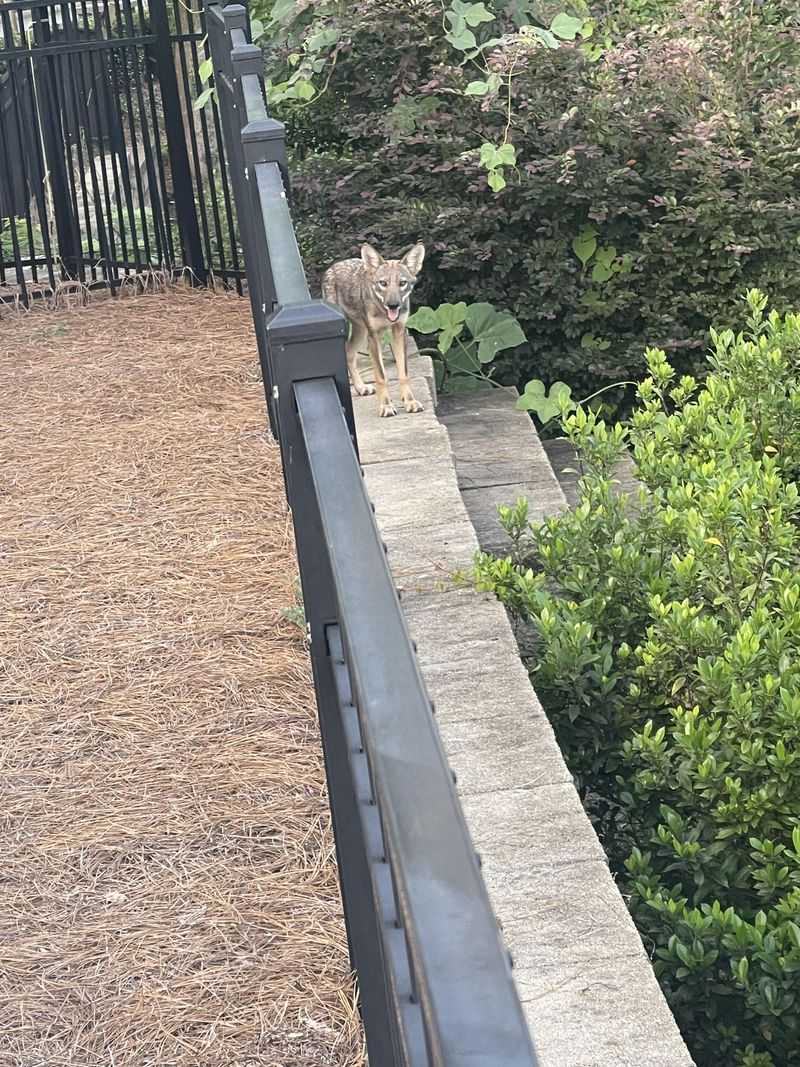
Most protection starts at home, with small habits. Georgia DNR’s urban wildlife coyote fact sheet recommends keeping pets indoors or on a leash and supervising them outside, even in a fenced yard.
Staying alert around dawn and dusk is also wise.
Remove anything that might draw wildlife in. That includes pet food left outside, open trash, fallen fruit, and other easy meals.
When walking a pet, carry a noise-maker so you are ready if you need it.
Never feed a coyote and never walk toward one. Do not imitate calls to pull coyotes closer, and do not go looking for a suspected den.
Giving the animals space is part of keeping everyone safe.
If a coyote is actually in your yard and it is safe to do so, Georgia DNR suggests hazing. That means yelling, banging pots, or using an air horn so the animal learns to stay wary of people.
Hazing is not something to do while a coyote is far off, and a howl in the distance is no reason to try it.
If a coyote bites a person or a pet, get appropriate medical or veterinary care and contact local authorities. For wildlife advice, Georgia DNR offers guidance on its preventing wildlife conflicts page and by phone at 1-800-366-2661.
Listen for communication, not a coded warning
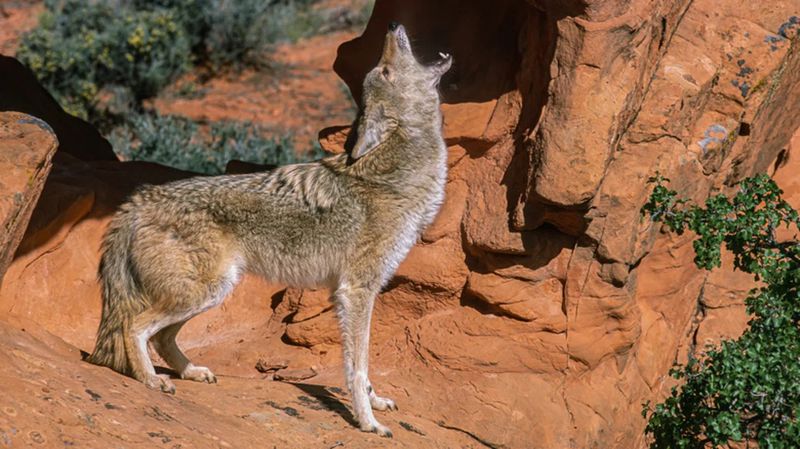
Coyote calls are social signals, the kind canid howl research describes. Sound alone cannot reveal an exact message, a head count, or a threat.
What you can do is keep your distance, protect your pets, and turn to Georgia DNR guidance if an animal’s behavior seems truly concerning.
The next midnight chorus is just the neighborhood’s wild residents catching up with each other, and you happen to be within earshot.
Share this story