Get the latest garden guides in your inbox →
Gardening Latest
  • General Gardening
  • Lawn Care
  • Plant Care
  • Composting
  • Soil Health
  • Backyard
  • Garden Muse Magazine
  • General Gardening
  • Lawn Care
  • Plant Care
  • Composting
  • Soil Health
  • Backyard
  • Garden Muse Magazine
  • News
  • Gardening Calendar
  • Garden Structures
  • Vegetable Garden
  • Vertical Garden
  • Raised Beds
  • Hydroponics
  • General Equipment
  • Community Gardens
Garden Themes
  • Spiritual Garden
  • Hydroseeding
  • Seeding and Laying Sod
  • Artificial Grass
  • Lawn Care Equipment
  • Plants
  • Trees
  • Planting Tools
  • Composting Basics
  • Fertilizer
  • Alternative Growing Mediums
  • Front Yard
  • Backyard Activities
  • Landscaping
Gardening Latest

Explore by state

Which state is your garden in?

Currently viewing North Carolina

All states

Northeast

  • Connecticut —
  • Delaware 36
  • Maine —
  • Maryland 22
  • Massachusetts 39
  • New Hampshire —
  • New Jersey 22
  • New York 32
  • Pennsylvania 32
  • Rhode Island —
  • Vermont —

Southeast

  • Alabama 22
  • Arkansas —
  • Florida 22
  • Georgia 23
  • Kentucky 36
  • Louisiana 21
  • Mississippi —
  • North Carolina 21
  • South Carolina 35
  • Tennessee 19
  • Virginia 21
  • West Virginia —

Midwest

  • Illinois 21
  • Indiana 24
  • Iowa 35
  • Kansas —
  • Michigan 23
  • Minnesota 21
  • Missouri 21
  • Nebraska —
  • North Dakota —
  • Ohio 23
  • South Dakota —
  • Wisconsin 37

Southwest

  • Arizona 22
  • Colorado —
  • Nevada —
  • New Mexico —
  • Oklahoma —
  • Texas 21
  • Utah —

West

  • Alaska —
  • California 22
  • Hawaii —
  • Idaho —
  • Montana —
  • Oregon —
  • Washington —
  • Wyoming —

No state matches that search.

Site menu

Gardening Latest
  • General Gardening
    • News
    • Gardening Calendar
    • Garden Structures
    • Vegetable Garden
    • Vertical Garden
    • Raised Beds
    • Hydroponics
    • General Equipment
    • Community Gardens
    Garden Themes
    • Spiritual Garden
  • Lawn Care
    • Hydroseeding
    • Seeding and Laying Sod
    • Artificial Grass
    • Lawn Care Equipment
  • Plant Care
    • Plants
    • Trees
    • Planting Tools
  • Composting
    • Composting Basics
  • Soil Health
    • Fertilizer
    • Alternative Growing Mediums
  • Backyard
    • Front Yard
    • Backyard Activities
    • Landscaping
  • Garden Muse Magazine

Explore

  • About GardeningLatest.com
  • Contact Us

Get the latest from the garden

New guides on lawn care, plants and backyard projects, sent when they go up.

Subscribe →

Follow

  • Facebook
  • X
  • Pinterest
  • YouTube
North Carolina Gardening

North Carolina Yuccas Pour Everything Into That Giant Flower Stalk, So Here’s When Cutting It Off Makes Sense

Cutting off a yucca's tall flower stalk makes sense once the blooms fade, if you want a tidier look or fewer seed…

WD

By Wyatt Daniels

November 27, 2026 · 6 min read

North Carolina Yuccas Pour Everything Into That Giant Flower Stalk, So Here’s When Cutting It Off Makes Sense
North Carolina Yuccas Pour Everything Into That Giant Flower Stalk, So Here's When Cutting It Off Makes Sense

Cutting off a yucca’s tall flower stalk makes sense once the blooms fade, if you want a tidier look or fewer seed capsules. It is a cleanup choice, not a rescue job, so nobody needs to panic when those white bells finish.

Leaving the stalk is just as reasonable if you like the capsules or the winter shape. Here is how North Carolina gardeners can decide, and how to do it safely.

At a glance

Where
North Carolina Gardening
Hardiness zone
8 10 to 20°F
Read
6 minutes
Published
November 27, 2026

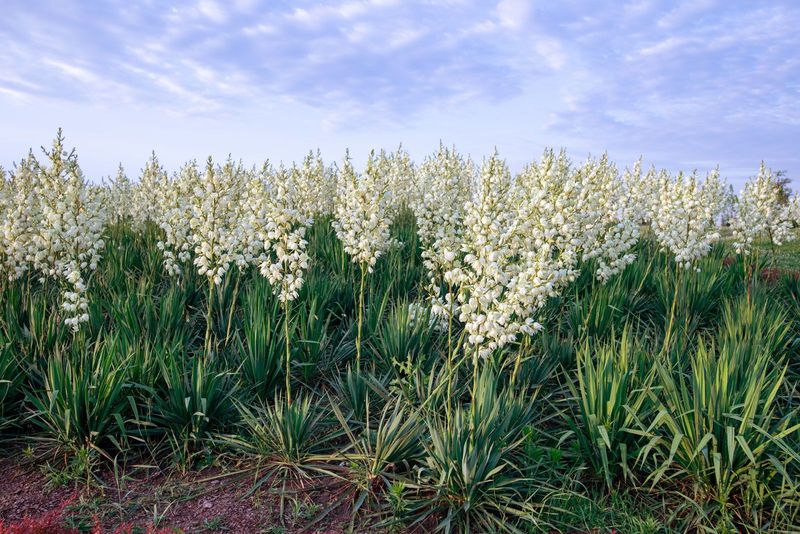
Adam’s needle is a familiar North Carolina garden yucca
Adam’s needle is a familiar North Carolina garden yucca
© Britannica

Drive past an old homestead or a sunny roadside bank in North Carolina, and you may spot a clump of stiff, sword-shaped leaves with a towering stalk of creamy bells. That is probably Adam’s needle, Yucca filamentosa, and it is the main example in this article.

According to NC State Extension’s Plant Toolbox, it is a native, clumping perennial with pointed leaves and a tall flower stalk that reaches about 5 to 8 feet. The leaves stay in a tough rosette through the year, so the plant looks good even when nothing is blooming.

The state flora, kept by the North Carolina Natural Heritage Program, records spring flowering, generally from late April to early June, and fall fruiting. So the show starts in spring, and the seed capsules follow later in the year.

Keep one thing in mind as you read. Adam’s needle is the example here, not a stand-in for every yucca sold at garden centers or growing in the state.

Other species can behave differently, and a later section covers how to tell them apart. For now, picture the plant in your own yard: a rosette at the base, a tall stalk above, and a decision to make once the flowers drop.

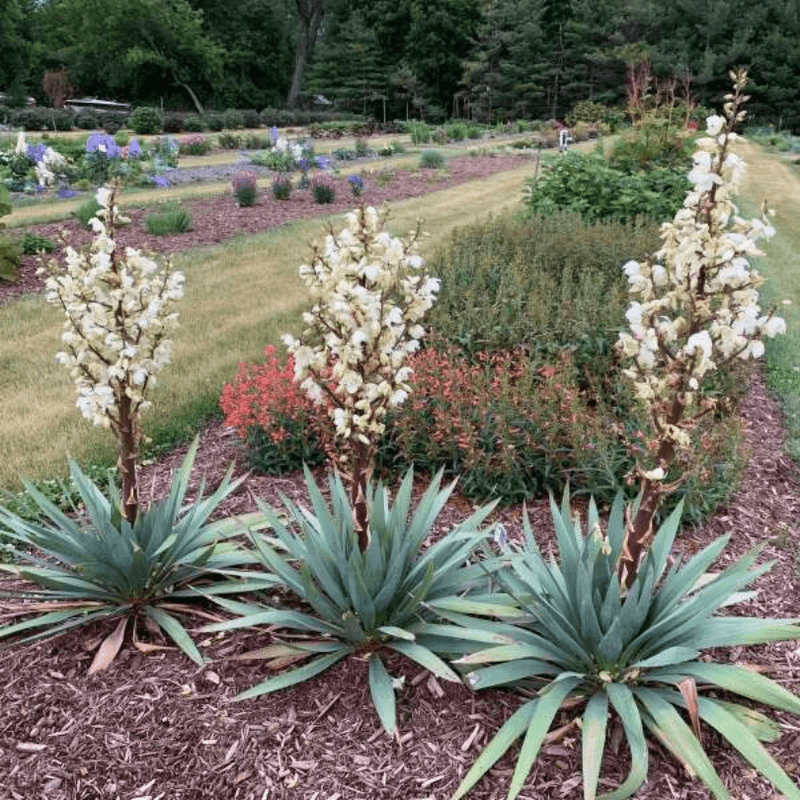
A spent stalk is not a plant-rescue emergency
A spent stalk is not a plant-rescue emergency
© Great Garden Plants

You may have heard that a yucca pours everything into its flower stalk and needs help afterward. For Adam’s needle, that story goes further than the guidance does.

A faded stalk is not a signal that the plant is in trouble.

University of Illinois Extension says the stalk can be removed after flowering or at the end of the growing season, and that the pods can be left into winter. Notice what that advice treats as the reasons: looks and personal taste.

The University of Arizona Cooperative Extension warns that yucca leaf spines can pierce skin and cause painful wounds.

It does not describe cutting as a way to save the plant.

The energy idea does have a research root. A 1976 study by Smith and Ludwig looked at Yucca elata in New Mexico and found that reproductive growth went along with slower vegetative growth.

That is a desert species in a different climate.

The study does not show that a Yucca filamentosa stalk harms a North Carolina garden plant. It also does not show that cutting the stalk meaningfully redirects energy or brings on a second flush of flowers.

So if you cut, do it because you prefer the look. If you skip it, your yucca will be fine.

Choose when to cut based on the display you want
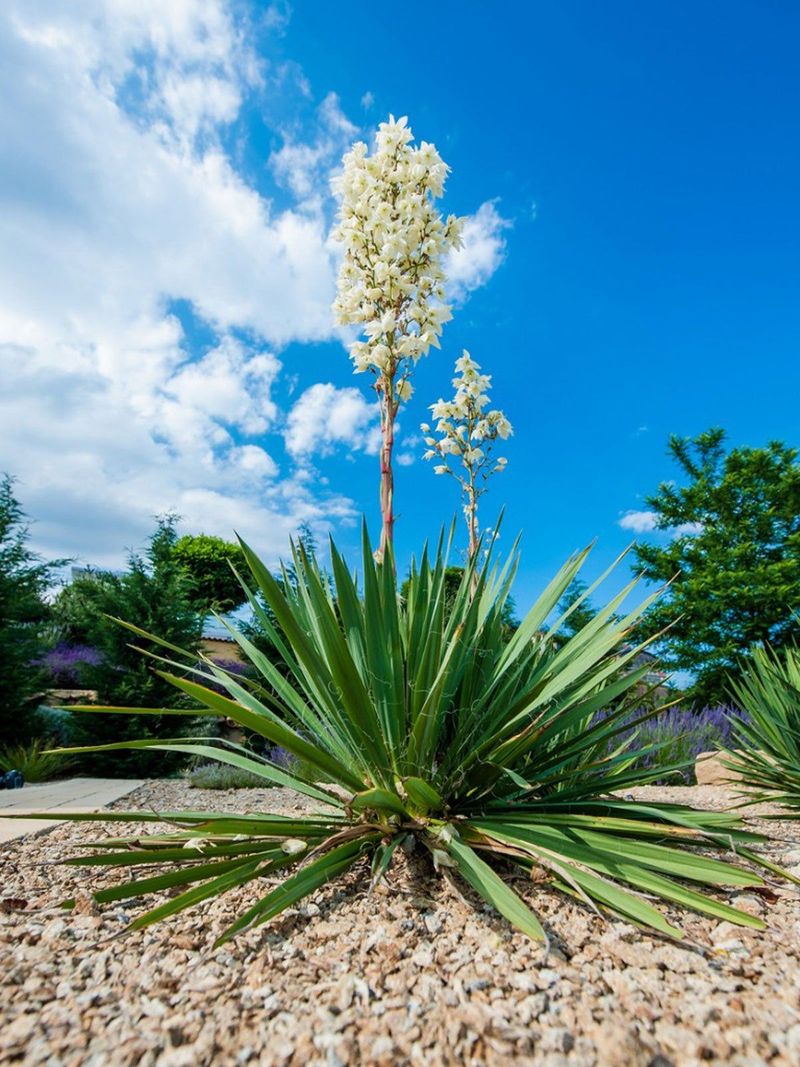
Choose when to cut based on the display you want
© Gardening Know How

Timing is relaxed here. Extension guidance from University of Illinois points to removing the stalk after flowering or later in the growing season.

There is no deadline, and you do not have to rush out the day the last bloom drops.

Wait until the flowers are truly finished before cutting. Cutting early gives up the rest of the display and may prevent seed from forming.

If you like a neat bed, cutting the stalk after bloom leaves a clean rosette of leaves. This also means you will not get seed capsules, which suits gardeners who do not want them.

Many people choose this route for yucca beside a walkway, a patio, or a front entry.

If you enjoy texture, leave the stalk standing. The capsules dangle from it, and the dry, upright shape can add interest to a quiet winter bed.

It looks especially nice against evergreens or ornamental grasses.

Some gardeners split the difference. They enjoy the capsules through fall and cut the stalk in late winter, before new growth gets going.

Any of these plans is a fair choice, so go with the look you like best.

Give seed capsules time to develop
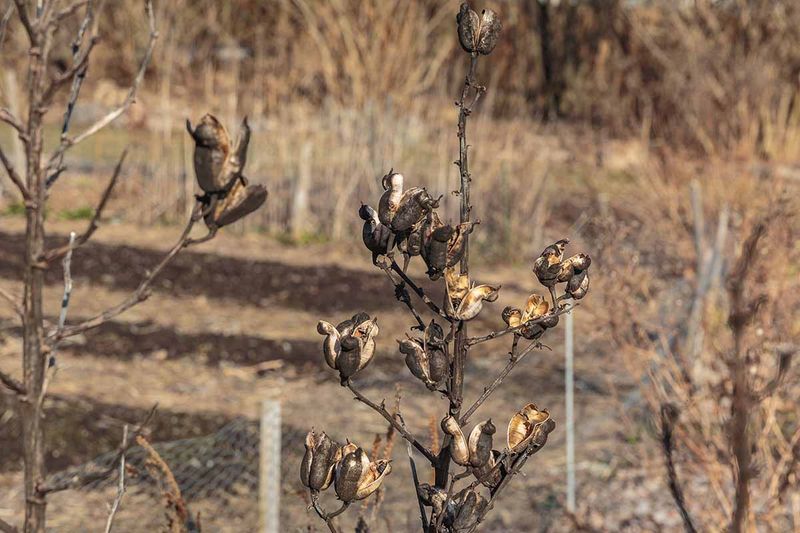
Give seed capsules time to develop
© Gardener’s Path

Adam’s needle has a famous partnership with a small insect. NC State Extension identifies it as a host for the yucca moth relationship, and research in the American Journal of Botany documents yucca moth pollination of this species.

Pollination happens while the flowers are open. Seed comes later, after fruit capsules form and slowly develop and mature on the stalk.

That gap matters if you hope to collect seed. Waiting only until the blooms fade lets pollination happen, but it does not ensure seed production.

Not every flower ends up with a capsule, and a pollinated flower is not a guarantee.

So if seed is your goal, leave the stalk in place long enough for capsules to develop and mature. Check them over the following months, and cut only when they have finished ripening.

If you simply care about wildlife, you do not need to keep every stalk. Letting the flowers finish before you cut is the gentler approach, and leaving one or two stalks is plenty.

Keeping the stalk is not required for every wildlife benefit.

Cut carefully and keep yucca away from pets
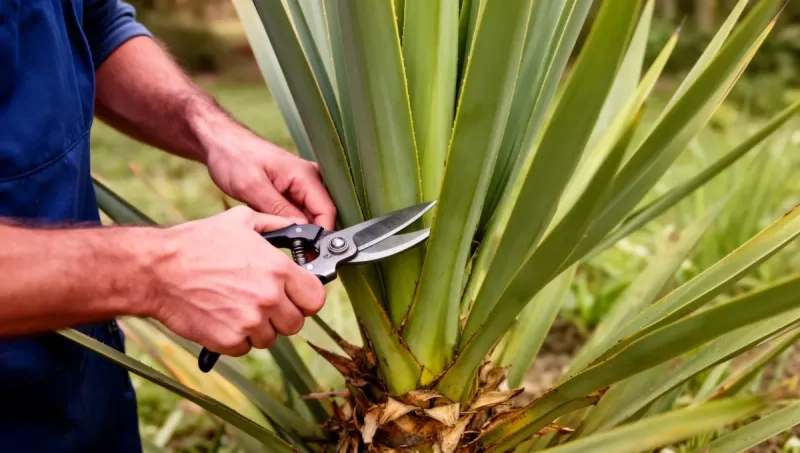
Cut carefully and keep yucca away from pets
© Blooming Expert

Those sharp leaf tips are no joke. The University of Arizona Cooperative Extension warns that yucca leaf spines can pierce skin and cause painful wounds.

Sturdy gloves and eye protection are sensible precautions. Long sleeves and closed shoes help too.

Choose a clean, suitable cutting tool, such as loppers or a pruning saw for a thick stalk. Cut the stalk low, but keep clear of the pointed leaves around it.

Do not reach blindly into the rosette. If you cannot see where the stalk meets the base, or you cannot make the cut safely, stop.

A shorter cut now and a tidier trim later beats an injury.

Pets deserve a thought as well. The ASPCA lists yucca as toxic to dogs, cats, and horses if ingested.

Merely touching the plant is not the concern.

After cutting, gather the stalk and any trimmings promptly. Keep them where curious pets cannot chew on them.

Not every yucca follows Adam’s needle’s pattern
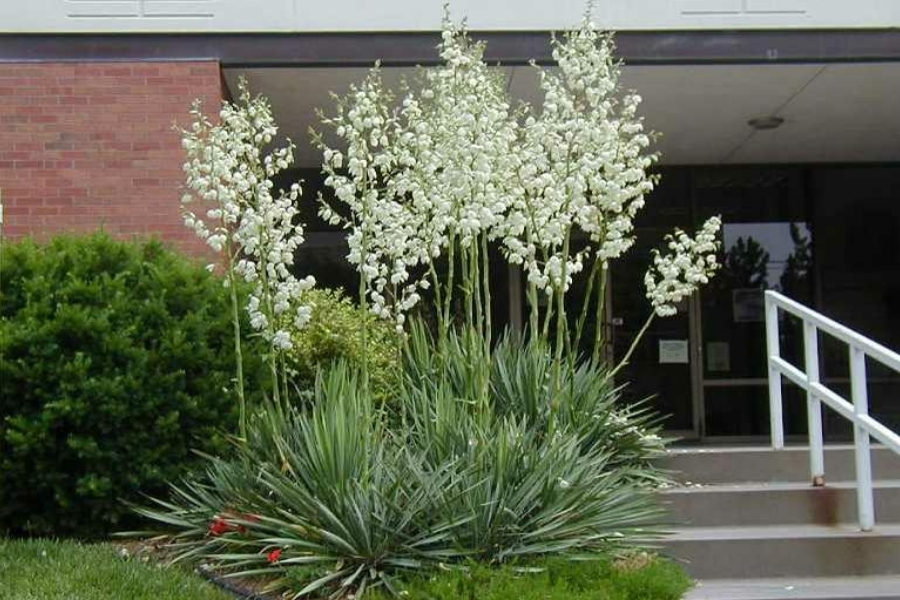
Not every yucca follows Adam’s needle’s pattern
© Johnson’s Nursery

Before you apply any of this to the yucca in your yard, make sure you know which one you have. The state flora shows that North Carolina has more than one yucca.

It also notes that the similar Yucca flaccida may be confused with Yucca filamentosa.

If you bought a plant labeled only as yucca, check the tag or compare photos from a trusted extension source. Guidance for the common garden yucca should not automatically be applied to every plant sold under that name.

Flowering habits differ across the genus too. The University of Arizona Cooperative Extension explains that most yuccas flower repeatedly, while some species are monocarpic, meaning they flower once and then die.

That means you cannot read much into the fact that a plant bloomed. It does not prove the plant will die, and it does not prove it will bloom again next year.

Identify first, then decide. If you are unsure, a local Cooperative Extension office can help you name the plant.

Make the choice after the flowers finish
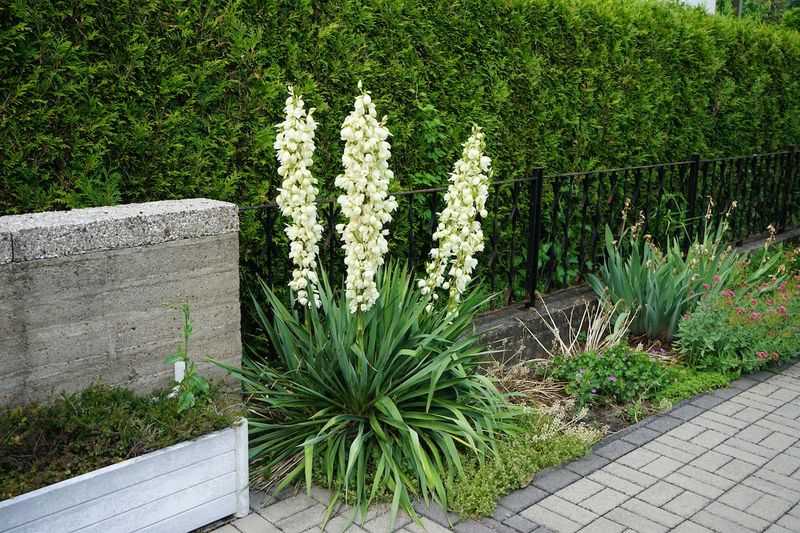
Make the choice after the flowers finish
© The Old Farmer’s Almanac

Once the last flower drops, the rule is simple. Cut the stalk if you want a cleaner look or fewer capsules, or leave it for the capsule display and winter interest.

If you want seed, wait for the capsules to develop and mature, since pollination alone does not guarantee it.

Either way, this is routine upkeep, not a test of whether your yucca will live or bloom again. The plant will hold its own while you decide.

Share this story
WD

Written by

Wyatt Daniels

More from Wyatt Daniels →

About Gardening Latest

Gardening Latest provides in-depth guides to maintaining and enhancing your garden and backyard. Learn how to make the most of the space you have and create a beautiful garden.

More about us →

Latest stories

  • Michigan GardeningWhy Pavement Ants Pile Up Fresh Hills in Michigan Lawns Right After It Rains

    Why Pavement Ants Pile Up Fresh Hills in Michigan Lawns Right After It Rains

    7 min ago
  • Massachusetts GardeningRaking Leaves in Massachusetts? Here’s What We Know About the Northern Short-Tailed Shrew’s Venom

    Raking Leaves in Massachusetts? Here’s What We Know About the Northern Short-Tailed Shrew’s Venom

    12 min ago
  • California GardeningPull One Seedling and More Pop Up: This Invasive Tree Is Spreading Through California Neighborhoods

    Pull One Seedling and More Pop Up: This Invasive Tree Is Spreading Through California Neighborhoods

    17 min ago
  • New York GardeningThe Glossy Nuts New York Children Gather Every Fall Are Actually Poisonous

    The Glossy Nuts New York Children Gather Every Fall Are Actually Poisonous

    22 min ago
  • Ohio GardeningAcross Ohio, an Invasive Tree Is Taking Over Neighborhoods Faster Than Anyone Can Pull It

    Across Ohio, an Invasive Tree Is Taking Over Neighborhoods Faster Than Anyone Can Pull It

    28 min ago

Gardening by state

Stories for your state, and the hardiness zone most of it gardens in.

Keep exploring

Read next

All North Carolina Gardening →
North Carolina GardeningStorm Winds Sent Your Neighbor’s Tree Into Your North Carolina Yard, but Who Actually Pays?
North Carolina Gardening

Storm Winds Sent Your Neighbor’s Tree Into Your North Carolina Yard, but Who Actually Pays?

2 hr ago
North Carolina GardeningCooler Late Fall Days Bring North Carolina’s Venomous Yard Critters Out Where You Can Spot Them
North Carolina Gardening

Cooler Late Fall Days Bring North Carolina’s Venomous Yard Critters Out Where You Can Spot Them

6 hr ago
North Carolina GardeningHere’s How To Tell Apart The Venomous Snakes And Spiders Living In North Carolina Gardens
North Carolina Gardening

Here’s How To Tell Apart The Venomous Snakes And Spiders Living In North Carolina Gardens

9 hr ago

More from North Carolina Gardening

  • Coyotes Are Howling Outside North Carolina Homes After Dark This Season, and There’s a Reason

    Nov 25
  • Eating Celery Every Day Does More To Your Body Than Most North Carolinians Realize

    Nov 24
Back to top

Leave a response Cancel

Your email address stays private. Required fields are marked with an asterisk.

Gardening Latest

In-depth guides to maintaining and enhancing your garden and backyard: how to make the most of the space you have, and how to make it beautiful.

  • Facebook
  • X
  • Pinterest
  • YouTube

We may earn a portion of sales from products or services that are purchased through our site as part of our affiliate partnerships with retailers.

Explore

  • About GardeningLatest.com
  • Contact Us
  • Terms and Conditions
  • Privacy
  • Editorial Note:
  • FTC Disclosure

Newsletter

New garden guides and seasonal tips, straight to your inbox.

We’ll email you a link to confirm. Unsubscribe any time.

Almost there! Check your inbox and tap the link to confirm.

© 2026 Gardening Latest. All rights reserved.

Back to top