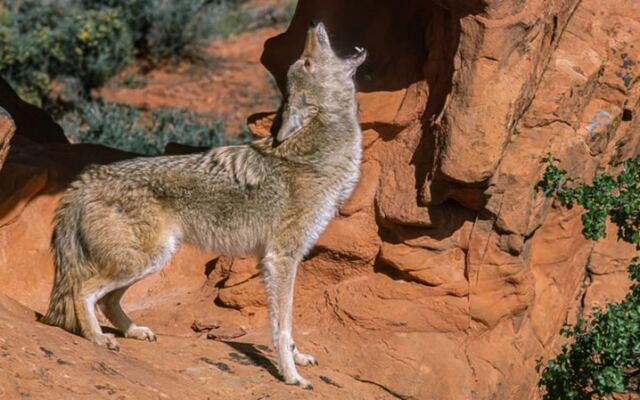
Those howls and yips drifting across your yard after dark are real messages between coyotes. They often tell other coyotes where someone is or call family members together.
The exact meaning of any one night’s chorus is harder to pin down, and that is part of the fun. Here is what South Carolina wildlife experts say the sounds can mean, and what to do about them.
What can coyote calls tell you?
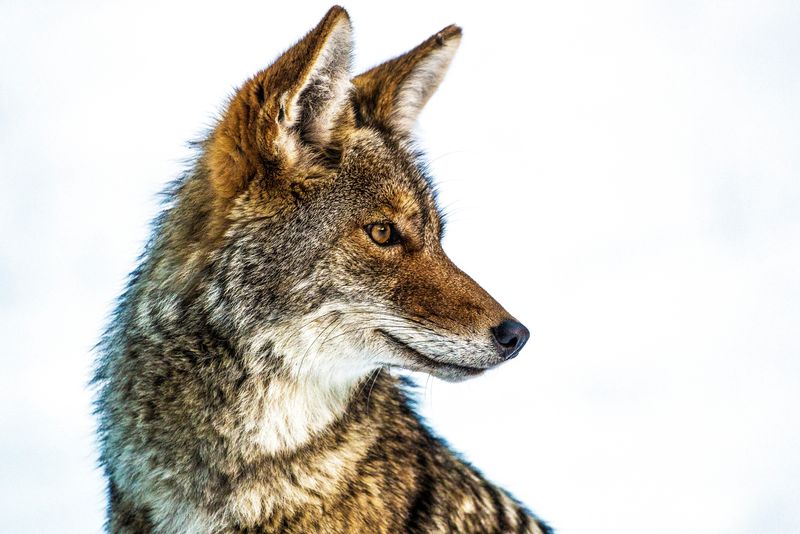
Coyotes use howls, yips, and barks to talk to one another, but you cannot translate a call into one exact sentence. According to South Carolina Department of Natural Resources guidance, these calls commonly help coyotes communicate their location or gather other coyotes.
That is true whether you live near the Blue Ridge foothills, the Midlands, or a Lowcountry marsh edge.
Another possible context is territory. Resident coyotes may defend their area against transient coyotes passing through, and a call can be part of that.
The same sound might fit more than one situation, which is why guessing is tricky.
Some people like to call a late-night chorus a family check-in. That works as a handy shorthand for location or gathering calls, where one coyote announces where it is and others answer.
It is not a proven literal message, and nobody can confirm that coyotes are asking for a roll call.
So when you hear yipping near the back fence, treat it as proof that coyotes are around and talking, nothing more. Sound alone cannot tell you the exact purpose of the call.
What it can do is nudge you to think about the season, the conditions, and your own yard, which the next sections cover.
Listening closely is still worthwhile. Noticing when the calls happen, how long they last, and what else was going on gives you useful background without pretending to decode a language we do not fully understand.
The season can add context
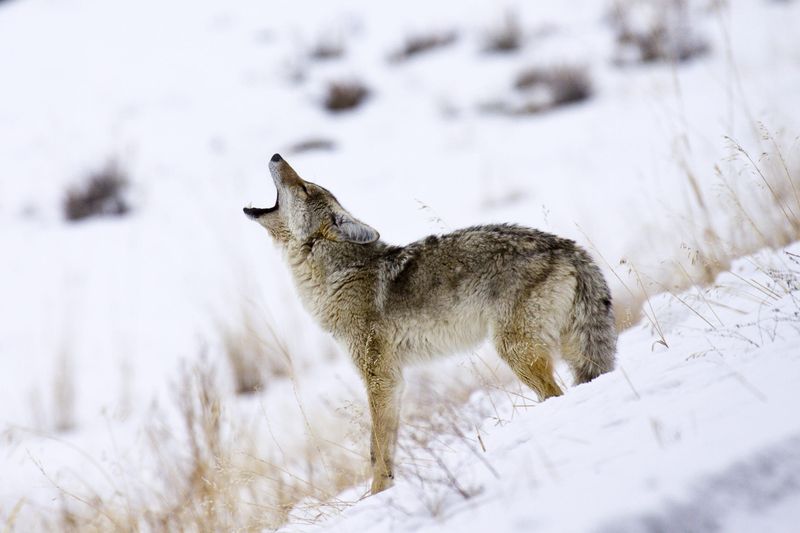
Think of the calendar as a clue, not an answer. In South Carolina, state wildlife information describes breeding as beginning in January and continuing into March, with activity peaking mostly in February and March.
Calling is typically heavier around then.
Late fall is different. Young coyotes from the previous year are getting older, and the family group breaks up at about 9 to 10 months of age, according to the state’s coyote biology publication.
A peer-reviewed study notes that howling commonly occurs during breeding season and dispersal, so late-fall calling may sometimes relate to young coyotes moving on.
Notice the careful wording there. Dispersal is one possible backdrop for fall calls, not a certainty.
A chorus in November does not prove young coyotes are leaving, just as a chorus in February does not prove mating.
If you hear calls in late November, the late-winter breeding peak has not arrived yet, so that explanation does not fit the timing. If you hear them in February, breeding season is a reasonable piece of context.
Either way, the season narrows the list of possibilities without settling the question for your neighborhood. Treat it like weather forecasting for sounds: helpful, but never a guarantee.
Spring brings a family-care phase
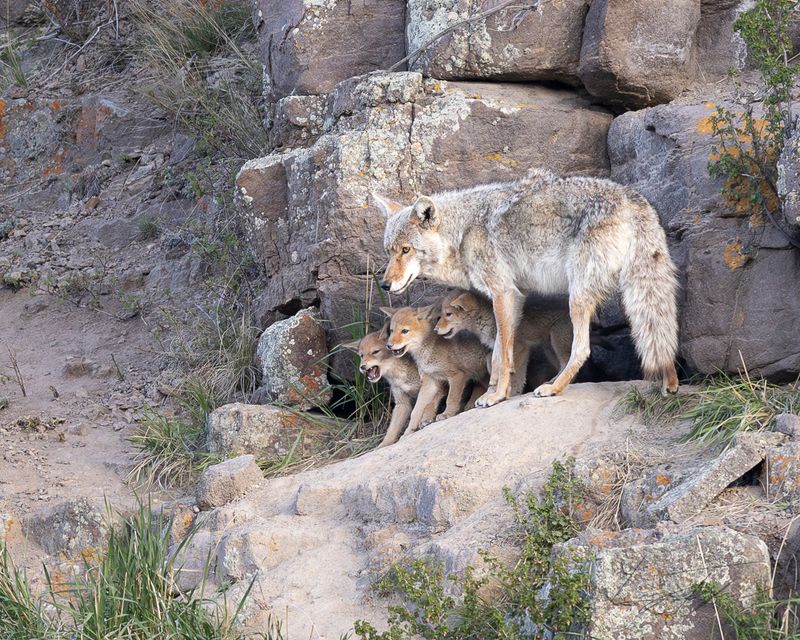
Mating and raising pups are separate chapters. After breeding mostly in February and March, females carry pups for about 63 days, according to South Carolina’s coyote species page.
That puts births in spring, and the household shifts from courtship to caregiving.
Pups begin leaving the den at 3 to 4 weeks old and are weaned at 8 to 9 weeks. By then, much of the work is about feeding.
Both parents bring food to the pups, as described in the state’s coyote biology publication, and other associated adults may sometimes help.
Because a coyote family is busy and spread out in spring, calls could plausibly help members find each other. That is a reasonable guess, but it is only a guess.
South Carolina guidance does not identify a distinct, recognizable pup-rearing call, so no listener can say that a particular howl means pups are nearby.
The practical takeaway is simple. If you suspect a den near your property, give it distance, keep pets away from that area, and never approach, feed, corner, or handle coyotes or pups.
Adults protecting young are best left alone.
By late summer and fall, the pups are growing quickly, and the cycle moves toward the dispersal period described earlier.
A chorus can sound larger than it is
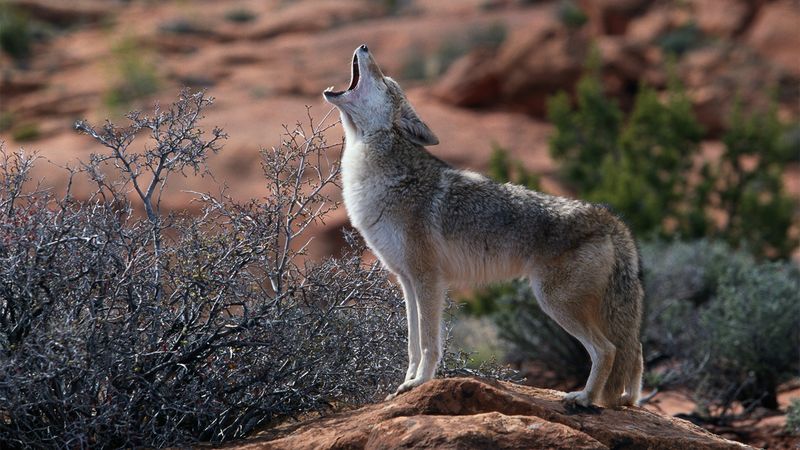
Four voices, forty voices: at night, it can be hard to tell. Coyote yips overlap and bounce around, and the brain tends to fill in the gaps with more animals than are really there.
Researchers tested this in Texas. In a 2017 study, 427 listeners heard recordings of one to four coyotes and generally guessed too high, by nearly twofold on average.
That finding is about how people hear, not about how many coyotes live in South Carolina neighborhoods. It does not tell us the size of any local population.
What it does say is that a loud chorus is a poor way to count animals.
A South Carolina nuisance wildlife factsheet makes a similar point, noting that a pair of coyotes can sound like many more.
So if the yard sounds surrounded, remember that a couple of animals can create that impression. A big, noisy chorus does not mean a large pack has moved in.
Why coyotes may call on some nights
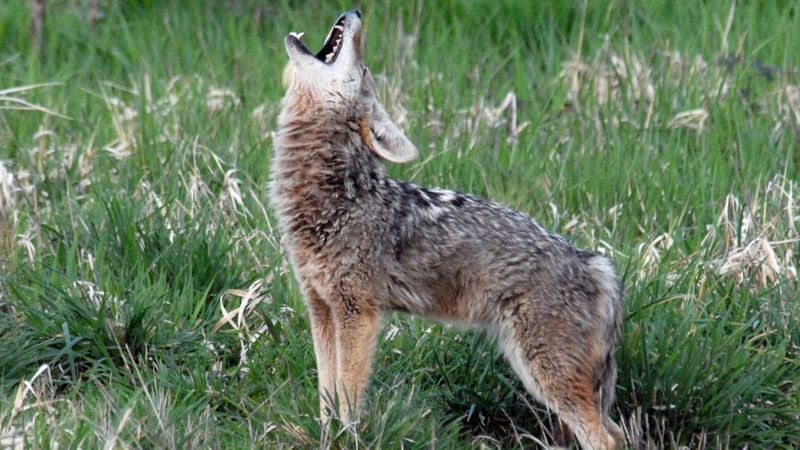
Some nights are noisy and others are quiet, and a few outside factors may play a role. Loud sounds such as trains, aircraft, or sirens can trigger vocalizations, according to the state’s coyote biology publication.
If a siren wails down your street and the howling starts right after, that timing is likely not a coincidence.
The same source says calling is also more frequent on clear, moderately temperate nights. Think of that as a condition associated with more calling, not a rule.
It does not explain why one particular chorus happened, and it does not mean the weather helps sound travel farther.
What about the full moon? It makes a good story, but a peer-reviewed paper summarizing earlier research found that howling is not linked to moonlight intensity.
Coyotes do not need a bright moon to start singing.
If you want to make sense of the sounds near your home, jot down the date, the time, and anything loud that happened just before. Over a few weeks, you may spot patterns without needing to pin down one exact cause.
Make the yard less inviting after dark
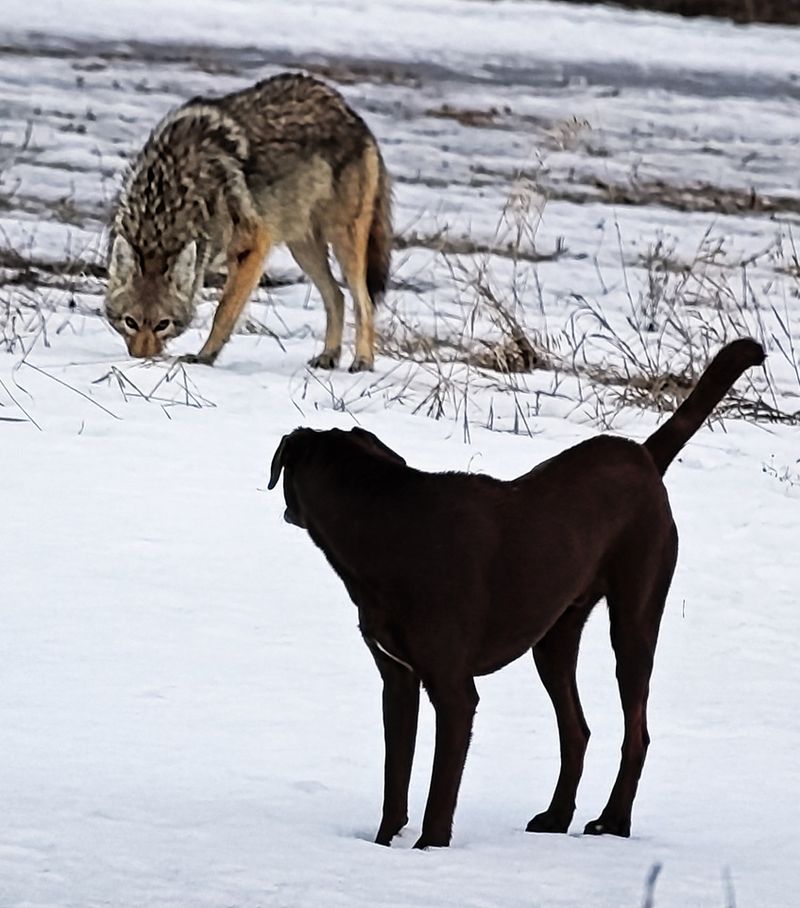
A few habits go a long way. Coyotes sometimes prey on domestic pets, so South Carolina wildlife officials suggest practical precautions, especially after dark.
These are sensible steps, not signs that a coyote nearby is about to attack.
Start with your pets. Keep smaller animals indoors at night when you can, and keep any pet you walk on a short leash.
Feed pets inside, and pick up food and bowls before dark so nothing tempting is left outside.
Next, look at what else draws wildlife. Secure garbage and compost, since coyotes are opportunistic and will investigate an easy meal.
A lidded can or a closed storage area helps a lot.
It also helps to think about the habits of the animals themselves. According to the state’s coyote species page, coyotes adapt well to many kinds of places, including areas near people.
That means a tidy yard matters just as much in a subdivision as it does near the woods.
Do a quick evening walk-through before bed. Bowls in, trash secured, pets inside.
It takes a couple of minutes and covers most of what you can control.
Respond to unusual behavior, not the chorus alone
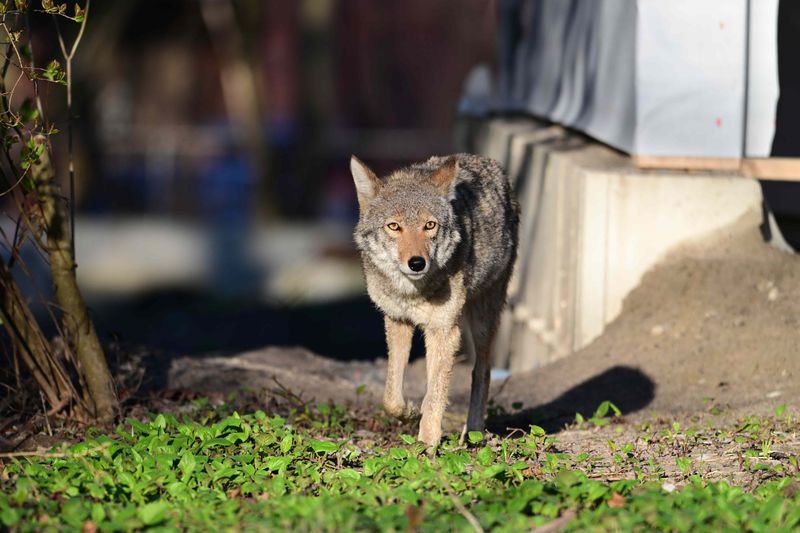
Hearing coyotes, or even seeing one, is not by itself a sign of danger to people. A nighttime chorus is ordinary behavior, and it does not establish an imminent threat.
Pets are the more realistic concern, since state wildlife information notes coyotes sometimes prey on them, which is why the yard habits above are worth keeping.
What deserves attention is a wild animal that looks sick, injured, or acts abnormally. Do not approach or handle it.
South Carolina’s Department of Public Health advises keeping children and pets away and contacting local animal control or police if the animal poses an immediate danger.
Also avoid feeding, cornering, or handling coyotes or pups. Removing food sources, as covered in the state’s coyote biology publication, works better than leaving anything out.
Most nights, the howls are just the neighborhood’s wild residents keeping in touch.
Share this story