The big brown moth on your porch light has a name, and there are two good leads: the black witch and a group of winter-flying owlet moths called sallows. One fits the giant size, and the other fits the cold season.
A porch light is only the place you spotted it, so a few simple clues matter more than the bulb. Here is how to tell the candidates apart and what to do next.
What the season and size can tell you
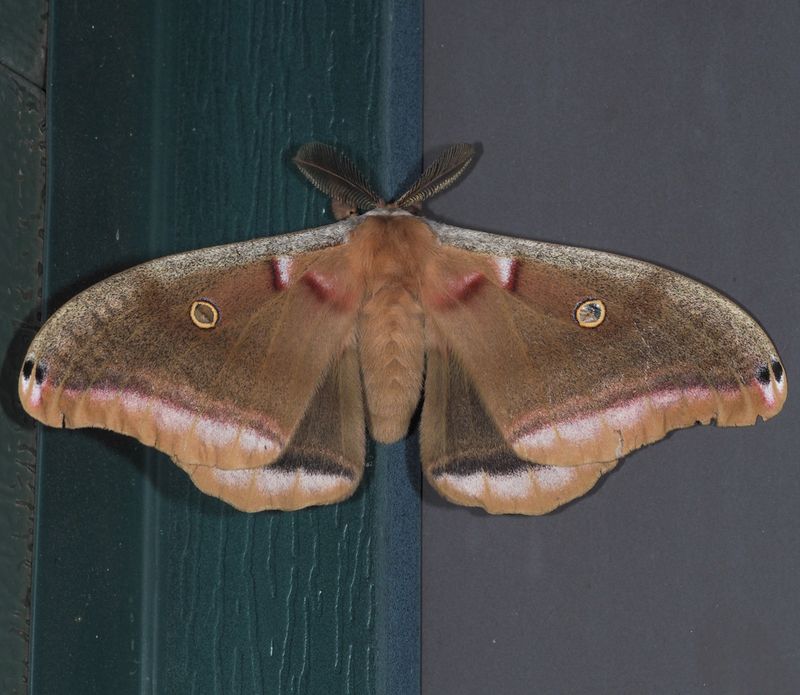
Two moths fit pieces of your sighting. The black witch matches a very huge moth resting near a building, while winter-active Eupsilia sallows match the cold-season timing better.
Neither one is a sure answer yet.
A bright porch light draws in many kinds of moths, so the light itself tells you very little. As University of Florida extension guidance on mothing explains, lights are simply good places to look for several species at once.
A moth sitting there is not proof of why it came or what it is.
Size and season are useful clues, but only when you combine them with other details. A moth the width of your hand points one direction.
A moderately sized brown moth active on a mild December evening points another.
The sallows are a good example of the second direction. North Carolina Parks records for Franclemont’s sallow describe a moth that flies in fall, spends winter as an adult, and shows up again in spring.
That is a regional record from a neighboring state, not a survey of South Carolina porches.
The Georgia Department of Natural Resources also describes black witches roosting in garages, carports, and under eaves, and appearing at bright outdoor lights, in its Out My Backdoor feature on black witches. The next sections compare both leads so you can judge which one fits your moth.
The black witch fits the size, not the usual winter timing
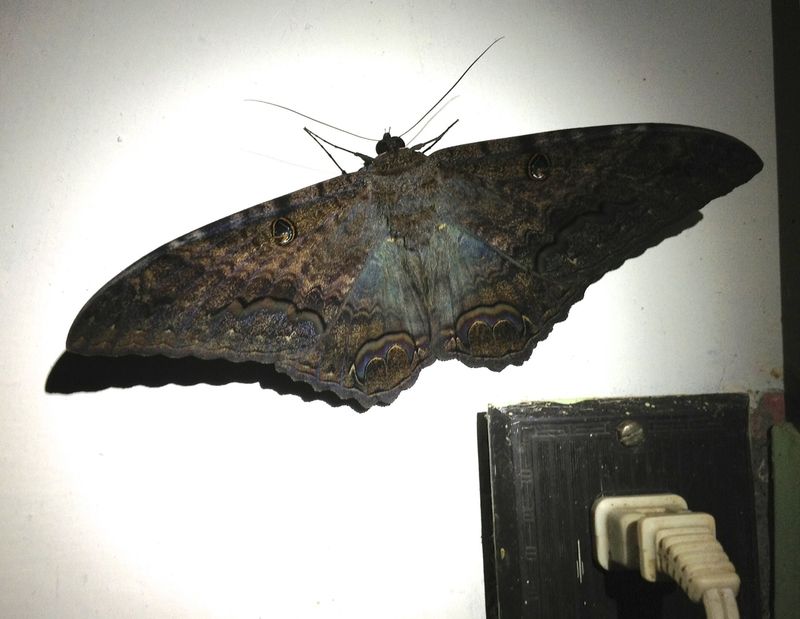
If your moth looked enormous, the black witch (Ascalapha odorata) deserves a look. It has long, pointed, dark-brown wings with comma-shaped marks, and its wingspan is reported at roughly 6.6 to 7 inches.
That is close to the width of a dinner plate’s rim.
The University of Colorado museum describes it as a migratory moth. Adults live only several weeks, and the museum’s black witch profile places the northward migration from June to October.
That timing is the catch for a midwinter sighting. The black witch is not the expected answer for a moth seen in January or February, though an unusual winter visitor cannot be ruled out.
Building behavior is where the black witch matches your story. The Georgia DNR says it may rest by day in garages, carports, or under eaves, and it has been reported at bright outdoor lights.
The same agency calls it rare in Georgia, as noted in its black witch article.
Resting near a house is something a black witch might do, but it does not prove that a moth on your house is one. Many other moths also rest on walls.
Treat the black witch as a candidate that fits the size, and look for the wing shape and markings before settling on it.
You may also hear that a black witch brings a death omen or lottery luck. Those are folklore, not biology.
Winter-active sallows fit the season better
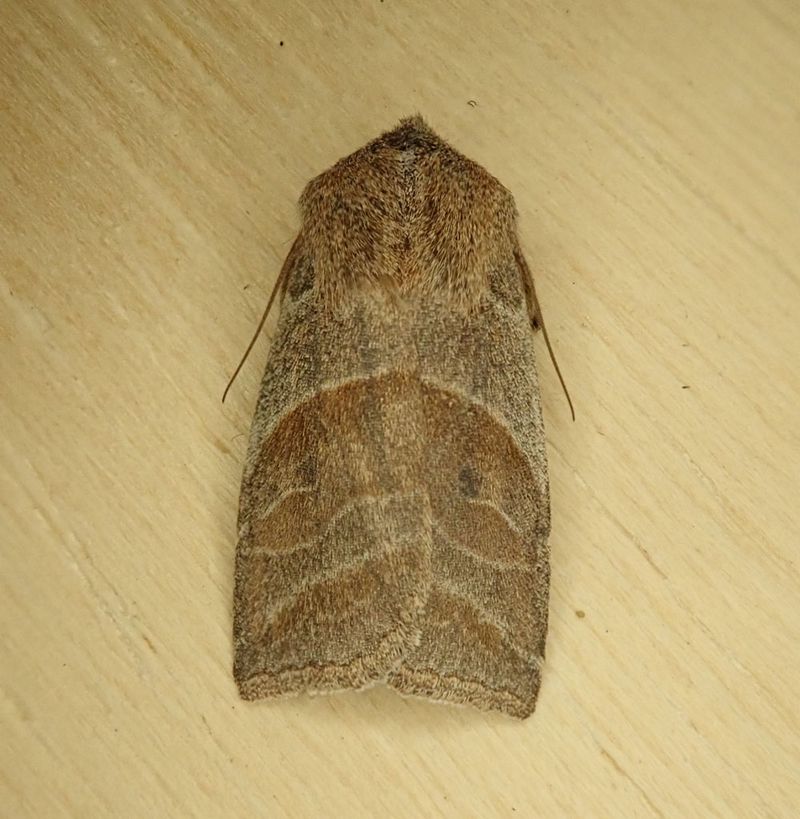
Sallows belong to the owlet moths, a huge family. Here, “owlet moth” is a group label, not a species name.
Some Eupsilia sallows spend the winter as adults and can fly again when the weather turns mild.
North Carolina records show how this works. The state’s account of Franclemont’s sallow says it begins flying in fall, overwinters as an adult, and returns in spring, with records that include December.
The page for Sidus sallow is another winter-flying lead, with sightings reported in February and March. That is why this group makes a good seasonal candidate.
Still, these are regional possibilities supported by records from neighboring North Carolina. They do not prove that a South Carolina homeowner is looking at a sallow.
Identification is the harder part. Several Eupsilia species look very much alike, and the same North Carolina resource warns that reliable separation may need a close look at body structure or DNA.
A photo from your porch may narrow things down to the group but may not name the exact species.
So think of sallows as a lead that matches the cold weather, not a final answer.
A clear photo can help narrow the options
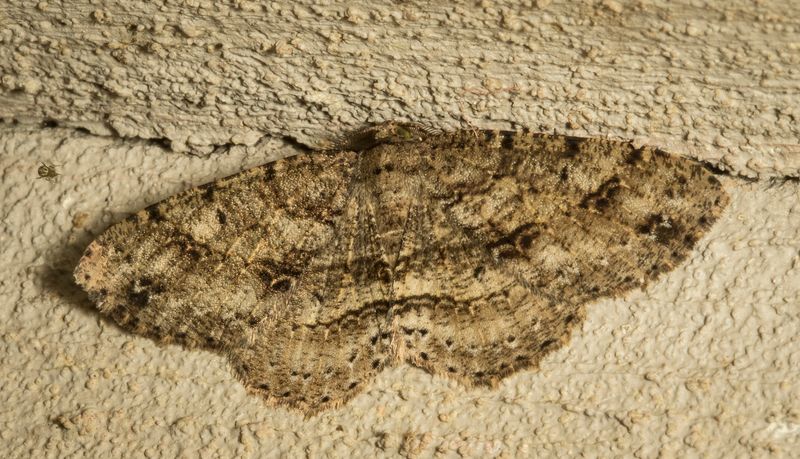
A good photo is your best tool. Take a sharp picture from the top and, if you can, one from the side, with the wings in view.
Place a coin, ruler, or pen next to the moth so the size is clear.
Then write down the date, the time, and your location. These small details help an expert or an observation platform weigh the sighting.
The University of Florida extension guide to mothing describes sharing observations on iNaturalist, where other naturalists can review them.
A photo may not settle everything. Similar sallows can be hard to separate, as the North Carolina Parks account warns, but a clear picture can still rule some candidates out.
Do not mix up sallows with the winter moth, Operophtera brumata. That is a different species, and UMass Amherst Extension describes it as roughly one inch across.
That guidance comes from the Northeast, so it cannot show that the winter moth lives in South Carolina. A moth the size of your palm is very unlikely to match that description, but a photo with a size reference will make this clear.
How to handle the safety question
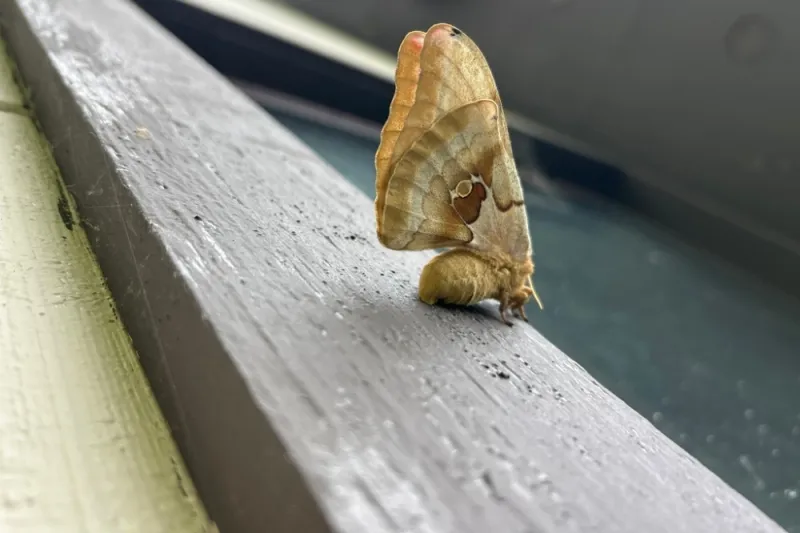
Texas Parks and Wildlife describes the black witch as harmless to people, in a release about tracking black witch moths. That statement is about this one species, so it should not be stretched to every moth.
Moths in general are a mixed group. Most health problems linked to moths and butterflies come from caterpillars, but a medical review of moth, butterfly, and caterpillar envenomation notes exceptions among adult moth species as well.
The practical rule is simple. Enjoy the moth with your eyes and a camera, and skip handling it if you do not know what it is.
Be especially careful with caterpillars. Hairs and spines can cause reactions, so do not pick up an unidentified hairy or spiny caterpillar.
A resting adult moth does not need spraying as routine control. The UMass fact sheet says there are no control options for adult winter moths, and that is northern guidance about a different species.
It does not show that your porch visitor needs any control. In most cases, leaving it alone until it flies off is enough.
Use the sighting details, not the porch light, to decide
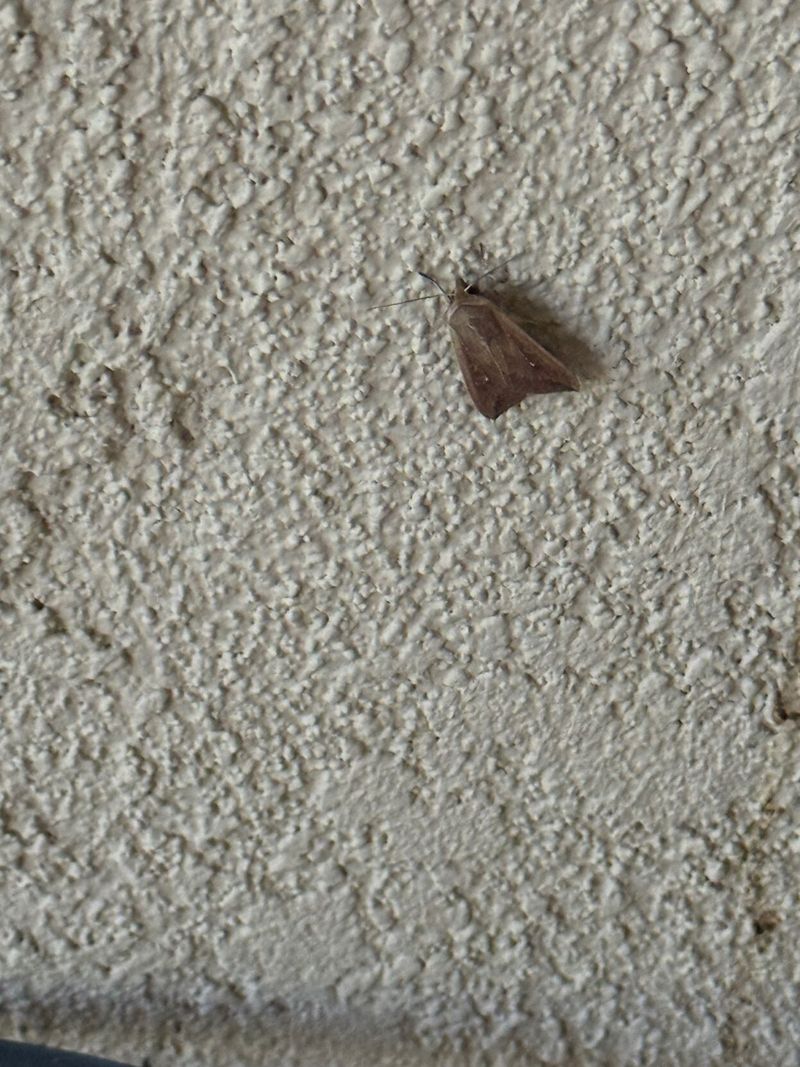
Size and a spot near the house make the black witch worth considering, and the June-to-October migration window keeps it a long shot in winter. Winter timing makes a sallow another lead, as North Carolina records suggest.
Neither is confirmed by a description alone.
Take a clear photo with a size reference, note the date and place, and share it through a platform like iNaturalist.
The porch light only shows you the moth. The details tell you who it is.
Share this story