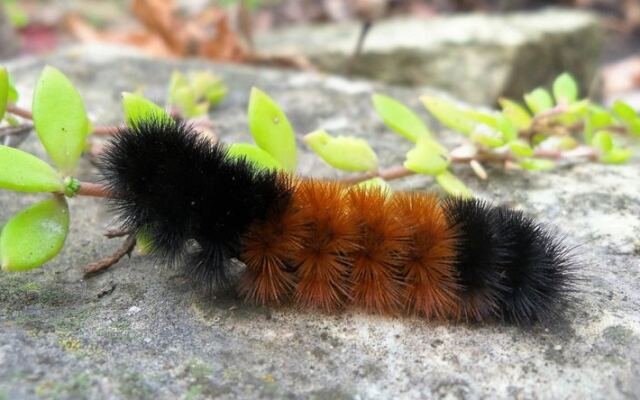
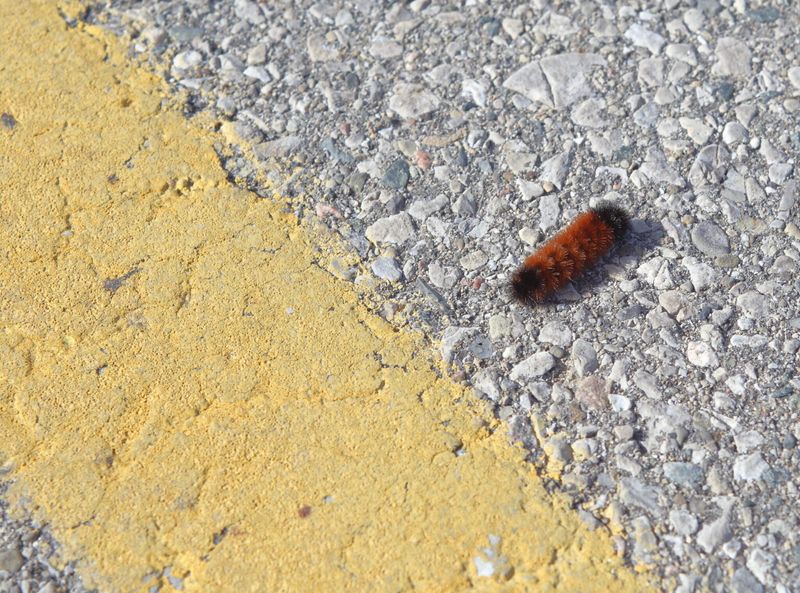
A fuzzy black-and-orange caterpillar inching across your driveway in fall is most likely searching for a place to spend the winter. Banded woolly bears wander at this time of year, looking for sheltered spots where they can wait out the cold.
Knowing what they are doing helps you decide whether to touch them, move them, or rake over their hiding places. A few simple choices in your yard can make a real difference for them.
Fall wandering points toward shelter
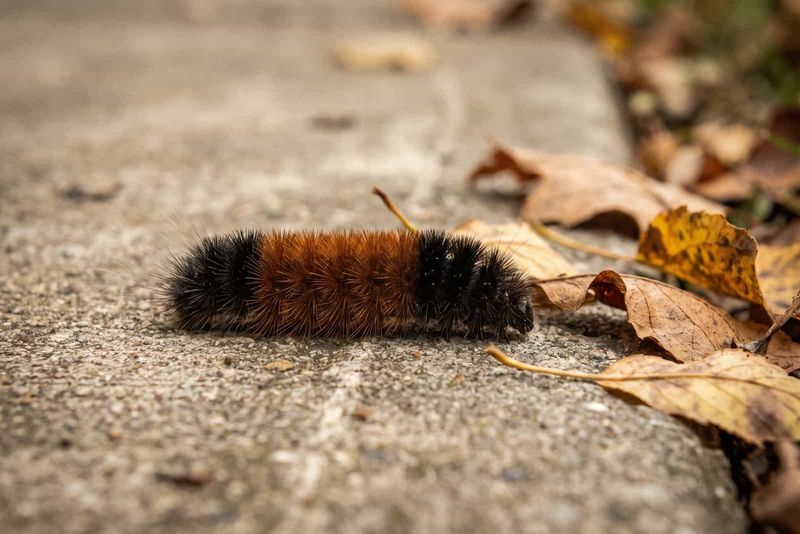
Fall is travel season for the banded woolly bear. According to the USA National Phenology Network, nearly mature caterpillars wander in autumn as they look for sheltered places to overwinter.
Recorded hiding spots include leaf litter, boards, rocks, and logs.
That is why a caterpillar on pavement makes sense. Driveways, sidewalks, and patios sit right between the open ground where it fed and the cover it wants.
Crossing a hard, open surface is part of the search.
There is a limit to what one sighting tells you. A caterpillar on your driveway cannot be assumed to be heading for a particular leaf pile, fence line, or woodpile.
Wandering fits with shelter-seeking, but nobody can read the mind of a single caterpillar.
The same goes for the phrase “right now.” Treat it as a local observation, such as the one you may have made yourself, and not as proof that caterpillars are crossing driveways all over South Carolina on a given date. The sources describe fall wandering across much of the species’ range, usually in October or early November, and note that the South has an additional generation.
That supports fall activity in the region, but it does not confirm what is happening in every neighborhood on a particular day.
So if you spot one, enjoy the moment. You are watching a normal piece of the insect’s seasonal routine, and your own yard may hold the kind of cover it is hunting for.
A familiar pattern is not proof of identity
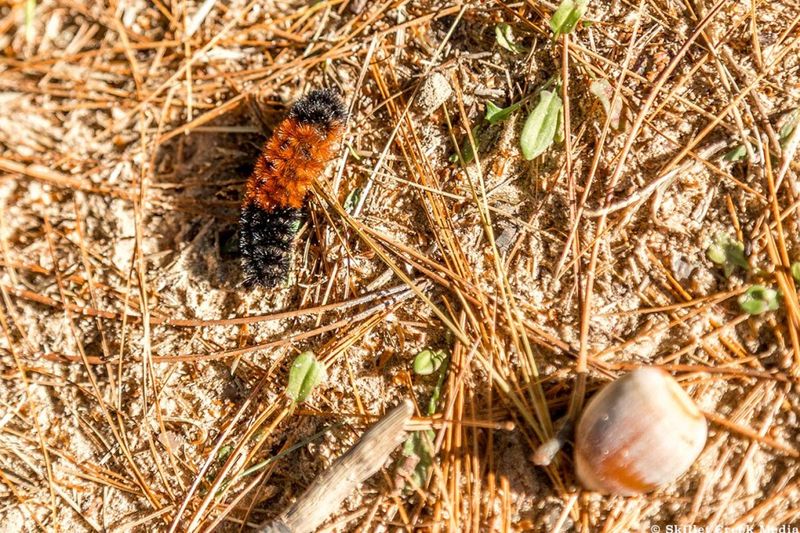
The classic look is a caterpillar with black at both ends and a rusty-orange band through the middle. When a caterpillar matches that pattern closely, it is most likely the larva of the Isabella tiger moth, Pyrrharctia isabella, often called the banded woolly bear.
The USA National Phenology Network describes it this way.
Still, “woolly bear” is a nickname, not a guarantee. As Illinois Extension explains, several different fuzzy caterpillars get called woolly bears or woolly worms.
A quick description like “fuzzy and dark” cannot confirm which one you saw.
A few clues help. Look for the clear three-part color layout: dark front end, broad reddish-orange middle, dark back end.
Notice that the hairs look short, dense, and evenly bristly, like a little brush.
If the caterpillar is mostly one color, has long tufts, or has spiky-looking hairs, treat it as unidentified. A clear photo taken from a comfortable distance is the best way to check later with a local Extension office or a trusted nature app.
Photos beat guesses here. Without one, the honest answer is that a black-and-orange caterpillar is probably a banded woolly bear, but probably is not the same as certain.
How woolly bears handle winter cold
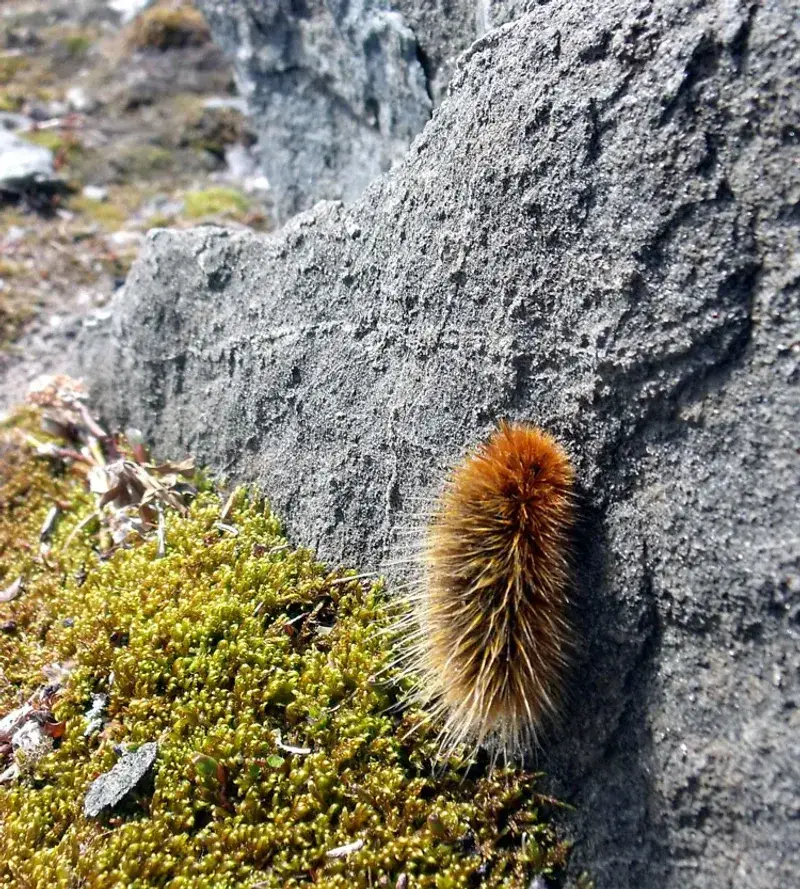
Few insects have a winter plan as unusual as this one. The banded woolly bear spends the cold months as a caterpillar, not as an egg or a moth.
When temperatures drop, it curls up in its shelter and waits.
Its body is built for the cold. Research led by the University of Michigan, published in the Journal of Experimental Biology, found that these caterpillars build up glycerol, a natural antifreeze-like compound, as they adjust to cold.
They are also freeze tolerant, which means they can survive having part of their body water turn to ice.
A freeze-survival study by Layne and Blakeley tested this in the lab. Caterpillars survived experimental freezing, though results depended on factors such as how cold the temperature got.
That does not make every caterpillar invincible. Cold tolerance is a strong advantage, not a promise.
Some will not make it through a particular freeze, and some face other dangers such as predators or drying out.
Shelter matters because it softens the harshest conditions. The USA National Phenology Network lists leaf litter, boards, rocks, and logs as places woolly bears have been found.
Leaves are one good option, but they are not the only acceptable winter bed.
So the picture is a tough little animal with a clever chemistry set, tucked into whatever cover it finds, and still taking a chance every winter.
It does not sting, but its bristles can irritate
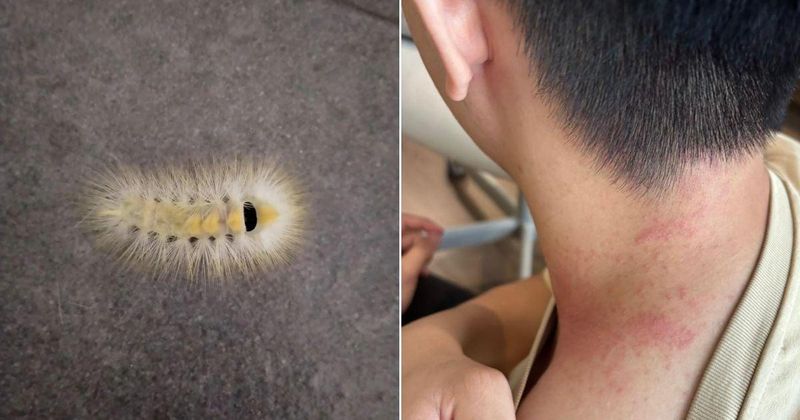
Here is the direct answer: the banded woolly bear does not sting the way a venomous, stinging caterpillar does. It has no venom-injecting spines.
For many people, that is where the worry ends.
It is not quite the whole story, though. The Missouri Department of Conservation notes that the bristles of the Isabella tiger moth caterpillar can irritate some people.
Skin irritation or dermatitis is possible, especially for sensitive skin or after repeated handling.
The bigger concern is mix-ups. Because several caterpillars share the woolly bear name, and some caterpillars have hairs or spines that do sting, a casual “it looks like a woolly bear” is not a safe basis for picking one up.
The University of Arizona Cooperative Extension also points out how often people misjudge red and black creatures around the home.
The practical rule is easy: look, photograph, and enjoy, but skip the handling. This is especially true for kids, who love to scoop up anything fuzzy.
If someone does touch one and gets an itchy patch, washing the skin with soap and water is a sensible first step, and a doctor can help if the reaction is strong. Do not assume that every caterpillar called a woolly bear is safe to touch.
A leaf-friendly yard can still be usable

Helping woolly bears does not mean burying your whole yard in leaves. A middle path works well for both people and wildlife.
Clemson Extension says fallen leaves can be left in place, shredded for mulch, or composted. That gives you several choices, and each one keeps useful material in the landscape.
Leaves in garden beds or tucked along fence lines and under shrubs are good places to keep cover.
Turf is the exception. A thick blanket of leaves on grass can smother it, so rake, mow, or shred leaves on lawn areas.
Thin, chopped leaves are far less of a problem than a deep layer.
Habitat is not the only factor. The University of Maryland Extension explains that leaf litter shelters helpful insects, but it also warns that leaf cover can be a place where ticks live.
Cornell IPM advises managing ticks near spaces people use often.
So keep leaf piles away from play areas, paths, patios, and pet zones. Also remove leaves from plants that had disease, since those leaves can carry problems into next season.
Leaf retention does not have to be all-or-nothing. A back corner, a bed edge, or a brush pile can serve as winter housing while the rest of the yard stays neat and safe.
Woolly bears cannot forecast the coming winter
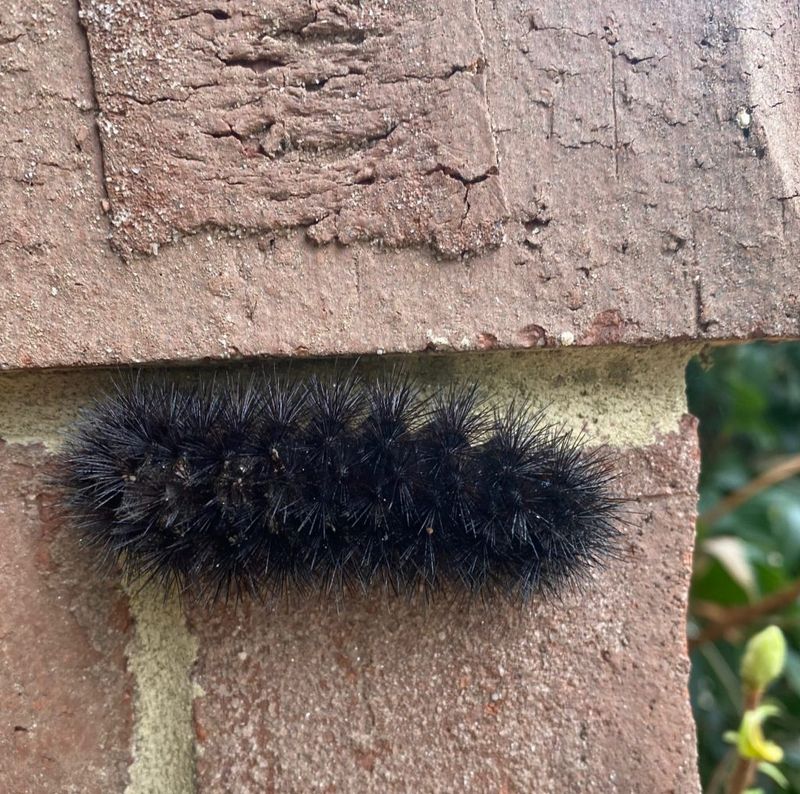
You have probably heard the old tale: a wide orange band means a mild winter, and a narrow one means a harsh winter. It makes for a fun fall story, but the caterpillar is not a weather forecaster.
Illinois Extension says band width does not reliably predict winter severity. The Missouri Department of Conservation adds that color and banding can vary with age and other factors.
A caterpillar that looks different from the one next door may simply be at a different stage of growth.
In other words, the bands tell a story about the caterpillar’s past, not the weather ahead. The caterpillar grew through the months before winter, and its pattern reflects that growth.
What a sighting can support is much more modest and still interesting. A caterpillar crossing open ground in fall may be searching for shelter, which fits the species’ known seasonal habits.
That is a fact about behavior, not a prediction.
If you enjoy the folklore, there is no harm in treating it as a seasonal tradition, like groundhog watching. Just do not plan your firewood, pipe wrapping, or garden covers around the width of an orange stripe.
Check a real weather forecast for that.
Leave a nearby refuge when you can
Keep some natural cover where it fits your yard, such as a leafy bed edge or a small log pile. The University of Maryland Extension backs leaving habitat where practical, and you do not need to leave leaves everywhere.
If a caterpillar is on your driveway, watch for traffic first. Skip bare-hand handling, since the Missouri Department of Conservation notes its bristles can irritate.
If it is safe, you may nudge it toward nearby cover with a leaf or card, though that is cautious common sense, not a tested method.
A small pile of leaves is a modest thing to give an animal that has been walking all fall.
Share this story