Get the latest garden guides in your inbox →
Gardening Latest
  • General Gardening
  • Lawn Care
  • Plant Care
  • Composting
  • Soil Health
  • Backyard
  • Garden Muse Magazine
  • General Gardening
  • Lawn Care
  • Plant Care
  • Composting
  • Soil Health
  • Backyard
  • Garden Muse Magazine
  • News
  • Gardening Calendar
  • Garden Structures
  • Vegetable Garden
  • Vertical Garden
  • Raised Beds
  • Hydroponics
  • General Equipment
  • Community Gardens
Garden Themes
  • Spiritual Garden
  • Hydroseeding
  • Seeding and Laying Sod
  • Artificial Grass
  • Lawn Care Equipment
  • Plants
  • Trees
  • Planting Tools
  • Composting Basics
  • Fertilizer
  • Alternative Growing Mediums
  • Front Yard
  • Backyard Activities
  • Landscaping
Gardening Latest

Explore by state

Which state is your garden in?

Currently viewing South Carolina

All states

Northeast

  • Connecticut —
  • Delaware 41
  • Maine —
  • Maryland 27
  • Massachusetts 43
  • New Hampshire —
  • New Jersey 27
  • New York 36
  • Pennsylvania 36
  • Rhode Island —
  • Vermont —

Southeast

  • Alabama 26
  • Arkansas —
  • Florida 27
  • Georgia 27
  • Kentucky 41
  • Louisiana 25
  • Mississippi —
  • North Carolina 25
  • South Carolina 40
  • Tennessee 23
  • Virginia 26
  • West Virginia —

Midwest

  • Illinois 25
  • Indiana 28
  • Iowa 40
  • Kansas —
  • Michigan 27
  • Minnesota 25
  • Missouri 25
  • Nebraska —
  • North Dakota —
  • Ohio 27
  • South Dakota —
  • Wisconsin 41

Southwest

  • Arizona 26
  • Colorado —
  • Nevada —
  • New Mexico —
  • Oklahoma —
  • Texas 25
  • Utah —

West

  • Alaska —
  • California 26
  • Hawaii —
  • Idaho —
  • Montana —
  • Oregon —
  • Washington —
  • Wyoming —

No state matches that search.

Site menu

Gardening Latest
  • General Gardening
    • News
    • Gardening Calendar
    • Garden Structures
    • Vegetable Garden
    • Vertical Garden
    • Raised Beds
    • Hydroponics
    • General Equipment
    • Community Gardens
    Garden Themes
    • Spiritual Garden
  • Lawn Care
    • Hydroseeding
    • Seeding and Laying Sod
    • Artificial Grass
    • Lawn Care Equipment
  • Plant Care
    • Plants
    • Trees
    • Planting Tools
  • Composting
    • Composting Basics
  • Soil Health
    • Fertilizer
    • Alternative Growing Mediums
  • Backyard
    • Front Yard
    • Backyard Activities
    • Landscaping
  • Garden Muse Magazine

Explore

  • About GardeningLatest.com
  • Contact Us

Get the latest from the garden

New guides on lawn care, plants and backyard projects, sent when they go up.

Subscribe →

Follow

  • Facebook
  • X
  • Pinterest
  • YouTube
South Carolina Gardening

Found a Huge Black-and-Yellow Spider Hiding in Your South Carolina Woodpile? Here’s Whether It Bites

A big yellow-and-black spider sitting in a round web is most likely a garden orb-weaver, and Clemson describes the ones…

BR

By Beau Rutledge

November 28, 2026 · 6 min read

Found a Huge Black-and-Yellow Spider Hiding in Your South Carolina Woodpile? Here’s Whether It Bites
Found a Huge Black-and-Yellow Spider Hiding in Your South Carolina Woodpile? Here's Whether It Bites

A big yellow-and-black spider sitting in a round web is most likely a garden orb-weaver, and Clemson describes the ones it covers as docile and not generally dangerous. If one does bite, it is usually about like a bee sting.

But a spider crawling among your logs could be something else, like a fishing spider or a wolf spider. Here is how to size up what you found before you carry any wood inside.

At a glance

Where
South Carolina Gardening
Hardiness zone
8 10 to 20°F
Read
6 minutes
Published
November 28, 2026

Color and size are not enough to identify a spider
Color and size are not enough to identify a spider
© Walker Pest Management

Suppose you lift a log and see a huge spider with yellow and black on its body. That description sounds specific, but size, color, and a woodpile location cannot identify a spider on their own.

Several very different spiders can look big and dramatic in poor light.

Start by watching without touching. Is the spider sitting in a circular web, or is it crawling over the bark and between the logs?

That one detail narrows the possibilities more than color does. Clemson Extension covers the large yellow-and-black orb-weavers, while Penn State Extension and South Carolina State Parks describe fishing and wolf spiders that look quite different.

Next, note any visible markings, such as stripes, bands, or a zigzag pattern in the web. Write down where on the pile you saw it and roughly how big it was.

If you want a record, take a photo from a safe distance with your phone zoomed in. Do not pick the spider up, corner it, or poke it to get a better shot.

Poison Control also advises against handling a spider for identification. A clear photo can later be shared with an extension service if you need help.

A circular web can point to a garden orb-weaver
A circular web can point to a garden orb-weaver
© Reddit

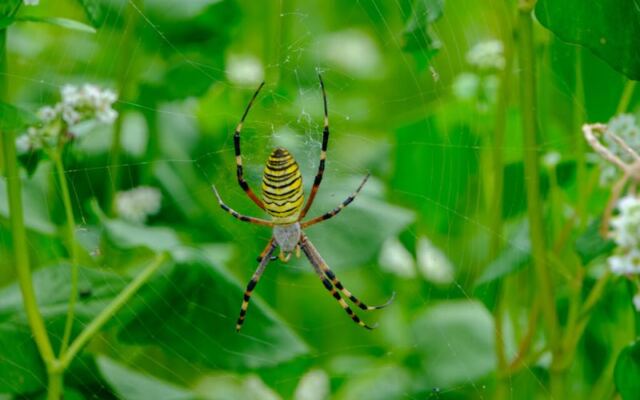
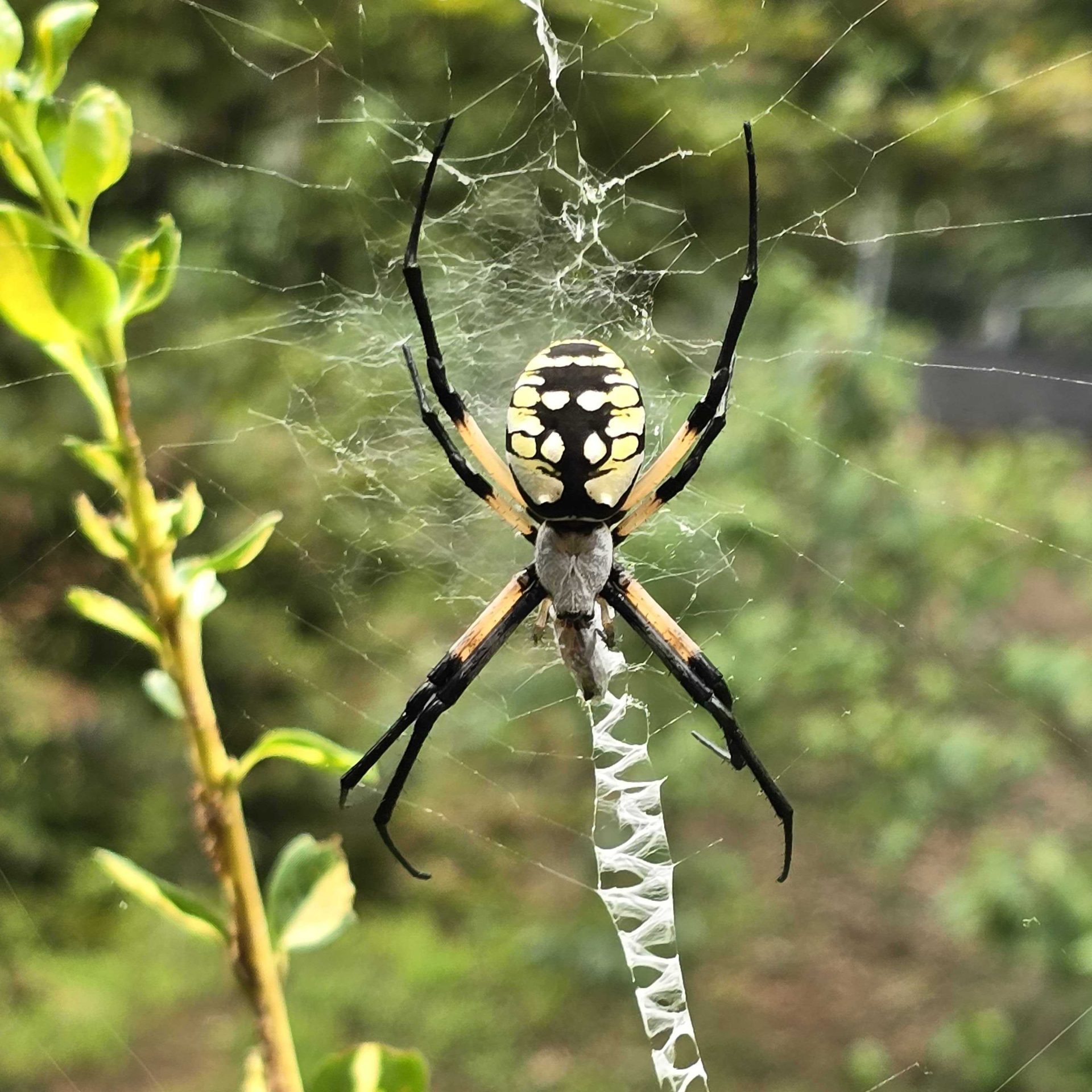
Sitting in the middle of a wheel-shaped web is classic orb-weaver behavior. South Carolina has several large yellow-and-black orb-weavers: the yellow garden spider, the banded garden spider, the golden silk orb-weaver, and the Jorō spider.

Clemson Extension lists all four.

Garden orb-weavers are commonly seen in webs among vegetation, such as shrubs, tall weeds, and garden plants. A web strung between a woodpile and a nearby bush or fence is a fair spot for one.

Stay calm, keep your hands out of tight gaps between logs, and wear gloves when stacking or carrying wood.

The spider tends to wait in the web rather than wander around.

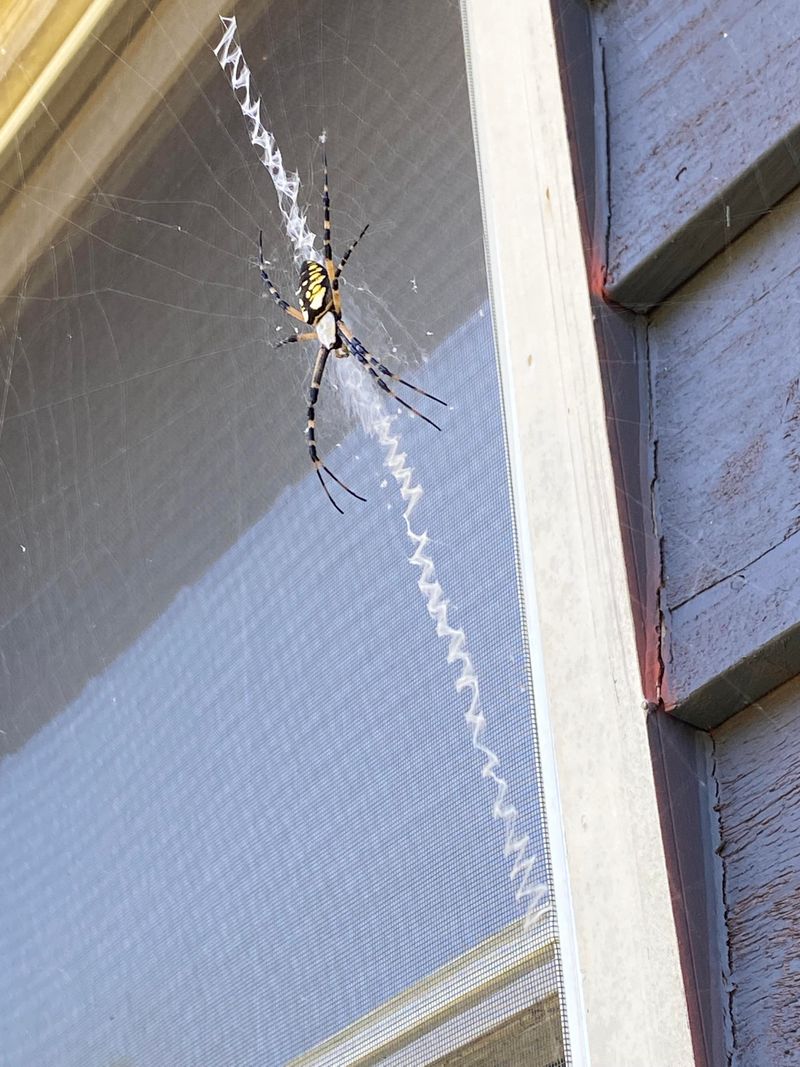
One helpful clue belongs to the yellow garden spider. Its web often has a bold white zigzag running through the center, and spotting that pattern can make this species a reasonable guess.

Treat each of these clues as a hint, not a final answer. A circular web suggests an orb-weaver, and a zigzag suggests a yellow garden spider, but neither one proves it.

Webs get damaged, spiders move, and similar-looking species exist.

If you see the round web and the bright colors together, you have a stronger lead. Even then, give the spider space, and let it stay in its web while you work around it.

A calm, careful approach protects both you and the spider.

A spider crawling among logs may be a fishing or wolf spider
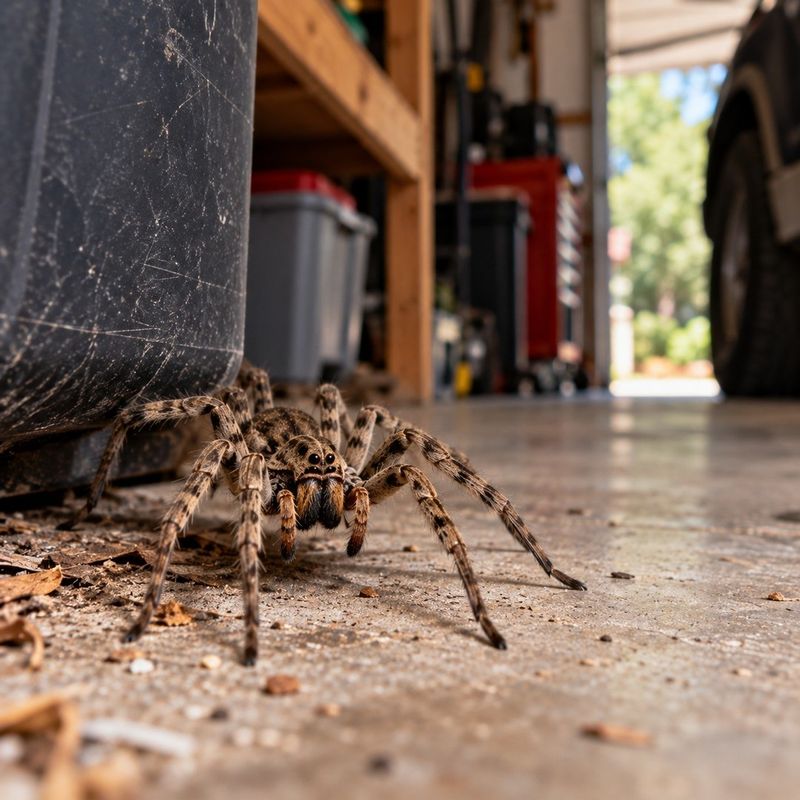
A spider crawling among logs may be a fishing or wolf spider
© ecoprotx

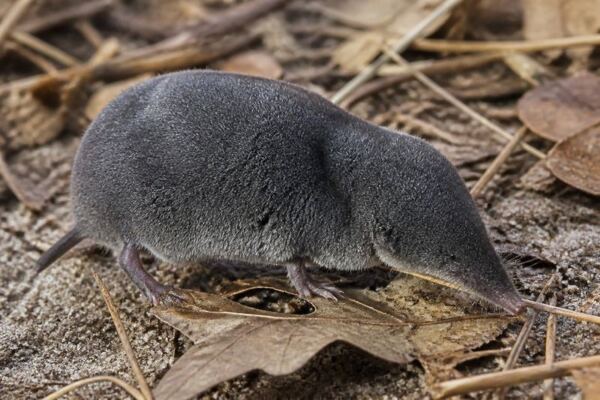
Picture the opposite scene: no web at all, and a big spider scurrying between logs. That behavior points away from an orb-weaver.

Two possible alternatives are the fishing spider and the Carolina wolf spider, which can resemble each other.

The dark fishing spider is brownish gray with dark and lighter markings. According to Penn State Extension, it may turn up in wooded areas, even away from water, and it can wander into homes.

Penn State describes it as rarely biting, even when grabbed, though that is no reason to grab one.

The Carolina wolf spider is large and lives on the ground. South Carolina State Parks describes it as gray-brown with a dark stripe and hairy legs.

It is not flashy yellow and black.

Use these traits as observation clues only. Dim light, dust, and bark can all change how a spider looks, and a quick glance rarely settles it.

Notice the body color, any stripe, leg hair, and whether it runs or sits still.

If it moves fast, keep your distance and let it go its own way. Photograph it from afar if you can, and leave the rest to a closer look by an expert.

Can it bite—and how worried should you be?
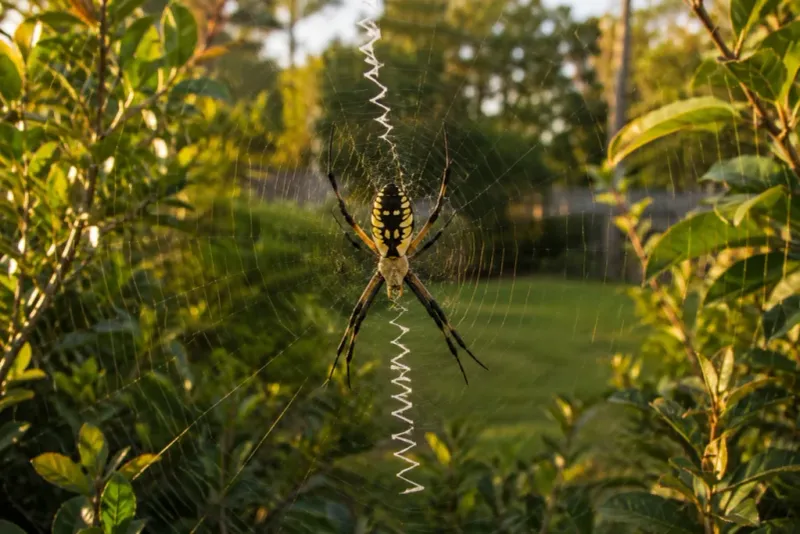
Can it bite—and how worried should you be?
© Northwest Exterminating

Any spider with fangs can bite in theory. What matters more is how likely it is to bite and how dangerous the bite is.

Those are three separate questions, and large spiders do not all share the same answers.

Clemson Extension calls the yellow-and-black orb-weavers it covers docile and not generally dangerous. If one bites, the bite is usually comparable to a bee sting.

That reassurance applies to those four orb-weavers, not to every spider you might find in firewood.

Fishing spiders are a different case. Penn State says they rarely bite, which is not the same as being unable to.

South Carolina also has widow spiders. Clemson lists the southern black, northern black, and brown widow here.

That does not mean a woodpile spider is likely to be one, and you should not label a spider a widow without good evidence.

So neither color nor location settles identity or risk. Stay calm, keep your hands out of tight gaps between logs, and wear gloves when stacking or carrying wood.

If you cannot tell what it is, treat it with respect and give it room.

Keep firewood outside until you need it
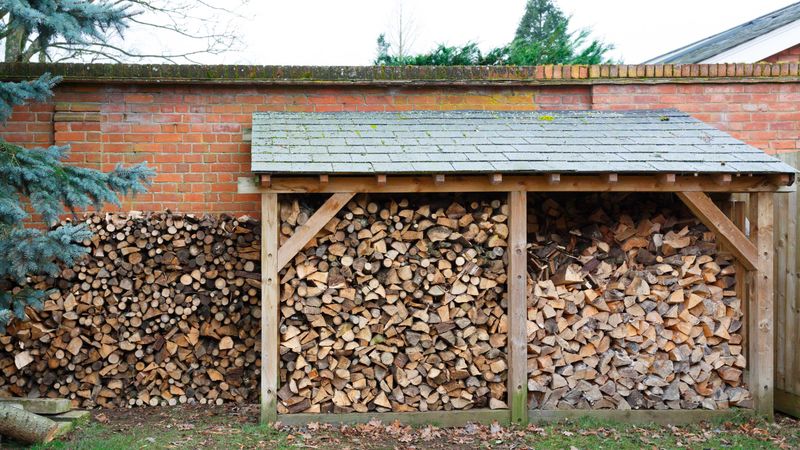
Keep firewood outside until you need it
© Homes and Gardens

Prevention is simple. Check logs outdoors, shake or turn them over where you can see them, and carry in only what you plan to burn soon.

That way any spider you disturb stays outside where it belongs.

Washington State University Extension advises against storing firewood indoors because it can carry spiders and other pests. A stack by the fireplace may feel handy, but it can bring hitchhikers into a warm room.

Some people think hauling the whole pile inside will trap a spider so it cannot escape. That idea backfires, since it moves the problem into your living space.

Keep stored wood outside, and grab small armloads as needed. Wearing gloves while you pick up logs is a sensible habit.

If a large spider shows up on a log, set that log down gently outdoors and choose another.

These steps are enough. A short outdoor check and a small indoor supply do most of the work.

After a bite, treat the symptoms—not a guessed species
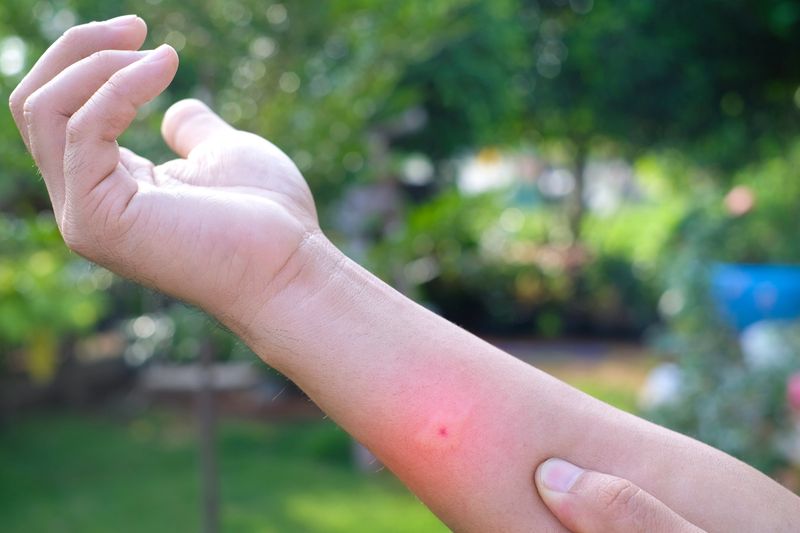
After a bite, treat the symptoms—not a guessed species
© Clemson HGIC – Clemson University

If you think a spider bit you, start with basic first aid. Wash the area with soap and water, then apply a cold damp cloth or wrapped ice.

Do not try to remove venom, because cutting or sucking at a bite does not help.

Watch the spot over the next hours. Poison Control recommends expert guidance for severe or worsening local symptoms, symptoms affecting the rest of the body, or a suspected bite from a medically important spider.

You can reach Poison Control at 1-800-222-1222.

Do not try to name the spider from the wound. The CDC says most spider encounters are harmless, but suspected bites are often misidentified when no spider was seen.

An unexplained sore does not establish that a spider caused it.

If you did see the spider, a photo taken from a safe distance can help an expert, but never chase or grab it for that. Focus on how the skin looks and how you feel, since that guides care better than a guess about the species.

A calm response and a quick call beat a confident guess every time.

Share this story
BR

Written by

Beau Rutledge

More from Beau Rutledge →

About Gardening Latest

Gardening Latest provides in-depth guides to maintaining and enhancing your garden and backyard. Learn how to make the most of the space you have and create a beautiful garden.

More about us →

Latest stories

  • Delaware GardeningThose Orange Mushrooms Popping Up in Your Delaware Mulch After Rain Are Toxic to Dogs

    Those Orange Mushrooms Popping Up in Your Delaware Mulch After Rain Are Toxic to Dogs

    4 min ago
  • Kentucky GardeningThat Lumpy Brown Toad Hiding Under Your Kentucky Woodpile Is Hibernating, So Leave It Right Where It Is

    That Lumpy Brown Toad Hiding Under Your Kentucky Woodpile Is Hibernating, So Leave It Right Where It Is

    18 min ago
  • Florida GardeningCoyotes Now Live in Every Florida County, and Their Nighttime Howls Near Your Home Mean Something

    Coyotes Now Live in Every Florida County, and Their Nighttime Howls Near Your Home Mean Something

    24 min ago
  • Maryland GardeningThat Huge Black Moth Resting by Your Maryland Porch Light Is a Harmless Visitor With a Wild Backstory

    That Huge Black Moth Resting by Your Maryland Porch Light Is a Harmless Visitor With a Wild Backstory

    31 min ago
  • Iowa GardeningThose Scratching Sounds Inside Your Iowa Walls at Night Might Be Flying Squirrels, or Mice

    Those Scratching Sounds Inside Your Iowa Walls at Night Might Be Flying Squirrels, or Mice

    37 min ago

Gardening by state

Stories for your state, and the hardiness zone most of it gardens in.

Keep exploring

Read next

All South Carolina Gardening →
South Carolina GardeningHearing Something Scratch Inside Your South Carolina Attic on Cold Nights Means a Flying Squirrel Family Moved In
South Carolina Gardening

Hearing Something Scratch Inside Your South Carolina Attic on Cold Nights Means a Flying Squirrel Family Moved In

2 hr ago
South Carolina GardeningAll Winter, a Tiny Mammal With a Venomous Bite Hunts Through Your South Carolina Pine Straw
South Carolina Gardening

All Winter, a Tiny Mammal With a Venomous Bite Hunts Through Your South Carolina Pine Straw

6 hr ago
South Carolina GardeningCoyotes Howling Around Your South Carolina Home at Night Are Saying More Than You’d Expect
South Carolina Gardening

Coyotes Howling Around Your South Carolina Home at Night Are Saying More Than You’d Expect

9 hr ago

More from South Carolina Gardening

  • That Red Fox Trotting Through Your South Carolina Yard This Winter Is Hunting Mice Under the Leaves

    Nov 26
  • Wondering Who Owns the Pecans Falling From Your Neighbor’s Tree Into Your South Carolina Yard?

    Nov 25
Back to top

Leave a response Cancel

Your email address stays private. Required fields are marked with an asterisk.

Gardening Latest

In-depth guides to maintaining and enhancing your garden and backyard: how to make the most of the space you have, and how to make it beautiful.

  • Facebook
  • X
  • Pinterest
  • YouTube

We may earn a portion of sales from products or services that are purchased through our site as part of our affiliate partnerships with retailers.

Explore

  • About GardeningLatest.com
  • Contact Us
  • Terms and Conditions
  • Privacy
  • Editorial Note:
  • FTC Disclosure

Newsletter

New garden guides and seasonal tips, straight to your inbox.

We’ll email you a link to confirm. Unsubscribe any time.

Almost there! Check your inbox and tap the link to confirm.

© 2026 Gardening Latest. All rights reserved.

Back to top