A red fox crossing your yard on a cold winter day is most likely looking for a meal, and mice under the leaves are a good bet. Red foxes eat rodents and can hear small animals moving beneath leaf litter.
A single sighting cannot tell you everything, though, so it helps to know what is likely and what is only a guess. A few simple habits can keep your pets, chickens, and yard safe while you enjoy the view.
What a yard sighting can tell you
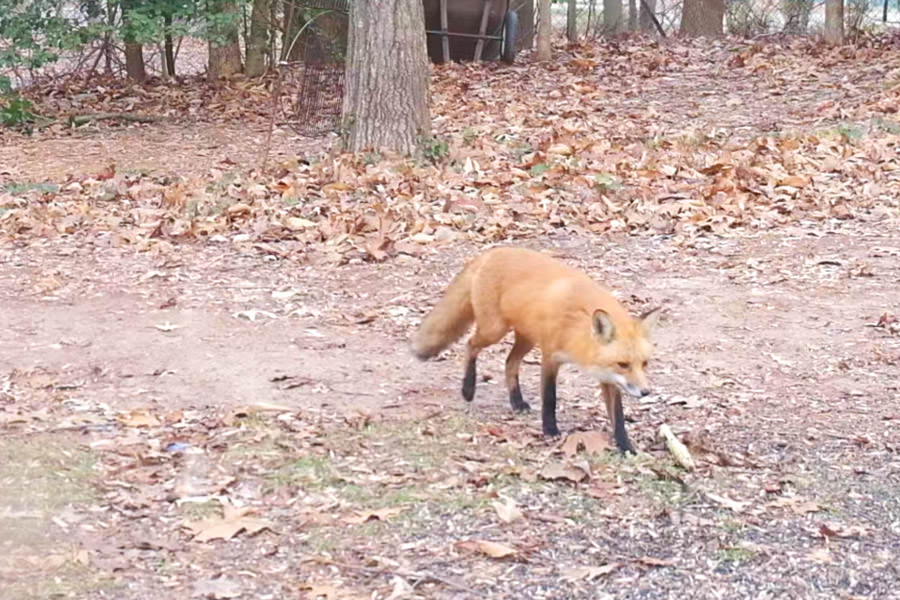
Red foxes eat mice, and they can find prey hidden beneath leaf litter. So a fox nosing and pouncing among fallen leaves in your yard has a credible explanation: it may be foraging for small animals.
That is a sensible reading of the scene, and it fits what we know about the animal.
A quick glimpse has limits, though. You usually cannot tell from a few seconds at a window what the animal was actually doing.
It might have been hunting, traveling between patches of woods, or simply cutting across your lot.
Species is another open question. According to the South Carolina Department of Natural Resources red fox profile, red foxes occur statewide, but gray foxes are more numerous.
Gray foxes are smaller and grayer, with a black-tipped tail and rusty patches on the sides. At dusk or through a window, the two can be hard to tell apart.
If you want a firmer answer, look for details. Note the tail tip, the leg color, and the overall color pattern.
A phone photo taken from a safe distance helps a lot. Without those clues, the honest answer is that a fox, possibly a red one, passed through and may have been looking for food.
Why a fox might search beneath leaves

Leaf litter hides plenty of small animals, and a fox is well equipped to find them. The University of Maryland Extension notes that red foxes can hear prey under leaf litter, vegetation, or even underground.
That sharp hearing explains the head-tilting and sudden pounce that people often describe.
South Carolina red foxes do eat mice and other small prey. They also eat rabbits, birds, insects, fruit, berries, and carrion, and the state describes them as opportunistic feeders.
A fox may take whatever is easiest to find on a given night.
That variety matters when you try to read a sighting. A fox poking around leaves could be after a mouse, a beetle, a fallen berry, or something else entirely.
Watching it for a minute cannot tell you what it was hunting, or whether it caught anything.
Some homeowners hope a fox will take care of the mice around the property. Foxes do eat rodents, but nothing in the sources promises reliable rodent control for any one yard.
If mice are a problem, treat that as a separate job to handle around the house, and view a passing fox as a bonus rather than a pest service.
South Carolina red fox breeding runs from December through February

Winter is mating time for foxes in much of the country. The South Carolina Department of Natural Resources gives red foxes in the state a breeding period of December through February.
That means January sits squarely inside the season, not ahead of it. Gestation lasts about 53 days.
That timing is stated for red foxes. It should not be applied to gray foxes or to foxes as a group, since the state profile speaks only about the red fox.
Foxes do use dens to breed and raise their young. Even so, a fox crossing your lawn does not show that it is checking out a den spot.
It could be moving between territories, following a mate, or looking for food, and nothing in the sources lets us pick one.
Details about den selection add another caution. Rutgers Cooperative Extension describes den-site selection in spring, before birth, but that account comes from a northern region.
It should not be treated as a South Carolina certainty. The practical takeaway is simple: stay alert to places a fox could shelter, such as under decks and sheds, without assuming that any one visitor plans to stay.
Make the yard less rewarding

Instead of guessing at a fox’s purpose, you can change what your yard offers. Foxes stick around where food is easy.
The SCDNR fox guidance lists several simple steps that make a property less appealing.
Start with the bowls. Do not leave pet food or water outdoors, especially overnight.
A dish on the porch is an easy meal for a fox, a raccoon, or an opossum.
Next, look at garbage and compost. Dispose of trash properly, using bins with tight lids, and put them out the morning of pickup rather than the night before.
Secure compost piles with a covered bin so scraps are not available.
Then think about rodents. Mice and rats gather around barns, crawl spaces, sheds, and garages, and they can draw predators along with them.
Tidy up clutter, store feed and birdseed in sturdy containers, and fix the conditions that let rodents settle in.
Fallen birdseed under feeders deserves a mention too. It feeds mice, and mice can draw hunters.
A quick weekly sweep of the area can make a visible difference.
Protect pets and poultry
Wild animals and pets do best when they stay apart. The CDC guidance on wildlife and pets recommends supervising your animals outdoors and preventing them from approaching or interacting with wildlife.
A leash or a quick walk to the door at dusk handles most situations.
Vaccines matter as well. CDC rabies prevention advice says to keep pets’ rabies vaccinations current.
If a pet ever tangles with wildlife, that protection gives you a head start, and your vet can tell you what to do next.
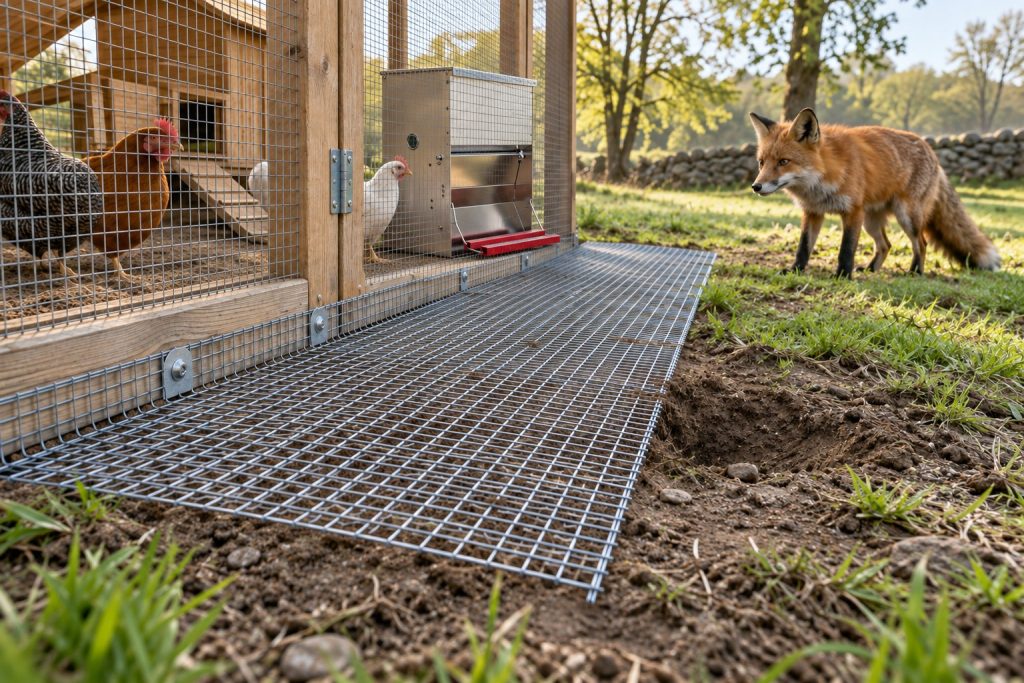
Chicken keepers have a few extra jobs. The SCDNR fox guidance recommends securing poultry structures and closing them at night.
Check latches, wire, and the ground along the base of the run for gaps.
These are sensible habits, not signs of danger. Seeing a fox does not mean an attack is likely, and most foxes want to avoid people and dogs.
Think of the steps as locking the car: cheap, quick, and worth doing every time.
What to do if a fox seems sick or makes contact

Spotting a fox in daylight can feel alarming, but time of day alone tells you little. Rutgers Extension cautions that seeing a fox during the day does not by itself mean it is sick.
A mother feeding young or a hungry fox in a cold snap may be out in full light.
Distance is your best tool. Keep away from any wild fox, bring pets inside, and do not try to feed, touch, or corner it.
If the animal appears sick or behaves unusually, call your local animal control.
If someone is bitten or scratched, act right away. As the CDC explains, wash the wound immediately with soap and water.
Then contact a health professional or public-health authority promptly so they can assess the exposure.
Appearance and timing are poor guides for diagnosing rabies, so leave that judgment to the experts. Remove food attractants, keep pets supervised, and shut the henhouse at night.
A fox that finds nothing interesting in your yard will usually keep moving.
Share this story