Get the latest garden guides in your inbox →
Gardening Latest
  • General Gardening
  • Lawn Care
  • Plant Care
  • Composting
  • Soil Health
  • Backyard
  • Garden Muse Magazine
  • General Gardening
  • Lawn Care
  • Plant Care
  • Composting
  • Soil Health
  • Backyard
  • Garden Muse Magazine
  • News
  • Gardening Calendar
  • Garden Structures
  • Vegetable Garden
  • Vertical Garden
  • Raised Beds
  • Hydroponics
  • General Equipment
  • Community Gardens
Garden Themes
  • Spiritual Garden
  • Hydroseeding
  • Seeding and Laying Sod
  • Artificial Grass
  • Lawn Care Equipment
  • Plants
  • Trees
  • Planting Tools
  • Composting Basics
  • Fertilizer
  • Alternative Growing Mediums
  • Front Yard
  • Backyard Activities
  • Landscaping
Gardening Latest

Explore by state

Which state is your garden in?

Currently viewing Pennsylvania

All states

Northeast

  • Connecticut —
  • Delaware 33
  • Maine —
  • Maryland 19
  • Massachusetts 35
  • New Hampshire —
  • New Jersey 19
  • New York 28
  • Pennsylvania 28
  • Rhode Island —
  • Vermont —

Southeast

  • Alabama 19
  • Arkansas —
  • Florida 19
  • Georgia 19
  • Kentucky 33
  • Louisiana 18
  • Mississippi —
  • North Carolina 17
  • South Carolina 32
  • Tennessee 16
  • Virginia 18
  • West Virginia —

Midwest

  • Illinois 18
  • Indiana 20
  • Iowa 32
  • Kansas —
  • Michigan 19
  • Minnesota 18
  • Missouri 18
  • Nebraska —
  • North Dakota —
  • Ohio 19
  • South Dakota —
  • Wisconsin 34

Southwest

  • Arizona 19
  • Colorado —
  • Nevada —
  • New Mexico —
  • Oklahoma —
  • Texas 18
  • Utah —

West

  • Alaska —
  • California 19
  • Hawaii —
  • Idaho —
  • Montana —
  • Oregon —
  • Washington —
  • Wyoming —

No state matches that search.

Site menu

Gardening Latest
  • General Gardening
    • News
    • Gardening Calendar
    • Garden Structures
    • Vegetable Garden
    • Vertical Garden
    • Raised Beds
    • Hydroponics
    • General Equipment
    • Community Gardens
    Garden Themes
    • Spiritual Garden
  • Lawn Care
    • Hydroseeding
    • Seeding and Laying Sod
    • Artificial Grass
    • Lawn Care Equipment
  • Plant Care
    • Plants
    • Trees
    • Planting Tools
  • Composting
    • Composting Basics
  • Soil Health
    • Fertilizer
    • Alternative Growing Mediums
  • Backyard
    • Front Yard
    • Backyard Activities
    • Landscaping
  • Garden Muse Magazine

Explore

  • About GardeningLatest.com
  • Contact Us

Get the latest from the garden

New guides on lawn care, plants and backyard projects, sent when they go up.

Subscribe →

Follow

  • Facebook
  • X
  • Pinterest
  • YouTube
Pennsylvania Gardening

Eating Celery Every Day: What Research Actually Shows

Celery grows well in backyard beds and fills the produce aisle at farm stands and grocery stores.

MY

By Martha Yoder

November 26, 2026 · 6 min read

Eating Celery Every Day: What Research Actually Shows

Celery grows well in backyard beds and fills the produce aisle at farm stands and grocery stores. Plenty of online posts claim that eating it every day changes your body in big ways.

The real story is quieter and more useful. Here is what celery offers, what the research does and does not show, and a few safety steps worth knowing.

At a glance

Where
Pennsylvania Gardening
Hardiness zone
6 −10 to 0°F
Read
6 minutes
Published
November 26, 2026

What does celery provide?

What does celery provide?
© EatBetter app

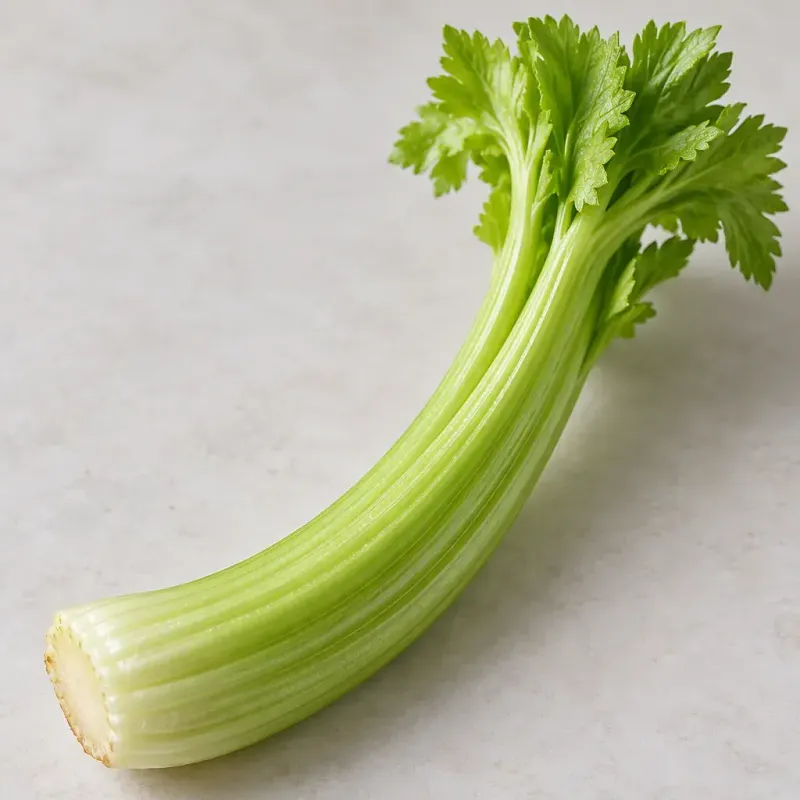
Picture two medium raw celery stalks, about 110 grams. According to FDA nutrition information for raw vegetables, that portion has about 15 calories, 2 grams of fiber, and 260 milligrams of potassium.

Celery is also mostly water, which is why it feels so crisp and light. Those numbers describe what is in the food.

They do not tell you what will happen in your body if you crunch through a few stalks each day.

The two-stalk figure is a reference serving used for labeling. It is not a daily target, and the sources reviewed for this article set no celery-specific amount you should eat.

Some people eat a stalk or two a day, and others eat it a few times a week. Both fit comfortably into a varied diet.

Celery earns its place in the kitchen because it is easy to use. Slice it into soups, stir it into chicken salad, chop it into stuffing, or pair it with peanut butter or hummus.

It adds crunch and a savory, slightly salty flavor to meals without adding many calories.

Gardeners who grow their own know the stalks can be stringy or sharp compared with store-bought ones. That is a matter of taste and growing conditions, and it does not change the basic picture of a low-calorie vegetable that supplies some fiber, potassium, and plenty of water.

Do studies show that celery changes health markers?
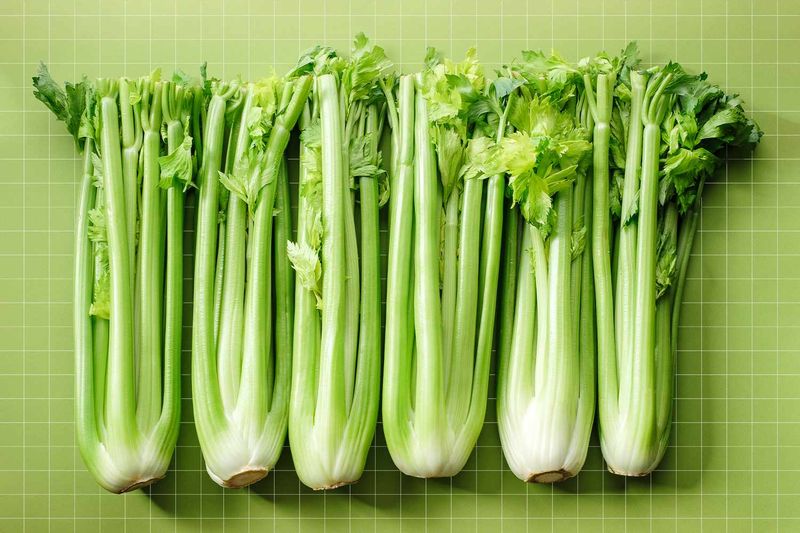
Do studies show that celery changes health markers?
© EatingWell

Headlines love to say celery lowers blood pressure, blood sugar, or cholesterol. The research behind them is thinner than it sounds.

A 2025 meta-analysis in Frontiers in Nutrition pooled nine trials with 511 participants and reported possible benefits for some markers.

Garden soil, farm-stand crates, and grocery shelves all have one thing in common: raw celery can pick up bacteria along the way.

The catch is what those trials tested. They used many different celery preparations, often supplements or seed products, rather than a set daily serving of fresh stalks.

The results also varied a lot from study to study, which researchers call substantial heterogeneity, and the authors asked for larger, higher-quality trials.

One result is worth knowing. The analysis found no overall effect on total, LDL, or HDL cholesterol.

So even in the pooled data, a cholesterol benefit did not show up.

In plain terms, these studies cannot tell you that eating fresh celery every day will lower your blood pressure or change your blood sugar. They are early signals, and early signals can fade when better studies come along.

That leaves a simple conclusion. No predictable set of bodily changes has been shown for a daily celery habit.

If you enjoy celery, eat it for the taste and the crunch, and look to your doctor for guidance on any health condition.

Whole celery, juice, and supplements are not interchangeable
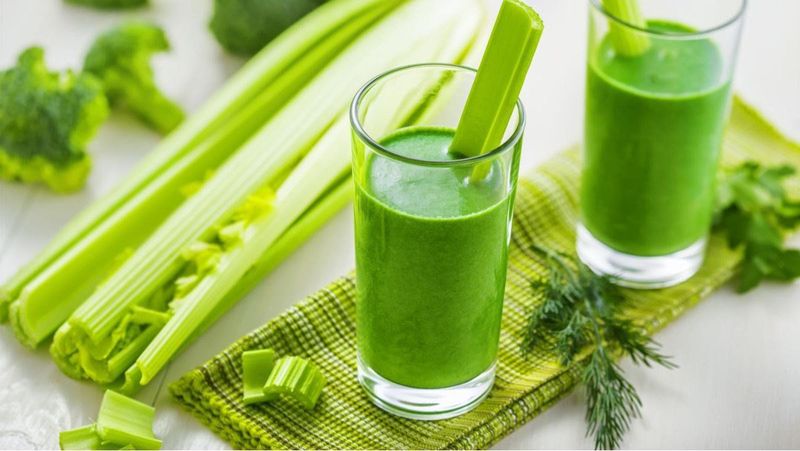
Whole celery, juice, and supplements are not interchangeable
© Vinmec

A study on one form of celery says little about another. Whole stalks, juice, and seed extracts are different products, and each needs its own evidence.

Juicing is the clearest example. According to Cleveland Clinic, it removes much of the fiber, so claims about celery juice should not be treated as claims about eating the whole vegetable.

Juice is not a meal replacement, and it is not a proven cure for anything.

The detox claim deserves a direct correction. The National Center for Complementary and Integrative Health says there is no compelling research supporting detox diets for eliminating toxins from the body.

Your liver and kidneys already handle that job, and a glass of celery juice does not upgrade them.

Supplements are another category. A trial of celery seed extract, such as this randomized hypertension study, tested a concentrated product at a set dose.

That is very different from the amount in a few sliced stalks in a salad.

Being a food does not make a supplement safe or effective. If a result comes from an extract, powder, or capsule, treat it as a finding about that product only.

Ordinary culinary portions of fresh celery are a separate question that those studies did not answer.

Wash celery before preparing or eating it
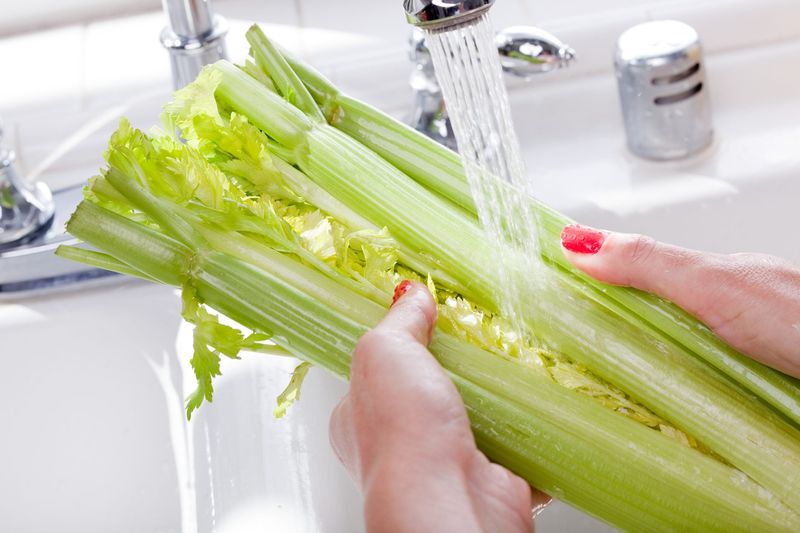
Wash celery before preparing or eating it
© The Healthy @Reader’s Digest

Garden soil, farm-stand crates, and grocery shelves all have one thing in common: raw celery can pick up bacteria along the way. The fix is simple and free.

The FDA’s produce safety guidance says to wash produce under running water before preparing or eating it. That applies to celery from your backyard bed, a farmers market, or a supermarket bag.

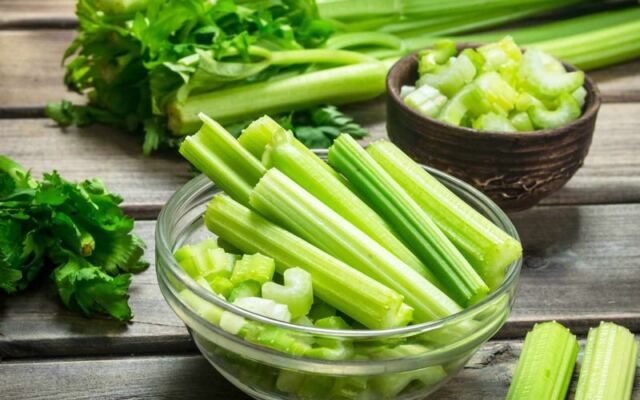
Separate the stalks and rinse each one, paying attention to the base where dirt tends to collect. Rubbing the stalks with your hands under the flow of water helps loosen grit.

Washing can reduce bacteria, but it cannot eliminate them. That is a reason to keep your cutting board and knife clean too, and to store cut celery in the refrigerator.

Skip the soap, detergent, and commercial produce wash. They are not recommended for produce, and plain running water does the job you need it to do.

Warfarin use and celery allergy call for care
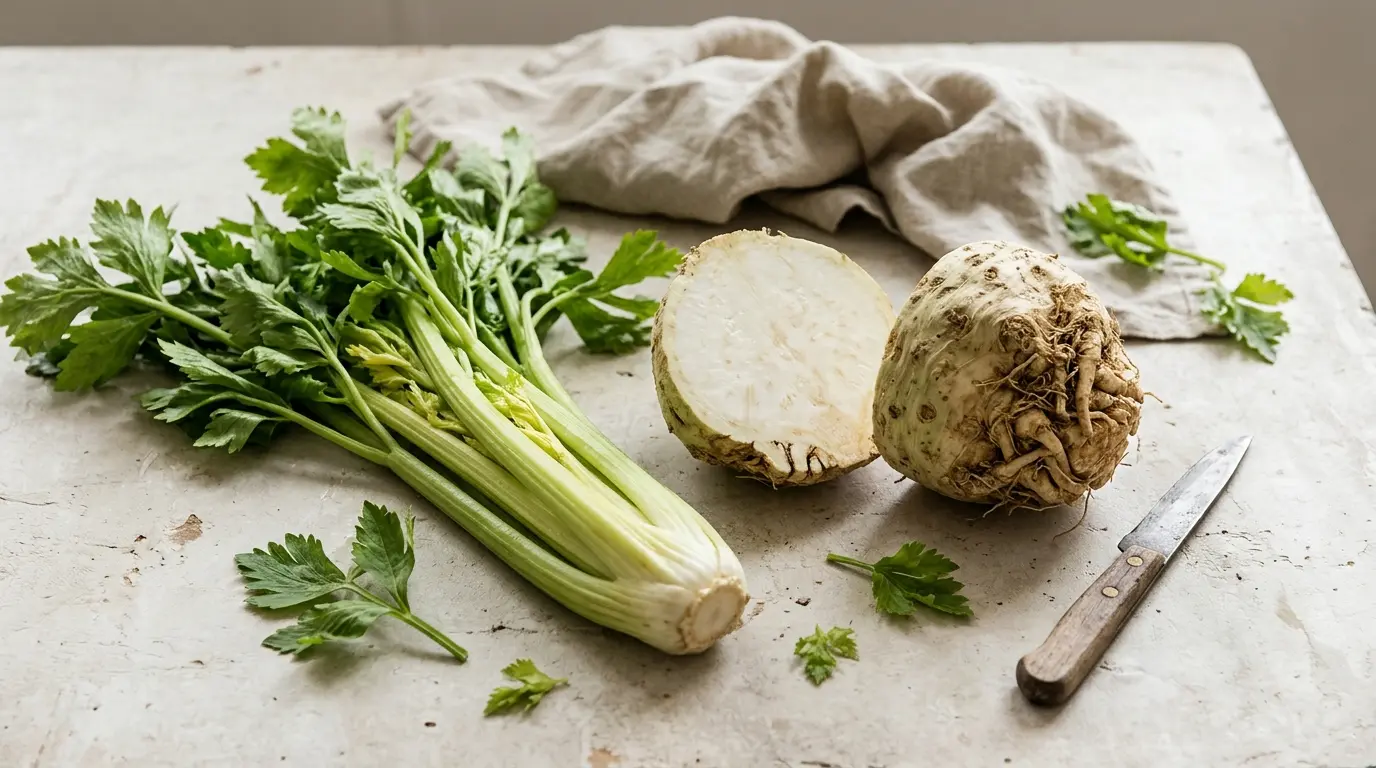
Warfarin use and celery allergy call for care
© Vestige Journal –

For most people celery is an ordinary vegetable, but two groups should pay attention. The first takes warfarin, a blood thinner.

The NIH Office of Dietary Supplements notes that sudden changes in vitamin K intake can alter warfarin’s anticoagulant effect. If you take warfarin, keep your vitamin K intake consistent from week to week.

Talk with your healthcare team before making a substantial dietary change, such as starting a daily celery habit or a juicing routine.

The second precaution is allergy. Celery and celeriac, the root form, are recognized food allergens.

A WHO and FAO risk assessment discusses reactions to them, including reported anaphylaxis, which is a severe and potentially life-threatening reaction.

That does not mean reactions are common everywhere. Much of the available evidence concerns celeriac and comes from Europe, so it should not be read as a picture of every population.

If you notice an itchy mouth, swelling, hives, or trouble breathing after eating celery, stop eating it and get medical advice. Trouble breathing or swelling of the throat needs emergency care right away.

The realistic takeaway
The realistic takeaway
© CookUnity

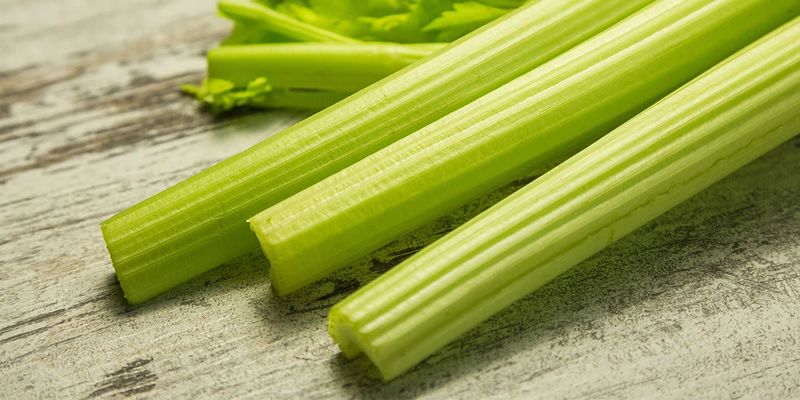
Eating celery every day should not be expected to bring any specific bodily change. It can add water, some fiber, and potassium for few calories, as the FDA’s figures show, and it sits well in a varied diet.

Detox, weight-loss, and disease-treatment promises do not hold up, as the NCCIH makes clear about detox claims.

Celery is a good crunchy vegetable, and that is enough of a reason to grow it or buy it.

Share this story
MY

Written by

Martha Yoder

More from Martha Yoder →

About Gardening Latest

Gardening Latest provides in-depth guides to maintaining and enhancing your garden and backyard. Learn how to make the most of the space you have and create a beautiful garden.

More about us →

Latest stories

  • California GardeningIf a Gray Fox Keeps Trotting Through Your California Yard This Winter, Here’s What It’s After

    If a Gray Fox Keeps Trotting Through Your California Yard This Winter, Here’s What It’s After

    11 hr ago
  • Arizona GardeningWhen a Gray Fox Trots Through Your Arizona Yard This Winter, It’s on a Mission

    When a Gray Fox Trots Through Your Arizona Yard This Winter, It’s on a Mission

    12 hr ago
  • Texas GardeningNeighbor Vines Crossing Into Your Texas Yard: Texas Tree-Branch Guidance Is Clear, but the Answer for Vines Is Less Settled

    Neighbor Vines Crossing Into Your Texas Yard: Texas Tree-Branch Guidance Is Clear, but the Answer for Vines Is Less Settled

    12 hr ago
  • Wisconsin GardeningWisconsin Neighbors Fight Over Snow Piled on Their Property, and Here’s What the Law Actually Says

    Wisconsin Neighbors Fight Over Snow Piled on Their Property, and Here’s What the Law Actually Says

    12 hr ago
  • Missouri GardeningYellow Jackets Nesting Near Your Missouri Home? This Is What You Should Do First

    Yellow Jackets Nesting Near Your Missouri Home? This Is What You Should Do First

    12 hr ago

Gardening by state

Stories for your state, and the hardiness zone most of it gardens in.

Keep exploring

Read next

All Pennsylvania Gardening →
Pennsylvania Gardening7 Smells Mice Hate That Keep Them Out Of Your Pennsylvania Kitchen All Winter
Pennsylvania Gardening

7 Smells Mice Hate That Keep Them Out Of Your Pennsylvania Kitchen All Winter

17 hr ago
Pennsylvania Gardening7 Everyday Smells That Lead Skunks Straight To Your Pennsylvania Porch
Pennsylvania Gardening

7 Everyday Smells That Lead Skunks Straight To Your Pennsylvania Porch

20 hr ago
Pennsylvania GardeningYour Neighbor’s Invasive Plants Crept Into Your Pennsylvania Yard, So Who Pays To Remove Them?
Pennsylvania Gardening

Your Neighbor’s Invasive Plants Crept Into Your Pennsylvania Yard, So Who Pays To Remove Them?

23 hr ago

More from Pennsylvania Gardening

  • This Tiny Pennsylvania Shrew Has A Venomous Bite And Spends Winter Tunneling Under Your Leaf Litter

    Nov 24
  • This Venomous Spider Loves Pennsylvania Garages And Hides In The Boxes You Rarely Move

    Nov 23
Back to top

Leave a response Cancel

Your email address stays private. Required fields are marked with an asterisk.

Gardening Latest

In-depth guides to maintaining and enhancing your garden and backyard: how to make the most of the space you have, and how to make it beautiful.

  • Facebook
  • X
  • Pinterest
  • YouTube

We may earn a portion of sales from products or services that are purchased through our site as part of our affiliate partnerships with retailers.

Explore

  • About GardeningLatest.com
  • Contact Us
  • Terms and Conditions
  • Privacy
  • Editorial Note:
  • FTC Disclosure

Newsletter

New garden guides and seasonal tips, straight to your inbox.

We’ll email you a link to confirm. Unsubscribe any time.

Almost there! Check your inbox and tap the link to confirm.

© 2026 Gardening Latest. All rights reserved.

Back to top