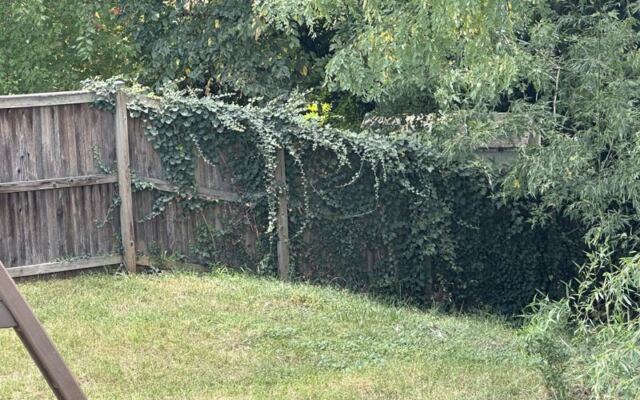
If a neighbor’s vine has crept over the fence into your yard, Georgia guidance gives you reason to think you can trim what is actually on your side. The catch is that the clearest guidance covers tree limbs, and the line between your yard and theirs may not be where the fence sits.
Cut the wrong thing or stand in the wrong spot, and a leafy nuisance can turn into a real dispute. Here is how to sort out what you can do, and when to hold back.
What Georgia says about growth across a property line

Georgia’s clearest guidance is about trees, not vines. Georgia’s Attorney General Consumer Ed office says a homeowner may trim tree limbs that reach into their yard.
The same advice warns against trespassing on the neighbor’s land and against damaging the tree.
UGA Extension covers similar ground in its tree ownership and responsibility publication. It also talks about limbs, and it stresses talking with the neighbor and getting professional input where it makes sense.
Neither source says anything specific about vines.
That gap matters. The sources reviewed do not establish a vine-specific rule, so nobody can honestly call a right to cut vines an explicit, settled state rule.
What exists is guidance about tree limbs that crossed a boundary.
Many homeowners reasonably apply that guidance to vines as a cautious analogy. It is a sensible way to think, but it is not a legal holding about vines.
A homeowner may have grounds to trim vine growth that is truly on their own property, and that is as far as the guidance carries.
In practice, two questions drive the decision. Where exactly is the growth, and what could your trimming damage?
If the answers are clear, a modest trim of what hangs into your yard is on firmer footing. If either one is fuzzy, slow down.
Check the property line, not just the fence
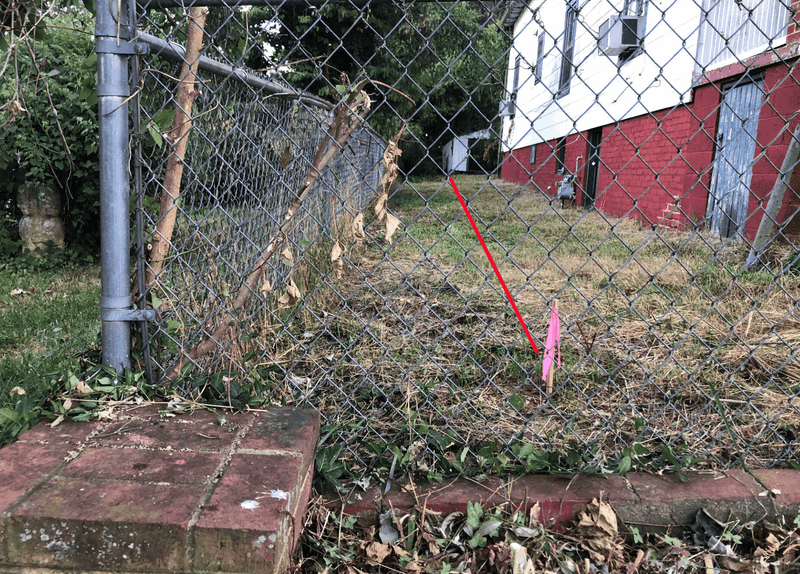
Plenty of people assume the fence marks the boundary. Fences are often built a little inside or outside the true line, so a vine on your side of the fence may or may not be on your land.
The fence is a clue, not proof.
Reliable boundary information is the better guide. Your deed, a recorded plat, or boundary markers can help, and UGA Extension says a survey may help establish ownership of a tree.
The same practical logic applies when you are trying to place vine growth.
This matters because the Attorney General’s advice is built around growth that extends onto your own yard. Trimming something that sits on the other side of the true line could be the kind of trespass that guidance warns about.
Cutting from the neighbor’s side of the line is a different matter altogether.
If the line is disputed or unclear, pause. That is especially true when the vine is wound through the fence itself, since pulling or cutting there can reach past your property.
A friendly chat with your neighbor about where the boundary falls often settles the matter before any tools come out.
A professional survey costs money, but it can cost far less than a feud. If the vine is a minor annoyance, waiting a few weeks for clarity is usually cheap insurance.
Keep any trimming limited and avoid damage
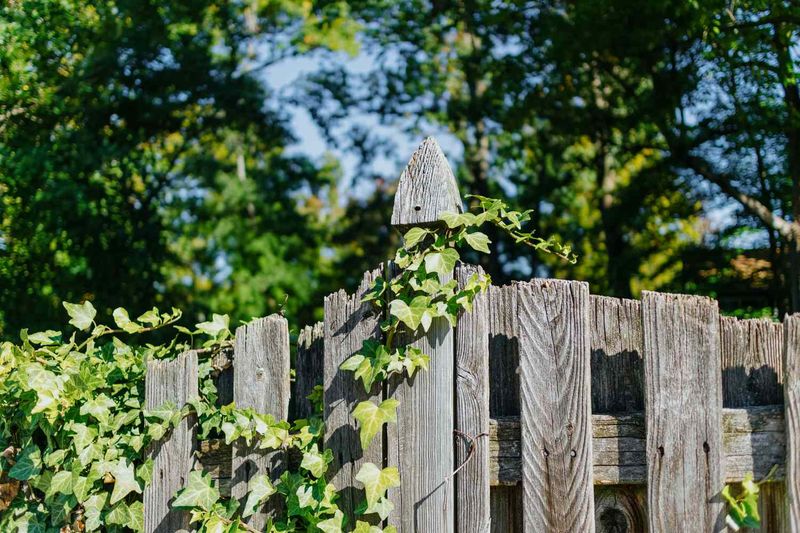
Suppose you have confirmed that some vine growth is on your property. A cautious approach is to trim only that growth, at the point where it crosses onto your land.
Think of it as tidying what has come to you, not clearing out the neighbor’s plant.
That is how the tree-limb guidance reads when carried over by analogy. The Attorney General’s advice allows trimming limbs that extend into your yard, but not trespassing or damaging the tree.
Nothing in it promises that every cut is legally permitted.
Keep a few limits in mind. Do not step onto the neighbor’s land to reach the vine, and do not cut it at its roots if the source plant is over there.
The sources do not establish a right to do that.
Watch for collateral damage too. Yanking a vine can pull down a fence panel, strip bark from a tree, or tear up a neighbor’s plantings.
Any of that could start a separate dispute, and UGA notes that heavy pruning can harm some evergreens.
So the guidance supports caution, not an unlimited right. Snip lightly, cut clean, and leave anything attached to the neighbor’s property alone until you have talked it over.
Pause when vines cross, wrap, or attach
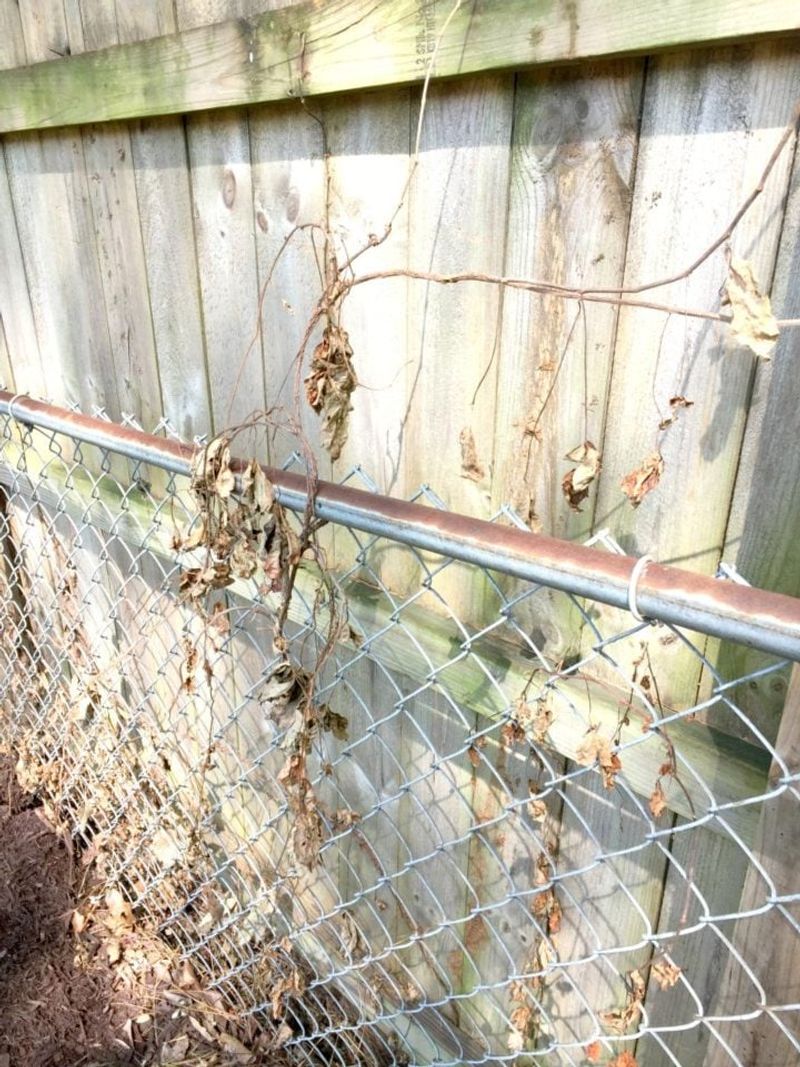
Some vine situations are messier than a few loose tendrils. A vine may be rooted on the neighbor’s side, woven through the fence, or wrapped around a tree or a structure like a shed.
The sources reviewed do not settle who may remove vines in these cases, so each one turns on its own facts.
In these cases, talking beats cutting. A short, friendly conversation can lead to a shared plan, such as the neighbor trimming it back or agreeing to let you do it.
If the problem involves a tree, a professional opinion from an arborist can help.
UGA’s advice is worth following closely. Its tree ownership guidance recommends agreeing in writing before hiring an arborist or doing work on a neighbor’s tree.
A simple signed note or email can prevent a lot of later arguments.
Also check the rules that sit on top of state guidance. Tree and fence rules can vary by city or county, and an HOA may have its own maintenance restrictions.
A secondary overview such as FindLaw’s Georgia fence and property line page can be a starting point, but it is not a universal rule. Confirm details with your city, county, or association.
If talking goes nowhere, hold off on cutting anything tangled with the fence or the neighbor’s plants. Waiting for clarity costs less than repairing a damaged fence.
Identify the vine before choosing how to remove it
Not every vine fights back the same way. A thin, young vine may pull out with little effort, while an older one can be tough as rope.
Knowing what you are dealing with helps you set realistic expectations.
UGA Extension’s tips for controlling vines taking over yards describes pruning and physical removal as options. How much work either one takes depends on the species and how mature the plant is.
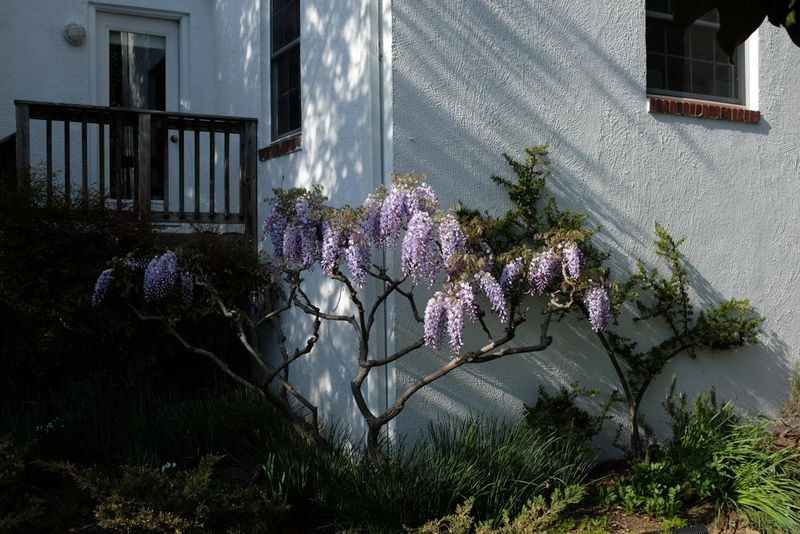
Established wisteria is a good example. Its woody stems can grow thick, and a mature plant may be difficult to remove.
A quick snip rarely ends the story with a vine like that.
If you cannot name the vine, take clear photos of the leaves, stems, and any flowers. Your county Extension office can often help with identification.
It also helps to know whether the plant might be poison ivy, which calls for extra precautions.
Keep in mind that no single method suits every vine. And even the best removal technique does not override the boundary question.
Knowing the species tells you how to work, but not whether you have the right to work on that spot.
Take extra care with poisonous plants and power lines
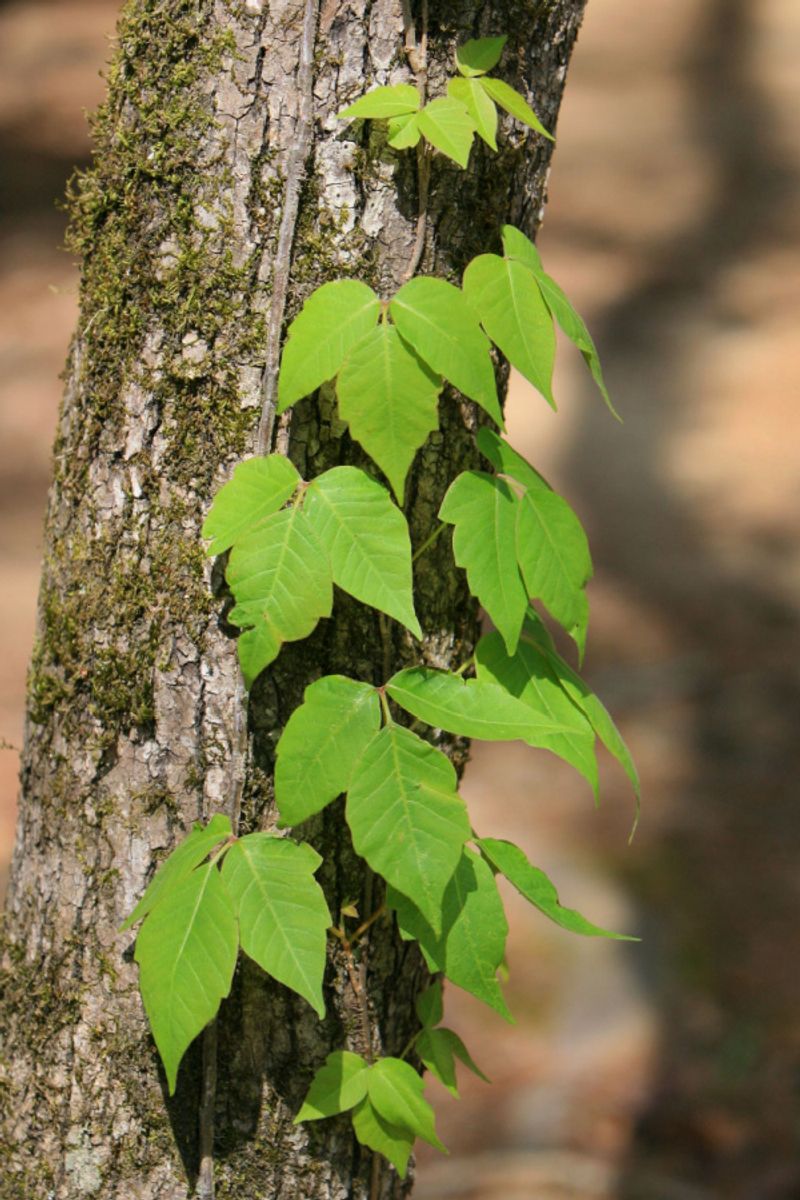
Two hazards deserve their own firm rules, no matter where the property line sits. The first is poison ivy, oak, or sumac.
If you suspect any of them, wear protective clothing and gloves, as CDC/NIOSH guidance on poisonous plants advises.
Clean your tools afterward, since the oil that causes the rash can cling to them. Never burn the cuttings.
Smoke can carry urushiol, the plant’s irritating oil, and expose your skin and lungs.
The second hazard is power lines. If a vine or branch is on a line, do not touch it and do not try to pull it off.
Georgia Power’s safety guidance warns that lines can be deadly and says not to touch objects on a downed line.
Instead, contact the utility, and call emergency services as appropriate if there is an immediate danger. Stay back and keep children and pets away.
Trimming near lines is work for trained crews.
Both of these limits stand apart from the boundary question. A vine may be entirely on your side of the line and still be unsafe to handle.
When in doubt, step away and call for help.
Verify first, then decide what to do

Start by finding out where the growth really is. Remember that a fence alone does not mark the boundary, and tree-limb guidance is only an analogy when it comes to vines.
The Attorney General’s advice points toward avoiding trespass and damage.
If ownership or safety is unclear, pause and talk with your neighbor before reaching for the shears. Careful steps keep a small nuisance small.
A vine is easy to trim later, but a broken fence or a bad relationship is much harder to fix.
Share this story