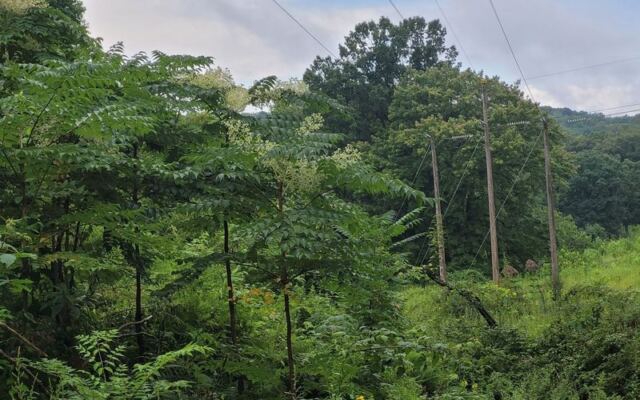
Pull or chop a tree-of-heaven, and it often answers with a crop of new shoots. That stubborn comeback is why a tree many people try to remove can seem to be everywhere.
In Minnesota, though, confirmed sightings are still rare, so the first job is to find out what you really have. Here is how to tell, what to do, and who to call.
Minnesota has confirmed only limited occurrences
Start with the big picture. The Minnesota Department of Agriculture describes documented tree-of-heaven occurrences in the state as very limited.
The same agency reported a confirmed infestation in Dakota County on September 25, 2025.
That finding does not mean the tree is taking over Minnesota yards in general. It means the state has a small, early problem that is easier to handle now than after the tree spreads.
State staff track this species through the Noxious and Invasive Weed Program annual report, which is a good place to see how the agency reports its work.
So if a tree keeps coming back in your yard, do not assume it is tree-of-heaven. It could be another plant that resprouts, and the odds favor something more common.
Still, a suspected plant is worth a closer look and a report, because early notice is exactly what helps keep a rare tree rare.
The rest of this article walks through how to identify the plant, what happens when you cut it, when pulling works, and what to do about larger trees.
Identify the tree before you remove it
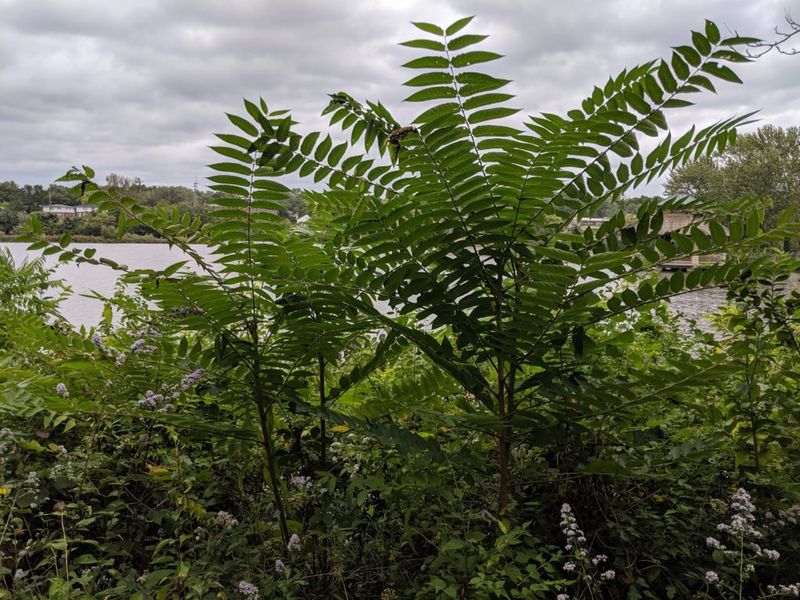
Leaves give the first clues. Tree-of-heaven has long compound leaves made of many leaflets, and the leaflet edges are smooth, as described in University of Minnesota Extension guidance.
Treat those traits as hints, not proof.
Several native trees look similar at a glance. Native sumacs, black walnut, and hickory all have compound leaves, and a quick visual guess can send you after the wrong plant.
Pulling out a harmless native is a real risk if you act too fast.
The Minnesota Department of Agriculture asks people to report suspected plants so staff can help confirm the identification. A clear photo of the leaves, the whole plant, and its location makes that easier.
Regrowth alone will not settle the question either. Tree-of-heaven is not the only invasive Minnesota tree that comes back after cutting.
The state DNR says Siberian elm can resprout from its stump and roots too. A tree that returns could be either one, or something else entirely, so confirm first and choose a response second.
Cutting can prompt new shoots
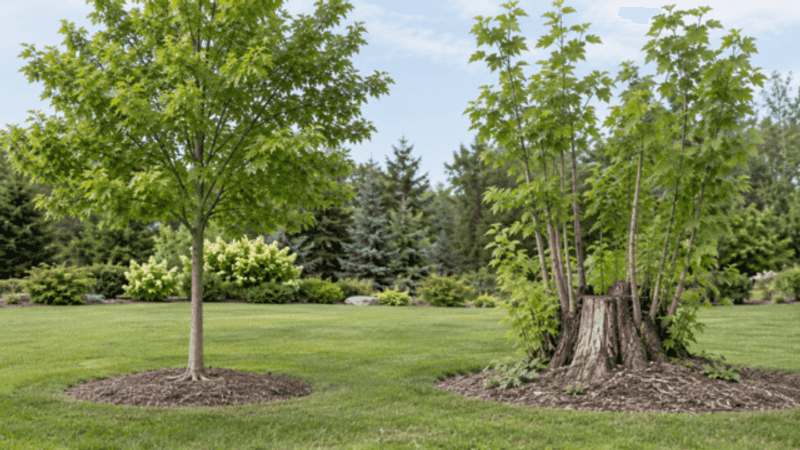
A chainsaw or mower feels like a clean answer, but for confirmed tree-of-heaven it often backfires. According to the Minnesota Department of Agriculture, cutting or mowing can prompt stump shoots and root suckers.
The tree puts energy into new growth, and new stems may pop up from the stump or from roots some distance away.
That helps explain the cycle some owners describe. They cut the tree, see a cluster of new stems a few weeks later, and cut again.
Each round can leave them where they started, with more stems than before.
The state is clear that cutting or mowing alone is not effective management for this species. It may knock the plant back for a while, but it does not solve the problem.
Pulling a small seedling is a different situation. A seedling has a small root system that can sometimes come out whole, while an established tree has a large network underground.
Also, not every pulled plant will regrow. What matters is the size of the plant and how much root is left in the ground.
If you cannot tell whether you have a seedling or a root sprout from an older tree, hold off and ask for help before you grab a tool.
Pull small seedlings only when you can remove the roots
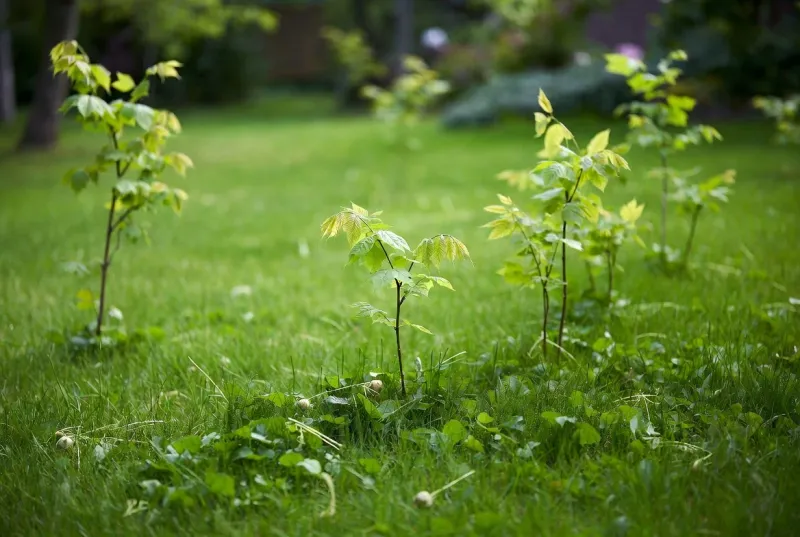
Hand removal has a narrow window. The Minnesota Department of Agriculture says pulling or digging may work for a small seedling when the soil is moist and the entire root system comes out.
All three conditions matter together.
Moist soil lets roots slide free instead of snapping off. After a good rain, or after watering the area well, the ground gives up roots more easily than in dry, packed dirt.
A small trowel can help you follow the root down.
Leftover pieces are the catch. Root fragments left behind can produce new shoots, so a broken root is a reason to keep watching the spot, not to assume the job is done.
Check the hole and the pulled plant to see whether the root ended cleanly.
This advice stops at seedlings. It does not apply to saplings with thick stems, established trees, or clusters of stems that seem connected underground.
Those need a different plan, covered next.
Wear gloves while you work, and dispose of the plant in a way that keeps it from rooting again. If you are not sure the seedling is tree-of-heaven, get it confirmed before you pull anything.
Established trees need a site-specific plan
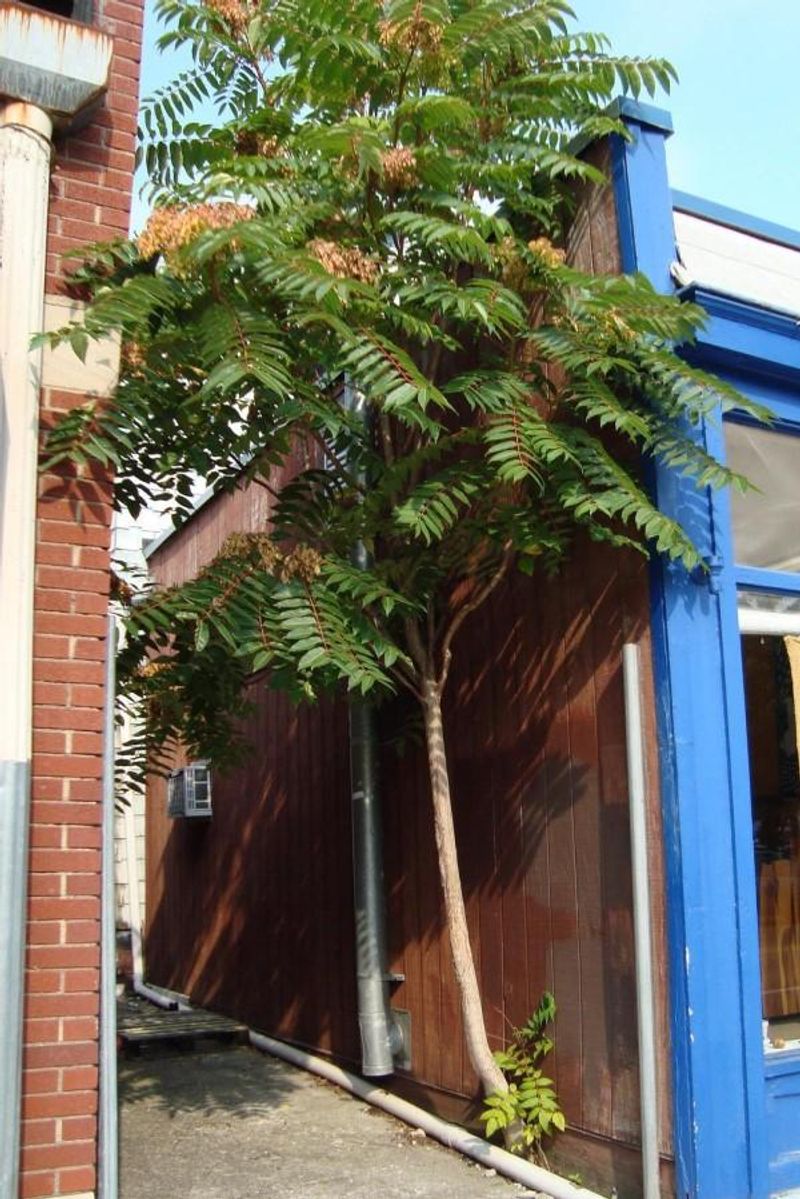
Large trees are a different job. For established tree-of-heaven, the Minnesota Department of Agriculture lists mid- to late-summer foliar treatment and basal-bark treatment as options.
It also says management depends on the site and that repeated treatment and monitoring are necessary.
Cut-stump herbicide alone is ineffective for this species, and so is cutting without follow-up. That surprises people, because stump treatment is common advice for other woody plants.
Buckthorn is the usual example. The Minnesota DNR recommends prompt cut-stump treatment for buckthorn, but that advice does not automatically carry over to tree-of-heaven.
University of Minnesota Extension also notes that stump covering and similar methods depend on the plant. Species that sucker from roots respond differently from species that sprout only at the stump.
This article does not give a herbicide recipe on purpose. The right product, timing, and method depend on your site, nearby plants, water, and the product label, which is the legal instruction for use.
Extension advises checking that any product is labeled for your site and the target plant.
Your best next step is to contact the Minnesota Department of Agriculture or a qualified local invasive-plant professional. Plan on more than one visit, since follow-up checks are part of the treatment.
Report suspected plants and keep monitoring
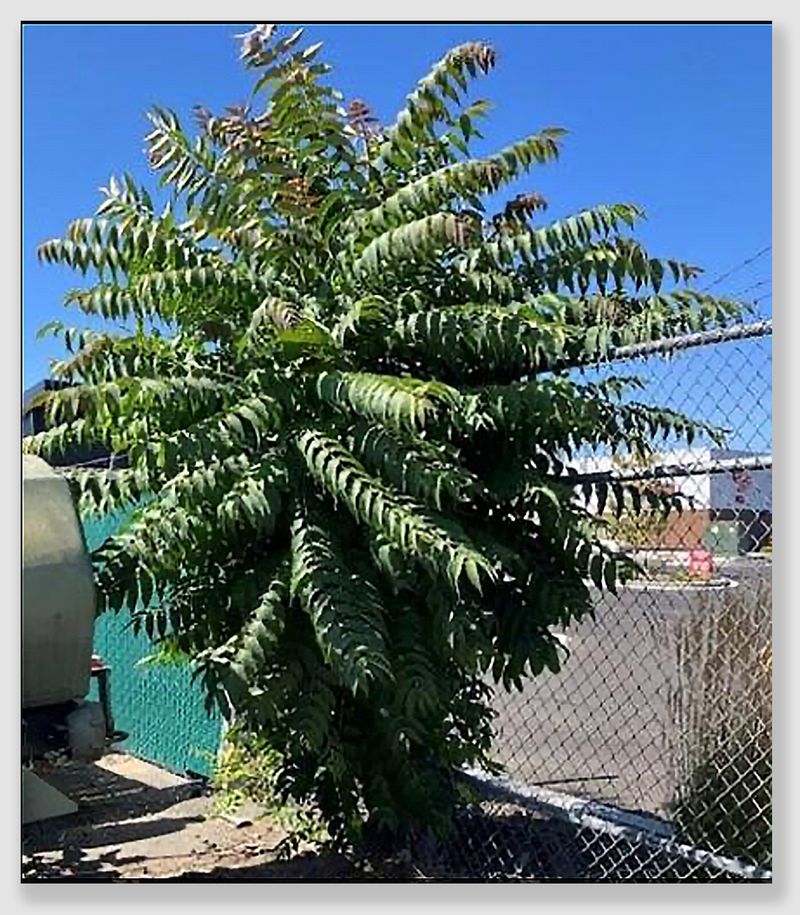
Reporting is more than a courtesy here. Minnesota’s current noxious weed list places tree-of-heaven in the Prohibited-Eradicate category.
State law says plants in that category must be eradicated on all lands in the state.
The Minnesota Department of Agriculture offers online, email, and phone reporting, and says it may work with landowners and local agencies on control. Details are on the MDA tree-of-heaven page.
Reaching out early can bring help instead of leaving you to handle it alone.
Wear gloves when you handle the plant, because MDA says the sap may cause dermatitis. That is a skin concern worth a simple precaution, not a reason for alarm.
Here is a practical order of steps. First, seek confirmation of what the plant is.
Second, pull only a small seedling, and only when its entire root system can come out. Third, ask MDA or qualified professionals about established trees.
Afterward, keep checking the area for new growth through the season and in following years. A tree that has been handled well still deserves a second look.
A plant that hides in plain sight is easy to miss, and a quick photo and report may be all it takes to stop a small problem from growing.
Share this story