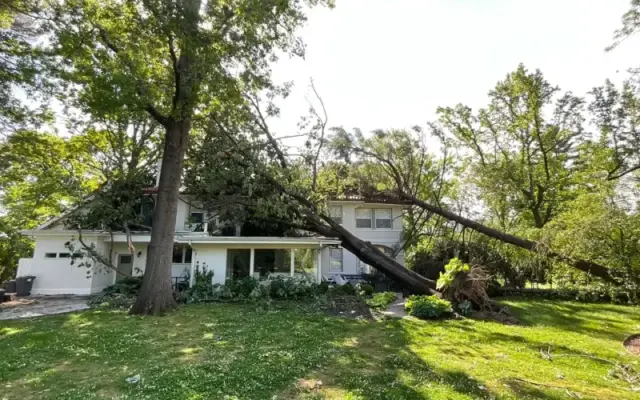
When a storm throws your neighbor’s tree into your yard, the bill usually does not go straight to the neighbor. In most cases, your own homeowners policy is the first place to look for help with covered damage.
The neighbor might be responsible, but only if the facts show negligence. Here is how to sort out damage, removal costs, and next steps without guessing.
Your own homeowners policy is usually the first place to check
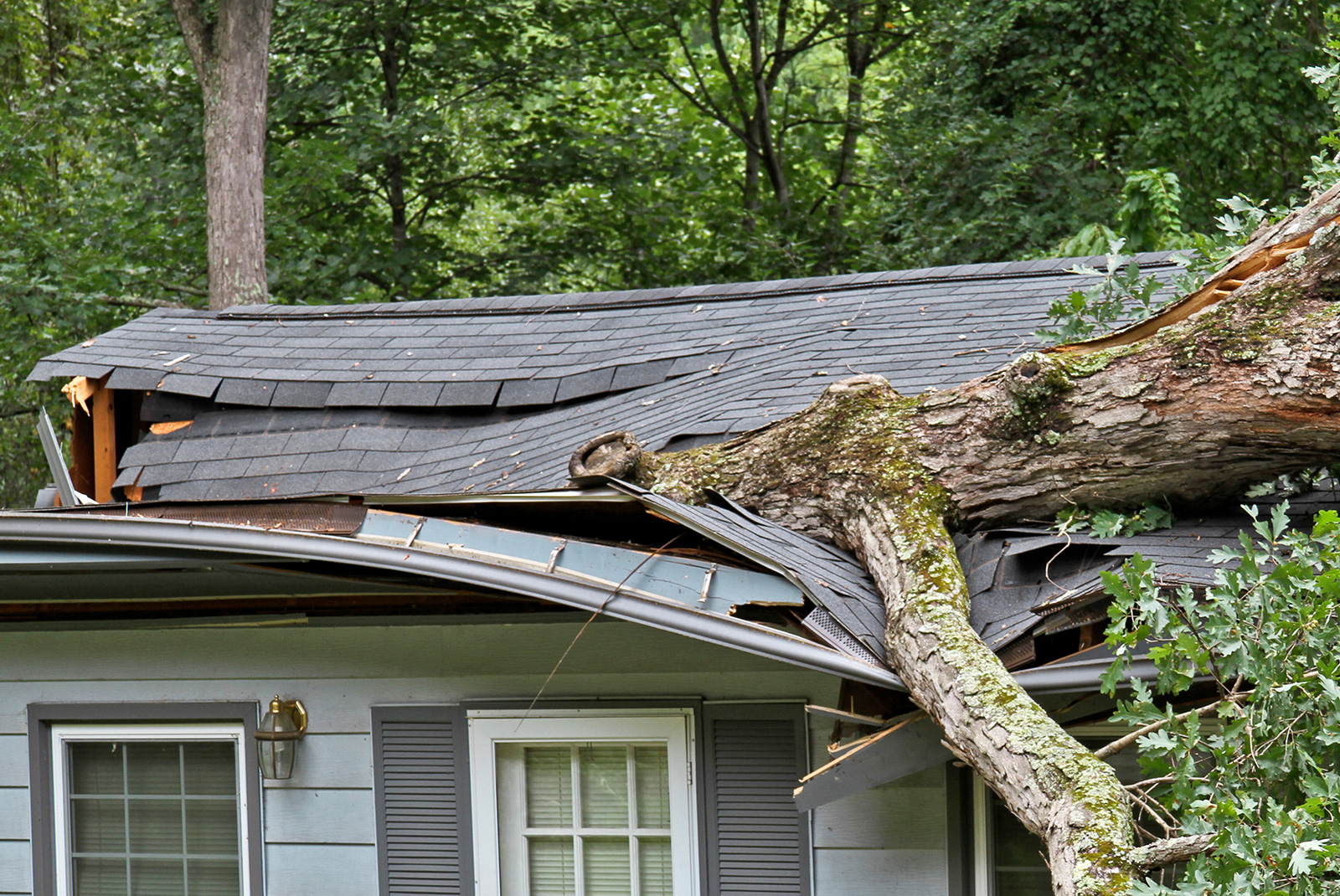
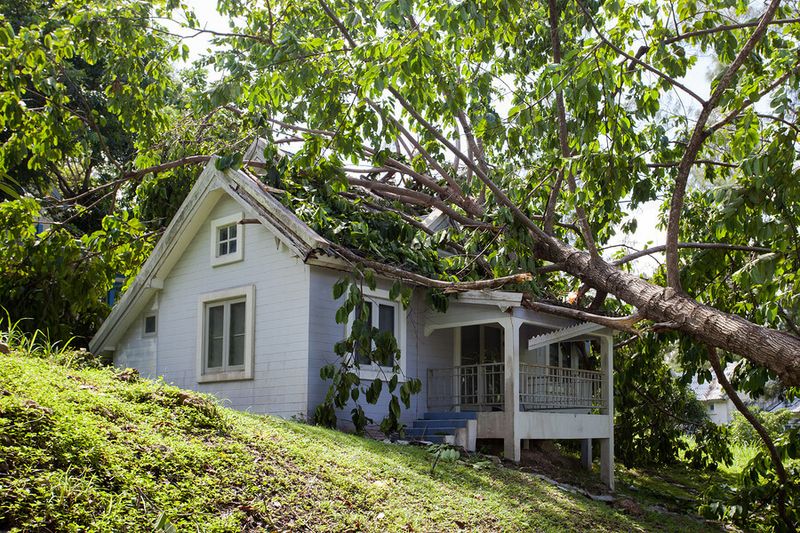
Picture a stormy night that ends with a heavy oak from next door resting on your roof. Most people assume the neighbor must pay because the tree was theirs.
In practice, your own homeowners policy is generally the first place to check when the tree damages your covered home or property.
That is a starting point, not a promise of payment. The actual terms of your policy control what is covered, what is excluded, and what your deductible will be.
Reading the declarations page and the section on windstorm damage will tell you far more than guessing.
Here is the basic idea, according to a Missouri legal aid disaster guide: unless negligence can be proved, each homeowner’s policy generally covers that homeowner’s own house, no matter whose yard the tree came from. Missouri’s insurance regulator also describes homeowners property coverage as applying to covered damage to the insured’s home and belongings.
Filing under your own policy is called a first-party claim. It is a separate question from whether your neighbor could be held responsible.
You can pursue the first path right away while the second one waits for facts.
If you are unsure what your policy says, call your agent or insurer and ask how a fallen tree from a neighboring property is handled. Written answers and claim numbers are worth saving.
A neighbor may be responsible if negligence can be shown
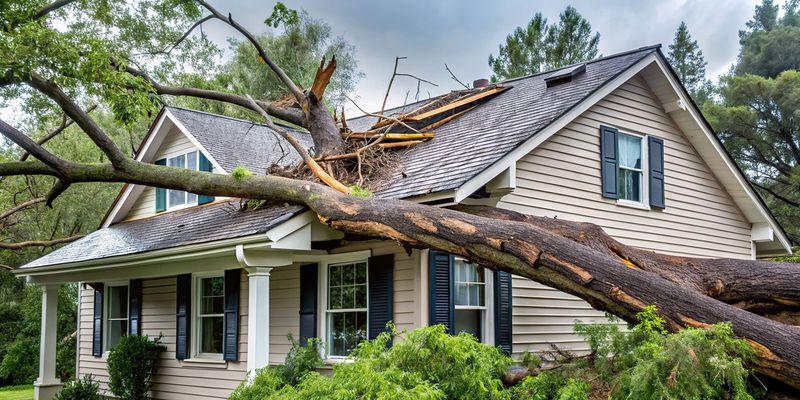
Owning the tree does not by itself make a neighbor liable. A claim against the neighbor depends on evidence of negligence, meaning the owner failed to use reasonable care about a hazard that was apparent or that they knew about or reasonably should have known about.
Courts look at the specific facts. A tree that looked healthy and fell in a strong wind is very different from one with obvious rot that everyone could see.
A storm also does not settle the matter either way. The phrase “act of God” is used in Missouri legal aid guidance for damage caused without fault or negligence, but a storm alone does not answer whether a hazardous tree was neglected.
Missouri case law offers a limited example. Hasapopoulos v.
Murphy involved encroaching roots and branches. The court affirmed a judgment for the tree owner where the plaintiffs did not show the trees were defective, and it discussed visible decay and the owner’s knowledge.
It is not a blanket rule for storm-felled trees.
Facts such as a tree being dead, diseased, leaning, or previously reported may matter in a negligence inquiry. None of them alone guarantees liability, and none alone defeats it.
If you think negligence played a role, photos of the tree before the storm, written complaints, and dates of earlier warnings can help. A Missouri attorney can explain how those facts apply to your situation.
Tree removal is a separate coverage question
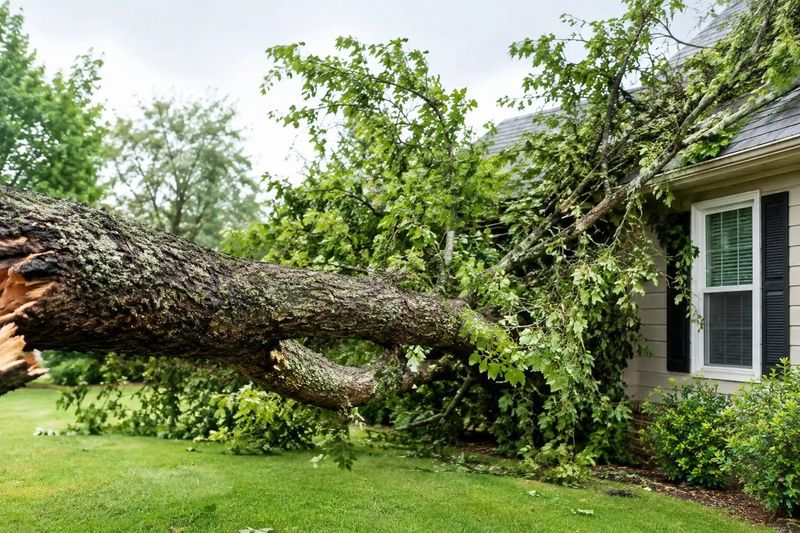
Paying for damage and paying to haul away the tree are two different bills. Many people expect one claim to handle both, and that is where surprises happen.
According to Missouri’s Department of Commerce and Insurance, homeowners insurance typically pays for removal when a storm-felled tree damages something the policy covers, such as a roof, a garage, or a fence. A tree that simply lands in the yard without damaging covered property may be the homeowner’s expense.
Policies differ, so look for wording about debris removal and any dollar limits per tree or per claim. Ask your insurer before hiring anyone, and keep invoices.
Vehicles follow a different path. If a car was crushed, do not assume the homeowners policy applies.
As Missouri legal aid guidance explains, vehicle coverage depends on the policy, so check your auto insurance, especially any comprehensive coverage.
Once you know which policy responds to which loss, you can plan for what you may pay out of pocket.
The neighbor’s insurance depends on legal responsibility and policy terms
Legal responsibility and insurance coverage are not the same thing. A neighbor may be legally responsible if negligence is established, but whether an insurance company pays is decided by the terms of the neighbor’s policy.
Missouri’s regulator explains in its homeowners insurance FAQs that personal-liability coverage generally applies to claims for injury or property damage for which the insured is negligent and legally liable, subject to policy exceptions. That wording matters.
It does not say the neighbor’s insurer pays whenever a neighbor’s tree falls.
So the tree belonging to the neighbor is not enough. Negligence has to be shown first, and then the policy’s conditions and exclusions come into play.
In practice, a neighbor who receives a claim usually reports it to their own insurer, which investigates. It may accept, deny, or ask for more information.
You can expect questions about the tree’s condition and any earlier complaints.
Keep conversations with your neighbor friendly and factual. Avoid blaming anyone before the facts are known, and share your documentation through your insurer or an attorney if the dispute grows.
Document the damage and contact your insurer promptly
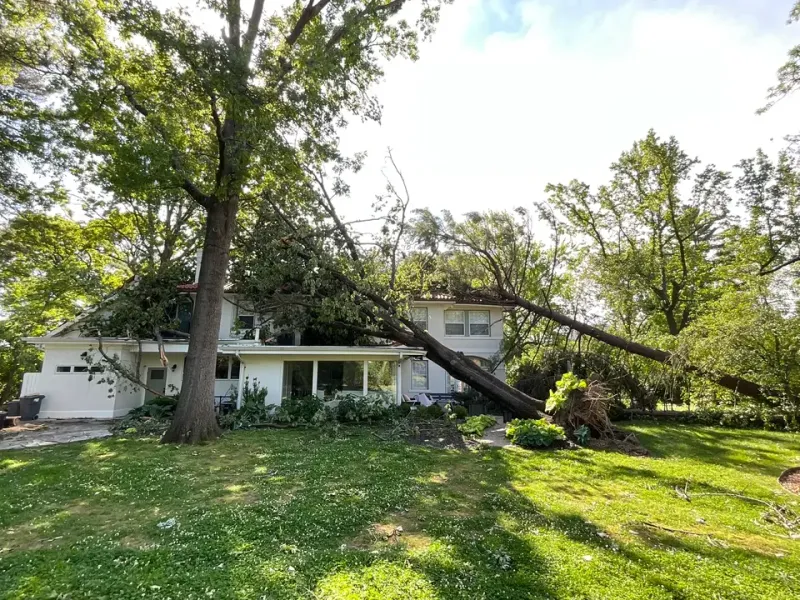
Once everyone is safe, start building a record. When it is safe to do so, take photos or video of the damage before any cleanup or repairs.
Capture wide shots of the tree and the yard, then close-ups of each damaged item.
Next, take reasonable steps to prevent further harm. A tarp over a hole in the roof or boards over a broken window are common examples.
Missouri’s insurance department advises this kind of protection, along with keeping receipts for emergency repairs.
Then contact your insurer promptly. Ask how to start a claim, whether an adjuster will visit, and what they need from you.
Write down the date, the name of the person you spoke with, and your claim number.
Read your specific policy, too. Look at the deductible, the windstorm provisions, and the debris removal language so you know what to expect.
If you have coverage questions, the Missouri Department of Commerce and Insurance Consumer Hotline is 800-726-7390.
Hold on to anything that shows the tree’s condition before the storm, such as older photos or messages with your neighbor. You may not need them, but they are hard to recreate later.
Stay clear of downed trees and power lines
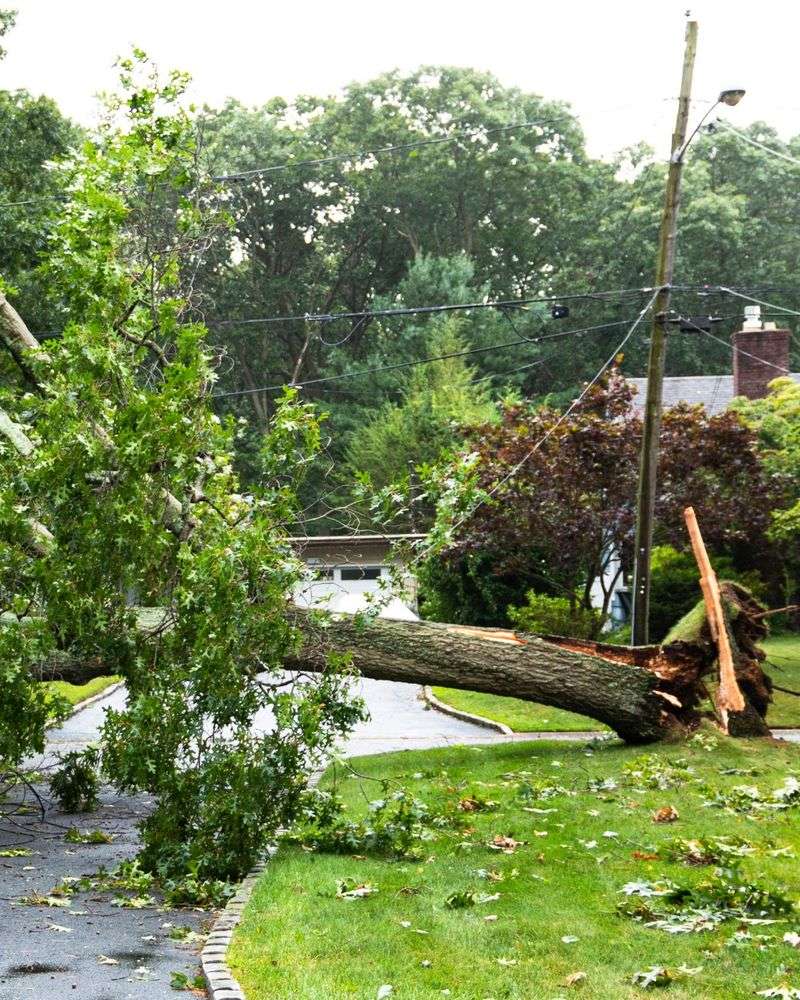
A tree that has brought down wires is a bigger problem than a roof repair. Missouri’s Public Service Commission says in its storm preparedness guidance to assume any downed power line is live.
Do not touch the line or anything it is touching, and call 911.
That includes branches, fences, puddles, and vehicles that may be in contact with the wire. Keep children and pets back, and wait for the utility and emergency crews.
Hidden strain is another danger. Storm-bent trees and branches can snap or spring without warning.
University of Missouri Extension advises having someone more experienced handle bent trees or branches over 6 inches in diameter.
Do not try to cut limbs that are hanging, bent, or pinned under tension. For large or borderline cases, call a professional arborist who has the right training and equipment.
Paperwork and claims can wait an hour or a day. Your safety cannot, so let the experts make the area safe before anyone picks up a saw.
Share this story