Maybe you have noticed a silky, gauzy web wrapped around the end of a branch and figured it was just autumn debris. In Missouri, many of these webs are made by fall webworm caterpillars, though a few other insects spin silk nests too.
Knowing what you are looking at helps you decide whether your tree needs any attention at all. Here is how to tell what is going on and what to do about it.
A silky web may hold an active feeding colony
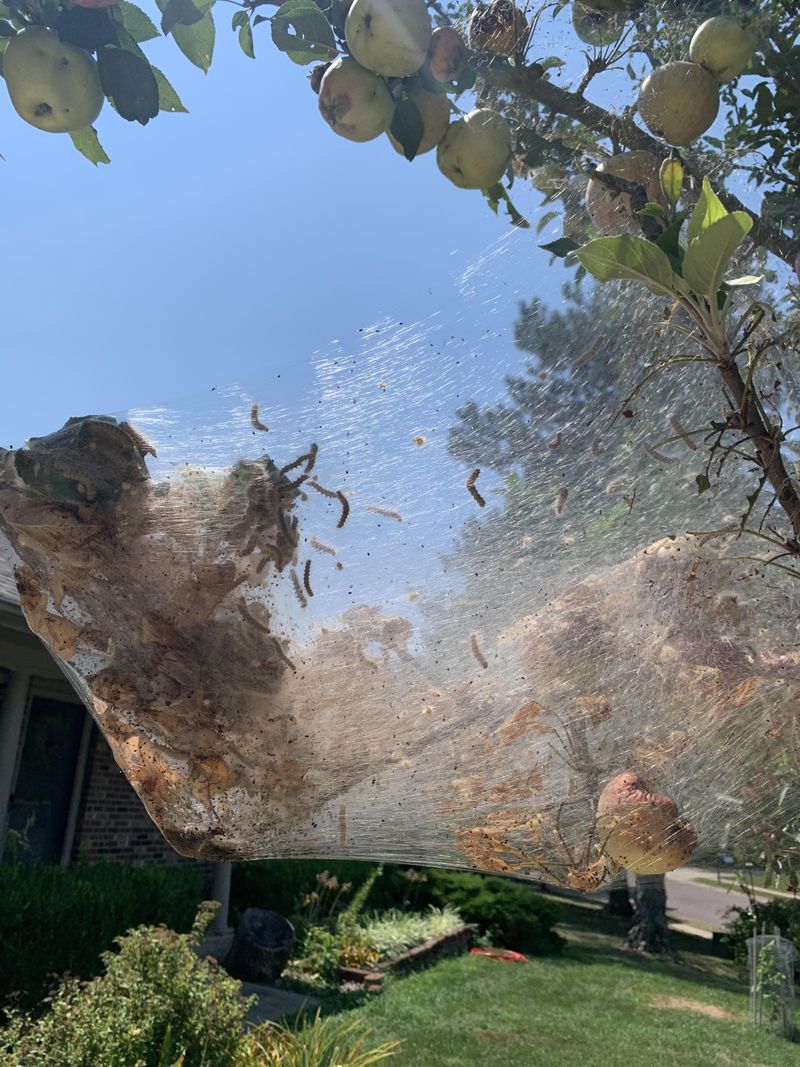
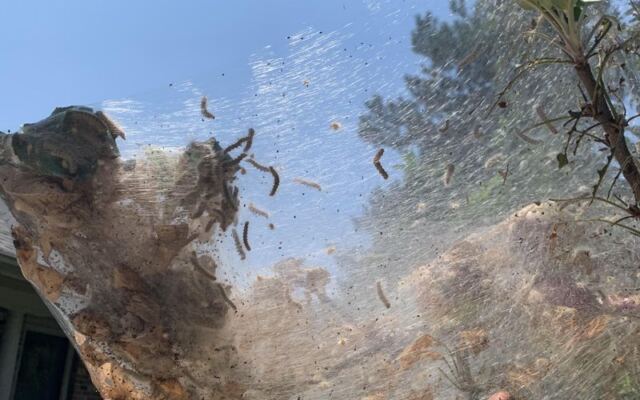
Late summer often brings a surprise: a thin, silky bag stretched over the end of a branch. It looks like something the wind left behind, but a fresh web is often a fall webworm colony.
The caterpillars spin silk around leaves and feed together inside that shelter, according to the Missouri Department of Conservation, which notes the species is widespread across the state and eats the leaves of many hardwood trees and shrubs.
Despite the name, fall webworms are not worms. They are the larval stage of a small white moth.
The caterpillars are pale yellowish or greenish and covered in fine hairs, and they stay close together under the silk as they chew the leaves they have wrapped.
A web alone does not prove the species, though. Other caterpillars also build silk nests, so the shape and location of the web matter, along with what you find inside.
A tent in a branch fork looks different from a bag around leaves at the tip, and the next section covers those clues.
Old webbing is another trap. University of Illinois Extension explains that some webbing can hang on after the caterpillars have moved on.
A tattered, empty web is not the same as a working colony.
So before you decide anything, take a close look. If you can see small caterpillars wriggling among chewed leaves and dark specks of droppings, the colony is active.
If the silk is dry, torn, and empty, there is nothing left to deal with. University of New Hampshire Extension also describes how to separate these webs from similar nests.
Check where the web sits and when it appeared
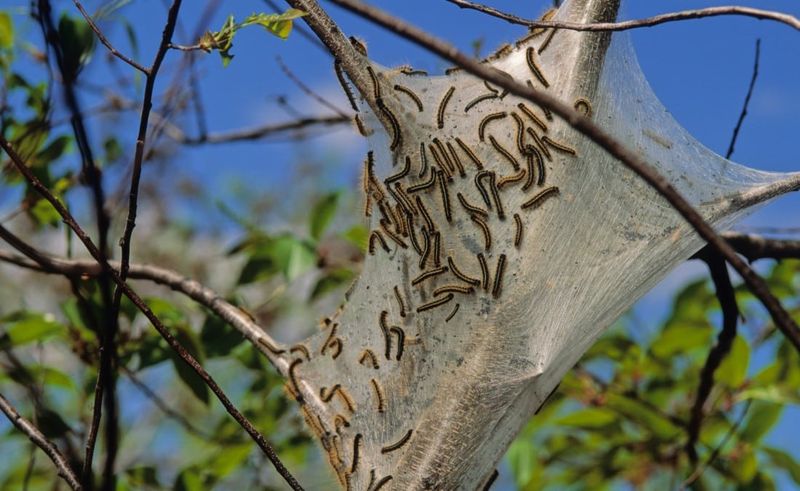
Location is one of the best clues you have. Fall webworm webs usually cover leaves at the ends of branches, and the caterpillars stay inside to feed.
University of New Hampshire Extension contrasts this with eastern tent caterpillars, which build tents in branch forks.
Behavior helps too. Tent caterpillars leave their tent to feed on nearby leaves and return afterward, so you may see them crawling along the bark.
Webworms mostly feed within the silk, which keeps growing outward as they enclose more foliage.
Timing is useful, but do not rely on it alone. Eastern tent caterpillar nests are typical in spring, while the webs most people notice appear from midsummer into fall.
Still, the word fall can mislead. According to MU Extension, Missouri fall webworms can produce two to three generations a year, so caterpillars may turn up anywhere from spring to fall.
The Missouri Department of Conservation field guide offers photos of the moth and caterpillars if you want to compare what you see.
A simple routine works well. Note whether the silk is at a branch tip or in a fork, watch whether caterpillars stay inside or wander out, and think about the season.
Together these clues point toward a likely answer, even if none of them settles it alone.
Most established trees tolerate late-season feeding
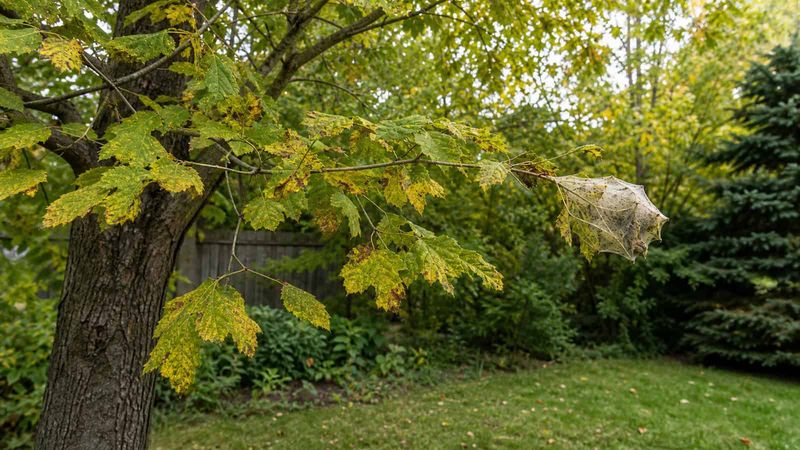
Seeing leaves stripped inside a web can feel alarming, but context matters. Fall webworm feeding usually happens late in the growing season, when a tree has already made most of its food for the year.
For a healthy, established tree, the result is mainly an unsightly branch tip rather than a lasting problem, as the Missouri Department of Conservation’s forest health alert explains.
That does not mean the caterpillars are harmless. They do eat leaves, and the department acknowledges defoliation.
The point is that a single web on a mature tree rarely says anything about serious damage to come, and no tree is completely immune.
Some situations deserve a closer look. Purdue Extension and other university sources flag heavy feeding as a bigger concern for young trees, recently planted trees, and trees already stressed by drought or other problems.
Repeated defoliation over more than one round can also add up.
Think about a sapling planted this spring with several webs covering much of its small crown. That is a different case from one web on a big oak.
As University of Illinois Extension notes, the effect depends on the tree and the amount of feeding. Check how much of the canopy is affected and how the tree has been doing this season before deciding how much attention it needs.
In most yards, leaving the colony alone is reasonable
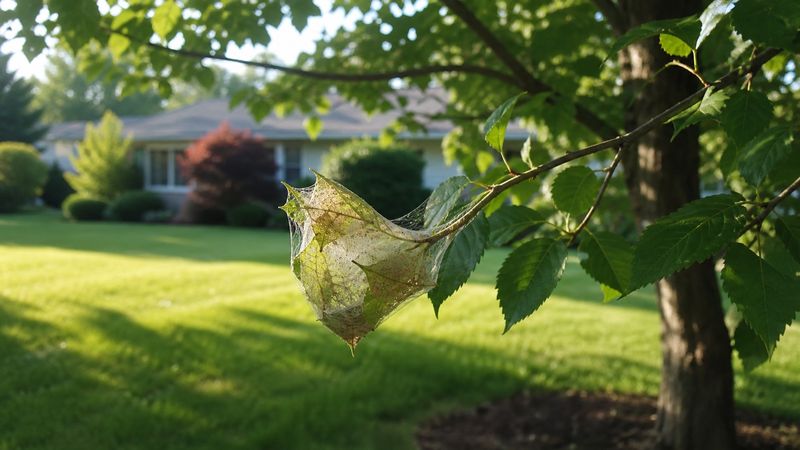
Doing nothing is a legitimate plan. The Missouri Department of Conservation says control is rarely necessary for fall webworm, and that fits most home landscapes, where a few webs sit on a tree that is established and otherwise healthy.
In its forest health alert, the department also lists natural enemies, including birds, parasitic wasps, and flies.
Those helpers are already at work in your yard. Birds pick at the caterpillars, and tiny wasps and flies lay eggs in or on them, which keeps populations in check over time.
Leaving a colony alone makes the most sense when feeding is limited to a few branch tips, the tree has good color and growth, and the season is winding down. Leaves will drop soon anyway, and the webs will weather away.
It also helps to keep the visual side in perspective. A web can look messy, but looks are not the same as harm.
If the appearance bothers you, the next section covers a gentle way to open a web you can reach safely.
Many gardeners find peace of mind in a simple habit: look at the tree every week or two, note whether more branches are being covered, and let nature’s own pest control do its part.
Open only a web you can reach safely
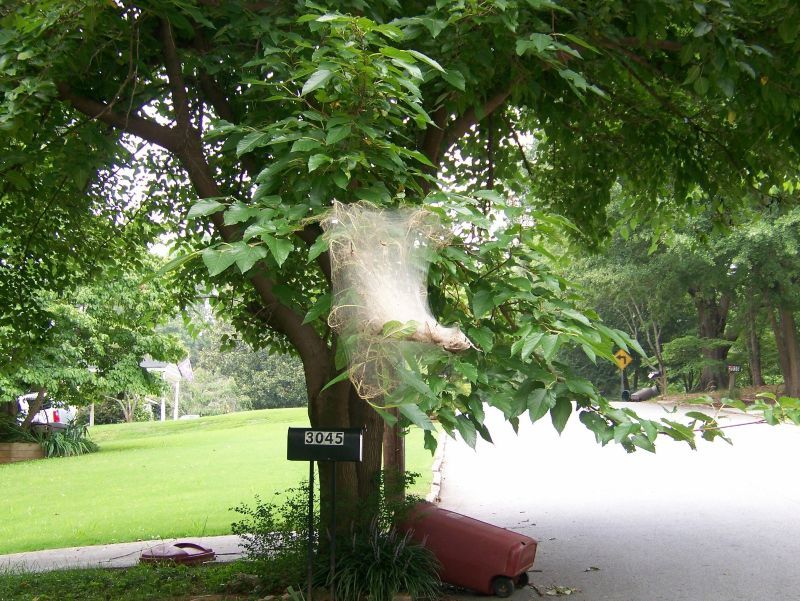
If a colony bothers you and it is low enough to reach from the ground, the Missouri Department of Conservation suggests opening the web with a long stick. Tearing it open exposes the caterpillars so birds and other natural enemies can get to them, as described in its forest health alert.
This is an option, not a requirement, since leaving the colony alone is often fine.
Keep your feet on the ground. Do not climb the tree or stretch from a ladder in an unsafe spot to reach a web.
If it is high, out over a roof, or near wires, skip it.
Avoid touching the caterpillars with bare skin. MU Extension advises caution with hairy caterpillars, and their hairs may irritate sensitive people.
Long sleeves, gloves, and a long tool keep you at a comfortable distance, and anyone who reacts to caterpillar hairs should skip this job.
Never burn a web. Fire can severely damage twigs and buds and can create real hazards for people and property.
University of Illinois Extension adds that burning can injure the tree more than the caterpillars do.
If you do open a web, make sure live caterpillars remain first. An empty, old web is not worth the effort.
Do not make spraying the default response
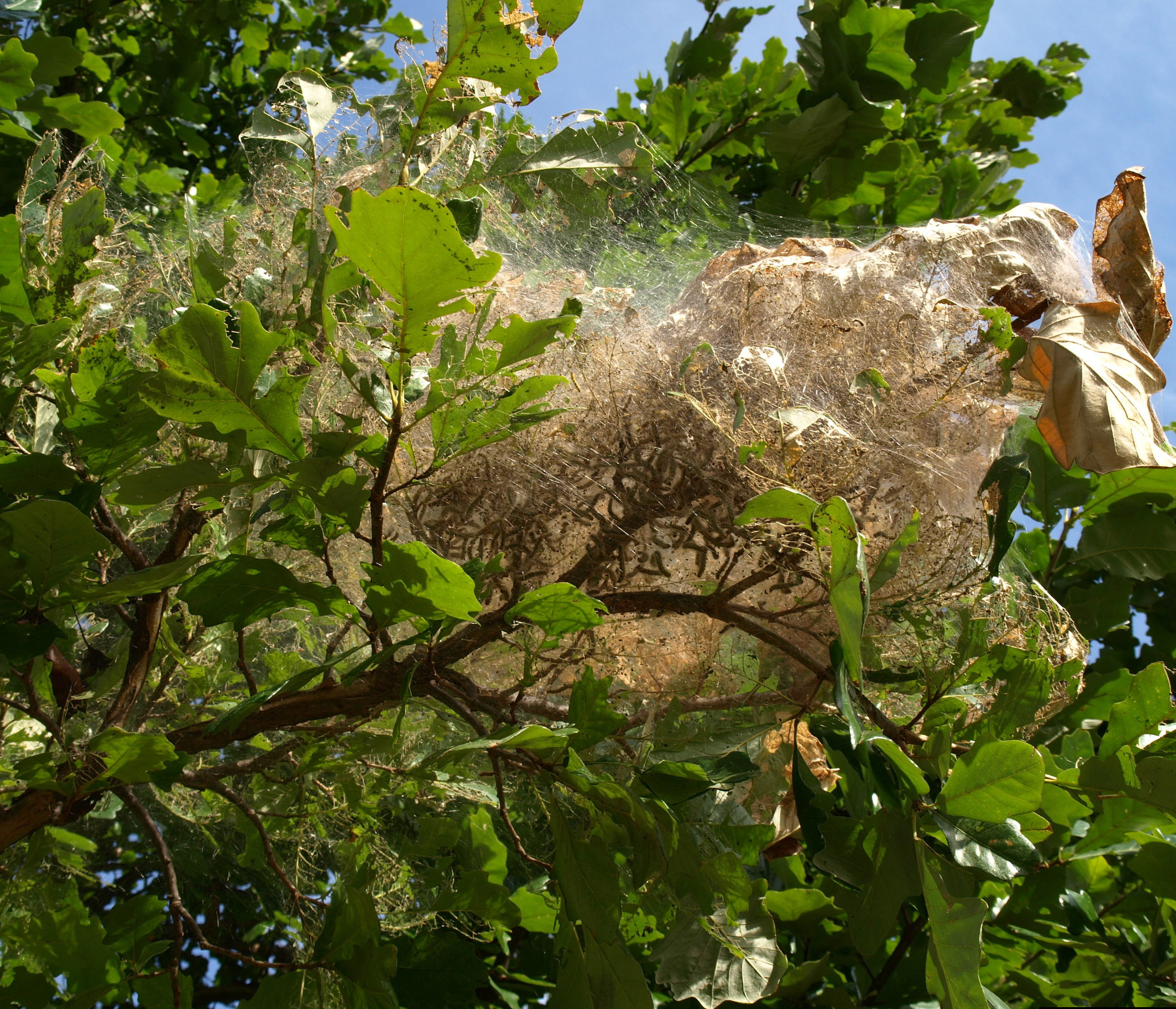
Reaching for a sprayer feels like action, but it is rarely the best first step. The Missouri Department of Conservation says control is usually unnecessary, and insecticides can also affect helpful insects that keep webworms in check.
The web itself is part of the problem. Dense silk can block spray from reaching the caterpillars tucked inside, so much of a treatment may never touch its target.
Timing matters as well, because caterpillars are easier to manage when they are small, and a large, late colony is a harder target.
Spraying every web is not sound advice. A mature tree with a few webs late in the season usually does not call for it, and treating a large tree by default can mean more product, more cost, and more risk to beneficial insects for little gain.
For a serious infestation, such as heavy repeated feeding on a young or stressed tree, talk with local extension staff first. Utah State University Extension also stresses timing and coverage when treatment is considered.
If you do use a product, choose one currently labeled for the specific pest and site, such as the type of tree, and follow every direction on the label. The label is the legal guide to how much to use, when, and where.
Check the web and the tree before deciding
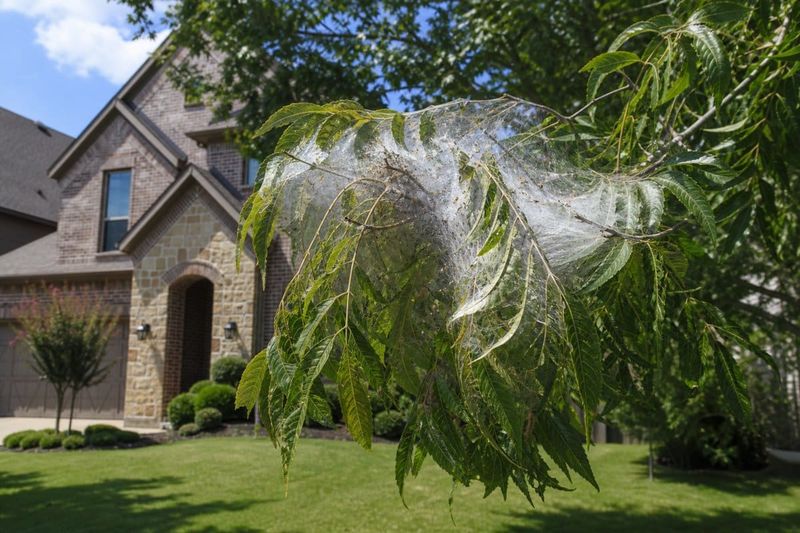
Start by looking for live caterpillars, since old silk alone means little. Then use the web’s location and the season to judge whether fall webworm is likely, and ask whether the tree is established and healthy or young and stressed.
For most trees, leave the colony alone, or open a web only if you can reach it safely from the ground. Save treatment questions for serious cases, guided by Missouri Department of Conservation guidance.
A little web at the end of a branch is often just a passing chapter in the tree’s year.
Share this story