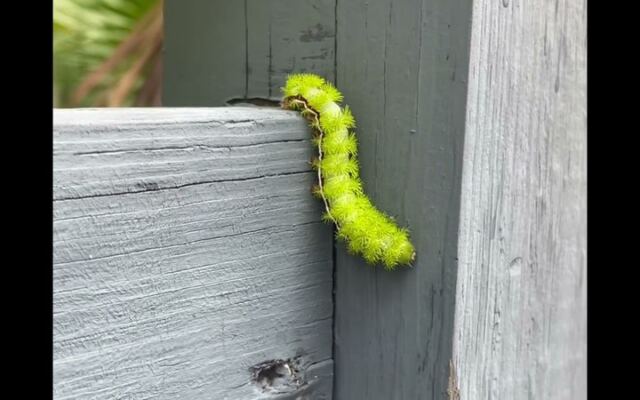
If a spiny or hairy caterpillar brushed your skin while you worked in the yard, the first steps are simple. Lift the spines with sticky tape, wash with soap and water, then cool the spot with a wrapped ice pack.
You do not need to know which caterpillar it was to start helping your skin. Here is how to handle the first hour, and what signs mean it is time to call for help.
Why caterpillar spines can irritate skin

Folks call it a sting, but no stinger is involved. The irritation comes from touching defensive spines or hairs that a caterpillar carries on its body.
Think of it as a prickly coat that pokes into skin when something brushes against it.
An io moth caterpillar is green and wears clusters of branched spines. According to University of Florida IFAS, the chemical makeup of its venom has not been characterized.
That means nobody can promise exactly how a given reaction will go, and it is a good reason to keep first aid simple and careful.
Wisconsin gardeners could possibly meet one while trimming shrubs or perennials in late summer or fall, but it is not something you can count on. These caterpillars feed on host plants, so a brush against leaves or stems is the more likely way contact happens.
The good news is you can begin treatment based on the exposure alone. Poison Control guidance says serious reactions are uncommon, though pain, itching, rash, or swelling at the spot can happen.
Skip any urge to pick the caterpillar up for a closer look.
What to do first
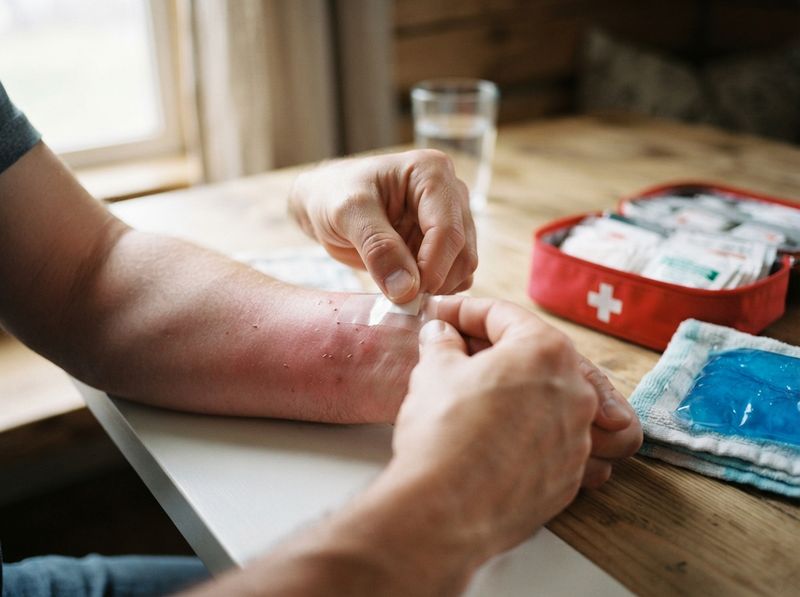
Stay away from the caterpillar with bare hands. If one is still on you, brush it off with a stick, a folded piece of paper, or a gloved hand.
Pulling it off with your fingers can push more spines into your skin.
Next, grab sticky tape. Press a piece gently onto the affected skin, then lift it away, and the tiny spines or hairs should come off with it.
Avoid rubbing or scratching, since that can drive them deeper.
Use a fresh piece of tape for each try and repeat a few times across the whole area. Poison Control recommends this tape method before washing, because water alone may not lift out the fine pieces.
Once the tape is done, wash the area with soap and water. Pat it dry instead of scrubbing.
Gloves and clothing that touched the caterpillar should be handled with care and washed before you wear them again.
Tape removal helps a lot of people, but it will not settle every case. If pain keeps building, move on to the cooling and medical-help steps below.
Cooling can ease discomfort

Once the skin is clean, a cold pack can take the edge off burning or throbbing. Wrap the ice pack in a thin towel or cloth first.
Ice pressed directly on skin can cause its own damage.
Follow the pattern MedlinePlus suggests: keep it on for 10 minutes, then take it off for 10 minutes. Avoid long stretches of direct ice contact, especially if you have blood-flow problems, since numb or poorly circulated skin is easier to injure.
For itching, hydrocortisone cream may help, as noted in Poison Control advice. No treatment is guaranteed to wipe out symptoms, so think of cooling and creams as comfort measures.
You may see baking-soda paste suggested online. It is not a proven first choice, so stick with tape, washing, and cold.
When to get medical help
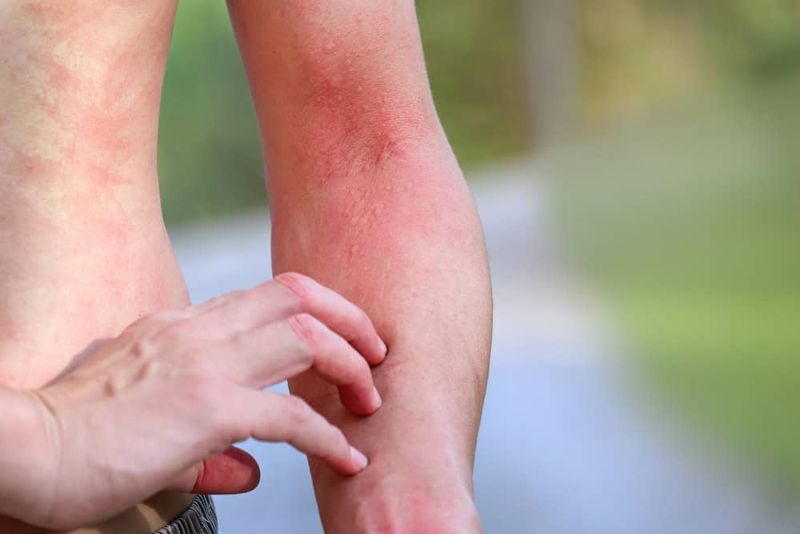
Most contact leads to mild local pain, itching, a rash, or a little swelling. Those can usually be handled at home with the steps above.
Still, some signs call for professional advice.
Contact a clinician, urgent care, or Poison Control at 1-800-222-1222 if you see blistering, signs of a localized allergic reaction, or eye irritation that will not go away. Poison Control lists these as reasons to check in.
The line is also handy if you are simply unsure what to do.
If hairs or spines get in an eye, rinse it promptly with water and seek medical or poison-center advice. If hairs may have been inhaled, that warrants medical care.
The North Carolina Poison Control page covers these exposures too.
Emergency help is a separate category. Call 911 or go to an emergency room for breathing difficulty, wheezing, or swelling of the mouth or throat, as MedlinePlus advises.
Severe reactions are rare, but they are not impossible. When something feels off, trust that feeling and make the call.
How to recognize an io moth caterpillar—and a lookalike
Io moth caterpillars are green and covered in clusters of branched spines, often tipped in black. They feed on host plants, so they turn up on foliage rather than being something you expect to dig out of leaf litter.
University of Missouri Extension lists them from July to October, but that is a regional guide, not a Wisconsin calendar.
A Wisconsin moth checklist includes the io moth, so it does occur in the state. That does not mean fall cleanup commonly brings gardeners face to face with one.
An encounter is possible, not predictable.
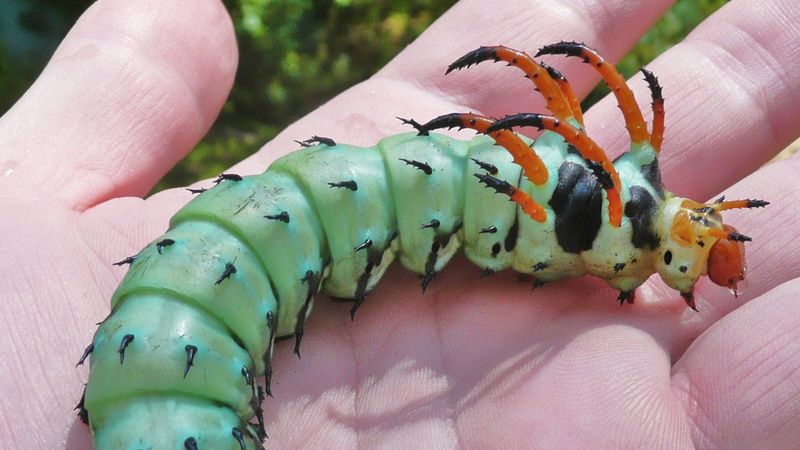
A possible irritating lookalike is the hickory tussock caterpillar. It has a white body, black markings, and tufts of hairs.
UW-Milwaukee describes its range as just nicking Wisconsin, with spotty presence.
Its hairs can detach and cause a localized rash and itching, according to Penn State Extension.
Appearance offers clues, but it does not confirm a species. Color changes, young stages, and poor light can all fool you, so do not pick one up to check.
You can act without identifying it
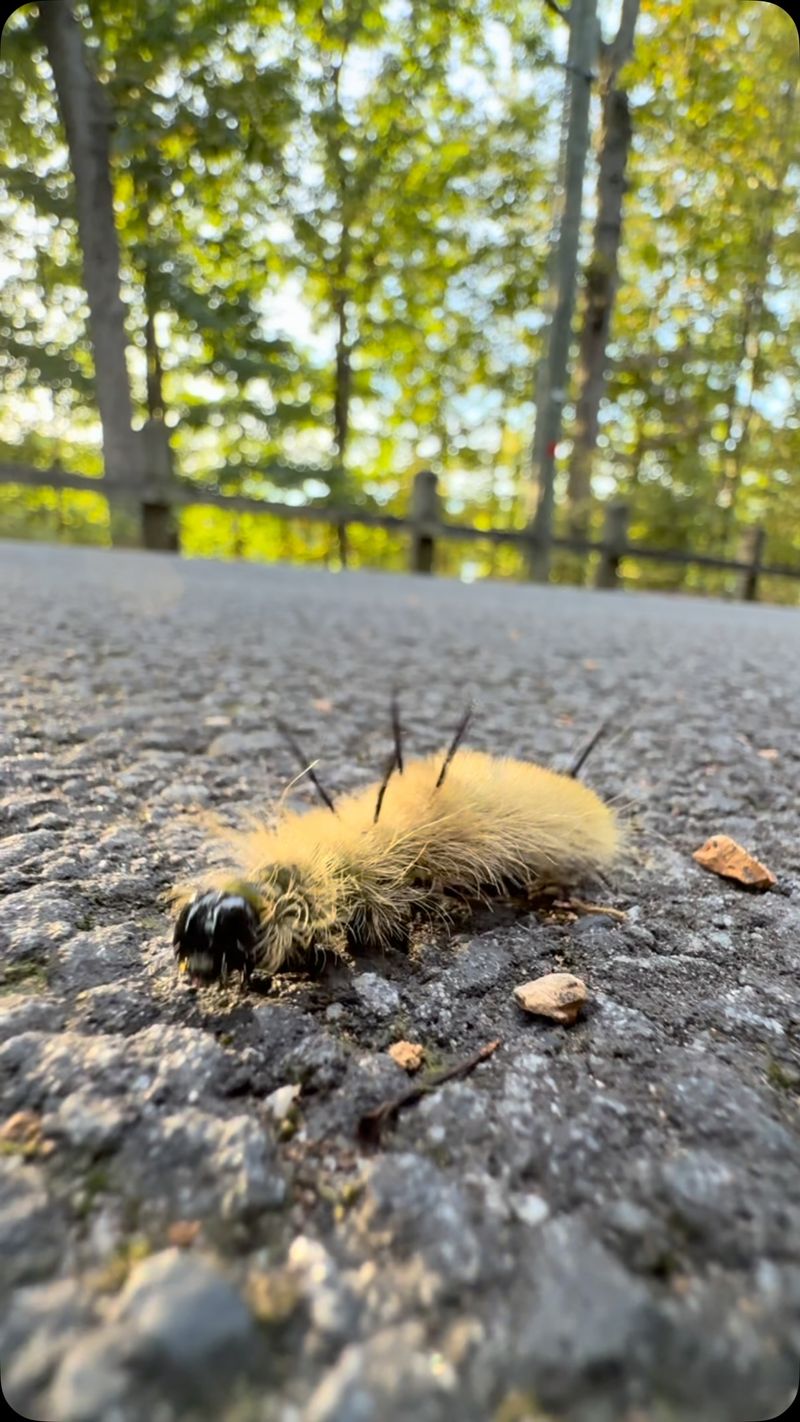
Naming the caterpillar is optional. Treat any unidentified hairy or spiny caterpillar as something to leave alone, and wear gloves when you work around shrubs and perennials.
If contact happens, follow the same path: tape, wash, cool, and watch for symptoms that call for help, as MedlinePlus outlines.
A caterpillar that looks like a tiny fuzzy fern is still wearing armor.
Share this story