
Making Christmas Wreaths to Sell Without Underpricing Your Work
Your prettiest Christmas wreath can leave you out of pocket. The ribbon looks lovely, the greenery smells wonderful and someone wants to buy it. But if you’ve spent half an afternoon making it, a price that only covers materials soon loses its appeal. Making Christmas wreaths to sell starts with a design you can repeat, a clear idea of your costs and enough room in the calendar to finish orders properly. You can begin at the garden workbench, with a small range and a manageable number of customers.
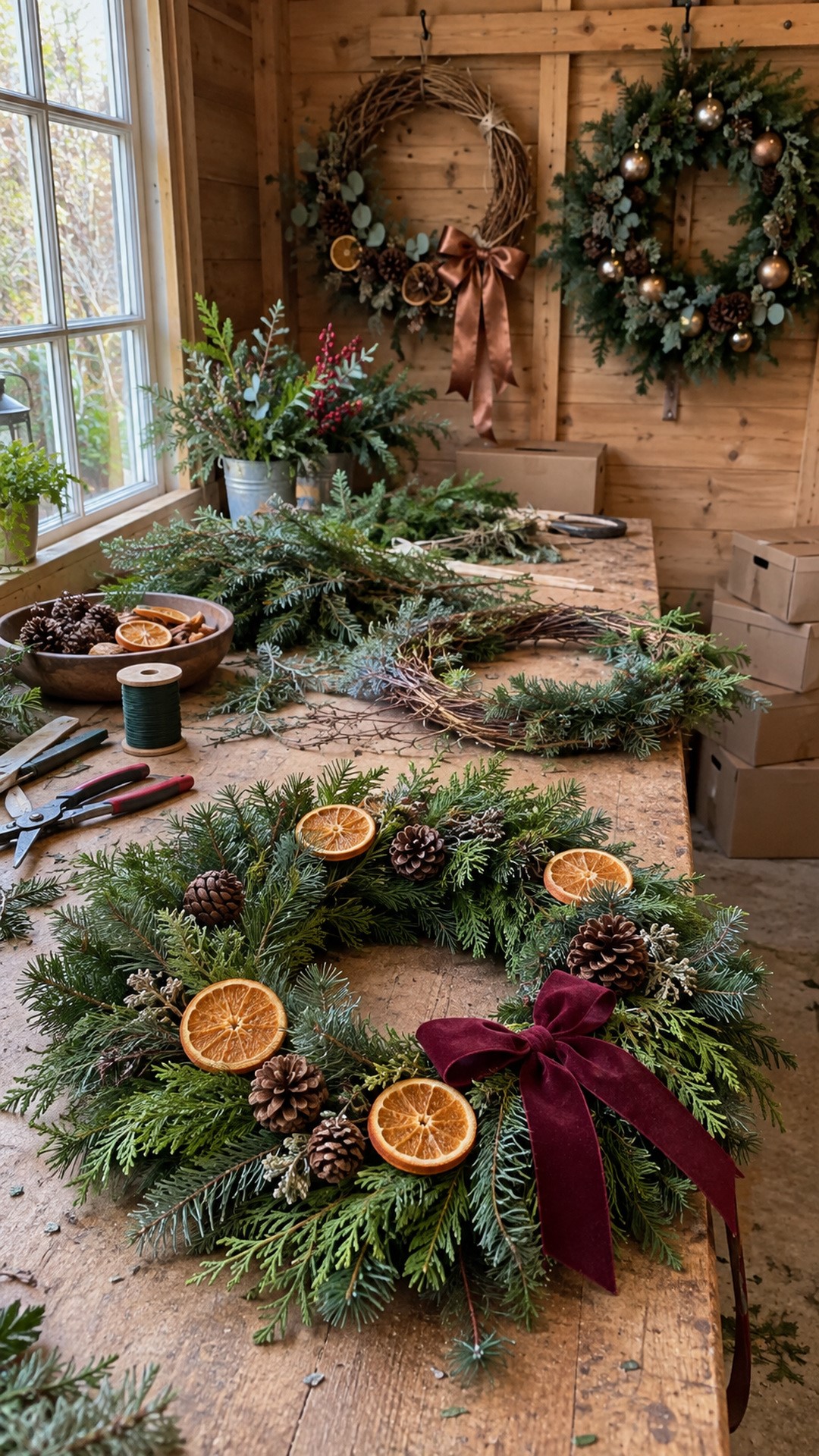
Start with a few samples so you can judge the work, materials and finished result.

Download FREE Comprehensive Guide to Making Christmas Wreaths
This FREE, 30-page guide includes four wreath projects, photo illustrations, measured diagrams, detailed instructions, hanging advice and printable checklists for making Christmas wreaths for yourself or to sell.
Start Small When Making Christmas Wreaths to Sell
Make one sample before buying supplies for twenty. Time the whole job, including gathering foliage, cutting ribbon, clearing the bench and packing the finished wreath. Then show that sample to likely local buyers with a proposed price and collection date. A paid order tells you more than a string of compliments. For a first run, a handful of confirmed orders can be enough to reveal which details people value and which ones take far too long to make.
Choose a first batch you can finish within the hours you have. If one repeatable design takes 45 minutes to assemble and decorate, eight need six hours for that work alone. Buying supplies, answering messages and arranging collections take more time. Write those tasks into your plan before announcing a quantity. Leave a spare frame and enough matching ribbon for a replacement, especially if you are selling fresh wreaths close to Christmas.
Choose Christmas Wreath Designs to Sell as a Small Range
Offer two or three designs with a shared set of supplies. A full evergreen wreath with burgundy ribbon can be your main design, while a grapevine crescent uses less foliage and gives customers a different look. Add a reusable artificial version if you want an option you can prepare earlier. Keep the choices clear: size, foliage type and ribbon colour. Unlimited custom requests turn every order into another design session, which needs its own price.
Keep the colours simple enough to repeat when a supplier runs out of your favourite ribbon. Dark green foliage, one ribbon colour and a few natural decorations give you a clear starting point. Place the bow slightly off centre if it suits the shape, then spread smaller details around the ring. Stand back before adding anything else. A wreath can look finished with very little on it, and every extra ornament adds buying time, attaching time and another possible repair.
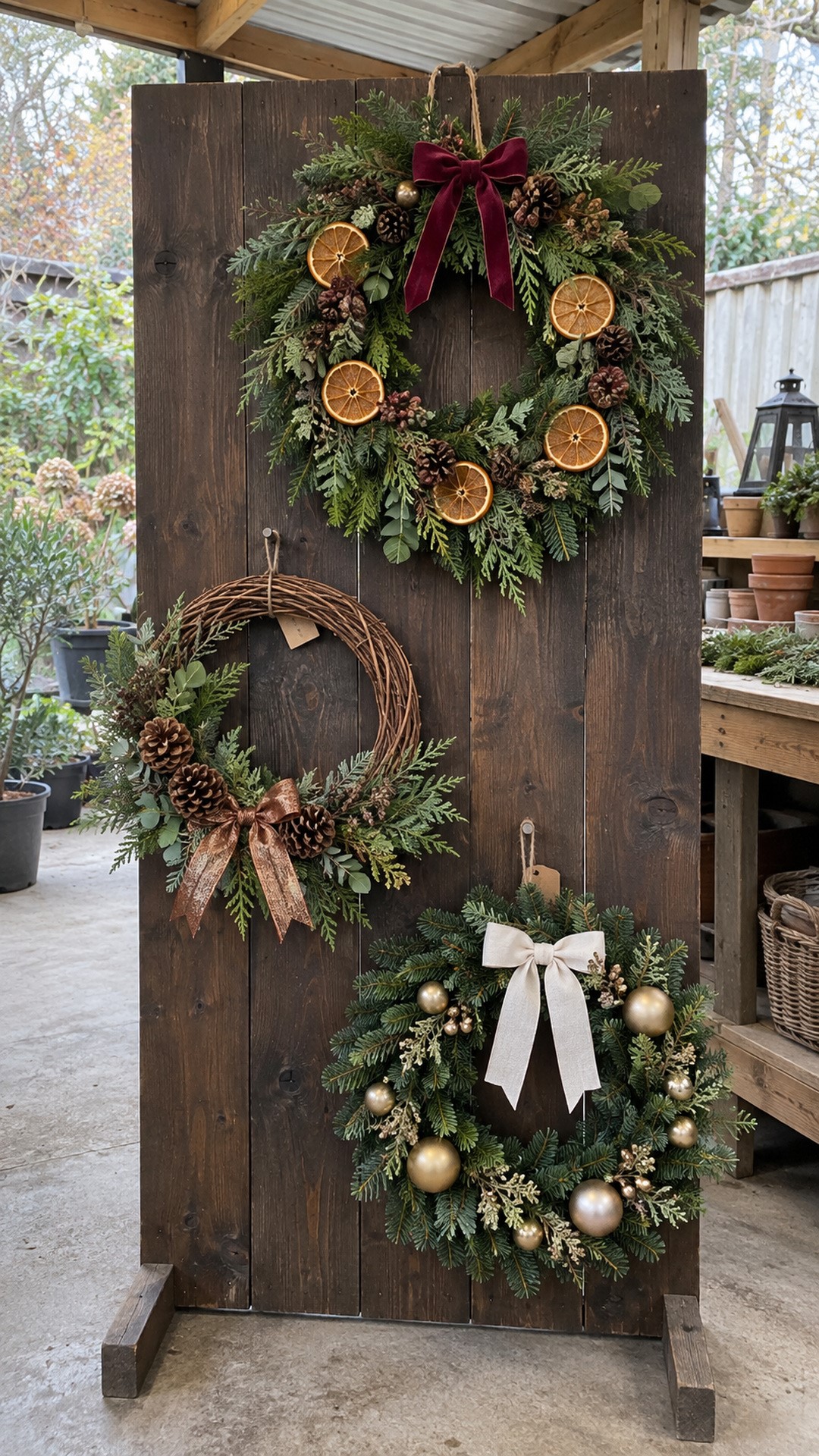
Show a small, distinct range rather than making every sample completely different.
Fresh Christmas Wreaths to Sell for Local Collection
Fresh wreaths suit buyers who enjoy natural texture and seasonal greenery. Fir gives a dense base, pine softens the outline and flat cedar sprays help cover bindings. Build close to the agreed collection date, then keep the wreaths cool and shaded. Local collection avoids a long trip in a box and lets you explain care in person. Describe the foliage you use and its intended display location, since a warm hallway treats cut greenery differently from a cool porch. [1, 2]
Artificial Christmas Wreaths to Sell for Repeat Use
Artificial foliage gives you more time to prepare stock and keeps unsold sound pieces available for another season. Choose branches with convincing colour and strong attachments, then hide plastic joins beneath other foliage. Tie decorations onto the frame so they can be replaced. A plain indoor hoop with a little greenery is another option, but label it for indoor display unless every component suits outdoor use. Reusable doesn’t automatically mean weatherproof, and buyers should know the difference before paying.
Gather Materials for Making Christmas Wreaths to Sell
For a compact door wreath, start with a sound 30 cm wire frame and aim for a finished width around 45 cm. That’s a design target, so measure your sample before advertising it. Gather fresh cuttings, green florist wire, separate decoration ties and ribbon. You’ll also need pruners, wire cutters and gloves. Keep wire away from pruning blades. A small dish for clipped wire ends saves them disappearing into the floor or the customer’s packaging. [2]
Garden greenery still has a cost, even when you’ve grown it yourself. Record the time spent cutting and sorting it, along with any travel or purchased supplements. Take modest amounts from healthy plants and get permission before collecting elsewhere. Reject mouldy or damaged stems. Choose known plants and avoid toxic berries where children or pets could reach them. Keep dried oranges and delicate flowers for sheltered designs, since damp weather can spoil them before the main foliage looks tired.
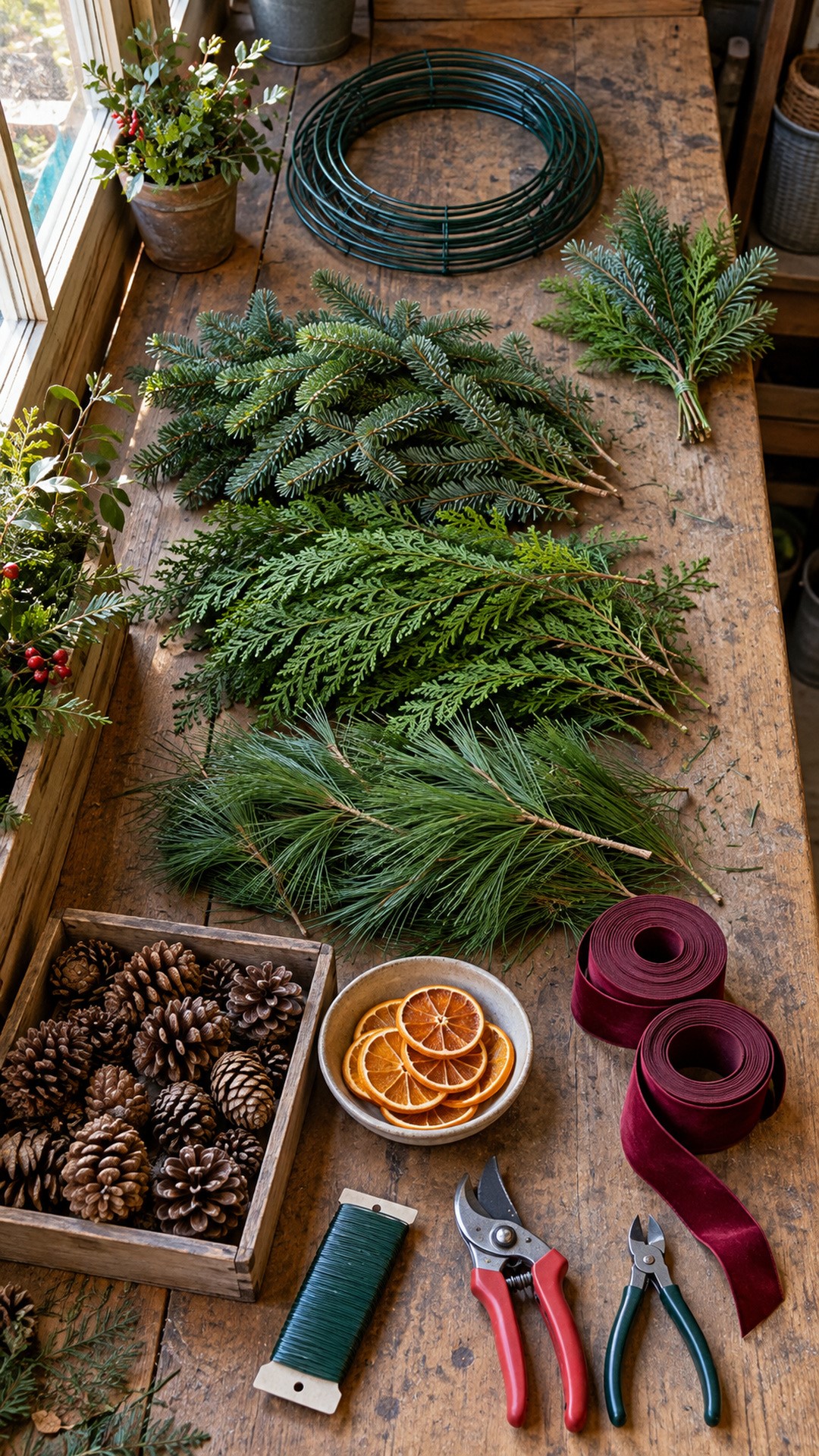
Sort supplies by job and make one sample bundle before cutting the whole batch.
Build Christmas Wreaths to Sell With a Consistent Finish
Prepare the Frame for Making Christmas Wreaths to Sell
Hydrate suitable fresh cuttings before assembly, then drain them. Cut most stems to about 12-18 cm and clear a short section at each base for binding. Fix a structural hanging loop to the rigid frame while the rails are visible. Assemble a small bundle with dense foliage behind lighter sprays and keep it beside you as a size reference. Once you start working, it’s surprisingly easy for each new handful to become larger than the last. [2, 3]
Bind and Decorate Christmas Wreaths to Sell
Anchor the reel wire to a frame brace. Lay the first bundle along the ring and bind its woody bases to the frame with two or three snug turns. Add the next bundle so its leafy tips hide the previous tie. Continue in the same direction, checking the outline and centre opening after each quarter. At the end, lift the first tips, tuck the final stem bases beneath them and secure the binding at the back. [2]
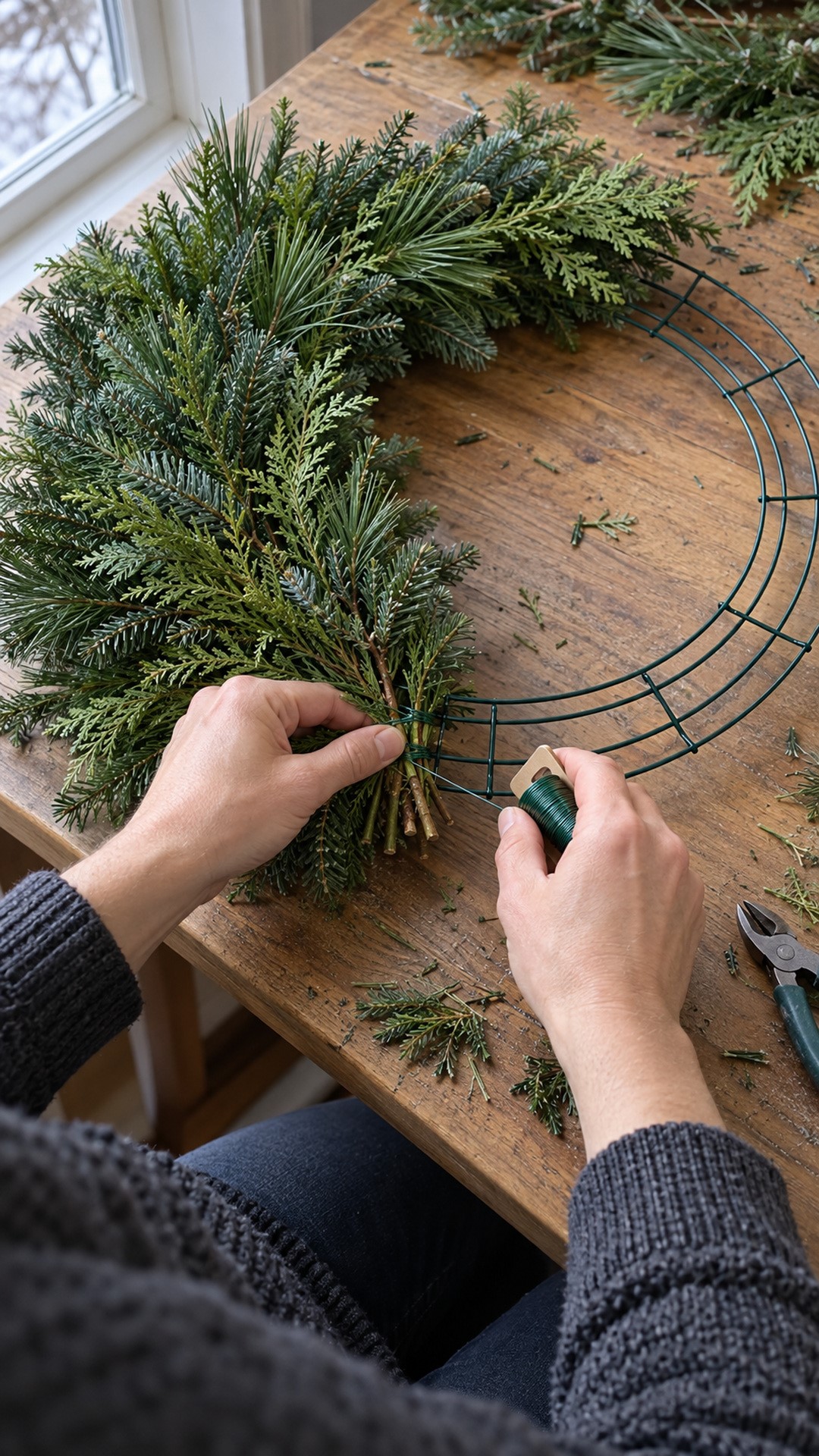
Bind clean stem bases to the frame and keep the leafy tips free.
Tie cones, fruit and the bow to the frame with their own wires. Fold every sharp end inward, then inspect the back with gloved fingers. Hang the wreath and give each decoration a gentle pull. Nothing should slip, swivel loosely or scratch the mounting surface. Keep the hanging loop sound and the centre clear. Trim ribbon tails so they are unlikely to catch in a handle, while reminding customers to check the fit on their own door.
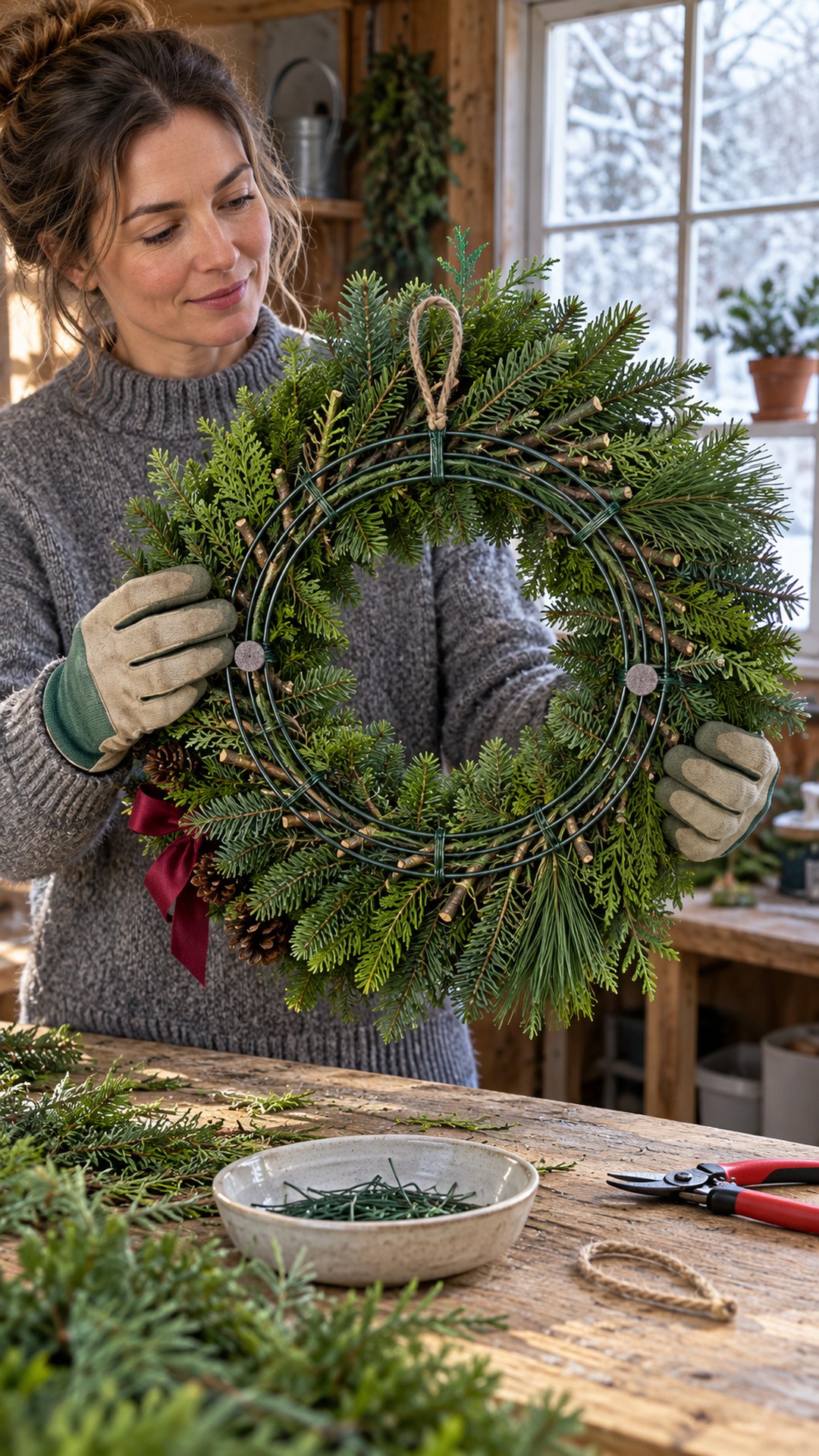
Check the back and hanging point as carefully as the decorated front.
Make Small Batches of Christmas Wreaths to Sell
Batch the repeated jobs, then complete a few wreaths at a time. Cut ribbon lengths together, wire the cones and sort matching foliage bundles into shallow trays. Keep one finished sample nearby so the second wreath resembles the first. Avoid preparing more fresh greenery than you can use promptly. Count finished, saleable wreaths before accepting extra orders, and leave room for one repair or replacement. Leave yourself that margin. A full order book loses its appeal when the final evening becomes a scramble.
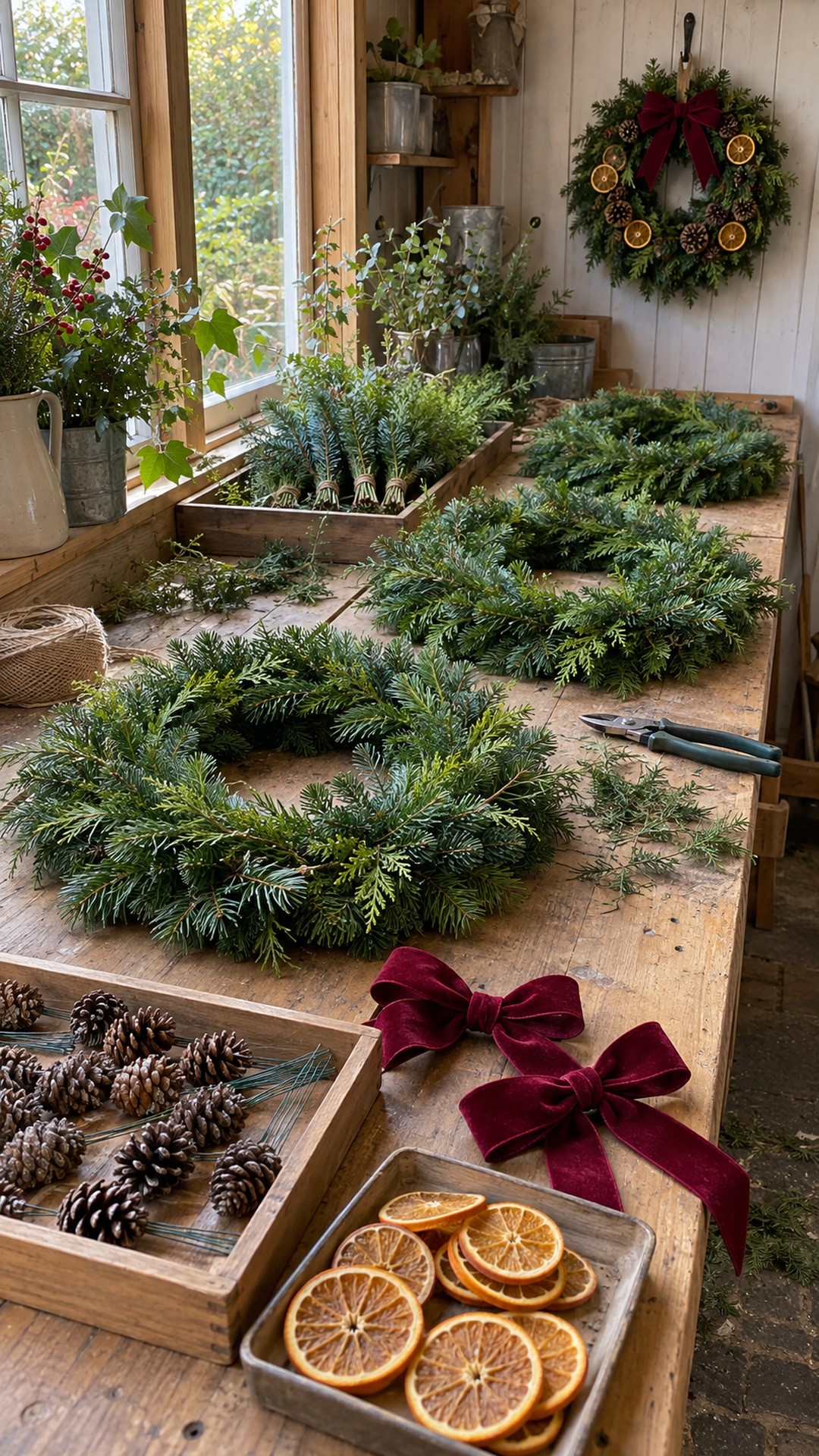
Prepare repeated components together, then finish a manageable number of wreaths.
Include Your Time When Pricing Christmas Wreaths to Sell
Write down materials, paid-for packaging and making time before choosing a selling price. Add a fair share of other costs, such as the market fee, travel and selling time. Spread those costs across a realistic number of sales, not every wreath you hope to make. Include allowances for waste and unsold stock. The SBA’s startup-cost guidance is a useful reminder to look beyond supplies alone, although your own records should determine the figures. [4]
Here is a worked example in US dollars, not a suggested market price. Suppose materials cost $14, packaging costs $2 and 45 minutes of work is valued at $20 an hour, adding $15. Allow another $5 for shared costs. That gives $36 before payment fees. At a $50 selling price, an assumed 3% payment fee is $1.50, leaving $12.50 after those listed costs and labour. That remainder is before income tax and any costs you’ve omitted.
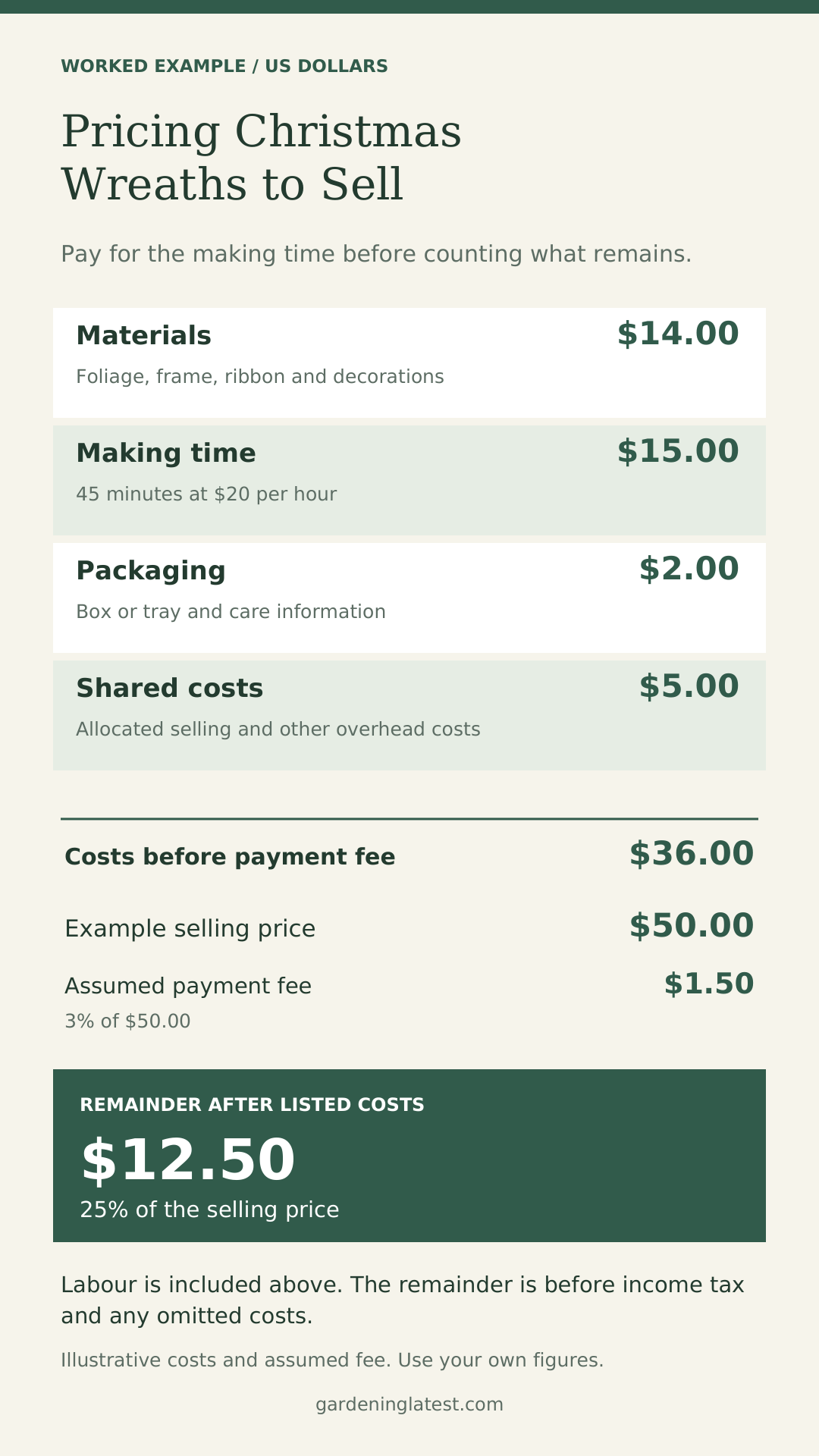
Illustrative figures only. Replace every cost and fee with your own.
The $12.50 remainder is 25% of the $50 sale price. It isn’t a 25% addition to your costs. If the price feels too high for your intended buyers, simplify the design, reduce waste or choose a smaller wreath. Use our pricing calculator to play around with pricing. Quietly removing your own pay from the calculation hides the problem. Recheck the figures when you change ribbon, add custom details or move from collection to delivery, because each change can consume the money you expected to keep.
Prepare Christmas Wreaths to Sell at Markets
Hang a few samples upright at different heights so buyers can see their size and shape. Use a stable display that fits within your allotted space, with stock protected behind or beneath the table. Show the price, finished diameter and whether the foliage is fresh or artificial. Keep a clear payment area and enough space to lift a wreath without snagging its neighbour. Take spare ties and scissors for small repairs, plus suitable protection for rain during loading.
Before booking, ask the organiser about stall dimensions, outdoor weighting requirements, insurance and any restrictions on displays. Check applicable business registration, selling permits and tax requirements with the relevant local authorities. Home collection may also need checking against local rules. Requirements vary by activity and location, as the SBA explains for US businesses. Treat these checks as part of choosing a selling route, alongside the fee and the likely customer, rather than leaving them until the night before. [5]
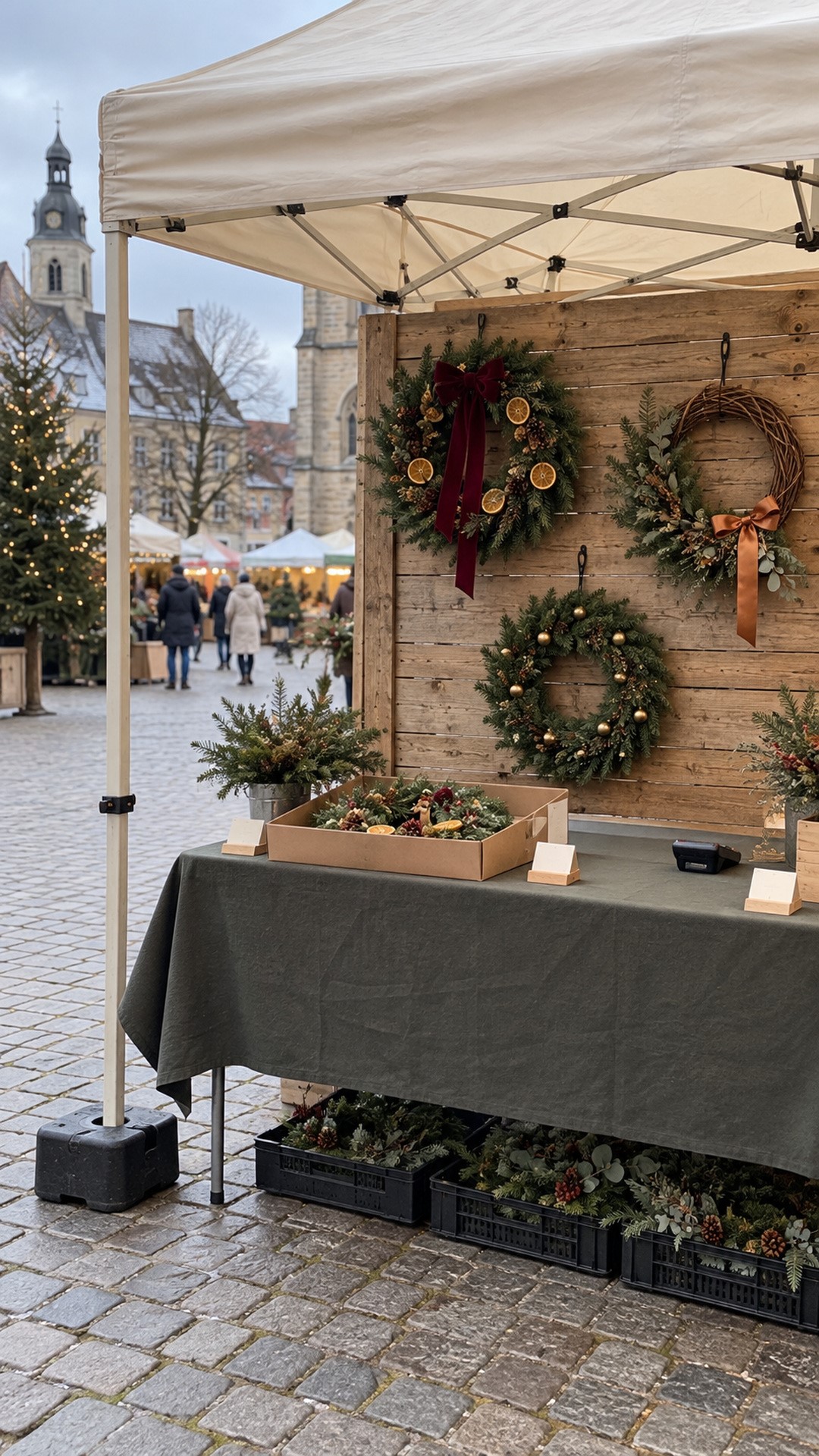
Display samples upright and leave enough space for customers to handle them.
Photograph Your Wreaths When Selling Christmas Wreaths From Home
Use soft daylight and a plain door or wall, then photograph the whole wreath straight on. Add close views of the bow and foliage, along with a rear view showing the hanging loop. Keep the colours believable. Your listing should state the finished size, materials, price and collection arrangements, including whether a door hanger is supplied. If each wreath varies slightly, say so and explain which features remain consistent. Photograph your own sale samples rather than using an illustration as proof of stock.
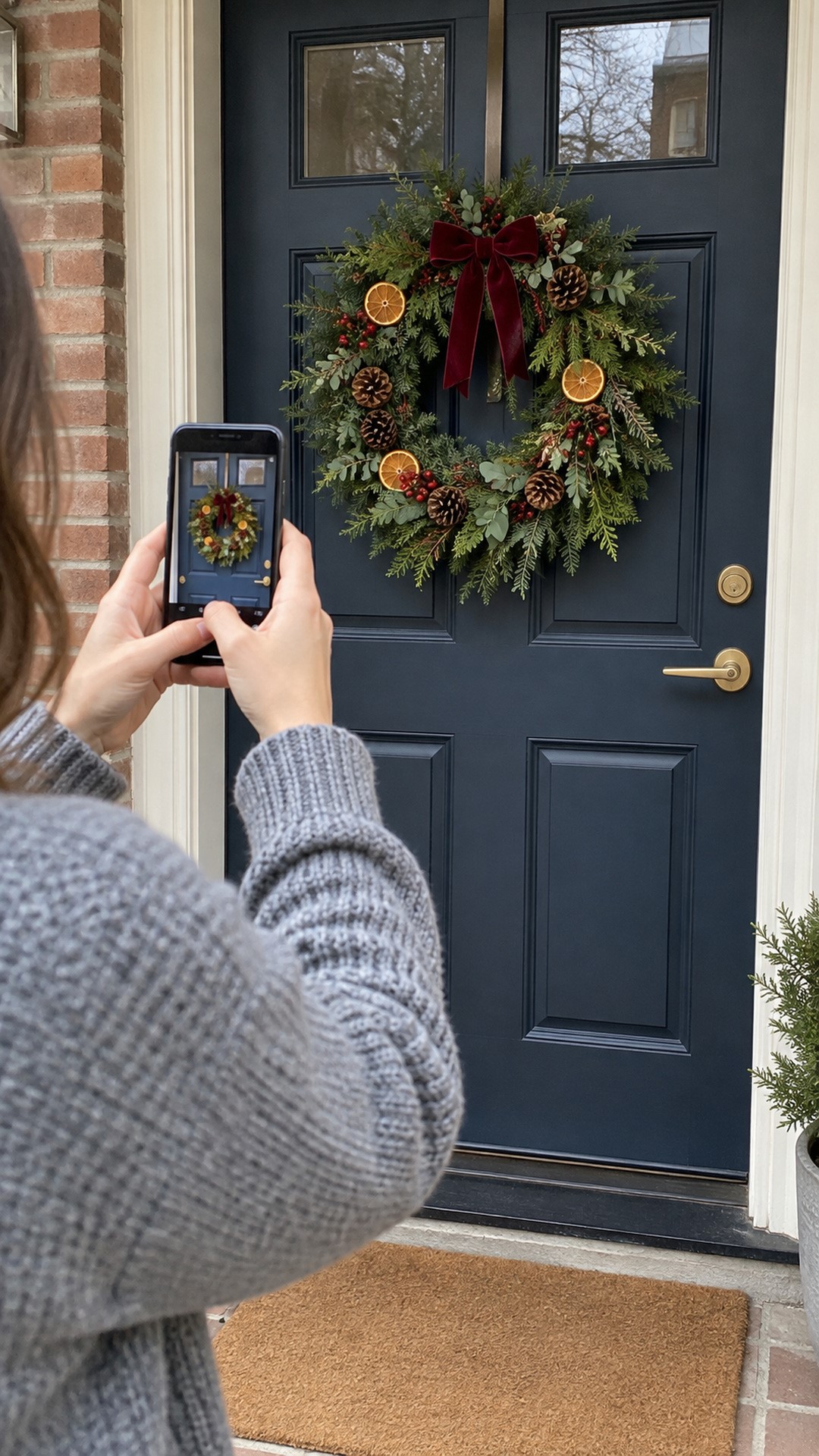
Photograph the actual sample and show the door hardware clear of the foliage.
Record each order in one place with the customer’s contact details, design, ribbon choice, payment status and agreed collection slot. Confirm the total price and your change or cancellation terms before accepting payment, subject to the rules that apply where you sell. Limit collection to a few workable windows so you can keep making. A short order list with clear promises is easier to manage than requests scattered across messages, comments and scraps of paper beside the wire cutters.
Plan Packaging for Christmas Wreaths
For local collection, choose a clean rigid box or tray that supports the frame and gives the foliage room. Secure the base against movement and keep packing material off the bow. Test the fit using a finished sample, including its deepest decoration. A 45 cm wreath might fit a box with a 50 cm internal width, but measure the actual outline and depth. Fresh foliage should be drained before packing, and customers should unpack it promptly for airflow.
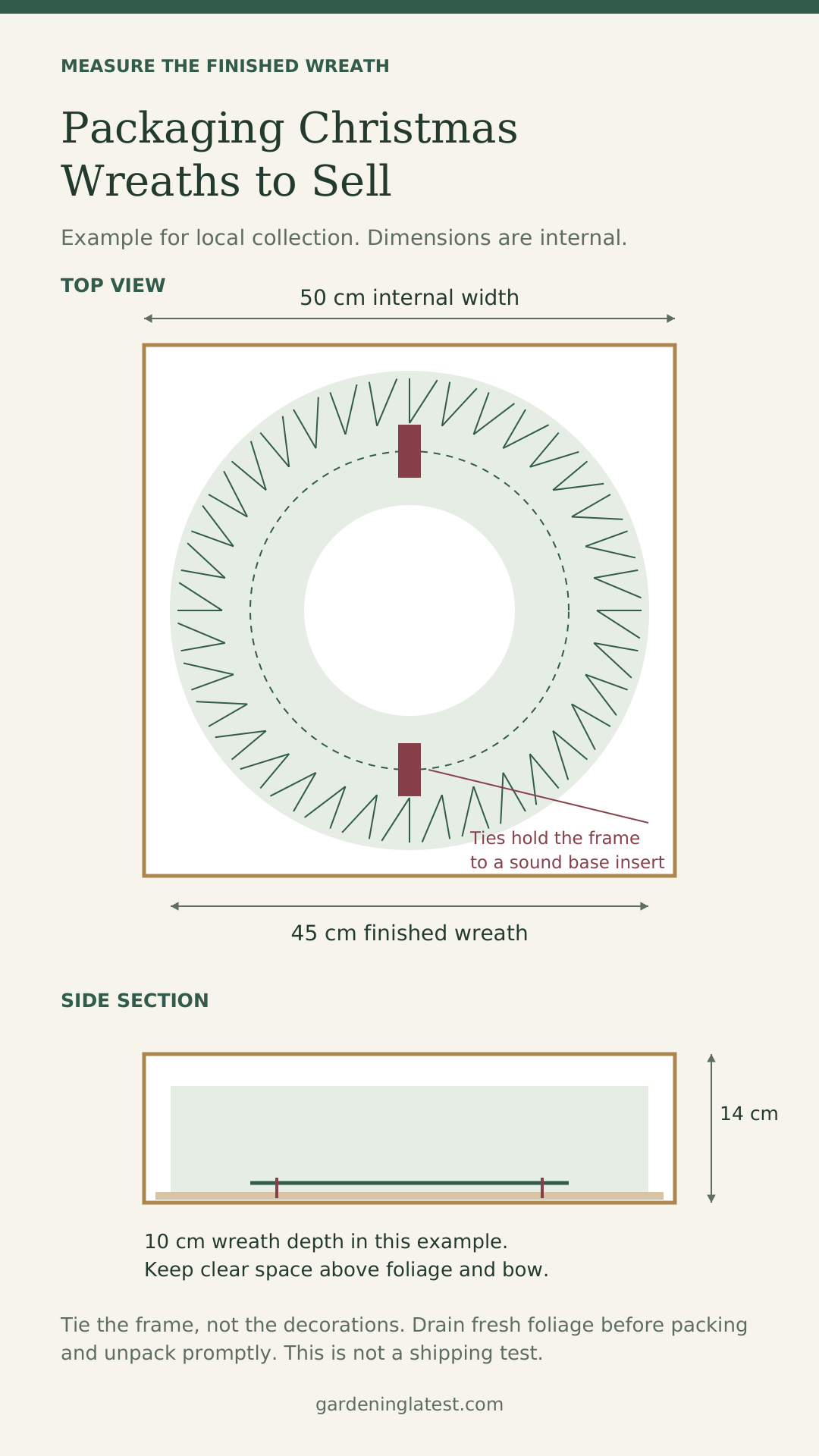
The dimensions illustrate a local collection box. Adjust them to the finished wreath.
Shipping adds another job: checking plant-material restrictions, testing packaging and choosing a service suited to the contents. Rules can apply to foliage, cones and other natural decorations, including movements between regions. Maine’s forestry guidance warns that some destinations restrict wreath materials or require inspection. Check the current origin and destination requirements before offering delivery by post. For a first season, local collection can keep the workload smaller while you learn how the wreaths handle transport. [6]
Share Care Advice for Fresh Christmas Wreaths to Sell
Give buyers a short care card with the display location, hanging advice and your contact details. Recommend cool shade for fresh greenery and explain that heated rooms shorten its display life. RHS guidance gives roughly four to five weeks outdoors in suitable conditions and one to two weeks indoors, but weather, foliage and handling change the result. Avoid promising a fixed lifespan. Tell customers to use a hanger suited to the finished weight and their door, keep the wreath away from heat and remove deteriorating material. [1]
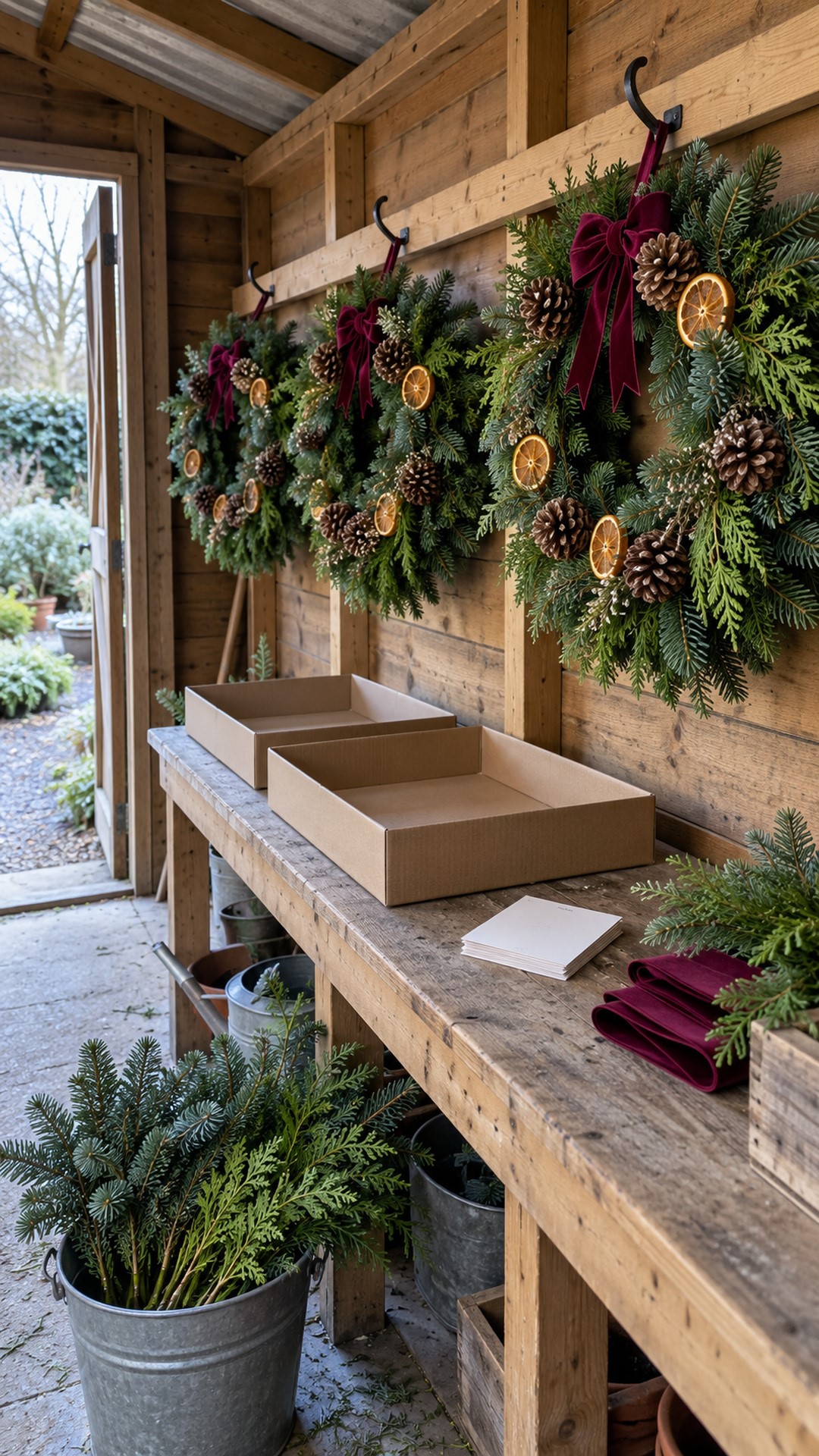
Store fresh stock cool and shaded, with space around the foliage.
Review the Season After Making Christmas Wreaths
After the last collection, record what sold, what remained and how long each design took. Note the ribbon buyers chose and the extras that caused trouble. Those details give you a better starting point next year than a vague feeling that December was busy. Begin with one sound sample now, price the work properly and offer a small number for sale. Your garden can supply character and useful materials, while a repeatable method helps the business fit around the rest of Christmas.
Notes
[1] Royal Horticultural Society. Christmas wreaths
Fresh foliage choices and approximate display life in suitable indoor and outdoor conditions.
[2] Iowa State University Extension and Outreach. How to Create a Holiday Wreath
Tools, binding wire, overlapping foliage bundles and closing the final join.
[3] Chicago Botanic Garden. Keeping Cut Greenery Indoors
Hydrating cut greenery and keeping it cool before display.
[4] U.S. Small Business Administration. Plan your business
Startup cost planning. The article’s figures are an original illustrative example, not market prices.
[5] U.S. Small Business Administration. Launch your business
Registration, permits, location and insurance checks. Applicable rules depend on the seller’s location.
[6] Maine Forest Service. Shipping Christmas Trees, Wreaths and Decorative Plant Material
Restrictions can apply to natural wreath materials. Check current rules for the origin and destination.
