
Small Space, Big Impact: Simple Front Yard Landscaping for Tiny Lots
You might have a small front yard but developed imaginatively it can carry an entire house!
It is the first patch of ground visitors see, the strip you pass with groceries in both hands and the view that greets you through the front window. Yet these spaces are often treated as leftovers. A shrub gets planted beside the meter box. Three unrelated pots gather near the step. A thin lawn struggles between the path and the pavement.
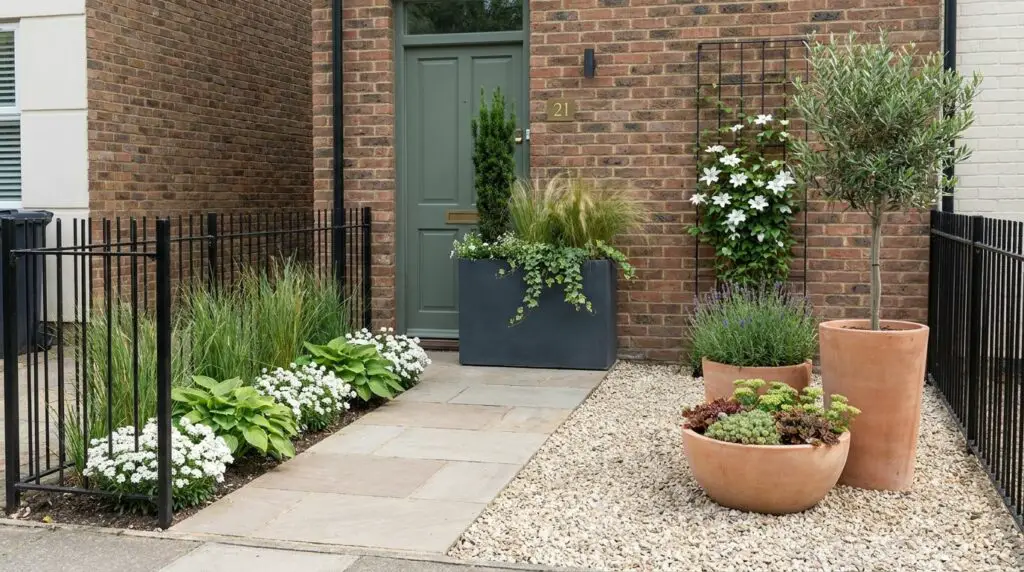
The trouble is rarely a lack of room. It is a lack of order. Simple front yard landscaping works best when the eye has somewhere to go. A clear path, one tall feature and a repeated plant can do more than a crowded bed filled with ten varieties. In a narrow lot or townhouse entrance, every object carries extra visual weight. The right choices stretch the space. The wrong ones make it feel like a cupboard with the door left open.
Simple Front Yard Landscaping Starts With the View From the Street
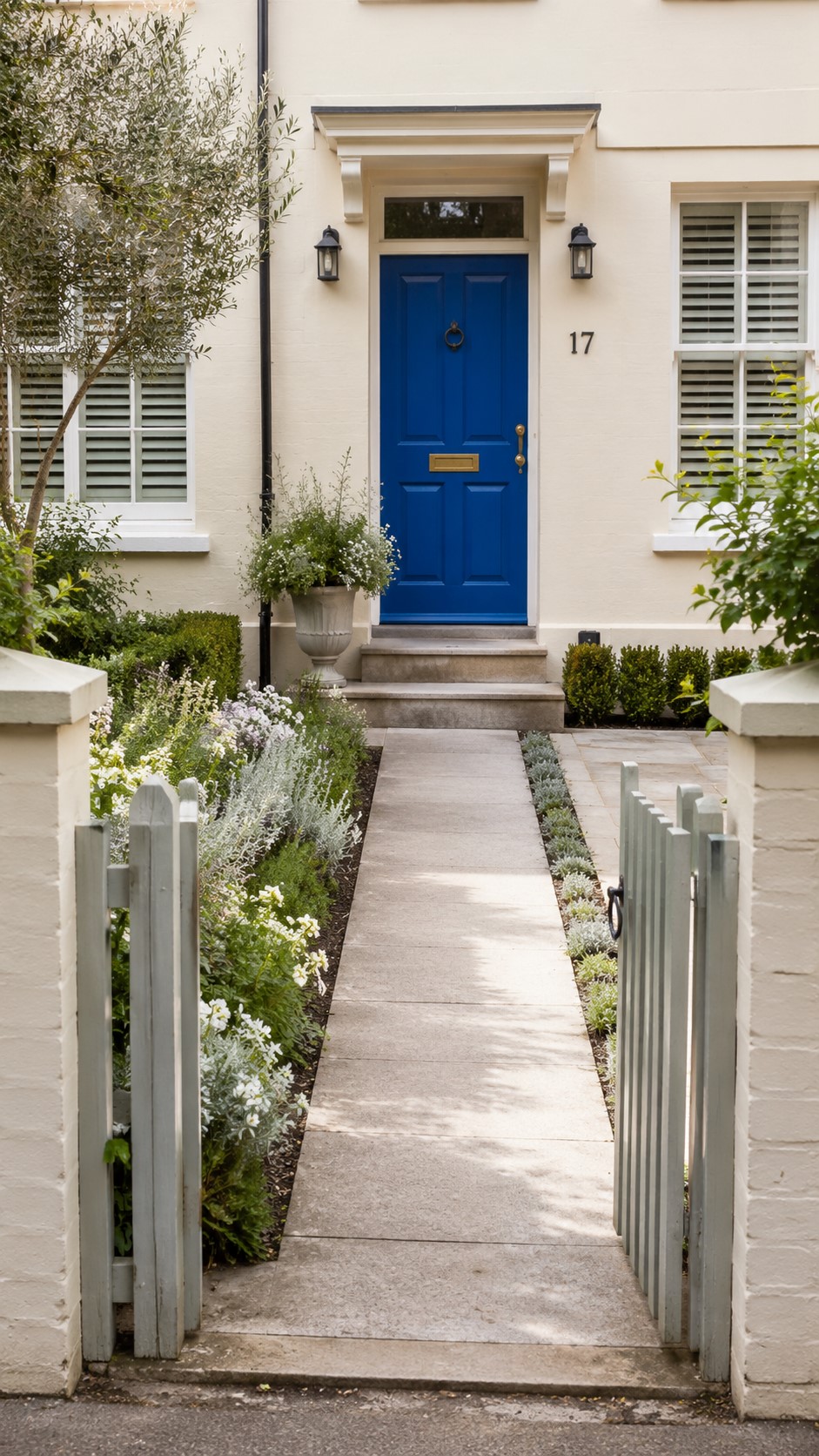
Before buying plants, stand on the pavement and look back at the house. Better still, take a photograph. A screen reduces the scene to shapes, gaps and blocks of colour, which makes problems easier to spot.
You may notice that a large shrub covers half the doorway. Perhaps the pots are too small for the steps or the path disappears beneath spreading plants. Sometimes the house looks disconnected from the ground because every plant sits at the same low height.
This first look should guide the whole design. Choose the view that matters most, then remove anything that pulls attention away from it.
Small Front Yard Curb Appeal Needs One Main Feature
A small space can support one strong feature with confidence. Several competing features tend to look like a garden centre clearance shelf.
The main feature might be a painted door, a slim tree, a tall planter or a handsome bench beneath a window. It does not need to be expensive. It needs enough size and presence to hold the eye.
Once that feature is chosen, let nearby plants support it. A blue door might be framed with silver foliage and white flowers. A small tree could sit above a low bed of ground cover. The parts should feel related, even if they were added over several weekends.
Tiny Front Yard Ideas Work Better With Open Sightlines
The front door should remain visible from the street. So should the path leading toward it. This sounds obvious, yet plenty of small gardens hide both behind bulky shrubs.
Open sightlines create depth because the eye can travel from the front boundary to the house. If the view stops at a hedge two metres away, the garden feels two metres deep.
Trim shrubs below windows and move wide plants away from narrow routes. Keep railings, house numbers and steps easy to see. Empty ground is useful here. A small patch of gravel or bare paving gives the eye a pause between planting groups.
Vertical Garden Ideas for Small Yards Pull the Eye Up
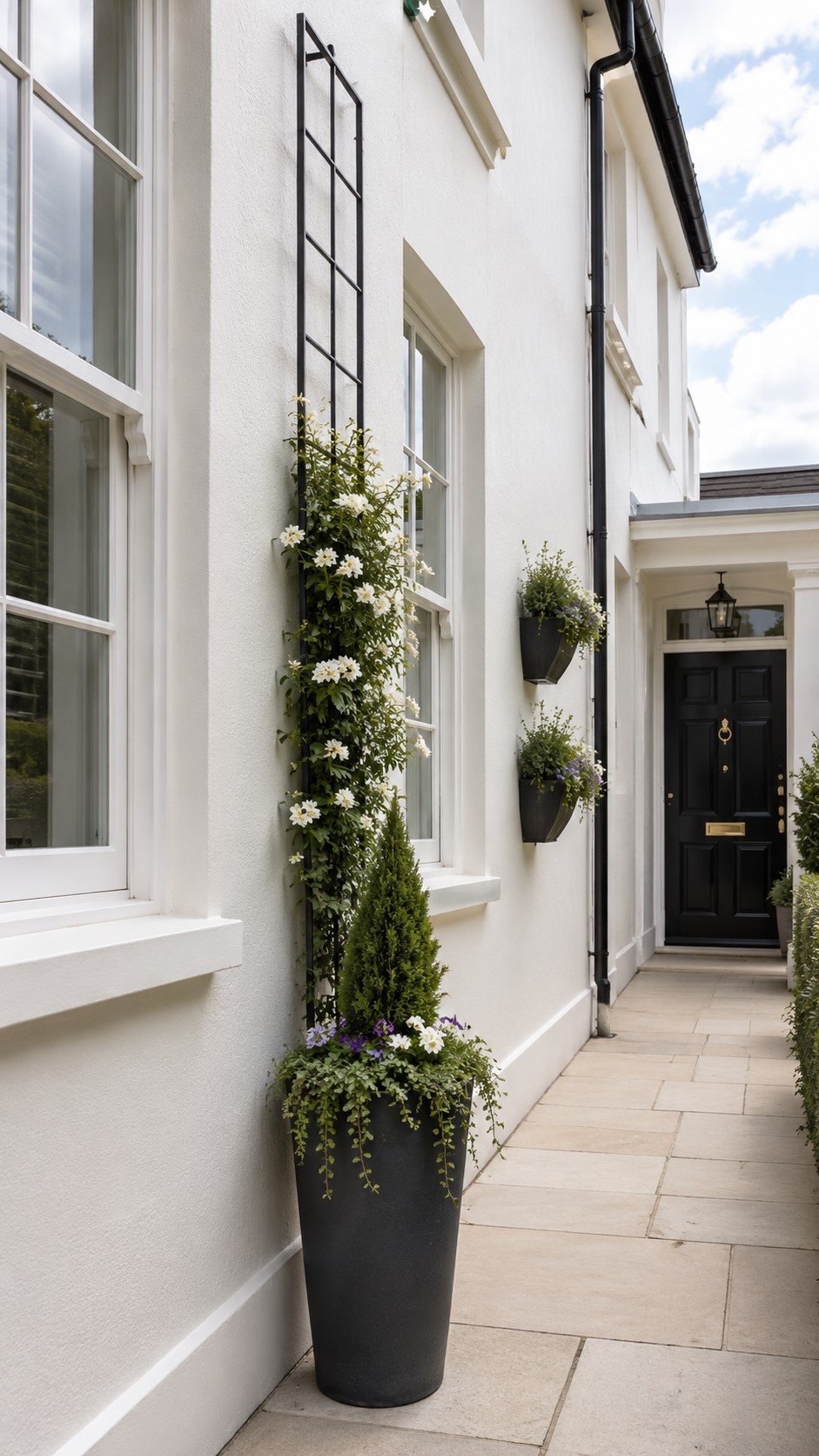
A tiny front yard has more vertical room than ground room. Walls, fences and porch posts can carry planting without narrowing the path or taking over the beds.
Height also helps connect the garden to the house. Low plants spread across the ground, but a trellis or tall planter draws attention toward windows, brickwork and rooflines. This makes the whole frontage feel like one composition rather than a building standing behind a thin strip of plants.
The key is restraint. One vertical feature can lengthen the view. Five can make the entrance feel fenced in.
Front Yard Trellis Ideas for Walls and Narrow Borders
A slim trellis works well beside a doorway, between windows or at the end of a narrow bed. Choose a shape that suits the building. Straight grids sit comfortably against modern homes, while softer arches often suit cottages and older brick fronts.
The climbing plant matters just as much. Check its mature size before bringing it home. A vigorous climber may look charming on the label, then spend its third summer wrestling with a gutter.
For very tight spaces, consider a climbing rose with a restrained habit, a compact clematis or a trained evergreen climber suited to your local conditions.
Tall Planter Ideas for Tight Entrances
Tall pots give you height without needing a wide planting bed. Narrow urns, tapered containers and rectangular planters can sit beside steps or against a blank wall.
Use one upright plant as the centre of the arrangement. A column-shaped evergreen, compact grass or clipped shrub gives the pot a clear outline. Smaller plants can soften the base, but they should not bury the container.
Scale matters. A tiny pot beside a full-height front door looks nervous. One larger container often feels calmer and takes up less visual space than a collection of smaller ones.
Front Yard Container Garden Ideas Need a Strong Grouping
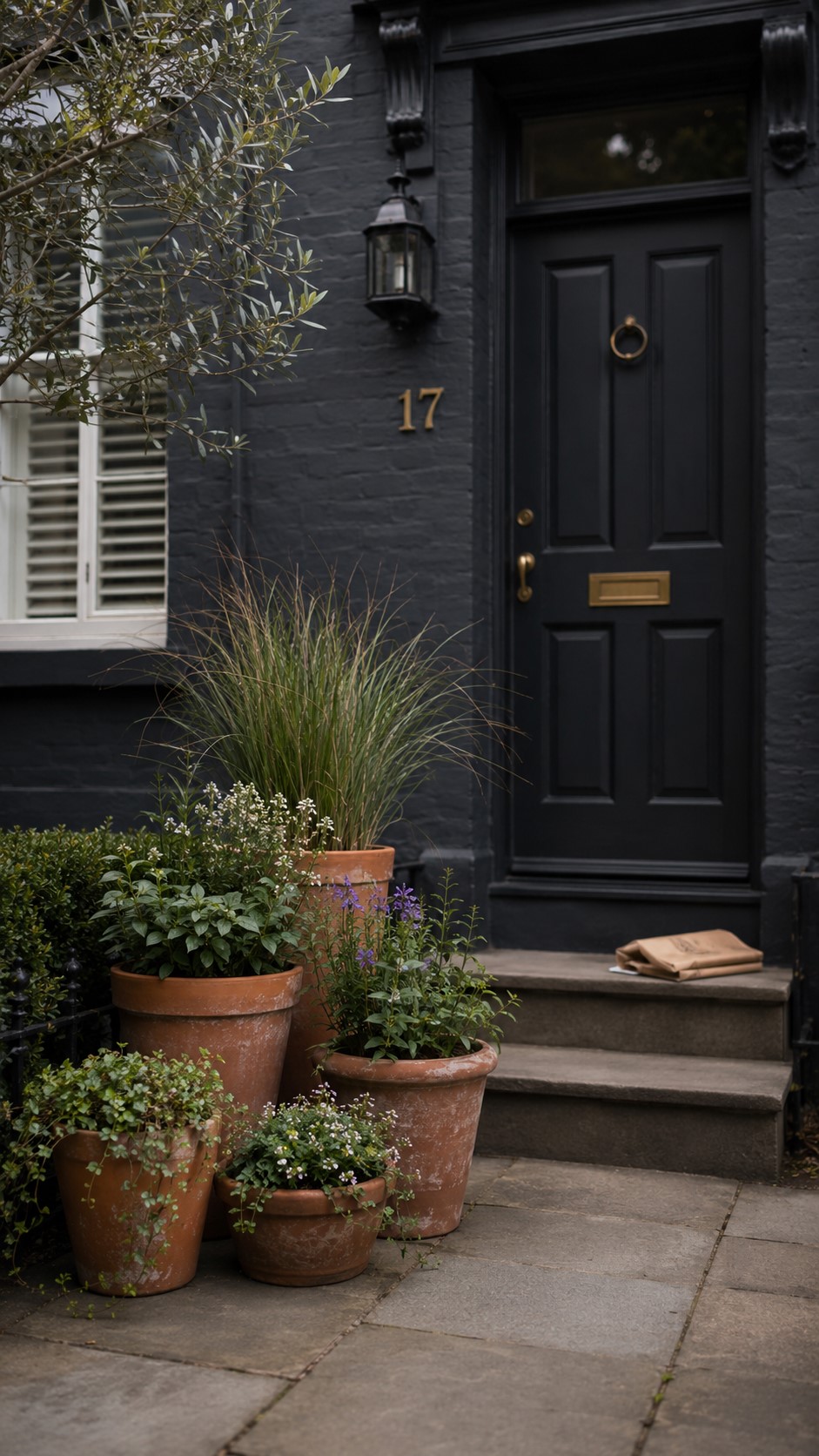
Containers are useful in paved front yards, rented homes and spaces with poor soil. They can also become clutter with surprising speed.
The usual mistake is scattering them. One pot sits by the door, another beneath a window and four more drift along the path. None is large enough to lead the design, so the eye keeps jumping between them.
Bring containers together instead. A grouped display reads as one feature and leaves the remaining ground clear. Repeating the same material or colour helps, even when the pots differ in size.
Layered Container Planting Adds Depth
Container groups look fuller when plants sit at several heights. Place the tallest pot toward the back, a medium container slightly forward and a low bowl near the edge. Let the shapes overlap a little.
This creates depth in a footprint that may be no wider than a doormat. It also lets each plant remain visible rather than hiding smaller pots behind one large container.
Keep the pot finishes limited. Terracotta mixed with terracotta usually looks better than terracotta, glazed blue, concrete, wicker and black plastic all competing within one square metre.
Small Entryway Planters Should Leave Room to Move
A front entrance has work to do. People carry bags through it. Parcels arrive. Children drop scooters across the step. Any planting plan that ignores daily life will soon become annoying.
Open the door fully before placing containers. Check the route from the pavement and leave enough space for two people to pass. On a very narrow porch, place a larger pot on one side rather than matching pots on both.
Asymmetry is often useful in small spaces. One tall planter can balance a wall-mounted light, house number or letterbox without squeezing the doorway between two bulky objects.
Narrow Front Yard Landscaping Ideas Depend on Proportion
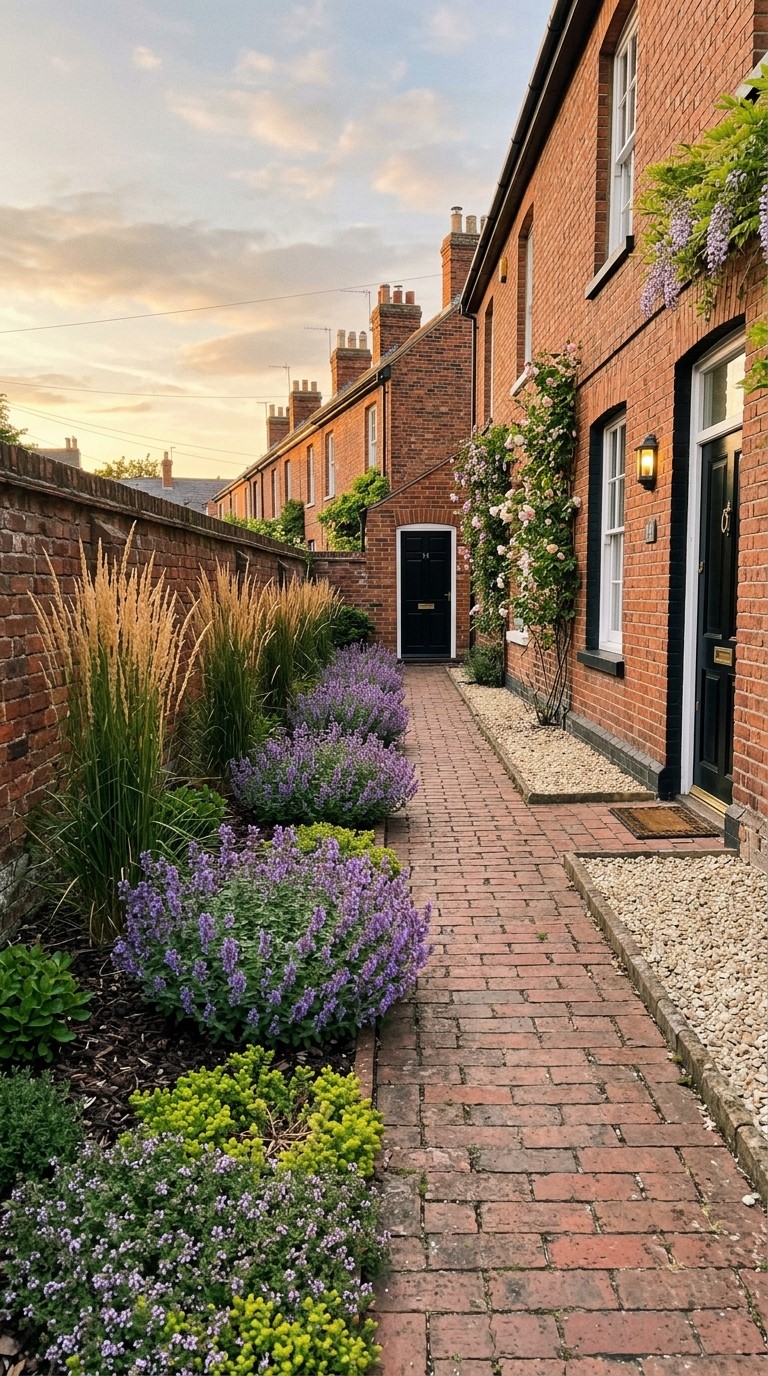
Narrow gardens often feel tighter because every feature is pushed against a boundary. Plants line both sides of the path, a hedge marks the pavement and pots fill the step. The remaining walkway becomes a corridor.
Proportion can fix this. Keep some sections low and allow one taller feature to rise near the house. Leave a clear strip beside the path. Use fewer materials across the ground.
A narrow yard does not need equal treatment on both sides. One planted border and one open gravel strip may feel wider than two matching beds pressing toward the centre.
Narrow Flower Bed Ideas Need Fewer Plant Types
A slim bed cannot display every plant you like. It has to be edited.
Choose three main forms. Start with a low plant near the edge, add a rounded perennial through the middle and place an upright plant at measured intervals. Repeating these shapes carries the eye along the bed.
Single specimens tend to disappear in a narrow border. Groups of the same plant have more presence and produce a calmer rhythm. They are also easier to care for because plants with similar needs sit together.
Let foliage do some of the work. Flowers come and go, but leaf shape and colour remain for much longer.
Compact Walkway Planting Should Respect the Path
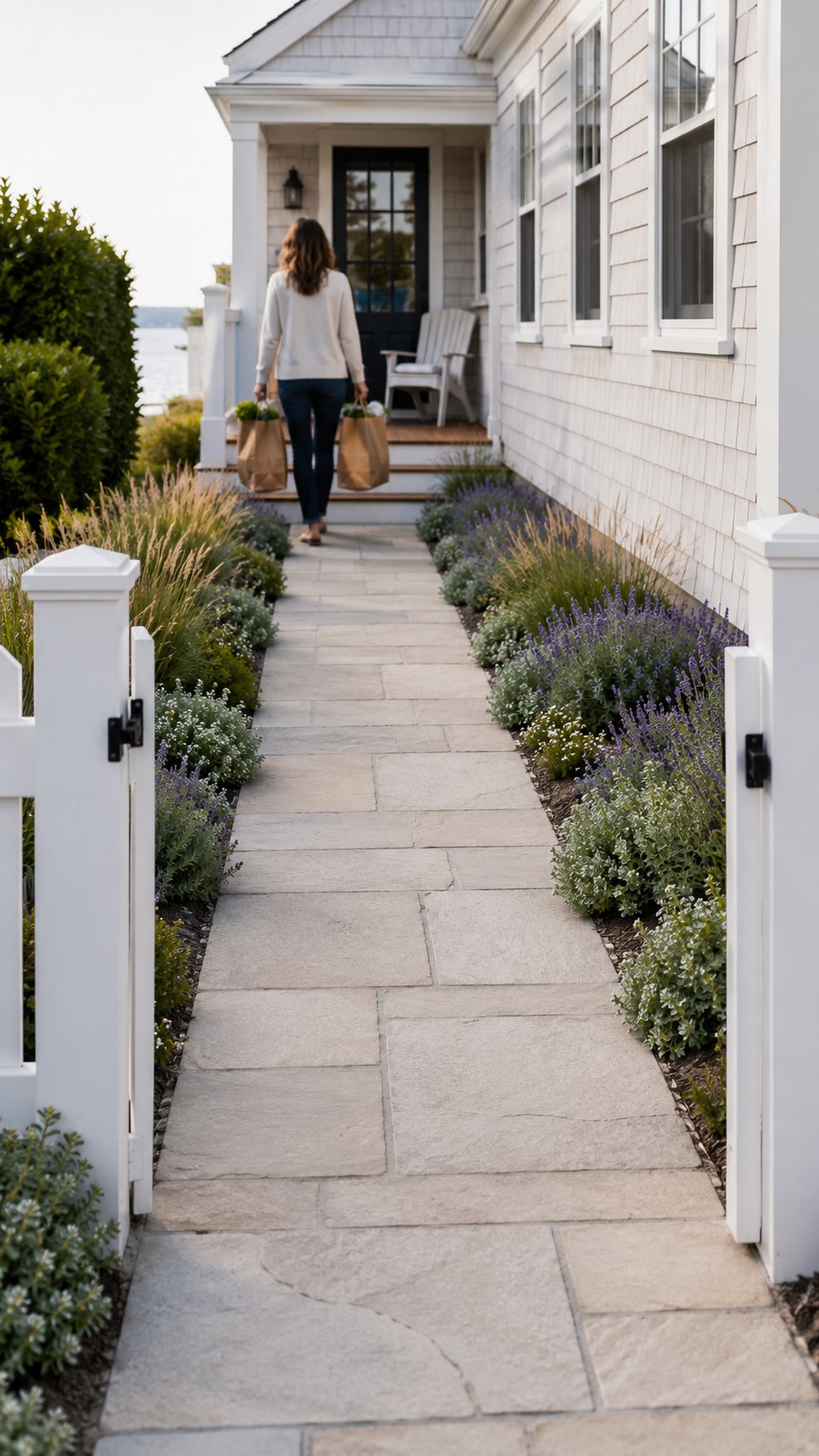
Plants beside a narrow path need good manners. That rules out thorny stems, stiff leaves at eye level and anything determined to sprawl across the paving after rain.
Check the mature width listed on the plant label. Then believe it. A shrub sold in a small pot may double or triple in size within a few years.
Low mounding plants and neat ground covers usually work well along tight routes. Set them back slightly so leaves can soften the edge without covering it. A visible path feels wider, stays drier and is less likely to catch shopping bags or coat sleeves.
Townhouse Front Yard Landscaping Ideas Should Follow the House
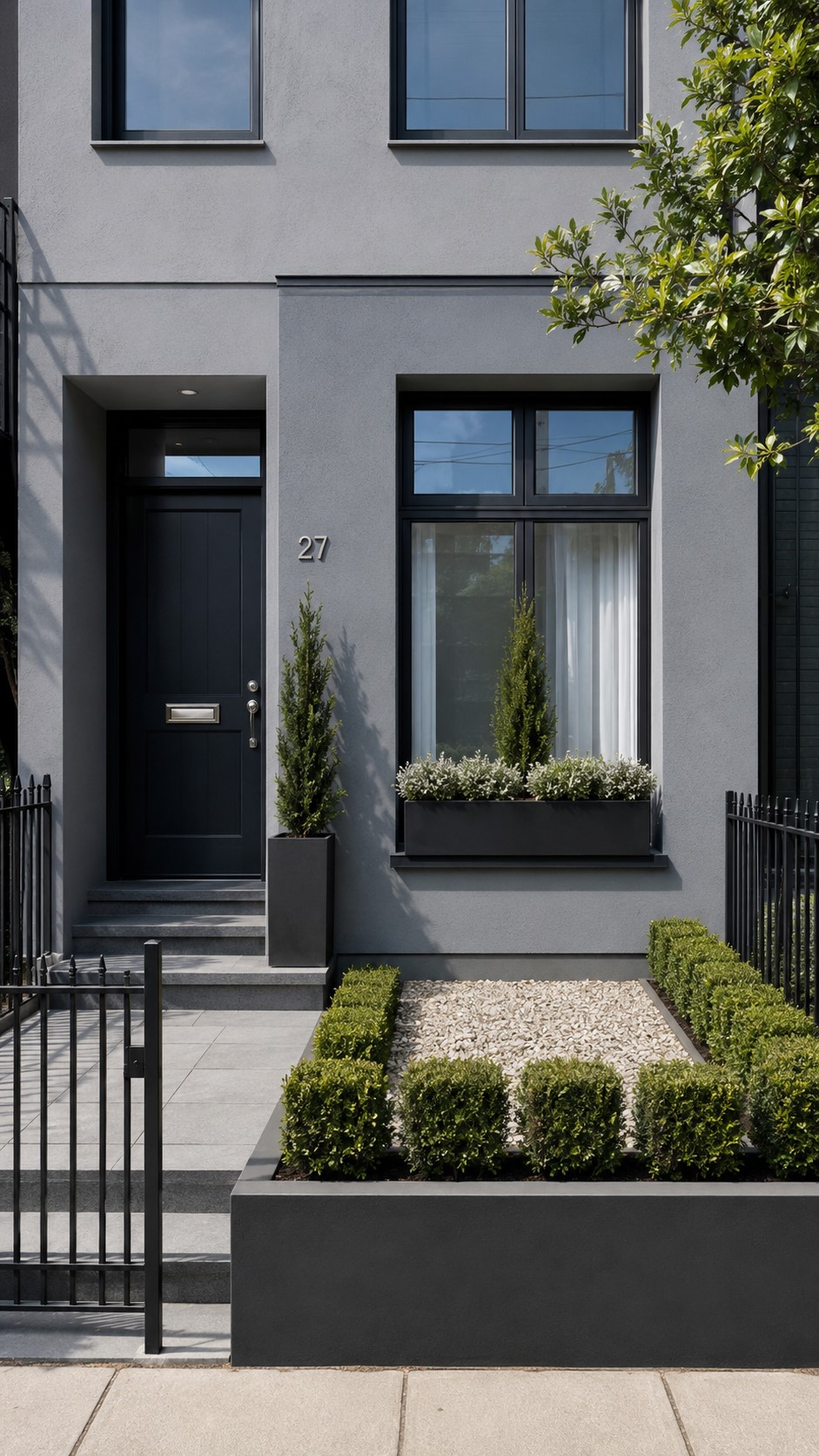
Townhouses already come with strong lines. Tall windows, narrow doors, railings and repeated brickwork give the front a built-in pattern. The garden should pick up that pattern rather than fight it.
Look at the shape of the windows and the spacing between architectural details. A rectangular planter may suit a square bay window. A slim evergreen might echo a narrow doorway. Repeating one shape ties the ground to the building.
This approach also stops a small townhouse garden from looking borrowed from somewhere else. The planting feels settled because it responds to the house standing behind it.
A Small Townhouse Garden Benefits From Repeated Shapes
Repetition is one of the cheapest ways to make a front garden look finished. Use the same pot shape in two sizes or repeat one plant along the path. Match the line of a low hedge to the bottom of a window.
The repetition does not need to be exact. Two similar planters can differ slightly in height. A repeated perennial can appear in loose groups rather than a ruler-straight row.
What matters is recognition. The eye sees a shape once, then finds it again. That simple link makes separate corners feel connected and reduces the sense of visual clutter.
Urban Front Yard Design Needs a Clear Edge
Small front gardens beside pavements often need a boundary, but a high solid barrier can make them feel boxed in.
A low hedge, narrow railing or clean gravel strip is usually enough to mark the edge. It tells passersby where public space ends and the garden begins without shutting out light.
Keep boundary plants low where visibility matters, especially near drives and pavement crossings. A defined edge also makes maintenance easier. Soil stays off paving, spreading plants have a stopping point and the whole frontage keeps its shape through the year.
Low-Maintenance Small Front Yard Landscaping Begins With Editing
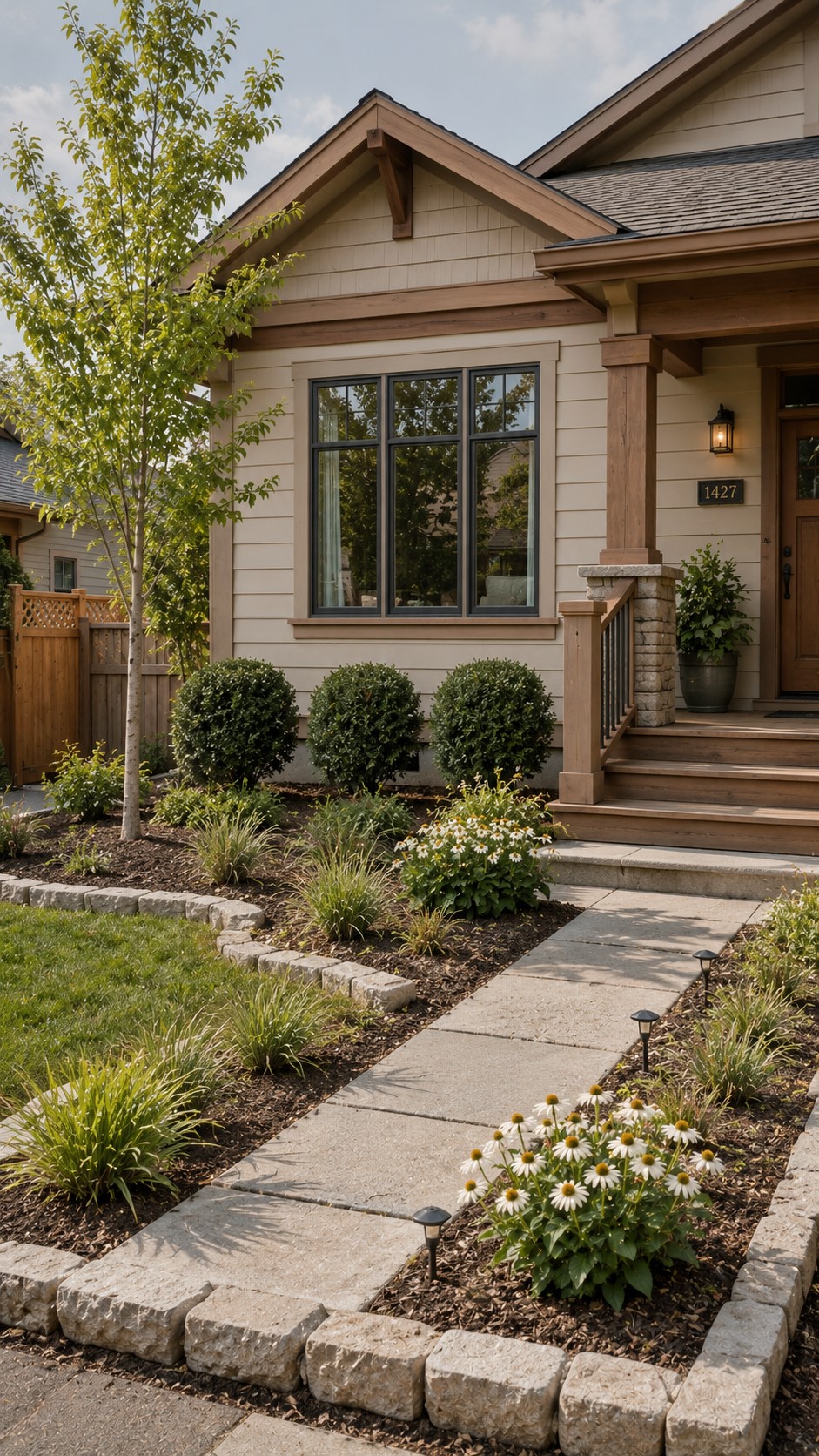
Small gardens are often described as easy to maintain. This is optimistic. A crowded small garden can demand more clipping, watering and tidying than a larger one with room for plants to grow properly.
Low maintenance starts with fewer plants. Each one should suit the light, soil and available width. If a shrub needs monthly pruning to stop it covering the path, it is the wrong shrub.
Leave room between new plants. The gaps may look bare at first, but they will close. Filling every space on planting day usually creates a thicket by the third season.
Easy-Care Front Yard Plants Need to Hold Their Shape
Plants with a dependable outline earn their place in a small front yard. Compact evergreens, clumping grasses, low ground covers and well-behaved perennials can provide structure without constant correction.
Look beyond the flower photograph on the label. Check how the plant looks after blooming. Notice whether the stems collapse, the leaves scorch or the plant disappears for half the year.
A useful front garden plant should contribute for more than two weeks. Good foliage, seed heads, bark or a neat winter shape can carry the space when flowers are absent.
Simple Perennial Planting Can Carry the Whole Bed
A repeated perennial can form the backbone of a small border. Choose one suited to the site, then plant it in several groups rather than buying one of everything.
The result feels more generous because the eye reads the repeated flowers as a larger sweep. Maintenance becomes simpler too. The same trimming and feeding routine applies across much of the bed.
Add one or two companion plants for contrast. Different leaf shapes often produce a stronger pairing than a crowded mix of flower colours. The bed stays readable, even when nothing is in full bloom.
Small Front Yard Landscaping Without Grass Opens the Ground Plane
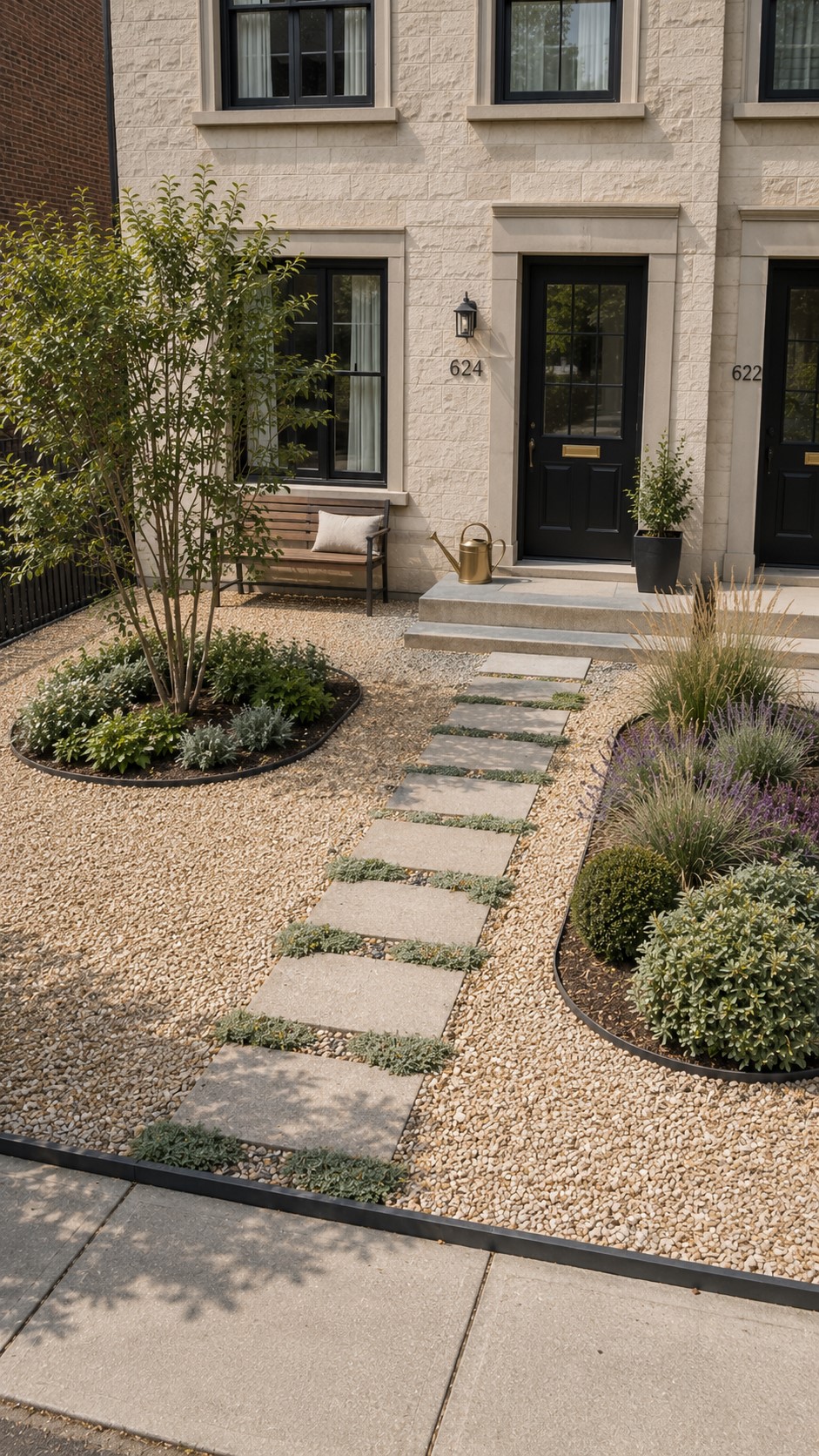
A tiny lawn can be more trouble than it deserves. It needs edging, feeding and mowing, often with little room to turn the mower. Shade from the house may leave it thin and damp.
Removing grass can make the space feel larger because the ground becomes one continuous surface. Gravel, paving or low ground cover links separate planting areas and gives containers room to stand out.
This does not mean covering everything in stone. A balance of open ground and planted areas usually feels softer and gives rain somewhere to soak into the soil.
A Gravel Front Garden Can Calm a Busy Entrance
Gravel creates a quiet surface around pots and planting beds. It works well in small front yards because it does not introduce another strong pattern.
Choose a size that stays in place and a colour that sits comfortably beside the house. Pale gravel can brighten a shaded entrance, while warmer stone often suits red brick and timber.
Good edging matters. Without it, gravel migrates onto the pavement and into planting beds. Prepare the base properly too. A rushed gravel job soon grows weeds and develops dips where water collects.
Small Yard Ground Cover Softens Paving
Ground cover can blur the edge between hard surfaces and planting. Use it between stepping stones, beneath shrubs or along the front of a bed.
The plant must suit the amount of foot traffic. Some low plants tolerate an occasional shoe. Others collapse after one delivery driver takes a shortcut.
Avoid aggressive spreaders near shared boundaries or tiny beds. A plant that covers ground with enthusiasm may also cover drains, paving and neighbouring gardens. Compact growers are slower, but they are far easier to live with.
Small Front Yard Landscaping on a Budget Rewards Reuse
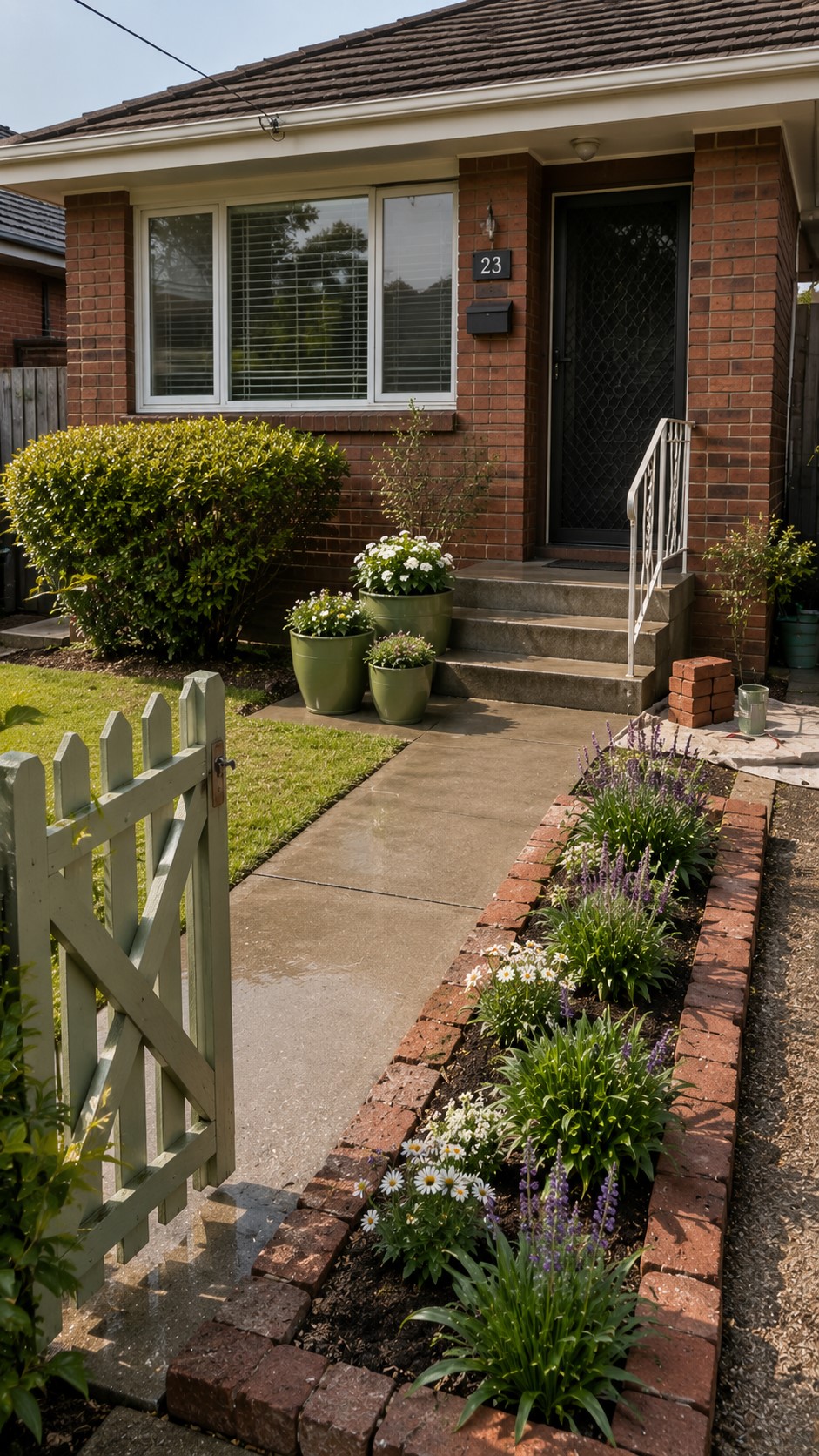
A small yard does not need a large shopping list. In fact, buying too much is one of the fastest ways to make it feel cramped.
Start with what is already there. Move scattered pots into a group. Paint mismatched containers in one colour. Divide suitable perennials and repeat them elsewhere. Remove broken edging, faded ornaments and plants that have outgrown the space.
Money is better spent on one visible improvement than several weak ones. A larger planter, a neat path edge or one healthy structural plant can change the whole frontage.
Cheap Front Yard Ideas Often Start With Removing Things
Clearing costs nothing, yet it can produce the biggest change.
Take out empty pots, dead shrubs and decorations that no longer suit the house. Prune plants away from windows and steps. Wash the paving and repaint a tired gate.
Then stop for a few days. The newly opened space may need less added back than expected. Small gardens often improve once they are allowed to breathe. The urge to fill every gap is strong, but empty space gives the remaining features more authority.
A DIY Front Garden Makeover Works Best in Stages
Begin with the path and boundaries because they set the shape of the garden. Next, place the tallest plant or planter. Add the main groups of containers or repeated plants after that.
Seasonal colour should come last. It fills small gaps and adds interest, but it cannot repair weak proportions.
Working in stages also prevents expensive impulse buying. You can see how each change affects the whole front yard before moving on. Some ideas will prove unnecessary. That is good news for the budget and the weekend.
Seasonal Small Front Yard Curb Appeal Without a Full Redesign
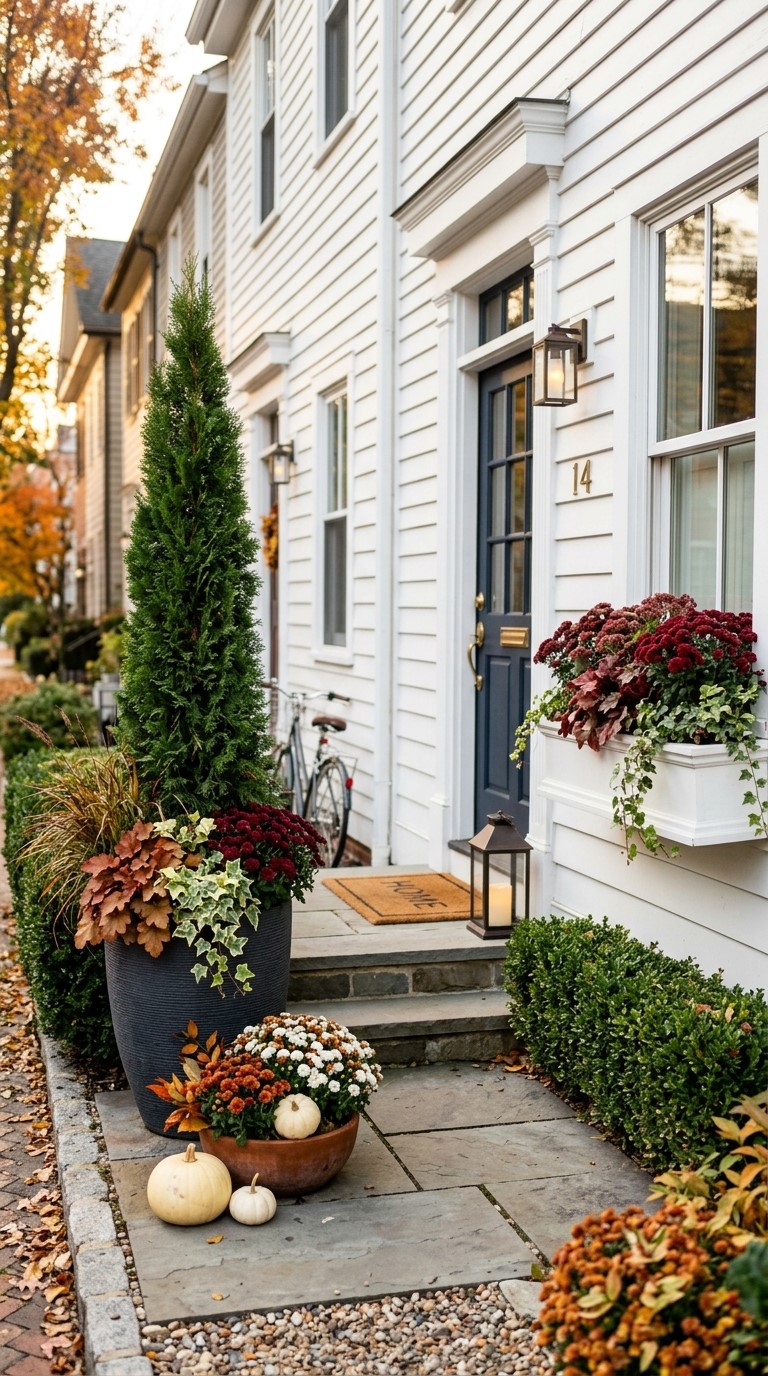
A simple permanent layout leaves room for seasonal changes. The door pots, a window box or one low container near the path can carry fresh colour without disturbing the main planting.
Spring bulbs, summer flowers and autumn foliage all have their moment. Winter can rely on evergreen branches, seed heads and bare stems with strong shapes.
Keep the seasonal layer small. Changing one or two areas produces a fresh look without turning the garden into a monthly decorating project.
Front Entrance Garden Ideas Can Shift With the Seasons
Use the same containers throughout the year and change only part of the planting. A compact evergreen can stay in the centre while bulbs, trailing plants or winter stems rotate around it.
This reduces waste and gives the entrance a familiar shape in every season. It also makes plant shopping easier because you are filling a known space rather than rebuilding the display.
Choose seasonal plants that suit the actual light near the door. A shaded porch needs different choices from an exposed step that bakes through summer afternoons.
Front Porch Planter Ideas Should Borrow From the House
Look to the house before choosing colours. Brick, painted trim, the front door and metal railings already provide a palette.
A dark green door might suit cream flowers and fresh green foliage. Warm brick can work with soft pinks, deep red leaves or terracotta pots. Repeating one colour from the building makes the planter feel settled.
Avoid trying to match everything. One link is enough. The porch should feel connected to the garden, not arranged like a themed shop display.
A Small Front Yard With More Presence
A small front yard feels spacious when the view remains clear, the planting has room and every feature earns its place. Height pulls the eye upward. Repeated plants carry it across the ground. Open paving or gravel provides breathing room between the two.
Begin with one change. Clear the doorway, group the pots or add a vertical feature beside a bare wall. Then look again from the street.
Limited square footage can be useful. It forces sharper choices and makes small improvements easy to see. With fewer plants and stronger proportions, even the narrowest front garden can give the house a proper sense of arrival.
