
Farmers Market Crate Display Ideas for Showing More Produce in Less Space
A flat table runs out of room long before a good harvest does. By eight in the morning, tomatoes have claimed the center, greens are spreading over one end and squash is creeping toward the card reader. Add berries, herbs and a few jars of preserves and the table starts to resemble a very polite traffic jam.
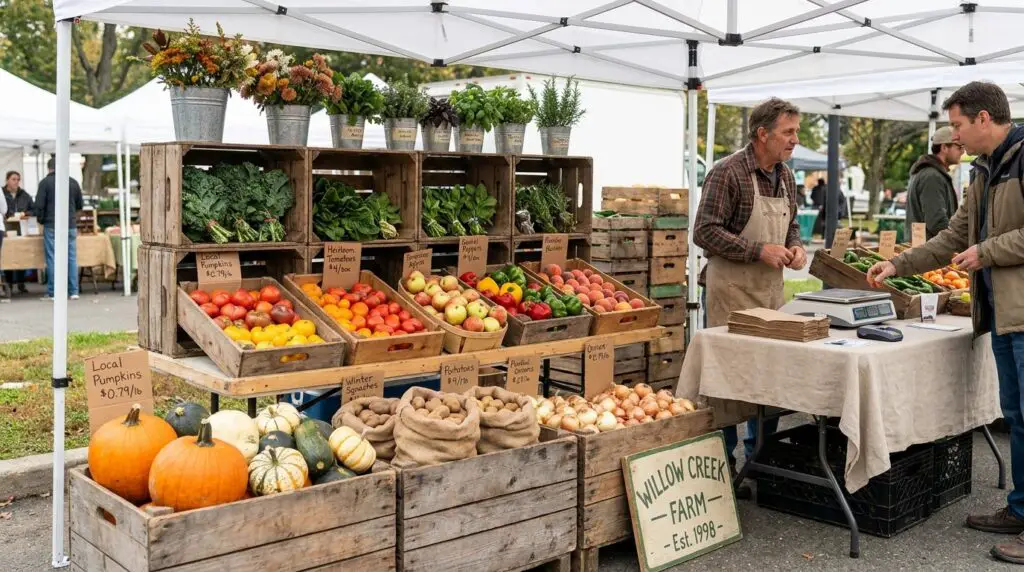
Crates solve much of this without adding another folding table. They let you build upward, lift smaller crops into view and give heavy produce a sensible place near the ground. A good setup can make a modest booth look generous and a large harvest easier to shop. The work lies in choosing useful heights, keeping the stack steady and leaving enough space for customers to reach what they see.
Why Farmers Market Vertical Display Ideas Work in Small Booths
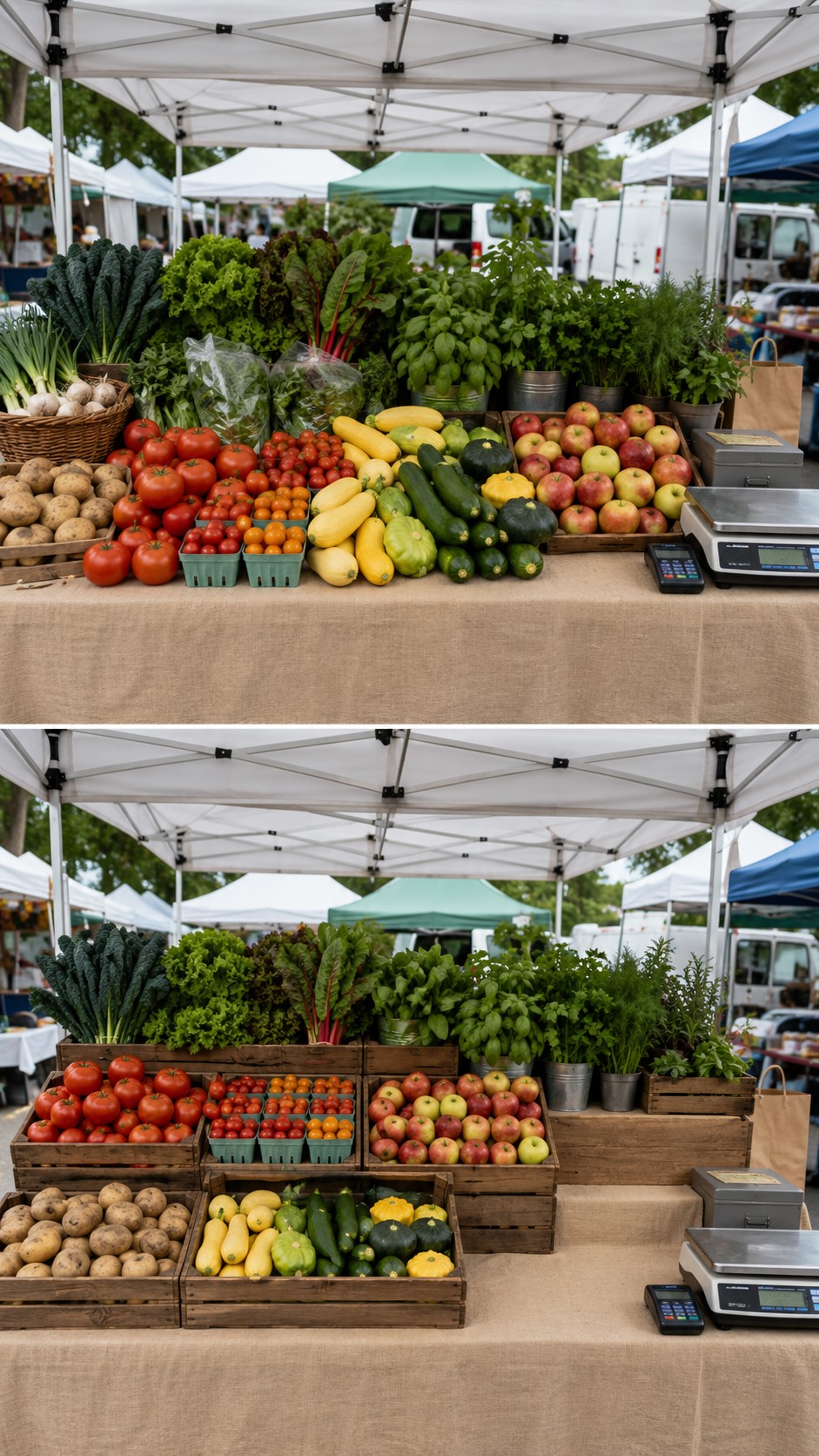
Height changes the way shoppers read a stall. A single-level table asks the eye to scan one long strip, so similar colors and shapes blur together. Raise a few crops and the display gains a clear front, middle and back. Customers can spot red peppers behind potatoes or herb bunches above cabbage without leaning over half the table.
A vertical arrangement also uses the full booth footprint. The ground below, the table surface and the air above it all become useful. That matters when every seller gets the same space, regardless of whether they brought twenty bunches of carrots or two hundred pounds of produce.
A Vertical Produce Display Gives Every Crop a Clear Place
The lower level should carry potatoes, onions, pumpkins and winter squash. These crops can handle a deep crate and their weight helps settle the base. The middle level belongs to produce shoppers want to inspect closely, such as tomatoes, peaches, peppers and apples.
Use the upper level for lighter products with strong color or shape. Leafy greens, herb bunches, flowers and small berry baskets read well from a distance. Keep heavy or breakable items below shoulder height. Nobody needs a melon rolling down from above, especially before breakfast.
Small Farmers Market Booth Displays Need One Strong Focal Point
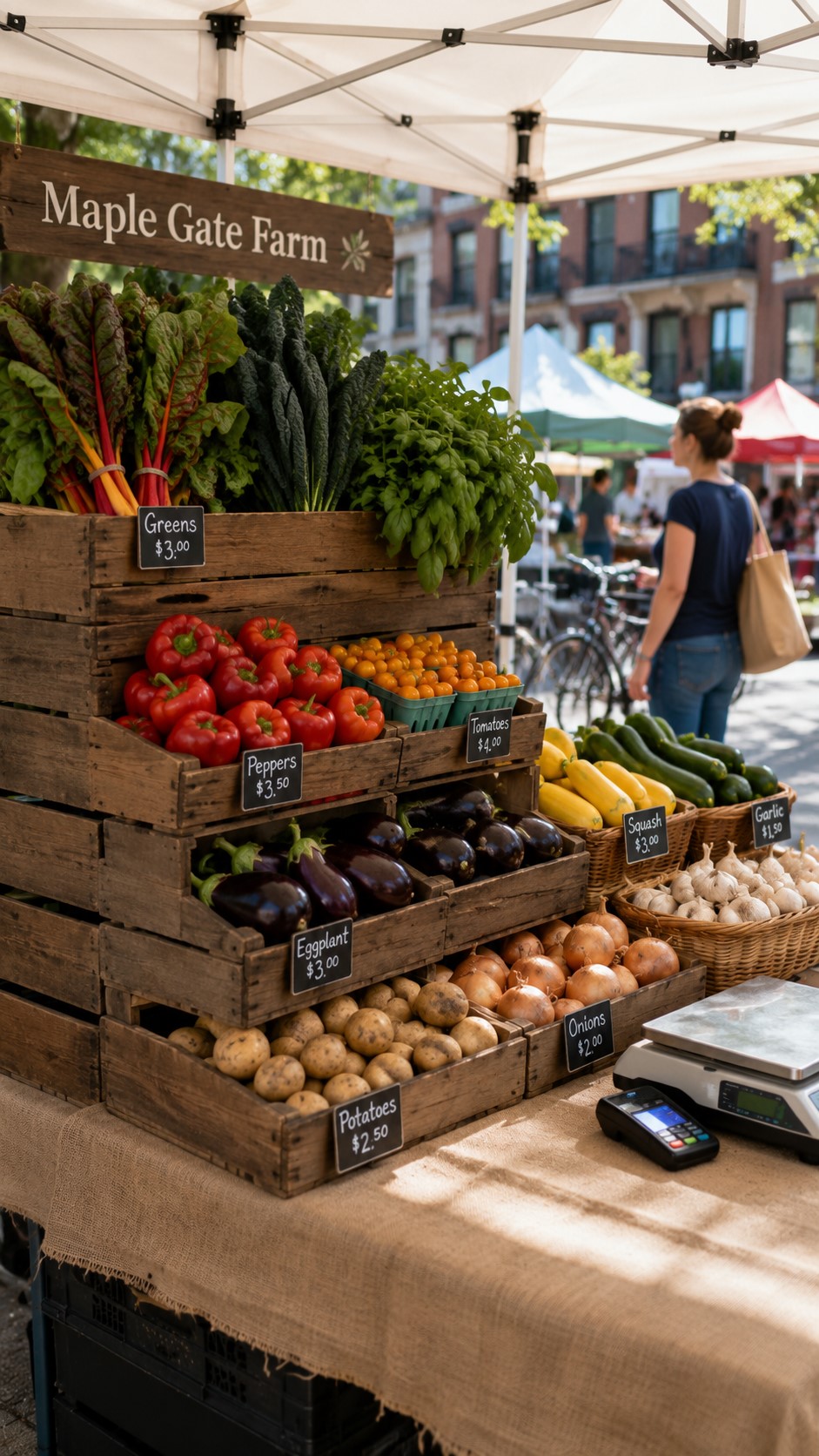
A booth with five competing crate towers can feel like a storage unit with bunting. Pick one main rise, then let the rest step down around it. The tallest point might sit at the back center or in a rear corner where it won’t block the seller or checkout area.
Feature the crop you most want to sell at this high point. A bright stack of sweet corn, a row of flower buckets or a neat group of berry pints gives people something to notice from the aisle. Once they stop, the lower levels can do the quieter work.
Choosing Crates for a Wooden Crate Farmers Market Display
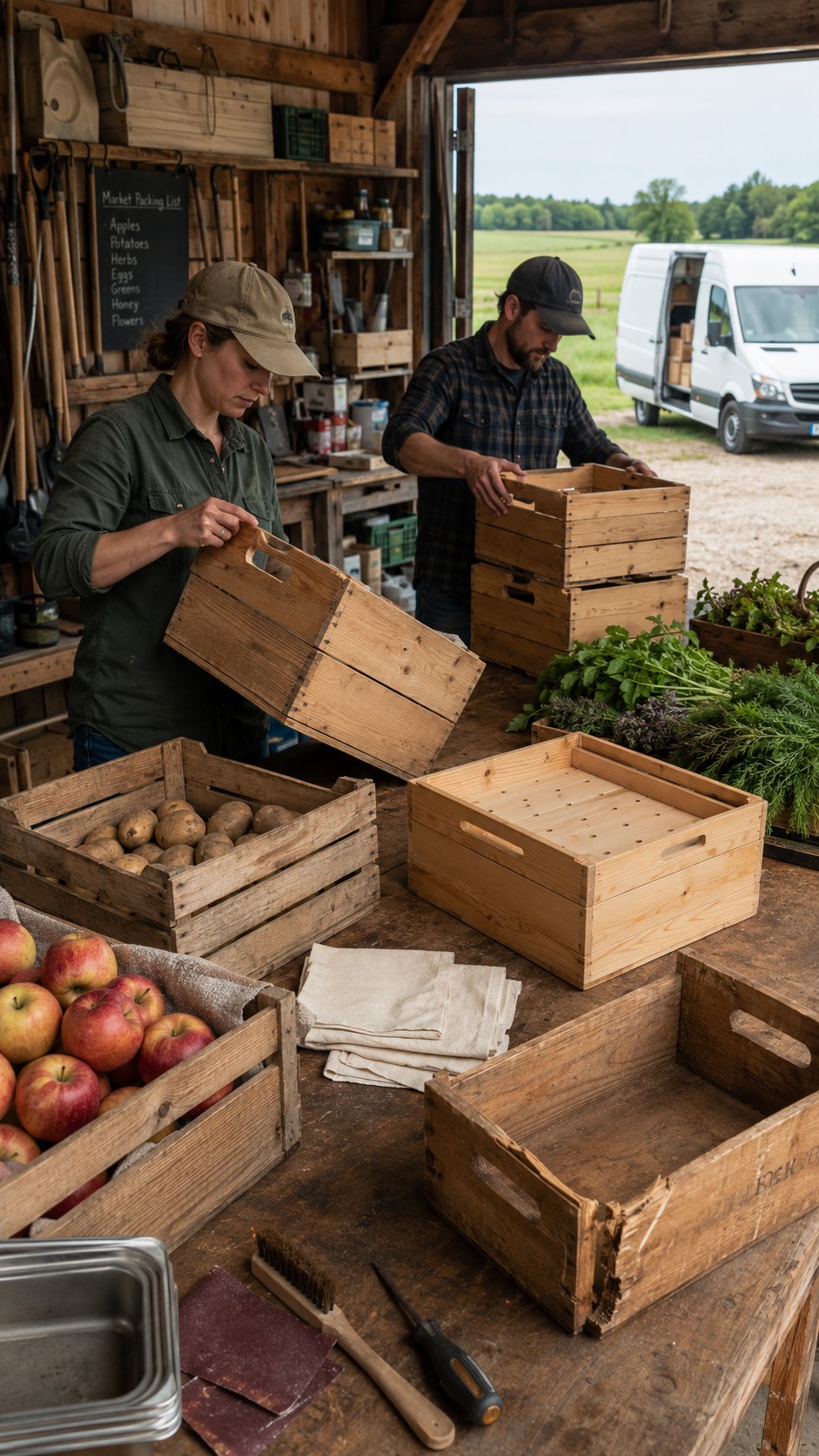
Old apple boxes have charm, but charm won’t stop a loose slat from dropping six pounds of tomatoes. Market crates need to survive loading, damp grass, hot pavements and the occasional impatient shove into a van. Check the corners, base and handles. If a box flexes when lifted empty, it has no business holding produce above knee height.
Choose crates deep enough to carry stock but shallow enough for shoppers to see inside. Very deep boxes swallow small crops and encourage overfilling. A removable tray or false bottom can turn a deep crate into a useful display box while backup stock stays elsewhere.
Wooden Produce Boxes Should Be Ready for Weekly Use
Run a hand over every edge before market day. Rough timber catches fabric, scratches hands and bruises delicate produce. Sand splinters, tighten loose screws and clean the boxes after each event. If untreated wood becomes stained or hard to wash, line it with a food-safe tray, clean cloth or fitted basket.
Painted crates can suit a neat farm brand, though chipped paint near unpackaged food looks careless. Natural wood often ages better. A light stain can help the boxes look related without making them precious. They are working equipment, after all. They will get muddy.
Matching Crate Sizes Make Stacked Market Crates Safer
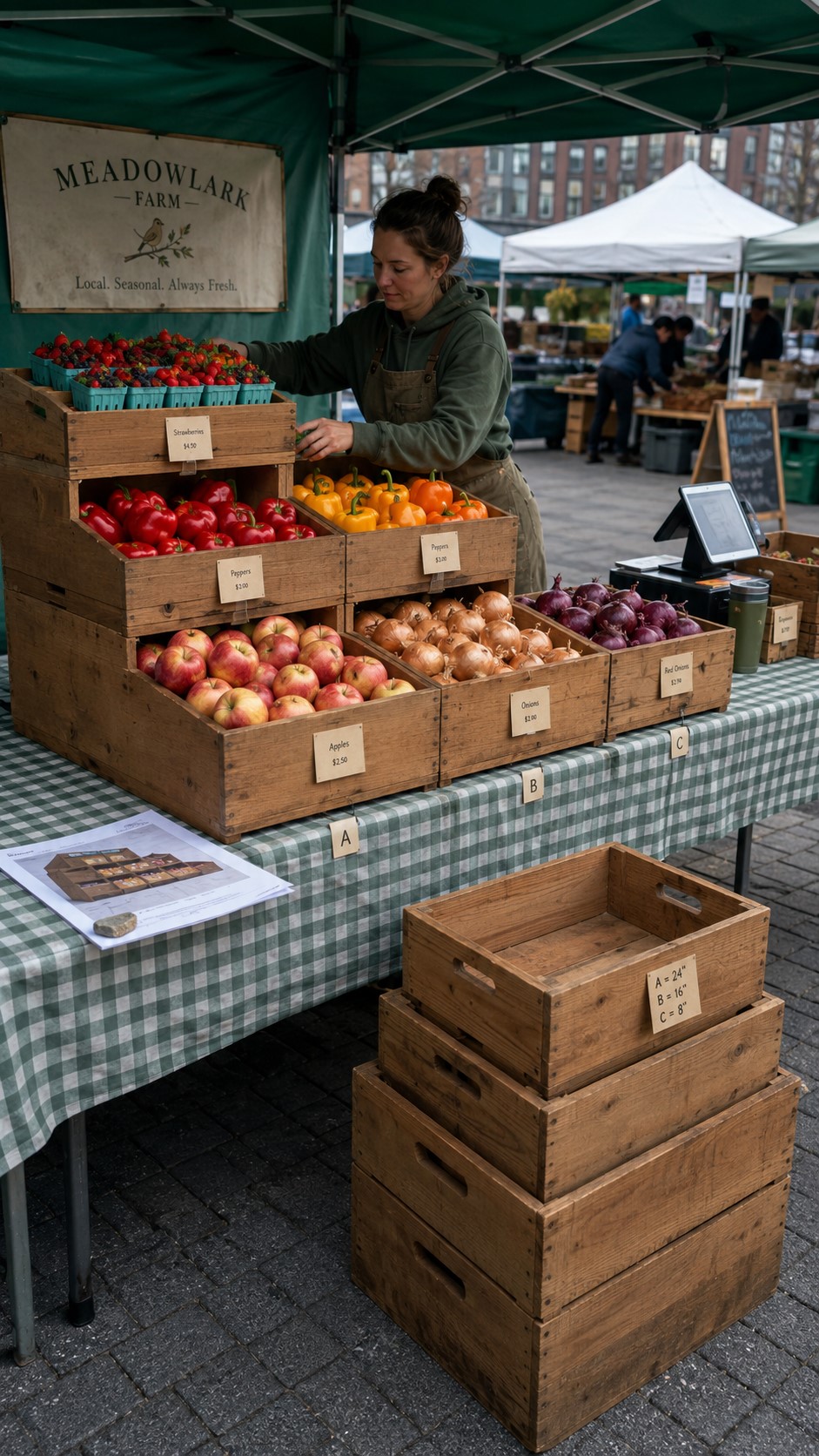
A random pile of boxes creates gaps and uneven pressure points. Two or three repeating sizes are easier to stack, transport and rebuild each week. Matching bases matter more than matching colors. A wide crate below and a narrower one above gives you a steady step.
Test the arrangement at home using realistic weight. Empty crates can behave beautifully in the garage, then complain once filled with apples. Mark the underside of each box with a small number or letter so the setup goes back together quickly on market morning.
Building a Safe Stacked Crate Produce Display
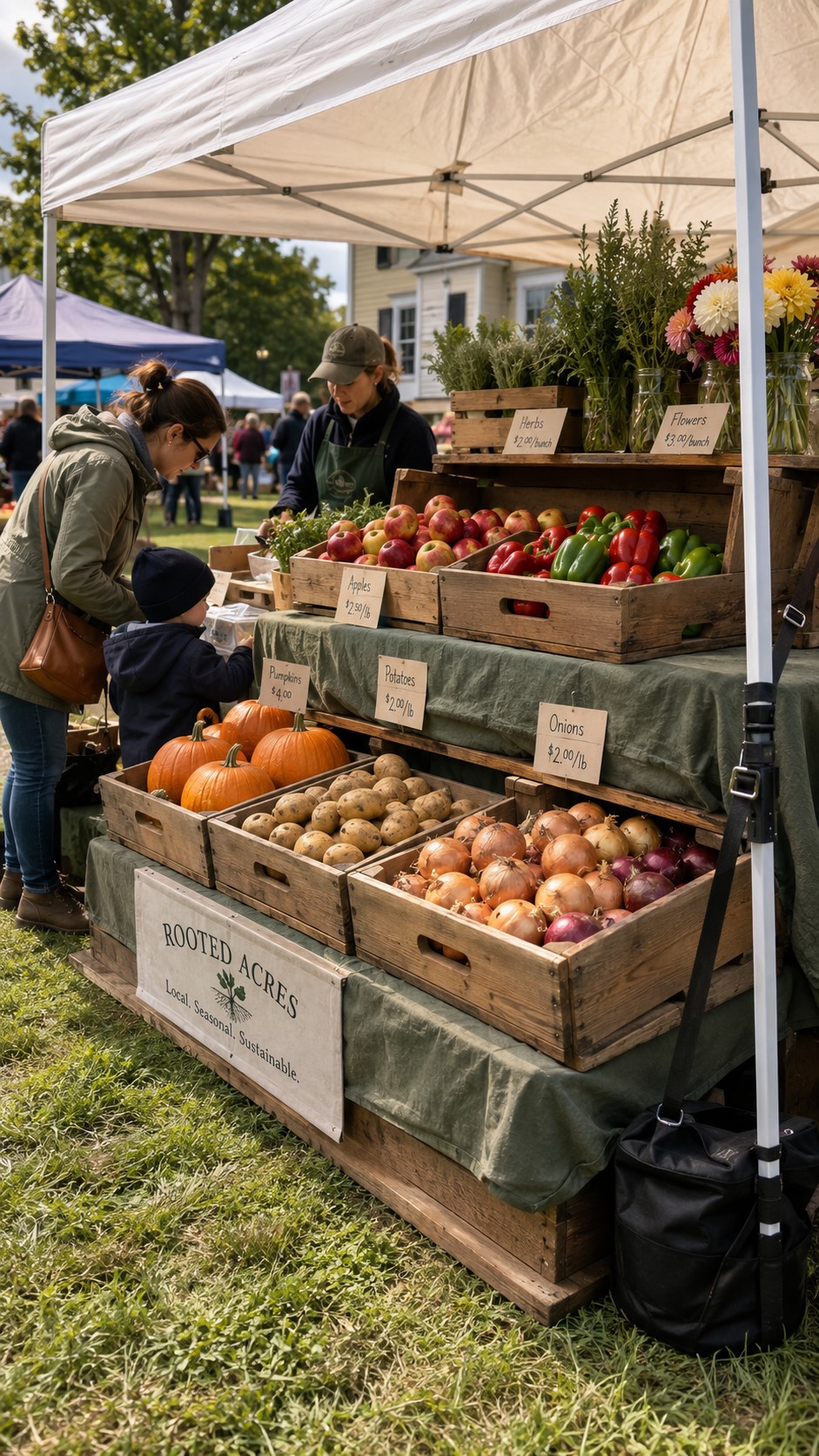
Tall displays attract attention, but they also attract hands. Shoppers will lift baskets, lean closer and sometimes steady themselves on whatever looks solid. Children may reach from below. Wind can press against signs and fabric. A crate display has to cope with normal market behavior, not the calm conditions of a practice run at home.
Start with level ground and a broad footprint. If the booth sits on grass or gravel, place a firm board under the main stack. This spreads the load and stops one corner sinking as the morning goes on. Keep the highest section away from the aisle edge where bags and shoulders can catch it.
Start a Produce Crate Tower With the Widest Boxes Below
Build the base from your strongest and widest crates. Fill them with dense crops or use them as closed risers with trays on top. The next level should sit fully on the one below, with no wobbling corners or unsupported slats.
Give the finished tower a gentle push from several directions. If it rocks, fix it before adding produce. Hidden clips, reusable straps or simple brackets can hold a repeated setup together. Avoid balancing crates on folded cloth, spare signs or scraps of wood. Those quick fixes shift when somebody removes a basket.
Tilted Crates Make a Tiered Vegetable Display Easier to Browse
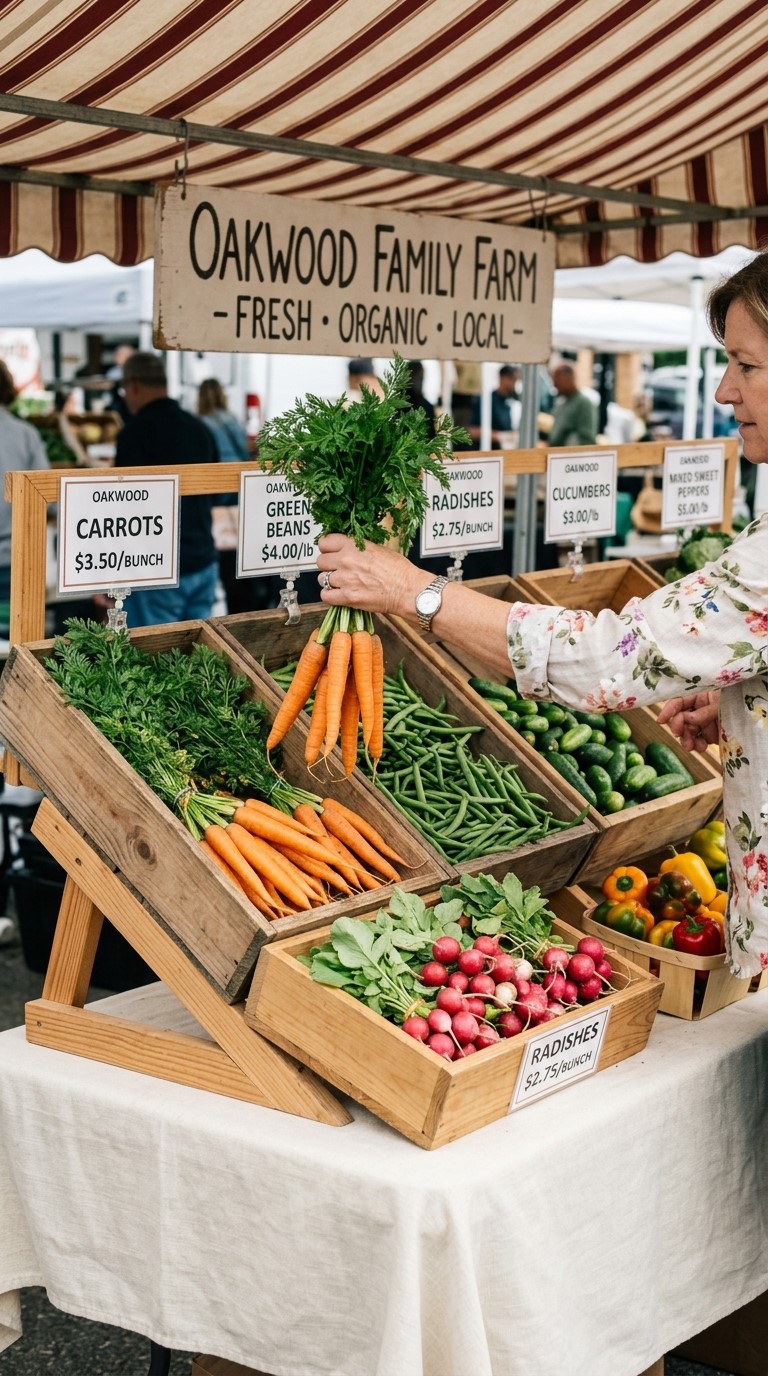
A slight backward tilt lets shoppers see carrots, beans and smaller vegetables without digging through a deep box. The angle should come from a fitted wedge, fixed support or crate designed to rest that way. Loose props can slide as stock is removed.
Add a shallow lip or basket at the front when displaying round produce. Apples and tomatoes have a talent for finding the one gap you forgot. Keep the tilt modest and test it with a half-full container, since that is when produce is most likely to move.
Planning a Tiered Farmers Market Produce Display by Crop Type
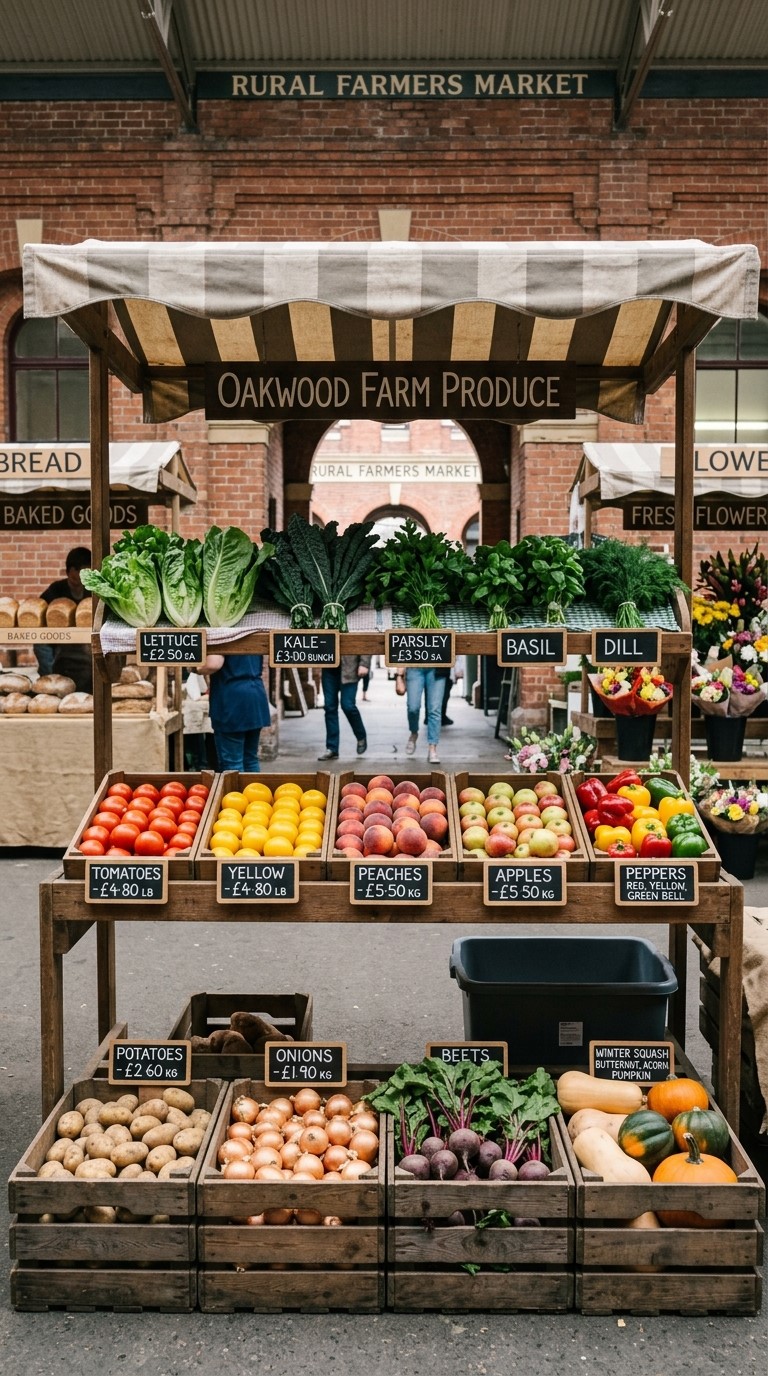
A useful tiered display begins with the needs of the produce. Weight, bruising, shade and customer reach should decide where each crop sits. Color matters too, but it comes after keeping the food in good condition. Pale greens can look lovely beside red tomatoes, yet lettuce will still wilt if placed high in direct sun.
Think of the display as three working bands. Heavy storage crops form the ground layer, bright fruit fills the middle and fragile leaves sit where they can breathe. That order feels natural because it resembles how people handle the food at home.
Root Vegetables Sit Low in a Tiered Vegetable Display
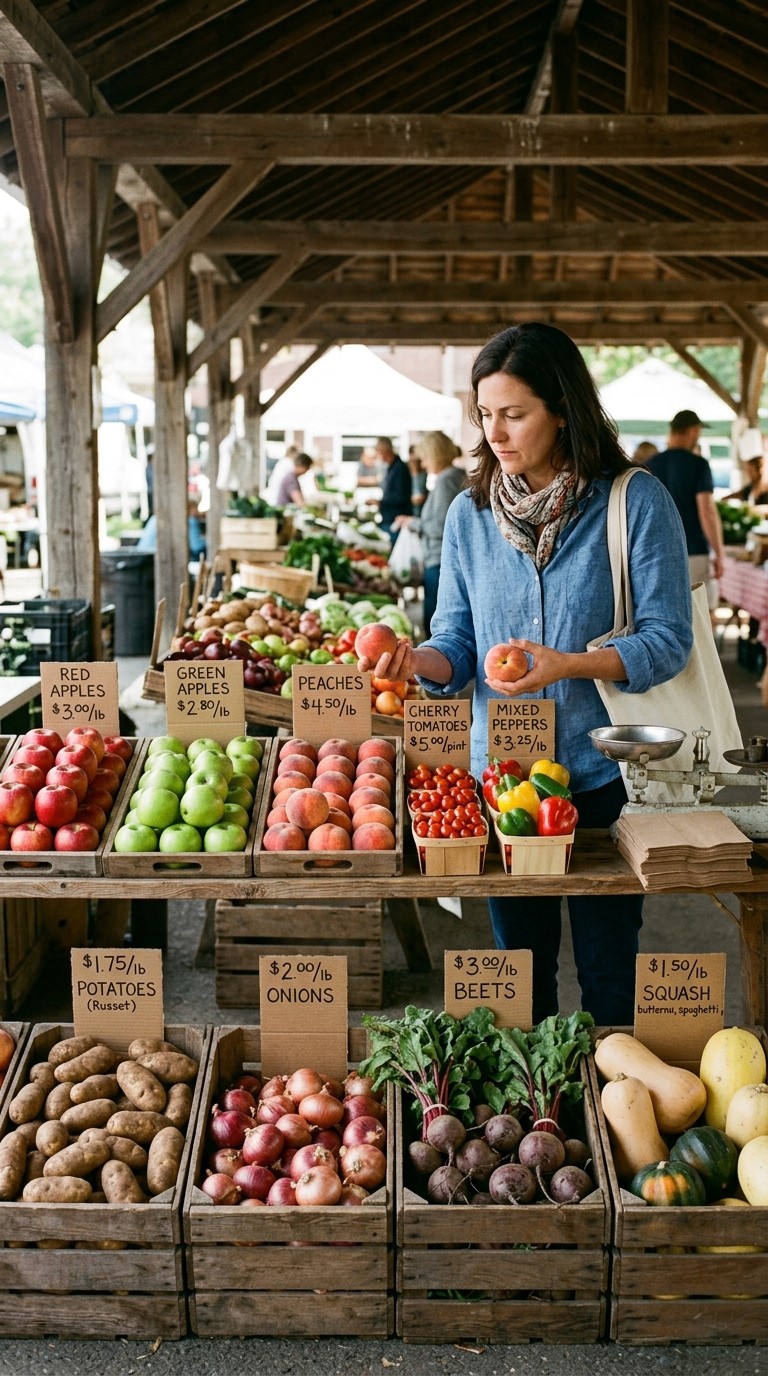
Potatoes, onions, beets and winter squash make excellent base crops. They carry visual weight as well as physical weight, so a low crate filled with them gives the display a settled look. Use shallow layers rather than burying the smaller pieces. Customers should see the range without turning the crate into an archaeological dig.
Brush off loose soil before stacking crates inside a booth. A little earth feels farm-fresh. A mound of it on the tablecloth feels like cleanup. Labels should sit above or beside the crate where they remain visible after shoppers remove the front row.
Colorful Fruit Belongs in the Middle of a Tiered Fruit Display
Tomatoes, apples, peaches and peppers deserve the easiest viewing height. Shoppers want to compare ripeness, size and color, and they often pick up more than one. Use shallow trays so the lower fruit isn’t crushed under a decorative mountain. Refill smaller amounts through the morning rather than starting with every piece on display.
Group varieties in clear blocks. A row of yellow tomatoes beside red ones reads faster than a mixed heap with five tiny labels. Place the price card close to the matching variety and keep it upright as the tray empties.
Leafy Greens Need Shade in a Vertical Produce Display
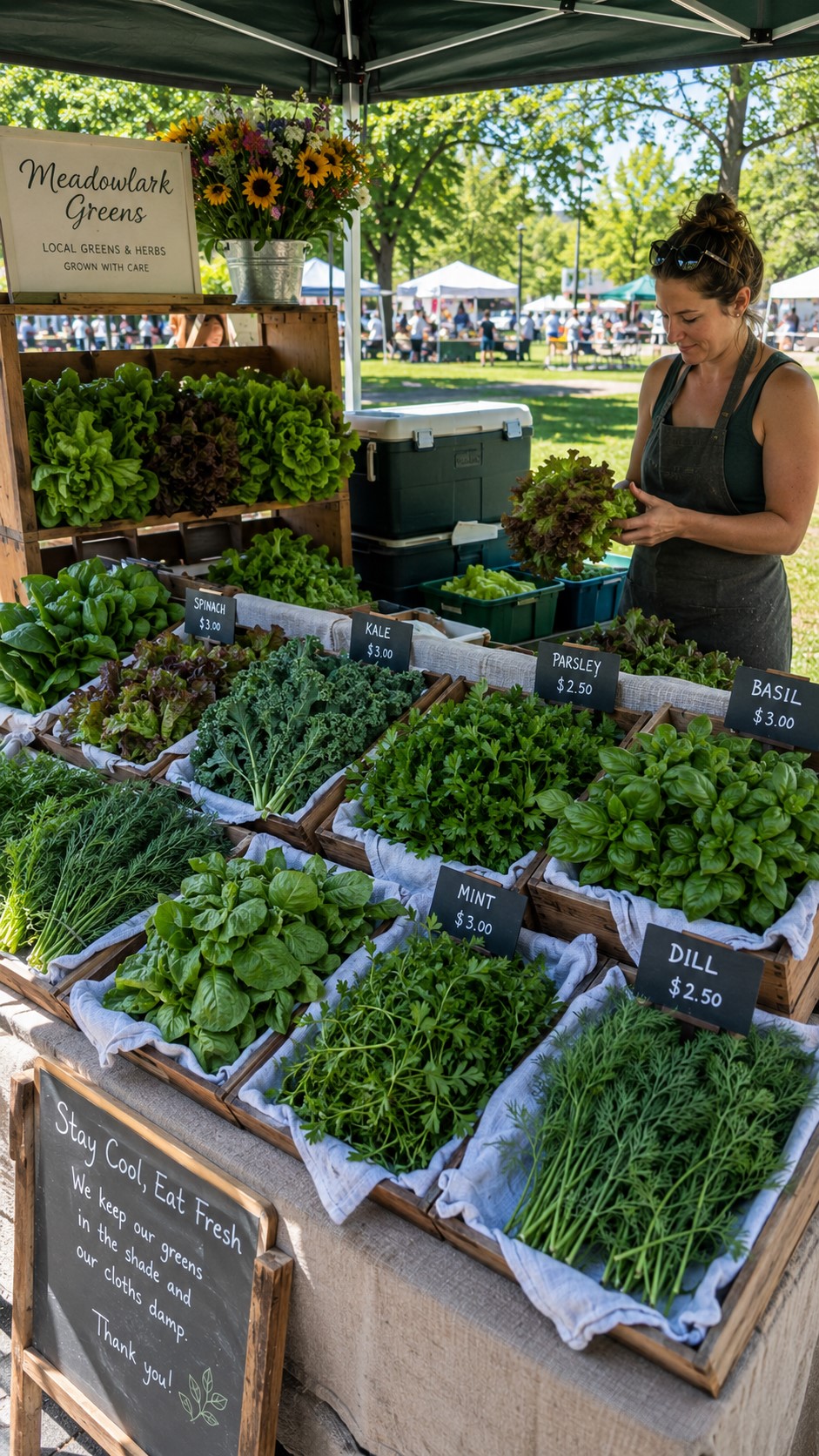
Greens often look wonderful at the top, where their leaves create height and movement. Heat has other plans. If the upper level catches sun, move lettuce, spinach and tender herbs to a shaded middle shelf. Use the highest point for flowers, signs or hardier bunches instead.
Display a smaller amount and keep refills cool behind the table. Damp cloths, shaded tubs and chilled storage can protect the remaining stock. The visible greens stay fresh longer when they aren’t packed tightly, and a little air between bunches helps them hold their shape.
Farmers Market Booth Displays With Crates Should Encourage Browsing
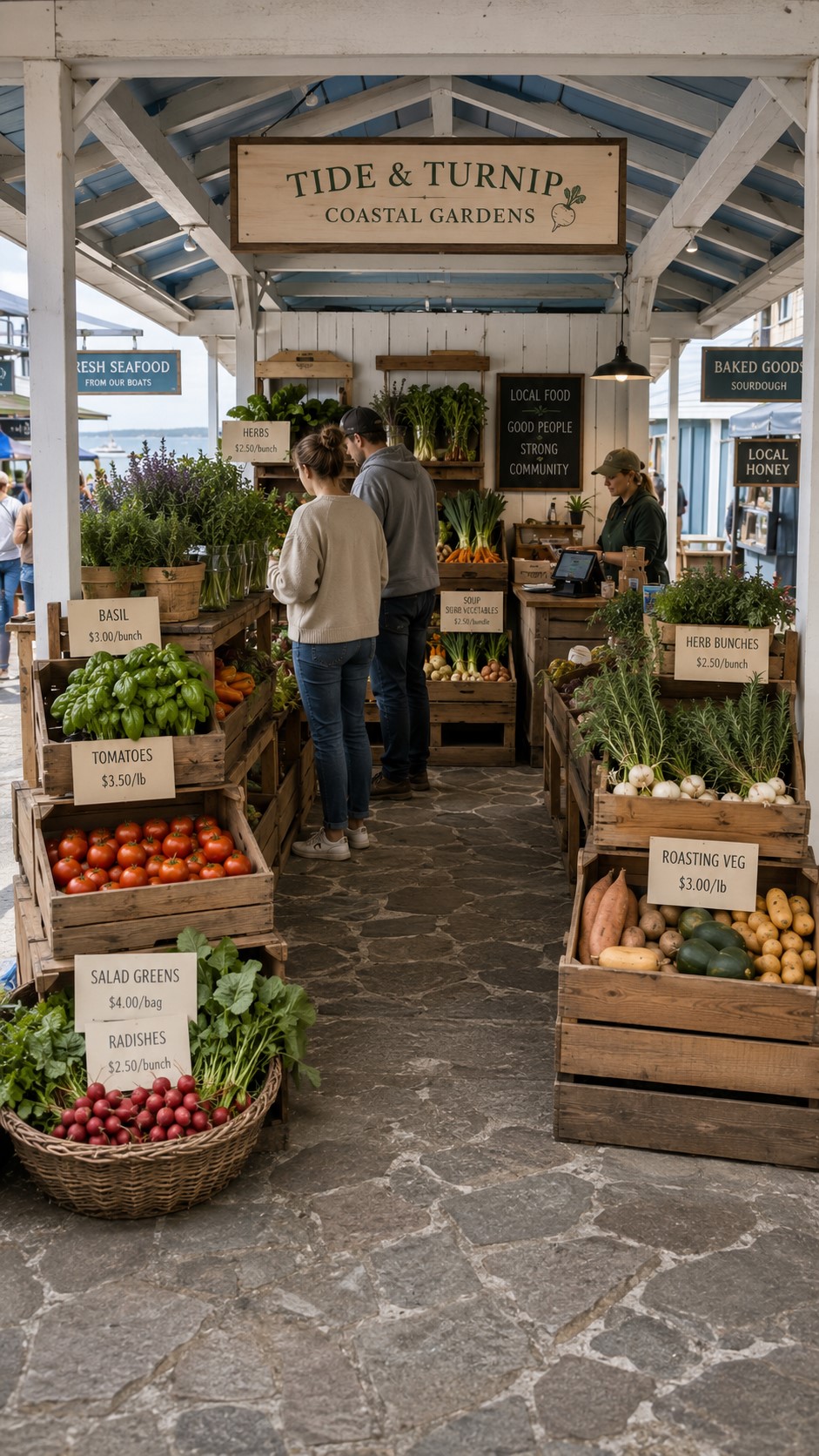
The front edge of a booth should invite people closer, not build a wooden fence between them and the produce. Keep crates near the aisle low and leave a clear opening into the stall. Taller stacks belong farther back, where they can frame the products without narrowing the entrance.
Watch how people move during the first hour. If customers stop at the corner and block the aisle, shift the featured crate inward. If they admire the display but don’t reach for anything, lower the front level or bring a basket closer. Small changes often beat a complete rebuild.
Group Farmers Market Produce Displays by How People Shop
Arrange crops in combinations that make sense at the kitchen counter. Tomatoes near basil, salad greens near radishes and roasting vegetables in one broad group can help shoppers picture a meal before they reach the checkout. This gives each level a practical reason beyond appearance.
Keep signs brief. “Soup vegetables” or “salad pick” can do more than a paragraph clipped to a crate. Prices still need to be clear. Customers who must ask about every item may move on, especially when the stall is busy.
Repeated Crates Make a Farmers Market Stand Display Easier to Read
Repeating the same crate shape or sign style brings calm to a booth filled with different produce. The crops already supply plenty of color and texture. They don’t need six basket styles, four chalkboard shapes and a gingham curtain competing for attention.
Use the same spot for price cards on each level, such as the upper left corner of every crate. Shoppers learn the pattern without thinking about it. Refilling becomes easier too, since each product has a clear home and empty spaces are easier to spot.
Keeping a Farmers Market Crate Display Full During the Day
A tall display can look impressive at opening and oddly hollow after the first rush. Deep boxes make this worse because the remaining produce sinks below the rim. False bottoms, shallow trays and smaller baskets keep stock near the surface without putting extra pressure on fruit.
Plan for the display to shrink. Remove an empty top crate rather than leaving it as a wooden monument to the peaches sold at nine. Move the remaining products into smaller containers and lower the tallest point as needed. The booth should still feel cared for at noon.
False Bottoms Keep Deep Produce Crates Looking Full
A fitted wooden insert, food-safe tray or sturdy upturned basket can raise the display level inside a deep crate. Cover it with a clean liner and add enough produce for a generous layer. This protects the lower pieces and cuts the amount needed to fill the box.
Make sure shoppers can’t pull the liner and expose a loose insert. The false bottom should sit firmly and remain hidden during normal handling. Keep refill stock behind the stall in labeled transport boxes rather than piling it around the display.
Rebuild the Tiered Produce Display as Stock Sells
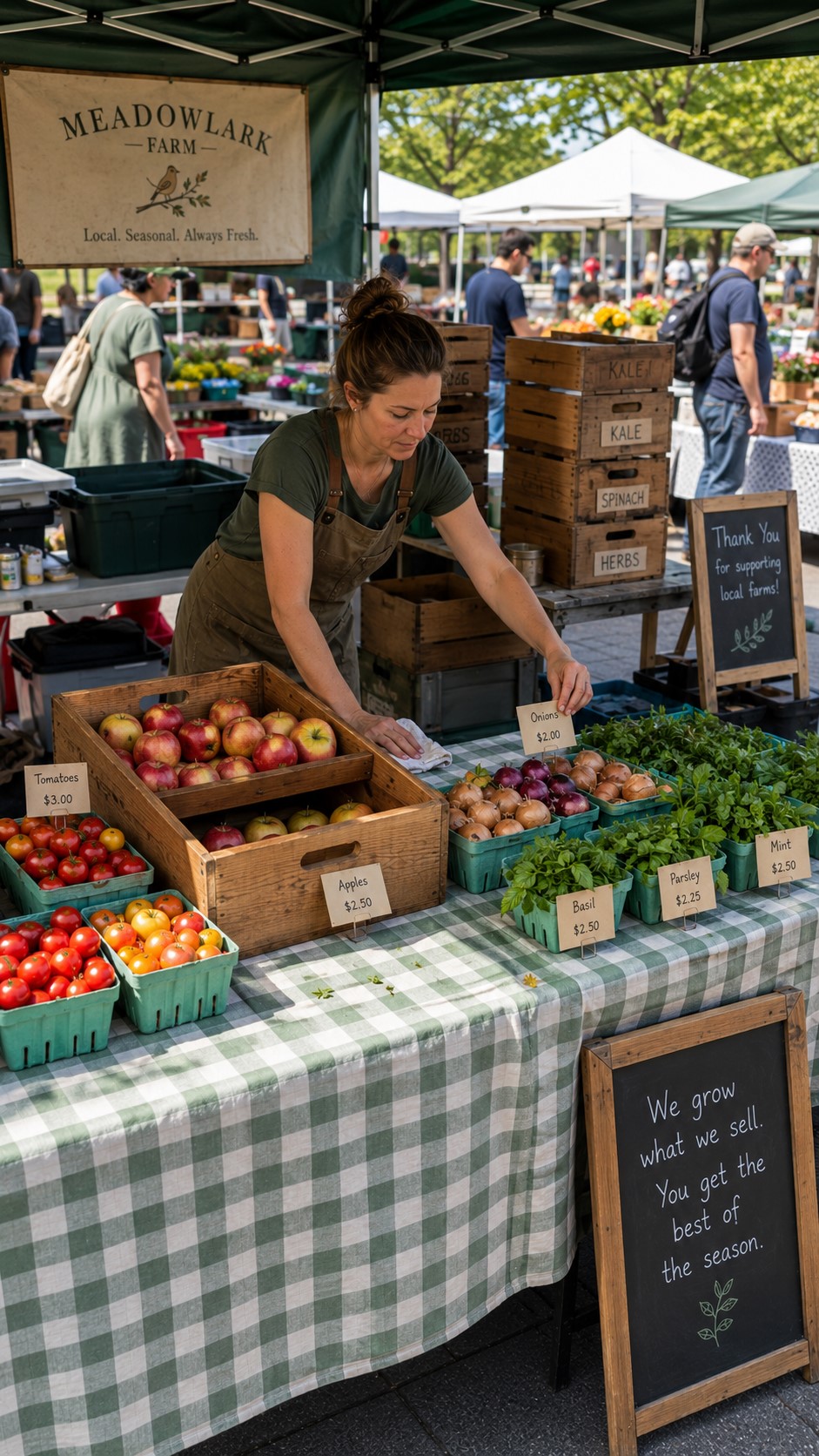
Consolidate similar varieties when their separate trays begin to look thin, but keep labels accurate. Remove empty containers, wipe away leaves and soil and bring the strongest remaining crops forward. Five minutes of editing can restore order after a busy spell.
The final hour may need a lower, tighter display than the opening hour. That’s fine. A compact stand with fresh-looking produce feels more appealing than a tall structure scattered with lonely onions and half-empty baskets.
A Taller Farmers Market Display With a Smaller Footprint
A few well-placed crates can give a crowded table room to breathe. Start with one stable rise at the back, one middle level for colorful produce and a low front basket customers can reach without effort. Watch the weight, protect delicate crops and keep the checkout area clear.
Then pay attention to the people. Their hands will tell you where the display works. They will reach for the peppers, pause at the herbs and ignore the basket hidden behind the sign. Move what needs moving. By the next market, your booth will hold more produce without feeling bigger, busier or harder to shop.
