
Spiller Plants for Containers: The Secret to Pots That Actually Look Alive
The terracotta pot tipped forward and dumped dry soil across the patio stones. Three leggy petunias clung to the rim while their roots baked in the afternoon sun. You bought the right flowers and watered them on schedule. You even rotated the container toward the morning light. The arrangement still looked stiff and exhausted because you ignored the rim.
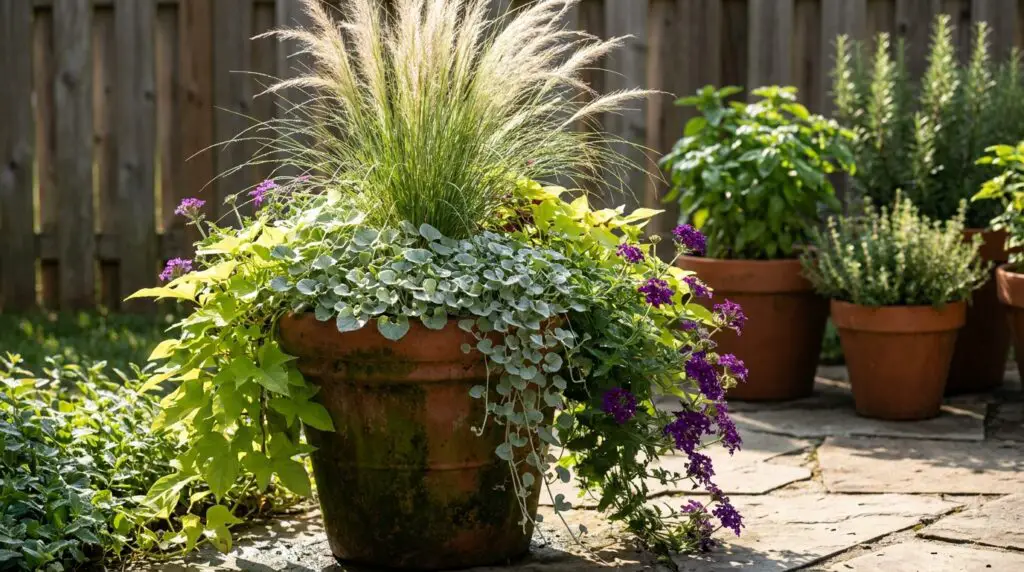
Trailing vines solve that problem by draping over hard edges and shading the root zone. Your containers stop looking like staged displays and start behaving like living systems. Below, we will fix that top-heavy look. You only need a few reliable trailers and a better layout strategy.
Why Spiller Plants for Containers Rescue Flat Garden Designs
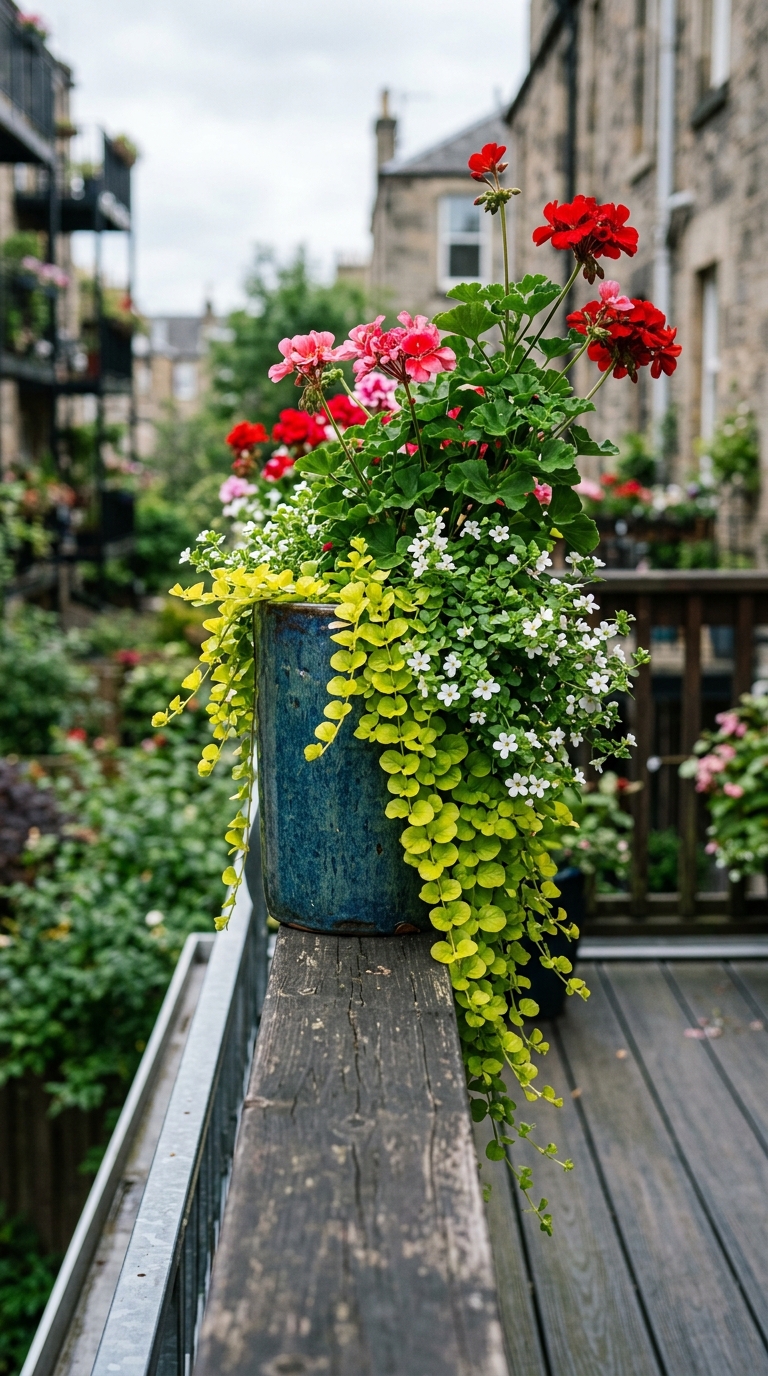
Most patio arrangements fail because they ignore vertical balance. Garden centers stack tall annuals in narrow pots and the result looks like a bouquet trapped in a bucket. Wind catches the foliage while the soil bakes and the whole thing leans toward the nearest wall. Trailing growth changes the physics completely. Vines spill over the rim and pull the visual weight downward so the pot suddenly looks grounded.
Spillers also create a protective microclimate around the root zone. Bare soil loses moisture fast under direct sun but a curtain of leaves blocks that heat from hitting the pot edge. Root zones stay cooler and watering intervals stretch longer. You spend less time dragging a hose across the deck while the plants reward you with steady growth instead of panic wilting.
You do not need a design degree to make this work. Treat trailing habits as structural tools and pick vines that match your light conditions. Place them where they can fall freely and watch the arrangement find its own rhythm. Container gardening tips rarely mention gravity but it dictates everything.
Material choice changes how spillers perform. Unglazed terracotta breathes and dries fast so trailers with thick foliage help seal the rim. Plastic pots retain moisture and work better with fine-leaved vines that need consistent hydration. Glazed ceramic sits in the middle and handles most trailing habits without trouble. Match the pot to the plant and the arrangement stabilizes.
How Container Garden Spiller Ideas Fix Top-Heavy Arrangements
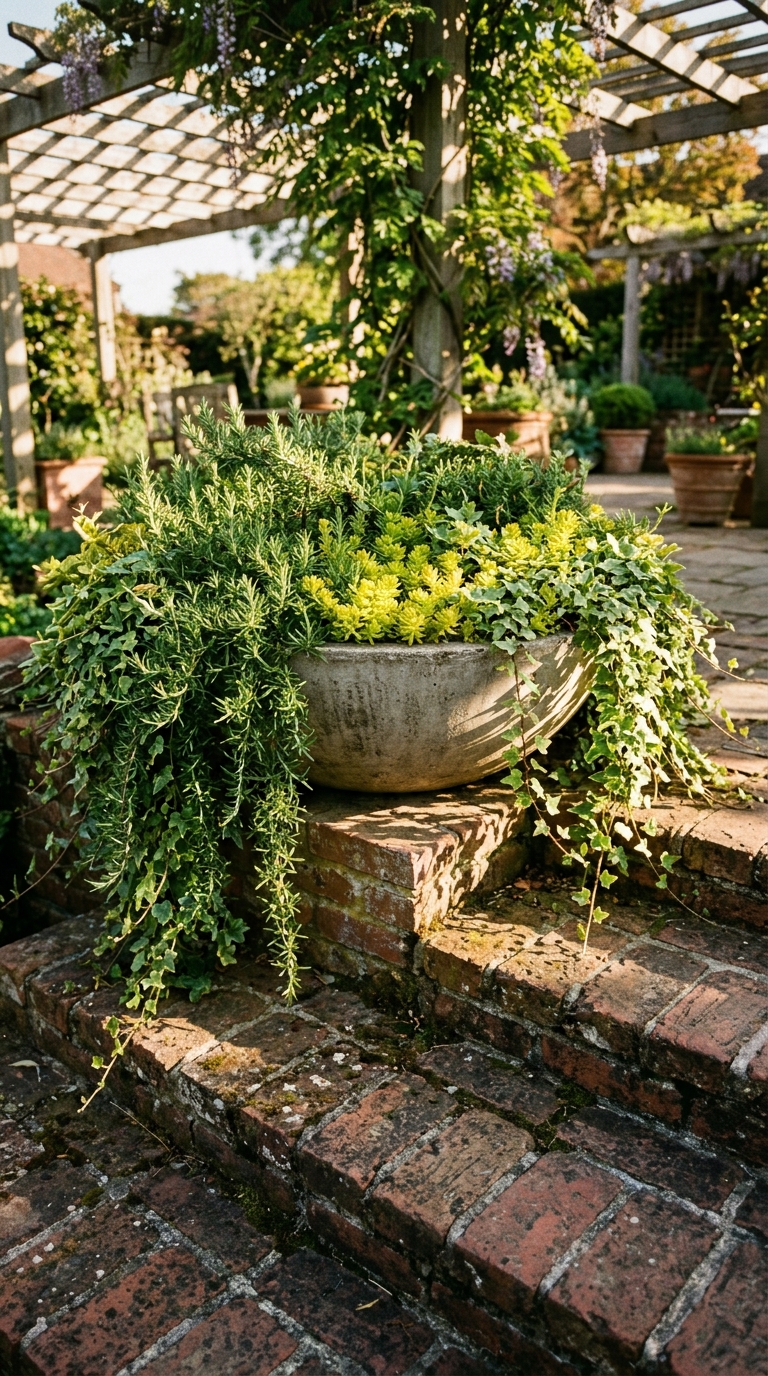
Narrow planters magnify every mistake you make. Tall grasses and upright geraniums catch breezes like sails while the pot rocks and roots tear against the plastic liner. You can stop the tipping before it starts by planting trailers along the front rim. Let them drop six to twelve inches and the downward growth anchors the visual center. The arrangement stops fighting gravity.
Scale matters more than species selection. A wide bowl needs longer vines to balance the mass while a tall cylinder needs shorter trailers that break the hard edge without swallowing the base. Measure your pot height and aim for spillers that reach roughly one third of that measurement. The ratio keeps everything proportional. Garden design basics rely on math more than mood boards.
Placement changes the outcome too. Set pots on steps or railings where vines can fall clear of the floor and avoid crowding them against siding. Trailing stems need air circulation because stagnant air invites mildew. Give the foliage room to breathe and your patio plant arrangements will look fuller. Small space gardening works when you use vertical drop instead of horizontal spread. Porch decor ideas improve when pots stop blocking walkways.
Corner arrangements benefit from directional planting. Face the spillers toward the open space and let them cascade away from the wall. The vines draw the eye outward and make tight areas feel larger. You gain visual square footage without moving a single piece of furniture.
Why the Best Spiller Plants for Pots Outperform Upright Blooms
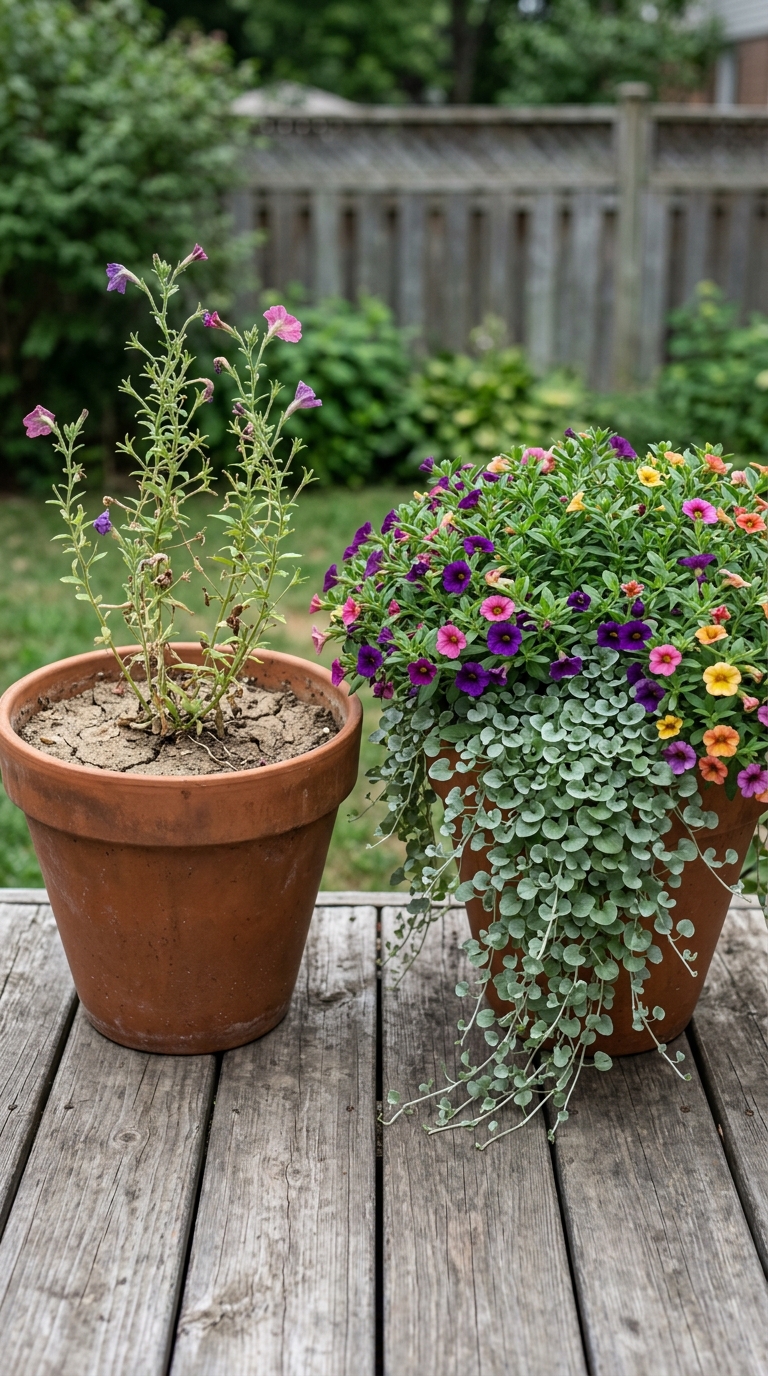
Upright annuals burn through energy fast because they push flowers upward and drop spent blooms by midsummer. Trailing varieties work differently and spread horizontally along the soil line. New growth emerges along the entire stem so you get continuous coverage instead of a bare middle.
Maintenance drops when you switch habits. Spillers naturally suppress weeds by shading the soil surface and they reduce splashback during heavy rain. Mud stays off your deck boards and you skip the daily deadheading routine. Most trailers self-clean or hide faded flowers beneath fresh foliage. Container plant care becomes predictable. Summer container plants finally earn their keep.
Seasonal longevity improves as well. When center flowers fade from heat stress the vines keep running and carry the pot through August slumps. You can refresh the middle with a quick transplant while the edges keep performing. Potting soil recommendations always stress drainage and spillers protect that drainage layer by reducing surface evaporation. Watering schedules stretch from daily to every third day. Garden center shopping tips usually push bright uprights but you should buy the trailers first.
Root behavior explains the difference. Upright plants send taproots straight down and compete fiercely for deep moisture. Trailers develop fibrous surface roots that spread wide and capture water before it drains away. The two habits complement each other when spaced correctly. You get efficient water use and less stress during heat waves.
Cascading Spiller Plants for Containers That Defy Gravity
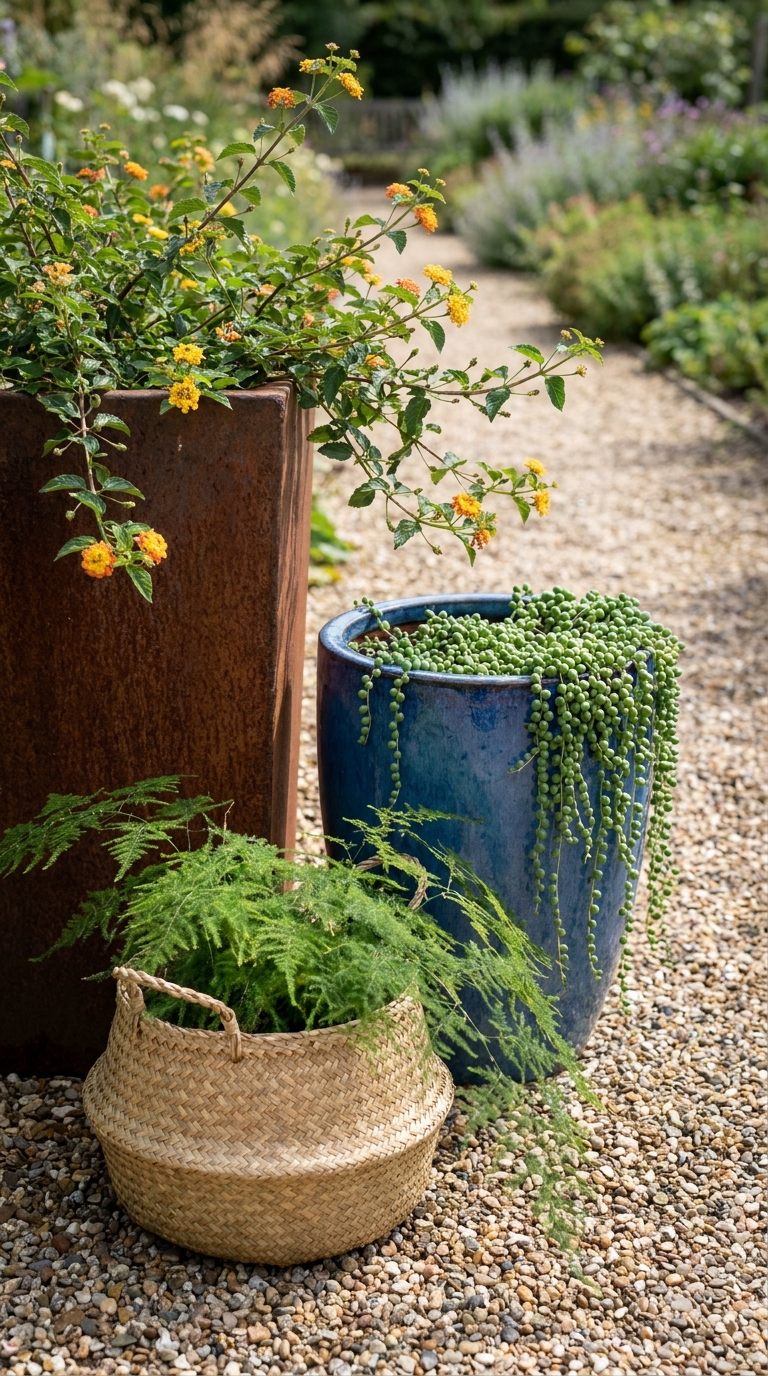
Not all trailers behave the same way in a pot. Some drip like water while others sprawl like groundcover and a few climb if they find a trellis. You have to match the habit to the vessel. True cascaders possess flexible stems and dense leaf nodes that fall straight down. Soft trailers wander and look better in wide troughs where they can spread sideways.
Wind and rain test every arrangement you build. Heavy foliage snaps weak stems and thin vines tangle against the pot wall. Look for species with woody bases or succulent leaves because they handle movement better. They also recover faster after summer storms. Your outdoor patio design stays intact when the weather turns rough.
Soil composition dictates performance too. Cascading growth demands steady moisture without soggy roots so a lightweight potting mix with perlite and compost works best. Avoid heavy garden soil because it compacts and starves the roots of oxygen. Feed lightly every three weeks since heavy fertilizer pushes weak growth that collapses under its own weight. Flower box arrangements thrive when you respect the root zone. Window box gardening succeeds when you plan for drainage first. Vertical planting structures need trailers that grip rather than slide. Balcony planters benefit from wind-resistant varieties.
Stem flexibility determines how a plant handles elevation. Rigid stems break when baskets swing. Pliable stems bend and spring back. Test a cutting before you buy by gently bending the tip. If it snaps cleanly the plant belongs in a ground bed. If it bends without cracking it will survive hanging hardware.
Trailing Spiller Plants for Hanging Baskets That Survive Wind and Heat
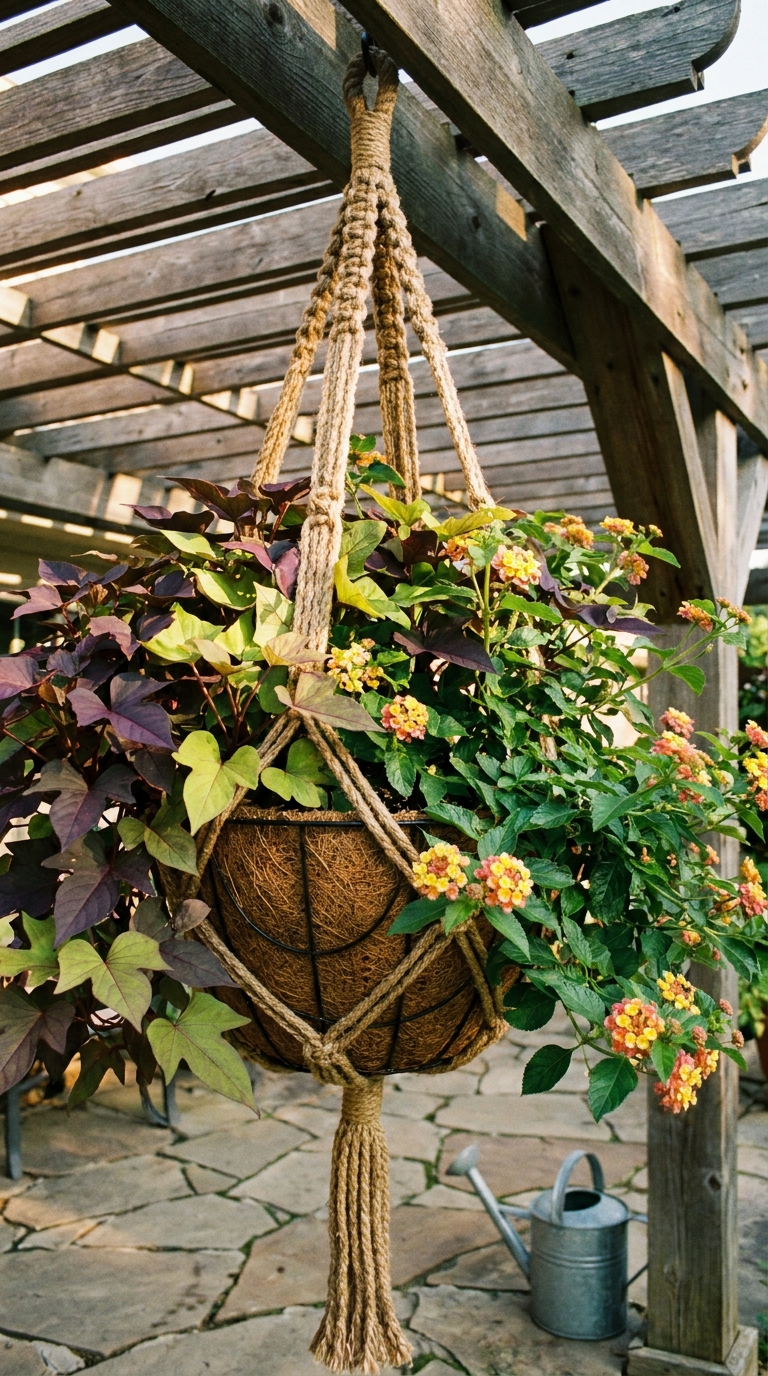
Elevated planters face brutal conditions every single day. Air circulates on all sides while soil dries in hours and hooks swing in sudden gusts. Roots pull away from the plastic liner and most baskets fail by July because the plant selection ignores elevation stress. You need trailers built for exposure.
Pick varieties with thick stems and waxy leaves. Sweet potato vine and trailing lantana handle rapid drying better than delicate lobelia. Their foliage holds moisture and their roots spread wide instead of deep. They anchor themselves against the liner wall. Shade garden ideas translate well to covered porches. Macrame plant hangers look better when the plants actually survive.
Placement saves baskets from early burnout. Hang them under eaves or pergola beams where they catch morning light and afternoon shade. Avoid exposed fence tops because wind strips moisture faster than you can water. Check soil daily by pressing a finger an inch deep and water until it runs from the drainage holes. Hanging basket maintenance takes five minutes. The payoff lasts all season. Balcony railing planters follow the same rules. Keep them sheltered and hydrated. Balcony privacy screens grow denser when trailers weave through the gaps. Summer bloomers perform better when roots stay cool.
Liner choice changes watering frequency. Coco coir dries fast and suits drought-tolerant trailers. Plastic liners hold moisture and work better for thirsty vines. Match the liner to the plant habit and you cut watering trips in half. The basket stays heavy enough to resist wind but light enough to hang safely.
Drought Tolerant Spiller Plants for Containers on Sun-Baked Patios
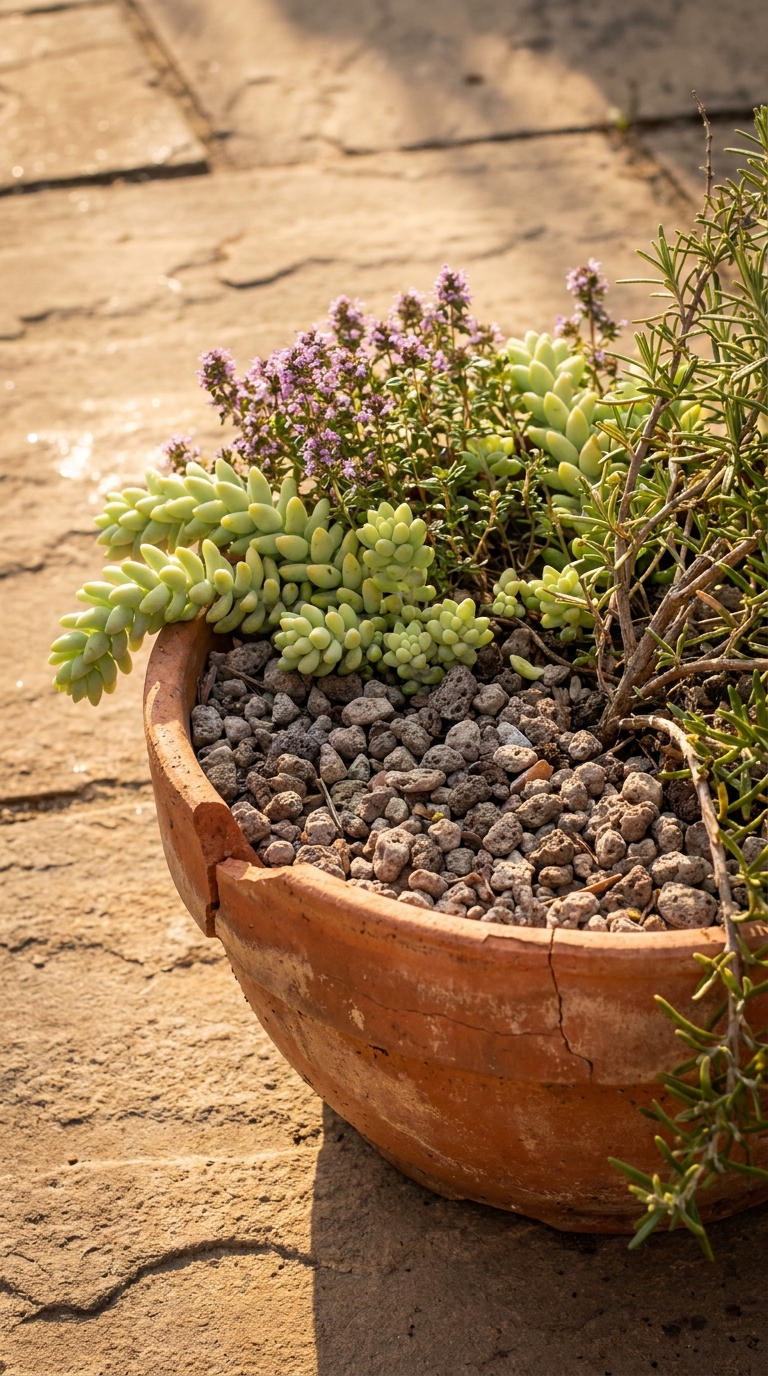
Reflected heat from pavers and stucco walls creates an oven effect that crisps standard trailers. Leaves curl and stems turn brittle within days. You can beat the heat without dragging a hose across the stones. Choose plants that evolved for dry slopes and rocky soil.
Sedum morganianum and trailing rosemary thrive in brutal sun. Their leaves store water and their stems harden quickly. They shrug off afternoon glare. Pair them with gritty potting mix and add extra pumice or coarse sand. Drainage prevents root rot during surprise downpours. Succulent arrangements look sharper when you avoid overwatering. Xeriscaping ideas work perfectly in glazed ceramic pots.
Water deeply but infrequently. Soak the pot until the bottom drips and wait until the top two inches dry completely. Shallow daily watering encourages weak surface roots while deep cycles push roots downward where moisture lingers. Low water gardening works when you train the roots to hunt. Summer heat garden tips rarely mention root training but it matters more than mulch. Your water wise landscaping starts at the drainage hole. Backyard landscaping improves when you stop fighting the climate.
Color selection affects heat absorption too. Dark pots bake roots faster than light ones. White or terracotta containers reflect sunlight and keep soil temperatures lower. Pair light pots with drought-tolerant spillers and you create a passive cooling system. The plants stay turgid longer and you water less often.
Mastering Thriller Filler Spiller Plant Combos Without the Guesswork
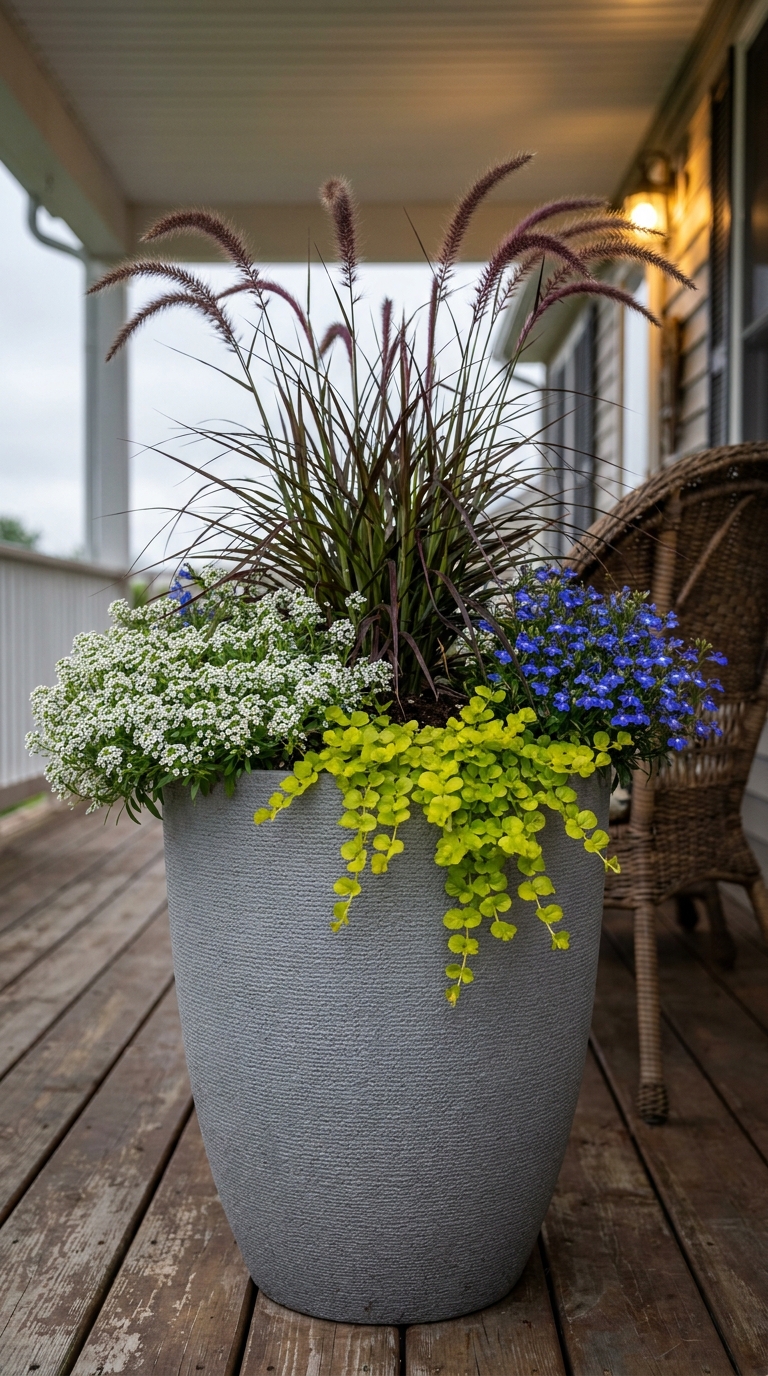
The classic formula sounds simple on paper. Plant something tall and add something bushy then finish with something that trails. Reality complicates the plan because growth rates clash and water needs diverge. You end up with a crowded mess that collapses by August. The fix requires ratio thinking.
Treat the pot as a pie chart. The thriller takes forty percent of the surface while fillers claim thirty percent. Spillers get the remaining thirty percent along the rim. This spacing prevents root strangulation and each plant accesses water without choking its neighbors. Mixed planters design succeeds when you respect underground space.
Match light and water requirements before you buy anything. A sun-loving verbena will drown next to a shade-tolerant fern. A thirsty calibrachoa will crisp beside a drought-hardy sedum. Group plants by habitat and read the tags. Ignore color theory until the survival needs align. Companion planting tips always start with environmental compatibility. Garden color theory comes second. Container soil amendments like biochar or worm castings help bridge minor moisture gaps. They do not fix mismatched habitats.
Growth speed dictates pruning frequency. Fast trailers like creeping jenny need weekly trimming to stay tidy. Slow trailers like string of pearls require almost no maintenance. Pair fast vines with aggressive thrillers and slow vines with delicate centerpieces. The arrangement stays balanced without constant intervention.
Pairing Container Garden Spiller Ideas With Bold Centerpieces
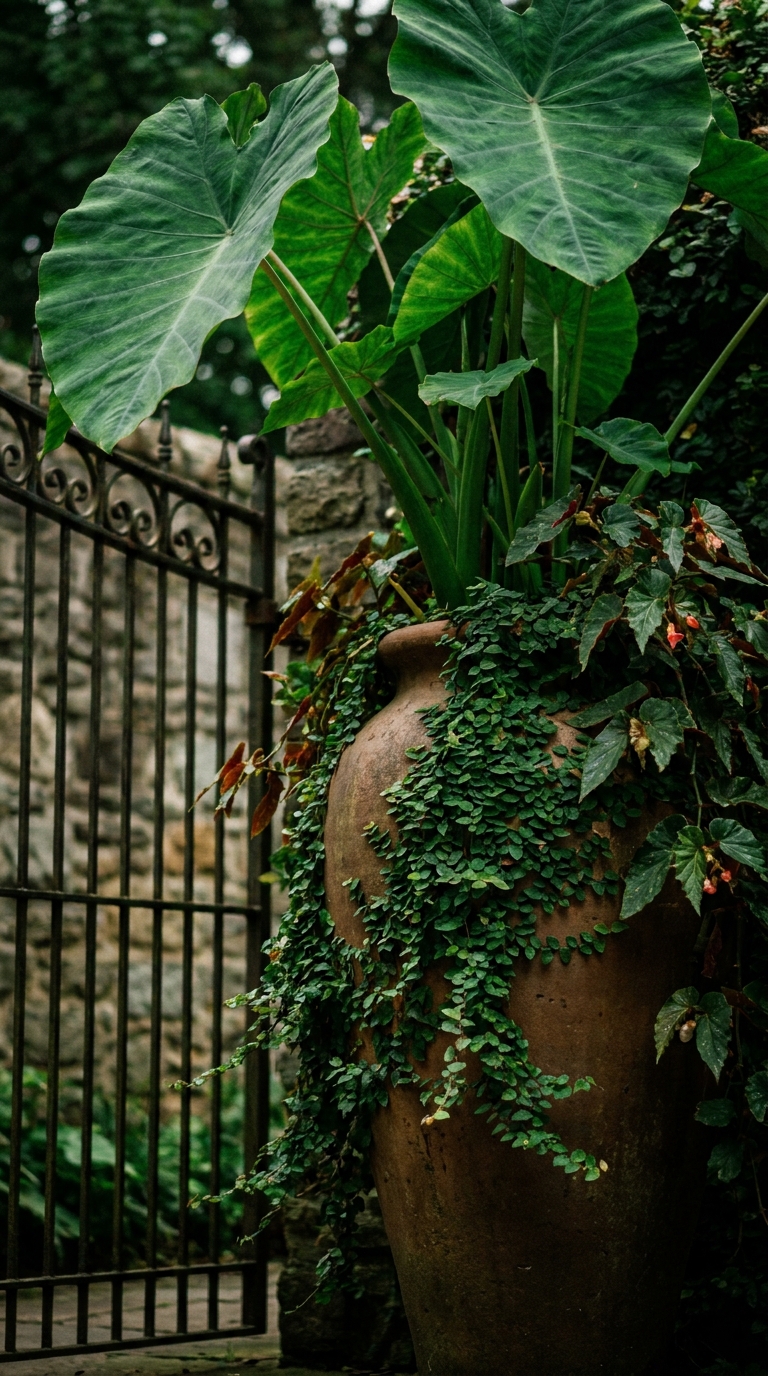
Dramatic focal plants demand soft edges. Cannas and ornamental grasses create strong vertical lines that need contrast. Delicate vines blur the silhouette while heavy cascaders ground the mass. Pick your trailer based on the thriller texture.
Fine foliage pairs well with thin stems. Angel vine and asparagus fern complement grassy blades. Broad leaves need thicker trailers. Sweet potato vine and creeping fig balance large hostas or elephant ears. The contrast keeps the arrangement readable from a distance. Outdoor pot decor relies on texture contrast more than flower count.
Position spillers carefully. Plant them between filler clusters rather than directly under the thriller. Direct placement triggers root competition and the centerpiece starves. Stagger the planting holes and angle the trailers outward. They will fall clear of the center and frame the pot instead of invading it. Plant spacing guidelines exist for a reason. Follow them and the arrangement breathes. Seasonal plant rotations keep the display fresh. Swap tired fillers in late July and leave the spillers alone.
Fertilizer timing changes how combos perform. Heavy feeding pushes thrillers upward and starves the edges. Light monthly feeding keeps all three layers growing at the same pace. Use a balanced liquid formula and dilute it to half strength. The vines stay lush without overtaking the center.
When Thriller Filler Spiller Plant Combos Go Wrong and How to Fix Them
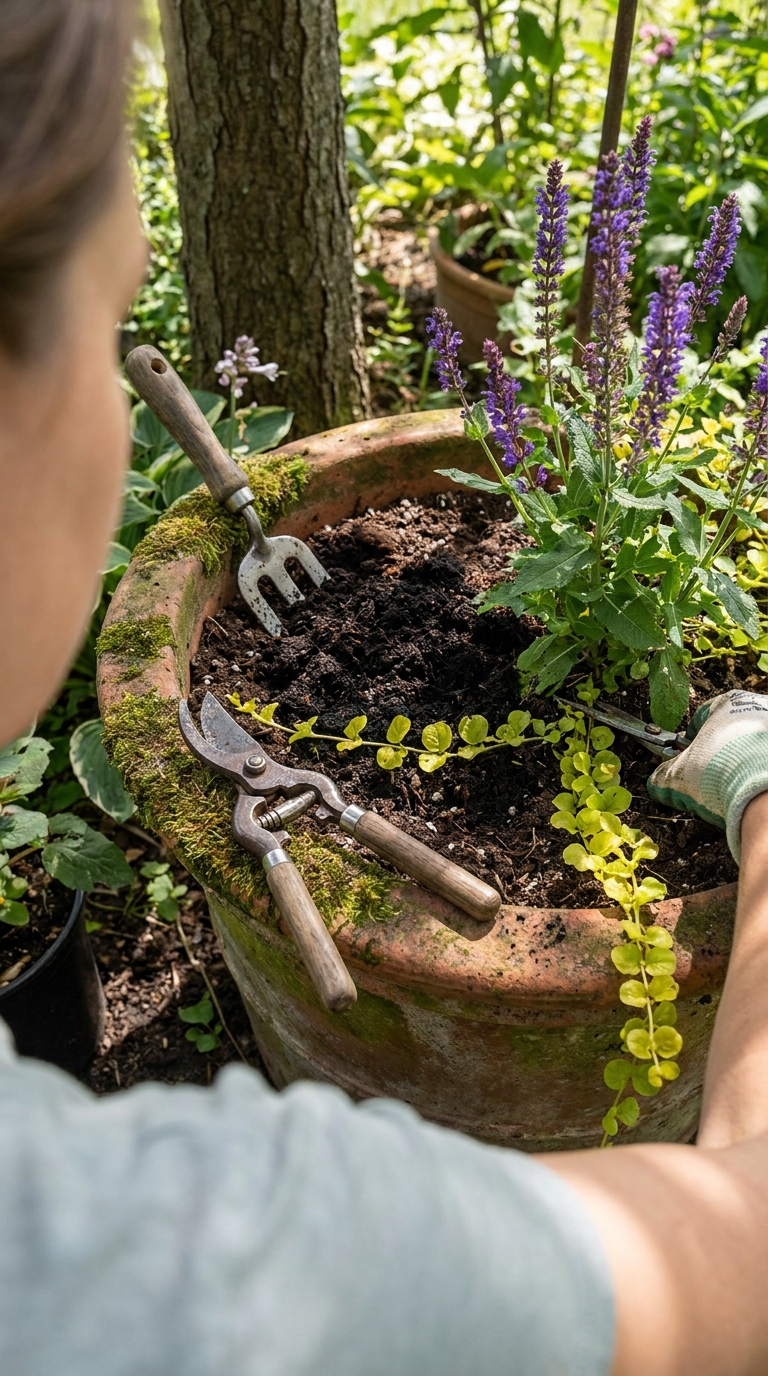
Even careful plans unravel by midsummer. Vines outrun their boundaries and fillers go leggy while the thriller leans toward the light. You can rescue the pot without tearing it apart. Start with selective pruning and cut back runaway stems by one third. Remove inward-growing branches that block airflow. The plant responds with fresh outward growth.
Check the soil next. Compacted mix repels water and moisture runs down the sides while the center stays dry. Loosen the top inch with a hand fork and add a light layer of compost. Water slowly so the soil rehydrates evenly. Root bound plant fixes rarely require repotting. Top dressing and aeration solve most midsummer crashes.
Relocate if the light shifts. Summer sun angles change and a spot that worked in May burns in July. Move the pot two feet left or tuck it behind a chair. Watch the foliage for three days. Leaves stop curling and stems stiffen. You adjust the environment instead of fighting it. Container gardening rewards observation. Plants tell you what they need. You only have to watch the leaves.
Pest pressure increases when airflow drops. Aphids hide under dense trailer canopies and spider mites thrive in dry stagnant corners. Spray the undersides of leaves with a strong water stream every week. Add insecticidal soap if colonies persist. Clean foliage photosynthesizes better and supports stronger blooms.
The Last Watering: Let Your Pots Find Their Edge
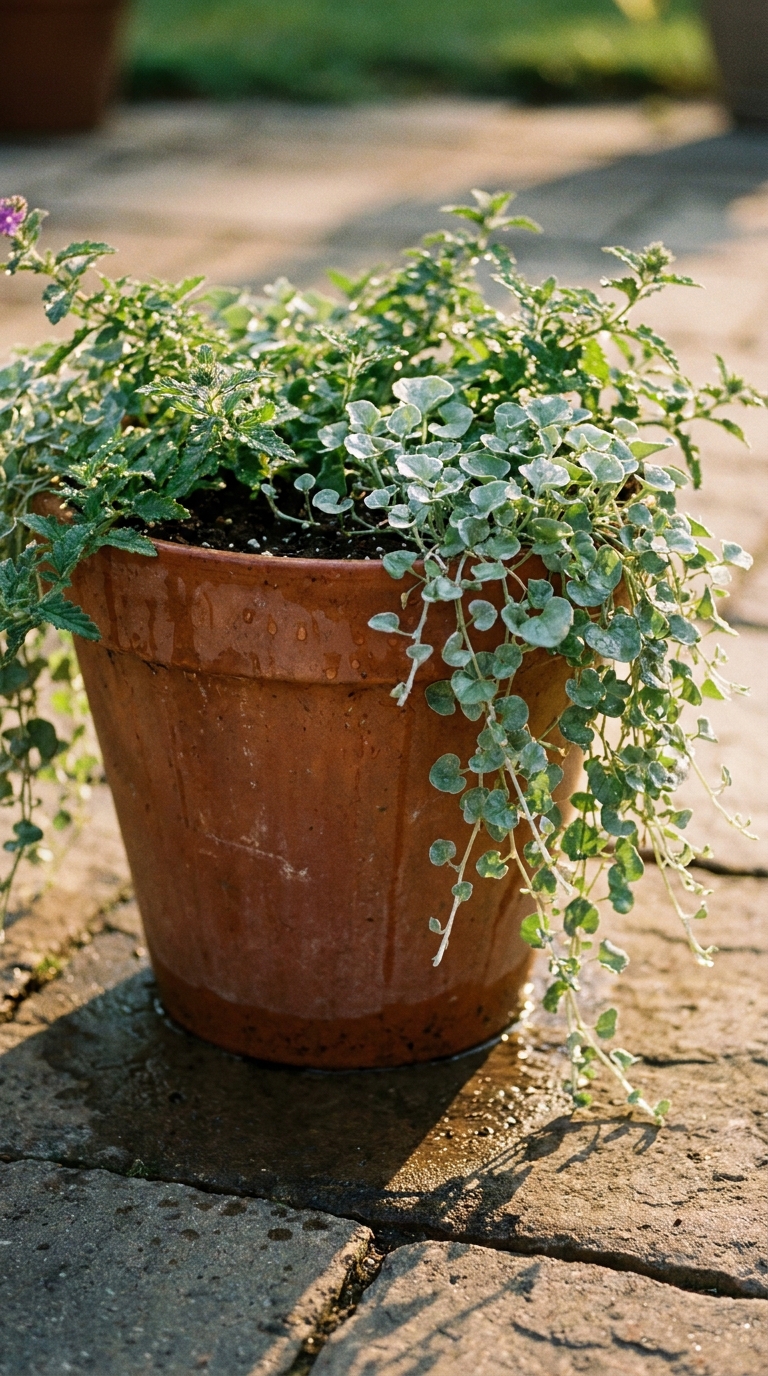
That tipped terracotta pot taught you something useful. Upright flowers draw the eye while trailing vines hold the arrangement together. They shade the soil and soften hard lines. They turn static displays into moving features. You only need to pick the right habit and give it room to fall.
Start with one container and clear the dead growth. Refresh the topsoil and tuck a proven spiller along the rim. Water until the bottom drips then step back and watch the silhouette change. The pot will look heavier at the base and the edges will blur. The whole thing will finally breathe.
Container gardening rewards patience more than perfection and brings visually appealing ideas. Vines grow at their own pace and respond to light and water and simple pruning. You guide them instead of forcing them. Pick a trailer that matches your patio conditions and let it spill over the edge. Your pots will look alive by next month. They will stay that way until frost.
