Most people in Michigan know about the Eastern Massasauga, the state’s only venomous snake. But your backyard holds plenty of other critters that can deliver venom with a bite or sting.
Knowing what they look like helps you stay calm, avoid painful surprises, and keep kids and pets safe. Here are ten venomous neighbors worth recognizing, starting with the famous rattler itself.
1. Eastern Massasauga Rattlesnake
Shy, slow, and rarely seen, the Eastern Massasauga is the snake every Michigan hiker talks about but few ever meet. It is a federally threatened species, so spotting one is actually a bit of a privilege.
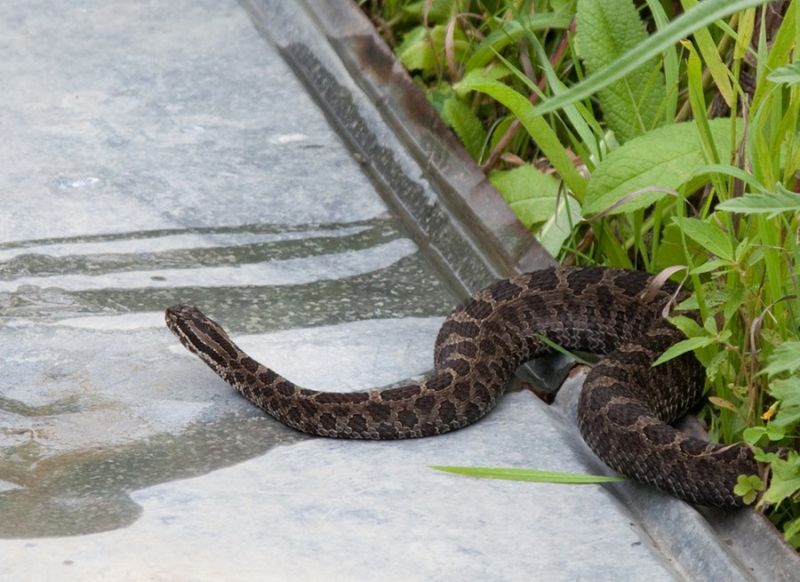
Look for a thick, gray or light brown body covered in dark, chocolate-colored blotches running down its back. The head is triangular, the pupils are vertical like a cat’s, and the tail ends in a small rattle.
Adults usually stay under three feet long.
Massasaugas love wet meadows, marsh edges, and old fields, especially in the Lower Peninsula. If one shows up in your yard, back away slowly and give it room.
Bites are rare and almost always happen when someone tries to handle or kill the snake.
2. Northern Black Widow Spider
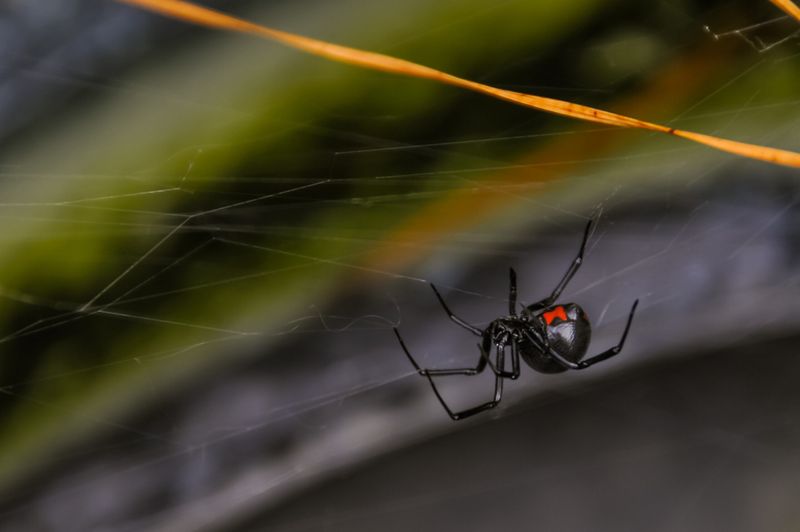
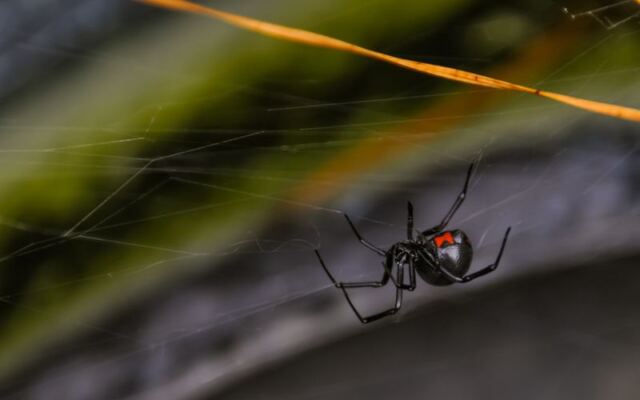
Flip over an old board or peek under a deck railing, and you might find Michigan’s most famous spider. The northern black widow is glossy black and about the size of a pea, with legs spreading wider.
Unlike southern cousins, its red hourglass is often split into two separate marks. Many also have a row of small red spots along the top of the abdomen.
Their webs look tangled and sloppy, not neat and round.
Only females are dangerous, and they bite mainly when pressed against skin. Symptoms can include muscle cramps and sweating, so call a doctor if bitten.
Wearing gloves when moving woodpiles is a simple habit that prevents most trouble.
3. Brown Recluse Spider
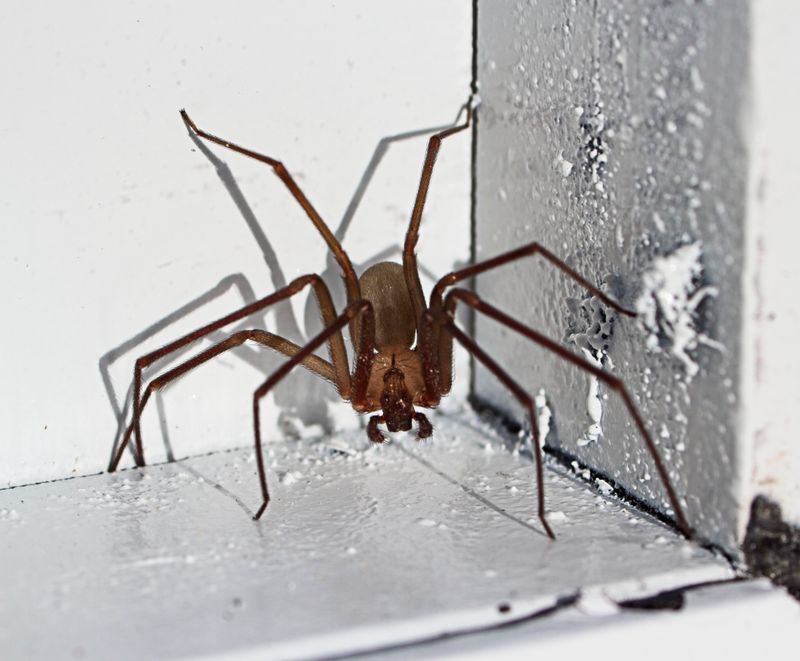
Here’s a twist: brown recluses are not native to Michigan. They hitch rides in moving boxes and furniture from southern states, so a few populations pop up in homes now and then.
The giveaway is a dark violin shape on the front of the body, with the neck of the violin pointing toward the rear. They are plain tan, have long thin legs, and only six eyes instead of eight.
Spotting those eye pairs takes a magnifying glass, though.
Many harmless spiders get blamed for recluse bites. If you think you found one, catch it in a jar and ask your local MSU Extension office to confirm before panicking.
4. Bald-Faced Hornet
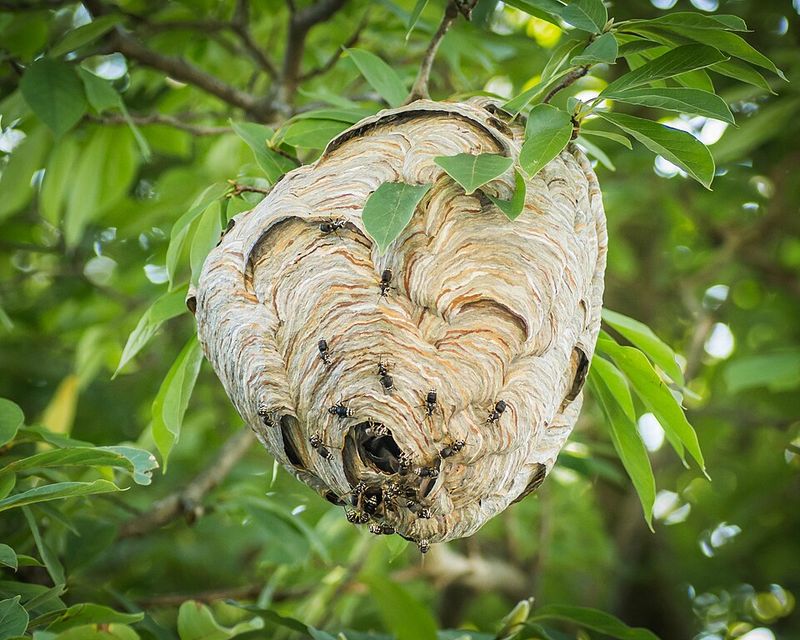
Picture a gray paper football dangling from a tree branch. That is the home of the bald-faced hornet, and the hundreds of workers inside take guarding it very seriously.
Despite the name, these are actually a type of yellowjacket. They are black with bright white markings on the face and tail tip, and they grow nearly an inch long.
Their stings hurt and they can sting more than once.
Leave nests alone if they are high and out of the way. By late fall the colony dies off, and the empty nest is safe to remove.
Low nests near doors are a job for a professional.
5. Eastern Yellowjacket
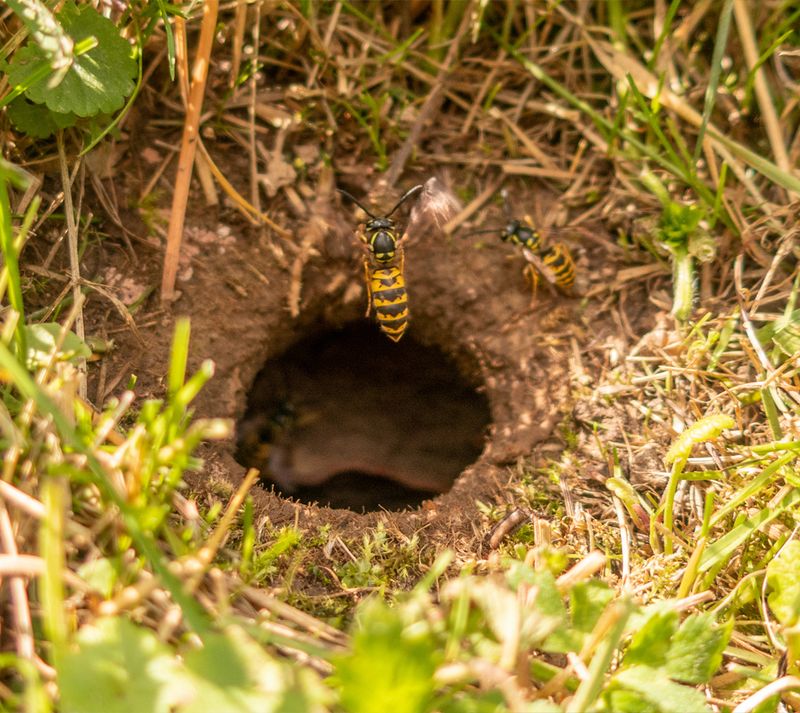
Ever had a picnic crashed by a buzzing striped guest grabbing at your soda can? Meet the eastern yellowjacket, the most common stinging pest of Michigan summers.
They are smaller and shinier than honeybees, with crisp yellow and black bands and almost no fuzz. Most nests are underground, often in old rodent holes, so mowing over one can trigger a swarm.
August and September are peak months, when colonies are largest and workers get cranky. Cover drinks outdoors and watch for steady traffic in and out of a hole in the lawn.
6. European Paper Wasp
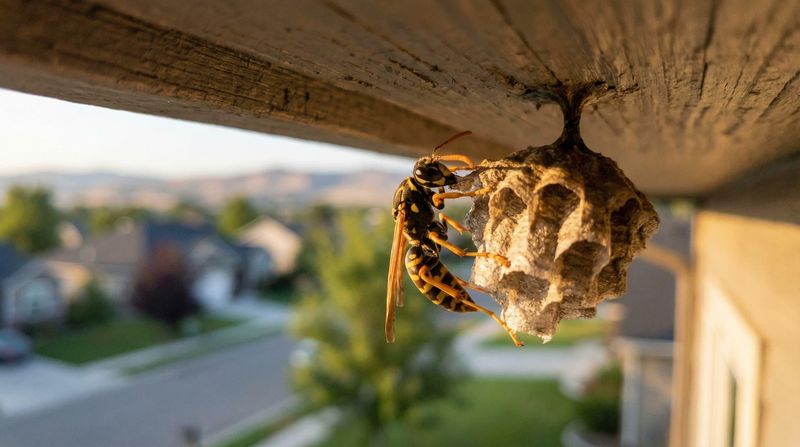
Under eaves, inside grill lids, and tucked into mailboxes, small upside-down umbrella nests are a sure sign of paper wasps. The European paper wasp has spread widely across Michigan in recent decades.
It looks a lot like a yellowjacket, but its body is slimmer, and it flies with long legs dangling below. Its antennae are orange, which helps tell it apart.
The open nest has visible cells with no outer cover.
These wasps are less aggressive than yellowjackets and even eat garden caterpillars. Still, a sting is no fun, so check grills and outdoor gear before reaching in.
7. Honey Bee
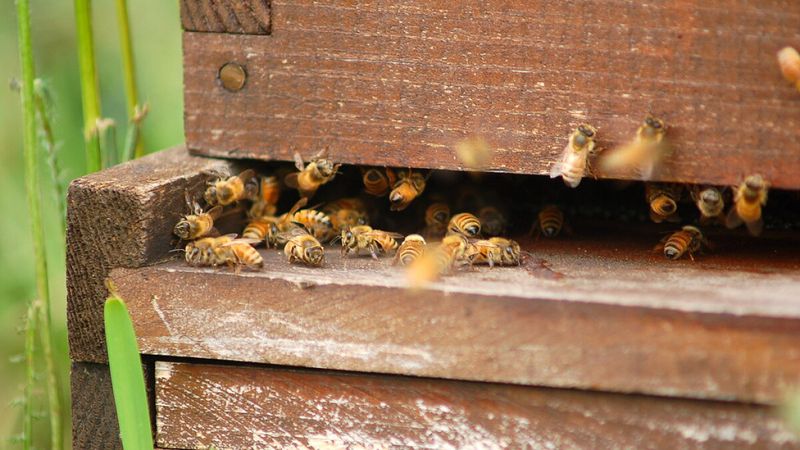
Few venomous creatures are as welcome as the honey bee. It pollinates Michigan cherries, apples, and blueberries, so a buzzing clover patch is good news.
Honey bees are fuzzy and golden brown with darker bands. They usually sting only when stepped on or when their hive is threatened.
Their barbed stinger stays in the skin, and the bee dies after using it.
Scrape the stinger out quickly with a fingernail or card. Anyone with swelling in the throat or trouble breathing needs emergency help right away, since bee allergies can be serious.
8. Bumble Bee

Round, fluffy, and noisy, the bumble bee looks more like a flying teddy bear than a threat. Michigan is home to around 20 species, including the endangered rusty patched bumble bee.
They are larger and hairier than honey bees, and many nest in the ground or in old bird boxes. Only females sting, and they can sting more than once because their stingers are smooth.
Fun fact: bumble bees can buzz-pollinate, shaking flowers to release pollen. Tomatoes grow better because of it.
Give them space, and they will happily ignore you.
9. Cicada Killer Wasp
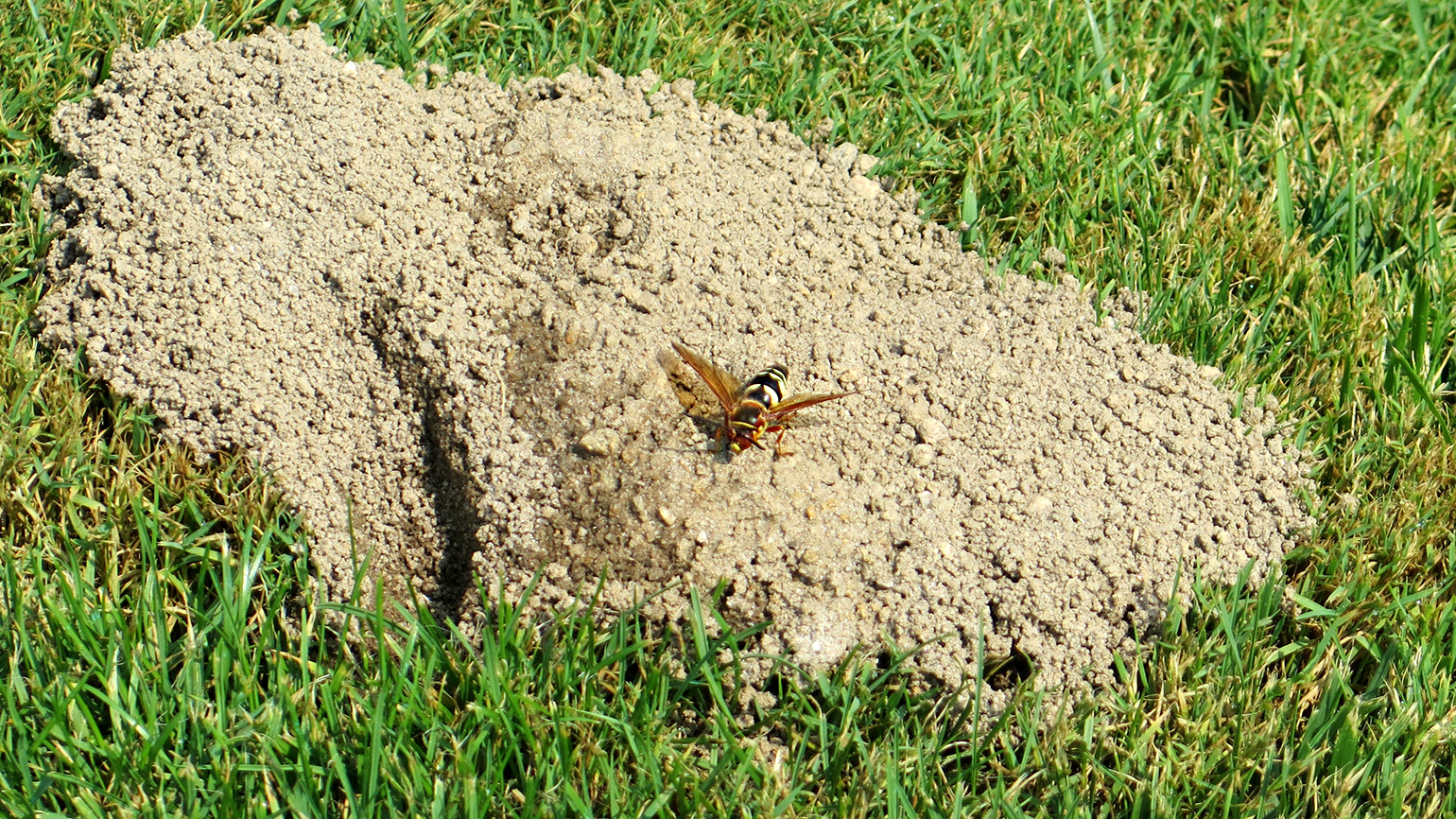
At nearly two inches long, the cicada killer looks like something from a monster movie. Kids often scream when one zooms past, but this giant is surprisingly mellow.
It has a black or reddish body with yellow bands and amber wings. Females dig burrows in sandy soil and stock them with paralyzed cicadas for their young.
Males buzz around aggressively but cannot sting at all.
Females can sting, though they rarely do unless grabbed. A few small dirt mounds in bare spots of lawn usually mean these wasps are nearby, and they leave by late summer.
10. Northern Short-Tailed Shrew
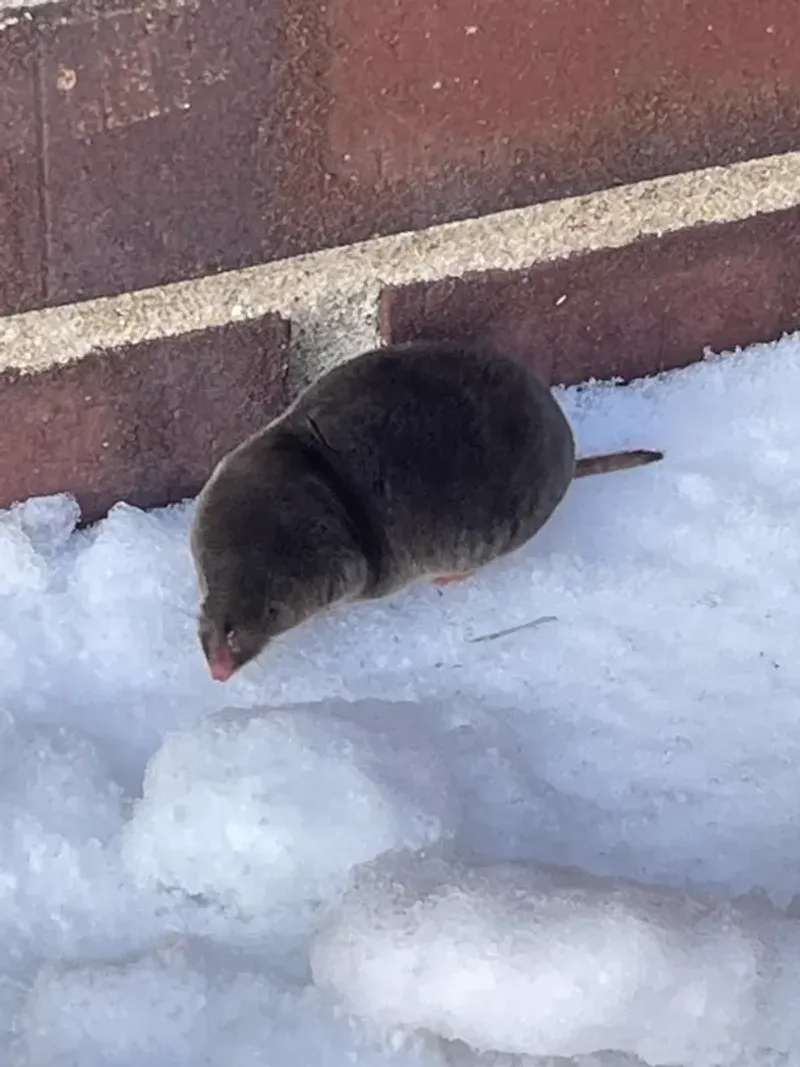
Surprise! One of the most unusual venomous creatures in Michigan is a mammal.
The northern short-tailed shrew has toxic saliva that it uses to stun worms, insects, and even mice.
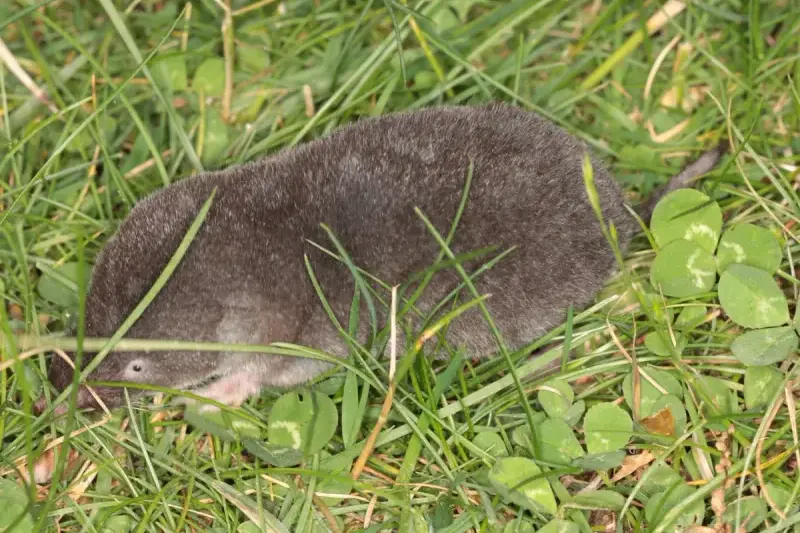
It is small and mouse-like, with dark gray velvety fur, a pointy nose, tiny hidden eyes, and a stubby tail. You may find one under leaves, in gardens, or brought to the door by a pet cat.
A bite to a human causes pain and swelling but is not dangerous. Just never pick one up bare-handed, and let it get back to eating garden pests.
Share this story