Tree-of-heaven is the invasive tree most likely behind those odd shoots popping up along your fence line, and it can keep coming back even when you pull and cut. Kentucky sources document it in urban areas, so it is a real neighborhood concern.
The trick is knowing what kind of growth you have, because a young seedling and a root sprout from a big tree need different handling. Here is how to tell them apart and what to do next.
First, make sure it is tree-of-heaven
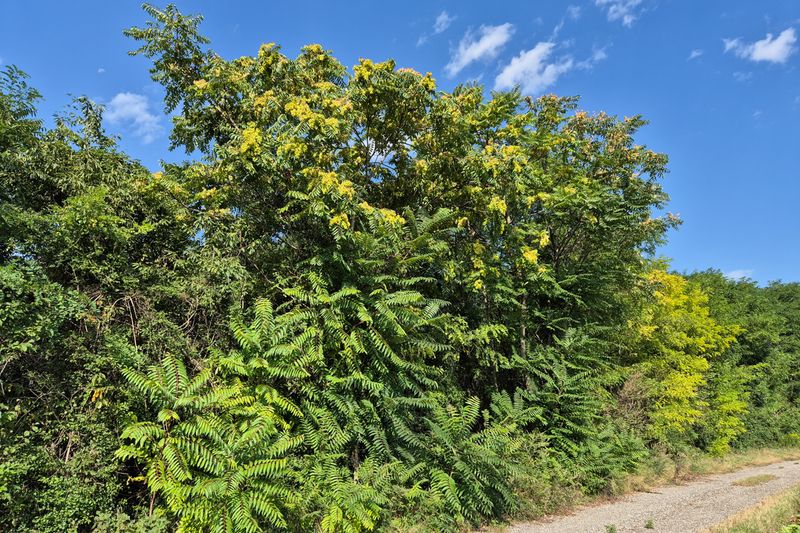
Before you pull or cut anything, confirm what you are looking at. Kentucky’s invasive plant guide, the University of Kentucky field guide, describes tree-of-heaven (Ailanthus altissima) as widespread in the state, including urban areas.
Mistaking a harmless native for it wastes effort, and the reverse mistake lets a problem tree keep growing.
Start with the leaves. They are compound, meaning one long stalk carries many leaflets, often somewhere between 11 and 25.
Each leaflet has smooth edges, with no teeth along the sides.
Look closely at the base of each leaflet. You should see one or a few small lobes tipped with a gland, like a tiny bump or notch.
This is a handy clue that helps separate tree-of-heaven from lookalikes.
Then use your nose. Crush a leaf or snap a twig, and tree-of-heaven gives off a sharp, acrid smell that many people compare to burnt peanut butter.
Wash your hands afterward, and consider gloves when handling plants you have not identified yet.
Sumacs and walnuts are the usual suspects for confusion. Both have compound leaves, so a quick glance can fool you.
Sumac leaflets usually have toothed edges, while walnut leaflets are often fewer and carry a different scent. If the smooth edges, gland-tipped lobes, and odor do not all line up, hold off.
When you are unsure, take clear photos of the leaves, bark, and base of the plant. Your county Extension office can help confirm the identification before you choose a control method.
Why a small shoot may resist pulling
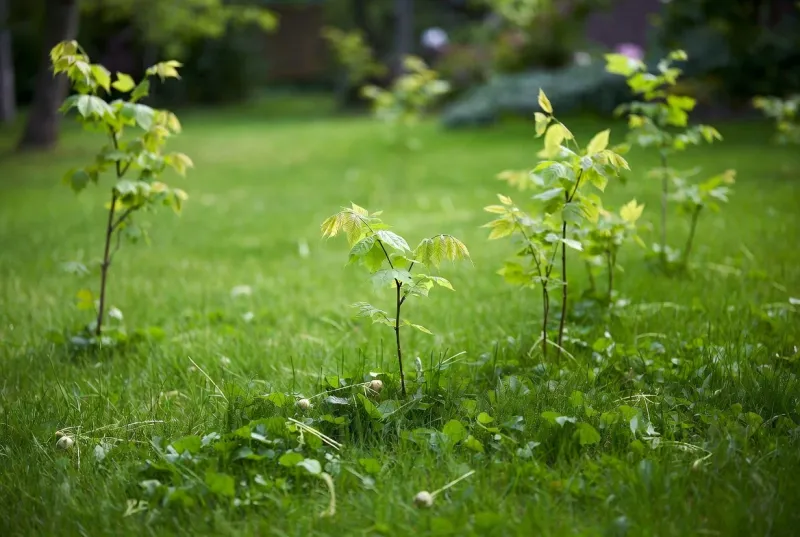
Two small shoots can look nearly identical above the soil and behave very differently when you grab them. One may be a seedling that grew from a seed and has its own small root.
The other may be a root sucker, a sprout that grew from the lateral root of an established tree nearby.
That difference matters for pulling. A seedling usually comes out as a single unit if you get the whole root.
A sucker stays tied to a larger root system, so you may be tugging on something far bigger than the stem suggests.
According to the USDA Forest Service species review, broken roots can resprout, and established root suckers can be very difficult to pull by hand. So a snapped stem or a torn root is not always the end of the plant.
None of this means every small shoot is a fight. Plenty of little tree-of-heaven plants are simply young seedlings, and those are fair game for hand pulling.
The point is to avoid assuming that every sprout is independent.
Here is a practical clue. If several shoots appear in a line or cluster, especially near a mature tree, suspect suckers.
If one lone sprout sits far from any larger tree and slides out with a thin root, it is more likely a seedling.
You can also test gently. Loosen the soil around the base and follow the root with your fingers.
If it runs sideways and thickens toward a bigger tree, stop and treat it as a sucker rather than yanking harder.
Seeds and roots can both produce new growth
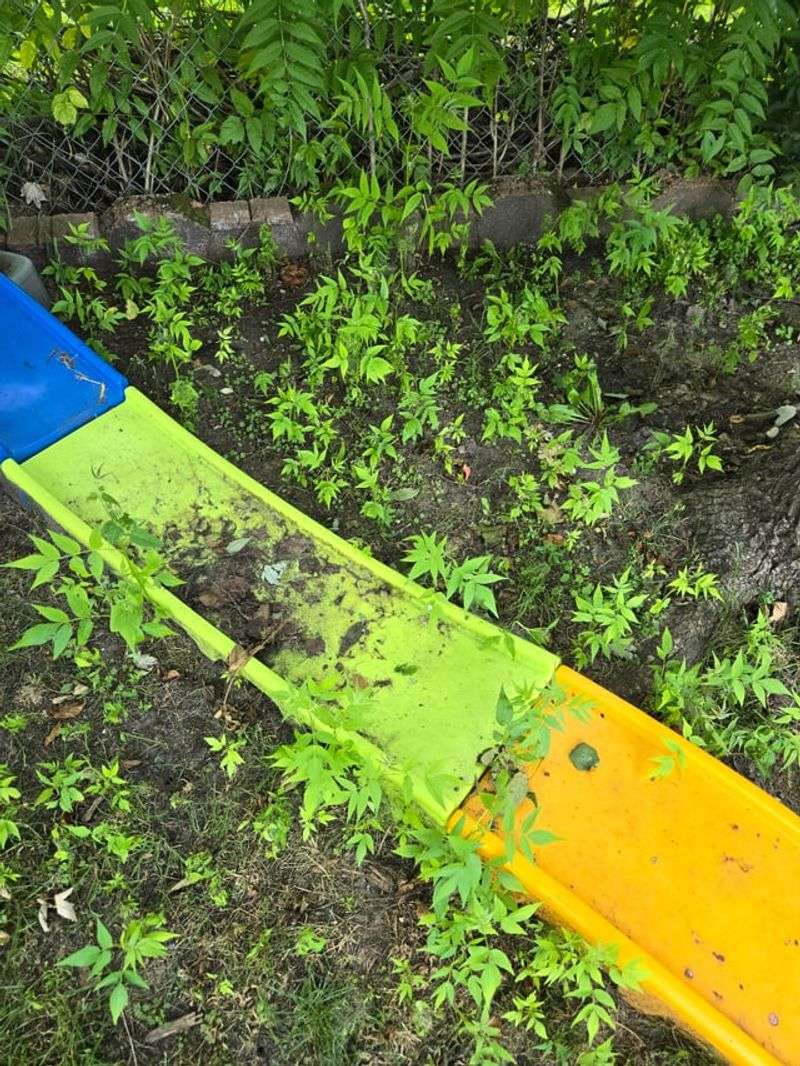
Tree-of-heaven has two ways to make more of itself. Seeds travel from mature female trees, and roots send up new sprouts.
Both routes explain why a single tree can lead to shoots in several spots.
Seeds first. Female trees produce winged seeds that can be carried off by wind.
UConn Extension notes a potential of more than 300,000 seeds in a year. That number shows what a tree is biologically capable of, not what a typical tree produces, and it does not mean every yard has a colony.
Now roots. The USDA Forest Service review describes root sprouting, and those sprouts can show up some distance from the parent tree.
That is why a shoot in the middle of a lawn or beyond a property line can still trace back to a tree you cannot see.
What about Kentucky specifically? Kentucky’s invasive plant guide documents tree-of-heaven as widespread, including in urban areas.
What the sources do not offer is a measured rate of spread through neighborhoods, or a comparison with how fast anyone can pull it.
So treat the headline as a warning about a real, persistent plant rather than a stopwatch race. Walk your property edges, fence lines, and unmanaged corners, and look for a mature tree nearby.
Spotting the source tells you whether you are dealing with seeds, roots, or both.
Pull young seedlings while the root is manageable
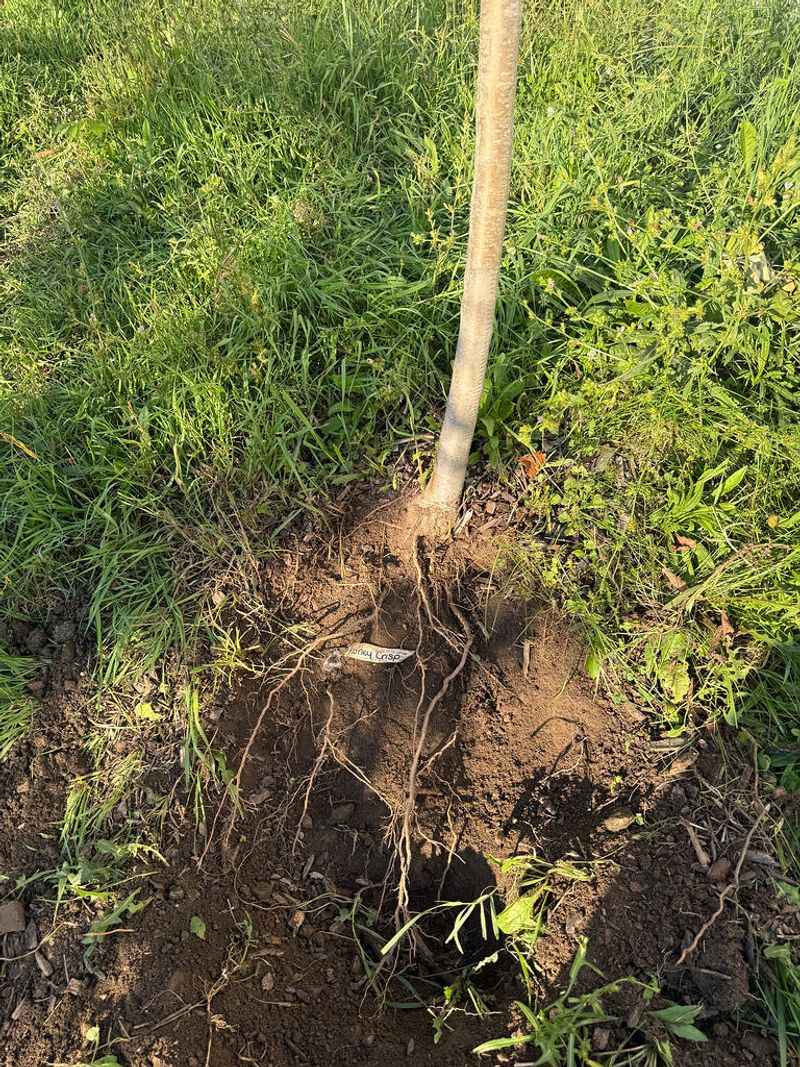
If you have confirmed a true young seedling, hand pulling is a reasonable first move. Timing helps a lot.
The younger the plant, the smaller and easier to remove its root.
Soil moisture also matters. After a good rain, or when the ground is damp, roots slide out more easily and are less likely to snap.
Dry, packed soil tends to leave pieces behind.
Grip the stem close to the ground and pull slowly with steady pressure instead of jerking. The goal is to remove the whole root.
The USDA Forest Service species review notes that broken roots can resprout, so leftover fragments can undo your work.
A hand trowel can help. Loosen the soil around the base first, then lift the plant out.
Check the root afterward, and if it snapped, dig down for the remainder.
Be honest with yourself about what you are pulling. A shoot that resists, shows a thick sideways root, or sits near a mature tree may be a root sucker, not an ordinary seedling.
In that case, stop and move to the plan for established growth rather than tugging until it breaks.
Do not expect one afternoon of pulling to clear an area. New seedlings can appear again if seeds are nearby, and missed roots may sprout.
Treat pulling as one tool for young plants, followed by regular checks.
Bag or dispose of pulled plants so they are not left lying in contact with soil.
Established trees need more than a saw
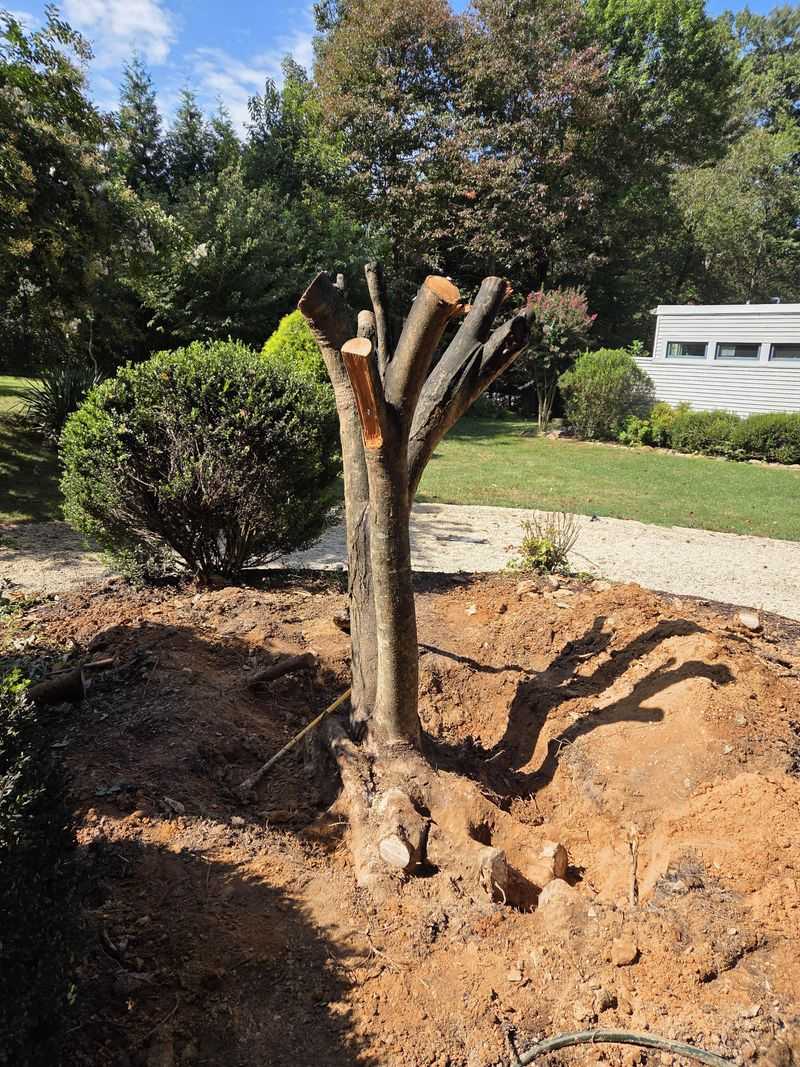
It is tempting to fell a big tree-of-heaven and call it done. The trouble is that cutting can prompt the plant to respond with stump sprouts and root sprouts.
The USDA Forest Service review says repeated follow-up is needed after mechanical control, and it warns that cutting without further treatment may increase the plant’s abundance.
Picture a stump with a ring of fresh shoots a few weeks later, plus new stems popping up several feet away. That is the pattern many homeowners run into when a saw is the only tool used.
For larger trees, Kentucky’s invasive plant guide points toward targeted herbicide methods, specifically basal-bark and hack-and-squirt approaches. The same guide warns against cut-stump treatment for tree-of-heaven, noting it can lead to aggressive root resprouting.
Advice that works for other trees, such as painting a stump, does not automatically fit this species.
This article will not give you a mixing or application recipe, and that is deliberate. Herbicide choices and legal uses depend on the specific product and the setting, so the product label is your rulebook.
Read it fully, and follow its directions for the method, timing, and safety gear.
If the tree is large, close to a structure, near water, or shared with neighbors, get help. Your county Extension office can explain options, and a qualified applicator can handle the work when the job goes beyond a weekend project.
Plan on follow-up either way. Even a well-done treatment can leave sprouts or seedlings that need attention later.
Keep checking for sprouts and seedlings
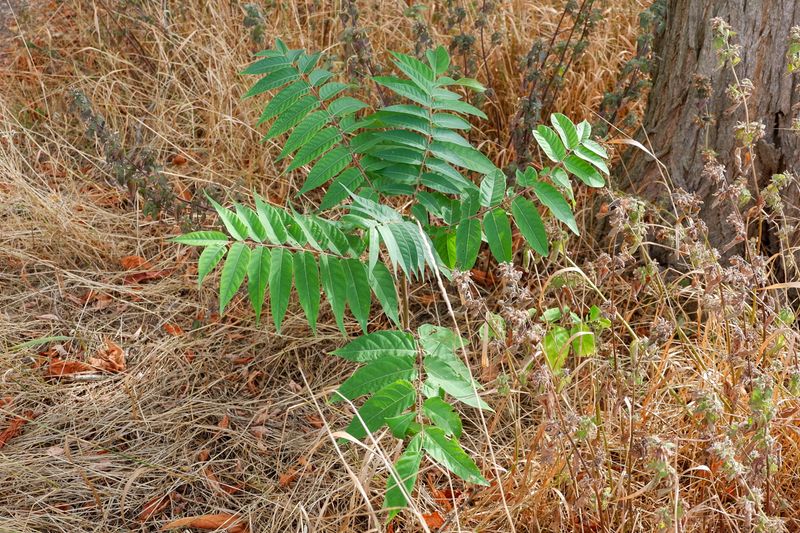
Control does not end with the pulling or the treatment. The USDA Forest Service review recommends repeated inspection and retreatment of new sprouts or seedlings, and it says mechanical control can take years.
Kentucky’s guide also recommends watching for regrowth and seedlings after treatment.
How long that takes varies. A lone seedling patch may need only a few checks, while a site with a big tree and a root network may need longer.
Every property is different, so let what you find guide the schedule.
Walk the area regularly through the growing season, and again the next year. Look near the old tree, along fences, and in corners you rarely mow.
Mark spots with a flag so you can find them again.
Your decision sequence is simple. Confirm the plant is tree-of-heaven.
Work out whether the growth is a seedling or a root sucker. Choose a response that fits, following any herbicide label and getting Extension or applicator advice when needed.
Then keep looking. With this tree, the plant that returns is rarely a surprise to anyone who is still watching.
Share this story