A fresh layer of snow turns your yard into a giant notebook that animals write in while you sleep. By morning, every paw print, hop, and slide tells a story about who stopped by in the dark.
In Kentucky, that list can be longer and more surprising than you might guess. Grab your boots and a cup of cocoa, because here are ten nighttime visitors your snowy lawn can reveal.
1. White-Tailed Deer
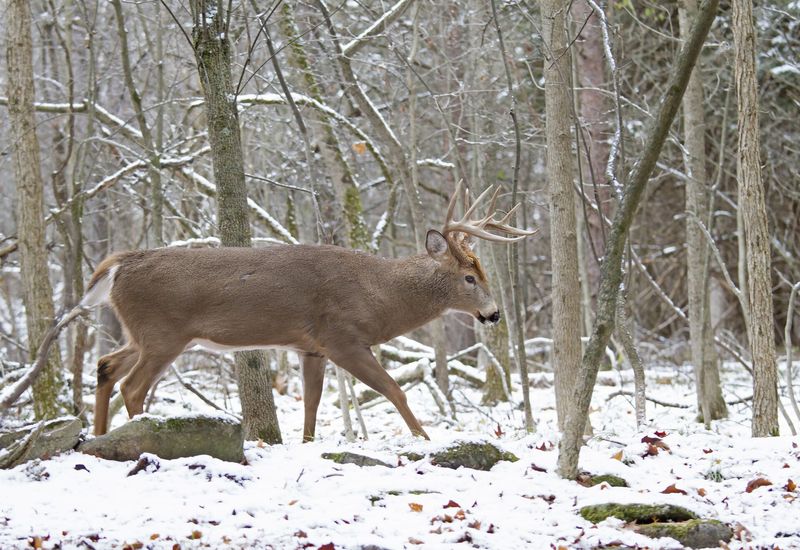
Picture two neat teardrops pressed side by side, pointing the way like little arrows. That is the calling card of a white-tailed deer, and Kentucky has hundreds of thousands of them roaming through farms and suburbs alike.
Deer prints are usually two to three inches long, with a split down the middle where the two halves of the hoof meet. In deeper snow, you may also see two small dots behind each print from the dewclaws.
The pointed end shows which direction the deer was heading.
Follow the trail and you might find nibbled shrubs, especially arborvitae, yews, or your favorite hostas that are hiding under the snow. Deer often move along fence lines and wooded edges, so check those spots first.
If you see a flattened oval in the snow, congratulations, a deer may have bedded down right in your yard.
2. Eastern Cottontail Rabbit
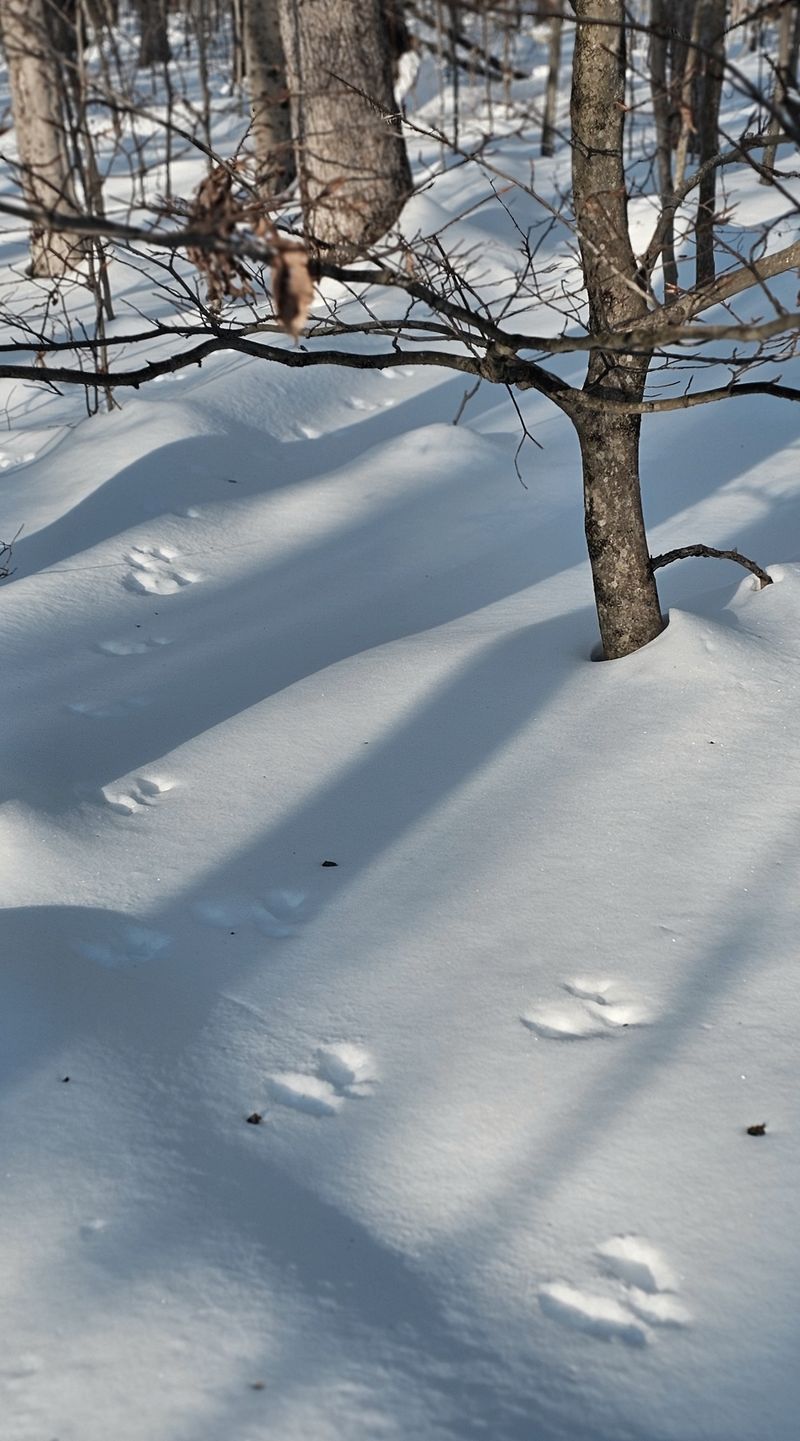
Ever notice tracks that seem to be running backward? Blame the cottontail.
When a rabbit hops, its long back feet swing past its front paws and land ahead of them.
The result is a pattern that looks like a Y or an exclamation point. Two small round prints sit close together behind two longer prints set side by side.
Kids often think the bunny was going the wrong way, which makes it a fun puzzle to solve together.
Cottontails love to hide under brush piles, decks, and thick shrubs. Look for tiny round droppings and clean, angled cuts on young twigs, almost like they were snipped with scissors.
Busy trails crisscrossing your lawn usually mean a rabbit has made your yard part of its nightly snack route.
3. Raccoon
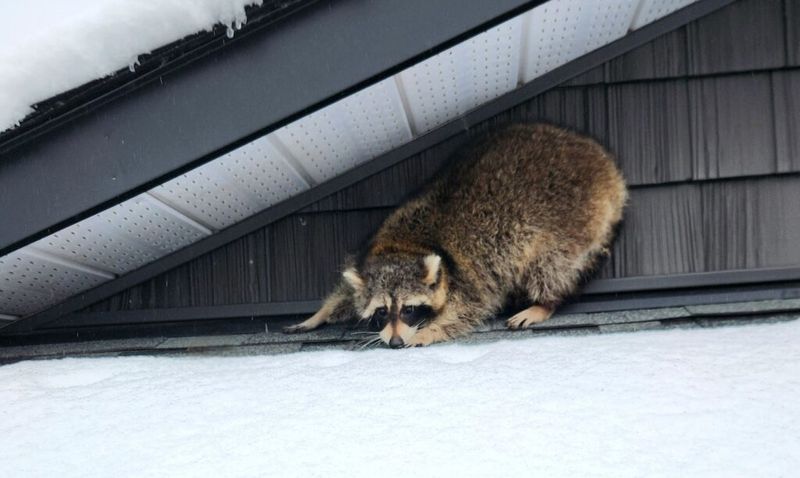
If it looks like a toddler crawled across your patio at midnight, you probably hosted a raccoon. Their front feet have five long fingers that leave prints shockingly similar to little human hands.
Raccoons walk in a special way, placing a back foot next to the opposite front foot. That creates pairs of prints, one big and one small, side by side all along the trail.
The back foot looks a bit like a tiny human foot with a long heel.
These masked bandits are clever and not shy about it. Trails often lead straight to garbage cans, pet food bowls, bird feeders, or a creek.
Fun fact: raccoons do not truly hibernate, but in very cold Kentucky snaps they may sleep for days, so fresh tracks after a thaw are common.
4. Opossum
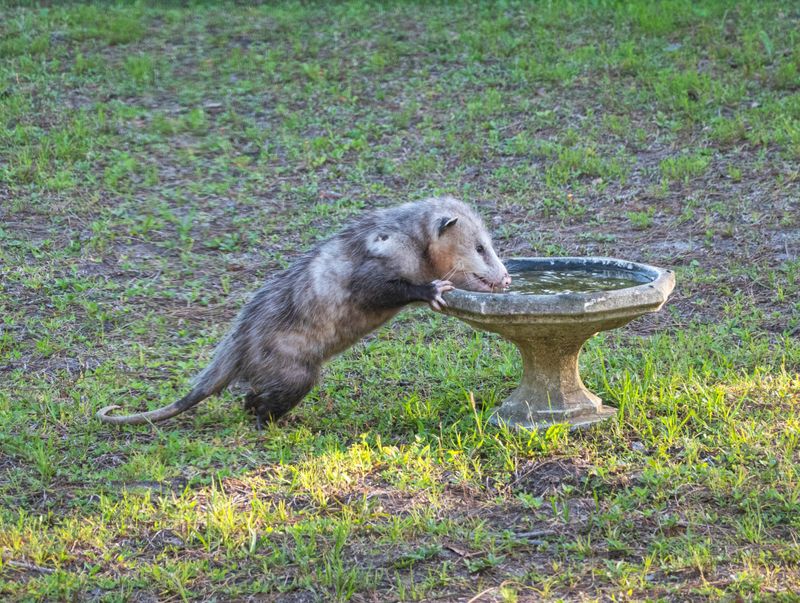
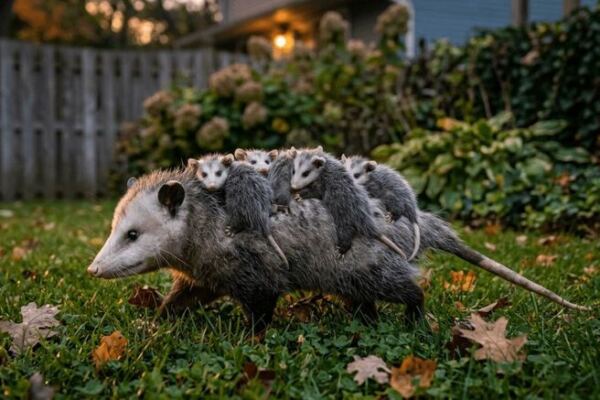
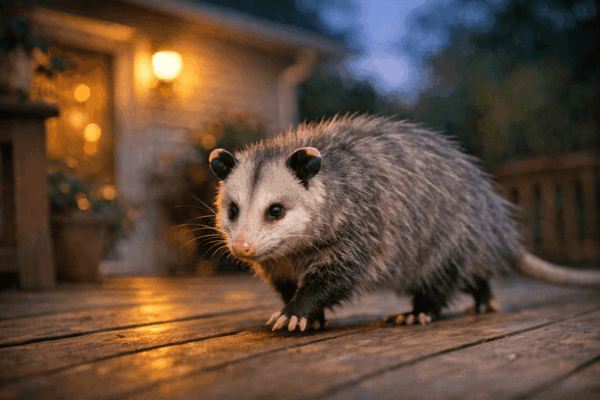
North America has only one marsupial, and it might be shuffling past your back steps tonight. The Virginia opossum leaves one of the strangest prints you will ever find.
Its front foot looks like a little star with five spread toes. The back foot is the real giveaway, since it has a thumb that sticks out sideways, a bit like a person giving a hitchhiker sign.
You may also spot a thin line where the bare tail dragged behind.
Opossums hate the cold, and their naked ears and tails can even get frostbite. Because of that, you will see their tracks more on milder winter nights.
They are harmless visitors that eat ticks, beetles, and fallen fruit, so consider them part of your free cleanup crew.
5. Red Fox
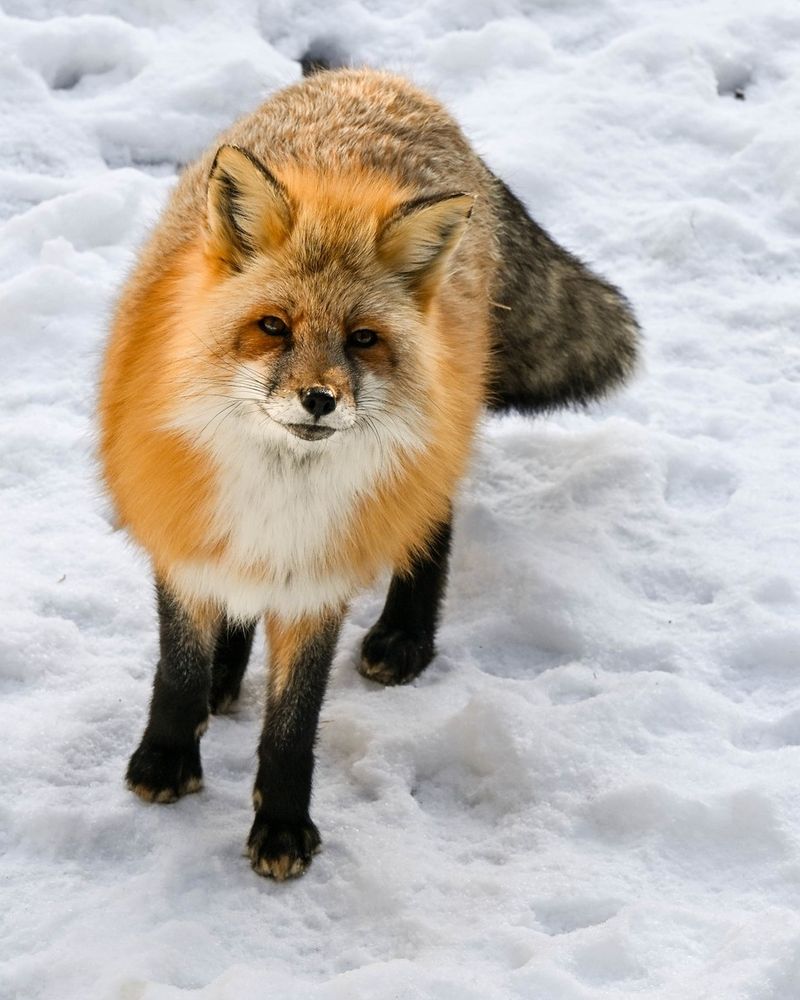
Some tracks look like they were laid down with a ruler. A red fox walks so precisely that each back foot lands right in the print of the front foot, creating a single tidy line across the snow.
Fox prints are small and oval, about two inches long, with four toes and claw marks. Their feet are furry in winter, so prints can look a little fuzzy around the edges.
A dog of the same size would leave a sloppier, wider trail.
Foxes hunt mice under the snow by listening, then pouncing nose first. If you see a trail that suddenly ends in a small crater, you may be looking at a fox’s dinner spot.
Gray foxes also live in Kentucky and leave similar but slightly rounder prints.
6. Coyote
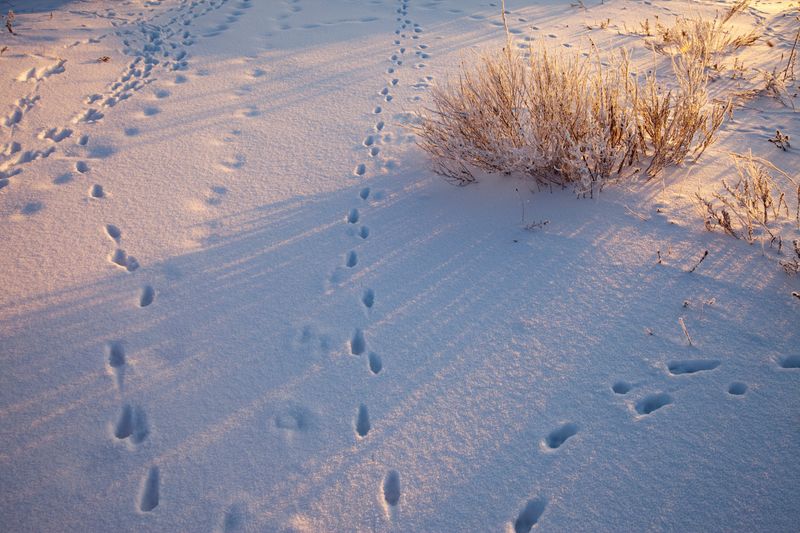
Plenty of Kentuckians are surprised to learn coyotes live in every single county, including parts of Louisville and Lexington. Snow is often the first proof that one has wandered close to home.
Coyote tracks are about two and a half inches long and narrower than most dog prints. Look closely between the toes and the pad.
On a coyote, you can usually draw an X through that space without touching the pad, while dog tracks are rounder and messier.
Coyotes travel with purpose, often in straight lines along field edges, creeks, and trails. They are usually wary of people.
Still, if their tracks show up regularly, bring small pets inside at night and secure trash and pet food.
7. Striped Skunk
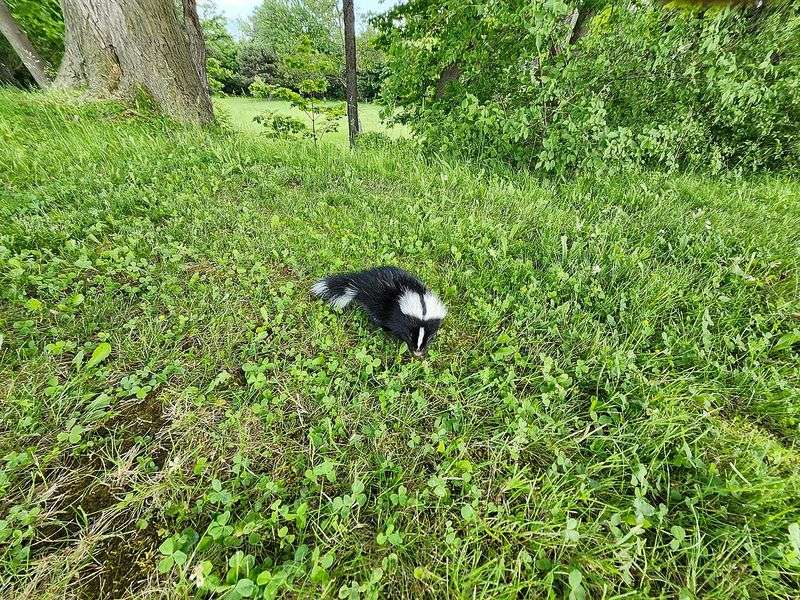
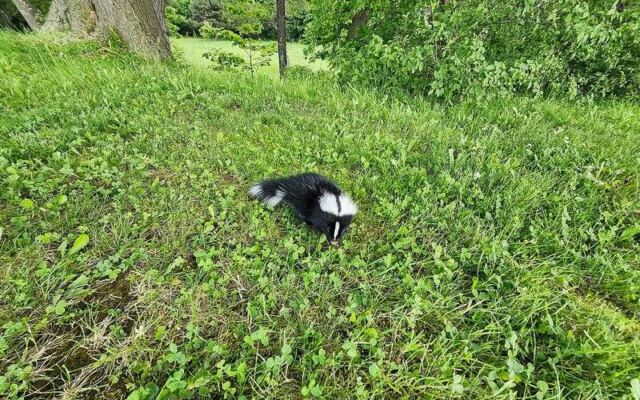
Okay, deep breath. Finding skunk tracks does not mean your yard is doomed to smell forever, though it does mean you should watch where you step at night.
Striped skunks leave five-toed prints with long claws on the front feet, which they use for digging. Their back prints look like tiny flat-footed shoes.
The trail tends to wander and meander, since skunks waddle along at a slow, lazy pace.
Late winter is skunk dating season in Kentucky, so tracks pick up in February. You may also find little cone-shaped holes in the lawn where they dug for grubs.
Check under decks and sheds, which are favorite hideouts.
8. Gray Squirrel
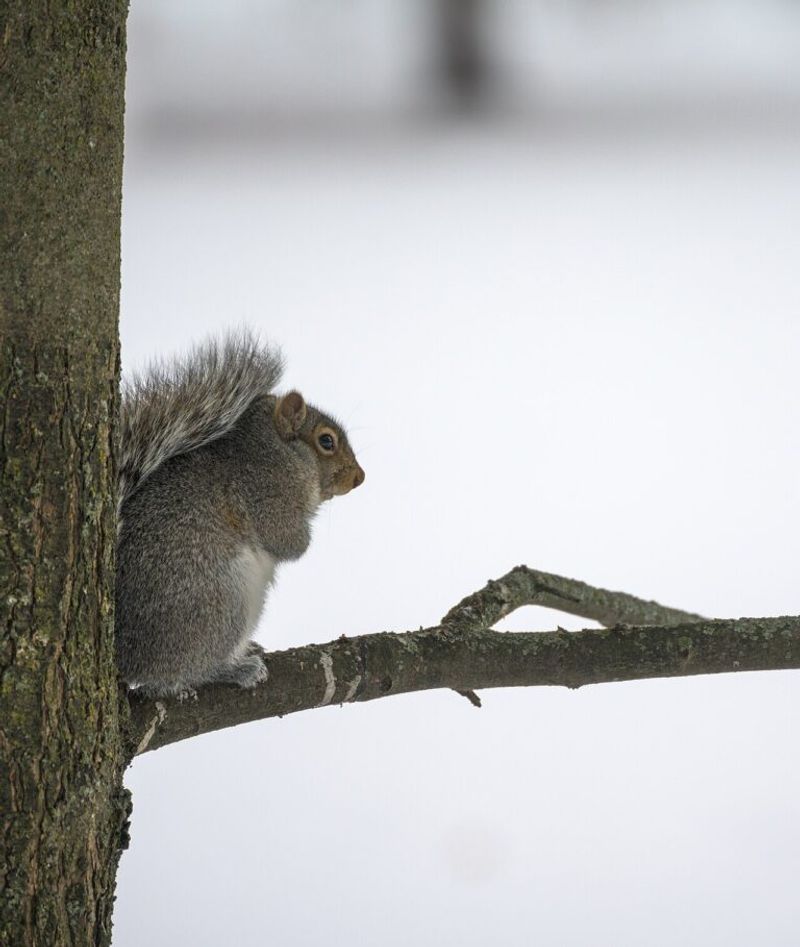
Here is a little twist. Squirrels are mostly daytime animals, but their tracks are so common that you will want to rule them out before blaming someone sneakier.
Gray squirrels bound like tiny rabbits, so their back feet land ahead of their front feet too. The big difference is that squirrel front feet usually land side by side, not one behind the other.
Trails often start and stop at tree trunks.
Under a bird feeder, squirrel tracks can turn the snow into a muddy mess. If those prints appeared overnight, though, take a closer look.
A southern flying squirrel, which is common across Kentucky and only comes out after dark, might be your real visitor.
9. Mice and Voles
Tiny footprints, big drama. Some of the most charming marks in the snow belong to the smallest night visitors of all.
Deer mice and white-footed mice leave dainty prints in groups of four, often with a thin tail line dragging between them. Their trails dart from shrub to shrub, as if they know an owl could be watching.
Sometimes a trail simply stops, and you can see wing marks where an owl swooped down.
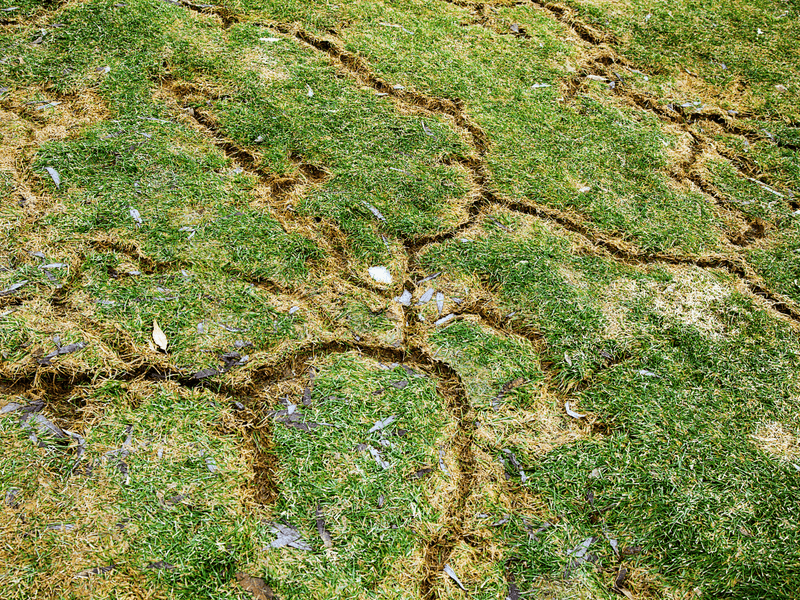
Voles do things differently. They tunnel under the snow, and when it melts you will see winding grassy paths across the lawn.
Those little highways show just how busy your yard was all winter.
10. Bobcat
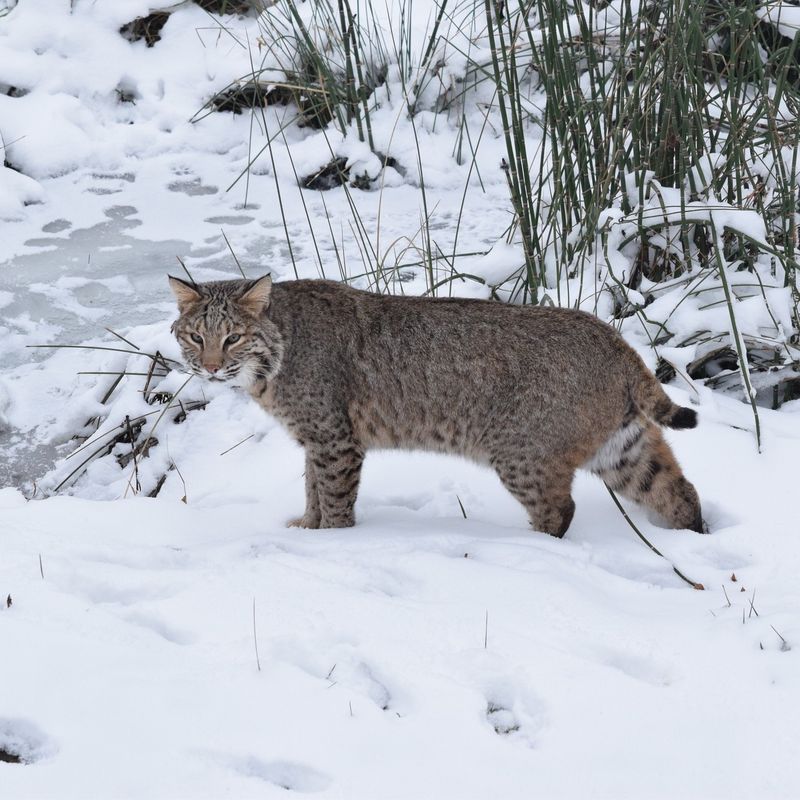
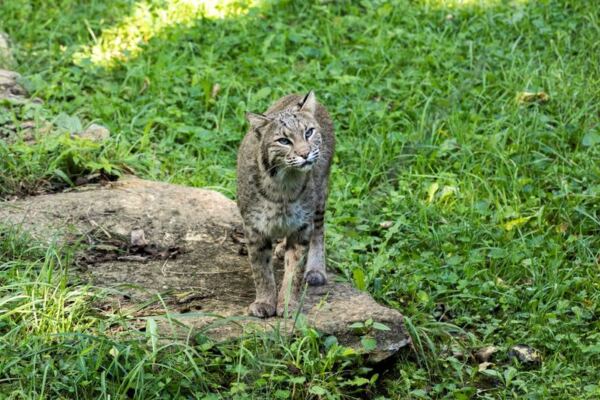
Rare, quiet, and almost never seen, the bobcat is the visitor that gives trackers goosebumps. Kentucky’s bobcat numbers have grown over the years, especially in the eastern and southern parts of the state.
Bobcat prints are round, about two inches wide, with four toes and no claw marks. Cats tuck their claws in while walking, which is the best way to tell them apart from foxes or dogs.
The heel pad also has three little bumps on the back edge.
Like foxes, bobcats step carefully into their own prints. Their trails hug brush, rocky slopes, and creek banks where they hunt rabbits.
Spot one near your home, and you have a story worth telling the neighbors.
Share this story