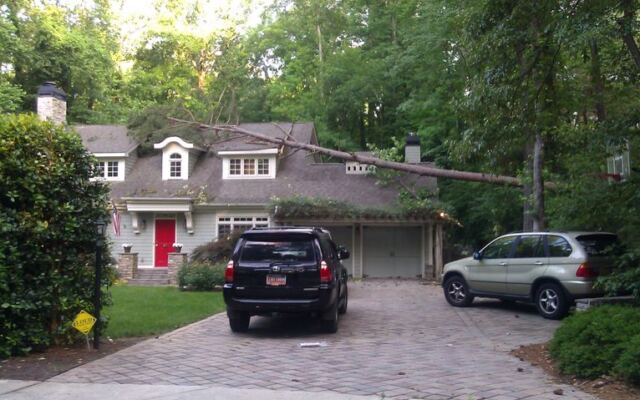
In New York, the person who pays for a fallen branch is not always the person who owns the tree. For a private tree, the question usually turns on whether the owner knew, or should have known, about a danger and did nothing.
A storm, a property line, and an insurance policy all play a part, but none of them settles the matter alone. Knowing the rules before winter weather arrives can save you money, stress, and a lot of arguing over a fence.
A tree owner does not automatically pay
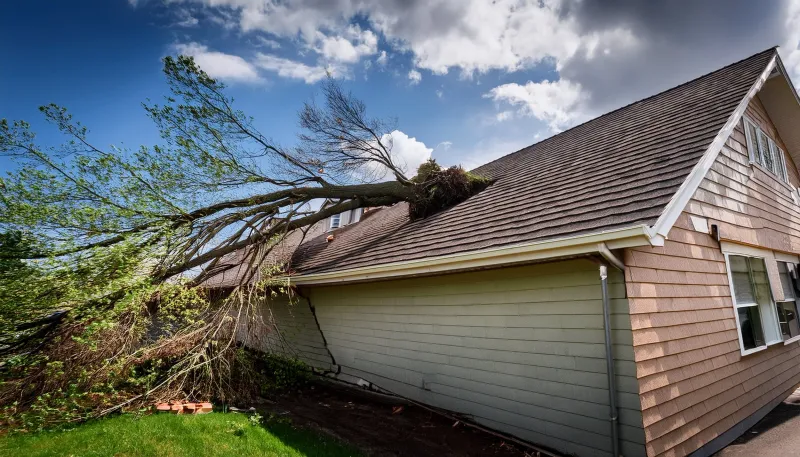
For a privately owned tree in New York, liability generally depends on whether the owner knew or reasonably should have known about a dangerous defect and failed to address it. Ownership alone does not establish negligence liability.
A branch landing next door does not, by itself, mean the tree owner owes money.
The law talks about two kinds of notice. Actual notice means the owner really knew about the problem, perhaps because a neighbor complained or the owner saw a cracked limb.
Constructive notice means the danger was obvious enough that a reasonable owner would have noticed it. A 2022 New York appellate decision treats readily observable signs of decay or defects as relevant to that second kind of notice.
That rule has limits. Under a 2007 trial-level decision, adjoining owners are not expected to constantly inspect for hidden decay that nobody could see.
Still, that does not mean owners never need to look at their trees. Dead branches, fungus on the trunk, or a visible lean are the kinds of signs a careful owner pays attention to.
Trees on public land are a different matter. Claims involving a city, town, or village tree may involve separate duties and notice requirements, as shown in a 2023 case involving a Town-owned tree.
The private-neighbor rule should not be assumed to answer those claims.
What can show the owner knew about a hazard?
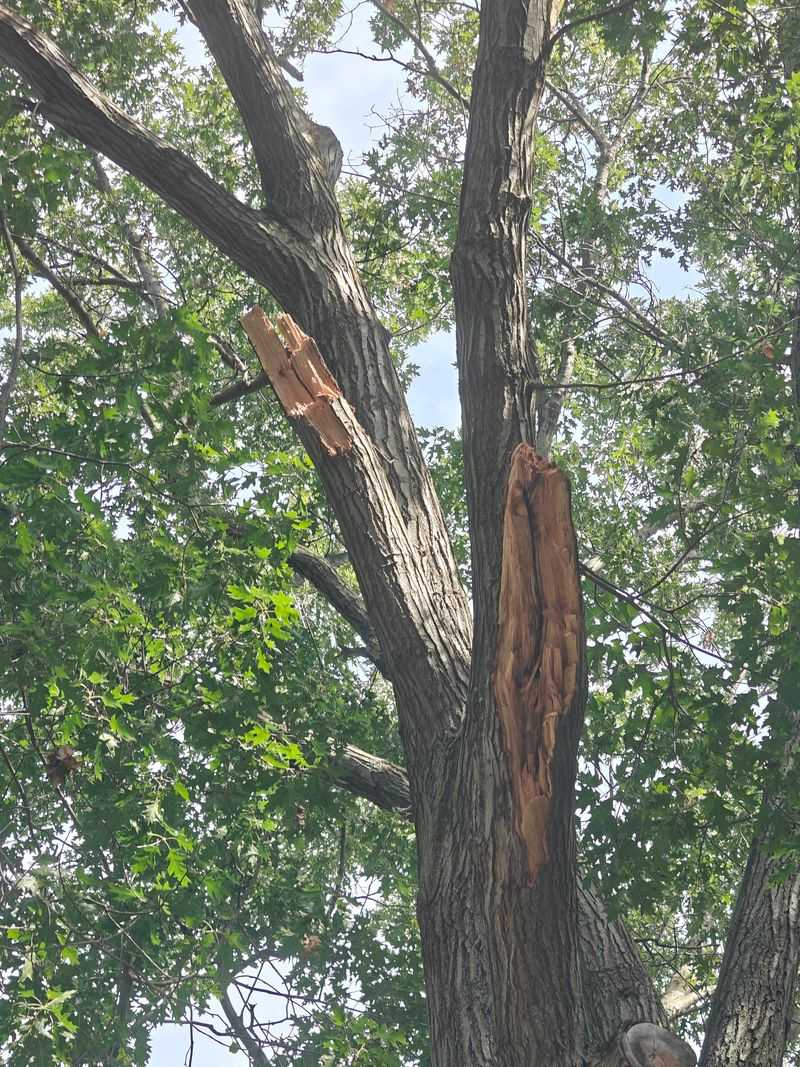
Courts look at the facts of each case to decide whether an owner had notice. Prior complaints are one example.
If a neighbor raised concern about a limb and the owner heard it, that may support a finding of actual notice.
Visible signs matter too. Dead wood, peeling bark, fungus, large cracks, or obvious decay may point toward constructive notice if they were easy to see.
In a 2011 appellate decision, the court looked at evidence like this when asking whether a defect would have been apparent.
Photographs and expert opinions are facts a court may consider. A dated photo of a split branch can help show what was visible, and an arborist may explain whether a problem could have been spotted.
None of these items is automatic proof of liability, and whether they establish notice depends on the evidence in the particular case, as seen in the 2022 decision.
If you suspect a hazard, write it down. Take dated photos, and send the tree owner a written note describing the concern, keeping a copy.
New York DFS guidance encourages homeowners to prepare for storms, and a written record may help show what the owner knew. It does not guarantee that anyone will be found liable.
Storm damage does not settle liability
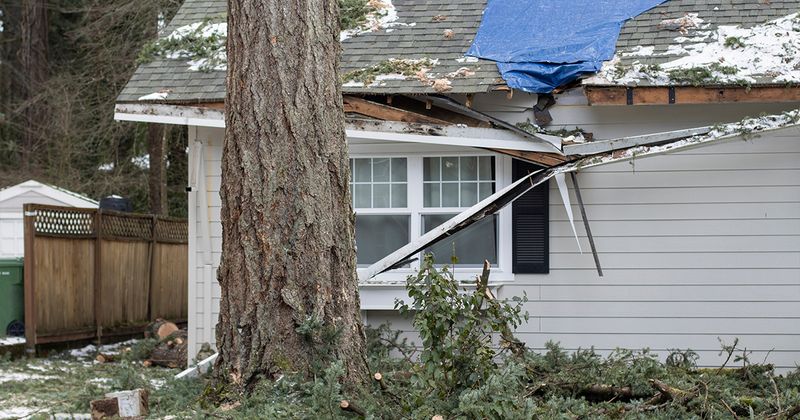
Picture two trees. One is healthy, and a fierce wind snaps a limb with no warning signs at all.
The other has a dead, cracked branch that a neighbor pointed out months ago, and it falls on a calm night after a light rain.
In the first case, the owner had no prior notice of a defect, so a storm alone does not make the owner automatically liable. In the second, a claim may be possible because there was a known or readily observable hazard that was not addressed.
A New York trial-level decision applies the notice rule to storm damage on neighboring property.
The point is that a storm does not by itself decide liability in either direction. It does not prove the owner was careless, and it does not erase evidence that the owner knew about an earlier danger.
The 2022 appellate decision sets out the underlying notice standard.
So after a storm, the useful questions are about the tree itself. What did it look like beforehand, who noticed, and was anyone told?
Those facts matter more than the weather report.
Trimming rights stop at the property line
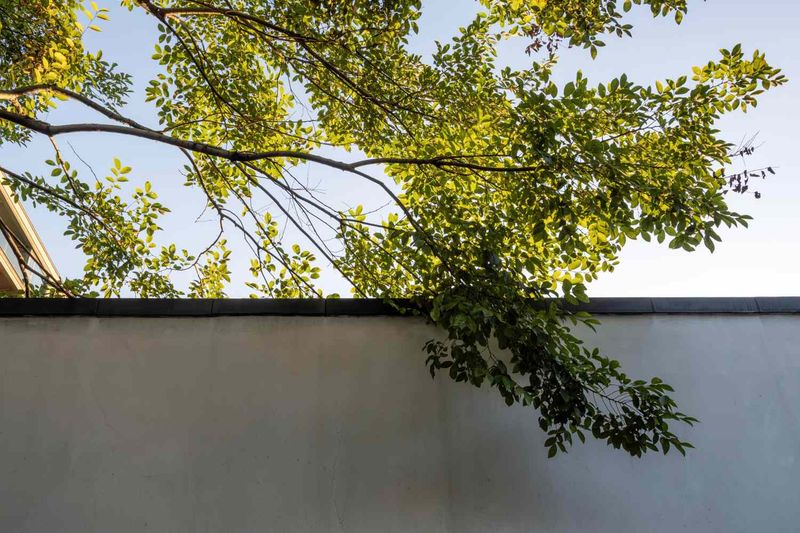
Overhanging branches can feel like an invitation to grab a saw. Generally, a property owner may trim branches that hang over from their own side of the property line.
That right has limits, though.
According to a 2017 decision from New York’s Appellate Term, the right does not extend past the boundary. It also does not allow you to injure or destroy the tree’s main support systems, such as major roots or the trunk.
Cutting too aggressively could create problems of your own.
Size and height change the picture. For high, large, or hazardous limbs, seek qualified professional advice from an arborist or accredited tree-care company instead of treating the job as do-it-yourself work.
Falling wood, ladders, and nearby wires make this risky.
Professional help is a sensible precaution, not a legal requirement, and it does not promise any particular outcome in a later dispute.
Insurance and legal liability are separate questions
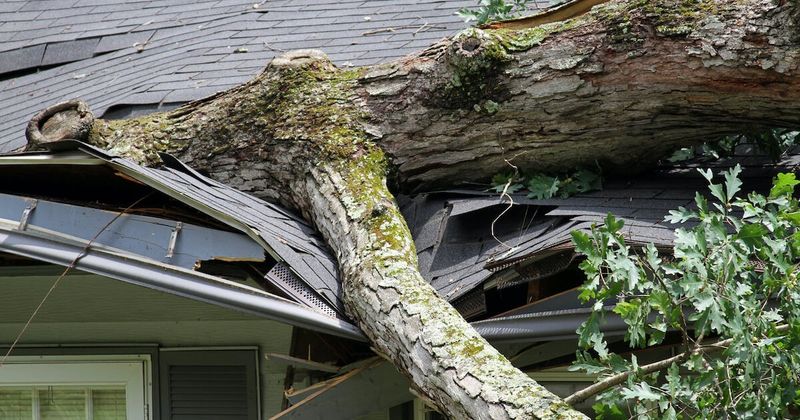
Whether a neighbor has a legal claim against a tree owner is one question. Whether an insurance company will pay is another.
A claim for negligence is possible only if the legal requirements for liability are met, while coverage depends on the contract.
Policies differ. Coverage, limits, exclusions, deductibles, and debris-removal terms all depend on the specific policy.
New York DFS explains that homeowners policies vary and recommends checking your policy and contacting your insurer or agent.
That means neither homeowner should assume an insurer will pay. A policy might cover damage to a house but set limits on removing a fallen tree.
Another might have a deductible larger than the repair bill.
Take time to read your own policy before trouble arrives. Look for the sections on wind damage, fallen trees, and debris removal, and call your agent with questions.
Having the answers ahead of time makes a stressful day easier.
What to do right after a branch falls
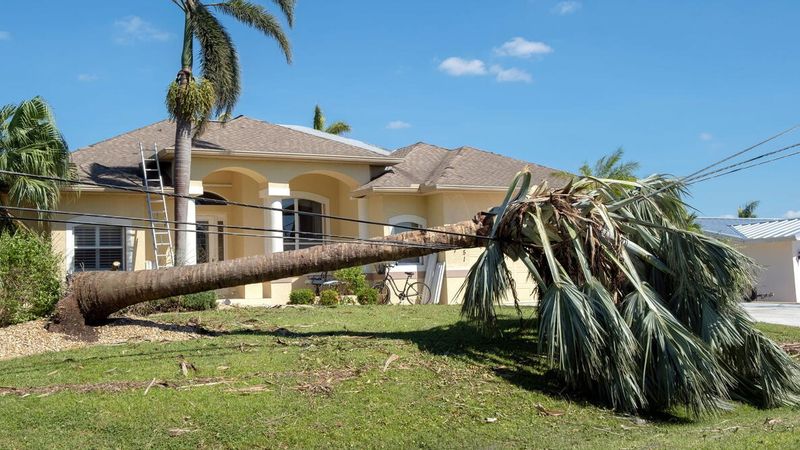
Safety comes first. If a fallen electrical line or a tree touching a line is involved, stay at least 30 feet away.
Touch nothing connected to it, including the line, the tree, or anything in contact with it, and call 911. This is the guidance in New York Department of Public Service safety information.
Once everyone is safe, notify your insurer promptly. DFS advice includes keeping records and receipts and taking reasonable steps to prevent further damage, such as covering a broken window or a hole in the roof.
Take photos of the branch, the damage, and the tree itself before anything is moved, if you can do it safely. Keep every receipt for temporary repairs.
Contact your insurer before making permanent repairs, and check what your policy says about its terms. DFS recommends reviewing the contract with your insurer or agent.
A quick call can prevent surprises about what is covered.
Check for hazards before the next storm
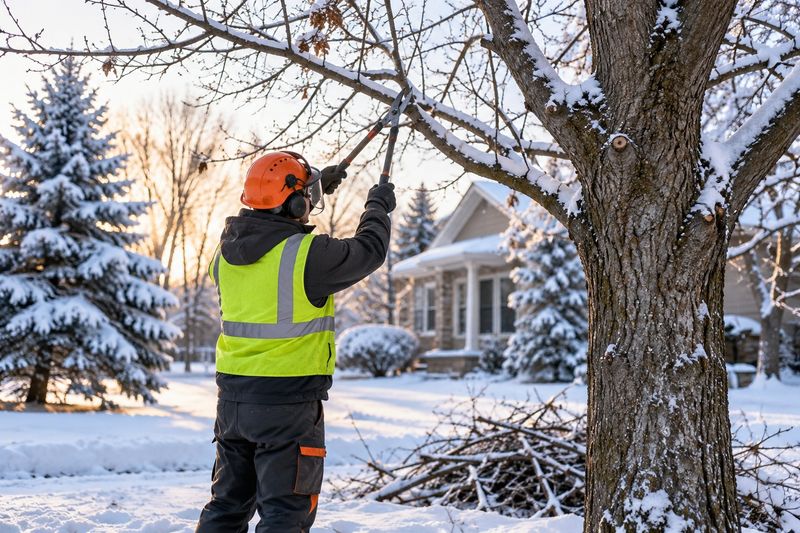
A short walk around your yard before winter can reveal a lot. New York DFS advises checking for old or damaged trees and contacting an arborist or accredited tree-care company when needed.
Look for dead limbs, cracks, leaning trunks, and branches hanging over roofs.
If the worrisome tree belongs to a neighbor, mention it in a friendly way and follow up in writing. Keep a copy, and save dated photos.
A record of your concern is a sensible precaution, though it does not promise liability or insurance payment.
A few minutes of looking now is easier than any cleanup later. A tree tends to give warnings long before it gives way.
Share this story