
A flash of orange fur crossing a snowy lawn can stop you at the window. It is natural to wonder what the fox is up to and whether it is a problem.
A quick sighting leaves a lot of questions open, but Iowa wildlife sources give some helpful clues. Here is what the sighting may mean, what it cannot tell you, and how to keep people and pets safe.
What a winter yard crossing may mean

Seeing a fox cross your yard feels like a story with a clear plot, but a few seconds of trotting rarely reveals the purpose. The fox might be moving along a regular route through its territory.
It might be searching for something to eat. It might be doing something else entirely.
Both of those first two explanations make sense for an Iowa animal. According to Iowa State University Extension, red foxes eat rabbits, rodents, and birds, and they adapt well to many settings, including towns and cities.
That means foxes are not limited to distant fields and woodlots. Farmland, creek corridors, neighborhoods, and mixed patches of habitat can all be part of a single fox’s range.
A yard may simply sit along a path between those places. It may also offer access to prey, such as a mouse under a bird feeder or a rabbit near a shrub line.
Neither possibility proves what the fox was doing at the moment you saw it. A fox can pass through a spot where food exists without hunting there at all.
Winter adds a few more things to think about. Foxes stay active in cold weather, and the winter months overlap with their breeding season in Iowa.
Later sections look at each of those ideas, along with what a sighting can and cannot say about where the fox lives. For now, the calm takeaway is that one trot across the lawn is ordinary information, not a warning sign.
Winter does not keep red foxes out of motion
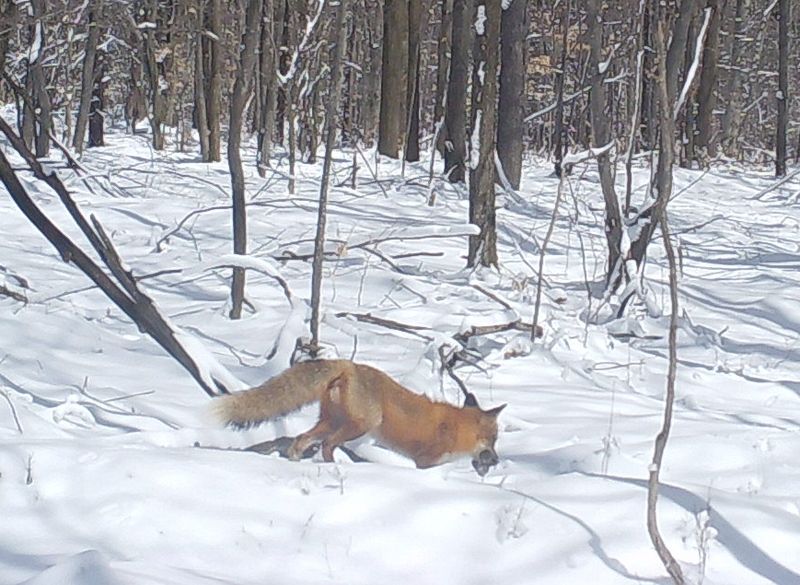
Cold weather slows down plenty of wildlife, yet foxes keep right on moving. They do not hibernate, and winter is a busy hunting season for them.
The National Park Service describes red foxes hunting rodents under the snow.
Their hearing makes that possible. The Iowa DNR notes that foxes can detect mice moving beneath the snow.
A fox cocking its head and then pouncing is a classic winter scene, though you will not see that behavior every time a fox passes.
Daytime sightings are a little more complicated. Iowa State Extension describes red foxes as most active at night.
The National Park Service adds that foxes may be more active by day in winter, especially when they are hunting rodents. So a fox in daylight is possible, but it does not mean foxes are commonly out in the open at noon.
All of this means a winter yard crossing fits comfortably within normal fox life. A fox on a snowy lawn in January does not need a special explanation.
It also does not reveal the animal’s motive. Travel, hunting, and other seasonal activity can all look similar from a kitchen window, especially when the animal is just passing by.
Could breeding season be part of the explanation?
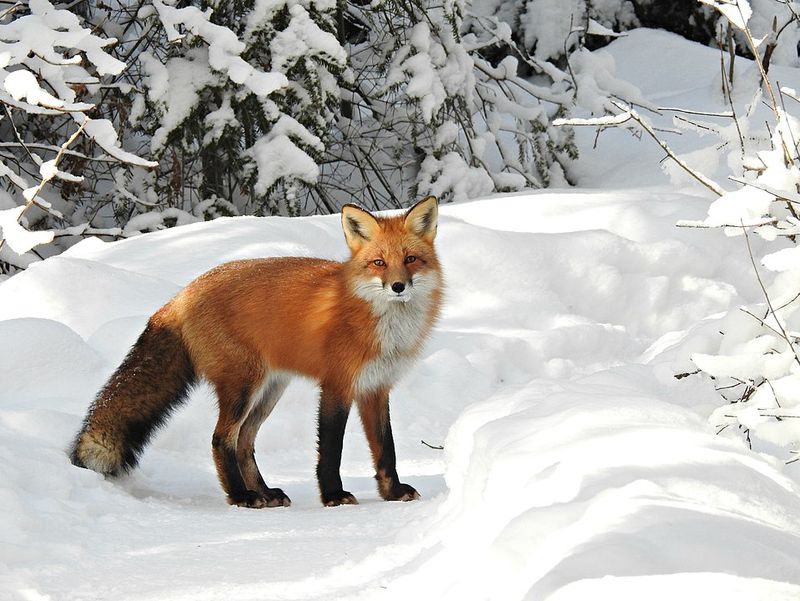
Winter is also mating season for red foxes in Iowa, and that can influence how much they move around. Iowa State Extension gives January and early February as the usual mating period.
Foxes may travel more widely during that time, so seasonal movement is one possible piece of the puzzle.
An older Iowa study offers finer detail. The Red Fox in Iowa, published in 1976, reported breeding beginning in late December and peaking around the third week of January.
Think of those dates as a historical Iowa estimate. They are not a calendar that every fox follows in every year.
Here is where caution matters. Knowing that breeding season exists does not let you say that the fox in your yard is looking for a mate.
A fox trotting past can be doing that, but it can just as easily be hunting or following its usual route. Nothing about the trot itself separates those possibilities.
It helps to treat breeding season as background context rather than a diagnosis. It may explain why you notice foxes more in midwinter.
It cannot tell you what a particular animal had in mind on a particular evening.
One sighting does not mean the fox has a den there
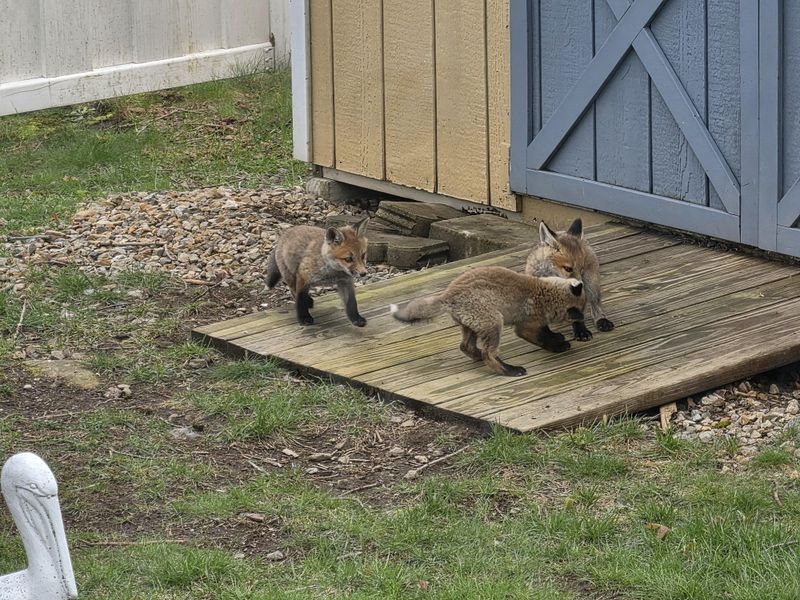
Seeing a fox is not the same as finding where it sleeps. Many people assume that an animal crossing the yard must live nearby, but a passing fox can be coming from a field a half mile away.
A sighting tells you the fox was there for a moment, not that it stays.
Foxes do sometimes use human structures. Iowa State Extension says they can den under decks, sheds, or porches.
That is a general fact about the species. It does not show that any particular deck or shed in your neighborhood is being used.
Think of it like seeing a delivery truck on your street. The truck being there does not mean the driver lives at your house.
In the same way, one fox crossing a lawn is not evidence of a den at that home.
If you are curious, the better move is patience rather than investigation. Do not crawl near openings or try to look inside, and do not try to approach the animal.
Simply notice whether sightings become frequent over time, and focus on the practical steps in the next sections.
Remove easy food if you do not want the fox to linger

If you would rather the fox keep moving, the simplest approach is to take away easy meals. The Animal Rescue League of Iowa recommends securing garbage and compost, bringing pet food indoors, picking up fallen fruit, and not leaving food scraps outside.
Start with the trash. Use cans with tight lids, and consider keeping them in a garage until pickup day.
Compost bins work best when they are enclosed, and meat or greasy scraps are better kept out of an open pile.
Next, look at the pet routine. A bowl left on the porch overnight can attract more than a cat or dog.
Feed pets inside or pick up the dish as soon as they finish. If you grow fruit trees, rake up what has dropped before winter sets in.
These steps give a fox fewer reasons to hang around, but they are not a guarantee. A fox may still pass through, since yards can be on its route anyway.
Also, a sighting does not prove it has been eating from your property. Think of food cleanup as sensible housekeeping that lowers the odds, not a cure.
Keep your distance and protect pets
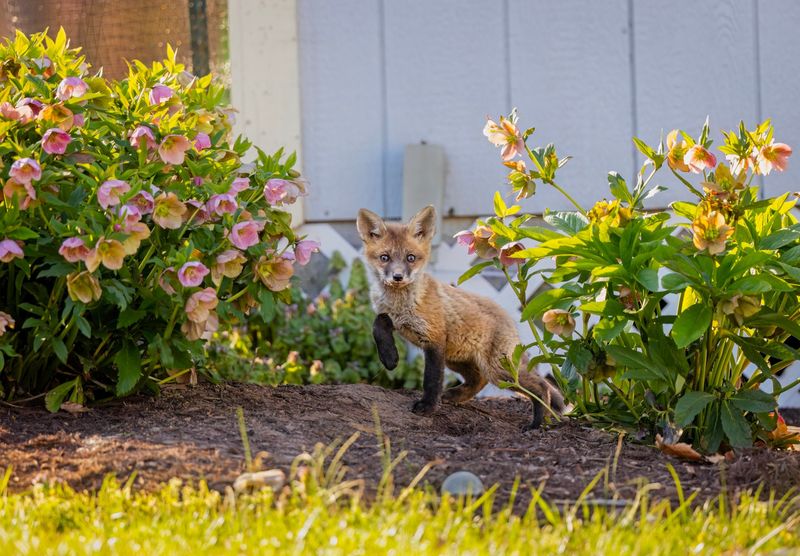
Enjoy the fox from a distance. Do not approach it, feed it, or try to handle it, and never corner or capture it.
Iowa Health and Human Services advises avoiding contact with wild animals, and it lists foxes among the wildlife considered more likely to carry rabies in Iowa.
Pets need a little extra planning. Supervise small pets when they are outside, especially at dawn and dusk.
Keep chickens and other poultry in secure enclosures, as the Michigan DNR recommends.
You may have heard that a fox seen in daylight must be sick. That is misleading.
As noted earlier, National Park Service information shows that foxes can be day-active in winter. Daylight alone is not a diagnosis.
Still, take abnormal or aggressive behavior seriously, such as a fox that seems unafraid and approaches people, and keep away from it.
If someone is bitten or scratched, wash the wound thoroughly with soap and water. Then promptly contact a healthcare provider or your local public-health authority for advice.
Current Iowa HHS exposure guidance explains how possible rabies exposures are evaluated.
A fox in the yard is usually just a brief visitor. Watch it, close the door, and let it go on its way.
Share this story