Your backyard in Iowa might feel calm and safe, but a few small residents carry venom you should know about. Most of them want nothing to do with you and only bite or sting when they feel trapped.
Learning to spot the differences between them can save you a painful surprise or even a trip to the doctor. Here is a simple guide to the venomous critters hiding in Iowa grass, woodpiles, and garden sheds.
1. Timber Rattlesnake
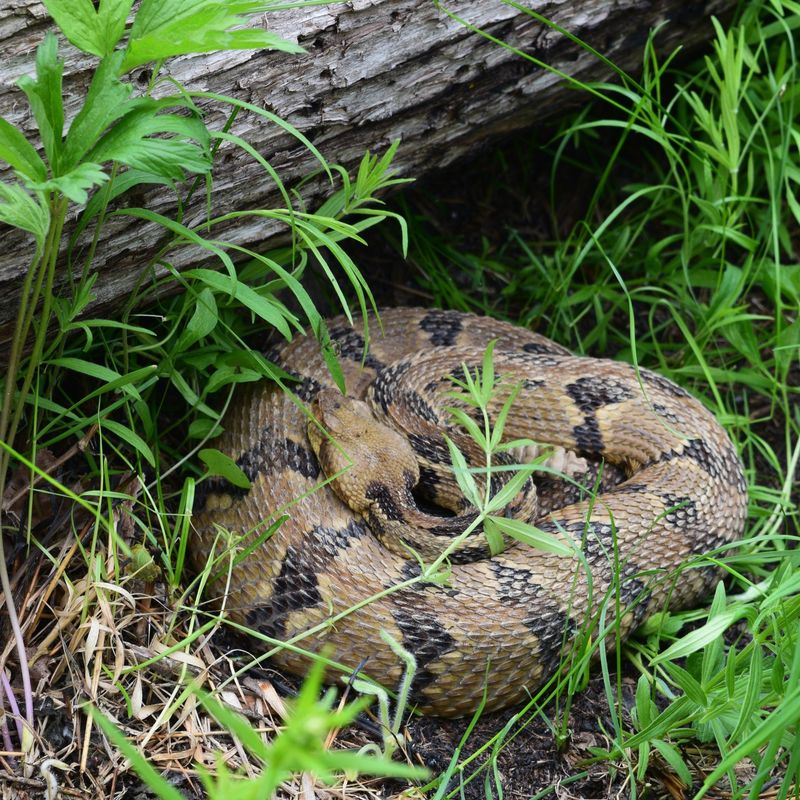
Picture a quiet bluff along the Mississippi River, and you have found prime timber rattlesnake country. Iowa’s largest venomous snake can stretch past four feet, yet it often sits so still that hikers walk right by it.
The giveaway is the pattern. Look for dark, wavy bands shaped like the letter V across a tan, yellow, or gray body, plus a solid black tail ending in a rattle.
Many have a rusty stripe running down the middle of the back.
Yards near wooded hills and rocky ledges in eastern and southern Iowa are the most likely spots for a visit. If you hear that dry buzzing sound, back away slowly and give the snake plenty of room.
A bite is a medical emergency, so call for help right away rather than trying old tricks like cutting the wound.
2. Prairie Rattlesnake
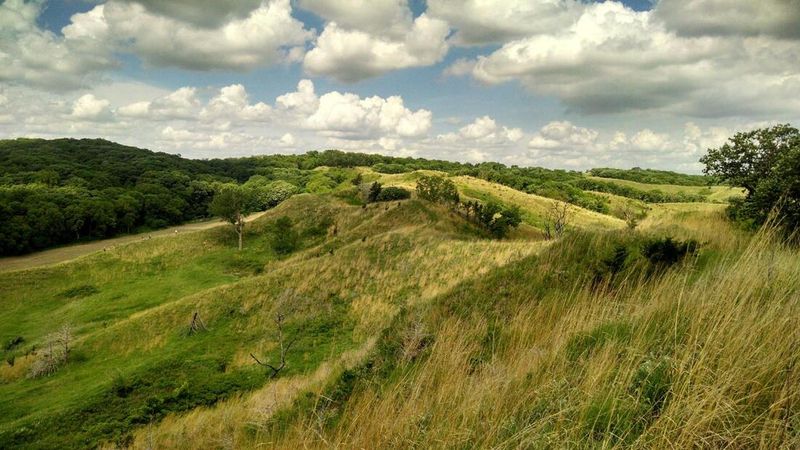
Few Iowans have ever seen one, and that rarity is exactly what makes the prairie rattlesnake special. It survives only in a tiny pocket of the Loess Hills in the far western part of the state.
Unlike the timber rattler, this snake wears rounded brown blotches on a greenish or tan body. Two pale stripes run along each side of its face, almost like it drew on eyeliner.
Its tail is banded instead of solid black, which is a handy clue. If you live near those dry, grassy hills, keep an eye on rock piles and prairie dog style burrows during warm months.
3. Eastern Massasauga
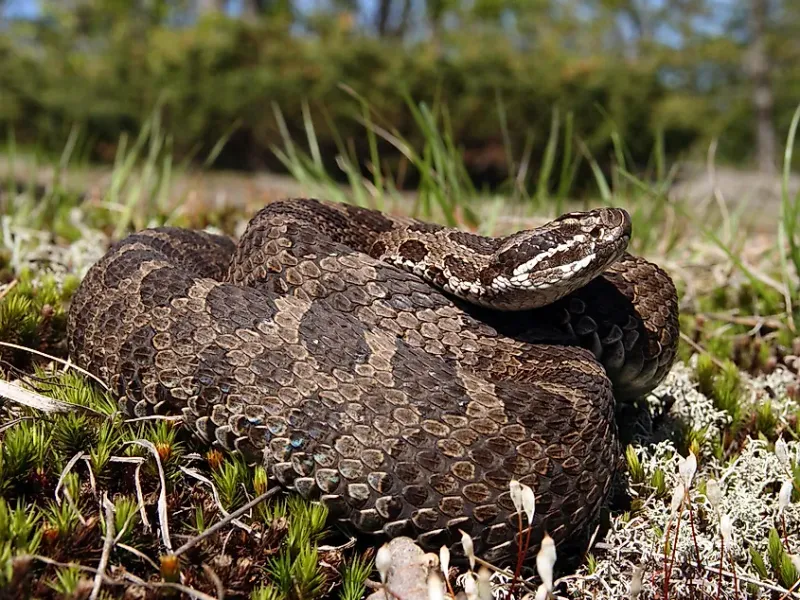
Small, shy, and seriously endangered, the eastern massasauga is the rattlesnake most people mistake for a harmless snake. It usually measures only about two feet long.
You will spot rows of dark brown blotches running down a gray body, with a short, thick tail and a little rattle. Its rattle sounds more like a buzzing insect than a warning, so listen closely.
Massasaugas love wet meadows and marshes, especially in eastern Iowa. Yards next to wetlands are the main places to watch.
If you find one, leave it alone and report the sighting to the Iowa DNR, since every snake counts for this species.
4. Copperhead
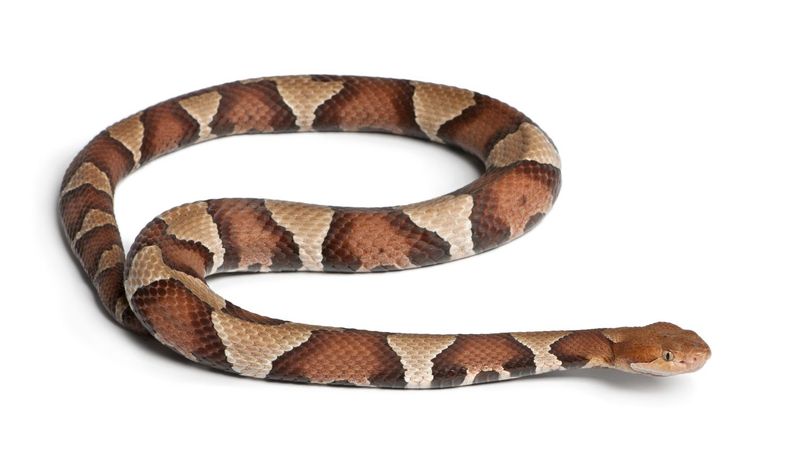
Ask any snake expert for the easiest pattern to memorize, and they will point to the copperhead’s hourglass bands. Wide on the sides and skinny on the back, those chestnut shapes make this snake look like it is wearing a row of bow ties.
The head is a smooth copper color with no markings, which gives the snake its name. Babies have a bright yellow tail tip that they wiggle to lure frogs.
In Iowa, copperheads are very rare and found mainly in the southeast corner. They blend into dead leaves perfectly, so wear gloves when raking or moving firewood in that area.
5. Black Widow Spider
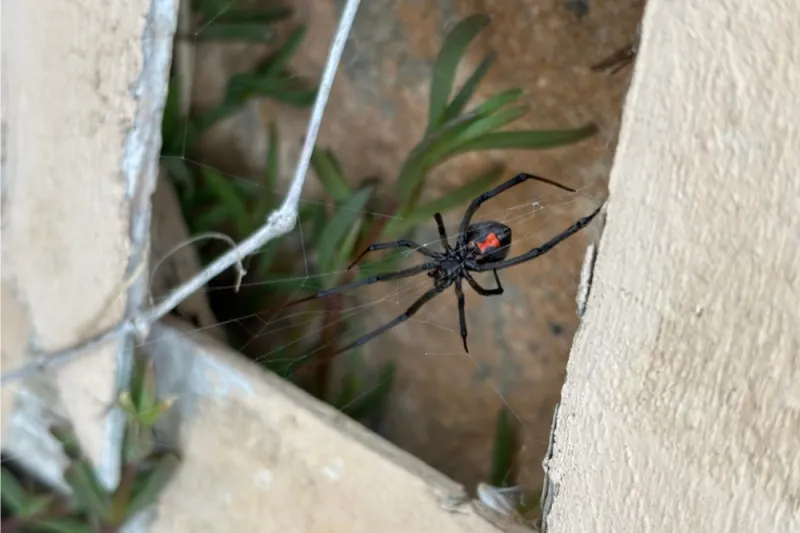
Flip over an old flowerpot, and you might meet a glossy black spider with a red mark that looks painted on. The female black widow is famous for that red hourglass under her round belly.
Her web is messy and tangled, not neat like an orb weaver’s. She builds it in dark, quiet corners such as sheds, woodpiles, window wells, and under patio furniture.
Her venom affects nerves and can cause strong muscle cramps. Bites are uncommon and rarely deadly, but kids and older adults should get checked by a doctor.
Shake out gloves and boots that sit in the garage for a while.
6. Brown Recluse Spider
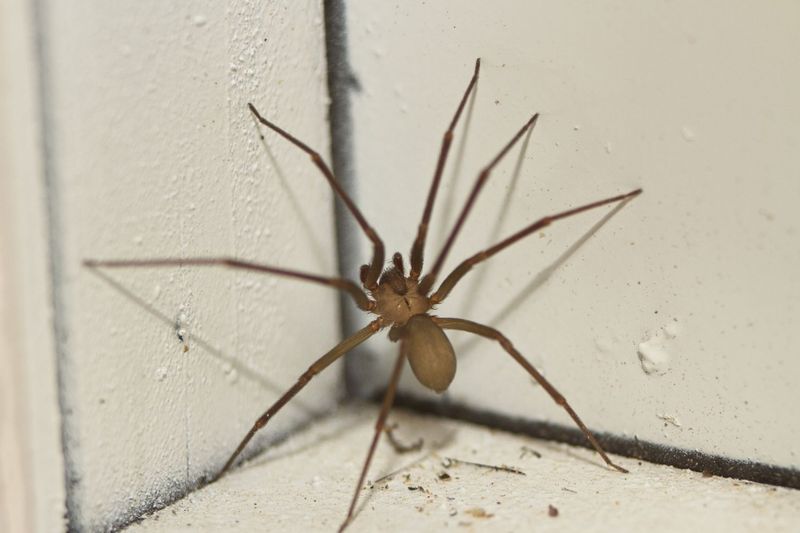
Here is a fun fact: brown recluses have six eyes instead of the usual eight. That tiny detail is one of the best ways to tell a real recluse from the many brown spiders that look similar.
Look for a tan body with a darker violin shape on the front section, with the neck of the violin pointing toward the rear. The legs are long, thin, and the same plain color with no stripes or spines.
Recluses show up mostly in southern Iowa, hiding in boxes, closets, and basements. Their bite can cause a slow-healing sore, so store items in sealed plastic bins and get any odd wound looked at.
7. Yellowjacket
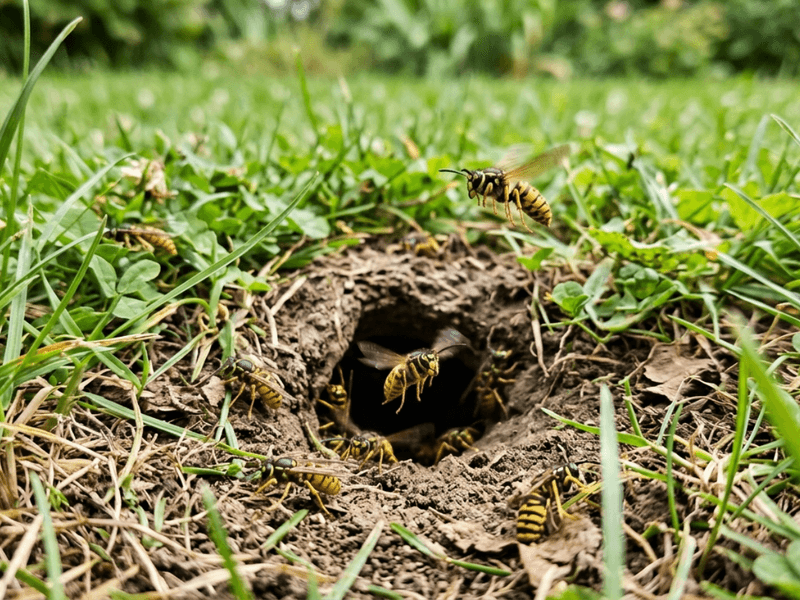
Late summer cookouts in Iowa have an uninvited guest who loves soda and hot dogs. Yellowjackets get bolder as the season goes on, buzzing around anything sweet or meaty.
They are smaller than most people expect, with sharp yellow and black bands and almost no fuzz. Many nest underground, so a hole in the lawn with insects flying in and out is a big warning sign.
Unlike honeybees, they can sting again and again. Mowing over a hidden nest is the classic way people get swarmed, so walk your yard first.
8. Bald-Faced Hornet
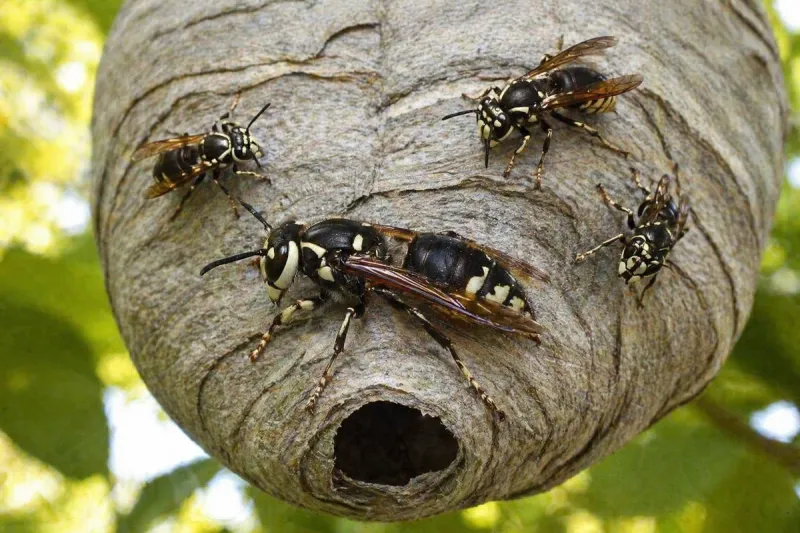
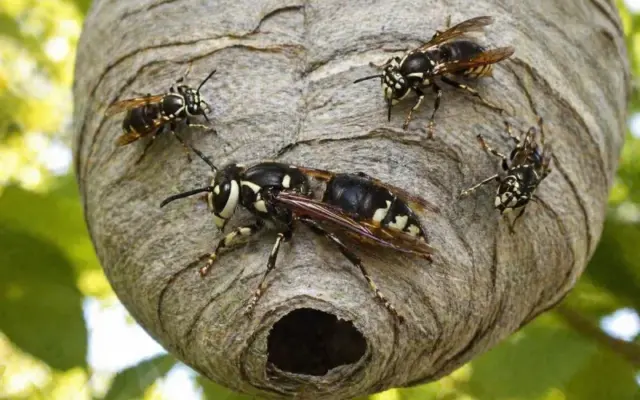
That gray, football-shaped paper ball hanging in your maple tree? It belongs to the bald-faced hornet, and the builders inside take home defense very seriously.
Spotting the difference is easy once you know it. These hornets are black with white markings on the face and tail, not yellow like their cousins.
They are also larger and fly straight at anything that bumps their nest.
Nests can grow bigger than a basketball by fall. Keep kids and mowers away, and call a pro if the nest sits near a door or play area.
Winter frost ends the colony, and the empty nest is never reused.
Share this story