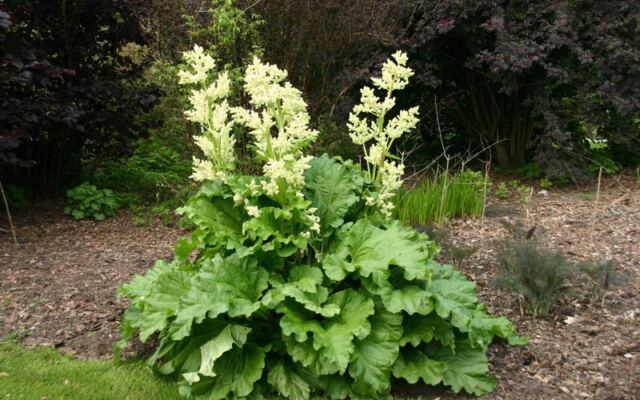
That tall, chunky stalk rising from your rhubarb is a flower stalk, and you can pull it out if you want more edible stalks. It is a normal part of the plant’s life, not a sign that your rhubarb is sick or dying.
Missouri gardeners often spot it in spring and wonder if they did something wrong. Here is what the stalk means, how to remove it, and when it is fine to leave it alone.
That Tall Stalk Means the Rhubarb Is Flowering
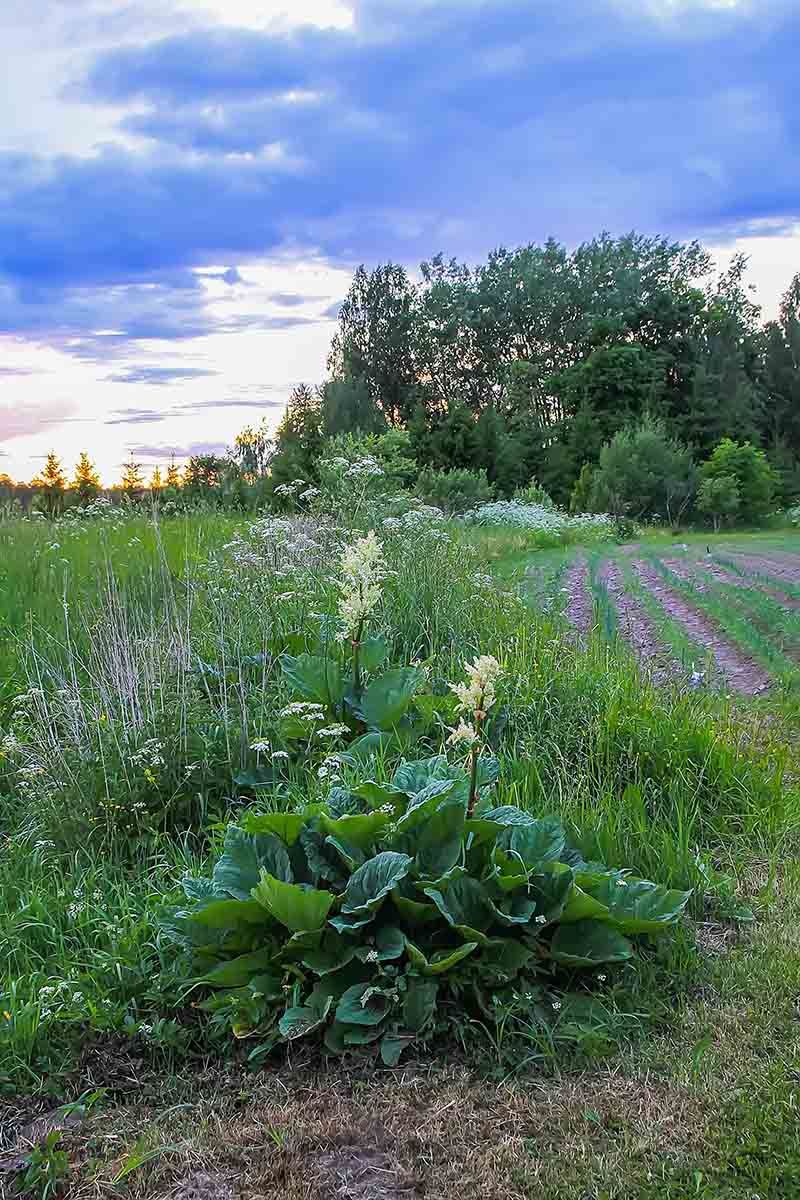
Walk out one morning and you may find a thick, pale green shoot towering above the leaves, topped with a fluffy cluster of tiny creamy flowers. That is rhubarb flowering, which gardeners often call bolting.
Rhubarb is a perennial that is built to bloom and make seed at times.
Flowering is a normal reproductive stage. As Iowa State guidance on rhubarb in the home garden describes it, the flower stalk is something gardeners manage, and it does not by itself show the plant is diseased or dying.
A healthy clump with a flower stalk can keep growing for years.
What you do next depends on your goal. If you grow rhubarb mainly for pie and sauce, removing the stalk is the usual advice because flowering and seed formation can reduce vigor or leaf-stalk production.
University of Alaska Fairbanks Extension notes that some gardeners leave the flowers anyway, and it frames that as a personal choice.
So there are really three paths: remove it for edible stalks, leave it for looks, or leave it to save seed. None of them is an emergency, and the rest of this article walks through each one.
Several Factors Can Prompt Flowering
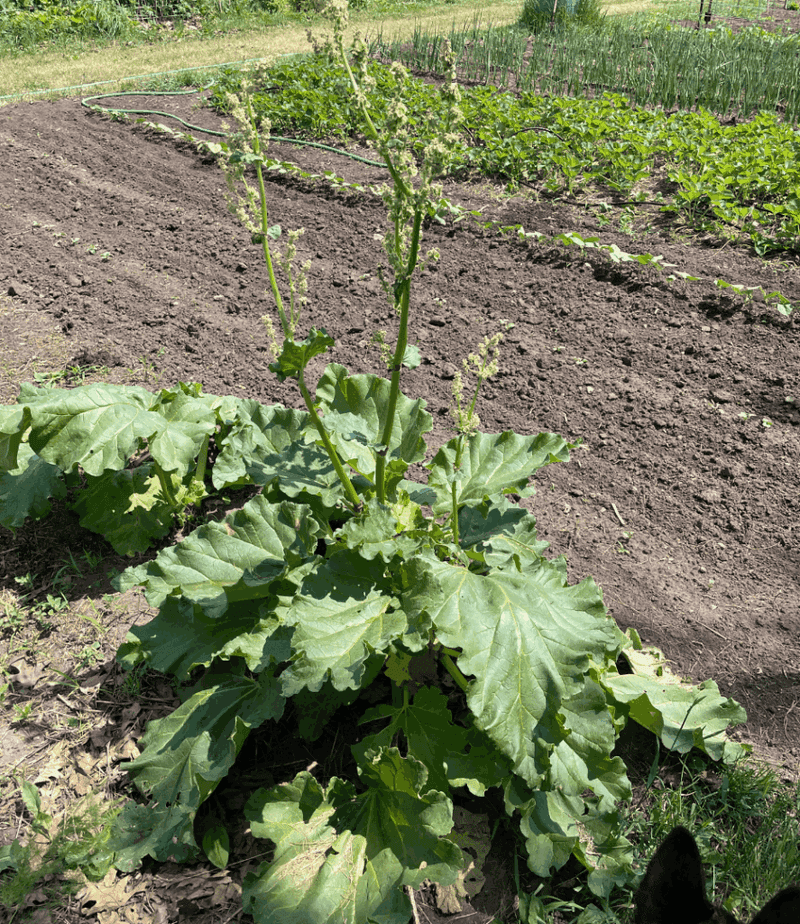
Gardeners love a single clear answer, but rhubarb does not give one. Extension sources link flowering to several possible influences, including plant age, drought, extreme heat or cold, and poor fertility.
Older plants may flower more often than young ones.
Some varieties also seem to bolt more readily than others. Virginia Tech’s crop profile mentions stress, age, and variety tendency in connection with seed stalks.
Keep in mind these are possible contributors, not a checklist that explains every plant.
Here is the catch. Looking at the stalk alone, nobody can tell which factor applied to your plant.
A hot, dry spell might have played a part, or the clump might just be mature, or your variety might simply like to bloom. Iowa State Extension’s rhubarb Q&A lists several possibilities without offering a way to pinpoint one.
That means you do not need to run a soil test or rip out the plant just because it flowered. A practical clue is how the rest of the clump looks.
Plenty of sturdy, thick leaf stalks suggest things are fine, while a pattern of weak growth over several seasons is a better reason to look closer.
How to Remove the Flower Stalk
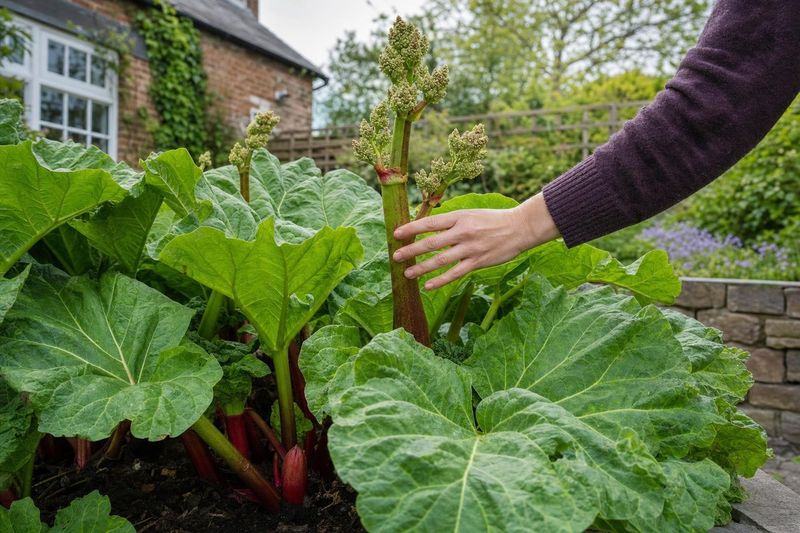
Removing the stalk takes about a minute. Reach down and grasp the flower stalk as close to its base as you can.
Then rock it gently side to side and pull, so as much of it as possible comes away from the crown.
The University of Kentucky production manual advises removing the entire stalk instead of cutting it. Iowa State’s home garden guide likewise says to pull it and discard it.
Toss it in the compost or trash rather than leaving it to rot beside the plant.
Guidance varies on cutting versus pulling, so a clean cut at the base is not a disaster if your hands cannot get a good grip. Careful removal at the base is simply the best-supported method.
Avoid yanking so hard that you tear the surrounding leaf stalks or loosen the crown.
As for results, the reason to do this is to favor plant vigor and leaf-stalk production. It does not promise a bigger harvest or a set number of extra stalks.
Think of it as removing one possible drain on the plant, not a guaranteed boost.
If more flower stalks show up later, repeat the process. A few stalks in a season are common, and pulling them is quick work.
When Leaving the Flowers Makes Sense
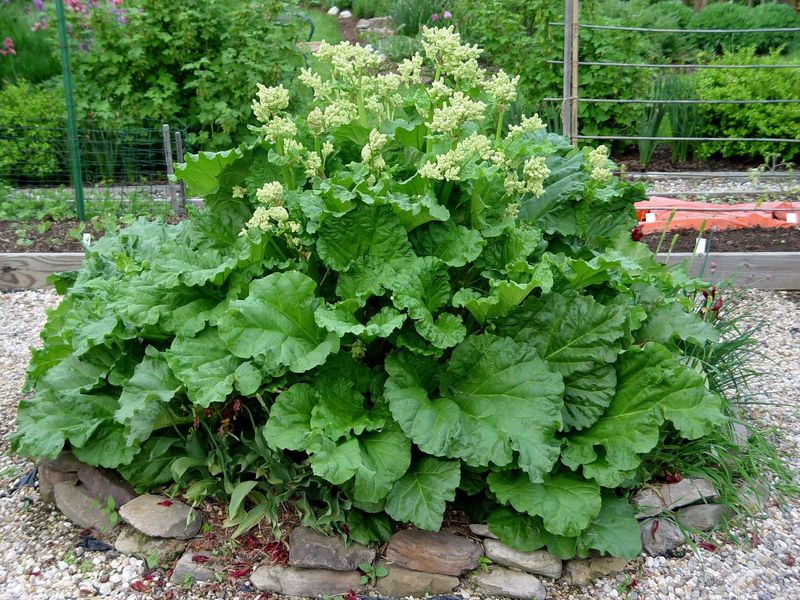
Not everyone wants a pie plant that behaves. Some gardeners enjoy the bold, architectural bloom, and bees and other insects visit the flowers.
Others want to let seed develop so they can save it, though seedlings may not match the parent plant.
Leaving the flowers is a reasonable choice. University of Alaska Fairbanks Extension points out that some gardeners leave the flowers and treats it as a personal decision, even though many sources recommend removal for edible-stalk quality.
The tradeoff is on the edible side. Flowering and seed formation can reduce vigor or leaf-stalk production, as Iowa State’s guidance explains.
You may notice fewer or thinner stalks, but the size of that cost is not something anyone can predict for your plant.
If stalks matter most to you, pull it. If the bloom brings you joy or you want seed, enjoy it.
Removing the flower stalk is a production choice, never a rescue mission for a failing plant.
Support the Crown Without Expecting a Cure
Good care helps rhubarb in general, even if it cannot be tied to one bloom. During prolonged dry weather, give the plant a deep soak.
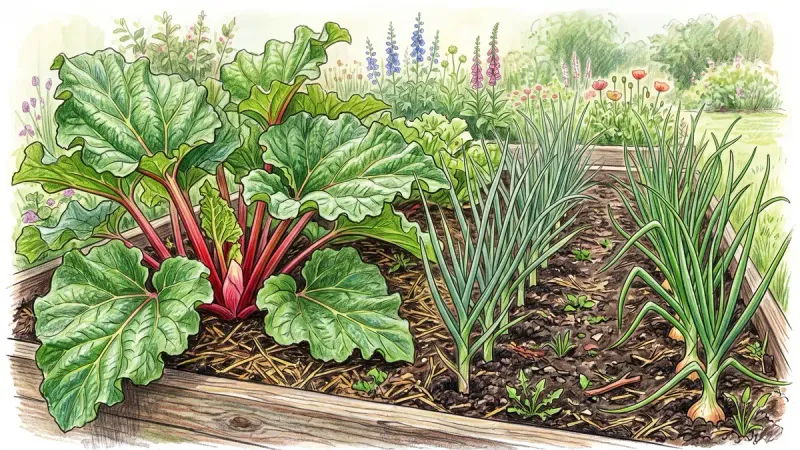
Keep up good growing conditions such as sunny spot, well-drained soil, and a layer of mulch to hold moisture.
Those steps will not tell you why the plant flowered, and they will not promise that it never happens again. Iowa State’s home garden guidance recommends general cultural care, including fertilizing.
That is ordinary upkeep, not proof that a nutrient shortage caused the stalk, and fertilizer will not stop flowering.
Division is a separate question. Sources suggest dividing mature crowns from time to time, though they differ on timing and how often.
The University of Kentucky manual covers crown division as part of rhubarb production.
Consider it when the clump is old and crowded, especially if it also puts up many thin stalks. One flower stalk on its own is not a reason to dig up the plant.
If your clump is producing thick, healthy stalks, let it be.
Harvest Carefully and Choose What Matters Most
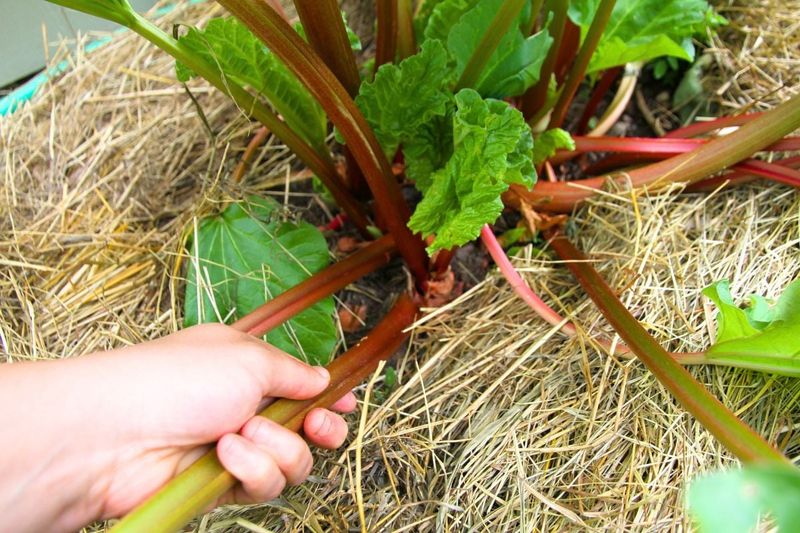
How you harvest matters as much as what you do with the flower stalk. Taking stalks too heavily or for too long can weaken the crown, which stores the reserves for next year.
University of Alaska Fairbanks Extension notes that harvesting too late can hurt the plant’s ability to build reserves.
Iowa State suggests ending harvest around mid-June in Iowa, but that is an Iowa date, not a Missouri deadline. The useful lesson is to ease off before the plant is worn down.
Stalks do not turn poisonous just because it is midsummer.
Eat only the leaf stalks, never the leaves. Extension guidance, including Iowa State’s home garden guide, says the leaves are unsafe to eat, and they can go in the compost.
After a hard frost, the advice is cautious. Iowa State and Minnesota Extension advise discarding limp or mushy stalks and using new growth.
NDSU Extension found no studies settling the toxin question and suggests tossing damaged tissue as a precaution. That does not mean every frost ruins every stalk.
Here is a simple rule. Pull the flower stalk near its base if you want edible stalks, or leave it for blooms or seed and accept a possible tradeoff.
Either way, the plant will be back next spring.
Share this story