
Window Box Shade Ideas for Windows Without Much Sun
The tray of petunias looks cheerful at checkout. Two weeks later, it is sulking in the window box under the porch roof, all stems and almost no charm. You water more, then less, then stand back and blame yourself. But the plant was always in the wrong room of the house, so to speak.
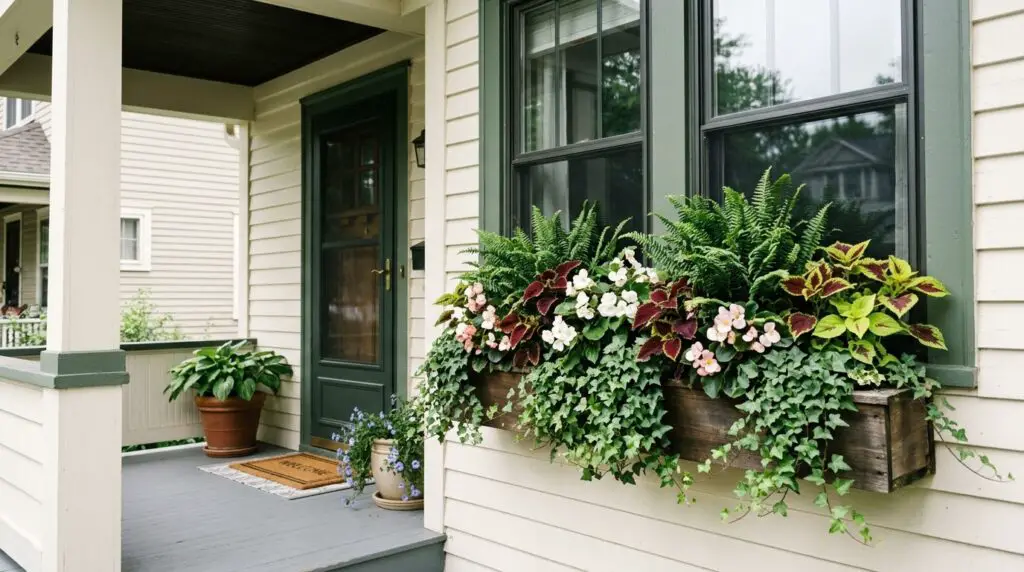
A shaded window box asks for a calmer kind of gardening. It doesn’t need sun-baked flowers pretending to be happy. It needs leaves with shape, flowers with patience, soil with drainage and a planting plan built around the light you have. Once you make that switch, the dark window stops looking like a problem spot.
Shade can be generous. It can make ferns look soft, begonias look polished and ivy look as if it has belonged there for years. The trick is to stop treating a window box shade planting like a sunny container with worse luck.
Why Window Box Shade Needs Its Own Plan
Window Box Shade Starts With Real Light
Before buying plants, stand at the window and watch the light for a day. A north-facing window may get no direct sun at all. A porch window might be bright but covered. An east-facing box may get gentle morning light, then spend the hot part of the day tucked into shade. Those are different growing situations, even though they all get called shade.
Shade Window Box Ideas Lean on Leaves Before Flowers
The biggest mistake with shade window box ideas is trying to force constant bloom. Flowers are lovely, but in shade they are rarely the whole story. Leaves carry the box through quiet weeks. A coleus leaf with wine-red edges, a fern frond catching a breeze or a silver heuchera tucked between begonias can do more work than one tired bloom.
Window Box Plants for Shade Still Need Drainage
Shade does not mean wet forever. A small window box can dry out in a hot wind, even without direct sun. It can also sit soggy after rain if the drainage is poor. Use a box with drainage holes and fill it with good potting mix, not heavy garden soil. If the box sits under an overhang, check the soil by hand because rain may never reach it.
Full Shade Window Box Ideas for Deep Porches and North-Facing Windows
Full Shade Window Box Plants With Texture and Height
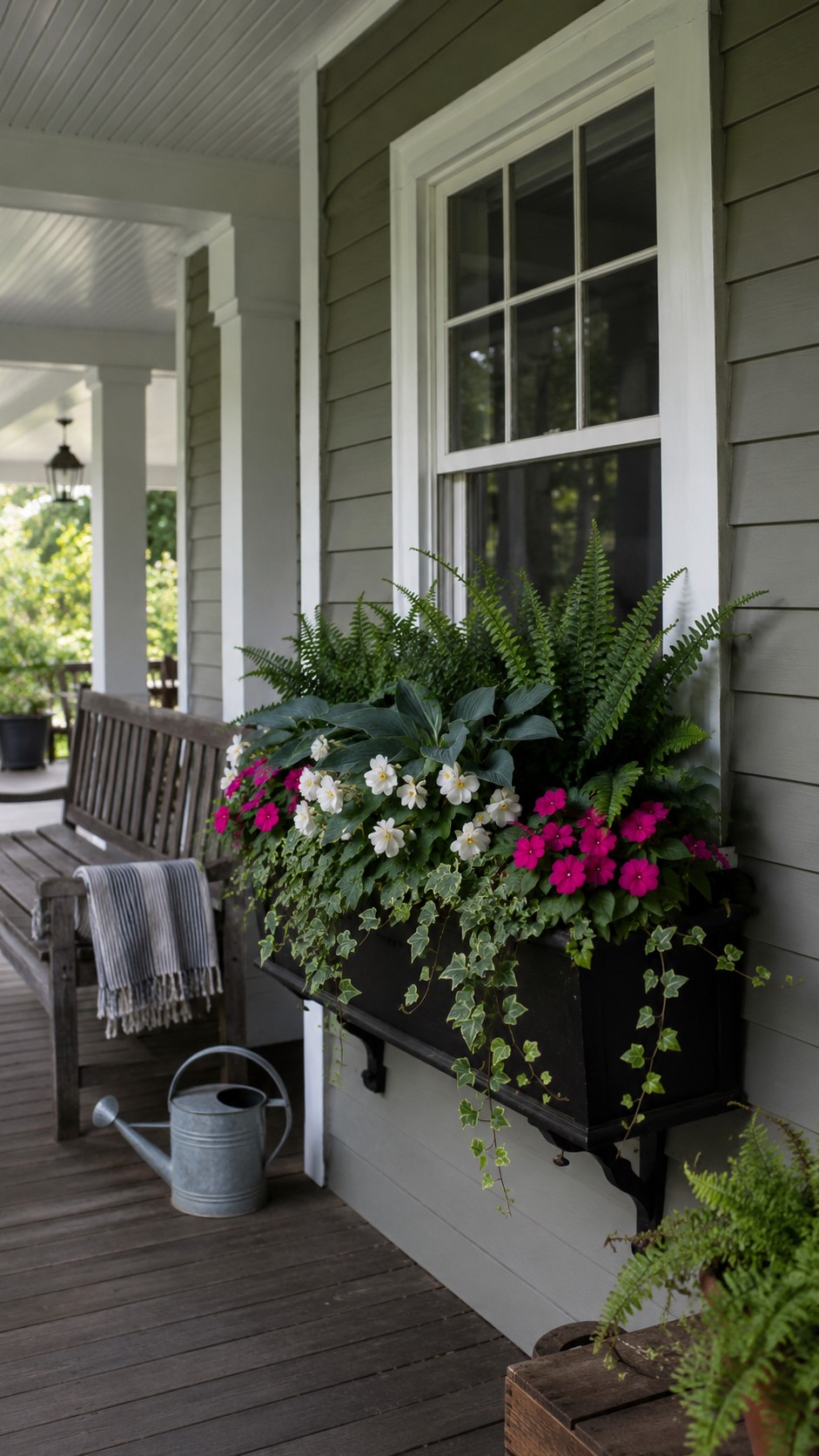
A full shade window box needs plants suited to the quieter side of the house. Ferns bring height without stiffness. Small hostas work in deeper boxes, especially types with blue-green or variegated leaves. Heuchera gives rich leaf color, while caladium can bring drama in warm summer conditions. Pick one plant for height, one for fullness and one to spill. That simple structure saves the box from looking thin.
Window Box Flowers for Shade in Soft Color
Flowers for shade need a little grace. Impatiens can brighten a dark box with pink, white, coral or red flowers. Begonias are useful because their leaves often look good between blooms. Fuchsia suits cooler shaded spots, especially where the hanging flowers can be seen up close. Torenia, sometimes called wishbone flower, is another sweet option for shade with a bit of brightness.
Green Window Box Shade Ideas for a Quiet Front
Some windows do not need a festival. They need softness. A green window box shade planting can be beautiful on an older house, a cottage front or a porch where the architecture already has plenty going on. Try ferns, variegated ivy, small hostas and one pale flower repeated through the middle. It feels grown-in without trying to shout from the sidewalk.
Partial Shade Window Box Ideas for Morning Sun
Partial Shade Window Box Plants for Brighter Color
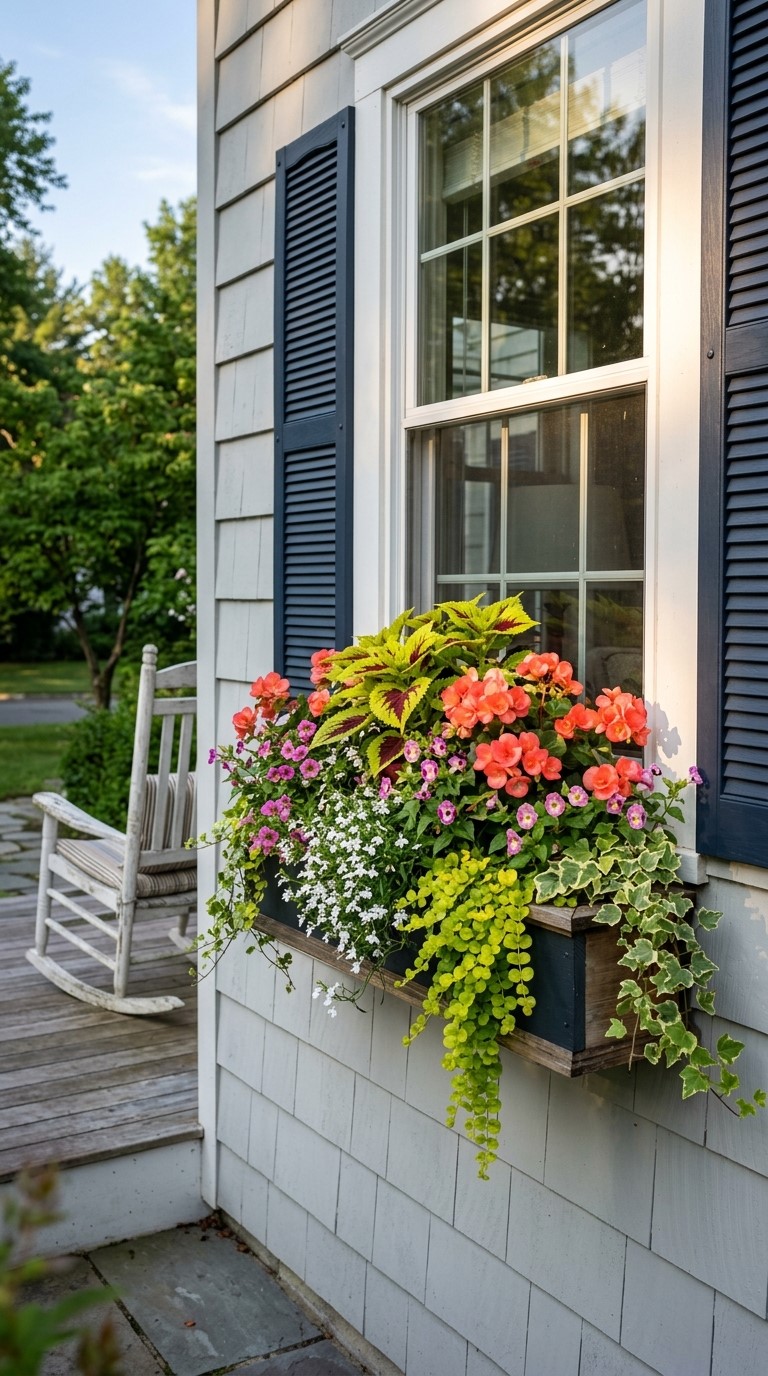
Partial shade is the friendlier version of the problem. A box with morning sun and afternoon shade can handle more color because the plants get light without being cooked all day. Begonias, coleus, lobelia, torenia and some trailing plants often do well in this middle ground. Lime coleus with coral begonias feels fresh, while burgundy coleus with white impatiens feels more classic.
Morning Sun Window Box Shade Combinations
A morning sun window box often sits on the east side of a house, where the day starts bright but cool. Try a middle row of wax begonias, a back row of coleus and a front edge of creeping Jenny or ivy. If creeping Jenny gets too much shade, it may stretch, but with morning light it often keeps a bright chartreuse color.
Shade Window Box Plants Worth Buying
Coleus for Window Box Shade With Colorful Leaves
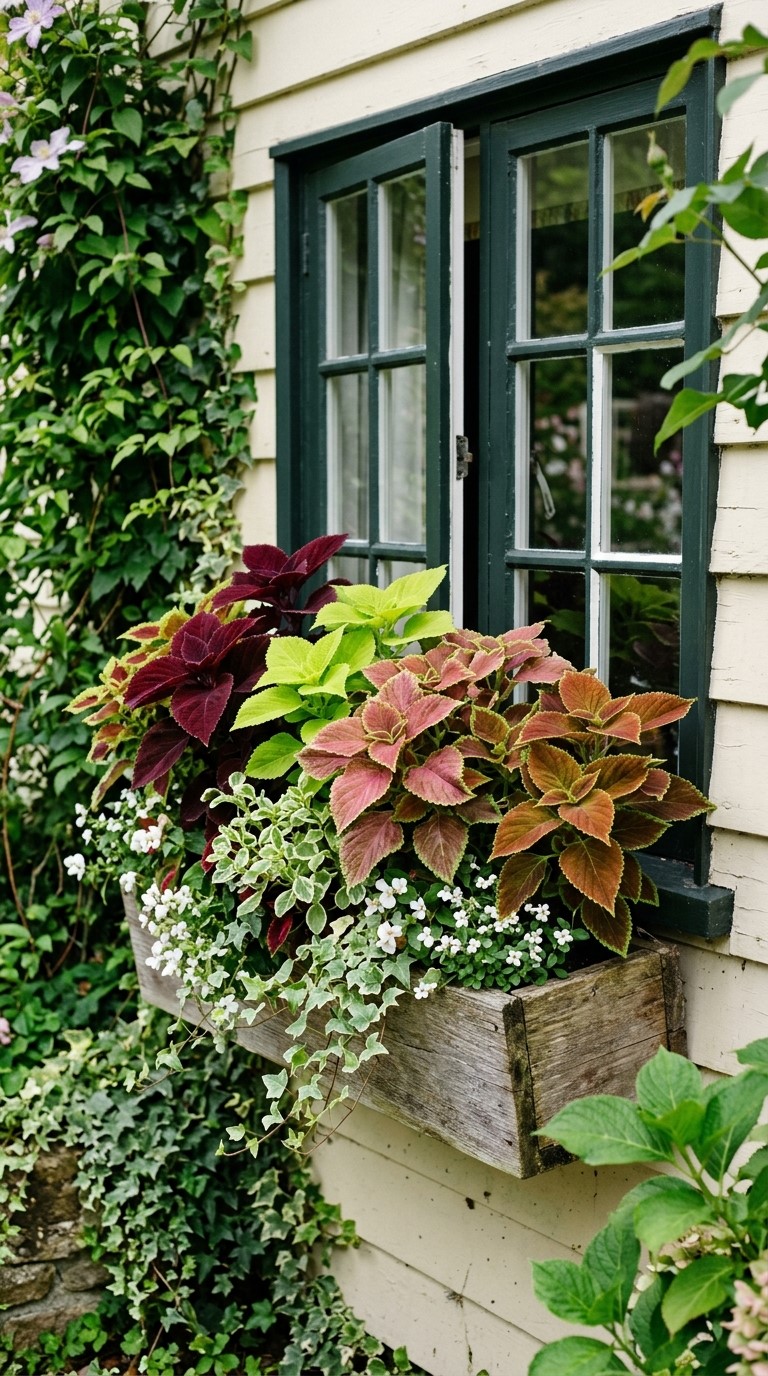
Coleus earns its place because it gives color without waiting for flowers. Burgundy, lime, pink, copper and cream leaves can all work in shade, although the strongest color often comes with bright indirect light or a little morning sun. Pinch the tips if it starts getting tall and leggy. That small trim encourages a bushier plant, which is exactly what a box needs.
Begonias as Window Box Flowers for Shade
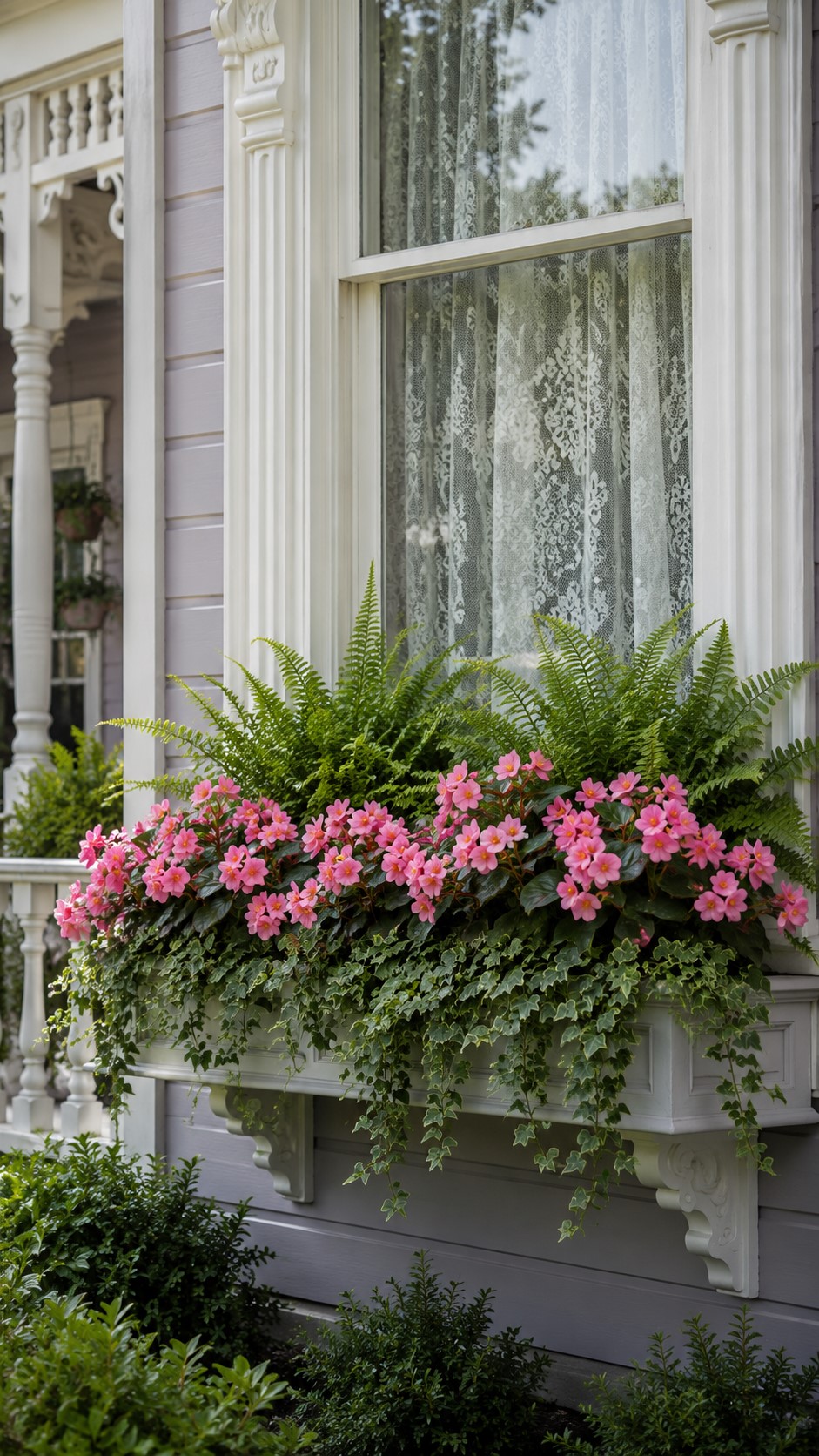
Begonias are the reliable friend in a shade window box. Wax begonias are compact, tidy and good for repeated patches of color. Tuberous begonias have larger flowers and a softer look, but they may need more shelter from rough weather. A few pink begonias tucked between ferns can look sweet on a cottage window, while white begonias with dark coleus feel sharper and more grown up.
Ferns and Ivy for Window Box Shade
Ferns and ivy do the quiet work in shaded boxes. Ferns lift the planting and add movement. Ivy trails over the front, hiding the edge of the box and making the whole thing look less newly planted. Use smaller ferns so the box does not turn into a forest ledge. Ivy is dependable, but trim it before it crawls somewhere irritating. Plants do not care about your siding.
Window Box Shade Combinations for a Fuller Front of House
Classic Shade Window Box Combinations With Ferns, Begonias and Ivy
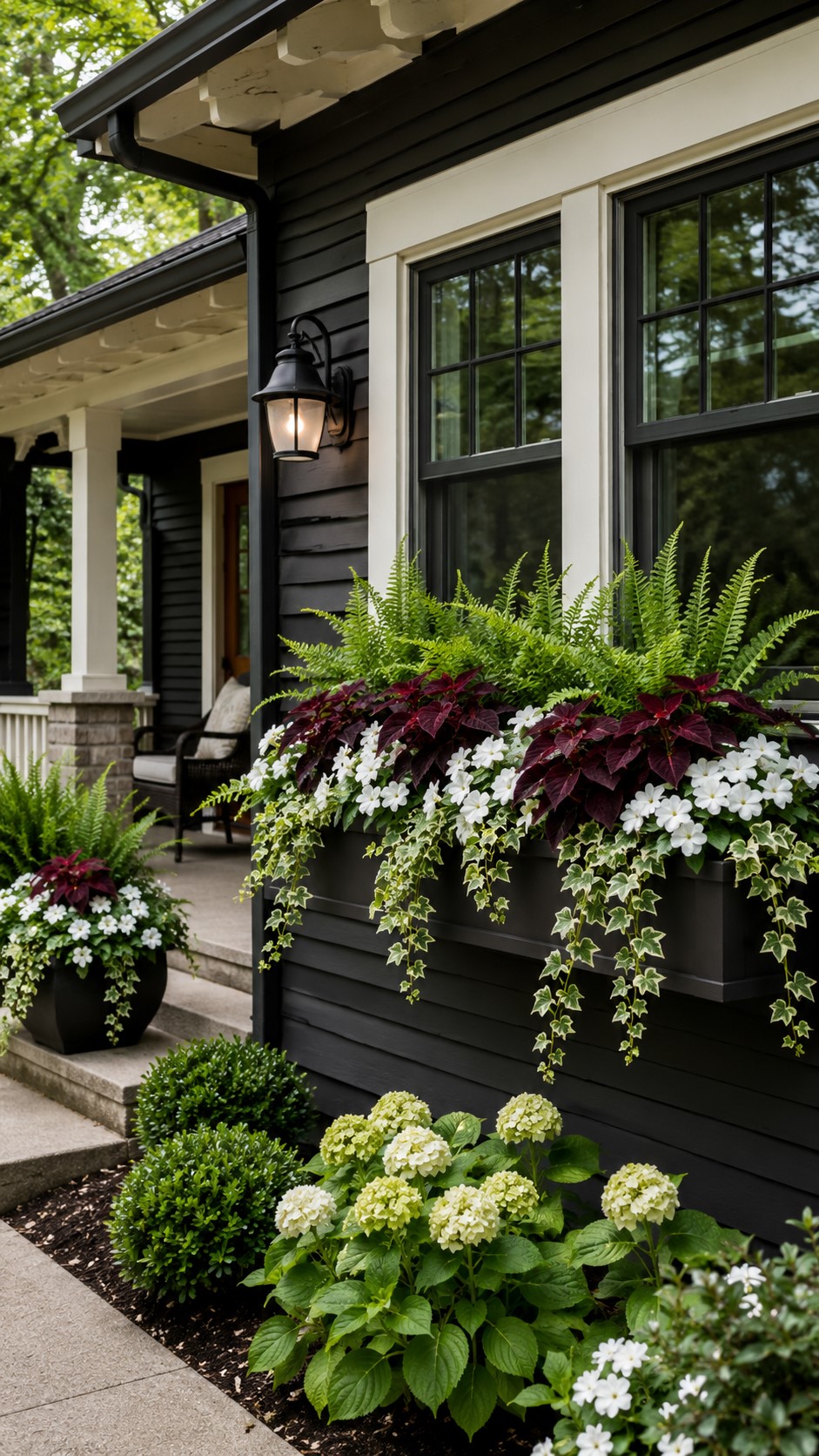
A classic shade window box combination is hard to beat: ferns at the back, begonias in the middle and ivy over the front. It works because each plant has a clear job. For a white or cream house, try pink begonias and deep green ivy. For dark siding, use white begonias so the flowers can be seen from the street. For brick, coral or pale pink often feels warmer than hard red.
Foliage-First Window Box Plants for Shade
A foliage-first box is perfect for gardeners who have been betrayed by too many flowers. Start with coleus or heuchera for color. Add ferns for fine texture. Use caladium for larger leaves if your summers are warm enough. Finish with ivy or another shade-tolerant trailer. Flowers can be added, but they are guests rather than the entire plan.
White Window Box Flowers for Shade Near Dark Walls
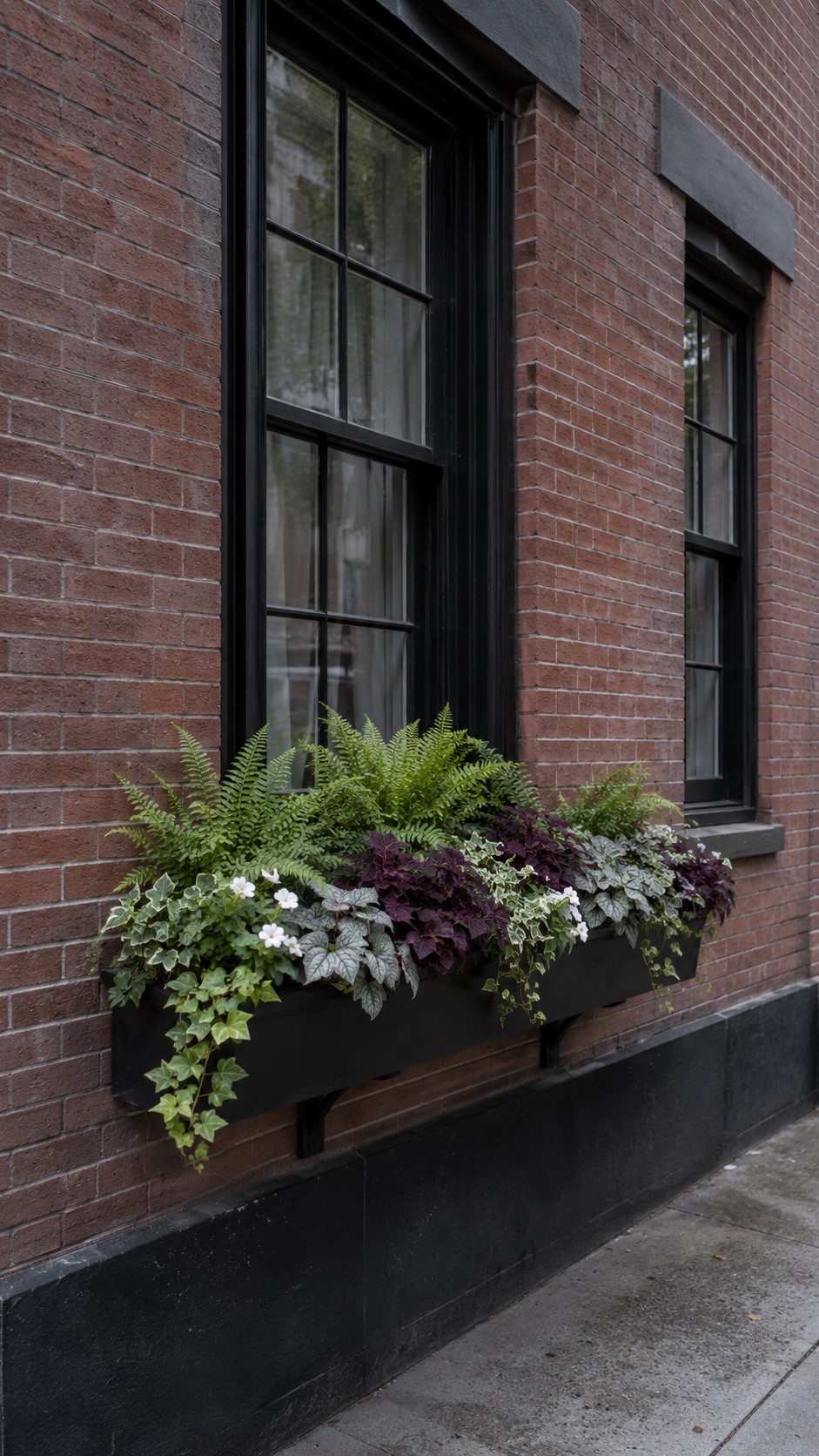
White flowers are almost too obvious, which is probably why people skip them. In shade, they are useful. White impatiens, white begonias and pale torenia catch low light and make the whole box easier to see. This works especially well on charcoal siding, red brick or shaded stone. A dark purple flower may be beautiful in your hand at the nursery, then vanish once planted under a porch roof.
Window Box Shade Perennials and Annuals
Window Box Shade Perennials for Protected Spots
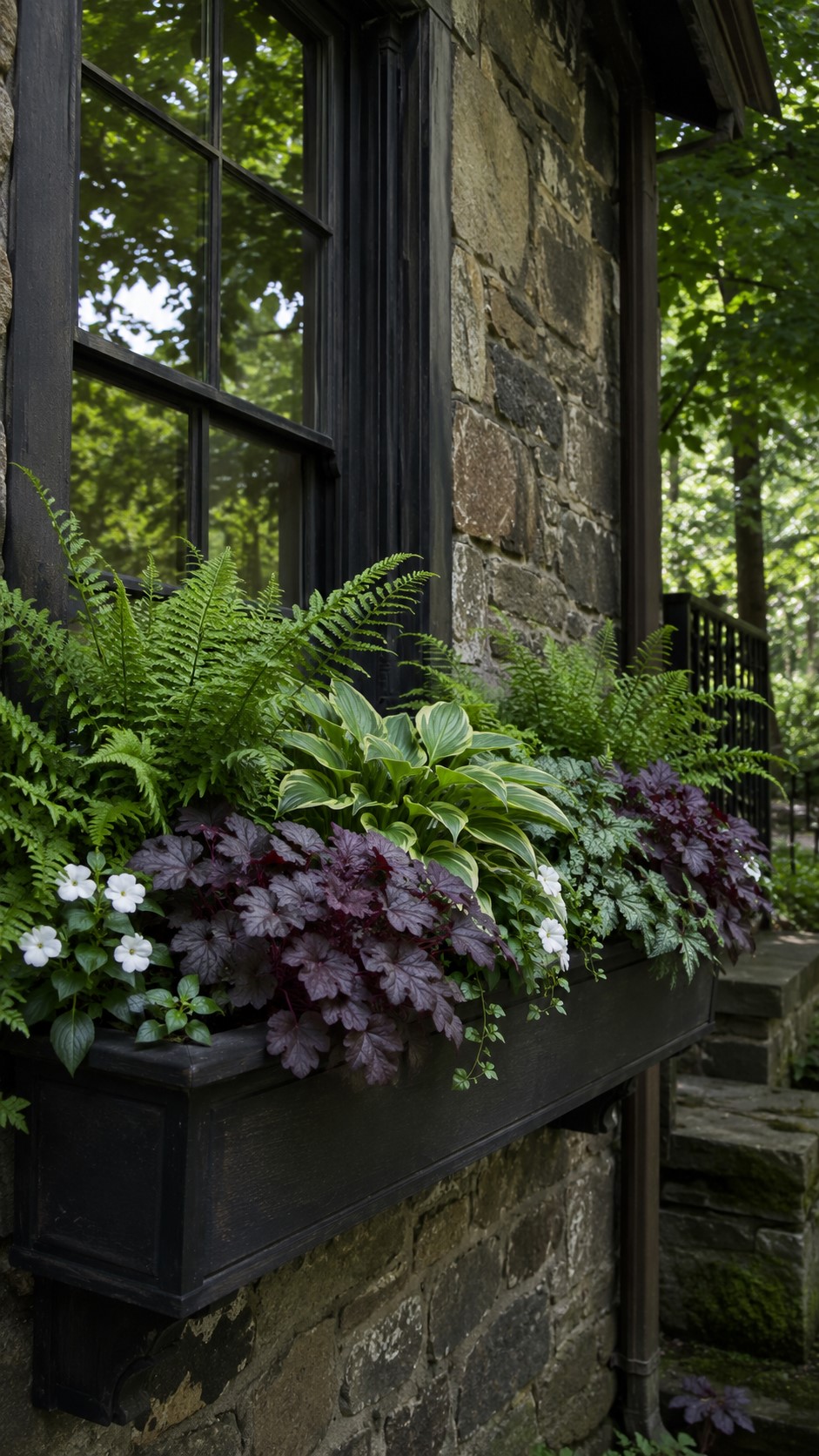
Window box shade perennials can lower the amount of replanting, but containers are harder on roots than garden beds. Small hostas, heuchera, hardy ferns and ajuga can work in deeper boxes, especially in sheltered places. In colder areas, the box may need winter protection because roots in containers feel temperature swings more than roots in the ground.
Window Box Shade Annuals for Quick Summer Color
Annuals are better when you want the box to look good now. Impatiens, begonias, torenia, lobelia and coleus can fill a shaded window box fast, especially if you plant them close enough for a full look without choking them. They are also useful for renters because you can change the whole box every season.
How to Plant and Care for Window Box Plants for Shade
Window Box Plants for Shade Need Enough Soil Depth
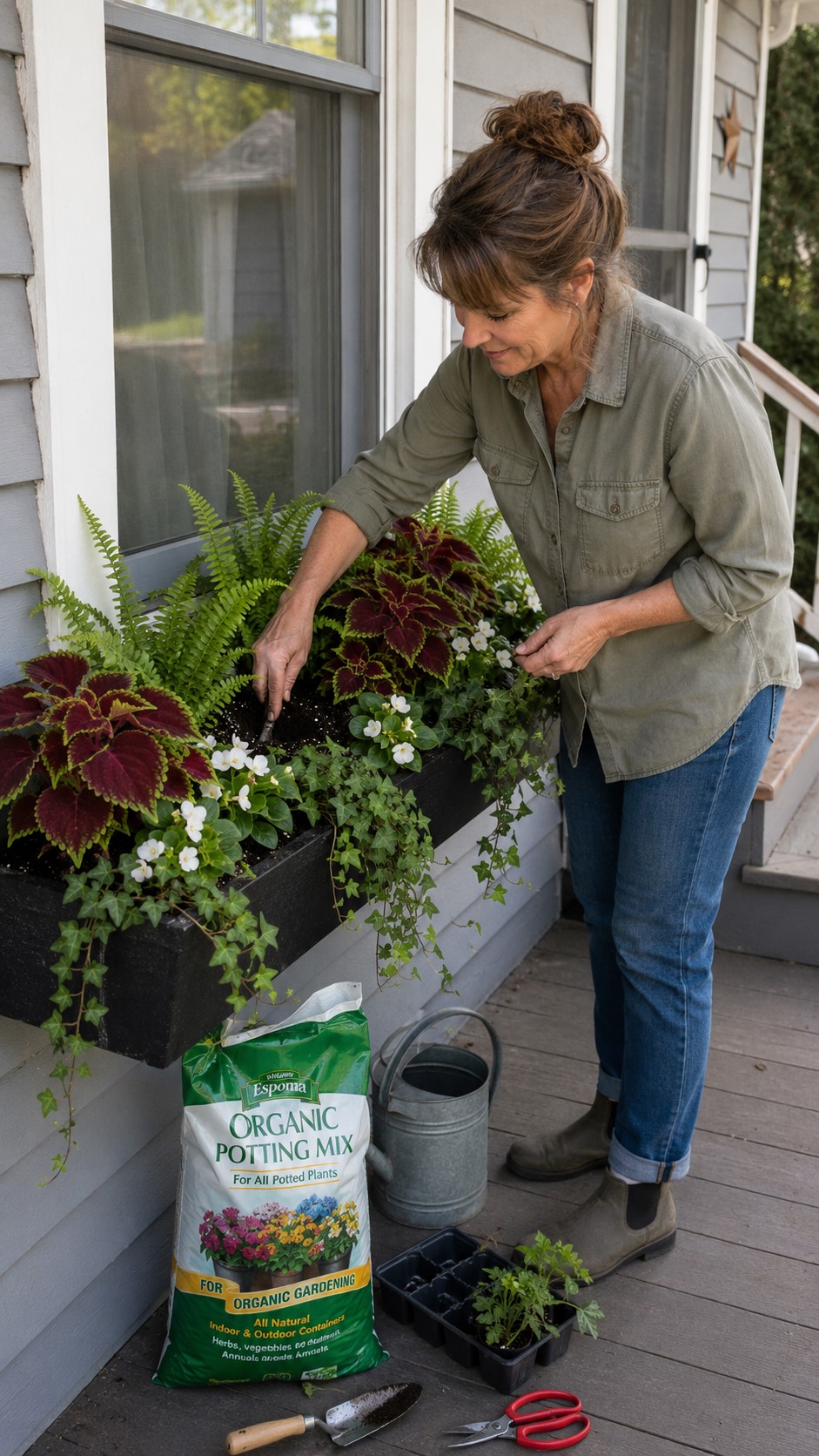
A shallow box limits what you can grow. Roots need room, and shade plants with larger leaves will struggle if the soil dries too fast or packs down into a hard little brick. Deeper boxes give you more choices, especially for small hostas, ferns and mixed plantings. Use fresh potting mix at the start of the season, then water once before planting so the mix settles.
Watering a Window Box Shade Planter
A shade planter can trick you. The top may look damp while the root zone is dry, or the surface may look fine while the bottom is soggy. Push a finger into the soil. If it feels dry below the surface, water. If it feels wet, wait. Boxes under porches need special attention because rain may miss them, while exposed boxes may get drenched during storms.
Feeding and Trimming Shade Window Box Plants
Container plants need food because nutrients wash out during watering. Use a gentle, balanced feed according to the label rather than guessing. Trimming matters too. Pinch coleus to keep it full. Remove dead begonia flowers if they make the box look messy. Cut back trailers before they tangle around brackets or block the window. A shaded box stays handsome when you edit it before it becomes a leafy argument.
Window Box Shade Mistakes to Avoid
Planting Sun-Loving Flowers in Full Shade
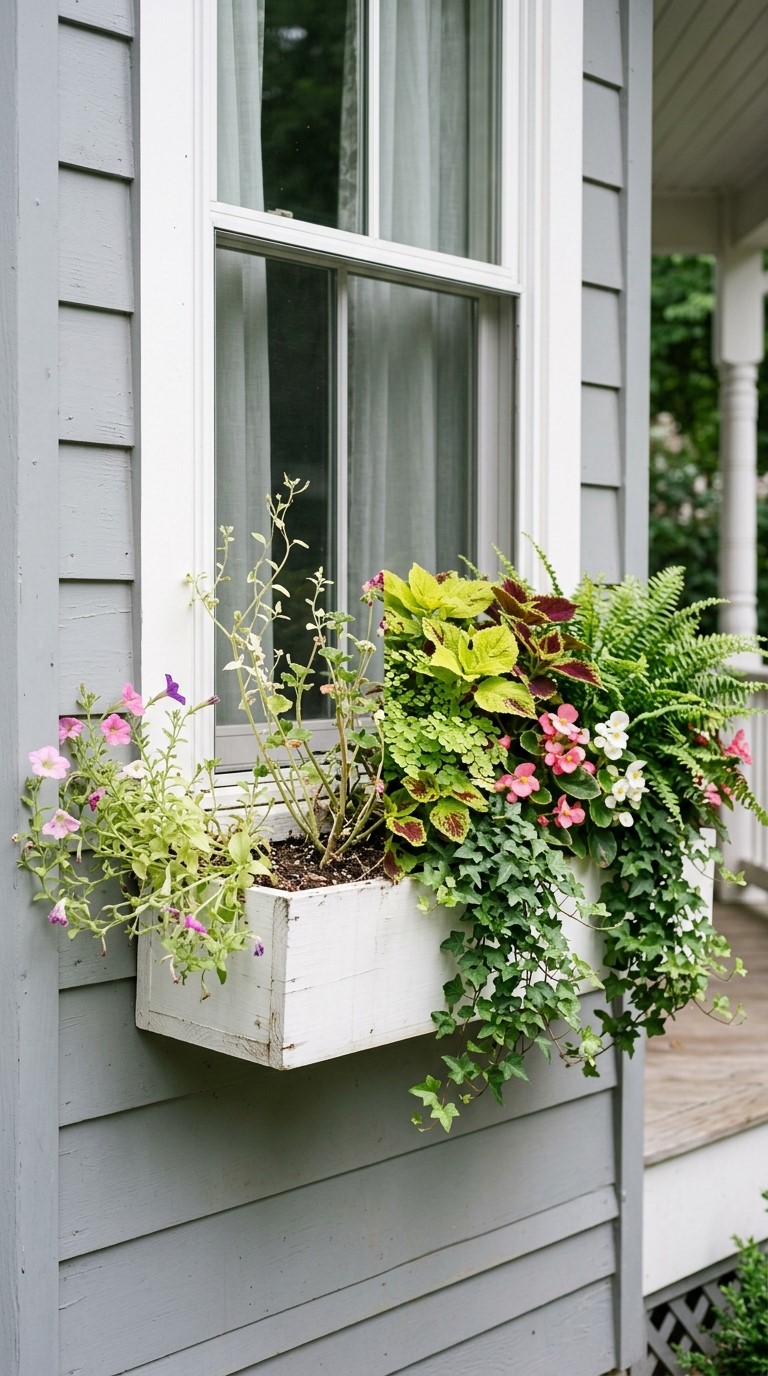
Petunias, geraniums and many sun-loving annuals are tempting because they look so good at the nursery. In full shade, they often stretch, bloom less and look disappointed. You may get leaves, but not the full flower display you paid for. Save those plants for sunny steps, patio pots or warm balcony corners. Put shade-tolerant plants in the window box instead.
Choosing Only Dark Plants for Window Box Shade
Dark foliage can be gorgeous, but in shade it needs help. A box full of burgundy coleus, dark heuchera and red flowers may look rich up close, then vanish from the street. Shadow swallows color. Add white blooms, lime coleus, silver leaves or variegated ivy to lift the planting. You do not need a bright rainbow. You need enough contrast for the eye to read the box.
Forgetting the View From Inside
A window box is not only for neighbors. You see it from inside the room too, often at closer range than anyone walking by. Place a few pretty leaves and flowers where they face the glass, not only the sidewalk. This is especially nice in kitchens, bedrooms and apartments where outdoor space is limited. Small pleasure. Real effect.
The Window Finally Looks Perfect
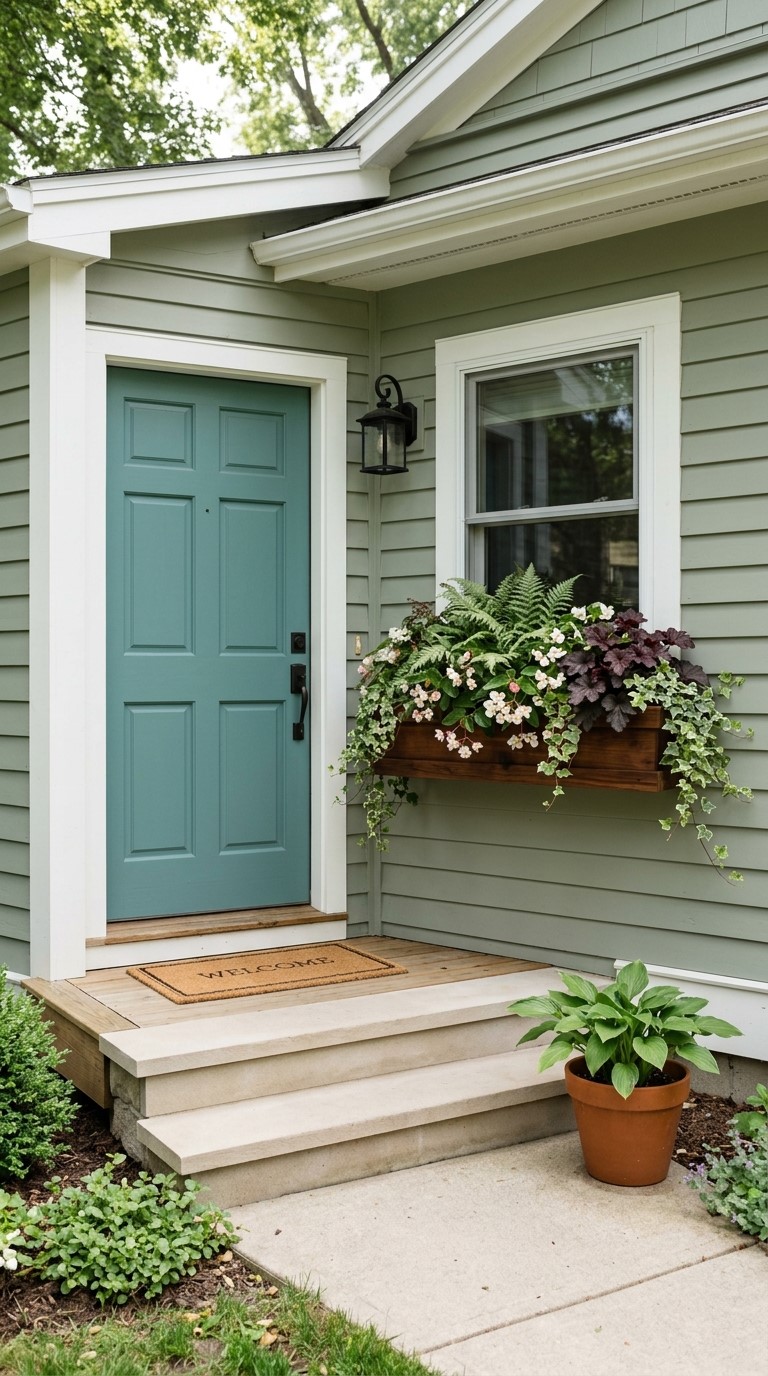
The shaded window was never the hopeless part of the house. It was just asking for different plants. Once you stop chasing full-sun flowers and start building with foliage, pale blooms, trailing edges and good soil, the box begins to make sense.
Start with the light you have. Choose a few plants with clear jobs. Give the roots drainage, water when the soil asks and trim before things get tired. A window box shade planting does not need to be loud to change the front of a home. It only needs to look alive, settled and worth pausing for on the way to the door.
