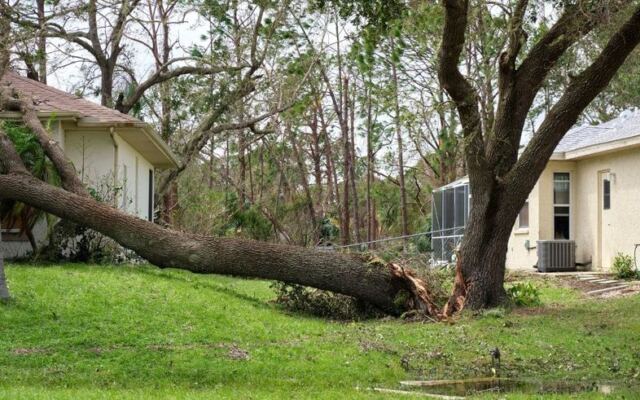
In Iowa, the tree’s origin alone does not decide who pays, and the answer usually comes from two places: the neighbor’s legal responsibility and your own insurance policy. A neighbor may owe you money if they ignored a tree they knew, or should have known, was unsafe.
Your homeowners policy may be the faster route when the fall damaged covered property. Here is how to sort out both paths and protect yourself while you do.
The tree’s origin does not settle who pays
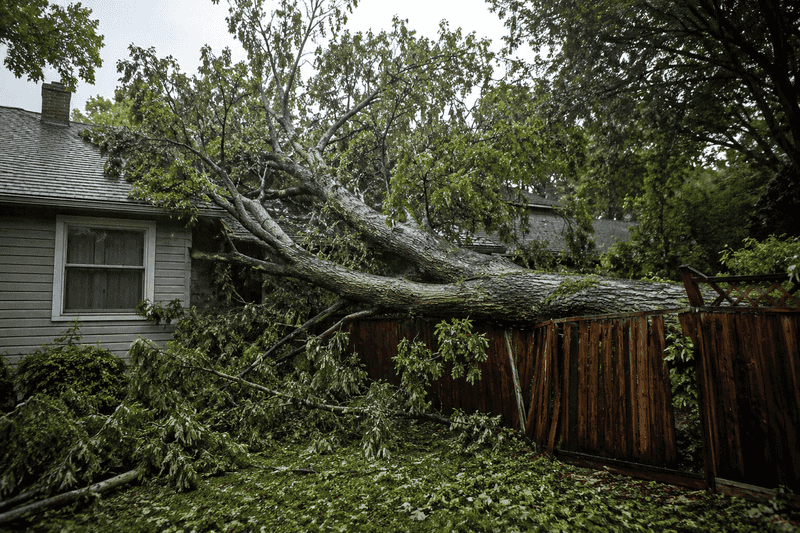
Two separate questions decide who pays, and the tree’s starting point does not answer either one. The first is whether your neighbor may be legally responsible.
The second is whether your own insurance policy covers the damage or the removal.
On the legal side, Iowa law looks at reasonable care and notice. In Meyers v.
Delaney, the Iowa Supreme Court tied a tree owner’s liability to whether the owner knew, or should have known, about a defect. So a neighbor is not automatically on the hook just because the trunk grew on their side of the line.
Facts, evidence, and the circumstances of the fall all matter.
On the insurance side, the policy language drives the result. The Iowa Insurance Division explains that homeowners coverage can apply to damage from a sudden fall caused by a covered peril, subject to limits.
Removal costs may be treated differently from repair costs.
Neither route comes with a guaranteed outcome. The sections below show how to check each one, starting with what the court looks for and then moving to what your policy may say.
Notice can affect whether the tree owner is liable

Iowa courts ask whether the tree owner used reasonable care. A key piece of that question is notice, which can be actual or constructive.
Actual notice means the owner really knew about the problem. Constructive notice means a reasonable owner in the same position should have known.
Meyers v. Delaney is the case people usually point to.
It involved a falling limb that injured a person, so it is not a ruling about who pays for yard cleanup. Still, it shows how the Iowa Supreme Court thinks about unsafe trees.
In the court’s opinion, liability depended on proof that the owner had notice of the defective condition.
The court also rejected a general duty to keep inspecting for decay that nobody can see. A tree that looked healthy from the outside is a different situation from one with dead limbs, a leaning trunk, or visible rot.
Storms matter too, but a storm alone did not settle the outcome. The trial court had rejected an act-of-God defense, yet the Supreme Court sided with the tree owners because the evidence did not show they had notice of the hazard.
So neither “it was just a storm” nor “it was your tree” is a safe shortcut.
Written records may help show notice, such as dated photos or messages about a dying tree. No specific format, like a certified letter, is required by that case.
These facts will not resolve every property-damage claim, but they show what evidence tends to matter.
Check your homeowners policy for property damage and removal
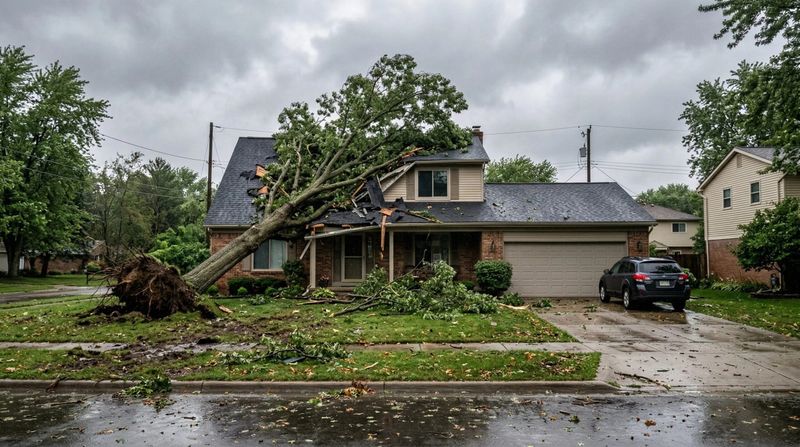
Your own policy is often the practical first stop. The Iowa Insurance Division says homeowners policies in most cases cover damage from a sudden fall caused by a covered peril, such as wind, hail, lightning, or the weight of ice or snow.
Coverage can include repairs and removal, but it is subject to policy terms and limits.
What the tree hit makes a big difference. If it damaged your roof, fence, or shed, the loss may be covered and removal may be part of the claim.
If the tree fell without causing damage, removal may not be covered at all. Do not assume your insurer, or your neighbor, must pay to haul away a tree that simply landed on the grass.
Read your policy for the covered perils, your deductible, and any tree-removal limits. Your agent or insurer can explain how those pieces apply to your loss.
Coverage is also a separate question from fault. A policy may pay for a storm loss even if your neighbor did nothing wrong.
If the neighbor was negligent, your insurer may try to recover its costs from the neighbor’s insurer, a process called subrogation.
If that recovery happens, you may get your deductible back. That is not guaranteed, so plan as though the deductible is yours to carry until you hear otherwise.
A damaged car follows a different insurance route
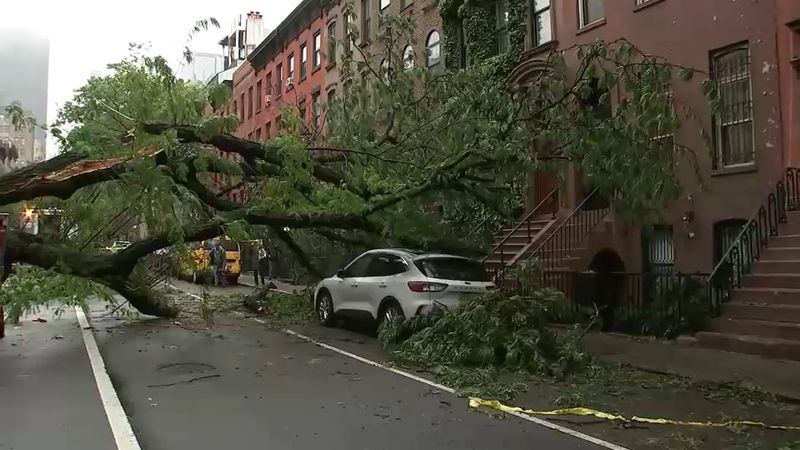
Cars get their own set of rules. The Iowa Insurance Division says homeowners insurance does not cover tree damage to a vehicle.
That means a crushed hood or shattered windshield is generally an auto insurance question.
Start by pulling out your auto policy and checking whether it includes comprehensive coverage. That part of a policy is the one that typically deals with damage from things like falling objects.
Not every auto policy has it, so do not assume your car is covered until you confirm.
Take photos of the car and the tree before anything is moved, if it is safe to do so. Then call your auto insurer to ask about your deductible and how to start a claim.
Keep any towing or repair paperwork.
The question of whether your neighbor was legally responsible can still come up, but your own policy is the place to begin.
Document the damage and stay clear of hazards
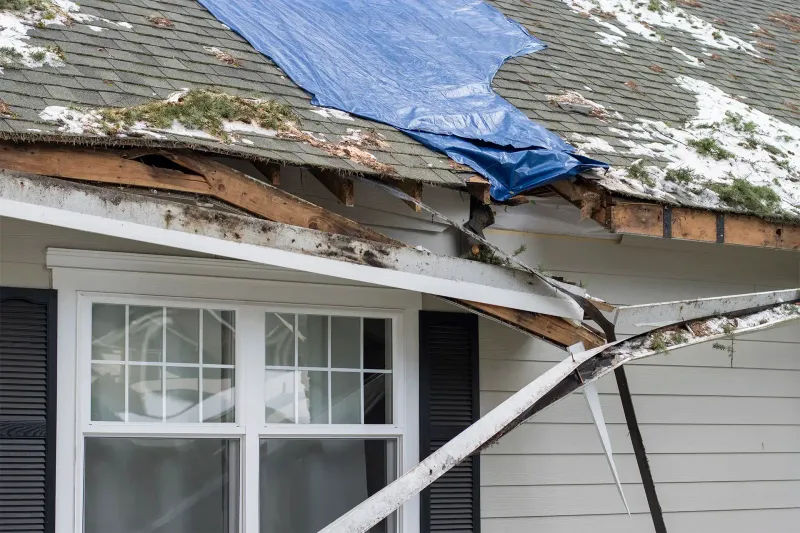
Order matters after a tree comes down. Before you move anything, take photos or video of the tree, the damage, and the surrounding area.
The Iowa Insurance Division recommends this first step, then taking reasonable action to prevent more damage, such as covering a hole in a roof with a tarp.
Contact your insurer promptly if the loss appears to exceed your deductible. Keep every receipt for temporary repairs and cleanup.
Be careful with contractors who show up after storms, and never sign a service contract with blank spaces.
Safety comes before cleanup. If limbs or the trunk are touching or near power lines, stay away and let the utility handle it.
Iowa DNR guidance on storm-damaged trees says to leave tree damage around power lines to the utility. The Iowa Utilities Commission also warns in its storm safety FAQ not to pull limbs off lines, because they may be energized.
Do not try to cut unstable limbs or trunks that are bent, cracked, or resting on a structure.
Before hauling away debris, check local instructions. Cleanup rules can differ by area, and your city or county may have specific drop-off or pickup procedures.
Branch trimming before a fall is a separate issue
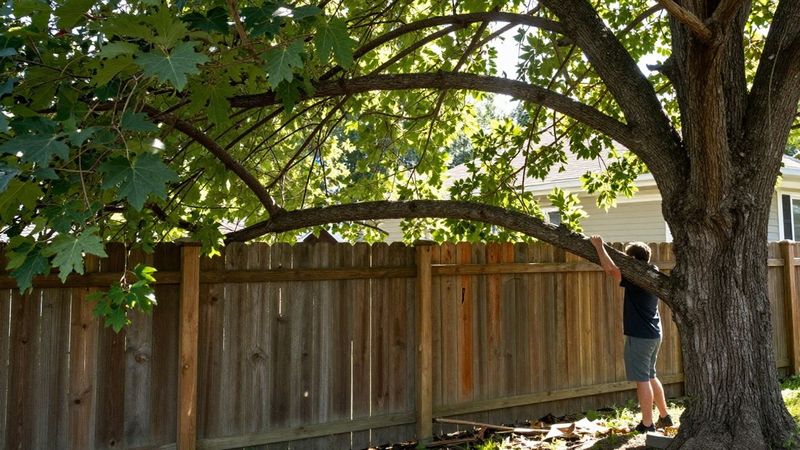
Trimming rights and cleanup costs are two different topics. Under Iowa’s common-law rule, summarized by Iowa State’s Center for Agricultural Law and Taxation, a neighbor may trim encroaching branches or roots from their own side.
That right has limits, so think carefully before cutting anything, especially if it could harm the tree.
That is a pre-fall self-help rule. It does not decide who pays once a tree has already come down, and it should not be used to answer cleanup or damage questions.
For a fallen tree, go back to the main questions. Identify exactly what was damaged, whether that is a roof, a fence, a car, or only the lawn.
Then check the relevant policy, starting with the Iowa Insurance Division’s guidance on homeowners and auto coverage.
Finally, look at your evidence. Consider whether anything suggests the tree owner knew or should have known about a defect, which is the notice question from Meyers v.
Delaney. Dead limbs, old photos, or earlier conversations may all matter.
Share this story