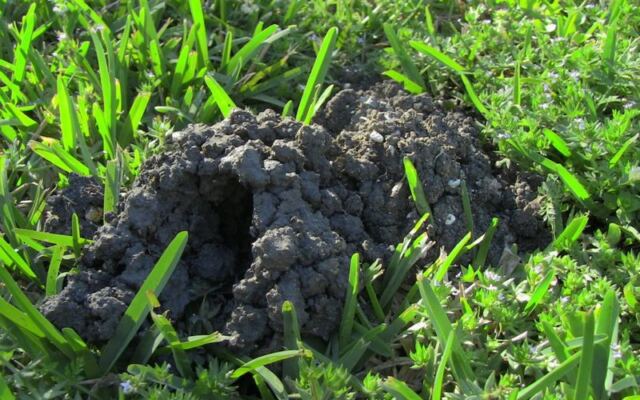
A small mud tower popped up in your grass overnight, and now you are wondering what built it. In Iowa, one likely answer is a crayfish that digs underground tunnels, even far from any creek or pond.
The tower tells a real story, but only part of it. Here is how to read the clue, what it can and cannot tell you, and what to do next.
A muddy tower is a clue, not a species label
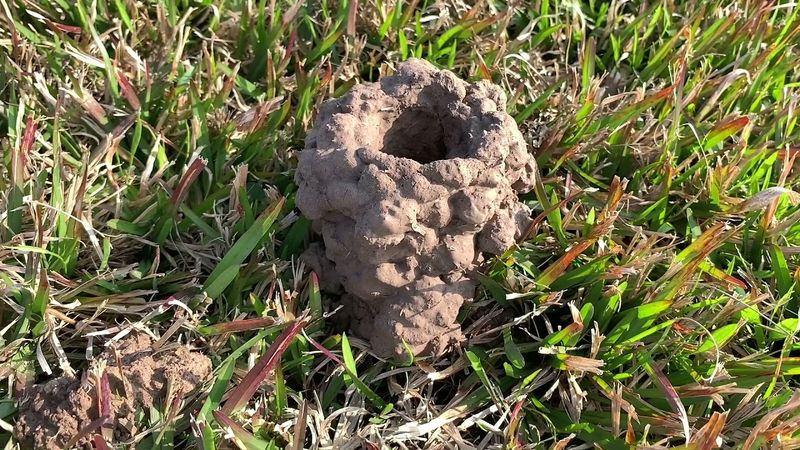
Picture a little volcano made of wet clay, standing a few inches tall in the grass, with a hole at the top. Iowa’s wildlife publication calls these formations tiny muddy volcanos and links them to crayfish that dig burrows.
That pattern is a strong clue that a burrowing crayfish worked nearby.
The mound is usually built from clumps or pellets of damp soil, often rounded and rough-looking. A Clemson Extension guide to identifying lawn holes describes crayfish towers as mud balls, often a few inches high, with a hole at the top.
Treat that size as a general clue rather than a strict Iowa rule. Towers can be shorter, taller, or slumped after rain.
Here is the limit of the clue. Iowa has several crayfish that burrow, and some only dig shorter burrows when wetlands or other waters dry up.
A mound alone cannot tell you which species made it, and it cannot prove a crayfish is home today.
Not every crayfish digs, either. Many live their whole lives in streams, lakes, or marshes and never touch a lawn.
So the tower points toward a burrower, but it does not name one.
If you want to be more certain, look at the setting. Damp soil, a low spot, or a ditch nearby makes the crayfish explanation more believable, while a dry hilltop with a dusty pile of soil might be something else entirely, such as an insect or another small animal.
The opening sits in a mound of excavated soil
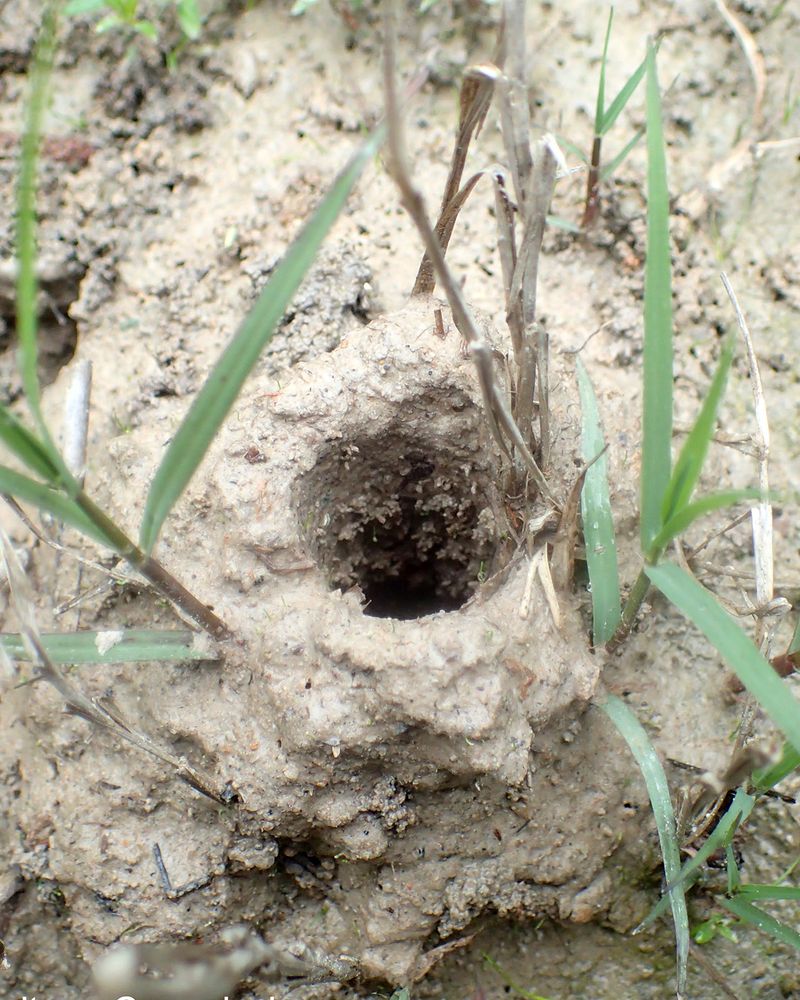
People often call the tower a crawdad’s front door, which is a fun shortcut, but it needs a small correction. The hole at the top of the chimney may be an entrance.
The mound around it is simply soil that was pushed out while the crayfish dug.
Think of it like a pile of dirt beside a posthole. The pile is not the hole, and it is not the animal.
Iowa DNR materials on burrowing crayfish describe burrows that run down to groundwater, so the real structure is underground.
That means the tunnel can stretch well beyond what you see on the surface. It may bend, branch, or drop deeper than you would guess from a tidy little tower.
The chimney is just the visible tip.
The mound also has a job beyond being a dirt pile. Researchers testing burrows found that crayfish chimneys can help ventilate burrows, which we will unpack in a later section.
For a homeowner, the practical takeaway is simple. Treat the mound as evidence of digging, and the opening as a possible way in and out.
Do not assume the tower is the whole burrow, and do not expect to see the crayfish sitting in it.
Iowa crayfish can reach lawns without a nearby pond
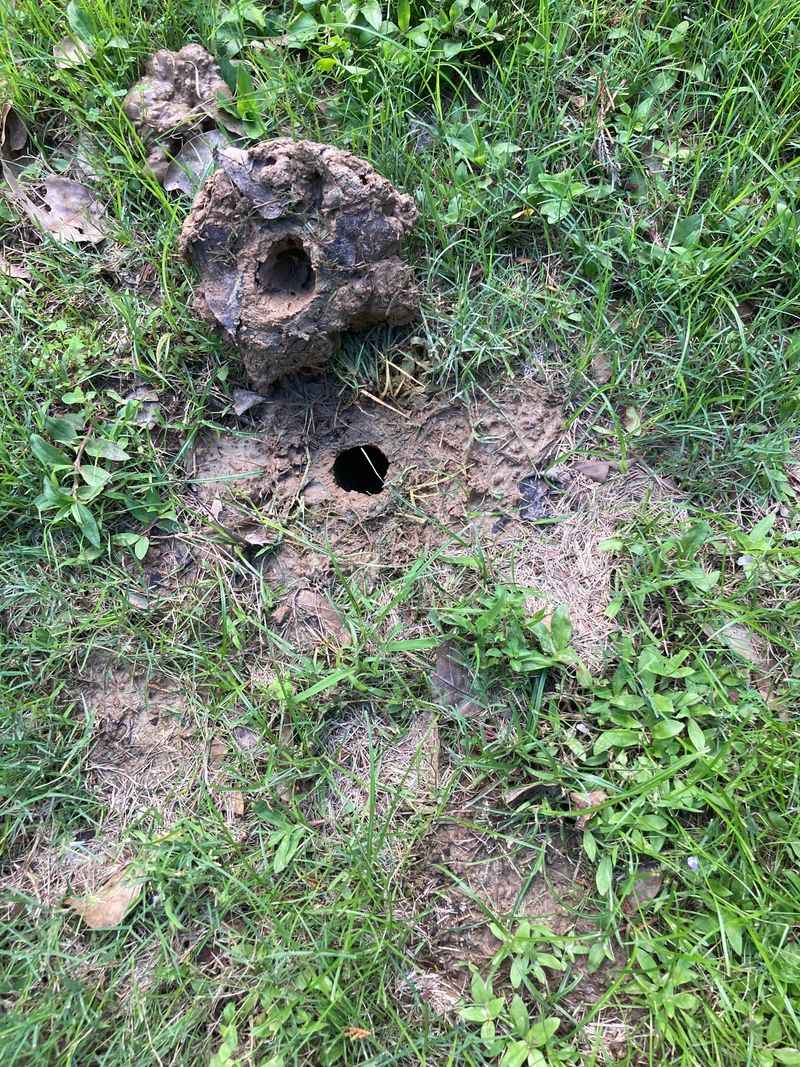
Finding a mud tower far from open water can feel like a mystery. No pond, no creek, yet something dug here.
The answer is that some Iowa crayfish live mostly underground rather than in surface water.
According to the Iowa DNR burrowing crayfish publication, Iowa’s Devil Crayfish and Prairie Crayfish dig burrows, and they use places such as grasslands, bottomland woods, and ditches. Their tunnels can reach down to groundwater, which gives them the moisture they need.
A lawn built on former prairie or low ground may sit right on top of that kind of habitat.
That is why a chimney does not require a stream next door. The water the crayfish needs can be underground, out of sight, beneath perfectly ordinary grass.
It also helps to separate burrowers from the rest of the crayfish family. Many species mostly live in streams, lakes, or marshes, and they are not the ones building lawn towers.
So seeing crayfish in a nearby creek does not mean they made your mound, and a mound does not mean your yard connects to a creek.
If your yard has a low corner, a drainage ditch, or a spot where the soil stays cool and damp, that is a sensible place to look for more towers. Notice where they appear.
The pattern can say more about your soil moisture than any single mound can.
Research supports ventilation as one possible chimney function
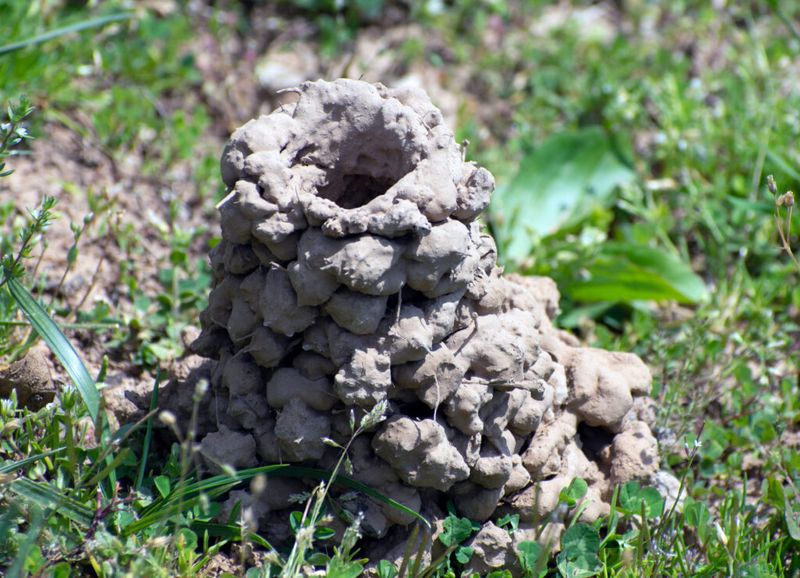
Why would a crayfish bother stacking mud into a tower? Scientists have tested one idea directly.
In a peer-reviewed paper titled Crayfish chimneys function as burrow-ventilation structures, experiments showed that chimneys helped move air through the burrows that were studied.
Good air flow matters in a tunnel that may sit in wet ground, where oxygen can run low. A chimney that lets air move in and out could make life underground easier.
That is a neat natural-history payoff for a pile of mud.
Still, the finding has edges. It shows ventilation works in those studied burrows.
It does not prove that ventilation is the only reason chimneys exist, and the authors also mention other proposed explanations.
Nor does it mean every species builds or uses chimneys the same way. Some crayfish skip chimneys entirely, and others may build them for different reasons or only under certain conditions.
Researchers say more work is needed to understand the benefits.
For a curious homeowner, that is a reasonable way to think about the tower in your lawn. It is likely doing something useful for the animal below, and ventilation is one well-supported possibility, but the full story is still being written.
Lawn complaints commonly center on mounds and mowing
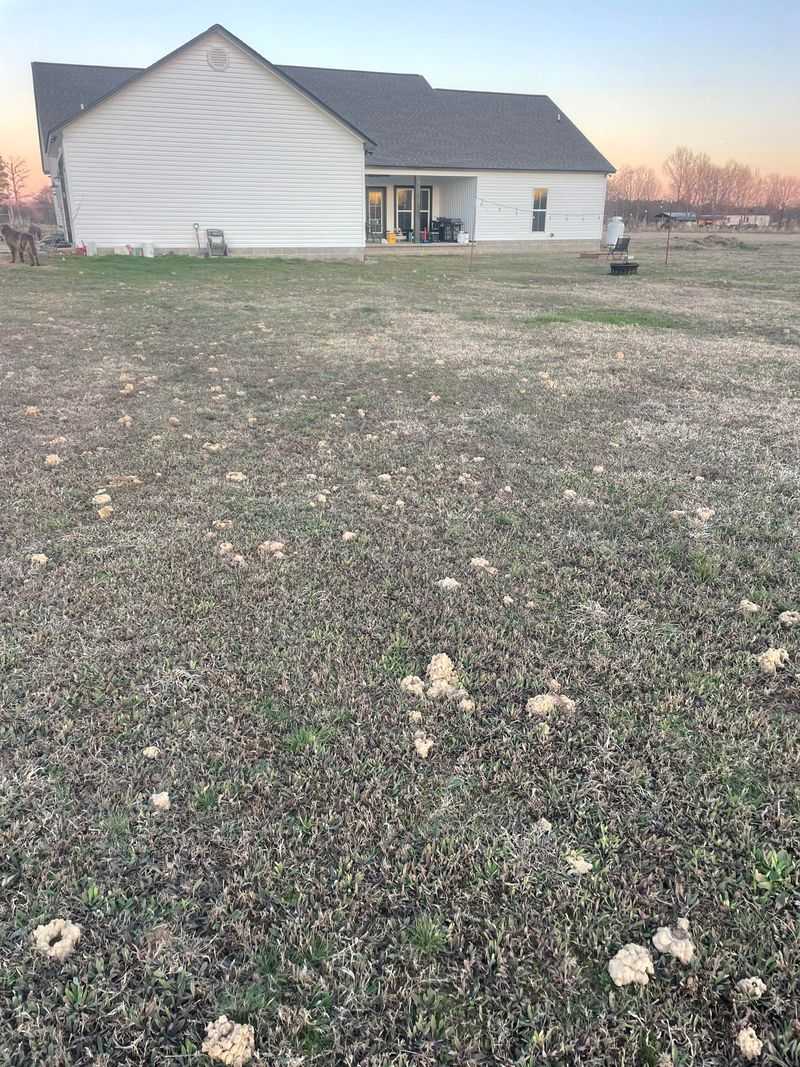
Lawn complaints commonly focus on the mound and mowing difficulty; serious turf damage is not the typical concern described by these sources. Hardened clay towers are bumpy, and a mower deck does not enjoy them.
That is the main nuisance most extension writers mention.
NC State Extension’s page on crayfish in turf and Clemson’s guide to crawfish chimneys both center on the soil piles and the trouble they cause for mowing. LSU AgCenter’s crawfish turf page also treats them mainly as a mound issue, though the sources differ in how they describe plant feeding.
So it is fair to say crayfish may sometimes affect plants, but routine, serious turf destruction is not what these sources establish.
That calls for a calm outlook. A few towers on a lawn are an annoyance, not an emergency, and the grass around them typically keeps growing.
There is one setting where burrowing deserves more attention. In earthen structures such as dams or dikes, tunnels can threaten structural integrity, which is a very different concern from a bumpy yard.
If you own a pond dam or levee with burrow openings, that is worth professional advice.
For an ordinary lawn, the question is simply whether the mounds bother you or your mower. If they do, small, gentle steps are enough.
Smooth the mound and avoid improvised control
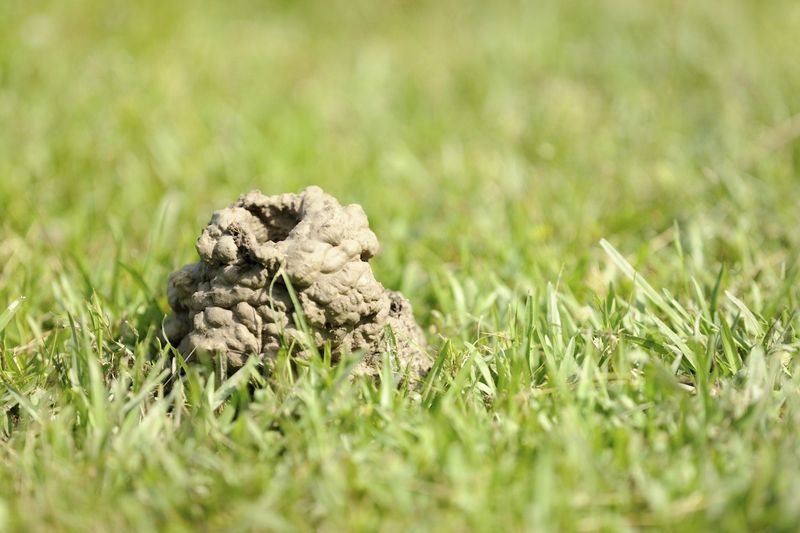
When the problem is only a visible mound, the fix can be as simple as a rake. Extension guidance for crawfish chimneys suggests raking them smooth or breaking them up gently with a garden hose.
A soft spray works best when the soil is already damp.
Skip mowing over hard mounds. Clemson’s lawn hole guide warns that mower contact can dull blades and send mud flying.
Smooth the tower first, then mow.
New towers may reappear after rain, so a quick check before each mow is a sensible habit. A little light raking now and then is far easier than fighting the animal.
Please do not reach for pesticides or kitchen-sink chemicals. NC State Extension notes that crayfish in turf are not a case for registered pesticide control, and Texas A&M’s crawfish page also cautions against chemical treatment.
Those are other states, but the lesson travels: improvised products can drift or wash into water. Boiling water is not established as a reliable, lawn-safe routine for Iowa yards either.
There is also a reason to stay gentle. Crayfish are part of the food web, and the Iowa DNR notes that their burrows provide habitat for some rare amphibians and reptiles.
That does not mean your yard burrow shelters a rare species, only that a light touch costs you very little.
Persistent wetness calls for a drainage check, not a guaranteed fix

If your yard stays squishy for days, treat that as its own question. A crayfish chimney does not prove you have a drainage problem, and a wet lawn does not prove crayfish are there.
Both can happen together, or either can happen alone.
Start with the simple suspects. Is the sprinkler running too long?
Does a downspout dump water in one spot? Is the soil compacted, or is there a low spot where water collects?
Iowa State Extension’s guide to testing and improving soil drainage explains how to assess these before making changes.
Drainage work can be costly, so it should answer a real water-management problem. Fixing it may make the yard better for grass and mowing, but it is not a guaranteed way to remove crayfish.
Expect improvement in wetness, not a promise about burrowers.
Be careful where the water goes. Redirecting runoff onto a neighbor’s property is a bad idea and can create a larger problem.
The University of Arkansas Extension’s note on crayfish chimneys in your yard also ties them to wet soil conditions, which is a useful reason to look at the ground itself.
If you only have a few towers and a normally dry lawn, a rake and a little patience will do. The mud chimney is a small tale of what is happening below, and it rarely needs more than a thoughtful look.
Share this story