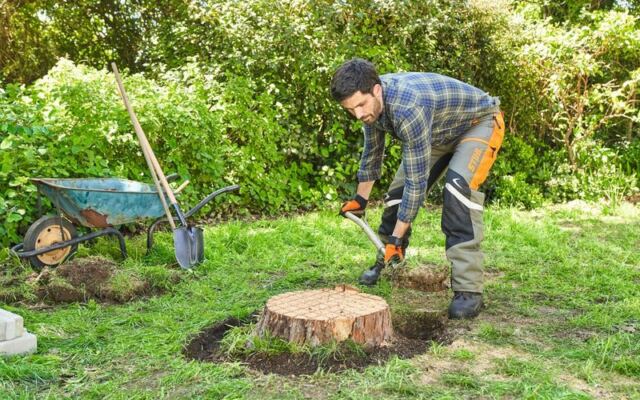
That stump in your yard trips the mower, ruins the view, and just sits there. Hiring a grinder costs money, so many homeowners wonder if a shovel and some muscle could do the job.
For some small stumps, hand digging really can work, but it asks a lot of your back and your patience. Here is how to tell whether yours is a good candidate and what to do if it is.
Hand digging works best on smaller stumps
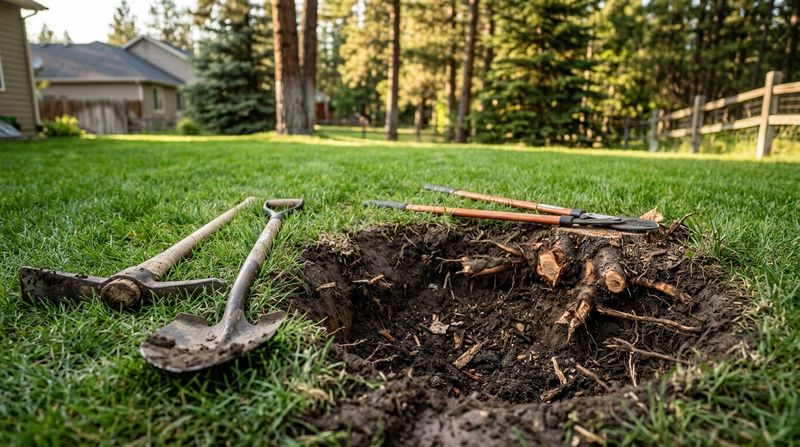
Hand removal can work without a grinder, but it is slow, sweaty work and it is not a fit for every stump or every person. It makes the most sense for smaller stumps.
Guidance varies on how small is small enough. Iowa State Extension says digging is most practical for stumps under roughly 12 inches across.
Illinois Extension is more cautious and says it would not go much beyond 6 inches.
Think of 6 to 12 inches as a rough range, not a hard line. Neither number promises success, and diameter alone will not tell you how the job goes.
Several other things change the difficulty. Species matters, since some trees grow thick, stubborn roots.
Root size and spread matter too, as do soil type, the condition of the stump, and how much of it sticks up for leverage.
A 7-inch stump in loose soil with thin roots might come out in an afternoon. A 7-inch stump packed into heavy clay with thick roots could wear you out by lunch.
A larger stump can need heavy equipment altogether.
A good test is to poke around the base with a shovel. If you find a few manageable roots and workable soil, trying by hand is reasonable.
If you hit a tangle of thick roots right away, you have learned something useful without much effort wasted.
What to check before digging
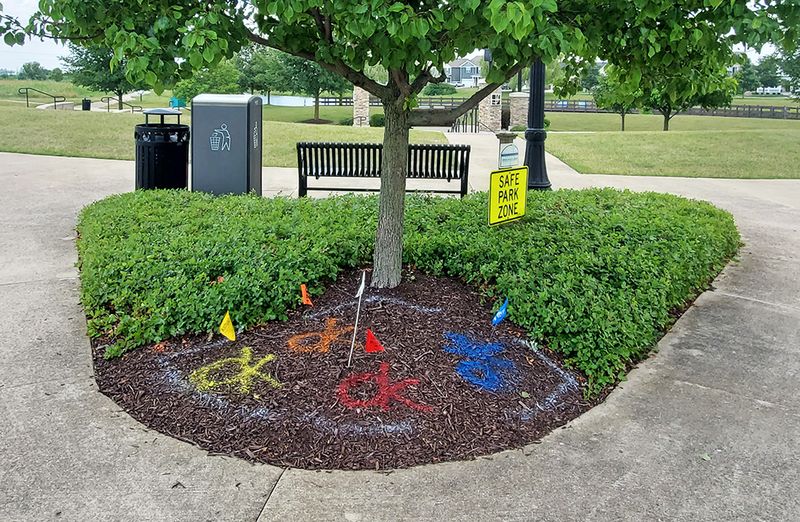
Before any shovel touches the ground, call 811. In New York, contacting the service before you dig or cut roots is the step that keeps you away from buried gas, electric, water, and communication lines.
According to New York 811, homeowners should make the request at least 48 hours and no more than 10 working days before digging. Plan ahead, because a stump project started on a whim can end up waiting a few days.
Once you make the request, wait for the utility markings. Paint or flags will show where lines run, and digging before they appear defeats the purpose of calling.
When the markings arrive, take care near the marked lines. Dig by hand with caution close to them, and do not assume a line sits exactly where the paint is.
If a marked line runs very near your stump, that is a good reason to reconsider the whole project.
Site preparation is simple but worth doing. Clear the area around the stump of rocks, tools, and trip hazards.
Set up a tarp or wheelbarrow for soil so the backfill step is easier later.
Wear sturdy boots and gloves, and have water handy. Work when the soil is not frozen solid or soaked, since both make the digging harder.
Expose the lateral roots
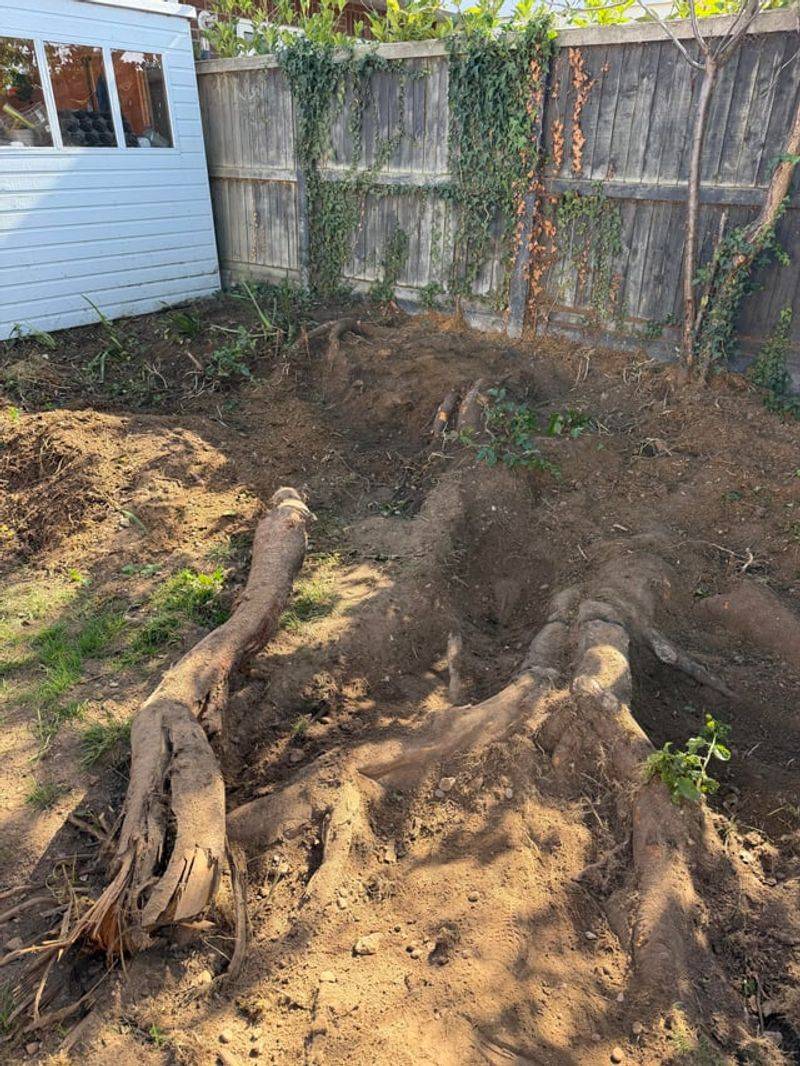
With the utilities marked and the area clear, start by digging a trench around the stump. Iowa State Extension suggests a trench roughly 1 to 2 feet deep.
That depth is a guide, not a guarantee, and your stump may need more or less.
Work in a ring, moving the soil away from the base a shovelful at a time. Pile the dirt on a tarp so you can use it to fill the hole later.
As the soil comes away, the lateral roots will start to show. These are the roots that spread sideways from the stump and hold it in place.
Follow each one outward until you can see enough of it to cut.
Next, sever the roots you can reach. A sharp mattock, an ax, loppers for thin roots, or a hand saw for thicker ones all do the job.
Take your time, because swinging into soil also means you can hit rocks, which dull blades quickly.
Each root you cut is one less thing anchoring the stump. Expect the stump to stay stubborn until most of the lateral roots are gone, and do not be discouraged if it barely wiggles at first.
If the roots are thicker than you expected, pause and judge whether you can keep going. Stopping here is better than forcing it.
Use a pry bar to free the loosened stump
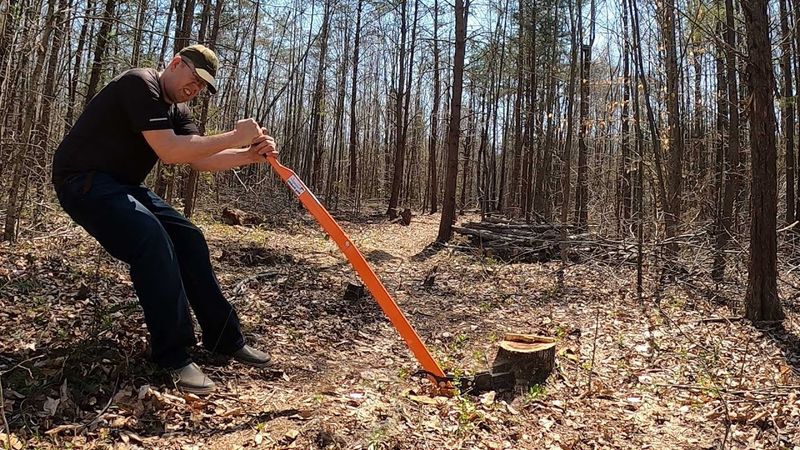
Once the side roots are cut, the stump should start to feel loose. Now a sturdy pry bar becomes your best tool.
Push it under or against the stump and lean on it to tip the stump to one side.
Tipping it exposes the roots underneath, including the ones that grow straight down. Cut those remaining roots with your saw or mattock, then rock the stump and tip it again until it comes free.
Iowa State Extension notes that a taller stump, about 4 to 6 feet, can give you leverage. That only applies if enough trunk remains above ground.
A stump already cut flush with the soil gives you nothing to push on, so do not expect it to pop out easily.
Even with a tall stump, plan on real effort. Leverage helps you apply force, but it does not cut the roots for you.
Keep your feet planted and your back straight when you pry. Let the bar do the lifting, and stop if something feels like it could slip or snap.
When the stump is out, backfill the hole with the soil you set aside. Pack it down in layers and add a little extra on top, since the ground will settle over time.
Chainsaws bring their own hazards
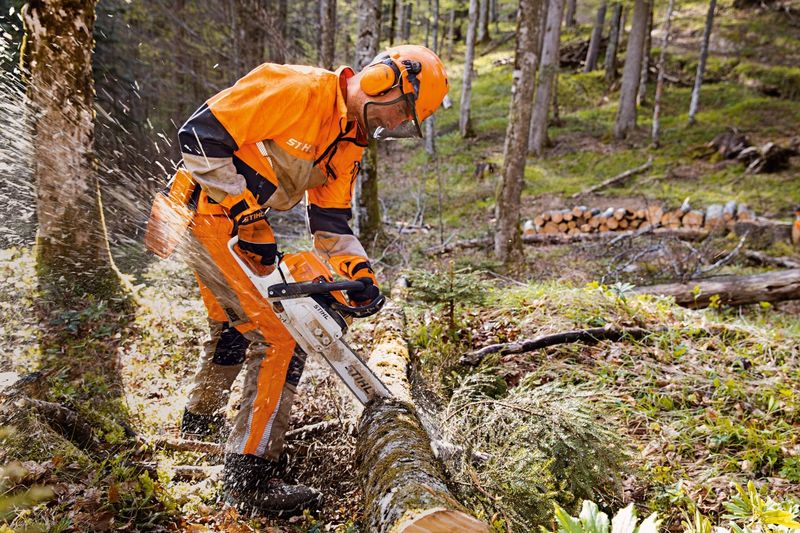
A chainsaw might look like a handy way to cut stubborn roots, but it is optional and far from a safe shortcut. If you have never run one, root cutting near the ground is not the place to learn.
The OSHA chainsaw safety guide lists several cautions worth taking seriously. Check for metal first, since nails, wire, or old fencing can be buried in a stump and cause dangerous kickback or damage.
Keep secure footing at all times. Loose soil, wet roots, and a freshly dug trench make for uneven ground, so clear the area and make sure you can stand steady.
Watch for objects under tension. A root or branch that is bent or pinned can spring when cut, and it can move fast.
Wear suitable protective equipment. That generally means eye and face protection, hearing protection, gloves, sturdy footwear, and leg protection made for chainsaw use.
Stay within your skill level. If a cut feels beyond what you know how to do, hand tools or a professional are the better choice.
Soil dulls chains quickly, so cutting roots near the ground has its own downsides. A hand saw or mattock is slower but gives you more control, and for many small stumps that is enough.
When another approach makes more sense

Sometimes the smartest move is to stop. If the stump is too large, the roots are enormous, or the digging simply is not worth it, you have options other than forcing it.
One is to wait. Iowa State Extension notes that natural decay can take years, and it may take 10 or more years depending on conditions.
You can plant around it or set a pot on top in the meantime.
Skip the Epsom salt trick. An Extension expert found no university research backing it.
Chemical products are no miracle either, and Illinois Extension says they will not liquefy a stump overnight.
Do not hitch a chain to your truck and pull. Illinois Extension warns that vehicle attempts can cause costly damage, and chains or ropes can slip or break and hurt someone.
Do not use accelerants or try to burn the stump. Stump fires can be hard to control.
New York’s open burning rules allow only specified kinds of fire, and the limited exception for small brush does not cover stumps. Check DEC and local rules before lighting anything.
For a big or stubborn stump, a grinder or a professional is often the safer and less exhausting answer. Knowing when to quit is part of doing the job well.
Share this story