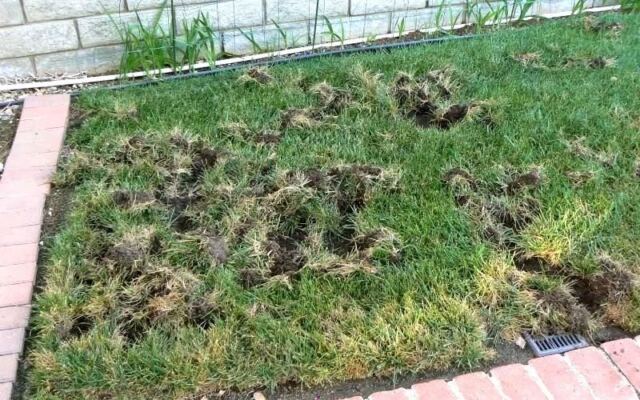
You step outside on a crisp fall morning and find little holes or flipped patches of turf where the grass was fine yesterday. It is natural to want a quick answer, and it is tempting to grab a bottle of lawn treatment.
But the damage is only a clue, and several animals can leave similar marks. A little careful looking can save you money and keep you from fixing the wrong problem.
What the holes can—and cannot—tell you
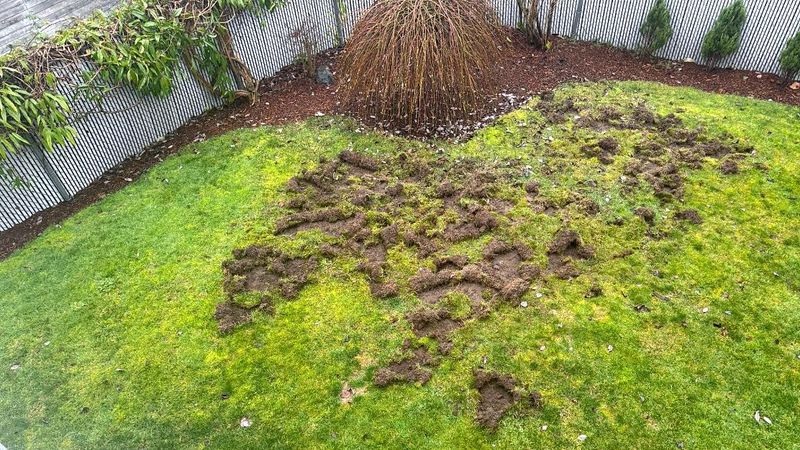
Think of the damage as evidence, not a verdict. University of Maryland Extension describes skunk digging as clusters of separate, roughly three-inch cone-shaped holes.
Lifted or rolled-back flaps of sod lean more toward raccoons. Neither sign is definitive, because either animal can tear up turf.
Both species live in Delaware, according to DNREC’s furbearer information. They forage at night for grubs, earthworms, and other soil-dwelling food, as noted in Iowa State guidance.
That means finding damage in the morning does not tell you which animal did it, since nighttime activity fits several visitors.
Pay attention to the shape of the damage, too. Shallow, scattered holes are a different pattern from tunnels or raised runways.
Those ridges suggest moles or voles instead, and they call for a different approach.
What about armadillos? A recent USGS range assessment describes their spread into parts of North Carolina but does not document an established Delaware population.
So they are an unlikely suspect here, though not an impossible one.
Late-summer and fall damage is well documented, but it is not unique to late fall. If you really need to know who is visiting, a trail camera aimed at the patch can settle the question without you going out at night.
Digging does not prove a grub problem
Grubs get blamed first, but they are only one item on the menu. Skunks and raccoons also eat earthworms and other insects, as Iowa State Extension explains.
A dug-up lawn can show up even when grubs are not numerous enough to need any treatment.
So the holes by themselves tell you very little about what is under the grass. The only way to know is to look.
Skip the guesswork and check the soil directly before you spend a dime.
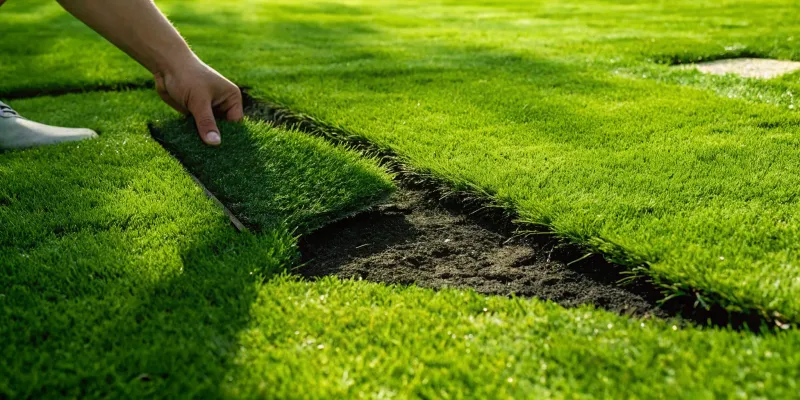
Here is a cautious way to do it. Use a flat spade or a knife to cut a small square of turf, about a foot on each side, and peel it back a few inches.
Count the C-shaped, creamy white grubs you see in the roots and soil, then press the sod back down.
Do this in several spots, not just one. Include areas with damage and nearby areas that look untouched.
University of Maryland Extension notes that grub populations can be patchy, so one clean square or one crowded square will not tell the whole story.
If you find few or no grubs, the animals may be after something else, and pesticide would be wasted effort. Checking first keeps the decision grounded in what is actually in your yard.
Why late-fall grub treatment may not work
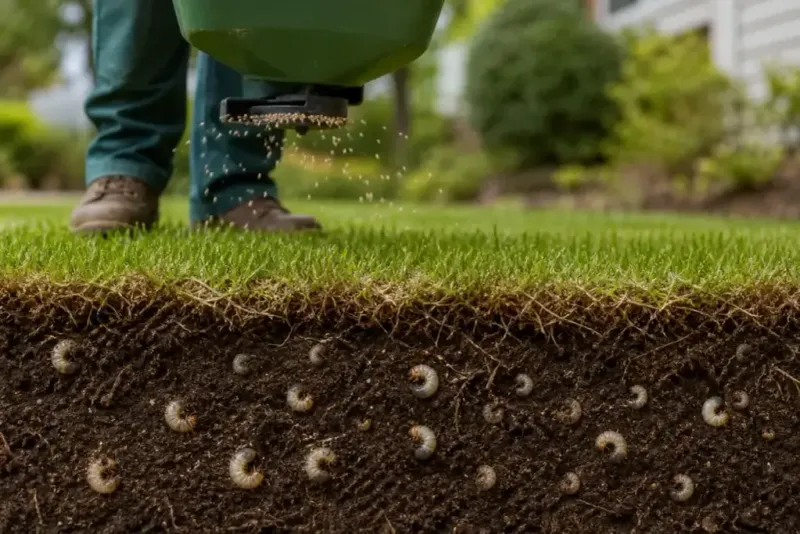
Timing is a big part of the story. Grubs of common lawn pests often move deeper into the soil as it cools in October, according to University of Maryland Extension.
By late fall, they may be out of reach and no longer feeding near the surface.
Curative products are tied to the grub stage and to the directions on the label. Applying one at the wrong moment may do little, so late-fall treatment can be ineffective.
Reading the label closely matters more than grabbing whatever is on the store shelf.
You may also see numbers for how many grubs per square foot call for action. Those figures vary.
Rutgers Cooperative Extension notes that thresholds depend on the grub species, the turf, and conditions. A figure from one source is not a rule that fits every Delaware lawn.
Healthy, well-watered turf can tolerate more grubs than a stressed lawn can. That is one reason a single number cannot settle the question for you.
Most important, do not apply a pesticide just because an animal dug up the grass. Iowa State guidance describes controlling these animals as difficult, and treatment will not necessarily stop the digging.
If your turf check shows a real grub problem, a better time to plan is the following season, following the label.
Reduce attractants and protect the damaged patch
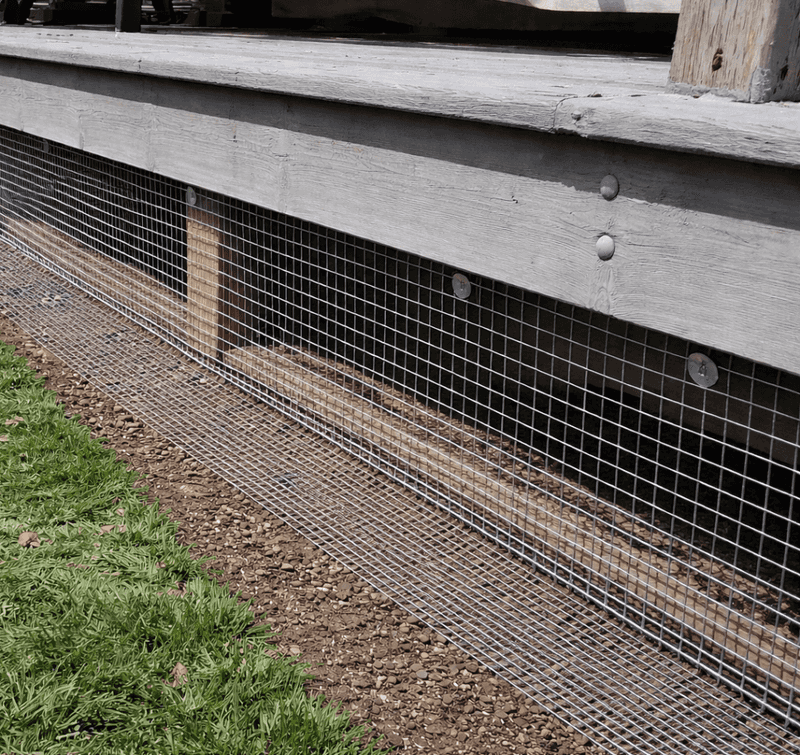
Start with the easy, low-risk steps. Keep garbage cans closed and secure, and bring pet food indoors before dark.
Removing an easy meal may make your yard less interesting to nighttime visitors, though it is not a guaranteed fix.
For a spot that gets hit again and again, consider covering it. University of Maryland Extension and similar guidance point to physical exclusion as an option.
Wire mesh laid over the patch and pinned down firmly can frustrate digging, so check that the edges are tight and have no sharp points that could snag a person or pet.
Set your expectations, though. Raccoons are strong and clever, and they can defeat some barriers.
Scent repellents are generally unreliable, so it is better not to count on them.
Then there is the repair work. Iowa State Extension notes that control is hard, so think of repair as tidying up rather than prevention.
Press flipped sod back into place, water it, and keep foot traffic off until it settles.
For bare areas, reseed or resod as needed once the weather allows. Healthy turf recovers better, but fixing the patch will not promise that the animals stay away.
Treat each step as one more way to lower the odds.
Keep your distance from wildlife
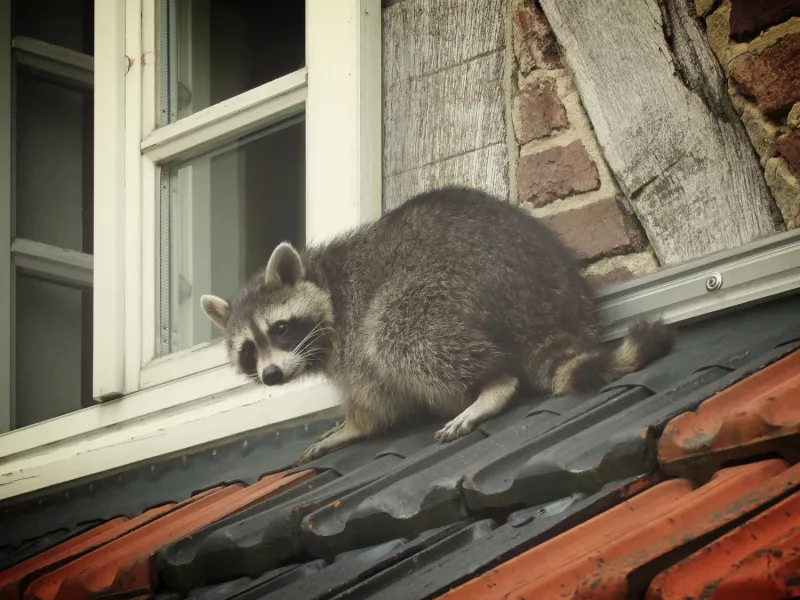
Whatever is tearing up the grass, it is a wild animal, and the safest plan is to leave it alone. Do not approach, handle, or corner a skunk or raccoon, and do not try to trap one yourself.
A cornered animal can spray, scratch, or bite.
If wildlife keeps causing trouble, get professional help. Delaware’s DNREC furbearer page directs people with nuisance-wildlife problems to a professional operator and points to the state’s trapping regulations.
Those rules exist for good reasons, so check them before anyone sets a trap.
Health risks come first if someone is hurt. CDC guidance advises keeping away from wildlife.
After a bite or scratch, wash the wound well and promptly contact a healthcare provider or your public-health department about rabies risk.
Keep pets and children in mind as well. Bring pets in at night and watch them when they go out, so they do not come face to face with an animal in the dark.
Looking from a window or using a trail camera lets you gather clues without getting close.
Use a cautious order of operations
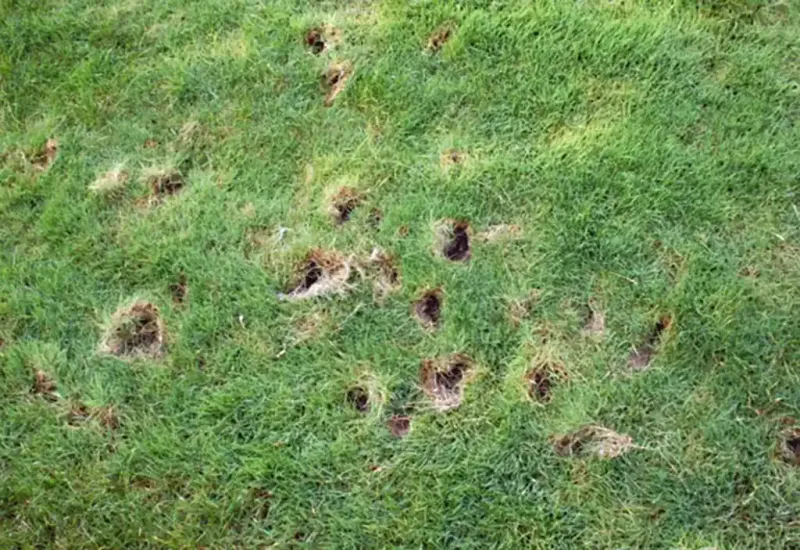
When you spot fresh damage, work through it in order. First, read the pattern as a clue, using University of Maryland’s digging guide.
Next, lift a few squares of turf and count grubs before assuming they are the cause, as its grub page suggests.
Skip automatic late-fall pesticide, then try low-risk steps like securing food and covering a repeat patch, and stay well away from the animals. Iowa State Extension is a good place to read more.
None of this guarantees you will name the culprit or stop the next visit. It simply helps you choose with more information, and a lawn can be patched far more easily than a wrong guess can be undone.
Share this story