Every fall, bigleaf hydrangeas in Delaware yards are already holding the tiny flower buds for next summer. A hard winter can harm those buds, even when the shrub itself comes through fine.
A simple cage stuffed with fallen leaves is one way gardeners try to lower that risk. Before you grab the chicken wire, though, it pays to know which hydrangeas really need it.
Identify the hydrangea before deciding to protect it

Not every hydrangea in your yard needs a winter wrap, so start by figuring out what you are growing. Hydrangeas differ in when they set flower buds, and that decides whether protection makes sense.
Two types often grow in Delaware gardens. University of Delaware Extension describes smooth hydrangea as a plant that blooms on new wood, meaning the flowers form on stems that grow this spring.
Oakleaf hydrangea, by contrast, blooms on old wood. A smooth hydrangea can be cut back and still flower, so it does not need a bud-saving cage.
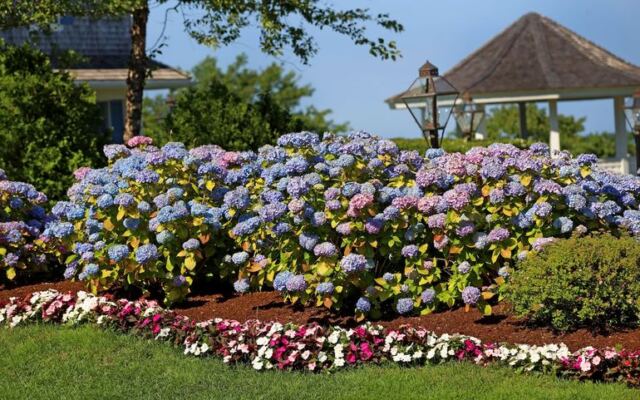
Bigleaf hydrangea (Hydrangea macrophylla) is the one gardeners most often worry about. Many bigleaf types form flower buds on last year’s stems, which is why a cold winter can cost you blooms.
Look for rounded, glossy leaves and big mophead or lacecap flowers in pink or blue.
There is a twist. According to Virginia Tech Extension, some bigleaf cultivars rebloom, flowering on both old and new wood.
If winter kills some of the old-wood buds, those plants may still bloom on new growth.
Check the plant tag, your purchase records, or the nursery’s website for the cultivar name. If you cannot find it, note whether the plant has bloomed reliably after rough winters.
That history helps you decide whether a cage is worth the effort.
Cold can damage flower buds while the shrub survives
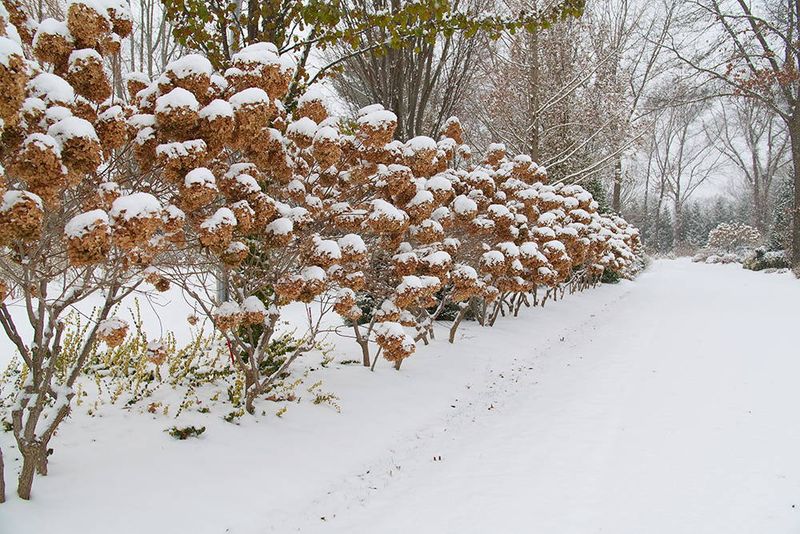
Picture a hydrangea that leafs out lush and green in May, then never produces a single flower. That is what bud injury can look like.
The shrub lives, but the buds that carried the blooms did not make it.
The reason is timing. UNH Extension explains that bigleaf hydrangeas set flower buds on old wood, so those buds sit exposed on last year’s stems all winter.
University of Georgia Extension adds that winter or late-spring cold can damage them.
Losing buds is very different from losing the whole plant. Stems and roots are often tougher than the buds, so a shrub can recover and grow new leaves while skipping its flowers for a year.
Wrapping is aimed at saving the buds, not at keeping the plant alive.
Still, a cold snap does not guarantee a flowerless summer. Virginia Tech Extension notes that bud hardiness varies among cultivars.
Plant condition, the spot in your yard, and later weather all play a part too.
That uncertainty is why protection is a way to improve your odds. A sheltered plant near a south-facing wall may need less help than one standing alone in a windy open lawn.
Use local conditions, not a statewide freeze deadline
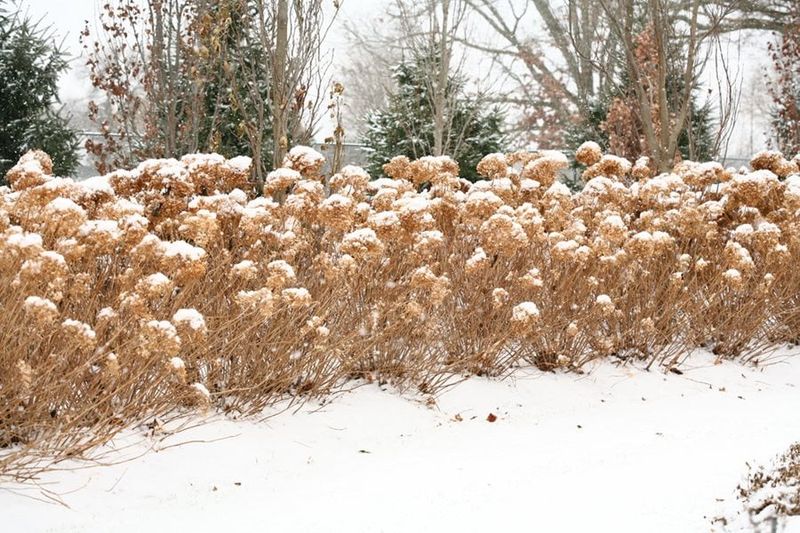
You will not find one correct wrapping date for the whole state, and nobody should hand you one. Northern Delaware and the southern end of the state often have different winters, and the weather can lurch between mild spells and sharp cold.
The University of Delaware points out that Delaware weather can swing from winter warmth to extreme cold. A calendar date chosen months ahead can miss that reality.
Freezing temperatures are a real concern for bigleaf buds. University of Georgia Extension says the buds may need protection when temperatures drop below freezing.
That does not mean the first hard freeze automatically kills them, and no single temperature has been shown to trigger damage.
So make the decision in steps. First, confirm the plant is a bigleaf type that blooms on old wood.
Then consider your own yard: how exposed it is, how your plant did in past winters, and what the extended forecast looks like.
Many gardeners build the cage in late fall once leaves have dropped, because that is when there are plenty of leaves to use. Treat that as a convenience, not a rule, and adjust to what your own weather is doing.
Build a leaf-filled cage without disturbing the buds
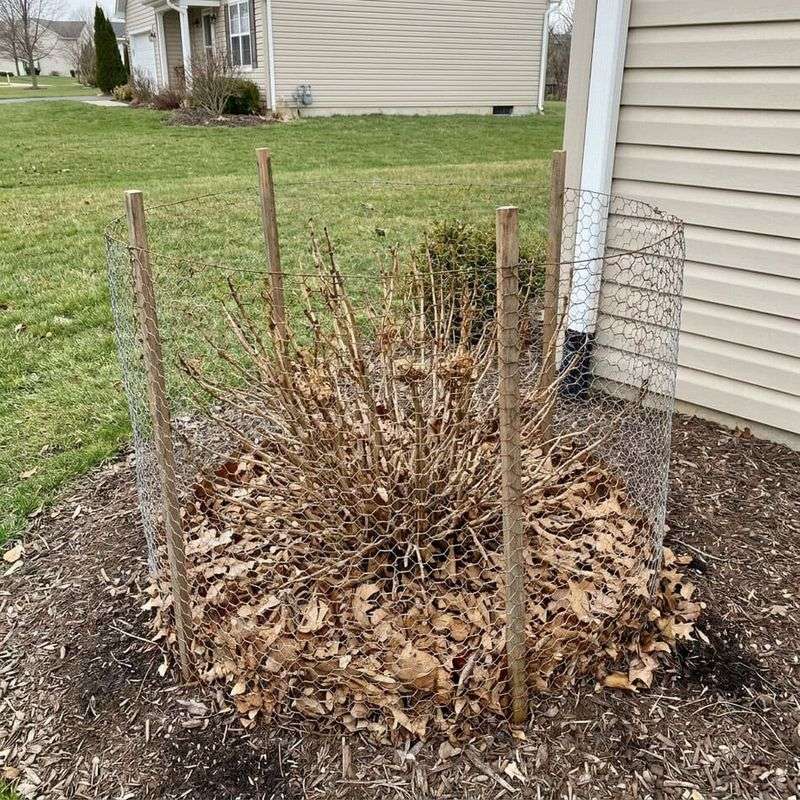
Here is the basic method. You need a roll of chicken wire or similar mesh, a few stakes, and a pile of fallen leaves.
Raking the lawn already gives you the filling.
Start by setting stakes in a circle around the shrub, leaving some space between the wire and the stems. UNH Extension advises surrounding the plant with a mesh cylinder without damaging the buds.
Bending or crushing stems is what you are trying to avoid, so work slowly.
Next, wrap the mesh around the stakes and fasten it into a cylinder. Make it a bit taller than the plant so the top can be filled too.
Then fill the cylinder loosely with fallen leaves, tucking them in around the stems.
The University of Georgia also recommends a chicken-wire cylinder filled with leaves. The leaves act as a buffer against winter cold around the buds.
Dry leaves from oak or maple trees work well. Avoid packing them so tightly that you snap twigs.
Keep your expectations realistic. The cage may help buffer the buds, but it cannot promise flowers, and it will not fix bud loss from other causes.
Keep old-wood stems intact until spring growth appears
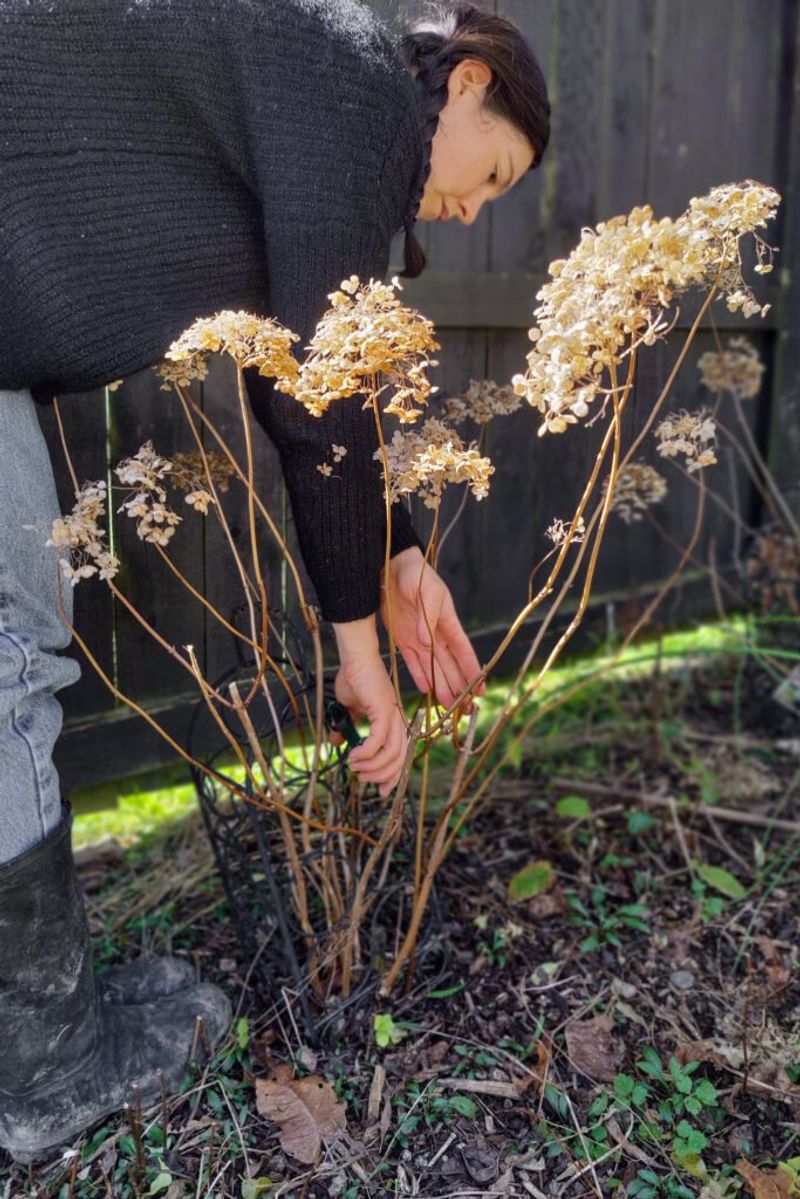
Tidy-minded gardeners tend to get the clippers out in fall, and that habit can cost you a summer of flowers. On old-wood bigleaf hydrangeas, those bare-looking stems are carrying the buds.
If you want those blooms, skip pruning in late summer, fall, and winter. University of Georgia Extension cautions that pruning during those seasons can remove next season’s buds.
Winter damage can be hard to judge by looking. Stems that seem dead in March may leaf out in April.
UNH Extension advises waiting for spring growth to show which buds and stems are alive.
Once new leaves appear, you can see where growth starts and where it stops. Prune out wood that stays truly dead, cutting back to a healthy bud or to the base.
A practical clue: scratch a tiny spot on a stem with your thumbnail. Green underneath usually means life, while brown and dry suggests the stem is gone.
Even then, give the plant time before deciding.
Protect expanding buds from a later spring frost
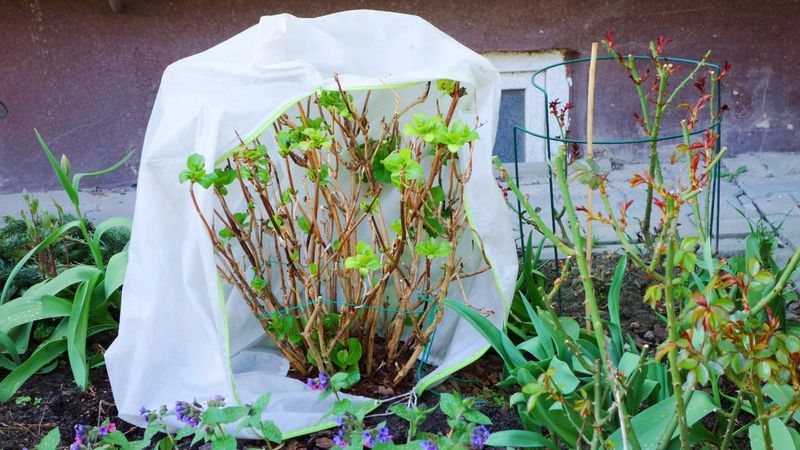
Spring can undo your winter work. A warm week in March or April may wake the plant up, and a surprise freeze afterward can injure the new growth and buds.
A winter cage does not cover that risk. As UNH Extension recommends, take the protection off once buds begin to expand.
Leaves left packed around swelling buds can hold moisture and keep the plant from growing normally.
When you open the cage, pull out the leaves gently and set the mesh aside for next year. Compost the leaves or spread them as mulch away from the stems.
After that, keep an eye on the forecast. Maryland Extension suggests covering the plant overnight with fabric when near-freezing temperatures are expected, and it advises against plastic for this purpose.
An old bedsheet or frost cloth works well. Drape it loosely over the shrub, using stakes if needed, and remove it in the morning once temperatures rise.
This takes a few minutes on a cold night, and it may save the buds the cage helped carry through winter.
Treat the cage as protection, not a bloom guarantee
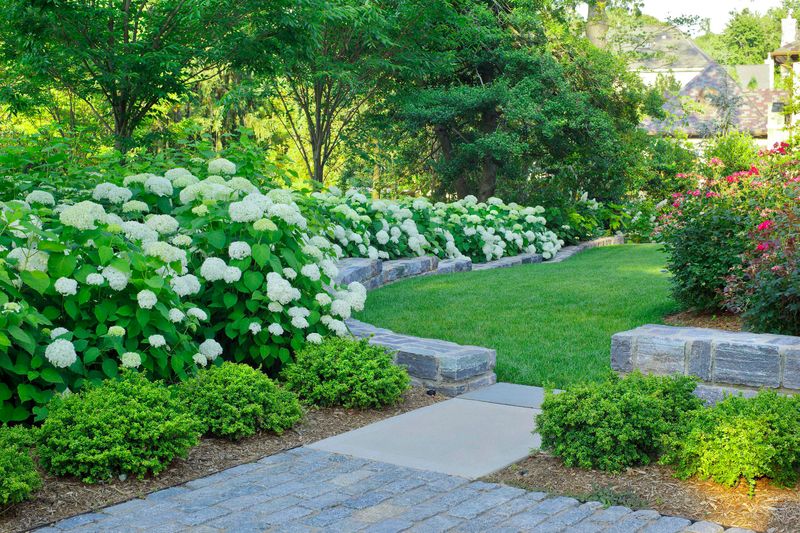
Think of the cage as one useful tool among several. It fits suitable old-wood bigleaf hydrangeas, and it works best alongside patient pruning habits and a watchful eye on spring frost.
Winter cold is only one cause of a flowerless summer. University of Maryland Extension lists drought, deer browsing, and other problems too, and Virginia Tech Extension notes that cultivars differ in bud hardiness.
Some years the leaves will be the show, and some years the flowers will be. Either way, the shrub is still worth keeping.
Share this story