Get the latest garden guides in your inbox →
Gardening Latest
  • General Gardening
  • Lawn Care
  • Plant Care
  • Composting
  • Soil Health
  • Backyard
  • Garden Muse Magazine
  • General Gardening
  • Lawn Care
  • Plant Care
  • Composting
  • Soil Health
  • Backyard
  • Garden Muse Magazine
  • News
  • Gardening Calendar
  • Garden Structures
  • Vegetable Garden
  • Vertical Garden
  • Raised Beds
  • Hydroponics
  • General Equipment
  • Community Gardens
Garden Themes
  • Spiritual Garden
  • Hydroseeding
  • Seeding and Laying Sod
  • Artificial Grass
  • Lawn Care Equipment
  • Plants
  • Trees
  • Planting Tools
  • Composting Basics
  • Fertilizer
  • Alternative Growing Mediums
  • Front Yard
  • Backyard Activities
  • Landscaping
Gardening Latest

Explore by state

Which state is your garden in?

Currently viewing Wisconsin

All states

Northeast

  • Connecticut —
  • Delaware 8
  • Maine —
  • Maryland 3
  • Massachusetts 10
  • New Hampshire —
  • New Jersey 3
  • New York 4
  • Pennsylvania 4
  • Rhode Island —
  • Vermont —

Southeast

  • Alabama 3
  • Arkansas —
  • Florida 3
  • Georgia 3
  • Kentucky 9
  • Louisiana 2
  • Mississippi —
  • North Carolina 1
  • South Carolina 8
  • Tennessee —
  • Virginia 2
  • West Virginia —

Midwest

  • Illinois 2
  • Indiana 4
  • Iowa 7
  • Kansas —
  • Michigan 3
  • Minnesota 2
  • Missouri 2
  • Nebraska —
  • North Dakota —
  • Ohio 3
  • South Dakota —
  • Wisconsin 8

Southwest

  • Arizona 3
  • Colorado —
  • Nevada —
  • New Mexico —
  • Oklahoma —
  • Texas 2
  • Utah —

West

  • Alaska —
  • California 3
  • Hawaii —
  • Idaho —
  • Montana —
  • Oregon —
  • Washington —
  • Wyoming —

No state matches that search.

Site menu

Gardening Latest
  • General Gardening
    • News
    • Gardening Calendar
    • Garden Structures
    • Vegetable Garden
    • Vertical Garden
    • Raised Beds
    • Hydroponics
    • General Equipment
    • Community Gardens
    Garden Themes
    • Spiritual Garden
  • Lawn Care
    • Hydroseeding
    • Seeding and Laying Sod
    • Artificial Grass
    • Lawn Care Equipment
  • Plant Care
    • Plants
    • Trees
    • Planting Tools
  • Composting
    • Composting Basics
  • Soil Health
    • Fertilizer
    • Alternative Growing Mediums
  • Backyard
    • Front Yard
    • Backyard Activities
    • Landscaping
  • Garden Muse Magazine

Explore

  • About GardeningLatest.com
  • Contact Us

Get the latest from the garden

New guides on lawn care, plants and backyard projects, sent when they go up.

Subscribe →

Follow

  • Facebook
  • X
  • Pinterest
  • YouTube
Wisconsin Gardening

Why Your Wisconsin Rhubarb May Be Flowering and Whether to Cut the Stalk

A thick stalk topped with a creamy, plume-like bloom can appear in a rhubarb patch almost overnight.

HB

By Heidi Brandt

November 18, 2026 · 6 min read

Why Your Wisconsin Rhubarb May Be Flowering and Whether to Cut the Stalk

A thick stalk topped with a creamy, plume-like bloom can appear in a rhubarb patch almost overnight. It looks strange next to the red leaf stalks you were hoping to bake into pie.

The good news is that you have simple choices, and none of them is urgent. Here is what that tall stalk means and what you can do about it.

At a glance

Where
Wisconsin Gardening
Hardiness zone
5 −20 to −10°F
Read
6 minutes
Published
November 18, 2026

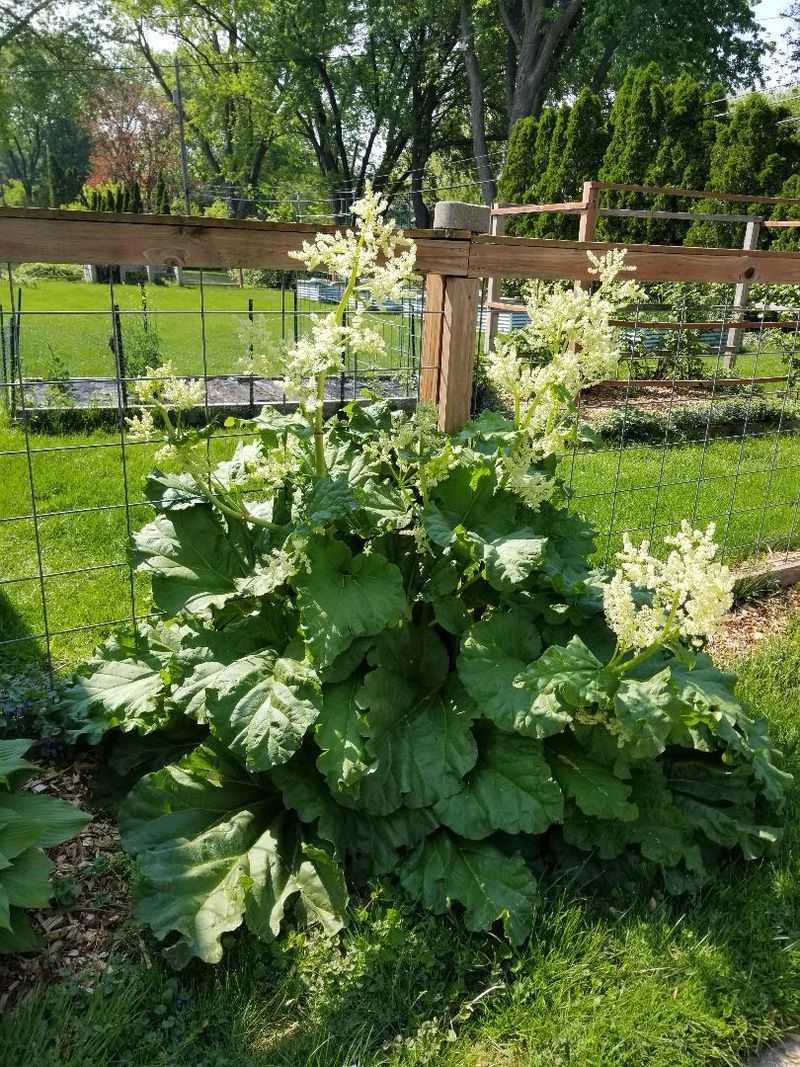
A flower stalk is a cue, not a crisis

A flower stalk is a cue, not a crisis
© Beyond Behnke’s

Spotting a tall flower stalk in the middle of your rhubarb does not mean the harvest is ruined. According to Purdue Extension guidance on rhubarb flowers, the ordinary leaf stalks stay edible whether or not flowers are present.

The plant has simply sent up a different kind of growth, and you get to decide what to do with it.

If your main goal is to pick leaf stalks for sauce, crisps, and pies, extension advice is to remove the flower stalk when you see it. Taking it out limits seed production, and it may leave more of the plant’s energy for continued leaf-stalk growth.

That is the reasoning behind the recommendation, not a promise about results.

Cutting the flower stalk will not guarantee thicker or more numerous stalks. Plants vary, and weather and soil play their own parts.

Think of removal as a way of nudging the plant toward your goal rather than a switch that guarantees a bigger pile of rhubarb.

Maybe you like the look of the bloom, or you are curious about seed. That is a reasonable path too, and a later section covers it.

For now, the main point is that a flower stalk gives you a decision to make, not a problem to panic about.

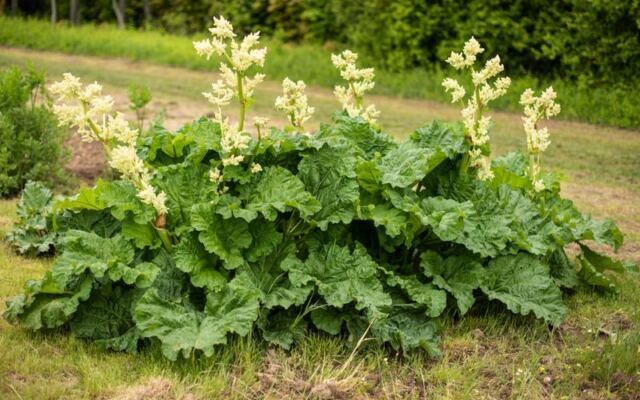
Several factors may contribute to flowering
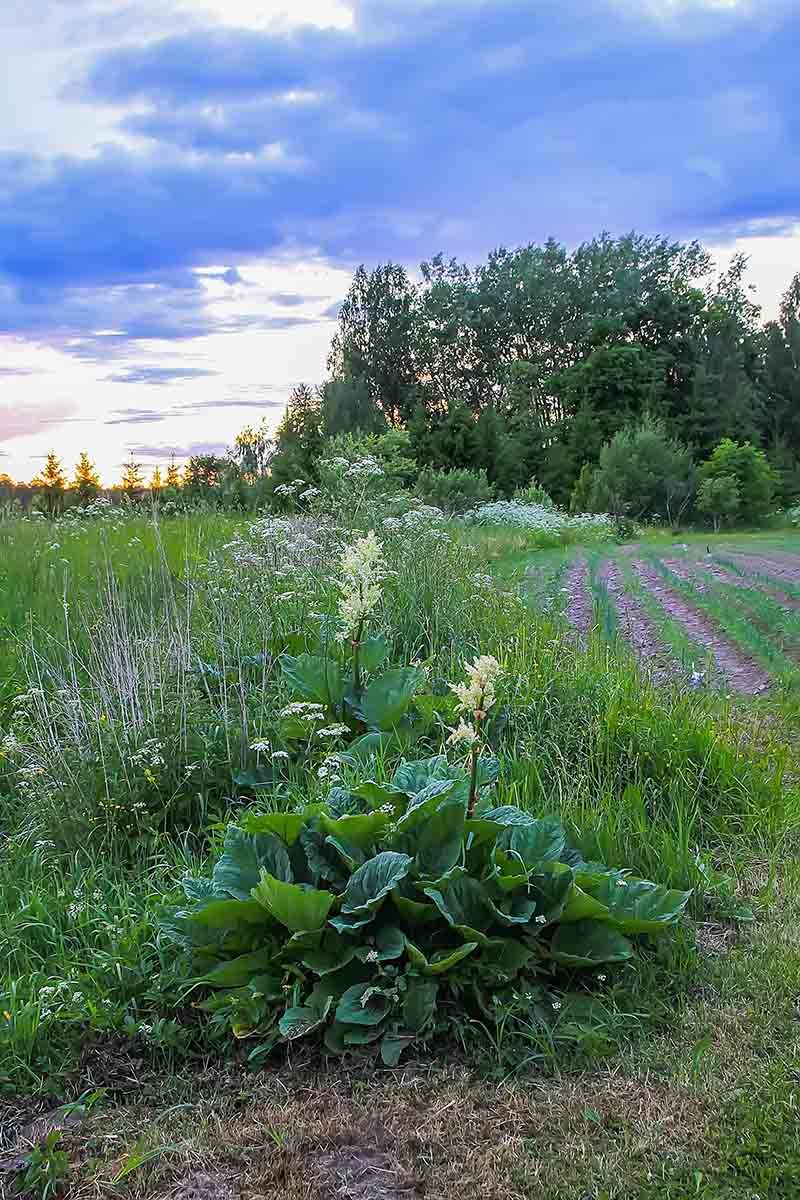
Several factors may contribute to flowering
© Gardener’s Path

Rhubarb can send up a flower stalk for a handful of reasons, and no one can tell which one applies by looking at the stalk. Purdue Extension notes that flowering can be more common in mature plants and in certain varieties.

So an older clump that has thrived for years might bloom simply because of its age or its genetics.

Some like the tall, feathery plume that rises over the leaves, and others want to see seed form.

Purdue also lists stress as a possible contributor, including temperatures above 90 degrees Fahrenheit, prolonged drought during hot weather, and poor nutrition. University of Maine Cooperative Extension likewise points to aging, poor nutrition, and drought.

Each of these is a possibility, not a verdict.

That distinction matters in a Wisconsin yard. A hot spell in July, a dry stretch, or a patch of tired soil may each play a role, or none of them may.

Two plants side by side can behave differently, and a flower stalk alone cannot reveal the cause.

Try to resist blaming yourself or the weather without more clues. If the clump is old and crowded, or the soil has not been fed in years, those are worth a look as general care.

Even then, treat them as helpful garden habits rather than an explanation for this one stalk.

Remove the whole stalk if you want to favor harvest
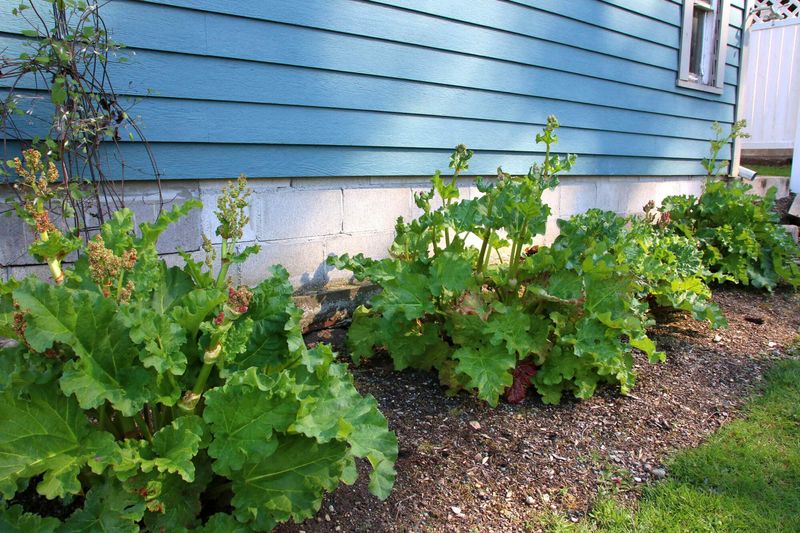
Remove the whole stalk if you want to favor harvest
© The Daring Gourmet

Cutting off only the fluffy flower head leaves most of the job undone. For best results, follow the advice from Purdue Extension and remove the entire flower stalk when you see it.

Work down to the point where it joins the crown, then cut or pull it close to the plant’s base.

Other extension guidance, including University of Maine Cooperative Extension, describes cutting or pulling at the base as well. A clean cut with sharp pruners works for most people.

Wear gloves if the stalk feels tough, and keep your tools clean.

Check the plant again in a week or two. Another stalk may emerge, and if it does, remove it the same way.

A quick look each time you water or harvest is plenty.

Remember what removal is meant to do. It aims to favor continued leaf-stalk production and limit seed development.

It does not guarantee bigger or more abundant stalks, so keep your expectations realistic and enjoy whatever the plant gives you.

Leaving the blooms is a valid choice
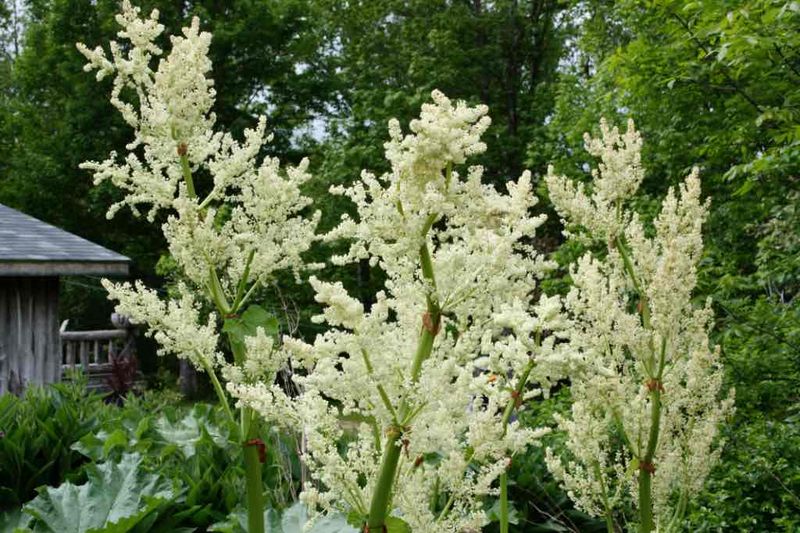
Leaving the blooms is a valid choice
© Farmhouse & Blooms

Not every gardener wants a tidy rhubarb patch. Some like the tall, feathery plume that rises over the leaves, and others want to see seed form.

Leaving the flower stalk in place for looks or for seed is a reasonable decision, not a mistake.

Extension sources describe it as a matter of preference. University of Maine Cooperative Extension says whether to leave the stalk is a personal choice.

If you have plenty of rhubarb or the plant is mainly ornamental in your yard, the bloom can stay.

Maybe you want the flowers for a while but do not want seed to mature. In that case, Purdue Extension advises cutting the stalk after flowering.

That lets you enjoy the display and still stop seeds from ripening.

This option is separate from the advice to remove a stalk early when you are prioritizing edible stalks. Pick the path that fits your goals for the plant this season.

Either way, the leaf stalks you harvest remain the same food they always were.

Flowering does not make the harvest unsafe
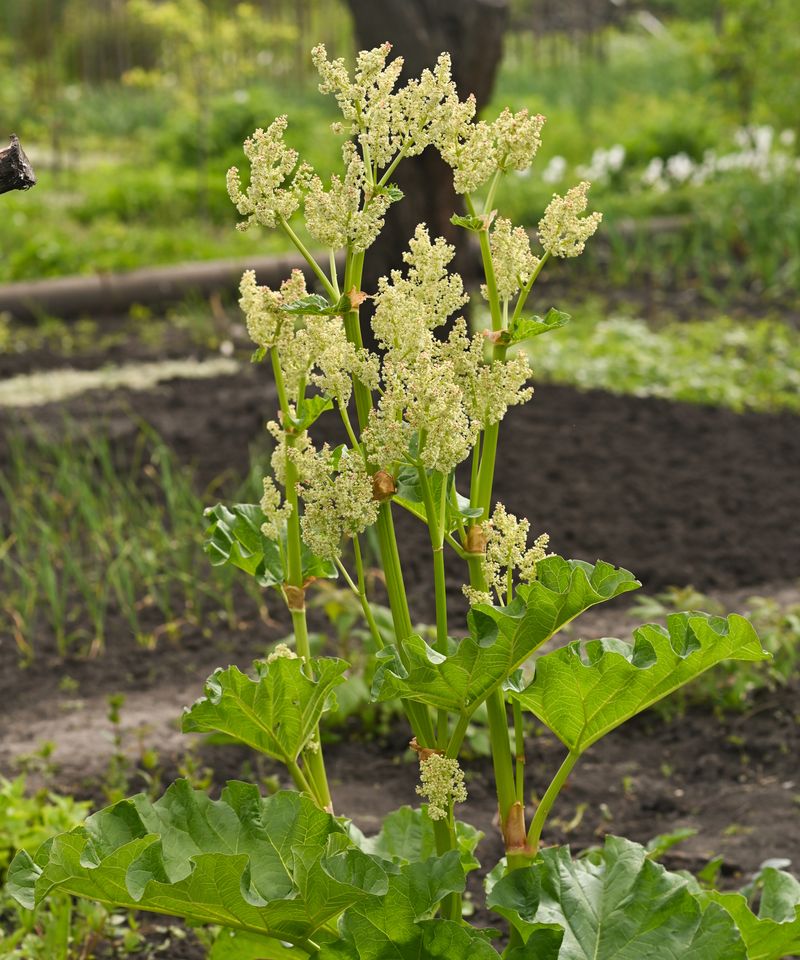
Flowering does not make the harvest unsafe
© Gardening Know How

Safety is usually the first worry, so here is the plain answer. Purdue Extension says the ordinary leaf stalks remain edible whether or not flowers are present.

A bloom on the plant does not change the stalks you pick for the kitchen.

The leaf blades are another matter. Do not eat them.

An Iowa State University rhubarb guide warns against consuming the leaves, so trim them off the stalks right after harvest and discard them.

Frost is its own topic and has nothing to do with flowering. Iowa State Extension says to discard stalks that turn soft and mushy after a freeze, while undamaged plants can be harvested.

If a stalk looks wilted or slimy, toss it.

Some questions remain about frost. Purdue plant pathology notes mention uncertainty over whether oxalic acid moves from the leaves into the stalks after freezing.

That means no one should say every frosted stalk is poisonous, or that every one is surely safe. When in doubt after a hard freeze, look closely at the stalk and let its condition guide you.

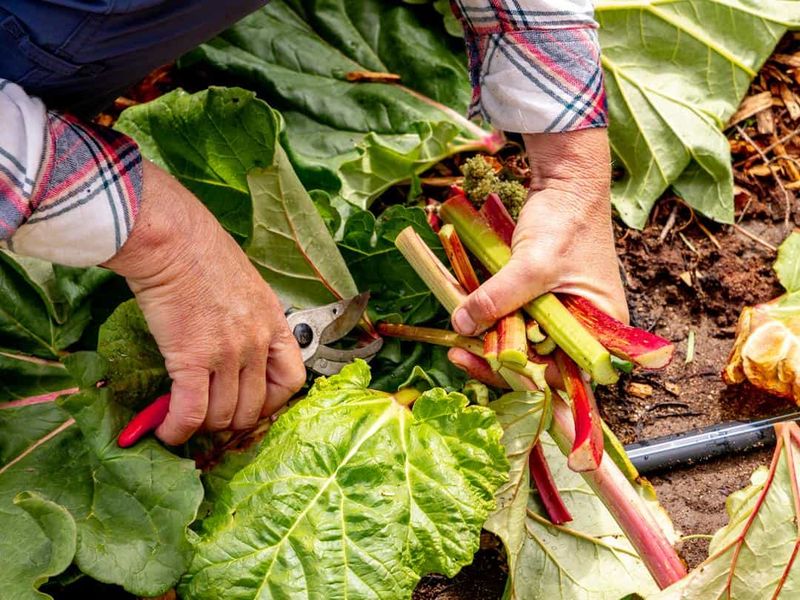
Harvest conservatively
Harvest conservatively
© California Grown

Removing a flower stalk is not a license to strip the plant. The point of taking it off is to favor stalk production, and the plant still needs plenty of leaves to rebuild its strength.

A lighter hand at harvest time keeps the clump going for years.

Extension advice on how much to pick is cautious but not identical. A UW-Milwaukee Extension Q&A suggests a brief harvest in the plant’s second year and a longer season from the third year.

It also says not to remove more than one-third of the stalks at once.

A rhubarb guide from Iowa State University that is hosted by the same office takes a stricter line. It advises no harvest in the first two years and no more than half the developed stalks at a time.

Because the numbers differ, no single age-based schedule fits every garden.

A sensible approach is to start light, watch how vigorous your plant looks, and leave plenty of stalks behind. Whether you cut the flower stalk or let it bloom, the choice depends on what you want from the patch.

A rhubarb plant rewards patience, and the best harvest is the one that leaves the plant ready for next spring.

Share this story
HB

Written by

Heidi Brandt

More from Heidi Brandt →

About Gardening Latest

Gardening Latest provides in-depth guides to maintaining and enhancing your garden and backyard. Learn how to make the most of the space you have and create a beautiful garden.

More about us →

Latest stories

  • Massachusetts GardeningMassachusetts Has Venomous Spiders That Sneak Indoors as Nights Get Cold, and Here’s How to Spot Them

    Massachusetts Has Venomous Spiders That Sneak Indoors as Nights Get Cold, and Here’s How to Spot Them

    53 min ago
  • Delaware GardeningDelaware’s Northern Short-Tailed Shrew Has a Venomous Bite, and Fallen Leaves Can Make Good Habitat

    Delaware’s Northern Short-Tailed Shrew Has a Venomous Bite, and Fallen Leaves Can Make Good Habitat

    54 min ago
  • Kentucky GardeningWhy You Hear Coyotes Howling After Dark in Kentucky

    Why You Hear Coyotes Howling After Dark in Kentucky

    58 min ago
  • South Carolina GardeningHearing Coyotes Howl Near Your South Carolina Home at Night? What Their Calls Can and Cannot Tell You

    Hearing Coyotes Howl Near Your South Carolina Home at Night? What Their Calls Can and Cannot Tell You

    59 min ago
  • Pennsylvania GardeningThose Fallen Pine Needles In Your Pennsylvania Yard Are Better Mulch Than You Think

    Those Fallen Pine Needles In Your Pennsylvania Yard Are Better Mulch Than You Think

    1 hr ago

Gardening by state

Stories for your state, and the hardiness zone most of it gardens in.

Keep exploring

Read next

All Wisconsin Gardening →
Wisconsin GardeningThese Venomous Critters Share Wisconsin Yards With You, And Fall Is When You’ll Spot Them
Wisconsin Gardening

These Venomous Critters Share Wisconsin Yards With You, And Fall Is When You’ll Spot Them

9 hr ago
Wisconsin GardeningWhat Happens To Your Body When You Eat Celery Every Day In Wisconsin
Wisconsin Gardening

What Happens To Your Body When You Eat Celery Every Day In Wisconsin

23 hr ago
Wisconsin GardeningThese Venomous Creatures Share Your Wisconsin Yard, And Here’s How To Recognize Each One
Wisconsin Gardening

These Venomous Creatures Share Your Wisconsin Yard, And Here’s How To Recognize Each One

Yesterday

More from Wisconsin Gardening

  • Massachusetts Has Venomous Spiders That Sneak Indoors as Nights Get Cold, and Here’s How to Spot Them

    53 min ago
  • Delaware’s Northern Short-Tailed Shrew Has a Venomous Bite, and Fallen Leaves Can Make Good Habitat

    54 min ago
Back to top

Leave a response Cancel

Your email address stays private. Required fields are marked with an asterisk.

Gardening Latest

In-depth guides to maintaining and enhancing your garden and backyard: how to make the most of the space you have, and how to make it beautiful.

  • Facebook
  • X
  • Pinterest
  • YouTube

We may earn a portion of sales from products or services that are purchased through our site as part of our affiliate partnerships with retailers.

Explore

  • About GardeningLatest.com
  • Contact Us
  • Terms and Conditions
  • Privacy
  • Editorial Note:
  • FTC Disclosure

Newsletter

New garden guides and seasonal tips, straight to your inbox.

We’ll email you a link to confirm. Unsubscribe any time.

Almost there! Check your inbox and tap the link to confirm.

© 2026 Gardening Latest. All rights reserved.

Back to top